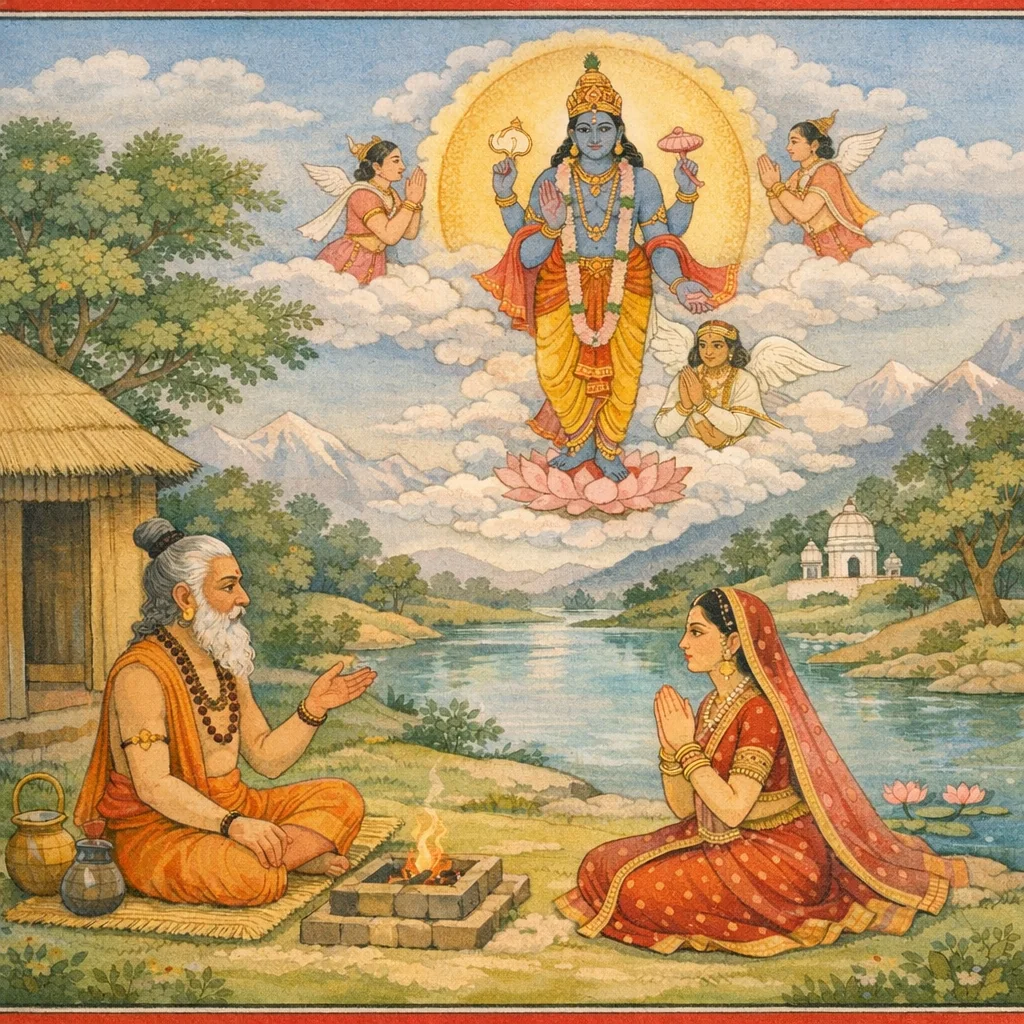
Adhyaya 67
The Slaying of Bala–Nāmuci
In Chapter 67, Hiraṇyākṣa commands the asuras to march; the host of daityas and dānavas multiplies and fills the sky. The devas assemble—Rudras, Sādhyas, Viśvedevas, and Vasus—joined by Skanda and Gaṇapa, and advance to battle under the leadership of Viṣṇu (Jiṣṇu). A dreadful war erupts: vast weapons are unleashed, ominous signs appear, and nature itself is thrown into turmoil. Blood inundates the earth until it becomes an “ocean of blood,” and rivers seem to run backward. Skanda’s empowered descent sends many daityas to Yama’s realm, while Indra and Viṣṇu withstand the demonic onslaught. At the climax, the mighty asura Bala fiercely harasses the gods. Indra’s wrath and the exchange of arms end in the fall of the demonic champion; the devas rejoice with showers of flowers, and the remaining daityas flee.
Shlokas
Verse 1
व्यास उवाच । एतच्छ्रुत्वा तु दैत्येंद्रो हिरण्याक्षो महाबलः । सरोषश्चातिताम्राक्षो ह्यसुरानादिदेश ह
Vyāsa said: Hearing this, the mighty Daitya king Hiraṇyākṣa—his eyes reddened with anger—issued orders to the Asuras.
Verse 2
स्वयं गच्छामि युद्धाय देवानां विजिघांसया । नागच्छंति न युद्ध्यंते तेन मार्गाद्विशन्त्वितः
“I myself am going to battle, intent on slaying the gods. Let those who neither go forth nor fight enter by that route from here.”
Verse 3
एतच्छ्रुत्वा तु वचनं शेषा दैत्यगणाधिपाः । युद्धाय प्रययुः सर्वे शूलपाशातिपंडिताः
Hearing these words, the remaining leaders of the hosts of Daityas all set out for battle—highly skilled in the use of tridents and nooses.
Verse 4
अधिकं पूर्वसैन्याश्च तथा शतगुणैरपि । निरंतरं तथाकाशं प्रययुर्युद्धकांक्षिणः
And the host grew even greater than before—indeed, a hundredfold; and, yearning for battle, they advanced, filling the sky with unbroken ranks.
Verse 5
ततो रुद्रास्स साध्याश्च विश्वे च वसवस्तथा । स्कंदश्च गणपश्चैव विष्णुजिष्णुपुरोगमाः
Then came forth the Rudras, the Sādhyas, the Viśvedevas, and the Vasus; and also Skanda and Gaṇapa—led at the vanguard by Viṣṇu, the all-pervading One, and Jiṣṇu, the victorious One.
Verse 6
सर्वे योद्धुं गतास्ते च हृष्टा रणसमुत्सुकाः । एतस्मिन्नंतरे युद्धं देवदानवयोरपि
All of them went forth to fight, rejoicing and eager for battle. Meanwhile, a war also broke out between the gods and the Dānavas.
Verse 7
न भूतं न श्रुतं पूर्वं सर्वलोकभयंकरम् । शस्त्रास्त्रैबर्हुधा युक्तं शिशिरेणेव काननम्
Never before had such a thing been seen or even heard of—terrifying to all the worlds—bristling with countless weapons and missiles, like a forest in winter, dense with bare, piercing branches.
Verse 8
धरां स्वर्गौक आकाशं संरुध्य युद्धमाबभौ । अन्योन्यं जघ्नुराकाशे तथान्योन्यं महीतले
Blocking the earth, the celestial regions, and the sky, they entered into battle. They struck one another—some in the heavens, and likewise others upon the earth.
Verse 9
शक्तिभिर्मुसलैर्भल्लैर्बहुभिः शरवृष्टिभिः । दारुणैः खड्गपातैश्च तथा चक्रपरःश्वधैः
With spears, clubs, and sharp darts; with showers of countless arrows; with dreadful sword-strokes; and likewise with discus-weapons and battle-axes—
Verse 10
अन्यायुधैश्च विविधैर्निर्जघ्नुस्ते परस्परम् । अभवन्घोररूपाणि धराकाशे व्ययानि च
With various other weapons, they struck one another down. Terrible forms appeared, and there were also destructive disturbances in the earth and in the sky.
Verse 11
शस्त्रैः शरैरसृक्पातैः कंकवायसजंबुकैः । यथा मुसलधाराभिर्घना वर्षंति लोहितम्
With weapons, arrows, and showers of blood—amid herons, crows, and jackals—just as dense clouds pour down rain in thick streams, so they rained down blood.
Verse 12
तथैव क्षतजैः स्रस्तैः स्वाङ्गाच्च देवदानवाः । केचित्पतंति मुह्यंति स्खलंति च हसंति च
Likewise, with blood streaming from their own bodies, the gods and the demons—some of them fall down, some become bewildered, some stumble, and some even laugh.
Verse 13
मुंचंति चार्तनादांश्च सिंहनादं मुहुर्मुहुः । केषांचिद्बाहवश्छिन्नाश्छिन्नपादास्तथापरे
They repeatedly let out cries of anguish and roar like lions again and again. For some, their arms were cut off; for others, their feet were severed.
Verse 14
छिन्नपार्श्वोदराः केचिन्निपेतुः शतशो भुवि । कोटिकोटिसहस्राणि गजवाज्यसुराणि च
Some, with their flanks and bellies torn open, fell by the hundreds upon the earth; and there fell, by tens of millions, elephants, horses, and warriors as well.
Verse 15
अपतन्धरणीपृष्ठे रक्तौघे बहुधा भुवि । ततस्तु धरणीपृष्ठे त्वभवल्लोहितार्णवः
Streams of blood fell in many places upon the surface of the earth. Then, upon the earth’s surface, there came to be an ocean of blood.
Verse 16
विपरीतास्ततो नद्यः सद्यस्तत्र विसुस्रुवुः । तृणकाष्ठपरास्तत्र शक्तयो दारुसंचयाः
Then the rivers there immediately began to flow in reverse. In that place, the streams carried grasses and pieces of wood, and there were heaps and accumulations of timber.
Verse 17
मुद्गरा मुसलाः शूला मकराद्या भवंति च । जयंतिका ध्वजा मीनाः कमठाश्चर्मकायकाः
There are also various forms such as mallets, pestles, and spears; and forms beginning with the makara. Likewise there are jayantikā-forms, banners, fish, tortoises, and those having bodies like leather.
Verse 18
शरादिभिर्महोष्ट्रैश्च निरुद्धाः प्रचुरैस्तथा । केशचामरशैवालाः संपूर्णास्तास्ततःस्ततः
They were also densely blocked by reeds and the like, and by many large camels; and those places, filled here and there with moss like hair and yak-tail whisks, were completely overgrown.
Verse 19
पतद्भिश्च तथान्यैश्च विविधैः क्षतजार्णवः । तदा वसुंधरा सर्वा सशैलवनकानना
Struck and wounded by many kinds of falling weapons and missiles, the ocean became a sea of blood; then the whole earth—together with its mountains, forests, and groves—was swept into that devastation.
Verse 20
रुधिरौघा महाघोरा सर्वलोकभयंकरा । स्कंदस्य शक्तिपातेन गता दैत्या यमक्षयम्
The Daityas—like torrents of blood, most dreadful and terrifying to all worlds—by the descent of Skanda’s power were sent to Yama’s realm, to destruction.
Verse 21
पर्शुना परमेणैव अग्निनाग्निशिखैः शरैः । वरुणस्य च पाशेन बद्धा मग्ना यमक्षये
Struck down by a supreme axe and by fiery arrows blazing like flames; bound by Varuṇa’s noose, they sank down, entering the abode of Yama—death.
Verse 22
येषां पुत्रैश्च पौत्रैश्च पुरोगैः सचिवैस्तथा । निपातिताश्च दैतेयाः शरशक्त्यृष्टिवृष्टिभिः
By their sons and grandsons—along with their commanders and ministers—the Daityas were struck down amid a rain of arrows, spears, and javelins.
Verse 23
ग्रहैश्च श्वसनैरेव यक्षगंधर्वकिन्नरैः । महत्या गदया चैव कुबेरेण च धीमता
Along with the Grahas and the Śvasanas, and with Yakṣas, Gandharvas, and Kinnaras; and bearing his mighty mace, Kubera too—the wise one—was present.
Verse 24
घनानां निकरैर्वज्रैस्तुषारैर्विधुनेरितैः । पन्नगानां विषैर्घोरैर्दैत्याः पेतुर्धरातले
Struck by clusters of thunderbolts from the clouds, battered by wind-driven hail, and tormented by the dreadful venom of serpents, the Daityas fell upon the face of the earth.
Verse 25
अन्यैश्च विविधैर्देवैः कोटिकोटिसहस्रशः । पातिताः प्रययुस्सर्वे धरण्यां तु गतासवः
And by other diverse hosts of the Devas—crores upon crores, in their thousands—were they struck down; all fell to the earth, their life-breath departed.
Verse 26
देहांस्त्यक्त्वा दिवं यांति केचिच्च यममंदिरम् । केचिद्गच्छंति पातालं पुण्यापुण्यप्रयोगतः
Casting off their bodies, some go to heaven, some to Yama’s abode; others descend to Pātāla, according to the workings of merit and demerit.
Verse 27
एतस्मिन्नंतरे वेदाञ्जजल्पुः परमर्षयः । स्वस्त्यस्तु ब्राह्मणेभ्यश्च गोभ्यः स्त्रीभ्यस्तपस्विषु
Meanwhile, the supreme sages recited the Vedas, proclaiming: “May there be well-being for the brāhmaṇas, for the cows, for women, and for the ascetics.”
Verse 28
प्रयुध्यमानेष्वन्येषु सांप्रतं सर्वजंतुषु । विबुधैरर्दिता दैत्याः शेषाः पर्वतमाश्रिताः
While the other beings were engaged in battle, the remaining Daityas—harried by the gods—took refuge in the mountain.
Verse 29
प्रजग्मुश्च दिशः सर्वाः कातरा रणभीरवः । दैत्यव्यूहे प्रभग्ने च बलो नाम महाबलः
Terrified amid the roar of battle, they fled in every direction. And when the Daitya formation was shattered, a mighty one named Bala stepped forth, great in strength.
Verse 30
अर्दयामास देवांश्च संयम्याग्निसमैः शरैः । तस्य बाणार्दिता देवा बहवो बलदर्पिताः
He harassed the gods, holding them in check with arrows blazing like fire. Many gods, proud of their strength, were struck and tormented by his shafts.
Verse 31
पतिता धरणीपृष्ठे केचिद्भग्ना रणाजिरे । दृष्ट्वा तस्य महत्कर्म दारुणं लोकभीषणम्
Some fell upon the face of the earth; others were shattered on the battlefield. Seeing his mighty deed—terrible and terrifying to the world—
Verse 32
शशंसुरृषयो देवास्तत्र शिष्टाः प्रचुक्रुशुः । अथ क्रुद्धो महातेजाश्शतक्रतुररिंदमः
There the sages and the gods spoke out, and the righteous raised loud cries; then the mighty, radiant Śatakratu (Indra), crusher of foes, became enraged.
Verse 33
जघान शरसंदोहैर्बलं बलवतां वरम् । सोपि क्रुद्धो बलो युद्धे तथा शक्रं ससंभ्रमः
With volleys of arrows he struck Bala, the foremost among the mighty. Enraged, Bala too, in the midst of battle, rushed upon Śakra (Indra) with fierce agitation.
Verse 34
रुधिरेणावसिक्तांगौ प्रसृतेन महाबलौ । तौ यथा माधवे मासि पुष्पितौ किंशुकद्रुमौ
Those two mighty ones, their limbs drenched in streaming blood, appeared like kiṃśuka trees in the month of Mādhava, bursting into bloom.
Verse 35
चक्राणि च सहस्राणि शूलानि मुसलानि च । निचखान रणे शक्रे चपले चासुरोत्तमः
In battle, that foremost of Asuras struck Indra with thousands of discus-weapons, with tridents, and with clubs, assailing the wavering Śakra.
Verse 36
तानि चक्राणि शूलानि निचकर्त्त शरोत्तमैः । सुरराट्सहसा भ्रांतो लीलया समरे बली
With his finest arrows he cut down those discus-weapons and tridents. The lord of the gods, mighty in battle, was suddenly made to reel—yet it seemed as though it were only play amid the fight.
Verse 37
स च दैत्यो महातेजाः शक्त्या चैव पुरंदरम् । निजघान तदा तूर्णं गजस्थं च स्तनांतरे
And that radiant, mighty Daitya swiftly struck Purandara with his spear, piercing him in the chest as he sat upon his elephant.
Verse 38
तया विनिहतः शक्रः प्रचचाल गजोपरि । लब्धसंज्ञो बलं जिष्णुर्बिभेद दनुजं क्षणात्
Struck by that blow, Śakra reeled upon his elephant. Regaining consciousness, the mighty Jiṣṇu split the Dānava in an instant.
Verse 39
रथसंस्थस्य हस्तौ च धनुश्चिच्छेद चेषुणा । चर्मतीक्ष्णं ध्वजं तस्य शरेणैकेन वीरहा
With his arrows, the slayer of heroes cut off the hands of the warrior seated in the chariot and severed his bow; and with a single shaft he split his keen leather shield and his banner.
Verse 40
चतुर्भिर्निशितैर्बाणैर्विव्याध चतुरो हयान् । शरेणैकेन सूतस्य शिरश्चिच्छेद तत्क्षणात्
With four keen arrows he pierced the four horses, and with a single arrow he instantly severed the charioteer’s head.
Verse 41
छिन्नधन्वा हतरथो हताश्वो हतसारथिः । निपत्य मूर्च्छितः पृथ्व्यां मुहूर्तान्मृत्युमाप सः
His bow cut, his chariot ruined, his horses slain, and his charioteer killed, he fell senseless to the earth; and within a short while he met his death.
Verse 42
अथ क्रुद्धो महादैत्यो नमुचिः सुरदर्पहा । गदामादाय सहसा स जघान महागजम्
Then the great demon Namuci, the breaker of the gods’ pride, enraged, suddenly seized his mace and struck the mighty elephant.
Verse 43
यथा मेरुगिरेः शृंगे वज्रपातो भवेद्ध्रुवम् । तथैव च महाशब्दो ह्यभवल्लोमहर्षणः
Just as a thunderbolt’s strike upon the peak of Mount Meru would be certain, so there arose a mighty sound—one that made the hair stand on end.
Verse 44
प्रहारेणार्दितः पद्मी संचचाल स विह्वलः । रुधिरेणावसिक्तांगो विमुखो वेदनातुरः
Struck by the blow, Padmī staggered, overwhelmed and unsteady; his limbs were drenched in blood, and, turning away, he was tormented by pain.
Verse 45
शतक्रतुं विधावंति शतशोथ सहस्रशः । अर्धचंद्रैक्षुःरप्रैश्च चिच्छेद पाकशासनः
As Śatakratu fled in many ways—hundreds and thousands—Pākaśāsana cut him down with half-moon-shaped arrows.
Verse 46
जंतुभिस्तस्य मायाभिरर्दितास्सुरपुंगवाः । भूमौ निपतिताः केचित्केचित्सुप्ता रथोपरि
Struck by his illusory powers, the foremost of the gods were thrown into confusion—some fell upon the ground, while others lay asleep upon their chariots.
Verse 47
दृष्ट्वा तस्य महत्कर्म माधवो विशिखांस्तथा । जंतुभूतान्स चक्रेण चिच्छेद देहलग्नकान्
Seeing that mighty deed, Mādhava also severed with his discus those arrows that had become like living creatures and had fastened themselves to the body.
Verse 48
ततो जिष्णुस्त्रिभिर्बाणैः पातयामास भूतले । पृथिव्यां पतितो दैत्यो मूर्च्छितस्खलितः पुनः
Then Jiṣṇu struck him with three arrows and brought him down to the ground. The demon fell upon the earth again, fainted and reeling.
Verse 49
दधार मुद्गरं घोरं शक्रं हंतुं समुद्यतः । ततो जघान मघवा कुलिशेन महासुरम्
Raising a fearsome mace, the great asura advanced, intent on slaying Śakra (Indra). Then Maghavā (Indra) struck that mighty demon with his vajra, the thunderbolt.
Verse 50
स पपात महीपृष्ठे क्षतवक्षा महाबलः । साधुसाध्विति देवाश्च सिद्धाश्चैव महर्षयः
That mighty one, his chest wounded, fell upon the surface of the earth. And the gods, the Siddhas, and the great sages exclaimed, “Sādhu, sādhu—well done, well done!”
Verse 51
अपूजयंस्तदा शक्रं बहुभिः पुष्पवृष्टिभिः । ततो दैत्यगणाः सर्वे भीतास्तत्र प्रदुद्रुवुः । गीतं गायंति गंधर्वा ननृतुश्चाप्सरोगणाः
Then they honored Śakra (Indra) with abundant showers of flowers. Thereupon all the hosts of Daityas, terrified, fled from that place. The Gandharvas sang songs, and the companies of Apsarases danced.
Verse 67
इति श्रीपाद्मपुराणे प्रथमे सृष्टिखंडे बलनमुचिवधोनाम सप्तषष्टितमोऽध्यायः
Thus ends the sixty-seventh chapter, called “The Slaying of Balanāmuci,” in the First Book (Sṛṣṭi-khaṇḍa) of the glorious Padma Purāṇa.