Adhyaya 98
The Greatness of Vaiśākha: Mādhava Bath, Tulasī Worship, Water-Cow Charity, and Deliverance of Pretas
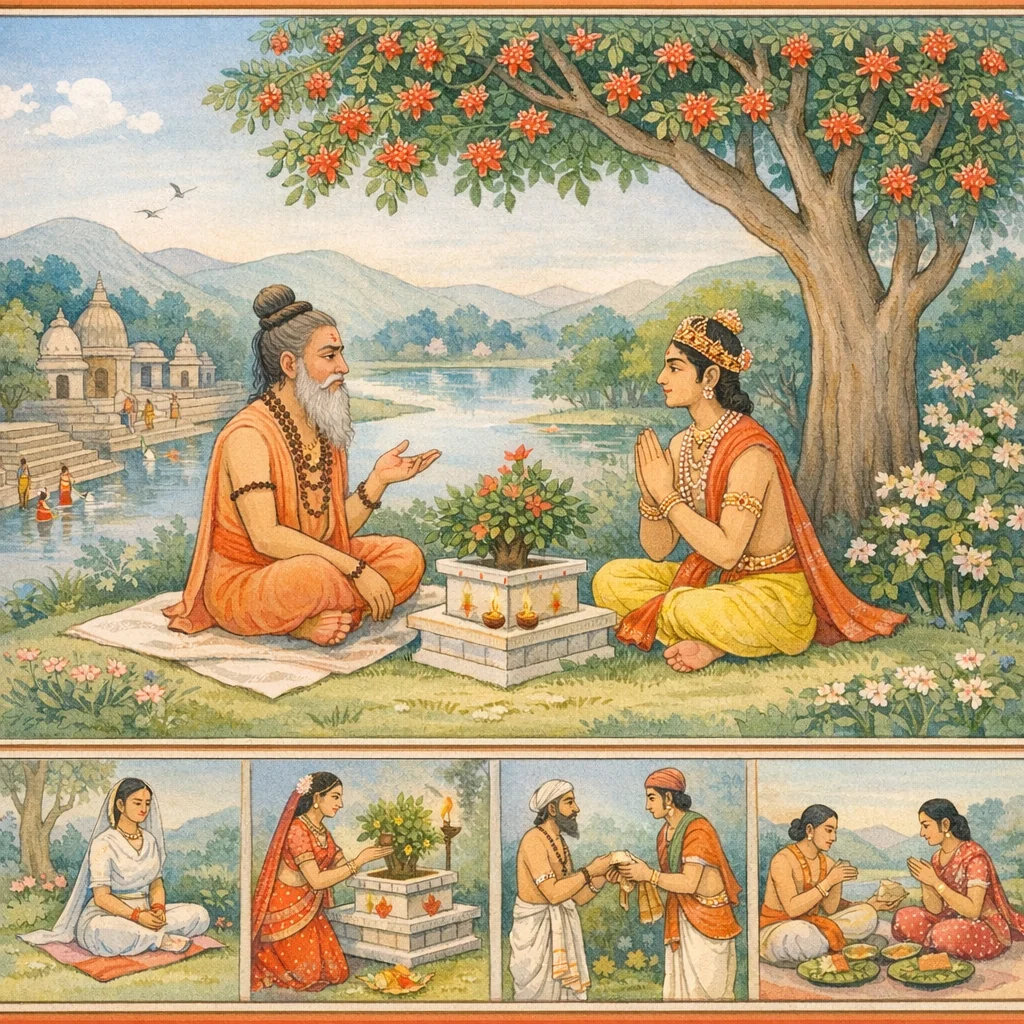
Chapter PP.5.98 teaches the Vaiśākha/Mādhava observance as a liberating discipline: bathing at dawn, worship of Mādhava (Viṣṇu) with tulasī, and supportive acts of dāna and śrāddha. Dharmarāja extols tulasī as Keśava’s dearest offering, warns against cutting it in impurity, and allows simplified worship when flowers are unavailable. It further sets out a ritual ecology—watering and circumambulating the aśvattha (pippala) tree, performing tarpaṇa, and feeding brāhmaṇas on key tithis (the 13th, 14th, and the full moon). In an embedded tale, Dhanaśarmā meets three pretas—Kṛtaghna, Vidaivata, and Avaiśākha—who disclose that their torment springs from ingratitude, irreverence, and neglect of Vaiśākha duties. Through Vaiśākha charity, especially water-gifts (jaladhenu and water-pots), sesame-with-honey dāna, and brāhmaṇa-feeding, ancestral lines are delivered, sins are burned away, and rebirth is curtailed.
Shlokas
No shlokas available for this adhyaya yet.