Adhyaya 109
The Greatness of Sacred Ash (Vibhūti) and the Saving Power of Śiva Worship
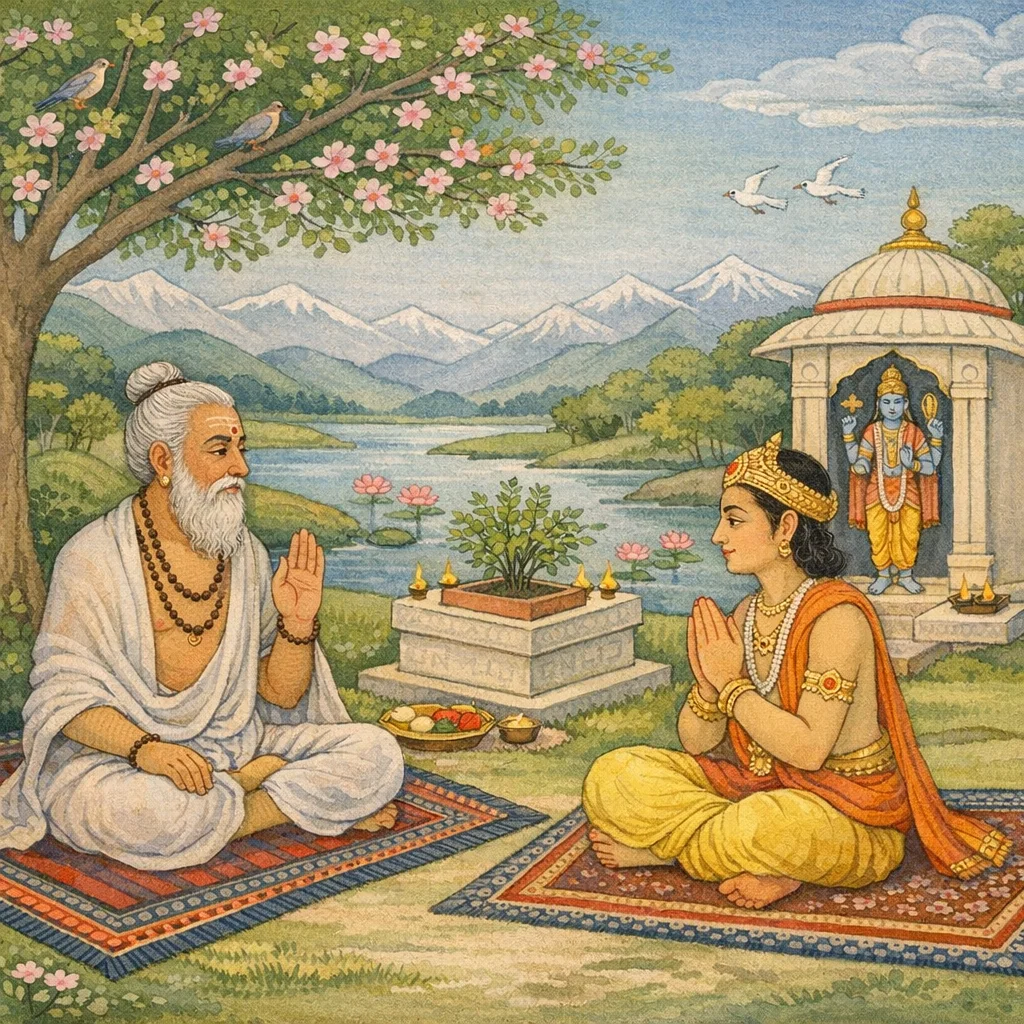
Śiva introduces a sin-destroying kathā: Ikṣvāku, a learned yet pleasure-seeking brāhmaṇa, neglects sacrifice, charity, Vedic teaching, and the study of the Purāṇas. After death he is brought before Yama’s judgment, warned of long hellish suffering, and granted a brief return to his body to undertake remedial dharma. Seeking refuge, Ikṣvāku approaches the Śiva-devotee sage Jābāli. The sage explains that a short human lifespan hinders prolonged disciplines; therefore the most potent remedy is worship of the Śiva-liṅga, daily hearing of the Purāṇa, and wearing vibhūti, the sacred ash. The narrative then shifts to Mandara’s divine city and Śiva’s yogic court in allegory, with yama-niyama, prāṇāyāma, dhyāna, and samādhi portrayed as attendants. After eight days of worship, Ikṣvāku dies offering his prāṇas to Śiva. Śaiva messengers dispute with Yama’s agents and prevail; Śiva grants the promised fruits, yet leaves a bodily mark recalling an earlier blasphemy against the liṅga. The chapter concludes by praising the merit gained from hearing and reciting this adhyāya.
Shlokas
No shlokas available for this adhyaya yet.