Adhyaya 102
The Greatness of Vaiśākha: Compassion and the Gift of Merit that Frees Beings from Hell
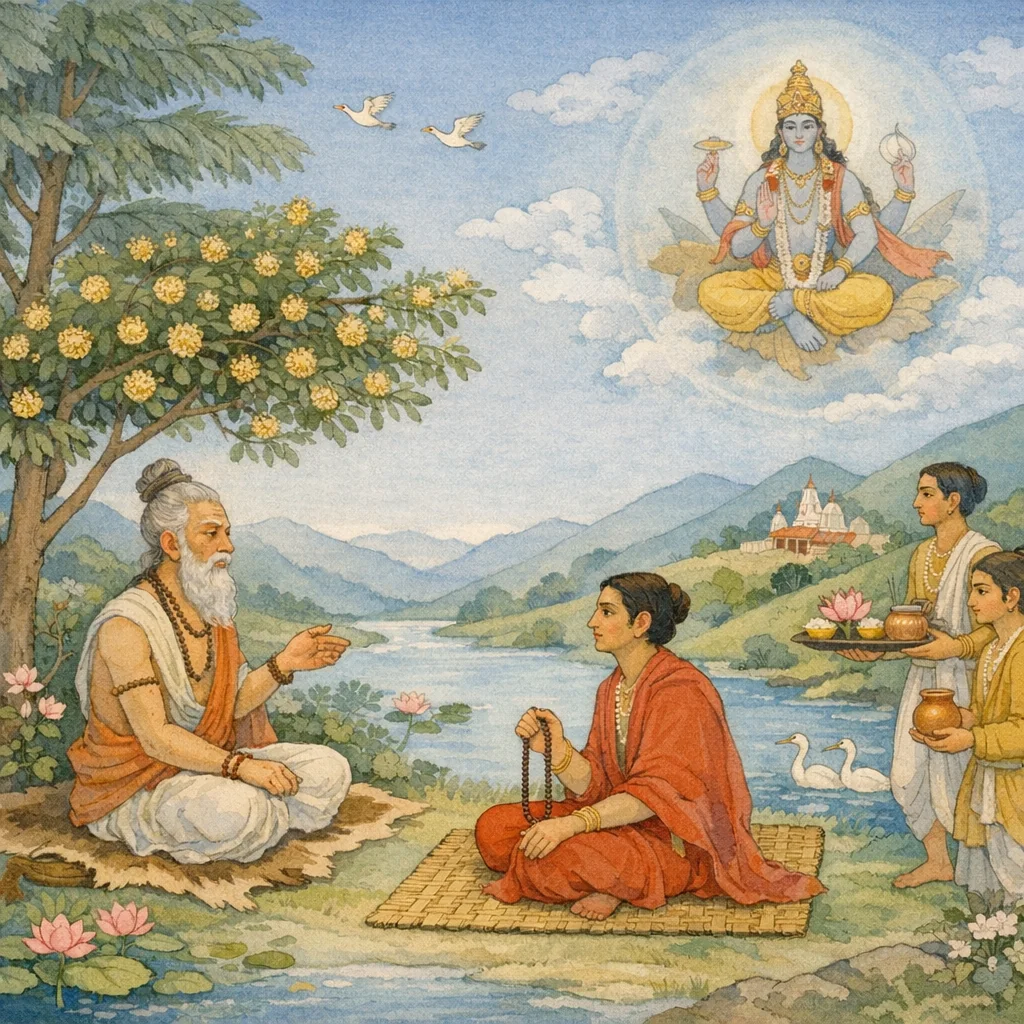
In PP.5.102, set within the Vaiśākha (Mādhava) māhātmya and framed by Yama and the Hari-dūtāḥ (Viṣṇu’s messengers), a compassionate king is shaken by the torment of beings suffering in hell. He proclaims a radical act of self-giving: he offers his own puṇya (merit) so that others may rise to heaven, even if he himself must remain behind. Hari’s messengers affirm that dayā (compassion) magnifies dharma, and the chapter turns to a catalog of Vaiśākha observances—bathing, dāna (charity), japa, homa, and worship—said to yield inexhaustible fruit. Particular gifts are linked to distinct heavenly realms (of Varuṇa, Sūrya, Brahmā, and Viṣṇu), culminating in instruction on formally transferring merit with Hari as witness through a thrice-spoken declaration. Exemplars such as Śibi, Dadhīci, and Sahasrajit uphold compassion as the highest dharma. The king’s merit-gift finally frees the sufferers, who depart in celestial chariots, while the king attains a supreme state, difficult even for yogins to reach.
Shlokas
No shlokas available for this adhyaya yet.