Adhyaya 9
The Glory of the Gaṅgā: Pilgrimage Discipline, Ancestral Rites, and Liberation
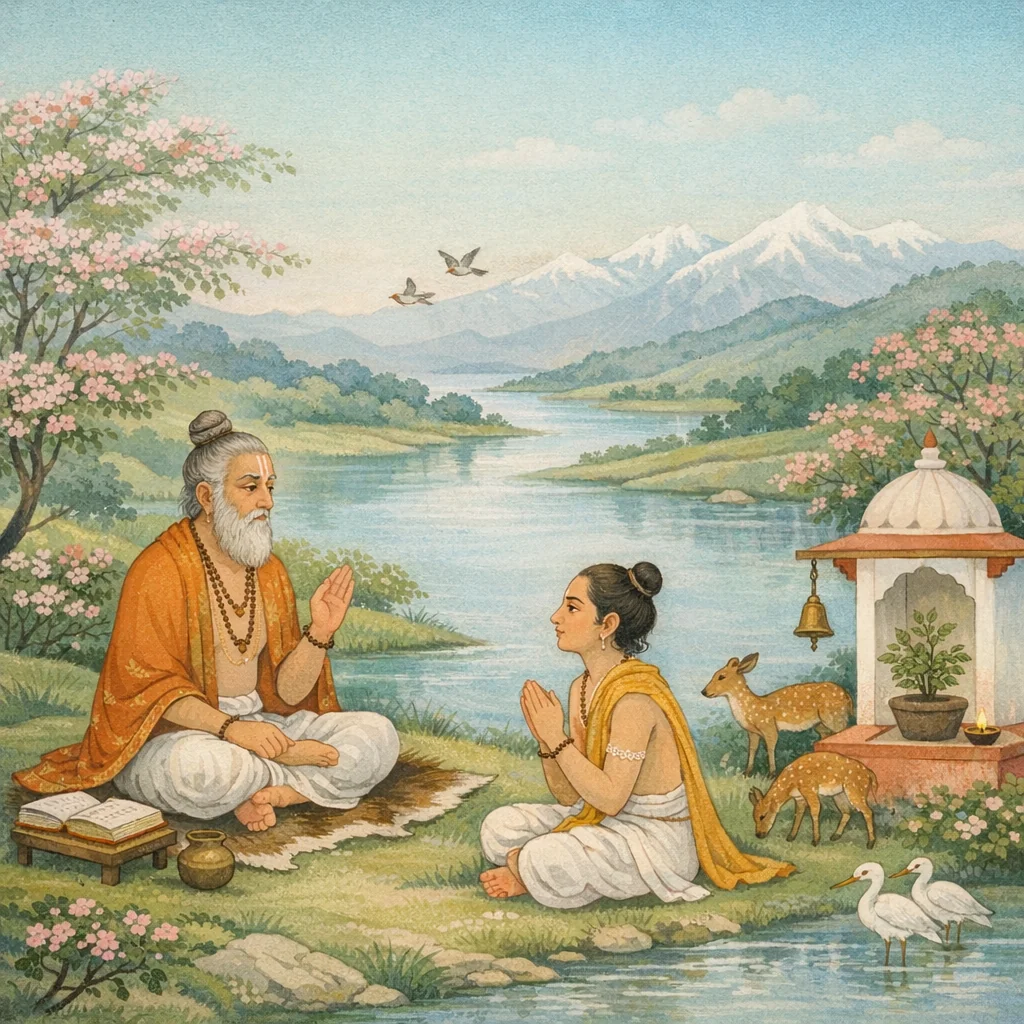
The chapter opens with Jaimini asking Vyāsa to recount the supreme glory of the Gaṅgā. A hymn-like praise follows, declaring the senses and limbs “fruitful” when devoted to her—walking to her bank, hearing her waves, tasting her waters, and wearing tilaka made from her sacred clay. It then sets forth the discipline of pilgrimage: austerity and self-restraint, truthful speech, avoidance of quarrel and indulgence, and constant recitation of Gaṅgā’s names. Detailed procedures are given for approaching, saluting, touching, bathing, collecting clay, applying tilaka, and performing tarpaṇa and śrāddha, along with worship of Gaṅgā and Viṣṇu and a night vigil. In the latter half, a karmic exemplum is embedded: King Satyadharma and Queen Vijayā suffer hell and animal rebirth for violence against a supplicant deer, yet through Gaṅgā-centered pilgrimage and death upon the route they attain ascent and liberation, revealing Gaṅgā’s salvific power and the primacy of ahiṃsā.
Shlokas
No shlokas available for this adhyaya yet.