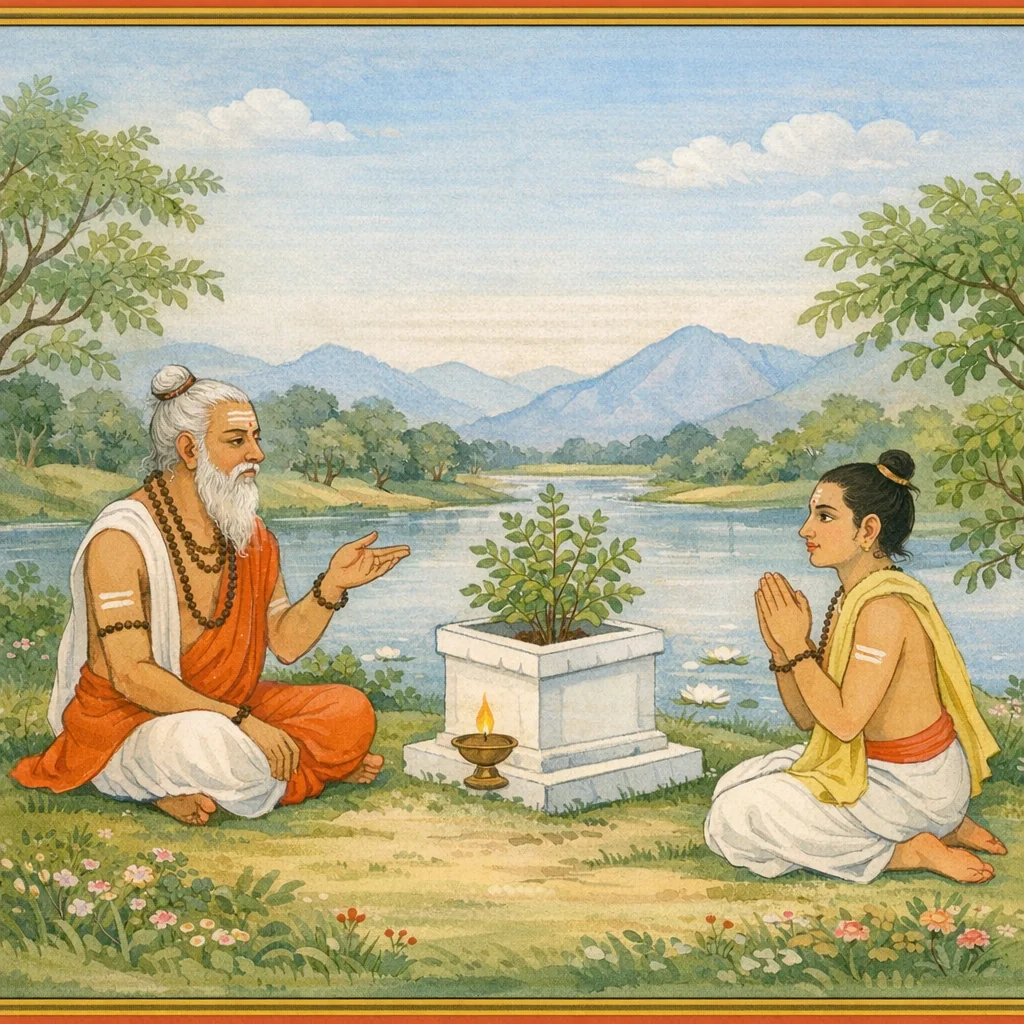
Adhyaya 8
The Glory of the Gaṅgā: Merit, Purity Laws, and Liberation at Death
This chapter extols the salvific might of the sacred Gaṅgā and lays down a strict code of conduct upon her banks. Approaching her with devotion and using Gaṅgā-water is declared to yield immense merit, equal to great sacrifices, while negligence toward pilgrims or obstructing devotees is said to bring hellish retribution. The purity injunctions are then sharpened: defiling the riverbank or waters with excreta, leftovers, mucus, and the like is portrayed as nearly inexpiable, and sins committed at Gaṅgā are said to be unremovable elsewhere. In the latter half, an embedded exemplum involving Indra, Śacī, and Padmagandhā/Krauñcī demonstrates the extraordinary fruit of dying in Gaṅgā—especially when one’s bones remain immersed—granting prolonged heavenly honor and nearness to Viṣṇu’s realm. The chapter culminates in end-of-life soteriology: uttering “Gaṅgā” or recalling her sacred account at the moment of death bestows liberation (mokṣa) or vast heavenly reward.
Shlokas
No shlokas available for this adhyaya yet.