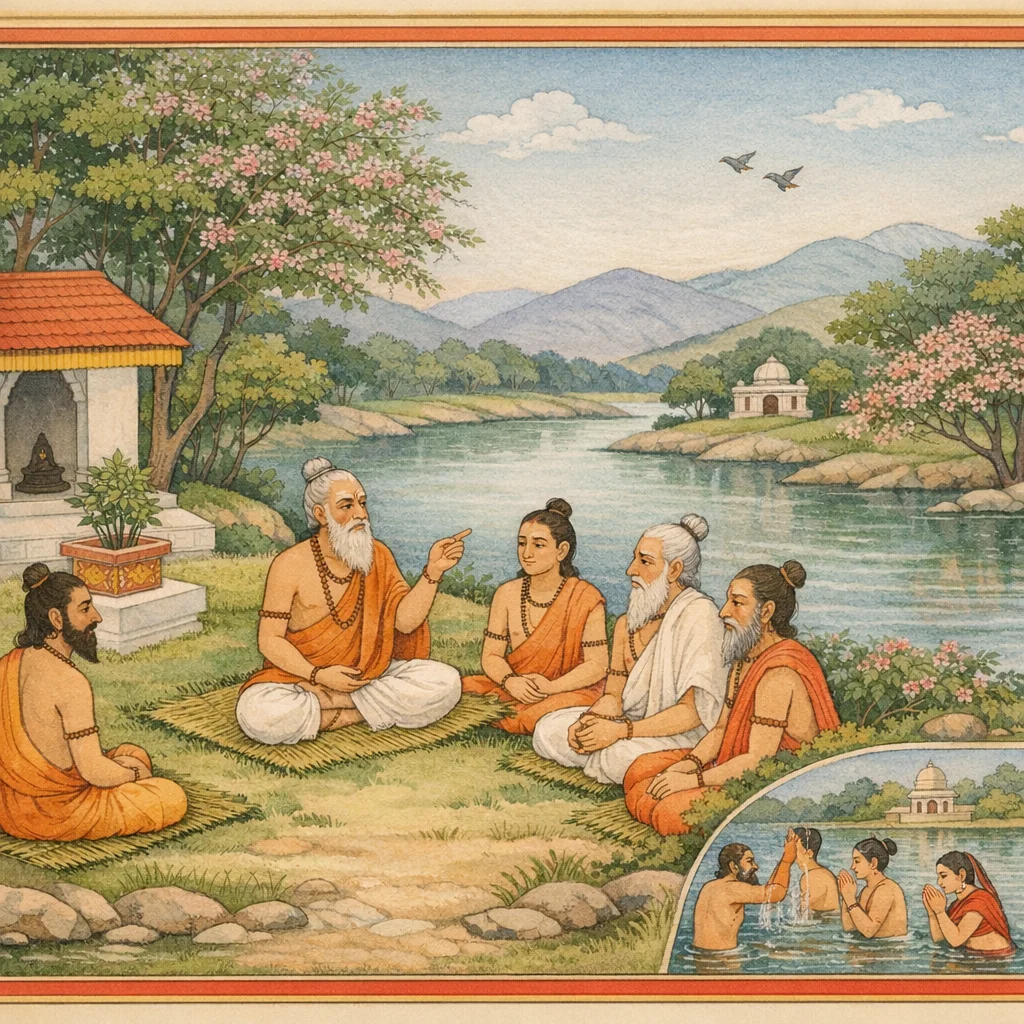
Adhyaya 24
The Glory of Tulasī (Holy Basil) and Dhātrī/Āmalakī (Indian Gooseberry)
After hearing the merit of Ekādaśī, Jaimini asks Vyāsa to describe the greatness of Tulasī. Vyāsa teaches that Tulasī is a divine abode in which Viṣṇu, the entire pantheon, and the tīrthas themselves reside; thus, to serve her is to draw near to the sacred. The chapter lists acts of devotion—watering, providing shade, offering a lamp at twilight, sweeping and cleansing the base, planting and protecting the plant—and the fruits they yield, from the destruction of sin and worldly prosperity to mokṣa. It also gives mantras and ritual rules for plucking leaves without causing “pain” to Viṣṇu, stressing non-injury and reverence. The discourse then places Tulasī alongside Dhātrī/Āmalakī, declaring both essential to ritual efficacy: deeds performed where they are present become imperishable, while places without them are deemed impure and spiritually barren.
Shlokas
No shlokas available for this adhyaya yet.