Adhyaya 1
Invocation, the Naimiṣāraṇya Frame, Kali-yuga’s Problem, and the Glory of Hari-kathā
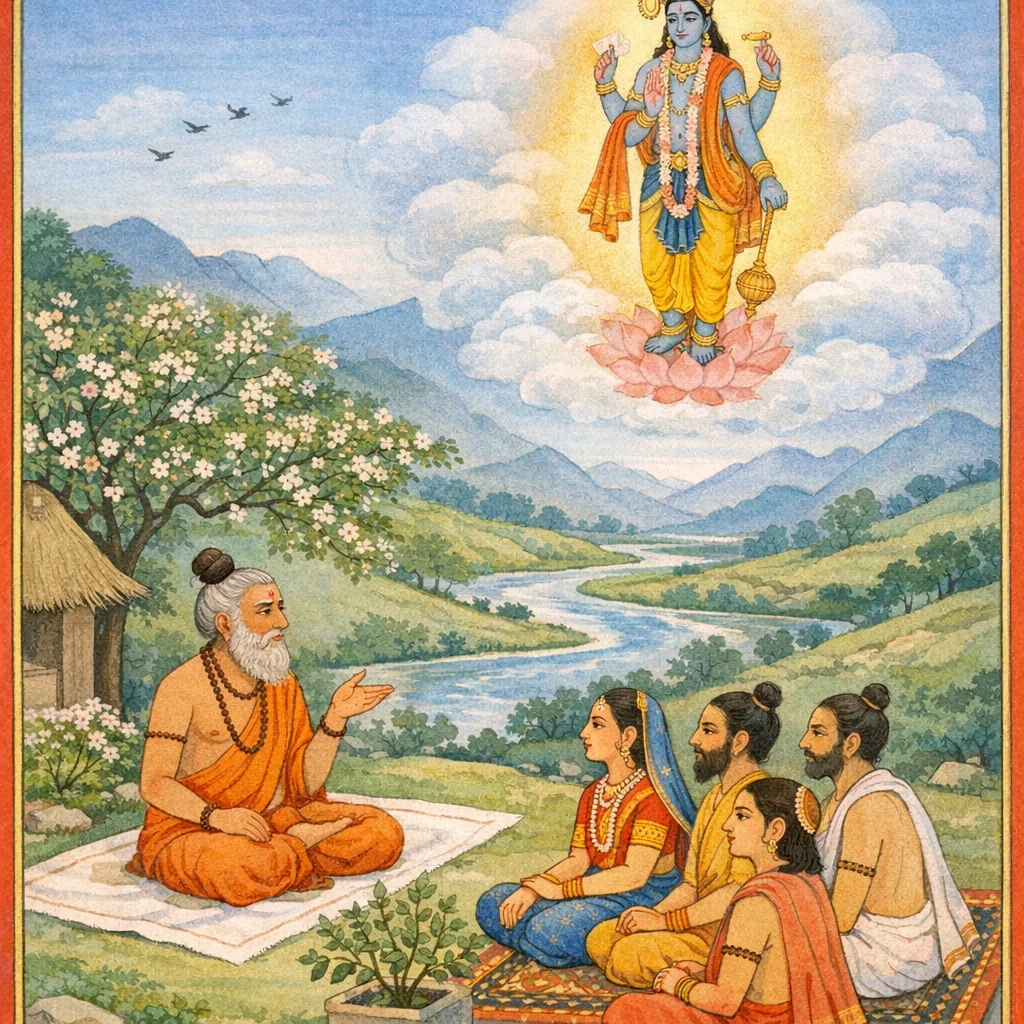
The chapter begins with benedictory invocations praising Viṣṇu (including Varāha) and Vyāsa together with Lakṣmī. It then sets the scene at the sages’ assembly in Naimiṣāraṇya, where they honor Sūta, Vyāsa’s disciple, and request sacred narration. Śaunaka asks how devotion (bhakti) and true welfare can arise in Kali-yuga amid moral decline, short life, poverty, and reduced capacity to gain merit. The text stresses the ethical weight of teaching—one who instructs shares in another’s merit or sin—exalting compassionate teachers as Keśava-like and censuring those who hinder or mock Vaiṣṇava storytelling. Sūta then introduces an inner chain of authority: he will recount what Vyāsa told Jaimini about why liberation becomes attainable in Kali-yuga. Hari-kathā is proclaimed the sin-destroying essence of kriyā-yoga and a direct means toward mokṣa.
Shlokas
No shlokas available for this adhyaya yet.