Adhyaya 11
The Lakṣmī–Nārāyaṇa Vow Narrative (Puṣya Thursday Observance and the Ethics of Fortune)
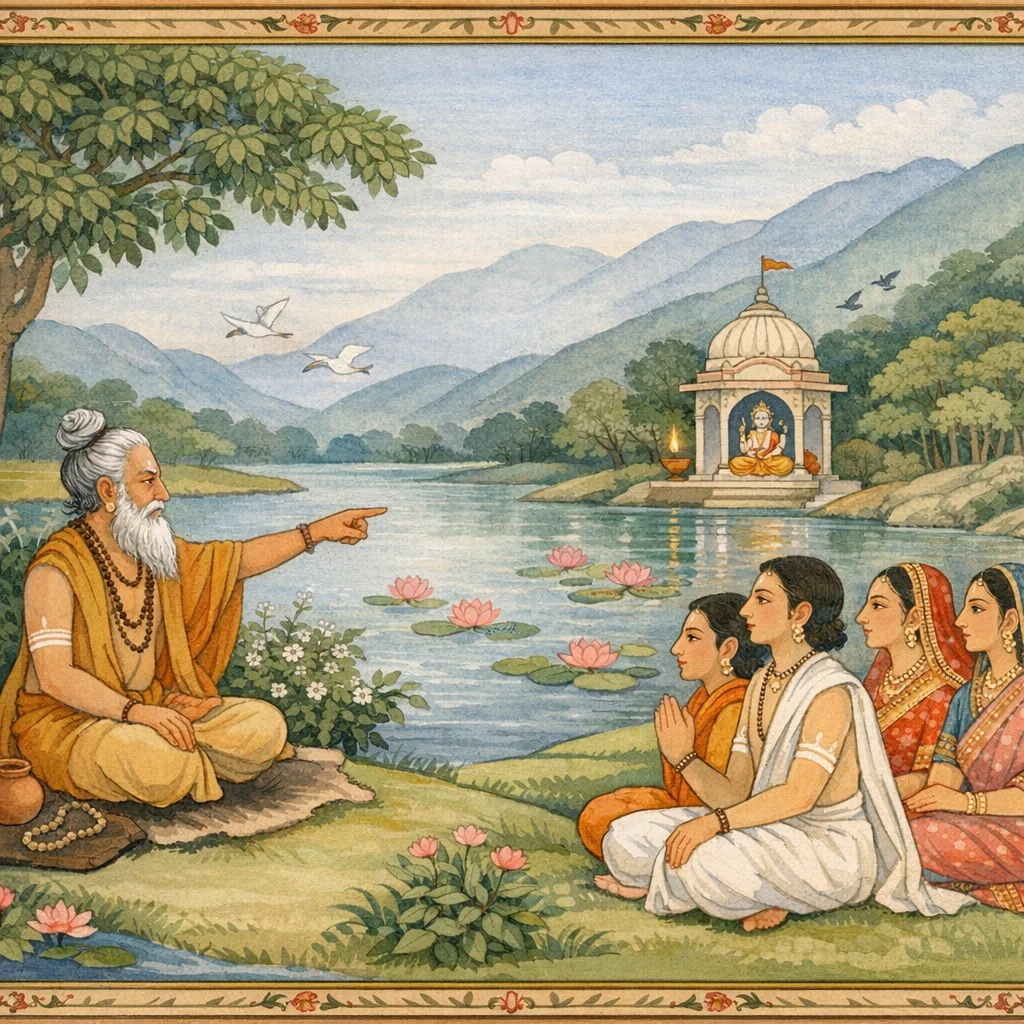
Prompted by questions about what makes a woman fortunate or ruined, Sūta relates a rare sacred episode set in the Dvāpara age: King Bhadraśravā of Saurāṣṭra and Queen Suraticandrikā. Lakṣmī (Kamalā), appearing as an aged brāhmaṇī and associated with Nītidā (right conduct personified), enters the royal household to turn domestic behavior back toward dharma. Conflict arises when the queen insults and strikes the disguised goddess, who departs in sorrow. The maiden Śyāmābālā learns the vrata-kathā and undertakes the Lakṣmī–Nārāyaṇa vow—especially on Puṣya day falling on a Thursday in Mārgaśīrṣa—with prescribed offerings and feeding of brāhmaṇas. Lakṣmī’s divine messengers protect devotees from Yama’s agents; prosperity returns to the worthy, while arrogance and contempt for ritual bring loss. The chapter ends with a strong phala-śruti: hearing the vow’s narrative is required for its fruit to fully mature.
Shlokas
Verse 1
शौनक उवाच । इदानीं श्रोतुमिच्छामि कथयस्व यथार्थतः । हरिस्वरूपिणा साक्षाद्वेदव्यासेन शासित
Śaunaka said: “Now I wish to hear—tell it truthfully as it really is—(that which was) taught by Vedavyāsa himself, who is directly of the very form of Hari.”
Verse 2
निरहंकार हे सूत लोकानुग्रहकारक । केन स्यात्सुभगा नारी पापिनी च सुदुर्भगा
O Sūta, free from ego and a benefactor to the world—by what does a woman become fortunate, and by what does a sinful woman become utterly unfortunate?
Verse 3
पतिप्रियांग केन स्याद्रूपिता चक्षुषोः सुधा । केन वा जायते लक्ष्मीस्तन्मे ब्रूहि तपोधन
O ascetic rich in austerity, tell me: by what does a beloved wife become truly dear, and by what is nectar made manifest to the eyes? And by what, indeed, does Lakṣmī (prosperity) arise?
Verse 4
सूत उवाच । यदि पुण्यमिदं विप्र वृत्तं परमदुर्लभम् । शृणुष्व भोः समासेन कथयामि विधानतः
Sūta said: “This sacred account, O brāhmaṇa, is exceedingly rare. Listen, sir—briefly I shall relate it to you, in due order and according to proper procedure.”
Verse 5
आसीद्भद्रश्रवा राजा युगे द्वापरसंज्ञके । सौराष्ट्रदेशवासी च वेदवेदांगपारगः
In the age known as Dvāpara, there lived a king named Bhadraśravā, a resident of the Saurāṣṭra region, well-versed in the Vedas and their auxiliary sciences (Vedāṅgas).
Verse 6
भार्या तस्य च संजाता नाम्ना सुरतिचंद्रिका । तस्यां बभूवुः श्रीराज्ञः सप्तपुत्रा मनोरमाः
His wife was named Suraticandrikā; and through her, that illustrious king had seven charming sons.
Verse 7
ततोऽभिजाता दुहिता सुंदरी सत्यवादिनी । श्यामबाला च विप्रेंद्र नाम्ना प्रीतिकरी पितुः
Then a daughter was born—beautiful and truthful in speech. O best of Brahmins, she was a dark-hued young maiden, and by name she was Prītikarī, a delight to her father.
Verse 8
अथैकदा श्यामबाला सुवर्णसिकतासु च । गूढैर्मनोहरै रत्नैः सखिभिः क्रीडितुं मुदा
Then once, the dark-hued young maiden, upon sands like gold, joyfully went to play with her companions, amid hidden and captivating gems.
Verse 9
जगाम नीपवृक्षस्य तलं परमदुर्लभम् । एतस्मिन्नंतरे विप्र लक्ष्मीः संसारतारिणी
He went to the exceedingly hard-to-reach base of the nīpa tree. Meanwhile, O brāhmaṇa, Lakṣmī—the savior who bears beings across the ocean of worldly existence—appeared.
Verse 10
लोकानां नीतिदा साथ समायाता स्वयं पुरः । धृत्वा च ब्राह्मणीरूपं पलितांगी च भूसुर
Then Nītidā, the instructress of righteous conduct for the worlds, came of her own accord to the fore; assuming the form of a brāhmaṇa woman, her limbs grey with age, she addressed the brāhmaṇa.
Verse 11
इति श्रीपाद्मे महापुराणे ब्रह्मखंडे सूतशौनकसंवादे एकादशोऽध्यायः
Thus ends the Eleventh Chapter in the Brahma-khaṇḍa of the glorious Padma Mahāpurāṇa, in the dialogue between Sūta and Śaunaka.
Verse 12
इति संचिंत्य मनसा गता राजनिकेतनम् । सुवर्णभित्तिभिर्युक्तं पताकाभिरलंकृतम्
Thinking thus within her mind, she went to the king’s residence, fitted with golden walls and adorned with banners.
Verse 13
सिंहद्वारमतिक्रम्य प्राह दौवारिकीं ततः । द्वारं जहि हि भो द्वारि नियुक्ते शुभलक्षणे
Having passed beyond the Lion Gate, he then said to the female gatekeeper: “Open the door, O gatekeeper—appointed to your post and bearing auspicious marks.”
Verse 14
यामि वेगेन पश्यामि राज्ञीं सुरतिचंद्रिकाम् । तच्छ्रुत्वा वचनं तस्या रत्नदंडकरा च सा । कोकिलावाक्यवन्मुक्तं परमं हर्षमाययौ
“I go with speed; I shall behold Queen Suraticandrikā.” Hearing her words, the lady—her hand holding a jeweled staff—was filled with supreme joy, as though she had heard the sweet utterance of the cuckoo.
Verse 15
द्वारनियुक्तोवाच । किं नाम वहसे वृद्धे कः पतिस्तावकः पुनः । आगतासि कथं किं ते कार्य्यं राज्ञ्याश्च दर्शने । कस्मात्किं ब्रूहि विप्रे त्वं श्रोतुं कौतुहलं हि मे
The gate-attendant said: “O aged lady, what is it that you carry? And who, moreover, is your husband? How have you come here, and for what purpose do you seek an audience with the queen? Tell me—why and for what reason have you come? O brāhmaṇa, speak; for I am eager to hear.”
Verse 16
वृद्धोवाच । शृणु पोष्ये महाराज पत्न्या दंडकरे यदा । श्रोतुं कौतूहलं तेऽस्ति मदागमनकारणम्
The elder said: “Listen, O cherished Mahārāja. When your wife was in Daṇḍakāraṇya, you wished to hear the reason for my coming.”
Verse 17
प्रसिद्धा कमला नाम्ना चाहं प्राणेश्वरो मम । भुवनेश इति ख्यातो नाम्ना द्वारवतीपुरी
“I am renowned by the name Kamalā, and my beloved lord is Prāṇeśvara. The city of Dvāravatī is famed in the world by the name Bhuvaneśa.”
Verse 18
तस्यां वै वर्त्तते पोष्ये मम प्राणेश्वरस्ततः । आगताहं रत्नवेत्रकरे शृणु सकौतुकम्
There, in that beloved place, dwells my Prāṇeśvara, dearer to me than life itself. From there I have come, holding a jeweled staff in my hand—listen with keen interest to what occurred.
Verse 19
ममागमनकार्यं हि वच्मीदानीं तवाग्रतः । पुरासीद्वैश्यकुलजा राज्ञी तव च दुःखिनी
Now, in your presence, I shall speak the purpose of my coming: formerly there was a sorrowful queen of yours, born in a Vaiśya family.
Verse 20
एकस्मिन्दिवसे पोष्ये पतिना कलहः कृतः । तया नार्या च दुःखिन्या ततो वै भर्तृपीडिता
On one day, in the month of Poṣya, her husband began a quarrel. That woman, sorrowful and truly afflicted, was then oppressed by her husband.
Verse 21
बहिर्भूय द्रुतं गेहाद्रुदंती च पुनः पुनः । तस्याश्च रोदनं श्रुत्वा चागताहं समीपतः
Rushing out from the house again and again, she wept repeatedly. Hearing her crying, I came near to her.
Verse 22
अपृच्छं सर्ववृत्तांतं कथितो वै यथार्थतः । तया ततो व्रतवरमुपदेशं ददाम्यहम्
I asked about the entire account, and she related it truthfully as it happened. Therefore, based on what she said, I shall now give instruction on the excellent vow.
Verse 23
ममोपदेशतः सा वै चक्रे व्रतवरं मुदा । तस्य प्रसादाद्भो द्वाःस्थे संजाता सुखिता च सा
Following my instruction, she joyfully undertook that excellent vow. By its grace, O doorkeeper, she became contented and happy.
Verse 24
कदाचिद्वैश्यकुलजा पत्या मृत्योर्वशं गता । समानेतुं ततस्तौ तु विहिताखिलघातकौ
Once, a woman born in a Vaiśya family, together with her husband, fell under the sway of Death. Then those two, intent on bringing her (or him) back, committed every kind of killing.
Verse 25
किंकरान्प्रेषयामास चंडाद्यान्धर्मराट्प्रभुः । यमाज्ञया समायाता यमदूता भयंकराः
The Lord Dharma-rāja sent forth his attendants—Caṇḍa and the others. By Yama’s command, the fearsome messengers of Yama arrived.
Verse 26
बद्ध्वा तौ चर्मपाशेन लोहमुद्गरपाणयः । उद्यमं चक्रिरे गंतुं यमस्य शरणं प्रति
Binding those two with leather ropes, the bearers of iron mallets made ready to take them toward Yama’s abode.
Verse 27
अत्रांतरे च लक्ष्म्यास्ते दूता विष्णुपरायणाः । समानेतुं समायाताः शंखचक्रगदाधराः
Just then, Lakṣmī’s messengers—devoted to Viṣṇu—arrived to escort him (or her). They bore the conch, discus, and mace.
Verse 28
दृष्ट्वा तथाविधांस्तांश्च यमदूताः पलायिताः । लक्ष्मीदूता महात्मानः स्वप्रकाशादयस्तथा
Seeing those divine attendants of such a nature, Yama’s messengers fled. Then the great-souled messengers of Lakṣmī—Svaprakāśa and the others—stood forth, shining with their own radiance.
Verse 29
पाशं छित्त्वा समारोप्य राजहंसयुते रथे । जग्मुर्लक्ष्मीपुरं सर्वे सहसाकाशवर्त्मना
Cutting the noose of bondage and mounting the chariot yoked with royal swans, they all set out at once for Lakṣmīpura, traveling by the path through the sky.
Verse 30
यावद्वारं व्रतवरं कृत्वा वैश्या च सा तदा । तावत्कल्पसहस्राणि तस्थतुः कमलापुरे
As long as that Vaiśyā woman continued to perform the excellent vow, for that very duration they remained in Kamalāpura—indeed, for thousands of kalpas.
Verse 31
पुण्यशेषस्य भोगार्थं जातौ राजान्वयेऽधुना । व्रतं च विस्मृतौ द्वाःस्थे राजसंपत्तिगर्वितौ । तस्माच्च तव तस्यापि चोपदेशार्थमागता
To enjoy the remaining fruit of past merit, we have now been born in a royal lineage. Yet, as doorkeepers, we have forgotten our vowed observance, intoxicated with the prosperity of kingship. Therefore we have come—to instruct both you and him.
Verse 32
द्वाःस्थोवाच । केनैव तु विधानेन वृद्धे व्रतवरं कृतम् । कस्मिन्मासे व्रतं श्रेष्ठं देवता का च पूज्यते
The gatekeeper said: “By what procedure, O venerable one, is this excellent vow to be undertaken? In which month is this vow considered best, and which deity is to be worshipped?”
Verse 33
एतन्मे पृच्छतो मातर्यथावद्वक्तुमर्हसि । कमलोवाच । कार्त्तिके च व्यतिक्रांते मार्गशीर्षे समागते । तस्मिन्मासे च भो पोष्ये वासरे गुरुसंज्ञके
O Mother, as I ask you this, you ought to answer me properly. Kamalā said: When Kārttika has passed and Mārgaśīrṣa has arrived—then, in that month, on the day called Puṣya, on the weekday known as Guru (Thursday)…
Verse 34
ततः पूर्वाह्णसमये सकलैर्व्रतिभिर्वृता । नारायणेन सहितां लक्ष्मीं संपूजयेत्ततः
Then, in the forenoon, surrounded by all devotees who keep their vows, one should duly worship Lakṣmī together with Nārāyaṇa.
Verse 35
मिष्टैः पायसयुक्तैश्च भुक्तैश्च खंडमिश्रितैः । लक्ष्मीं संतोषयेत्प्रेष्ये ततः संप्रार्थयेदिदम्
O beloved, with sweet offerings—pāyasa (rice-milk) and foods mixed with sugar—one should please Lakṣmī; then one should pray to her in this manner.
Verse 36
त्रैलोक्यपूजिते देवि कमले विष्णुवल्लभे । यथा त्वमचला कृष्णे तथा भव मयि स्थिता
O Goddess worshipped in the three worlds—O Kamalā, lotus-born, beloved of Viṣṇu—just as you remain unwavering with Kṛṣṇa, so too abide steadfastly within me.
Verse 37
ईश्वरी कमले देवि शरणं च भवानघे । नानोपहारद्रव्यैश्च लक्ष्मीमाज्ञाप्य तोषयेत्
O sovereign Goddess—O Kamalā, O Devī—O sinless one, you are indeed my refuge. By respectfully invoking Lakṣmī, one should please her with many kinds of offerings and ritual articles.
Verse 38
शास्त्रैश्च पूजयेद्देवीं महोत्सवसमन्विताम् । ततो नैवेद्यशेषांश्च दत्वा ब्राह्मणसत्तमम्
One should worship the Goddess in accordance with the śāstras, accompanied by a grand festival; thereafter, having given the remaining portions of the naivedya to the best of brāhmaṇas.
Verse 39
आत्मानं स्वपतिं पुत्रान्पोष्येऽन्यानपि सेवकान् । द्वितीये तु गुरोर्वारे विशेषं शृणु सुंदरि
“I shall maintain myself, my husband, and my sons, and I shall also support other dependents and servants. But listen, O fair one, to the special observance for the second day—Thursday, the day of the Guru.”
Verse 40
चित्रधूलीप्रशस्तैश्च भ्राष्ट्रैर्गोधूमनिर्मितैः । तोषयेत्कमलादेव्याः कुर्य्याद्वै भक्तिभावतः
With choice roasted offerings made from wheat—commended as “citradhūlī”—one should please Goddess Kamalā (Lakṣmī), performing the rite with a spirit of devotion.
Verse 41
तृतीये खंडसंयुक्तं दध्योदननिवेदनम् । शामाक शालि कासारैश्चतुर्थे पूजयेन्मुदा
On the third day, one should joyfully offer curd-rice mixed with pieces. On the fourth, one should worship with śyāmāka grain, śāli rice, and kāsāra preparations, with delight.
Verse 42
लक्ष्मीदेवीं प्रयत्नेन रत्नदंडकरे ततः । लक्ष्मीदेवी प्रीतये तु ब्राह्मणान्पूजयेद्धनैः
Then, taking a jeweled staff in hand, one should diligently worship Goddess Lakṣmī; and for the pleasure of Lakṣmī-devī, one should honor brāhmaṇas with wealth.
Verse 43
वस्त्रालंकारभोज्यैश्च फलैर्नानाविधैस्तथा । पोष्योवाच । अत्रैव तिष्ठ भो वृद्धे राज्ञीं सुरतिचंद्रिकाम्
“With garments, ornaments, foods, and various kinds of fruits as well.” Puṣya said: “Stay right here, O old lady, and attend upon the queen Suratichandrikā.”
Verse 44
विज्ञाप्य त्वां नयिष्यामि मा क्रोधं कुरु सत्तमे । इत्युक्त्वा सा तु चार्वंगी गता राज्ञीसमीपतः
“After informing you, I shall lead you there; do not be angry, O best of men.” Having said this, that fair-limbed woman went near the queen.
Verse 45
शिरस्यंजलिमाधाय पोष्या ब्रह्मन्समूलतः । आरभ्य सांगपर्यंतं यदूचे कमलालया
Placing his folded hands upon his head, Puṣyā reverently addressed Brahmā from the very beginning, recounting in full—together with all its details—what Kamalālayā (Lakṣmī, she who dwells in the lotus) had spoken.
Verse 46
तत्सर्वं कथयामास राज्ञीं सुरतिचंद्रिकाम् । द्वारपालीवचः श्रुत्वा राज्ञी सुरतिचंद्रिका
She related all of that to Queen Suraticandrikā. Hearing the words of the female gatekeeper, Queen Suraticandrikā…
Verse 47
जगाम ब्राह्मणीपार्श्वं सगर्वा प्राह सुंदर । राज्ञ्युवाच । वृद्धे ब्राह्मणि किं वृत्तं चोपदेशार्थमागता
Then the queen, proud of herself, went to the brāhmaṇī’s side and spoke: “O fair one, O aged brāhmaṇī—what has happened, and have you come here to offer instruction?”
Verse 48
कथयस्व चिरं मह्यं भयं त्यक्त्वा यथासुखम् । ब्राह्मण्युवाच । तवानीतिमहं दृष्ट्वा गंतुमिच्छामि चंचला
“Tell me at length—casting aside fear—comfortably and at ease.” The brāhmaṇī said: “Seeing your improper conduct, I, being restless, wish to go away.”
Verse 49
कथयिष्यामि किं दुष्टे व्रतं परमदुर्लभम् । इंदिरावासरे चाद्य चांडालेन करोषि यत्
“What shall I tell you, O wicked one, of that exceedingly rare vow—what you are now undertaking on Indirā’s weekday, in the company of a caṇḍāla?”
Verse 50
तद्दृष्टं मयि का दुष्टे तद्गेहे गर्वितेऽधुना । तच्छ्रुत्वा ब्राह्मणीवाक्यं क्रोधसंरक्तलोचना
“What have you seen in me, you wicked woman—now grown arrogant in that house?” Hearing the brāhmaṇī’s words, her eyes became reddened with anger.
Verse 51
जरंतीं ब्राह्मणीं चैव प्रहारं च चकार सा । ततः सा कमला वृद्धा क्रंदमाना पलायिता
And she struck that aged brāhmaṇa woman. Then the old woman Kamalā, crying out, fled away.
Verse 52
क्रीडमाना ततः श्यामा ब्राह्मणीक्रन्दनध्वनिम् । आगतास्याः समीपं तु श्रुत्वा बाला तपोधना
Then Śyāmā, while playing, heard the sound of a brāhmaṇa woman’s weeping; and the young girl—rich in ascetic merit—came near to her at once.
Verse 53
श्यामाबालोवाच । वृद्धे व्यथेदृशी केन दत्ता तुभ्यं वदस्व मे । तस्या वचनमाकर्ण्य शोकगद्गदया गिरा
Śyāmābāla said: “O venerable lady, who has caused you such suffering? Tell me.” Hearing her words, she replied in a voice choked with grief.
Verse 54
कमला कथितं सर्वं वृत्तांतं द्विजसत्तम । श्यामाबाला ततः श्रुत्वा व्रतं परमदुर्ल्लभम्
O best of the twice-born, Kamalā recounted the entire account. Then Śyāmābālā, having heard of that exceedingly rare vow, was moved to undertake it.
Verse 55
शास्त्रोक्तविधिना चक्रे सश्रद्धं च सभक्तितः । त्रिवारे परिपूर्णे तु तुर्यवारे समागते
He performed the rite according to the procedure taught in the scriptures, with faith and devotion. When three cycles were completed and the fourth occasion arrived,
Verse 56
विवाहकर्मसंसिद्धं द्विजलक्ष्मीप्रसादतः । श्रीसिद्धेश्वरदेवस्य नृपतेर्भूपतेजसः
The marriage rite was successfully accomplished through the grace of the prosperity of the twice-born, and through the splendor of the king—under the glory of Lord Siddheśvara.
Verse 57
मालाधरो नाम सुतो गृहीत्वा तां गृहं गतः । अथ तस्यां गतायां तु ब्रह्मन्शृणुष्व कौतुकम्
A son named Mālādhara took her with him and went home. And when she had entered his house, O Brāhmaṇa, listen to the curious incident that occurred.
Verse 58
राज्ञीगृहे च सर्वाणि स्थितानि सुबहूनि च । द्रव्याणि केन नीतानि न ज्ञातान्यपि भूसुर
And in the queen’s residence many valuables were kept; yet who carried off those goods was not known, O Brāhmaṇa.
Verse 59
निर्वित्ता बुद्धिहीना सा चान्नवस्त्रविवर्जिता । उपविष्टा च केनापि गंतुं च दुहितुर्गृहम्
Penniless and witless, bereft of food and clothing, she sat there—somehow—and then set out for her daughter’s house.
Verse 60
प्रेषयामास भर्त्तारं किंचित्प्रार्थनहेतवे । तस्य मालाधरस्यापि ग्रामे च सरसीतटे
She sent her husband with a small request; and he went to the village of that Mālādharā, on the bank of the lake.
Verse 61
कालेन कियता विप्र प्रविवेश च कष्टतः । तस्माज्जलं समानेतुं तस्या दास्यः समागताः । तं दृष्ट्वा दुःखिनां श्रेष्ठं पप्रच्छुः सानुकंपिताः
After some time, O brāhmaṇa, he entered—though with great difficulty. Then her maidservants came to fetch water; seeing him, foremost among the afflicted, they questioned him with compassion.
Verse 62
दास्य ऊचुः । कस्त्वं कुतः समायातो मांसरक्तविवर्ज्जितः । रूक्षांगो रूक्षकेशश्च तत्सर्वं कथयस्व नः
The maidservants said: “Who are you, and from where have you come—devoid of flesh and blood? Your limbs are gaunt and your hair is dry. Tell us all of this.”
Verse 63
दरिद्र उवाच । श्यामाबालापिता चाहं सौराष्ट्रनगरागतः । कथयध्वं च भो दास्यः श्यामाबालासमीपतः
Daridra said: “I am Śyāmābālā’s father, and I have come to the city of Saurāṣṭra. Tell me, O maidservants—where is Śyāmābālā nearby?”
Verse 64
तच्छ्रुत्वा वचनं तस्य कौतूहलसमन्विताः । परस्परमुखाः सर्वा जहसुः स्वपुरं गताः
Hearing his words, all of them—filled with curiosity—looked into one another’s faces and laughed, then returned to their own city.
Verse 65
श्यामाबाला च कथितं सर्वं वृत्तं च भो द्विज । श्रुत्वैतद्वचनं तासां प्रेषयामास सेवकान्
And Śyāmābālā recounted the entire account, O twice-born one. Having heard their words, he then dispatched servants.
Verse 66
पुष्पतैलं दिव्यवस्त्रं चंदनं पर्णवीटिकाम् । घोटकं च तथा दत्वा पितरं प्रति सुंदरी
Thus, O beautiful one, she offered to her father flower-scented oil, divine garments, sandalwood, a leaf-wrapped betel quid, and also a horse…
Verse 67
गत्वाथ सर्वे ते भृत्याः कृत्वा सुवेषमुत्तमम् । श्यामाबालागृहं निन्युर्देवराजगृहोपमम्
Then all those attendants went, arranged the finest attire, and led (the person) to Śyāmābālā’s house—splendid like the palace of the king of the gods.
Verse 68
श्यामाबाला ततश्चैव पितरं दुखिनां वरम् । श्याल्यन्नं सघृतं चैव भोजयामास यत्नतः
Then Śyāmābālā, with great care, fed her father—foremost among the afflicted—giving him śyālī-rice together with ghee.
Verse 69
तुर्येषु समतीतेषु दिवसेषु तपोधन । प्रेषयामास तं दत्वा गुप्तपात्रस्थितं धनम्
When four days had passed, O treasure of austerity, he sent him away after giving him the wealth that had been kept concealed in a secure vessel.
Verse 70
ततः प्रविश्य स्वगृहे धनं पात्रान्तरस्थितम् । ददर्शांगारनिचयं रुरोद भृशदुःखितः
Then, entering his own house, he looked for the wealth that had been kept inside another vessel, but he saw only a heap of embers; overwhelmed with sorrow, he wept bitterly.
Verse 71
दुहितुः सदनं यातुं निःससार गृहागतः । तत्रैव सरसीकूले प्रविवेश च दुःखिनी
Having arrived home, she went out intending to go to her daughter’s house; and there, on the bank of that very lake, the sorrowful woman entered that place.
Verse 72
तथैनां च समानीतां यथा स्याः प्राणवल्लभाम् । तथैव पूजयामास मातृस्नेहात्पतिव्रता
And having brought her in, she honored her in such a way that she might become as dear as life itself—thus did that devoted wife worship her, moved by motherly affection.
Verse 73
एतस्मिन्समये विप्र लक्ष्मीवासरमुत्तमम् । श्यामाबाला कारयितुं मनश्चक्रे च मातरम्
At that time, O brāhmaṇa, it was the excellent day of Lakṣmī. The dark-complexioned young maiden resolved in her mind to have her mother perform the sacred observance.
Verse 74
तस्या माता दरिद्राणि भुक्त्वा वैकांतिकेपि च । शावकानां तु चोच्छिष्टं लक्ष्मीकोपसमन्विता
Her mother, seized by Lakṣmī’s wrath, ate the food of the poor; and even in the sacred Vaikāṃtika observance, she ate the leftovers of the young ones.
Verse 75
इंदिरायास्तृतीयानि वासराणि गतान्यपि । चतुर्थवासरे तां तत्कारयामास सा दृढम्
Even after Indirā’s third days had passed, on the fourth day she firmly made her perform that act (rite).
Verse 76
आगता नगरं सा वै राज्ञी सुरतिचंद्रिका । दृष्ट्वा गृहं तथा दिव्यमिंदिरायाः प्रसादतः
Queen Suraticandrikā indeed came to the city, and on seeing that splendid, divine residence—granted through Indirā’s (Lakṣmī’s) favor—she was filled with wonder.
Verse 77
श्यामाबाला च विप्रेंद्र कदाचित्समये पुनः । मातुर्गृहं गता चाथ ऐश्वर्यस्य दिदृक्षया
O best of brāhmaṇas, Śyāmābālā once again, at a certain time, went to her mother’s house, wishing to behold its prosperity.
Verse 78
श्यामाबालां ततो दूराद्दृष्ट्वा संकुपिता च सा । न पश्यामि मुखं तस्या इत्युक्त्वालक्षिता स्थिता
Then, seeing Śyāmābālā from afar, she grew alarmed and said, “I do not see her face,” and remained standing there, unnoticed.
Verse 79
गत्वा गृहांतरालं च गृहीत्वा सैंधवं च सा । आगता स्वगृहं किंचित्तूष्णीं लक्ष्मीसमाश्रितम्
Then she went into the inner part of the house, took some rock-salt, and returned to her own home—quietly, having sought the shelter of Lakṣmī’s auspicious fortune.
Verse 80
राजा स्वामी च पप्रच्छ तां साध्वीं पतिदेवताम् । किमानीतं त्वया कांते कथयस्व ममाग्रतः
Then the king, her lord, questioned that virtuous woman who revered her husband as her very deity: “Beloved, what have you brought? Tell me here, in my presence.”
Verse 81
कांतोवाच । राज्यसारं समानीतं दर्शयिष्यामि भोजने । इत्युक्त्वा सा तदा पाकं कृत्वा च लवणं विना
The beloved said: “I have brought the very essence of the kingdom; I shall reveal it at the meal.” Having spoken thus, she prepared the food—yet without salt.
Verse 82
अन्नादिकं ततो दत्वा मालाधराय भूभुजे । ततो मालाधरो राजा व्यंजनं लवणवर्जितम्
Then, after serving Mālādhara, the king, with food and other provisions, he ate. Thereupon King Mālādhara partook of a side-dish that was devoid of salt.
Verse 83
भुक्त्वा वैगुण्यतां प्राप्तो राज्यसारं ददौ च सा । तदा हृष्टमना राजा भोजनं कृतवान्द्विज
Having eaten and thereby incurred a defect (a ritual impropriety), she gave away the essence of her kingdom. Then the king, his mind delighted, took his meal, O brāhmaṇa.
Verse 84
प्रशशंस च तां नारीं धन्याधन्या इति ब्रुवन् । एतद्व्रतं च या नारी न करोति महादरात्
And he praised that woman, saying, “Truly blessed!” But any woman who does not observe this vow with great reverence—
Verse 85
जन्मजन्मनि सा नारी दरिद्रा दुर्भगा भवेत् । इदं या शृणुयाद्भक्त्या पठेद्यो वा समाहितः
From birth to birth, such a woman becomes poor and ill-fated. Whoever hears this with devotion, or recites it with a collected mind,
Verse 86
सर्वपापैर्विनिर्मुक्तो लक्ष्मीलोकं लभेच्च सः । इमां व्रतकथां या तु न श्रुत्वा क्रियते व्रतम् । तस्या व्रतफलं चैव नश्यत्येव न संशयः
Freed from all sins, that person attains the world of Lakṣmī. But if a vow is undertaken without first hearing this account of the vow, then the fruit of that vow is surely destroyed—of this there is no doubt.