The Exposition of the Table of Contents (Anukramaṇī) of the Agni Purāṇa
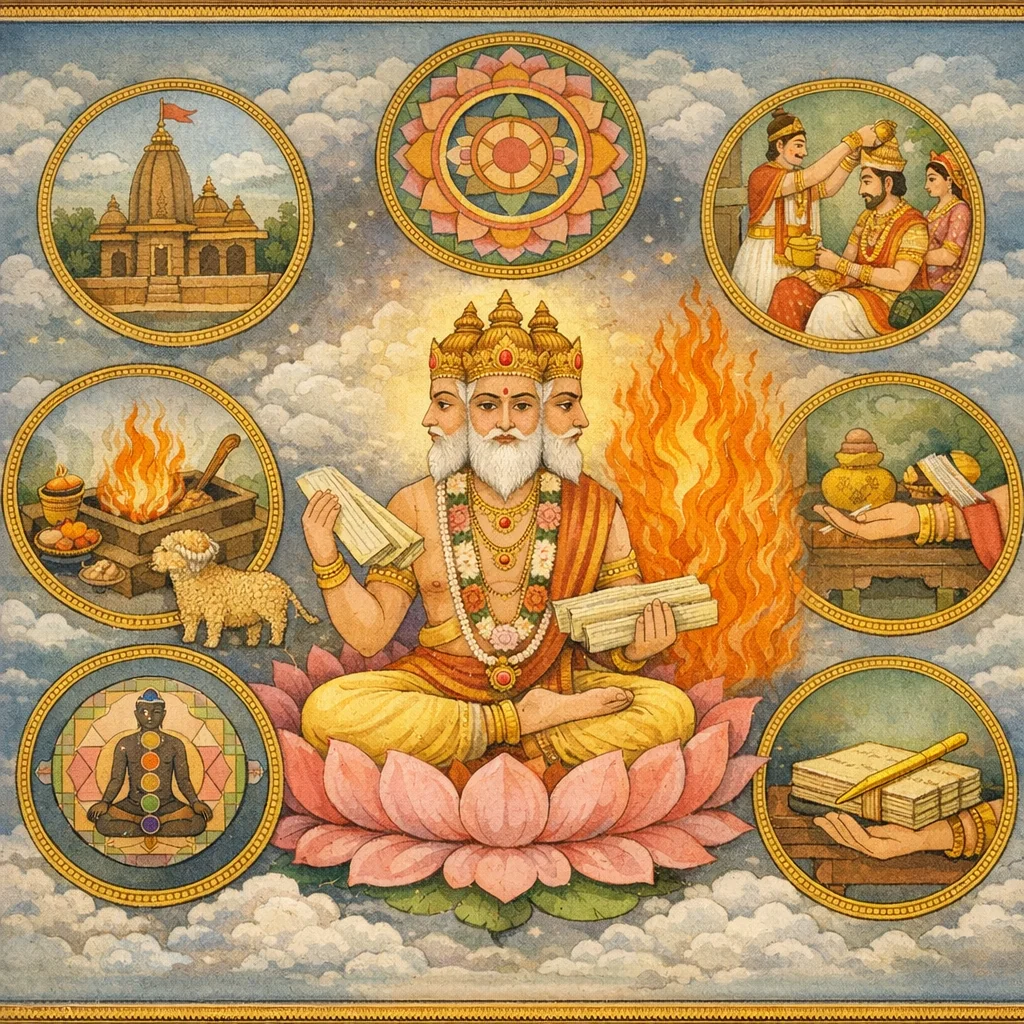
Śrī Brahmā gives a systematic anukramaṇī (table of contents) of the Āgneya/Agni Purāṇa, as transmitted in the Īśāna-kalpa and spoken by Agni to Vasiṣṭha. He states its extent of 15,000 verses and its purifying power for both reciters and listeners. The synopsis then ranges widely—avatāra narratives, creation, Vaiṣṇava worship, fire rites, mantra and mudrā doctrine, dīkṣā and abhiṣeka, maṇḍala design, purifications, pavitra installation, temple rules, iconography, nyāsa, pratiṣṭhā and temple-building, Vināyaka and Kubjikā worship, koṭi-homa, manvantaras, āśrama-dharmas (from brahmacarya), śrāddha, graha-yajña, prāyaścitta, vratas by tithi/weekday/nakṣatra and by month, dīpa-dāna, vyūha worship, narakas, nāḍī-cakra and saṃdhyā-vidhi, the meaning of Gāyatrī, Liṅga-stotra, royal consecration mantra and rāja-dharma, dream and omen lore, gem initiation and ratna-śāstra, Rāma’s nīti, dhanurveda, vyavahāra, Deva–Asura conflict, āyurveda and veterinary medicine with śānti, chandas, literature, kośa/lexicography, pralaya theory, analysis of embodiment, yoga, and the fruit of brahma-jñāna through hearing. It concludes by prescribing a gift—donating a manuscript with a golden pen and a tila-dhenu in Mārgaśīrṣa—and affirming benefits in this world and the next.
Shlokas
Verse 1
श्रीब्रह्मोवाच । अथातः संप्रवक्ष्यामि तवाग्नेयपुराणकम् । ईशानकल्पवृत्तांतं वसिष्ठायानलोऽब्रवीत् ॥ १ ॥
Śrī Brahmā said: Now, then, I shall clearly expound to you the Agneya Purāṇa—its account as set forth in the Īśāna-kalpa—(that very narrative which) Agni spoke to Vasiṣṭha.
Verse 2
तत्पंचदशसाहस्रं नाना चरितमद्भुतम् । पठतां श्रृण्वतां चैव सर्वपापहरं नृणाम् ॥ २ ॥
That Purāṇa consists of fifteen thousand verses, filled with many wondrous narratives; for people, it removes all sins for those who recite it and for those who listen as well.
Verse 3
प्रश्नः पूर्वं पुराणस्य कथा सर्वावतारजा । सृष्टिप्रकरणं चाथ विष्णुपूजादिकं ततः ॥ ३ ॥
First comes the inquiry into the Purāṇa; then the narrative arising from all the divine descents (avatāras). Next follows the section on creation, and thereafter the topics beginning with the worship of Viṣṇu.
Verse 4
अग्निकार्यं ततः पश्चान्मंत्रमुद्रादिलक्षणम् । सर्वदीक्षाविधानं च अभिषेकनिरूपणम् ॥ ४ ॥
Thereafter it describes the rites of the sacred fire, the defining features of mantras and ritual hand-gestures (mudrās) and the like, the complete procedure for all initiations (dīkṣās), and the exposition of consecration (abhiṣeka).
Verse 5
लक्षणं मंडलादीनां कुशापामार्जनं ततः । पवित्रारोपणविधिर्देवालयविधिस्ततः ॥ ५ ॥
Then it describes the characteristics of ritual maṇḍalas and related arrangements; after that, the cleansing with kuśa grass and apāmārga; then the procedure for placing the pavitra (consecrated protective thread/amulet); and thereafter the rules for temples (devālaya).
Verse 6
शालग्रामादिपूजा च मूर्तिलक्ष्म पृथक्पृथक् । न्यासादीनां विधानं च प्रतिष्ठापूर्तकं ततः ॥ ६ ॥
It also sets forth the worship of Śālagrāma and other sacred forms, and separately describes the marks and characteristics of the mūrti (icon). Then it prescribes the ordinances for nyāsa and related rites, together with the procedures for consecration and installation (pratiṣṭhā) and the works of temple-building and setting in place.
Verse 7
विनायकादिपूजा च नानादीक्षाविधिः परम् । प्रतिष्ठा सर्वदेवानां ब्रह्मंडस्य निरूपणम् ॥ ७ ॥
It also teaches worship beginning with Vināyaka, the supreme procedures for the various dīkṣās (initiations), the consecration and installation (pratiṣṭhā) of all the deities, and an exposition of the Brahmāṇḍa, the cosmic egg.
Verse 8
गंगादितीर्थमाहात्म्यं द्वीपवर्षानुवर्णनम् । ऊर्द्ध्वाधोलोकरचना ज्योतिश्चक्रनिरूपणम् ॥ ८ ॥
It describes the greatness of the sacred tīrthas beginning with the Gaṅgā, the account of the dvīpas and varṣas (continents and regions), the structure of the higher and lower worlds, and the exposition of the celestial wheel of luminaries (jyotiṣ-cakra).
Verse 9
ज्योतिषं च ततः प्रोक्तं शास्त्रं युद्धजयार्णवम् । षट्कर्म च ततः प्रोक्तं मंत्रमंत्रौषधीगणः ॥ ९ ॥
Then the science of Jyotiṣa (astral lore) was taught, and also the treatise called Yuddhajayārṇava, the “Ocean of Victory in Battle.” After that, the doctrine of the ṣaṭkarman, the six ritual operations, was expounded, along with collections concerning mantras, counter-mantras, and medicinal herbs.
Verse 10
कुब्जिकादिसमर्चत्वं षोढा न्यासविधिस्तथा । कोटिहोमविधानं च मन्वंतरनिरूपणम् ॥ १० ॥
It also sets forth modes of worship beginning with Kubjikā, the sixfold procedure of nyāsa, the ordinance for performing the koṭi-homa (a vast homa counted in crores), and the exposition of the Manvantaras, the cosmic cycles ruled by the Manus.
Verse 11
ब्रह्मचर्यादिधर्मांश्च श्राद्धकल्पविधिस्ततः । ग्रहयज्ञस्ततः प्रोक्तोवैदिकस्मार्तकर्म च ॥ ११ ॥
Then the dharmic duties beginning with brahmacarya—the celibate discipline of the student—are described; thereafter the rules and proper procedure of the śrāddha rites are set forth. Next is taught the graha-yajña, the propitiatory sacrifice to the planets, together with both Vedic and Smārta ritual obligations.
Verse 12
प्रायश्चित्तानुकथनं तिथीनां च व्रतादिकम् । वारव्रतानुकथनं नक्षत्रव्रतकीर्तनम् ॥ १२ ॥
It recounts the methods of prāyaścitta, rites of expiation and purification, and also the vows and observances connected with the tithis, the lunar dates. It further explains vows based on the weekdays, and proclaims the vows associated with the nakṣatras, the lunar mansions.
Verse 13
मासिकव्रतनिर्द्देशो दीपदानविधिस्तथा । नवव्यूहार्चनं प्रोक्तं नरकाणां निरूपणम् ॥ १३ ॥
Here are taught the directions for the monthly observances called māsika-vratas, the proper rite of dīpa-dāna, the offering of lamps, the worship of the nine Vyūhas, and a description of the narakas, the hells.
Verse 14
व्रतानां चापि दानानां निरूपणमिहोदितम् । नाडीचक्रसमुद्देशः संध्याविधिरनुत्तमः ॥ १४ ॥
Here, too, is set forth an exposition of vratas, sacred vows, and dānas, charitable gifts; likewise an outline of the nāḍī-cakra, the wheel of vital channels, and the unsurpassed saṃdhyā-vidhi, the rite of twilight worship.
Verse 15
गायत्र्यर्थस्य निर्द्देशो लिंगस्तोत्रं ततः परम् । राज्याभिषेकमन्त्रोक्तिर्द्धर्मकृत्यं च भूभुजाम् ॥ १५ ॥
Then comes an explanation of the meaning of the Gāyatrī; thereafter the Liṅga-stotra. Next is the enunciation of the mantra for royal consecration (rājābhiṣeka), and also the righteous duties to be performed by kings.
Verse 16
स्वप्नाध्यायस्ततः प्रोक्तः शकुनादिनिरूपणम् । मंडलादिकनिर्द्देंशो रत्नदीक्षाविधिस्ततः ॥ १६ ॥
Then the chapter on dreams is taught, followed by the explanation of omens and related signs; next comes the description of maṇḍalas and allied matters, and thereafter the procedure for gem-related initiation (dīkṣā).
Verse 17
रामोक्तनीतिनिर्द्देशो रत्नानां लक्षणं ततः । धनुर्विद्या ततः प्रोक्ता व्यवहारप्रदर्शनम् ॥ १७ ॥
Next is the instruction on polity (nīti) as taught by Rāma; then the characteristics of gems (ratna); thereafter the science of archery (dhanur-vidyā) is taught, and the exposition of practical legal procedure (vyavahāra).
Verse 18
देवासुरविमर्दाख्या ह्यायुर्वेदनिरूपणम् । गजादीनां चिकित्सा च तेषां शांतिस्ततः परम् ॥ १८ ॥
It contains the section called “Devasura-vimarda,” along with an exposition of Āyurveda; it also describes the medical treatment of elephants and other animals, and thereafter the śānti rites for their pacification as the highest remedy.
Verse 19
गोनरादिचिकित्सा च नानापूजास्ततः परम् । शांतयश्चापि विविधाश्छन्दः शास्त्रमतः परम् ॥ १९ ॥
Then come medical treatments such as those beginning with the tradition of Go-nārada, followed by a variety of forms of worship (pūjā); next are diverse śānti rites of pacification; and thereafter the science of Vedic metres, Chandas, is taught.
Verse 20
साहित्यं च ततः पश्चादेकार्णादिसमाह्वयाः । सिद्धशब्दानुशिष्टिश्चकोशः सर्गादिवर्गकः ॥ २० ॥
Thereafter comes the section on sāhitya, literary composition; then the compilation known by the title beginning with “Ekārṇa…”, followed by instruction on established, authoritative words (siddha-śabda); and also a kośa, a lexicon arranged by categories such as sarga (creation) and related topics.
Verse 21
प्रलयानां लक्षणं च शारीरकनिरूपणम् । वर्णनं नरकाणां च योगाशास्त्र परम् ॥ २१ ॥
It sets forth the marks of cosmic dissolutions (pralayas), an inquiry into the embodied being (the body’s constitution), an account of the hells, and the supreme teaching of Yoga.
Verse 22
ब्रह्मज्ञानं ततः पश्चात्पुराणश्रवणे फलम् । एतदाग्नेयकं विप्र पुराणं परिकीर्तितम् ॥ २२ ॥
Thereafter, the fruit of hearing this Purāṇa is Brahma-jñāna—the realization of Brahman. O brāhmaṇa, this Purāṇa is proclaimed to be of the Āgneya type.
Verse 23
तल्लिखित्वा तु यो दद्यात्सुवर्णकलमान्वितम् । तिलधेनु युतं चापि मार्गशीर्ष्यां विधानतः ॥ २३ ॥
But whoever, after having it written down, donates it with a golden pen, and also together with a tila-dhenu (“sesame-cow,” a sesame offering), in the month of Mārgaśīrṣa according to the prescribed rite—gains the stated merit.
Verse 24
पुराणार्थविदे सोऽथ स्वर्गलोके महीयते । एषानुक्रमणी प्रोक्ता तवाग्नेयस्य मुक्तिदा ॥ २४ ॥
One who truly knows the meaning of the Purāṇas is honored in the heavenly world. Thus has been declared this anukramaṇī (ordered synopsis) of your Āgneya Purāṇa—bestowing liberation.
Verse 25
श्रृण्वतां पठतां चैव नृणां चेह परत्र च ॥ २५ ॥
For those who listen to it and for those who recite it, there is benefit both here in this world and also in the next.
Verse 26
इति श्रीबृहन्नारदीयपुराणे पूर्वभागे बृहदुपाख्याने चतुर्थपादेऽग्निपुराणानुक्रमणीनिरूपणं नामैकोनशततमोऽध्यायः ॥ ९९ ॥
Thus ends the ninety-ninth chapter, entitled “The Exposition of the Table of Contents (Anukramaṇī) of the Agni Purāṇa,” in the First Part of the Śrī Bṛhannāradīya Purāṇa, within the Great Narrative (Bṛhad-upākhyāna), in the Fourth Pada.
Frequently Asked Questions
Because the Nārada Purāṇa uses anukramaṇīs to classify Purāṇic knowledge for transmission and study—showing the scope, sequence, and authority-line (Agni → Vasiṣṭha) while highlighting the soteriological value of śravaṇa and pāṭha.
It functions as a topical index: it quickly identifies where the Agni Purāṇa positions tantra-ritual procedures (dīkṣā/nyāsa/pratiṣṭhā), dharma topics (āśrama, śrāddha, prāyaścitta), and śāstra disciplines (jyotiṣa, chandas, vyavahāra, āyurveda), enabling targeted comparative study.
The chapter states that the fruit of hearing is Brahman-realization (brahma-jñāna), while also affirming broad purification from sins for both listeners and reciters and benefit in this world and the next.