The Description of the Index (Anukramaṇikā) of the Padma Purāṇa
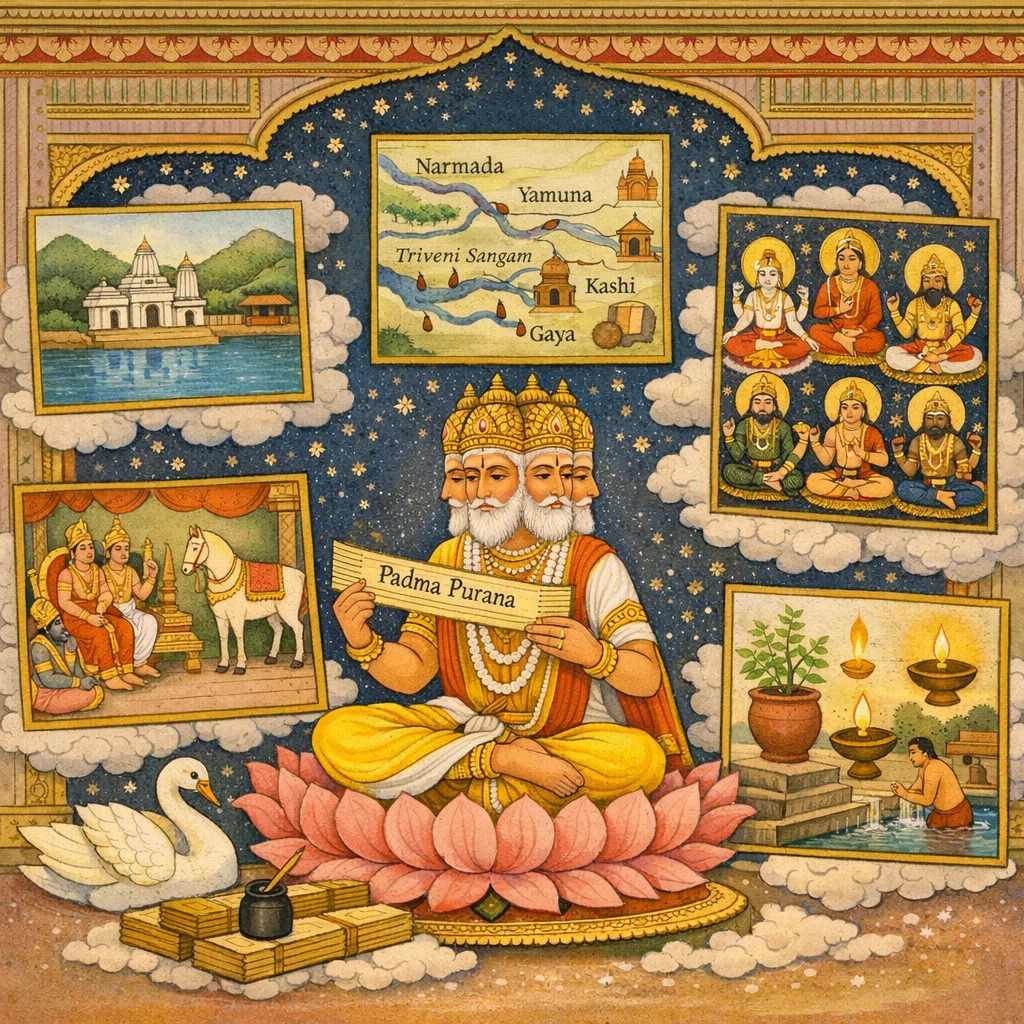
Brahmā presents the Padma Purāṇa as a sin-destroying teaching, arranged in five khaṇḍas and taught by Pulastya to Bhīṣma in the order of creation, abounding in dharma through narratives, histories, and observances. He lists its hallmark themes—Puṣkara-māhātmya, the Brahma-yajña procedure, Vedic recitation marks, dānas and vratas, Pārvatī’s marriage, the Tāraka episode, glorification of the cow, and demon-slayings—then points out the Sṛṣṭi-khaṇḍa (including graha-worship and dāna). He continues with the Bhūmi-khaṇḍa’s story-chain (Śivaśarman, Suvrata, Vṛtra, Pṛthu, Nahuṣa, Yayāti, Guru-tīrtha, Aśokasundarī, Huṇḍa, and more), along with cosmology, the world’s arrangement, and extensive tīrtha catalogues (Narmadā, Kurukṣetra, Yamunā, Kāśī, Gayā, Prayāga). Later sections include karma-yoga by varṇa-āśrama, samudra-manthana, the five days of Ūrjja, Rāma’s Aśvamedha and coronation, Jagannātha and Vṛndāvana, Kṛṣṇa-līlā, the fruits of Mādhava bathing, Śiva-devotion (bhasma, Śiva-gītā), and the Uttara-khaṇḍa’s vrata cycles (the Ekādaśī set, Mahā-Dvādaśī, Kārtika, Māgha bath), Viṣṇu-dharma, Viṣṇu-sahasranāma, avatāra-kathā, Rāma-nāma-śata, and praises of the Gītā and Bhāgavata. The chapter ends with phala-śruti: hearing or reciting this index yields the merit of hearing the Padma Purāṇa, and gifting a written Purāṇa on Jyeṣṭhā Pūrṇimā grants Vaiṣṇava attainment.
Shlokas
Verse 1
ब्रह्मोवाच । श्रृणु पुत्र प्रवक्ष्यामि पुराणं पद्मसंज्ञकम् । महत्पुण्यप्रदं नॄणां श्रृण्वतां पठतां मुदा ॥ १ ॥
Brahmā said: Listen, my son; I shall expound the Purāṇa known as the Padma. It bestows great merit upon people—upon those who hear it and those who recite it with joy.
Verse 2
यथा चंचेंद्रियः सर्वः शरीरीति निगद्यते । तथेदं पंचभिः खंडैरुदितं पापनाशनम् ॥ २ ॥
Just as every embodied being is described as having restless senses, so too this sin-destroying teaching has been set forth in five sections.
Verse 3
पुलस्त्येन तु भीष्माय सृष्ट्यादिक्रमतो द्विज । नानाख्यानेतिहासाद्यैर्यत्रोक्तो धर्मविस्तरः ॥ ३ ॥
But, O twice-born one, this Purāṇa was taught by Pulastya to Bhīṣma in proper sequence beginning with creation; and in it the expanse of Dharma is set forth through many narratives, histories, and related accounts.
Verse 4
पुष्करस्य च माहात्म्यं विस्तरेण प्रकीर्तितम् । ब्रह्मयज्ञविधानं च वेदपाठादिलक्षणम् ॥ ४ ॥
The greatness of Puṣkara is also proclaimed in detail, and likewise the prescribed procedure for the Brahma-yajña—together with the defining features of Vedic recitation and related observances.
Verse 5
दानानां कीर्तनं यत्र व्रतानां च पृथक्पृथक् । विवाहः शैलजायाश्चतारकाख्यानकं महत् ॥ ५ ॥
Therein are set forth the many kinds of sacred gifts (dānas) and, separately, the diverse vows (vratas); also the marriage of Śailajā (Pārvatī), and the great narrative known as the Tāraka episode.
Verse 6
माहात्म्यं च गवादीनां कीर्तितं सर्वपुण्यदम् । कालकेयादिदैत्यानां वधो यत्र पृथक्पृथक् ॥ ६ ॥
Therein is proclaimed the sacred greatness of cows and the like—bestowing every kind of merit; and there too is described, one by one, the slaying of the demons such as the Kālakeyas.
Verse 7
ग्रहाणामर्चनं दानं यत्र प्रोक्तं द्विजोत्तम । तत्सृष्टिखंडमुद्दिष्टं व्यासेन सुमहात्मना ॥ ७ ॥
O best of twice-born ones, that section in which the worship of the planetary deities (grahas) and the giving of gifts are taught is designated by the great-souled Vyāsa as the “Sṛṣṭi-khaṇḍa” (Section on Creation).
Verse 8
पितृमात्रादिपूज्यत्वे शिवशर्मकथा पुरा । सुव्रतस्य कथा पश्चाद्वृत्रस्य च वधस्तथा ॥ ८ ॥
In the section on the duty of venerating one’s father, mother, and other elders, the ancient account of Śivaśarman is told; afterwards comes the story of Suvrata, and likewise the slaying of Vṛtra.
Verse 9
पृथोर्वैनस्य चाख्यानं सुनूथायाः कथा तथा । सुकलाख्यानकं चैव धर्माख्यानं ततः परम् ॥ ९ ॥
Then follows the narrative of Pṛthu, son of Vena, along with the account of Sunūthā; thereafter come the episode called “Sukalākhyāna,” and next the discourse known as “Dharmākhyāna.”
Verse 10
पितृशुश्रूषणाख्यानं नहुषस्य कथा ततः । ययातिचरितं चैव गुरुतीर्थनिरूपणम् ॥ १० ॥
Then follows the account of devoted service to the Pitṛs, the ancestors; thereafter the story of Nahuṣa; also the life of Yayāti; and the description of the sacred pilgrimage-place called Guru-tīrtha.
Verse 11
राज्ञा जैमिनिसंवादो बह्वाश्चर्य्यकथायुतः । कथा ह्यशोकसुंदर्याहुंडदैत्यवधान्विता ॥ ११ ॥
There is also the king’s dialogue with Jaimini, filled with many wondrous narratives—indeed, the tale of Aśokasundarī, including the slaying of the daitya Huṇḍa.
Verse 12
कामोदाख्यानकं तत्र विहुंडवधसंयुतम् । कुंजलस्य च संवादश्च्यवनेन महात्मना ॥ १२ ॥
There, the narrative called “Kāmoda” is included as well, together with the account of Vihuṇḍa’s slaying; and likewise the dialogue of Kuñjala with the great-souled sage Cyavana.
Verse 13
सिद्धाख्यानं ततः प्रोक्तं खंडस्यास्य फलोहनम् । सूतशौनकसंवादं भूमिखंडमिदं स्मृतम् ॥ १३ ॥
Next, the accomplished narrative called “Siddha” was told, along with the fruit-bearing merits of this section. This is remembered as the “Bhūmi-khaṇḍa,” formed as the dialogue between Sūta and Śaunaka.
Verse 14
ब्रह्माण्डोत्पत्तिरुदिता यत्रर्षिभिश्च सौतिना । सभूमिलोकसंस्थानं तीर्थाख्यानं ततः परम् ॥ १४ ॥
Therein, the sages—together with Sauti—have described the origin of the Brahmāṇḍa, the cosmic egg of the universe. Next comes the account of the arrangement of the earth and the worlds, and thereafter the narration of sacred pilgrimage places (tīrthas).
Verse 15
नर्मदोत्पत्तिकथनं तत्तीर्थानां कथाः पृथक् । कुरुक्षेत्रादितीर्थानां कथा पुण्या प्रकीर्तिता ॥ १५ ॥
It sets forth the account of the origin of the Narmadā, along with separate narratives of her sacred tīrthas (holy fords); and it also proclaims the pure, merit-bestowing stories of pilgrimage-places such as Kurukṣetra.
Verse 16
कालिंदीपुण्यकथनं काशीमाहात्म्यवर्णनम् । गयायाश्चैव माहात्म्यं प्रयागस्य च पुण्यकम् ॥ १६ ॥
It recounts the sacred merits of the Kāliṇdī (Yamunā), describes the greatness of Kāśī, and also sets forth the glory of Gayā and the sanctifying holiness of Prayāga.
Verse 17
वर्णाश्रमानुरोधेन कर्मयोगनिरूपणम् । व्यासजमिनिसंवादः पुण्यकर्मकथान्वितः ॥ १७ ॥
Here Karma-yoga is expounded in accordance with the duties of varṇa and āśrama, together with the dialogue between Vyāsa and Jaimini, accompanied by accounts of meritorious deeds.
Verse 18
समुद्रमथनाख्यानं व्रताख्यानं ततः परम् । ऊर्ज्जपंचाहमाहाम्यं स्तोत्रं सर्वापराधनुत् ॥ १८ ॥
Then comes the narrative of the Churning of the Ocean; after that, the account of sacred vows (vrata). Next is the greatness of the five days of Ūrjja, and a hymn (stotra) that destroys all offenses.
Verse 19
एतत्स्वर्गाभिधं विप्र सर्वपातकनाशनम् । रामाश्वमेधं प्रथमं रामराज्याभिषेचनम् ॥ १९ ॥
O brāhmaṇa, this is called “Svarga” (heaven-bestowing) and it destroys all sins: first, Rāma’s Aśvamedha sacrifice, and then the consecration (abhiṣeka) of Rāma’s kingship.
Verse 20
अगस्त्याद्यागमश्चैव पौलस्त्यान्वयकीर्त्तनम् । अश्वमेधोपदेशश्च हयचर्या ततः परम् ॥ २० ॥
It also includes the tradition beginning with Agastya, the recitation of Pulastya’s lineage, instruction on the Aśvamedha sacrifice, and thereafter the discipline and proper conduct concerning the horse (haya-caryā).
Verse 21
नानाराजकथाः पुण्या जगन्नाथानुवर्णनम् । वृन्दावनस्य माहात्म्यं सर्वपापप्रणाशनम् ॥ २१ ॥
Sacred are the many narratives of kings, the description of Jagannātha, and the glorification of Vṛndāvana—each a destroyer of every sin.
Verse 22
नित्यलीलानुकथनं यत्र कृष्णावतारिणः । माधवस्नानमाहात्म्यं स्नानदानार्चने फलम् ॥ २२ ॥
There is continual narration of the eternal līlās of the Lord who descends as Kṛṣṇa; and there too are taught the greatness of the Mādhava bath and the fruits of bathing, charitable giving, and worship.
Verse 23
धरावराहसंवादो यमब्रह्मणयोः कथा । संवादो राजदूतानां कृष्णस्तोत्रनिरूपणम् ॥ २३ ॥
It contains the dialogue between Dharā and Varāha, the account concerning Yama and Brahmā, the conversation of the king’s messengers, and the exposition of a hymn in praise of Kṛṣṇa.
Verse 24
शिवशंभुसमायोगी दधीचाख्यानकं ततः । भस्ममाहात्म्यमतुलं शिवमाहात्म्यमुत्तमम् ॥ २४ ॥
Then it describes the sacred union with Śiva—Śaṃbhu; thereafter the narrative of Dadhīci; the incomparable greatness of sacred ash (bhasma); and the supreme glory of Lord Śiva.
Verse 25
देवरातसुताख्यानं पुराणज्ञप्रशंसनम् । गौतमाख्यानकं चैव शिवगीता ततः स्मृता ॥ २५ ॥
Then are recounted: the tale of Devarāta’s son, the praise of those who know the Purāṇas, the episode concerning Gautama; and thereafter the Śiva-gītā is remembered.
Verse 26
कल्पांतरे रामकथा भारद्वाजाश्रमस्थिता । पातालखंडमेतद्धि श्रृण्वतां पठतां सदा ॥ २६ ॥
In another kalpa, the narrative of Rāma was preserved in Bharadvāja’s hermitage. Indeed, this is the Pātāla-khaṇḍa—meant to be ever listened to and regularly recited.
Verse 27
सर्वपापप्रशमनं सर्वाभीष्टफलप्रदम् । पर्वताख्यानकं पूर्वं गौर्थै प्रोक्तं शिवेन वै ॥ २७ ॥
This ancient “Account of the Mountain” pacifies all sins and bestows every desired fruit. Indeed, it was formerly spoken by Śiva himself for the sake of Gaurī.
Verse 28
जालंधरकथा पश्चाच्छ्रीशैलाद्यनुकीर्तनम् । सगरस्य कथा पुण्या ततः परमुदीरितम् ॥ २८ ॥
Thereafter comes the account of Jālandhara, followed by the recitation of Śrīśaila and other sacred places. Then the holy story of King Sagara is proclaimed, and after that, further topics are expounded in due order.
Verse 29
गंगाप्रयागकाशीनां गयायाश्चाधिपुण्यकम् । अन्नादि दानमाहात्म्यं तन्महाद्वादशीव्रतम् ॥ २९ ॥
It proclaims the supreme sanctity of the tīrthas—Gaṅgā, Prayāga, Kāśī, and also Gayā; and it explains the greatness of gifts such as the giving of food, together with the great vow observed on Dvādaśī, the Mahā-Dvādaśī vrata.
Verse 30
चतुर्विंशैकादशीनां माहात्म्यं पृथगीरितम् । विष्णुधर्मसमाख्यानं विष्णुनामसहस्रकम् ॥ ३० ॥
The greatness of the twenty-four Ekādaśīs has been proclaimed separately; likewise, the teaching of Viṣṇu-dharma and the Viṣṇu-nāma-sahasra—the thousand Names of Viṣṇu—have been set forth.
Verse 31
कार्तिकव्रतमाहात्म्यं माघस्नानफलं ततः । जम्बृद्वीपस्य तीर्थानां माहात्म्यं पापनाशनम् ॥ ३१ ॥
Then comes the greatness of the Kārtika vow, and thereafter the fruit of bathing in the month of Māgha; also the sin-destroying glory of the sacred tīrthas of Jambūdvīpa.
Verse 32
साभ्रमत्याश्च माहात्म्यं नृसिंहोत्पत्तिवर्णनम् । देवशर्मादिकाख्यानं गीतामाहात्म्यवर्णनम् ॥ ३२ ॥
It also tells of the greatness of Sābhramatī, narrates the manifestation of Narasiṃha, relates the account beginning with Devaśarmā, and describes the greatness of the Gītā.
Verse 33
भक्त्याख्यानं च माहात्म्यं श्रीमद्भागवतस्य ह । इन्द्रप्रस्थस्य माहात्म्यं बहुतीर्थकथान्वितम् ॥ ३३ ॥
It also contains the account of bhakti and the greatness of the Śrīmad Bhāgavata; and the greatness of Indraprastha as well—together with narratives of many tīrthas.
Verse 34
मन्त्ररत्नाभिधानं च त्रिपाद्भूत्यनुवर्णनम् । अवतारकथाः पुण्या मत्स्यादीनामतः परम् ॥ ३४ ॥
Then follow the designation of the “Mantra-Ratna,” the description of the Tripād-bhūti (the threefold transcendent glory), and thereafter the sacred accounts of the divine avatāras—beginning with Matsya and the rest.
Verse 35
रामनामशतं दिव्यं तन्माहात्म्यं च वाडव । परीक्षणं च भृगुणा श्रीविष्णोर्वैभवस्य च ॥ ३५ ॥
O Vāḍava, here are set forth the divine hundred names of Rāma and their greatness, as well as Bhṛgu’s testing (of the gods) and the majestic glory of Śrī Viṣṇu.
Verse 36
इत्येतदुत्तरं खण्डं पंचमं सर्वपुण्यदम् । पंचखंडयुतं पाद्मं यः श्रृणोति नरोत्तमः ॥ ३६ ॥
Thus, this is the fifth section—the Uttara-khaṇḍa—bestowing all merit. The best of men who listens to the Padma Purāṇa, complete with its five sections, gains great spiritual merit.
Verse 37
स लभेद्वैष्णवं धाम भुक्त्वा भोगानिहेप्सितान् । एतद्वै पंचपंचाशत्सहस्रं पद्मसंज्ञकम् ॥ ३७ ॥
Having enjoyed here the desired pleasures, he indeed attains the Vaiṣṇava abode. This, in truth, is the measure of fifty-five thousand, known by the name “Padma.”
Verse 38
पुराणं लेखयित्वा वै ज्येष्ठ्यां स्वर्णाब्जसंयुतम् । यः प्रदद्यात्सुसत्कृत्य पुराणज्ञाय मानद ॥ ३८ ॥
O bestower of honor, whoever has a Purāṇa written out and, on the full-moon day of Jyeṣṭhā, respectfully presents it—adorned with gold and a lotus—to a knower of the Purāṇas, gains great religious merit.
Verse 39
स याति वैष्णवं धाम सर्वदेवनमस्कृतः । पद्मानुक्रमणीमेतां यः पठेच्छृणुयात्तथा ॥ ३९ ॥
He attains the Vaiṣṇava abode, honored by all the gods—whoever recites this Padmānukramaṇī, or likewise listens to it.
Verse 40
सोऽपि पद्मपुराणस्य लभेच्छ्रवणजं फलम् ॥ ४० ॥
He too would obtain the merit that arises from hearing the Padma Purāṇa.
Verse 41
इति श्रीबृहन्नारदीयपुराणे पूर्वभागे बृहदुपाख्याने चतुर्थपादे पद्मपुराणानुक्रमणिकावर्णनं नाम त्रिनवतितमोऽध्यायः ॥ ९३ ॥
Thus ends the ninety-third chapter—called “The Description of the Index (Anukramaṇikā) of the Padma Purāṇa”—in the First Part of the Śrī Bṛhannāradīya Purāṇa, within the Great Narrative, in the Fourth Section (Pāda).
Frequently Asked Questions
Because the index assigns a formal taxonomy to Padma Purāṇa’s material: graha-pūjā (planetary worship) and dāna instruction are explicitly identified by Vyāsa as characteristic of the Sṛṣṭi-khaṇḍa, establishing section-identity and aiding reciters in thematic navigation.
The chapter states that reciting or listening to the Padmānukramaṇī yields the same merit as hearing the Padma Purāṇa itself, culminating in enjoyment of desired fruits here and attainment of the Vaiṣṇava abode.