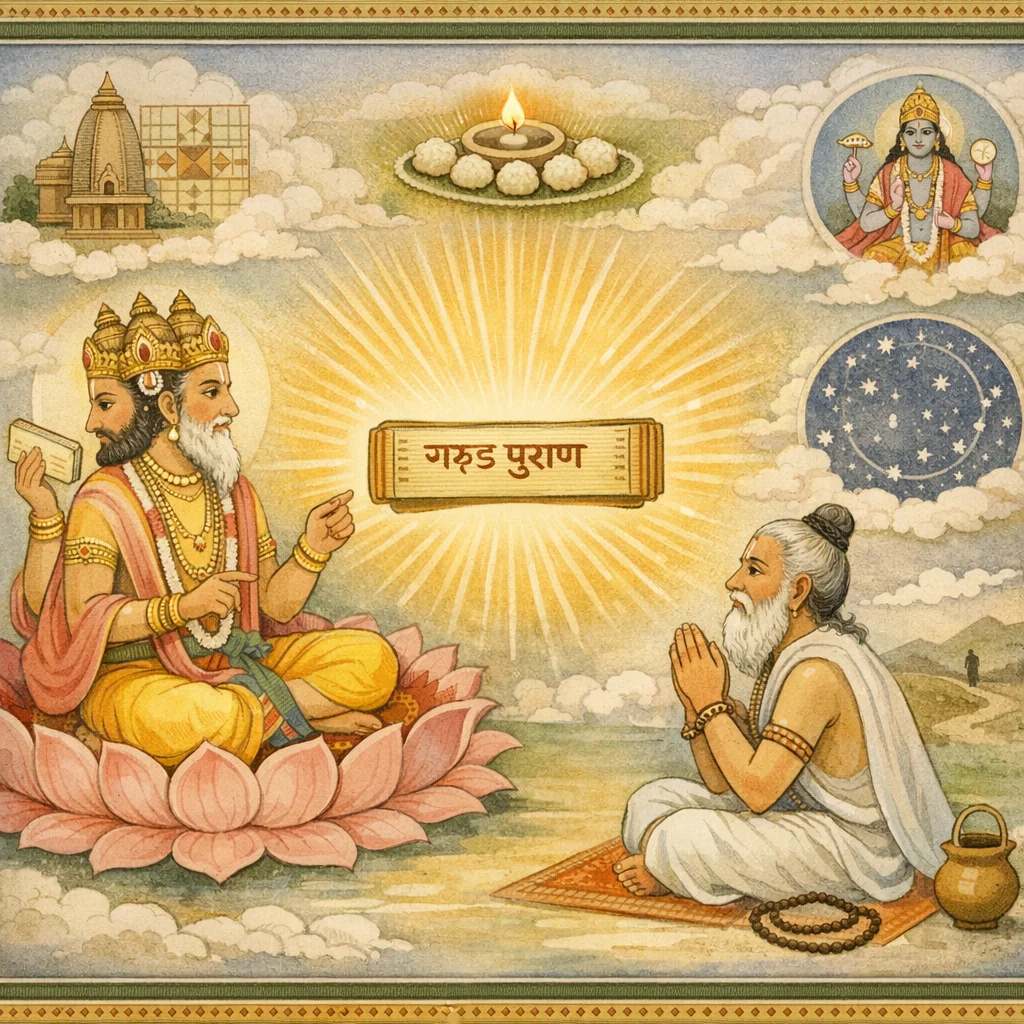
The Description of the Index/Summary of the Garuḍa (Purāṇa)
Brahmā speaks to Marīci, proclaiming an auspicious synopsis of the Garuḍa Purāṇa as Bhagavān’s instruction to Garuḍa (Tārkṣya). Serving as an anukramaṇikā, it states the work’s extent (19,000 verses) and lists its ordered themes: creation; worship of the Sun and other deities, dīkṣā, śrāddha, vyūha-pūjā, Vaiṣṇava protective hymns (pañjara), yoga and the Viṣṇu-sahasranāma; worship of Śiva, Gaṇeśa, Gopāla, Śrīdhara; nyāsa and sandhyā; Durgā and Deva worship; pavitra-installation rites, image-meditation, vāstu and temple marks, consecration rules; dāna and prāyaścitta; cosmography and hells, jyotiṣa, sāmudrika, svara, gemology; tīrtha-māhātmya (especially Gayā), manvantaras, pitṛ-dharma, varṇāśrama duties, ritual purity, graha-yajñas, nīti-śāstra, dynasties and avatāras, medical sciences, grammar, vedāṅga topics, and yuga/saṅkrānti observances. It then highlights the Pretakalpa: dharma for yogins, post-death mantras and gifts, the road to Yama, preta signs and sufferings, piṇḍīkaraṇa, eligibility and timing of death-rites, Nārāyaṇa-bali, vṛṣotsarga, karmic maturation, mapping of the lokas, pralaya, and the fruits of hearing/reciting and donating the text.
Shlokas
Verse 1
ब्रह्मोवाच । मरीचे श्रृणु वक्ष्याभि पुराणं गारुडं शुभम् । गरुडायाब्रवीत्पृष्टो भगवान्गरुडासनः ॥ १ ॥
Brahmā said: “O Marīci, listen. I shall relate the auspicious Garuḍa Purāṇa—how the Blessed Lord, seated upon Garuḍa, spoke to Garuḍa when questioned.”
Verse 2
एकोनविंशसाहस्रं तार्क्ष्यकल्पकथान्वितम् । पुराणोपक्रमप्रश्नः सर्गः संक्षेपतस्ततः ॥ २ ॥
It consists of nineteen thousand verses and includes narratives connected with the Tārkṣya-kalpa. Then, in brief, comes the section on creation (sarga), together with the inquiry concerning the Purāṇa’s opening.
Verse 3
सूर्यादिपूजनविधिर्दीक्षाविधिरतः परम् । श्राद्धपूजा ततः पश्चान्नवव्यूहार्चनं द्विज ॥ ३ ॥
Next comes the procedure for worship of the Sun and other deities; after that, the rite of initiation (dīkṣā). Then follows the worship connected with śrāddha, and thereafter—O twice-born—the procedure for worship of the nine Vyūhas.
Verse 4
पूजाविधानं च तथा वैष्णवं पंजरं ततः । योगाध्यायस्ततो विष्णोर्नामसाहस्रकीर्तनम् ॥ ४ ॥
Then the procedure of worship is described; thereafter the Vaiṣṇava protective hymn called the “Pañjara”; next, the chapter on yoga; and then the chanting/recitation of Viṣṇu’s thousand names.
Verse 5
ध्यानं विष्णोस्ततः सूर्यपूजा मृत्युंजयार्चनम् । मालामंत्रः शिवार्चाथ गणपूजा ततः परम् ॥ ५ ॥
First comes meditation on Viṣṇu; then the worship of the Sun; then the adoration of Mṛtyuñjaya, the Death-conquering Lord. Next is the rosary-mantra practice; then the worship of Śiva; and after that, the worship of Gaṇa (Gaṇeśa).
Verse 6
गोपालपूजा त्रैलोक्यमोहनश्रीधरार्चनम् । विष्ण्वर्चा पंचतत्त्वार्चा चक्रार्चा देवपूजनम् ॥ ६ ॥
Here are taught: the worship of Gopāla; the arcana of Śrīdhara, whose splendor enchants the three worlds; the worship of Viṣṇu; worship by the five principles (pañca-tattva); the worship of the Discus (Cakra); and the worship of the deities.
Verse 7
न्यासादिसंध्योपास्तिश्च दुर्गार्चाथ सुरार्चनम् । पूजा माहेश्वरी चातः पवित्रारोपणार्चनम् ॥ ७ ॥
Also to be performed are: the devotions connected with nyāsa and the Sandhyā rites; the worship of Durgā and the honoring of the Devas; then the Māheśvarī pūjā related to Śiva; and thereafter the ritual worship that installs the sacred pavitras—consecrated threads or garlands.
Verse 8
मूर्तिध्यांनवास्तुमानं प्रासादानां च लक्षणम् । प्रतिष्ठा सर्वदेवानां पृथक्पूजा विधानतः ॥ ८ ॥
It sets forth meditation upon sacred images (mūrti), the measurements of temple-sites according to Vāstu, and the defining marks of temples; it also explains the consecration (pratiṣṭhā) of all deities and the prescribed rules for their distinct modes of worship.
Verse 9
योगोऽषटांगो दानधर्माः प्रयश्चित्तविधिक्रिया । द्वीपेशनरकाख्यानं सूर्यव्यूहश्च ज्योतिषम् ॥ ९ ॥
It teaches the six-limbed discipline of yoga (ṣaḍ-aṅga), the dharmas of charitable giving (dāna), and the prescribed rites of expiation (prāyaścitta); it recounts the continents (dvīpa) and their rulers and describes the hells (naraka); and it also sets forth the Sun’s cosmic array (sūrya-vyūha) together with jyotiṣa, the sacred science of astrology.
Verse 10
सामुद्रिकं स्वरज्ञानं नवरत्नपरीक्षणम् । माहात्म्यमथ तीर्थानां गयामाहात्म्यमुत्तमम् ॥ १० ॥
It also sets forth sāmudrika, the lore of physiognomy; knowledge of svara, the sacred tones and intonations; and the testing of the nine gems (nava-ratna). Then it proclaims the holy greatness (māhātmya) of the tīrthas, the pilgrimage-fords, and—supremely—the unsurpassed greatness of Gayā.
Verse 11
ततो मन्वंतराख्यानं पृथक्पृथग्विभागशः । पित्राख्यानं वर्णधर्मा द्रव्यशुद्धिः समर्पणम् ॥ ११ ॥
Thereafter comes the account of the Manvantaras, set forth separately in distinct divisions; then the narrative of the Pitṛs, the duties of the varṇas, the purification of ritual materials, and the proper act of offering (samarpaṇa).
Verse 12
श्राद्धं विनायकस्यार्चा ग्रहयज्ञस्तथआ श्रमाः । जननाख्यं प्रेतशौचं नीतिशास्त्रं व्रतोक्तयः ॥ १२ ॥
This section also describes: the rites of śrāddha; worship of Vināyaka (Gaṇeśa); offerings and sacrifices to the grahas (planets); prescribed disciplines and austerities; the rite called ‘janana’ concerning birth; the purification rules regarding the departed (preta-śauca); the teachings of nīti-śāstra on ethics and statecraft; and the injunctions concerning vows (vratas).
Verse 13
सूर्यवंशः सोमवंशोऽवतारकथनं हरेः । रामायणं हरेर्वंशो भारताख्यानकं ततः ॥ १३ ॥
The Solar dynasty and the Lunar dynasty are described, along with the account of Hari’s incarnations. Then come the Rāmāyaṇa, the lineage of Hari, and thereafter the narrative of the Bhārata (Mahābhārata).
Verse 14
आयुर्वेदनिदानं प्राक् चिकिकत्सा द्रव्यजा गुणाः । रोगघ्नं कवचं विष्णोर्गारुडं त्रैपुरो मनुः ॥ १४ ॥
First comes the diagnosis of Āyurveda, then medical treatment and the qualities born of medicinal substances; then the disease-destroying protective hymn (kavaca) of Viṣṇu, the Gāruḍa teaching, and the Traipura Manu (mantra/discipline).
Verse 15
प्रश्नचूडामणिश्चांतो हयायुर्वेदकीर्तनम् । ओषघीनाम कथनं ततो व्याकरणोहनम् ॥ १५ ॥
It concludes with the ‘Praśna-cūḍāmaṇi’; then follows an account of the Hayāyurveda; a description of medicinal herbs is given, and thereafter comes the extensive treatment of grammar (Vyākaraṇa).
Verse 16
छंदः शास्त्रं सदाचारस्ततः स्नानविधिः स्मृतः । तर्पणं वैश्वदेवं च संध्या पार्वणकर्म च ॥ १६ ॥
Next are remembered: the science of Vedic metres (chandas), the code of right conduct (sadācāra), and then the prescribed rule of ritual bathing; also the libation rite (tarpaṇa), the Vaiśvadeva offering, Sandhyā worship, and the observances performed on Parvan days, the sacred lunar junctions.
Verse 17
नित्यश्राद्धं सर्पिडाख्यं धर्मसारोऽघनिष्कृतिः । प्रतिसंक्रम उक्ताः स्म युगधर्माः कृतेः फलम् ॥ १७ ॥
The daily śrāddha, the rite called Sarpiḍā, the essence of dharma and the cleansing expiation of sins; and also the observances to be performed at each saṅkrānti, the sun’s transition—these yuga-dharmas, together with the fruits belonging to the Kṛta Yuga, have been declared.
Verse 18
योगशास्त्रं विष्णुभक्तिर्नमस्कृतिफलं हरेः । माहात्म्यं वैष्णवं चाथ नारसिंहस्तवोत्तमम् ॥ १८ ॥
It teaches the science of Yoga, devotion (bhakti) to Viṣṇu, and the fruit of bowing to Hari; it also proclaims Vaiṣṇava greatness and further contains the excellent hymn to Narasiṃha.
Verse 19
ज्ञानामृतं गुहुष्टकं स्तोत्रं विष्ण्वर्चनाह्वयम् । वेदांतसांख्यसिद्धांतो ब्रह्मज्ञानं तथात्मकम् ॥ १९ ॥
It teaches the “Nectar of Knowledge,” the “Guhuṣṭaka,” and the hymn called “Worship of Viṣṇu”; likewise the established conclusions of Vedānta and Sāṅkhya, and Brahma-knowledge of that very nature.
Verse 20
गीतासारः फलोत्कीर्तिः पूर्वखंडोऽयमीरितः । अथास्यैवोत्तरे खंडे प्रेतकल्पः पुरोदितः ॥ २० ॥
Thus the former section has been described as containing the essence of the Gītā and the proclamation of its fruits; and then, in the later section of this very work, the Pretakalpa—the ordinance concerning the departed—has already been set forth earlier (as stated).
Verse 21
यत्र तार्क्ष्येण संपृष्टो भगवानाह वाडवाः । धर्मप्रकटनं पूर्वं योगिनां गतिकारणम् ॥ २१ ॥
There, in that account, when the Blessed Lord was questioned by Tārkṣya (Garuḍa), He spoke to the Vāḍavas: first is the revelation of Dharma; and that Dharma becomes the cause of the yogins’ higher path (attainment).
Verse 22
दानादिकं फलं चापि प्रोक्तमन्त्रोर्द्धदैहिकम् । यमलोकस्थमार्गस्य वर्णन च ततः परम् ॥ २२ ॥
The fruits of gifts (dāna) and other meritorious acts are also declared, along with the rites and mantras pertaining to the post-death state. Thereafter is set forth the description of the route leading to Yama’s realm.
Verse 23
षोडशश्राद्धफलको वृत्तांतश्चात्र वर्णितः । निष्कृतिर्यममार्गस्य धर्मराजस्य वैभवम् ॥ २३ ॥
Here the account of the fruits of the sixteen Śrāddhas is set forth, along with the expiation (niṣkṛti) concerning the path of Yama and the majesty of Dharmarāja.
Verse 24
प्रेतपीडांविनिर्द्देशः प्रेतचिह्ननिरूपणम् । प्रेतानां चरिताख्यानं कारणं प्रेततां प्रति ॥ २४ ॥
It sets forth the afflictions that befall a preta, describes the signs by which a preta is recognized, recounts the conduct and experiences of pretas, and explains the causes that lead a being into the state of preta-hood.
Verse 25
प्रेतकृत्यविचारश्च सर्पिडीकरणोक्तयः । प्रेतत्वमोक्षणाख्यानं दानानि च विमुक्तये ॥ २५ ॥
It also examines the rites for the departed, the prescriptions concerning piṇḍīkaraṇa (the offering of rice-balls), the account of release from the state of being a preta, and the gifts (dānas) that lead to liberation.
Verse 26
आवश्यकोत्तमं दानं प्रेतसौख्यकरोहनम् । शारीरकविनिर्देशो यमलोकस्य वर्णनम् ॥ २६ ॥
It describes the most essential and excellent gifts of charity—those that bring solace to the departed spirit (preta); it also sets forth the teaching concerning the embodied ātman and recounts the realm of Yama.
Verse 27
प्रेतत्वोद्धारकथनं कर्मकृर्त्तृविनिर्णयः । मृत्योः पूर्वक्रियाख्यानं पश्चात्कर्मनिरूपणम् ॥ २७ ॥
It tells the means of delivering one from the state of a preta, determines who is qualified to perform the rites, explains what should be done before death, and sets forth the rituals to be performed after death.
Verse 28
मध्यषोडशकश्राद्धं स्वर्गप्राप्तिक्रियोहनम् । सूतकस्याथ संख्यांनं नारायणबलिक्रिया ॥ २८ ॥
It also teaches the “middle sixteen” śrāddha rites (madhya-ṣoḍaśaka), the ritual procedures that lead to attaining heaven, the reckoning of the days of sūtaka (ritual impurity), and the performance of the Nārāyaṇa-bali rite.
Verse 29
वृषोत्सर्गस्य माहात्म्यं निषिद्धपरिवर्जनम् । अपमृत्युक्रियोक्तिश्च विपाकः कर्मणां नृणाम् ॥ २९ ॥
It also teaches the greatness of the vṛṣotsarga rite (releasing a bull), the avoidance of forbidden acts, the prescribed rites to counter an untimely death (apamṛtyu), and the ripening results (vipāka) of human karma.
Verse 30
कृत्याकृत्यविचारश्च विष्णुध्यानविमुक्तये । स्वर्गतौ विहिताख्यानं स्वर्गसौख्यनिरूपणम् ॥ ३० ॥
It sets forth discernment of what should and should not be done, for the sake of liberation through meditation on Viṣṇu; it also narrates what is enjoined regarding the path to heaven and explains the nature of heavenly enjoyments.
Verse 31
भूर्लोकवर्णनं चैव सप्ताधोलोकवर्णनम् । पंचोर्द्ध्वलोककथनं ब्रह्मांडस्थितिकीर्तनम् ॥ ३१ ॥
It contains the description of Bhūrloka, the account of the seven nether worlds, the narration of the five higher worlds, and the exposition of how the cosmic egg, the Brahmāṇḍa, is established and ordered.
Verse 32
ब्रह्मांडानेकचरितं ब्रह्मजीवनिरूपणम् । आत्यंतिकं लयाख्यानं फलस्तुति निरूपणम् ॥ ३२ ॥
It describes the many events of the Brahmāṇḍa (the universe), sets forth the life and career of Brahmā, recounts the final, absolute dissolution (laya), and explains the eulogy of the spiritual fruits of hearing and reciting this Purāṇa.
Verse 33
इत्येतद्गारुडं नाम पुराणं भुक्तिमुक्तिदम् । कीर्तितं पापशमनं पठतां श्रृण्वतां नृणाम् ॥ ३३ ॥
Thus has the Purāṇa known as the Gāruḍa been described—bestowing worldly enjoyment and liberation; and it is proclaimed as a destroyer of sins for people who read it or hear it.
Verse 34
लिखित्वैतत्पुराणं तु विषुवे यः प्रयच्छति । सौवर्णहंसयुग्माढ्यं विप्राय स दिवं व्रजेत् ॥ ३४ ॥
Whoever, having written out this Purāṇa, donates it to a brāhmaṇa on the equinox—adorned with a pair of golden swans—attains the heavenly realm.
Verse 35
इति श्रीबृहन्नारदीयपुराणे पूर्वभागे बृहदुपाख्याने चतुर्थपादे गारुडानुक्रमणीवर्णनं नामाष्टोत्तरशततमोऽध्यायः ॥ १०८ ॥
Thus ends the one-hundred-and-eighth chapter, called “The Description of the Index/Summary of the Garuḍa (Purāṇa),” in the Pūrva-bhāga (Earlier Section) of the venerable Bṛhan-Nāradīya Purāṇa, within the Great Narrative, in the Fourth Pada.
Frequently Asked Questions
Because the Garuḍa Purāṇa is especially authoritative for post-death dharma: śrāddha sequences, preta-conditions, piṇḍīkaraṇa, Nārāyaṇa-bali, gifts (dāna) for relief and liberation, and the doctrinal mapping of Yama’s path. The anukramaṇikā foregrounds these as a practical soteriological manual tied to pitṛ-kārya and mokṣa-dharma.
Its primary function is enumerative and architectural: it lists the Garuḍa Purāṇa’s internal sequence of subjects (ritual, cosmology, sciences, ethics, liberation teachings) rather than developing a continuous story. In Purāṇic pedagogy, such an index legitimizes scope, aids memorization, and guides ritual and study navigation.