Matsya-purāṇa Anukramaṇikā (Synopsis / Table of Contents)
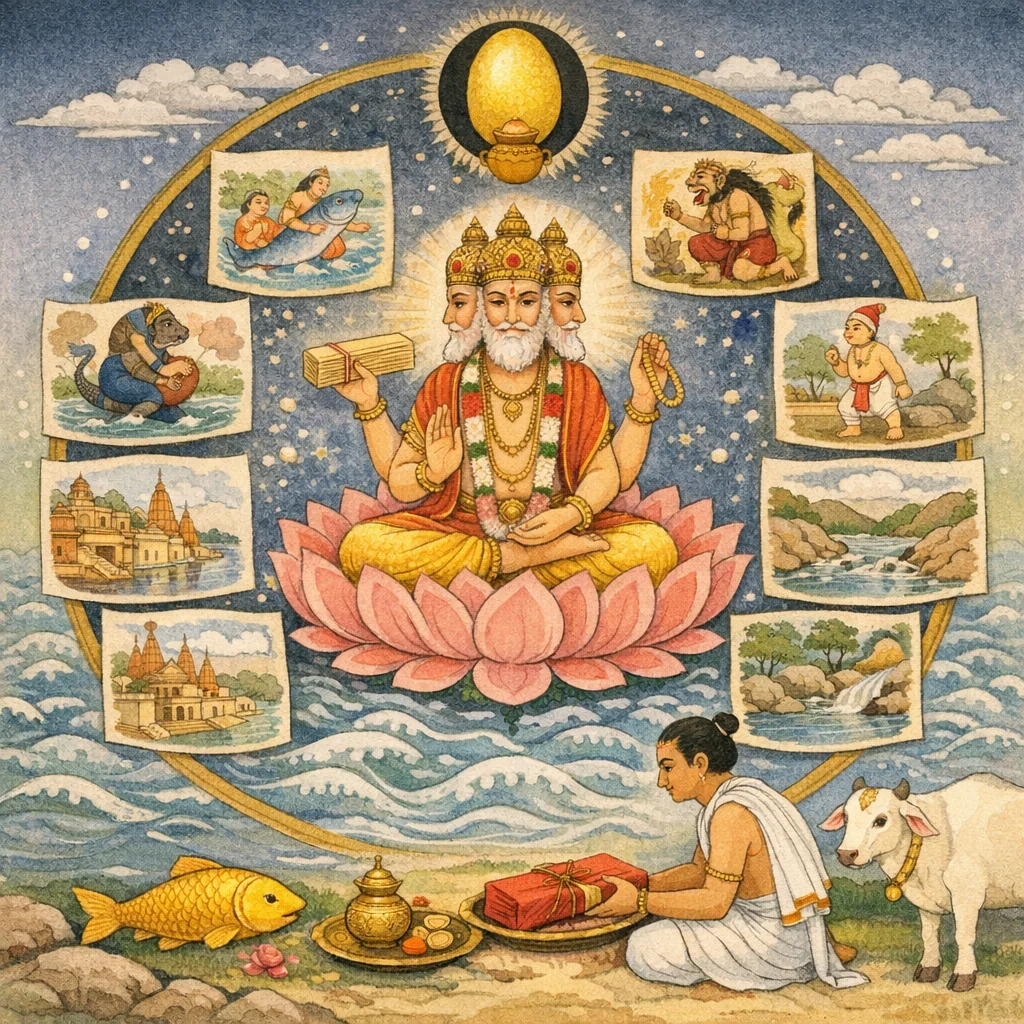
Brahmā gives a condensed anukramaṇikā of the Matsya Purāṇa’s scope: the Manu–Matsya dialogue; brahmāṇḍa cosmology; the origins of Brahmā, devas, asuras, and the Maruts; the manvantara and yuga scheme with dharmas for each age; and extensive royal and pitṛ genealogies with the proper time for Śrāddha. He surveys major mythic cycles—Tāraka, Pārvatī’s tapas and marriage, Skanda’s birth and victory, Narasiṃha, Varāha, Vāmana, and Andhaka—along with the greatness of tīrthas such as Vārāṇasī, Narmadā, and Prayāga. The chapter catalogs vrata-kalpas (many dvādaśīs, saptamīs, śayanas, and nakṣatra vows), dānas (Meru-dāna, kṛṣṇājina), and graha-śānti rites including eclipse abhiṣeka. It also highlights vāstu-śāstra, icon/temple and maṇḍapa types, future kings, mahā-dānas, and kalpa cycles. It ends with a phalaśruti and a manuscript-dāna rite—gifting the text with a golden fish and a cow at Viṣuva—promising attainment of Hari’s abode.
Shlokas
Verse 1
ब्रह्मोवाच । अथ मात्स्यं पुराणं ते प्रवक्ष्ये द्विजसत्तम । यत्रोक्तं सप्तकल्पानां वृत्तं संक्षिप्य भूतले ॥ १ ॥
Brahmā said: Now, O best of the twice-born, I shall expound to you the Matsya Purāṇa, in which the account of the seven kalpas is succinctly set forth upon the earth.
Verse 2
व्यासेन वेदविदुषा नारसिंहोपवर्णने । उपक्रम्य तदुद्दिष्टं चतुर्द्दशसहस्रकम् ॥ २ ॥
The sage Vyāsa, knower of the Vedas, having begun the narration of Narasiṃha, set forth—as indicated there—a section consisting of fourteen thousand verses.
Verse 3
मनुमत्स्यसुसंवादो ब्रह्मांडकथनं ततः । ब्रह्मदेवासुरोत्पत्तिर्मारुतोत्पत्तिरेव च ॥ ३ ॥
Here are outlined: the excellent dialogue between Manu and Matsya; then the account of the Brahmāṇḍa, the cosmic egg; the origin of Brahmā, the devas and the asuras; and also the origin of the Maruts, the storm-deities.
Verse 4
मदनद्वादशी तद्वल्लोकपालाभिपूजनम् । मन्वन्तरसमुद्देशो वैश्यराज्याभिवर्णनम् ॥ ४ ॥
The topics include the Madana-dvādaśī observance; likewise the worship of the Lokapālas, guardians of the worlds; an outline of the Manvantaras; and a description of the reign of Vaiśya kings.
Verse 5
सूर्यवैवस्वतोत्पत्तिर्बुधसंगमनं तथा । पितृवंशानुकथनं श्रद्धाकालस्तथैव च ॥ ५ ॥
Also described are the origin of Sūrya, the son of Vivasvān; the meeting with Budha; the narration of the lineage of the Pitṛs, the ancestral fathers; and likewise the proper time for performing Śrāddha rites.
Verse 6
पितृतीर्थप्रचारश्च सोमोत्पत्तिस्तथैव च । कीर्तनं सोमवंशस्य ययातिचरितं तथा ॥ ६ ॥
Also described are the propagation of the sacred pilgrimage-places of the Pitṛs, the origin of Soma (the Moon), the narration of the Lunar Dynasty, and likewise the account of King Yayāti.
Verse 7
पितृवंशानुकथनं सृष्टवंशानुकीर्तनम् । भृगुशापस्तथा विष्णोर्दशधा जन्मने क्षितौ ॥ ७ ॥
It recounts the genealogies of the Pitṛs and proclaims the lineages arising from creation; it also narrates Bhṛgu’s curse, and describes Viṣṇu’s tenfold births upon the earth (Daśāvatāra).
Verse 8
कीर्त्तनं पूरुवंशस्य वंशो हौताशनः परम् । क्रियायोगस्ततः पश्चात्पुराणपरिकीर्तनम् ॥ ८ ॥
Then follows the kīrtana, the sacred narration of the Pūru dynasty; next, the excellent lineage of Hautāśana (Agni); thereafter the discipline of kriyā-yoga, ritual practice; and finally the orderly recitation and summary of the Purāṇa.
Verse 9
व्रतं नक्षत्रपुरुषं मार्तण्डशयनं तथा । कृष्णाष्टमीव्रतं तद्वद्रोहिणीचन्द्रसंज्ञितम् ॥ ९ ॥
Also taught are the vows: the one called Nakṣatra-Puruṣa; the observance known as Mārtaṇḍa-Śayana, the Sun’s ‘reclining’ rite; the Kṛṣṇāṣṭamī vow; and likewise the vow called Rohiṇī-Candra.
Verse 10
तडागविधि माहात्म्यं पादपोत्सर्ग एव च । सौभाग्यशयनं तद्वदगस्त्यव्रतमेव च ॥ १० ॥
Also described are the rite and sacred merit of constructing a pond; the offering and dedication of a footprint at a holy place; the Saubhāgya-Śayana observance; and likewise the Agastya-vrata as well.
Verse 11
तथानन्ततृतीयाया रसकल्याणिनीव्रतम् । तथैवानं दकर्याश्च व्रतं सारस्वतं पुनः ॥ ११ ॥
Likewise there are the Ananta-tṛtīyā observance and the Rasa-kalyāṇinī vow; likewise the Dakaryā vow; and again the Sārasvata vow.
Verse 12
उपरागाभिषेकश्च सप्तमीशनं तथा । भीमाख्या द्वादशी तद्वदनंगशयनं तथा ॥ १२ ॥
Likewise are taught the abhiṣeka, the ceremonial bathing performed at the time of an eclipse; the Saptamī observance on the seventh lunar day; the Dvādaśī known as Bhīmā; and similarly the vow called Anaṅga-śayana.
Verse 13
अशून्यशयनं तद्वत्तथैवांगारकव्रतम् । सप्तमीसप्तकं तद्वद्विशोकद्वादशीव्रतम् ॥ १३ ॥
Likewise there is the observance called Aśūnya-śayana; and in the same manner the Aṅgāraka vow; similarly the “sevenfold Saptamī” observance; and likewise the Viśoka-dvādaśī vow that removes sorrow.
Verse 14
मेरुप्रदानं दशधा ग्रहशांतिस्तथैव च । ग्रहस्वरूपकथनं तथा शिवचतुर्दशी ॥ १४ ॥
Also described are the gift called “Meru-dāna,” the tenfold methods of pacifying the grahas (planetary powers), an account of the true nature of the grahas, and the observance of Śiva’s fourteenth lunar day (Śiva-caturdaśī).
Verse 15
तथा सर्वफलत्यागः सूर्यवारव्रतं तथा । संक्रांतिस्नपनं तद्वद्विभूतिद्वादशीव्रतम् ॥ १५ ॥
Likewise (one should observe) the vow of renouncing all fruit (of actions), and also the Sunday vow; similarly, the ritual bath on Saṅkrānti, and in the same way the Vibhūti-Dvādaśī vow.
Verse 16
षष्टीव्रतानां माहात्म्यं तथा स्नानविधिकमः । प्रयागस्य तु माहात्म्यं द्वीपलोकानुवर्णनम् ॥ १६ ॥
“(Here are described) the greatness of the Ṣaṣṭī-vratas (vows observed on the sixth lunar day), as well as the ordered procedures for ritual bathing; also the greatness of Prayāga, and the narration describing the continents and worlds.”
Verse 17
तथांतरिक्षचारश्च ध्रुवमाहात्म्यमेव च । भवनानि सुरेंद्राणां त्रिपुरोद्योतनं तथा ॥ १७ ॥
Also (described are) the movements through the mid-sky, the very greatness of Dhruva, the celestial abodes of the lords of the gods, and likewise the account of Tripura’s blazing splendor.
Verse 18
पितृप्रवरमाहात्म्यं मन्वंतरविनिर्णयः । चतुर्युगस्य संभूतिर्युगधर्मनिरूपणम् ॥ १८ ॥
It proclaims the greatness of the Pitṛs and the pravaras (ancestral lineages), determines the divisions of the Manvantaras, explains the arising of the four Yugas, and expounds the dharma proper to each Yuga.
Verse 19
वज्रांगस्य तु संभूति स्तारकोत्पत्तिरेव च । तारकासुरमाहात्म्यं ब्रह्मदेवानुकीर्तनम् ॥ १९ ॥
It also recounts the origin of Vajrāṅga, the very birth of Stāraka, the glory and deeds of the asura Tāraka, and the narration of Brahmā and the gods.
Verse 20
पार्वतीसंभवस्तद्वत्तथा शिवतपोवनम् । अनंगदेहदाहश्च रतिशोकस्तथैव च ॥ २० ॥
Likewise, it describes the manifestation of Pārvatī, the sacred forest where Śiva performed austerities, the burning of Ananga’s (Kāma’s) body, and the grief of Rati.
Verse 21
गौरीतपोवनं तद्वच्छिवेनाथ प्रसादनम् । पार्वतीऋषिसंवादस्तथैरोद्वाहमंगलम् ॥ २१ ॥
Also described are Gaurī’s grove of austerities and how Śiva, the Lord, was propitiated; the dialogue between Pārvatī and the sages, and the auspicious account of her marriage.
Verse 22
कुमारसंभवस्तद्वत्कुमारविजयस्तथा । तारकस्य वधो घोरो नरसिंहोपवर्णनम् ॥ २२ ॥
Also described are the birth of Kumāra (Skanda), Kumāra’s victory, the dreadful slaying of Tāraka, and the account of Lord Viṣṇu’s Narasiṃha incarnation.
Verse 23
पद्मोद्भवविसर्गस्तु तथैवांधकघातनम् । वाराणस्यास्तु माहात्म्यं नर्मदायास्तथैव च ॥ २३ ॥
Also recounted are the emanation of creation connected with the Lotus-born (Brahmā), and likewise the slaying of Andhaka; as well as the sacred greatness of Vārāṇasī and, in the same way, of the river Narmadā.
Verse 24
प्रवरानुक्रमस्तद्वत्पितृगाथानुकीर्तनम् । तथोभयमुखीदानं दानं कृष्णाजिनस्य च ॥ २४ ॥
One should also recite the succession of illustrious ancestors (pravaras) and chant the ancestral eulogies; and one should give the “two-faced” (double-ended) gift, as well as the gift of a black antelope skin (kṛṣṇājina).
Verse 25
ततः सावित्र्युपाख्यानं राजधर्मास्तथैव च । विविधोत्पातकथनं ग्रहणांतस्तथैव च ॥ २५ ॥
Then follows the sacred narrative of Sāvitrī, and likewise the duties of kings; also an account of various portents, and in the same way the concluding discussion regarding eclipses.
Verse 26
यात्रानिमित्तकथनं स्वप्नमंगलकीर्तने । वामनस्य तु माहात्म्यं वाराहस्य ततः परम् ॥ २६ ॥
There is a description of auspicious omens connected with journeys, and an account of dreams and auspicious signs; then comes the glorification of Vāmana, and after that, that of Varāha.
Verse 27
समुद्रमथनं तद्वत्कालकूटाभिशांतनम् । देवासुरविमर्दश्च वास्तुविद्या तथैव च ॥ २७ ॥
Also described are the churning of the Ocean; likewise the pacification of the Kālakūṭa poison; the great clash between the gods and the asuras; and the science of Vāstu (sacred architecture) as well.
Verse 28
प्रतिमालक्षणं तद्वद्देवतायतनं तथा । प्रासादलक्षणं तद्वन्मंडपान च लक्षणम् ॥ २८ ॥
Likewise, it teaches the defining marks of sacred icons (pratimās) and of the deities’ temples; in the same way it sets forth the characteristics of the main shrine (prāsāda) and the temple halls (maṇḍapas).
Verse 29
भविष्यराज्ञामुद्देशो महादानानुकीर्तनम् । कल्पानुकीर्तनं तद्वत्पुराणेऽस्मिन्प्रकीर्तितम् ॥ २९ ॥
In this Purāṇa are also proclaimed the account of future kings, the narration of great gifts (mahā-dānas), and likewise the description of the cosmic ages and cycles (kalpas).
Verse 30
पवित्रमेतत्कल्याणमायुः कीर्तिविवर्द्धनम् । यः पठेच्छृणुयाद्वापि स याति भवनं हरेः ॥ ३० ॥
This teaching is purifying and auspicious; it increases one’s lifespan and fame. Whoever recites it, or even hears it, attains the abode of Hari.
Verse 31
लिखित्वैतत्तु यो दद्याद्धेममत्स्यगवान्वितम् । विप्रायाभ्यर्च्य विषुवे स याति परमं पदम् ॥ ३१ ॥
But whoever writes out this sacred text and then gives it—together with a golden fish and a cow—to a brāhmaṇa, honoring him on the day of Viṣuva (the equinox), attains the supreme abode.
Verse 32
इति श्रीबृहन्नारदीयपुराणे पूर्वभागे बृहदुपाख्याने चतुर्थपादे मत्स्यपुराणानुक्रमणीकथनं नाम सप्तोत्तरशततमोऽध्यायः ॥ १०७ ॥
Thus ends, in the Śrī Bṛhannāradīya Purāṇa—within the Pūrva-bhāga, in the Great Narrative (Bṛhad-upākhyāna), in the Fourth Quarter (Caturtha-pāda)—the one-hundred-and-seventh chapter, entitled “The Account of the Anukramaṇikā (Table of Contents) of the Matsya Purāṇa.”
Frequently Asked Questions
The anukramaṇikā is designed as a navigational map of the Matsya Purāṇa’s dharma-portion: it clusters vrata-kalpa, dāna-vidhi, and graha-śānti because these are practical, repeatable observances tied to calendrics (tithis, nakṣatras, saṅkrāntis, eclipses) and are central to Purāṇic ritual instruction.
It is a Purāṇic pustaka-dāna and dakṣiṇā model: copying stabilizes transmission (śruti-smṛti continuity), while gifting with symbolically aligned offerings (fish for Matsya; cow for dharma and sustenance) on Viṣuva (equinox) sacralizes the act through cosmological timing and frames knowledge as a meritorious donation.