The Anukramaṇikā (Contents-Outline) of the Vāmana Purāṇa
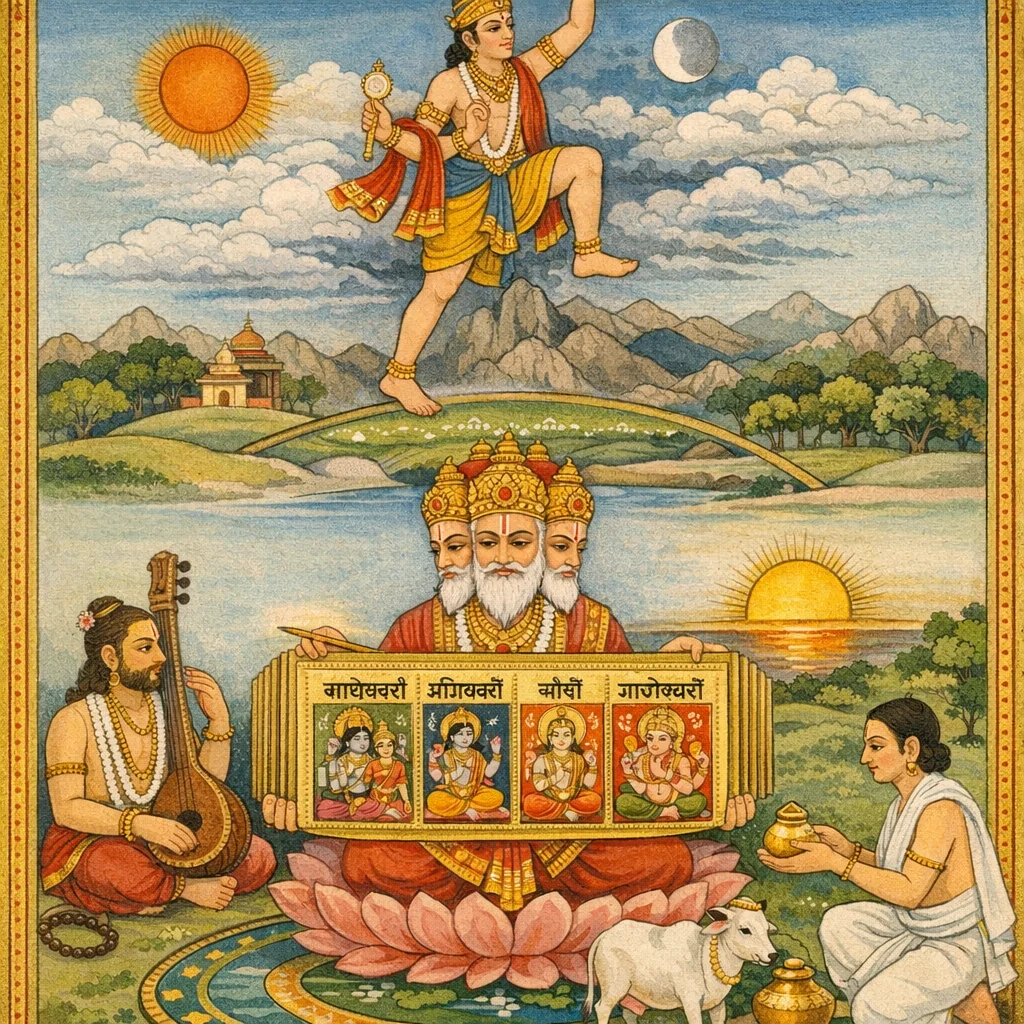
Brahmā outlines the Vāmana Purāṇa as a 10,000-verse scripture centered on Trivikrama (Vāmana–Viṣṇu), arranged in divisions and two parts. He lists its chief narrative themes: questions about the Purāṇa; the severing of Brahmā’s head and release from the skull-sin; the disruption of Dakṣa’s sacrifice; Śiva as Time and the burning of Kāma; conflicts involving Prahlāda, Nārāyaṇa, the Devas and the Asuras; and episodes such as Sukeśī–Arka, cosmic geography, kāmya-vratas, and the sacred account of Devī Durgā. Further topics include Tapatī, Kurukṣetra, Satyā’s greatness, Pārvatī’s birth, austerities and marriage, Gaurī/Kauśikī, Kumāra, Andhaka’s slaying and his assimilation among the gaṇas, the birth of the Maruts, Bala’s exploits, Lakṣmī narratives, Prahlāda tīrthas, Dhundhu, the preta-upākhyāna, Nakṣatra-Puruṣa, and Śrīdāma. The later Bṛhad-Vāmana section is said to contain four Saṃhitās—Māheśvarī, Bhāgavatī, Saurī, Gāṇeśvarī—each of a thousand units, praising Kṛṣṇa’s devotees, Devī’s deliverance of Khāṭa, the Sun’s sin-destroying greatness, and Gaṇeśa’s deeds. The chapter ends with the transmission lineage (Pulastya → Nārada → Vyāsa → Romaharṣaṇa) and a phalaśruti lauding recitation, listening, copying, gifting (especially at the autumnal equinox), and dāna such as the “ghee-cow,” culminating in attainment of Viṣṇu’s supreme abode.
Shlokas
Verse 1
ब्रह्मोवाच । शृणु वत्स प्रवक्ष्यामि पुराणं वामनाभिधम् । त्रिविक्रमचरित्राढ्यं दशसाहस्रसंख्यकम् ॥ १ ॥
Brahmā said: Listen, dear child; I shall expound the Purāṇa called the Vāmana Purāṇa, abundant with the sacred deeds of Trivikrama, and comprising ten thousand verses.
Verse 2
कूर्मकल्पसमाख्यानं वर्गत्रयकथानम् । भागद्वयसमायुक्तं वक्तृश्रोतृशुभावहम् ॥ २ ॥
It contains the account of the Kūrma-kalpa, a narration arranged in three divisions, and is set in two parts—bestowing auspiciousness upon both speaker and listener.
Verse 3
पुराणप्रश्नः प्रथमं ब्रह्मशीर्षच्छिदा ततः । कपालमोचनाख्यानं दक्षयज्ञविहिंसनम् ॥ ३ ॥
First comes the inquiry concerning the Purāṇa; next, the severing of Brahmā’s head; then the tale of release from the sin of the skull; and the account of the disruption of Dakṣa’s sacrifice.
Verse 4
हरस्य कालरूपाख्या कामस्य दहनं ततः । प्रह्लादनारायणयोर्युद्धं देवासुराहवः ॥ ४ ॥
Then is described Hara (Śiva) as the very form of Time; thereafter the burning of Kāma; the battle between Prahlāda and Nārāyaṇa; and the great war of the Devas against the Asuras.
Verse 5
सुकेश्यर्कसमाख्यानं ततो भुवनकोशकम् । ततः काम्यव्रताख्यानं श्रीदुर्गाचरितं ततः ॥ ५ ॥
Next comes the narrative of Sukeśī and Arka; thereafter the description of the Bhuvana-kośa, the cosmic geography of the worlds. Then follows the account of kāmya-vratas, vows undertaken for desired ends, and after that the sacred deeds of Goddess Durgā.
Verse 6
तपतीचरितं पश्चात्कुरुक्षेत्रस्य वर्णनम् । सत्यामाहात्म्यमतुलं पार्वतीजन्मकीर्तनम् ॥ ६ ॥
Thereafter is told the account of Tapatī, then the description of Kurukṣetra; the incomparable greatness of Satyā; and the narration of Pārvatī’s birth.
Verse 7
तपस्तस्या विवाहश्च गौर्युपाख्यानकं ततः । ततः कौशिक्युपाख्यानं कुमारचरितं ततः ॥ ७ ॥
Then comes the account of her austerities (tapas) and her marriage; thereafter the narrative of Gaurī; then the episode of Kauśikī; and thereafter the story of Kumāra (Kārttikeya).
Verse 8
ततोऽन्धकवधाख्यानंसाध्योपाख्यानकंततः । जाबालिचरितं पश्चादरजायाः कथाद्भुता ॥ ८ ॥
Thereafter comes the account of the slaying of Andhaka; then the subsidiary narrative concerning the Sādhyas. After that follows the story of Jābāli, and then the wondrous tale of Arajā.
Verse 9
अंधकेशरयोर्युद्धं गणत्वं चांधकस्य च । मरुतां जन्मकथनं बलेश्च चरितं ततः ॥ ९ ॥
It then describes the battle between Andhaka and Īśvara (Śiva), Andhaka’s becoming one of the gaṇas, the account of the birth of the Maruts, and thereafter the exploits of Bala.
Verse 10
ततस्तु लक्ष्म्याश्चरितं त्रैविक्रममतः परम् । प्रह्लादतीर्थयात्रायां प्रोच्यंतेऽथ कथाः शुभाः ॥ १० ॥
Then the sacred account of Lakṣmī is narrated; and after the tale of Trivikrama, auspicious stories of Lakṣmī are proclaimed. Thereafter, in the pilgrimage section on Prahlāda’s tīrthas, blessed narratives are told.
Verse 11
ततश्च धुन्धु चरितं प्रेतोपाख्यानकं ततः । नक्षत्रपुरुषाख्यानं श्रीदामचरितं ततः ॥ ११ ॥
Then comes the account of Dhundhu; after that, the subsidiary tale concerning a preta, a restless spirit. Next follows the story of Nakṣatra-Puruṣa, the personified Man of the constellations, and thereafter the narrative of Śrīdāma.
Verse 12
त्रिविक्रमचरित्रांते ब्रह्मप्रोक्तः स्तवोत्तमः । प्रह्लादबलिसंवादे सुतले हरिशंसनम् ॥ १२ ॥
At the close of the narrative of Trivikrama is found the supreme hymn spoken by Brahmā; and in the dialogue between Prahlāda and Bali—within Sutala—there is the glorification of Hari.
Verse 13
इत्येष पूर्वभागोऽस्य पुराणस्य तवोदितः । शृण्णतोऽस्योत्तरं भागं बृहद्वामनसंज्ञकम् ॥ १३ ॥
Thus the earlier portion of this Purāṇa has been declared to you. Now hear its later portion, which is known as the Bṛhad-Vāmana section.
Verse 14
माहेश्वरी भागवती सौरी गाणेश्वरी तथा । चतस्रः संहिताश्चात्र पृथक् साहस्रसंख्यया ॥ १४ ॥
Here there are four Saṃhitās—Māheśvarī, Bhāgavatī, Saurī, and Gāṇeśvarī—each separately consisting of a thousand (verses/units).
Verse 15
माहेश्वर्यां तु कृष्णस्य तद्भक्तानां च कीर्तनम् । भागवत्यां जगन्मातुखतारकथाद्भुता ॥ १५ ॥
In the Māheśvarī there is the glorification of Kṛṣṇa and of His devotees; and in the Bhāgavatī there is the wondrous account of the World-Mother, who became a tāraka, a savior, to deliver Khāṭa.
Verse 16
सौर्यां सूर्यस्य महिमा गदितः पापनाशनः । गाणेश्वर्यां गणेशस्य चरितं च महेशितुः ॥ १६ ॥
In the Saurya section, the sin-destroying glory of Sūrya, the Sun, is proclaimed; and in the Gāṇeśvarī section, the deeds and sacred tale of Gaṇeśa, the mighty Lord, are narrated.
Verse 17
इत्येतद्वामनं नाम पुराणं सुविचित्रकम् । पुलस्त्येन समाख्यातं नारदाय महात्मने ॥ १७ ॥
Thus this wondrously variegated Purāṇa is called the Vāmana Purāṇa, narrated by Pulastya to the great-souled Nārada.
Verse 18
ततो नारदतः प्राप्तं व्यासेन सुमहात्मना । व्यासात्तु लब्धवांश्चैतत् तच्छिष्यो रोमहर्षणः ॥ १८ ॥
Thereafter the great-souled Vyāsa received it from Nārada; and from Vyāsa, his disciple Romaharṣaṇa obtained this very Purāṇa.
Verse 19
स चाख्यास्यति विप्रेभ्यो नैमिषीयेभ्य एव च । एवं परंपराप्राप्तं पुराणं वामनं शुभम् ॥ १९ ॥
And he will narrate it to the Brahmin sages—indeed, to those assembled at Naimiṣa as well. Thus, through an unbroken lineage of transmission, this auspicious Vāmana Purāṇa has been received.
Verse 20
ये पठंति च शृण्वंति तेऽपि यांति परां गतिम् । लिखित्वैतत्पुराणं तु यः शरद्विषुवेऽर्पयेत् ॥ २० ॥
Those who recite it and those who listen to it—both attain the supreme state. And whoever has this Purāṇa written out and offers it as a gift on the autumnal equinox likewise attains that highest good.
Verse 21
विप्राय वेदविदुषे घृतधेनुसमन्वितम् । स समुद्धृत्य नरकान्नयेत्स्वर्गं पितॄन्स्वकान् ॥ २१ ॥
He who gives a “ghee-cow” (a cow endowed with ghee and the proper gifts) to a Veda-knowing Brāhmaṇa—such a giver lifts his own ancestors up from hell and leads them to heaven.
Verse 22
देहांते भुक्तभोगोऽसौ याति विष्णोः परं पदम् ॥ २१ ॥
At the end of the body (i.e., at death), having fully experienced the fruits of his enjoyments, he goes to the supreme abode of Viṣṇu.
Verse 23
इति श्रीबृहन्नारदीयपुराणे पूर्वभागे बृहदुपाख्याने चतुर्थपादे वामनपुराणानुक्रमणीवर्णनं नाम पञ्चाधिकशततमोऽध्यायः ॥ १०५ ॥
Thus ends, in the Śrī Bṛhannāradīya Purāṇa—within the Pūrva-bhāga, in the Great Narrative (Bṛhad-upākhyāna), in the Fourth Pāda—the one-hundred-and-fifth chapter entitled “The Anukramaṇikā (contents-outline) of the Vāmana Purāṇa.”
Frequently Asked Questions
An anukramaṇikā functions as a scholastic table-of-contents: it preserves the internal architecture of a Purāṇa, aids memorization and citation, and frames diverse myths, vratas, tīrthas, and hymns as an ordered curriculum culminating in phalaśruti and mokṣa-oriented reception.
Māheśvarī (glorification of Kṛṣṇa and His devotees), Bhāgavatī (the World-Mother’s deliverance of Khāṭa), Saurī/Saurya (Sun’s sin-destroying greatness), and Gāṇeśvarī (deeds of Gaṇeśa).
Hearing and reciting the Purāṇa, having it written and gifted (notably on the autumnal equinox), and performing dāna such as gifting a properly endowed ‘ghee-cow’ to a Veda-knowing Brāhmaṇa—linked with ancestral uplift and final attainment of Viṣṇu’s abode.