The Exposition of the Anukramaṇī (Index/Summary) of the Liṅga Purāṇa
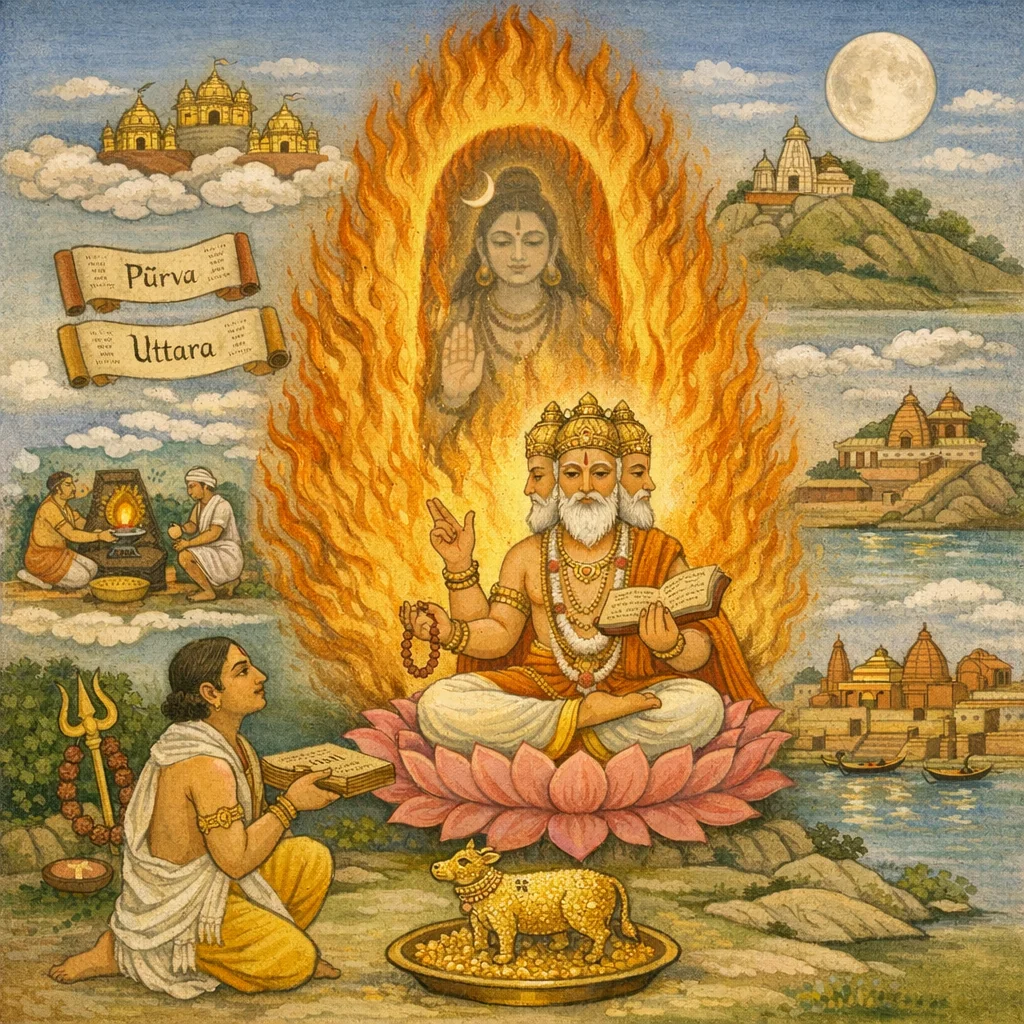
Brahmā introduces the Liṅga Purāṇa as a Śaiva Purāṇa that grants both bhukti (worldly enjoyment) and mukti (liberation) through hearing and recitation. Śiva, abiding in the fiery liṅga, is proclaimed the revelatory source, and the work is said to rest on an Agni-kalpa narrative frame. Vyāsa’s authorship, its two-part arrangement, an extent of about 11,000 verses, and its chief focus on Hara’s greatness are noted. Brahmā then gives a sequential contents-map: the opening inquiry, a brief primordial creation, yoga teaching, kalpa narration, manifestation of the liṅga and Ambā, Sanatkumāra dialogues, Dadhīca, yuga-dharmas, bhuvana-kośa, solar and lunar dynasties, expanded creation, the Tripura episode, liṅga-pratiṣṭhā, liberation from paśu-pāśa, Śiva-vratas, ācāra, prāyaścitta, ominous portents and pacifications, Kāśī and Śrīśaila, Andhaka, Varāha and Narasiṃha, Jalandhara-vadha, Śiva-sahasranāma, destruction of Dakṣa-yajña, Kāma-dahana, and Pārvatī’s marriage. The chapter ends with phalaśruti: gifting a written copy with tila-dhenu on Phālguna Pūrṇimā yields merit; hearing/reciting destroys sin and leads to Śiva’s abode and Śiva-sāyujya.
Shlokas
Verse 1
ब्रह्मोवाच । श्रृणु पुत्र प्रवक्ष्यामि पुराणं लिंगसंज्ञितम् । पठतां श्रृण्वतां चैव भुक्तिमुक्तिप्रदायकम् ॥ १ ॥
Brahmā said: “Listen, my son; I shall now expound the Purāṇa known as the Liṅga Purāṇa—one that bestows both worldly enjoyment (bhukti) and liberation (mukti) upon those who recite it and those who hear it.”
Verse 2
यच्च लिंगाभिधं तिष्ठन्वह्निलिंगे हरोऽभ्यधात् । मह्यं धर्मादिसिद्ध्यर्थं मग्निकल्पकथाश्रयम् ॥ २ ॥
And while abiding in the form known as the Liṅga—within the fiery Liṅga—Hara (Śiva) spoke: “For me, for the attainment of Dharma and the other aims of life, this account is to be taken as resting upon the narrative of the Agni-kalpa.”
Verse 3
तदेव व्यासदेवेन भागद्वयसमन्वितम् । पुराणं लिंगमुदितं बह्वाख्यानविचित्रितम् ॥ ३ ॥
That very work, composed by Vyāsadeva and arranged in two parts, is proclaimed as the Liṅga Purāṇa—richly adorned with many diverse narratives.
Verse 4
तदेकादशसाहस्रं हरमाहात्म्यसूचकम् । परं सर्वपुराणानां सारभूतं जगत्त्रये ॥ ४ ॥
That text consists of eleven thousand verses and proclaims the greatness of Hara (Śiva). It is regarded as supreme among all the Purāṇas—its very essence across the three worlds.
Verse 5
पुराणोपक्रमे प्रश्नः सृष्टिः संक्षेपतः पुरा । योगाख्यानं ततः प्रोक्तं कल्पाख्यानं ततः परम् ॥ ५ ॥
At the very opening of the Purāṇa, a question is raised; then the ancient creation is set forth in brief. Thereafter the teaching on Yoga is proclaimed, and after that comes the narration of the Kalpa.
Verse 6
लिंगोद्भवस्तदंबा च कीर्तिता हि ततः परम् । सनत्कुमारशैलादिसंवादश्चाथ पावनः ॥ ६ ॥
Thereafter the manifestation of the Liṅga and the Divine Mother Ambā is indeed described; and then follows the purifying dialogue of Sanatkumāra with Śaila and others.
Verse 7
ततो दाधीचचरितं युगधर्मनिरूपणम् । ततो भुवन कोशाख्या सूर्यसोमान्वयस्ततः ॥ ७ ॥
Then comes the account of Dadhīca, followed by an exposition of the duties proper to the ages (yugas). Then there is the section called the “Bhuvana-kośa” (Cosmic Sheath), and thereafter the lineage of Sūrya and Soma.
Verse 8
ततश्च विस्तरात्सर्गस्त्रिपुराख्यानकं तथा । लिंगप्रतिष्ठा च ततः पशुपाशविमोक्षणम् ॥ ८ ॥
Then creation is described in fuller detail, along with the narrative of Tripura; thereafter comes the establishment (consecration) of the Śiva-liṅga, and then the liberation of Paśu from the bonds (pāśa).
Verse 9
शिवव्रतानि च तथा सदाचारनिरूपणम् । प्रायश्चितान्यरिष्टानि काशीश्रीशैलवर्णनम् ॥ ९ ॥
It also sets forth the vows dedicated to Śiva, the exposition of righteous conduct (sadācāra), the various expiatory rites (prāyaścitta), the ominous portents and their pacification, and the description of Kāśī and Śrīśaila.
Verse 10
अंधकाख्यानकं पश्चाद्वाराहचरितं पुनः । नृसिंहचरितं पश्चाज्जलंधरवधस्ततः ॥ १० ॥
Thereafter is told the tale of Andhaka; then again the sacred narrative of (Viṣṇu as) Varāha. After that comes the account of Narasiṃha, and then the slaying of Jalaṃdhara.
Verse 11
शैवं सहस्रनामाथ दक्षयज्ञविनाशनम् । कामस्य दहनं पश्चाद्गिरिजायाः करग्रहः ॥ ११ ॥
Next is the Śaiva “Thousand Names,” then the account of the destruction of Dakṣa’s sacrifice; thereafter the burning of Kāma, and finally the hand-taking marriage of Girijā (Pārvatī).
Verse 12
ततो विनायकाख्यानं नृपाख्यानं शिवस्य च । उपमन्युकथा चापि पूर्वभाग इतीरितः ॥ १२ ॥
Thereafter are narrated the account of Vināyaka, the account of the king, and also that of Śiva; and the story of Upamanyu as well—thus is the Pūrva-bhāga described.
Verse 13
विष्णुमाहात्म्यकथनमंबरीषकथा ततः । सनत्कुमारनंदीशसंवादश्च पुनर्मुने ॥ १३ ॥
Then comes the narration of Viṣṇu’s greatness, followed by the account of Ambarīṣa; and again, O sage, the dialogue between Sanatkumāra and Nandīśa.
Verse 14
शिवमाहात्म्यसंयुक्तः स्नानयागादिकं ततः । सूर्यपूजाविधिश्चैव शिवपूजा च मुक्तिदा ॥ १४ ॥
Connected with the glorification of Śiva, it then teaches the rites of sacred bathing, sacrificial worship (yajña), and the like; it also sets forth the procedure for worship of Sūrya, and the worship of Śiva that bestows liberation.
Verse 15
दानानि बहुधाक्तानि श्राद्धप्रकरणं ततः । प्रतिष्ठातं त्रमुदितं ततोऽघोरस्य कीर्तनम् ॥ १५ ॥
Then many kinds of charitable gifts are described; thereafter comes the section on the śrāddha rites. Next the account of Pratiṣṭhāta and Tramudita is given, and then the kīrtana—glorification of Aghora—is recounted.
Verse 16
वज्रेश्वरी महाविद्या गायत्रीमहिमा ततः । त्र्यंबकस्य च माहात्म्यं पुराणश्रवणस्य च ॥ १६ ॥
Next come the great sacred science (Mahāvidyā) of Vajreśvarī, then the glory of the Gāyatrī; and also the greatness of Tryambaka (Śiva) and of listening to the Purāṇas.
Verse 17
एवं चोपरिभागस्ते लैंगस्य कथितो मया । व्यासेन हि निबद्धस्य रुद्रामाहात्म्यसूचितः ॥ १७ ॥
Thus I have explained to you the later (upper) section of the Liṅga Purāṇa, composed by Vyāsa, wherein the greatness of Rudra is set forth.
Verse 18
लिखित्वैतत्पुराणं तु तिलधेनुसमन्वितम् । फाल्गुन्यां पूर्णिमायां यो दद्याद्भक्त्या द्विजातये ॥ १८ ॥
Having had this Purāṇa written out, and accompanied by the gift of a ‘sesame-cow’ (tila-dhenu), whoever on the full-moon day of Phālguna offers it with devotion to a dvija (twice-born) gains the meritorious fruit of that sacred giving.
Verse 19
स लभेच्छिवसायुज्यं जरामरणवर्जितम् । यः पठेच्छृणुयाद्वापि लैंगं पापापहं नरः ॥ १९ ॥
That person attains sāyujya—union with Śiva, free from old age and death—who recites, or even merely listens to, the Liṅga Purāṇa, the sin-destroying text.
Verse 20
स भुक्तभोगो लोकेऽस्मिन्नंते शिवपुरं व्रजेत् । लिंगानुक्रमणीमेतां पठेद्यः श्रृणुयात्तथा ॥ २० ॥
Whoever recites, or likewise listens to, this Anukramaṇī—the index‑summary of the Liṅga Purāṇa—having enjoyed the fruits of life in this world, at the end goes to Śiva’s abode.
Verse 21
तावुभौ शिवभक्तौ तु लोकद्वितयभोगिनौ । जायतां गिरिजाभर्तुः प्रसादान्नात्र संशयः ॥ २१ ॥
Indeed, those two will be devotees of Śiva, enjoying prosperity in both worlds; by the grace of the Lord, the husband of Girijā, it shall be so—of this there is no doubt.
Verse 22
इति श्रीबृहन्नारदीयपुराणे पूर्वभागे बृहदुपाख्याने चतुर्थपादे लिंगपुराणानुक्रमणीनिरूपणं नाम द्व्युत्तरशततमोऽध्यायः ॥ १०२ ॥
Thus ends, in the Śrī Bṛhannāradīya Purāṇa—within the Pūrva-bhāga, in the Great Narrative (Bṛhad-upākhyāna), in the Fourth Pada—the one-hundred-and-second chapter entitled “The Exposition of the Anukramaṇī (Index/Summary) of the Liṅga Purāṇa.”
Frequently Asked Questions
It functions as a traditional knowledge map—identifying the Liṅga Purāṇa’s internal sequence of doctrines, myths, rituals, and tīrtha materials—so that reciters, students, and commentators can locate themes (vrata-kalpa, prāyaścitta, mokṣa-dharma) within a coherent Purāṇic curriculum.
It praises hearing and recitation as sin-destroying and liberation-granting, and additionally highlights a gifting rite: commissioning a written copy and offering it with a tila-dhenu (sesame-cow gift) to a dvija on Phālguna Pūrṇimā, performed with devotion.