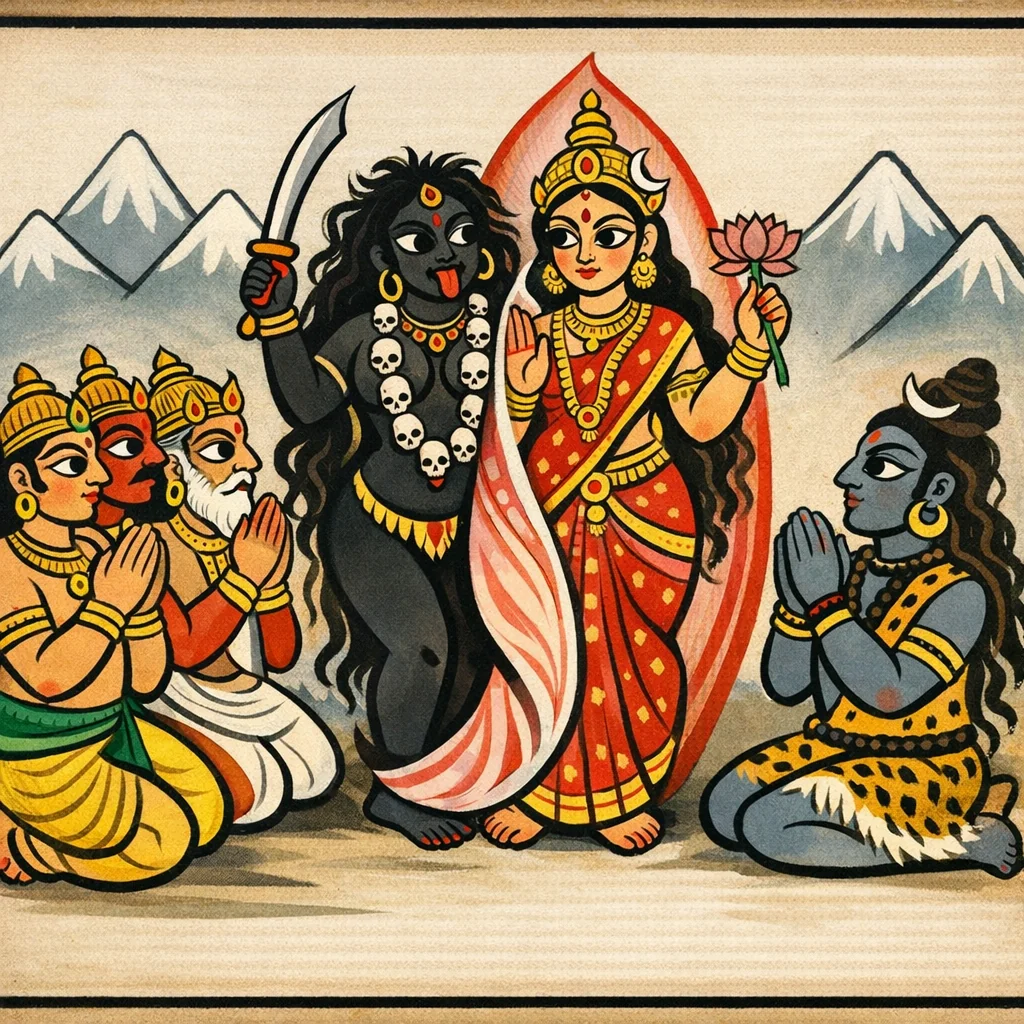
Adhyaya 85: The Gods’ Hymn to the Goddess and the Emergence of Kaushiki; Shumbha Sends His Envoy
देवीस्तुति-कौशिकीप्रादुर्भाव-शुम्भदूतप्रेषण (Devī-stuti–Kauśikī-prādurbhāva–Śumbha-dūta-preṣaṇa)
Suratha's Devotion
In Adhyaya 85, the gods gather and offer a sacred hymn of praise to the Great Goddess, seeking her protection and victory over the asuras. From Uma’s own being a pure radiance manifests as Kaushiki, a new luminous form of the Devi meant to destroy adharma. Hearing of her splendor, Shumbha sends an envoy to approach her, press his claim, and proclaim his power in pride.
Divine Beings
Celestial Realms
Key Content Points
Focus Keywords
Shlokas in Adhyaya 85
Verse 1
ऋषिरुवाच पुरा शुम्भनिशुम्भाभ्यामसुराभ्यां शचीपतेः । त्रैलोक्यं यज्ञभागाश्च हृता मदबलाश्रयात् ॥
The Ṛṣi said: “Formerly, the asuras Śumbha and Niśumbha—relying on the strength of their pride—deprived Indra (lord of Śacī) of the three worlds and of the portions of sacrifice.”
Verse 2
तावेव सूर्यतां तद्वदधिकारं तथैन्दवम् । कौबेरमथ याम्यं च चक्राते वरुणस्य च ॥
“Those two themselves assumed the office of the Sun, and likewise the authority of the Moon; and they took up the regencies of Kubera, of Yama, and also of Varuṇa.”
Verse 3
तावेव पवनार्धि च चक्रतुर्वह्निकर्म च । अन्येषाञ्चाधिकारान् स स्वयमेवाधितिष्ठति ॥ ततो देवा विनिर्धूता भ्रष्टराज्याः पराजिताः ॥
Those two also carried out the functions of Vāyu and Indra and the rites of Agni; and they themselves assumed the offices of the other gods as well. Therefore the gods were driven out, deprived of their kingdoms, and defeated.
Verse 4
हृताधिकारास्त्रिदशास्ताभ्यां सर्वे निराकृताः । महासुराभ्यां तां देवीं संस्मरन्त्यपराजिताम् ॥
The Thirty gods, stripped of their offices and all cast out by those two great Asuras, remembered the unconquered Goddess, Aparājitā.
Verse 5
तयास्माकं वरो दत्तो यथाऽपत्त्सु स्मृताखिलाः । भवतां नाशयिष्यामि तत्क्षणात् परमापदः ॥
She granted us a boon: “Whenever, in times of distress, you all remember me, I shall destroy your greatest calamities at that very moment.”
Verse 6
इति कृत्वा मतिं देवा हिमवन्तं नगेश्वरम् । जग्मुस्तत्र ततो देवीं विष्णुमायां प्रतुṣ्टुवुः ॥
Having thus resolved, the gods went to Himavat, lord of mountains; and there they praised the Goddess—Viṣṇu’s Māyā.
Verse 7
देवा ऊचुः नमो देव्यै महादेव्यै शिवायै सततं नमः । नमः प्रकृत्यै भद्रायै नियताः प्रणताः स्म ताम् ॥
The gods said: “Salutation to the Goddess, to the Great Goddess; constant salutation to Śivā. Salutation to Prakṛti, to the Auspicious One (Bhadrā). Disciplined and bowed down, we prostrate to her.”
Verse 8
रौद्रायै नमो नित्यायै गौर्यै धात्र्यै नमो नमः । नमो जगत्प्रतिष्ठायै देव्यै कृत्यै नमो नमः ॥
Salutation to the Fierce One (Raudrā), to the Eternal One, to Gaurī, to Dhātrī—salutation again and again. Salutation to the Goddess who is the foundation of the world, to the Goddess Kṛtyā—salutation again and again.
Verse 9
द्योत्स्नायै चेन्दुरूपिण्यै सुखायै सततं नमः । कल्याण्यै प्रणतां वृद्ध्यै सिद्ध्यै कुर्मो नमो नमः ॥
Constant salutation to her who is moonlight, who has the form of the moon, who is happiness. To Kalyāṇī; to the increase of those who bow; to Siddhi—we offer salutation again and again.
Verse 10
नैरृत्यै भूभृतां लक्ष्म्यै शर्वाण्यै ते नमो नमः । दुर्गायै दुर्गपारायै सारायै सर्वकारिण्यै । ख्यात्यै तथैव कृष्णायै धूम्रायै सततं नमः ॥
Salutation again and again to you as Nairṛtī; to the Lakṣmī of the mountains; to Śarvāṇī. Salutation to Durgā, to her who carries one beyond difficulties, to the Essence, to the Doer of all. Constant salutation to Khyāti, and likewise to Kṛṣṇā and to Dhūmrā.
Verse 11
अतिसौम्यातिरौद्रायै नतास्तस्यै नमो नमः । (म)नो जगत्प्रतिष्ठायै देव्यै कृत्यै नमो नमः ॥
Salutation again and again to her who is exceedingly gentle and exceedingly fierce; bowed to her, we offer homage. Salutation again and again to the Goddess who is the foundation of the world, to Kṛtyā.
Verse 12
या देवी सर्वभूतेषु विष्णुमायेति शब्दिता । नमस्तस्यै नमस्तस्यै नमस्तस्यै नमो नमः ॥
That Goddess who, in all beings, is spoken of as Viṣṇu-māyā—to her be salutation, to her be salutation, to her be salutation—salutation again and again.
Verse 13
या देवी सर्वभूतेषु चेतनेत्यभिधीयते । नमस्तस्यै नमस्तस्यै नमस्तस्यै नमो नमः ॥
Salutations again and again to that Goddess who, in all beings, is spoken of as consciousness.
Verse 14
या देवी सर्वभूतेषु बुद्धिरूपेण संस्थिता । नमस्तस्यै नमस्तस्यै नमस्तस्यै नमो नमः ॥
Salutations again and again to that Goddess who abides in all beings in the form of intellect.
Verse 15
या देवी सर्वभूतेषु निद्रारूपेण संस्थिता । नमस्तस्यै नमस्तस्यै नमस्तस्यै नमो नमः ॥
Salutations again and again to that Goddess who abides in all beings in the form of sleep.
Verse 16
या देवी सर्वभूतेषु क्षुधारूपेण संस्थिता । नमस्तस्यै नमस्तस्यै नमस्तस्यै नमो नमः ॥
Salutations again and again to that Goddess who abides in all beings in the form of hunger.
Verse 17
या देवी सर्वभूतेषु छायारूपेण संस्थिता । नमस्तस्यै नमस्तस्यै नमस्तस्यै नमो नमः ॥
Salutations again and again to that Goddess who abides in all beings in the form of shadow.
Verse 18
या देवी सर्वभूतेषु शक्तिरूपेण संस्थिता । नमस्तस्यै नमस्तस्यै नमस्तस्यै नमो नमः ॥
Salutations again and again to that Goddess who abides in all beings in the form of power.
Verse 19
या देवी सर्वभूतेषु तृष्णारूपेण संस्थिता । नमस्तस्यै नमस्तस्यै नमस्तस्यै नमो नमः ॥
Salutations again and again to that Goddess who abides in all beings in the form of thirst.
Verse 20
या देवी सर्वभूतेषु क्षान्तिरूपेण संस्थिता । नमस्तस्यै नमस्तस्यै नमस्तस्यै नमो नमः ॥
Salutations again and again to that Goddess who abides in all beings in the form of forbearance.
Verse 21
या देवी सर्वभूतेषु जातिरूपेण संस्थिता । नमस्तस्यै नमस्तस्यै नमस्तस्यै नमो नमः ॥
Salutations again and again to that Goddess who abides in all beings in the form of birth (species/natal condition).
Verse 22
या देवी सर्वभूतेषु लज्जारूपेण संस्थिता । नमस्तस्यै नमस्तस्यै नमस्तस्यै नमो नमः ॥
Salutations again and again to that Goddess who abides in all beings in the form of modesty (a sense of shame/restraint).
Verse 23
या देवी सर्वभूतेषु शान्तिरूपेण संस्थिता । नमस्तस्यै नमस्तस्यै नमस्तस्यै नमो नमः ॥
To that Goddess who abides in all beings in the form of peace—salutations to Her, salutations to Her, salutations to Her; again and again, salutations.
Verse 24
या देवी सर्वभूतेषु श्रद्धारूपेण संस्थिता । नमस्तस्यै नमस्तस्यै नमस्तस्यै नमो नमः ॥
To that Goddess who abides in all beings in the form of faith—salutations to Her, salutations to Her, salutations to Her; again and again, salutations.
Verse 25
या देवी सर्वभूतेषु कान्तिरूपेण संस्थिता । नमस्तस्यै नमस्तस्यै नमस्तस्यै नमो नमः ॥
To that Goddess who abides in all beings in the form of radiance and beauty—salutations to Her, salutations to Her, salutations to Her; again and again, salutations.
Verse 26
या देवी सर्वभूतेषु लक्ष्मीरूपेण संस्थिता । नमस्तस्यै नमस्तस्यै नमस्तस्यै नमो नमः ॥
To that Goddess who abides in all beings in the form of Lakṣmī—fortune and auspicious prosperity—salutations to Her, salutations to Her, salutations to Her; again and again, salutations.
Verse 27
या देवी सर्वभूतेषु धृतिरूपेण संस्थिता । नमस्तस्यै नमस्तस्यै नमस्तस्यै नमो नमः ॥
To that Goddess who abides in all beings in the form of steadfastness and fortitude—salutations to Her, salutations to Her, salutations to Her; again and again, salutations.
Verse 28
या देवी सर्वभूतेषु वृत्तिरूपेण संस्थिता । नमस्तस्यै नमस्तस्यै नमस्तस्यै नमो नमः ॥
To that Goddess who abides in all beings in the form of vṛtti (activity/behavior)—salutations to Her, salutations to Her, salutations to Her; again and again, salutations.
Verse 29
या देवी सर्वभूतेषु स्मृतिरूपेण संस्थिता । नमस्तस्यै नमस्तस्यै नमस्तस्यै नमो नमः ॥
To that Goddess who abides in all beings in the form of memory—salutations to Her, salutations to Her, salutations to Her; again and again, salutations.
Verse 30
या देवी सर्वभूतेषु दयारूपेण संस्थिता । नमस्तस्यै नमस्तस्यै नमस्तस्यै नमो नमः ॥
To that Goddess who abides in all beings in the form of compassion—salutations to Her, salutations to Her, salutations to Her; again and again, salutations.
Verse 31
या देवी सर्वभूतेषु नीतिरूपेण संस्थिता । नमस्तस्यै नमस्तस्यै नमस्तस्यै नमो नमः ॥
To that Goddess who abides in all beings in the form of right conduct (nīti)—salutations to Her, salutations to Her, salutations to Her; again and again, salutations.
Verse 32
या देवी सर्वभूतेषु तुष्टिरूपेण संस्थिता । नमस्तस्यै नमस्तasyai namastasyai namo namaḥ ॥
To that Goddess who abides in all beings in the form of contentment (santoṣa)—salutations to Her, salutations to Her, salutations to Her; again and again, salutations.
Verse 33
या देवी सर्वभूतेषु पुष्टिरूपेण संस्थिता । नमस्तस्यै नमस्तस्यै नमस्तस्यै नमो नमः ॥
Salutations again and again to that Goddess who abides in all beings in the form of nourishment and thriving.
Verse 34
या देवी सर्वभूतेषु मातृरूपेण संस्थिता । नमस्तस्यै नमस्तस्यै नमस्तस्यै नमो नमः ॥
Salutations again and again to that Goddess who abides in all beings in the form of Motherhood.
Verse 35
या देवी सर्वभूतेषु भ्रान्तिरूपेण संस्थिता । नमस्तस्यै नमस्तस्यै namastasyai namo namaḥ ॥
Salutations again and again to that Goddess who abides in all beings in the form of delusion and error.
Verse 36
इन्द्रियाणामधिष्ठात्री भूतानां चाखिलेषु या । भूतेषु सततं तस्यै व्याप्तिदेव्यै नमो नमः ॥
Obeisance to that all-pervading Goddess who, as the presiding power of the senses, continually abides in all beings everywhere.
Verse 37
चितिरूपेण या कृत्स्नमेतद् व्याप्य स्थिता जगत् । नमस्तस्यै नमस्तस्यै नमस्तस्यै नमो नमः ॥
Salutations again and again to that Goddess who, in the form of consciousness, pervades and abides in this entire universe.
Verse 38
स्तुता सुरैः पूर्वमभीष्टसंश्रयात् तथासुरेन्द्रेण दिनेṣu सेविता । करोतु सा नः शुभहेतुरीश्वरी शुभानि भद्राण्यभिहन्तु चापदः ॥
May that sovereign Goddess—formerly praised by the gods as the refuge that grants the fulfillment of their desired aims, and served even by the lord of the asuras in times of need—be for us the cause of auspiciousness; may she bestow blessings and strike down calamities.
Verse 39
या साम्प्रतं चोद्धतदैत्यतापितैरस्माभिरीशा च सुरैर्नमस्यते । या च स्मृता तत्क्षणमेव हन्ति नः सर्वापदो भक्तिविनम्रकूर्तिभिः ॥
She who is now revered by us and by the gods, even as we are tormented by the arrogant daityas—when remembered, she destroys at that very moment all our misfortunes, for those who bow down in devotion.
Verse 40
ऋषिरुवाच एवṃ स्तवादियुक्तानां देवानां तत्र पार्वती । स्त्रातुमभ्याययौ तोये जाह्नव्याः नृपनन्दन ॥
The seer said: Thus, while the gods were engaged in hymn and praise, Pārvatī came there to bathe in the waters of the Jāhnavī (Gaṅgā), O delight of kings.
Verse 41
साऽब्रवीत्तान् सुरान् सुभ्रूर्भवद्भिः स्तूयतेऽत्र का । शरीरकोशतश्चास्याः समुद्भूता ब्रवीच्छिवा ॥
She, the fair-browed one, said to those gods, “Who is being praised here by you?” Then, from her bodily sheath there arose another form, who spoke—(she who is) Śivā.
Verse 42
स्तोत्रं ममैैतत् क्रियते शुम्भदैत्यनिराकृतैः । देवैः समेतैः समरे निशुम्भेन पराजितैः ॥
“This hymn is being offered to me by the assembled gods—gods who have been freed from the daitya Śumbha—gods who in battle had been defeated by Niśumbha.”
Verse 43
शरीरकोशाद्यत्तस्याः पार्वत्या निःसृताम्बिका । कौशिकीति समस्तेषु ततो लोकेषु गीयते ॥
From the bodily sheath (kośa) of Pārvatī, Ambikā came forth; therefore, in all the worlds she is celebrated by the name Kauśikī.
Verse 44
तस्यां विनिर्गतायां तु कृष्णाभूत् सापि पार्वती । कालीकेति समाख्याता हिमाचलकृताश्रया ॥
When she (Ambikā/Kauśikī) had gone forth, Pārvatī herself became dark; she was then known as Kālikā, having the Himālaya as her abode.
Verse 45
ततोऽम्बिकां परं रूपं बिभ्राणां सुमनोहरम् । ददर्श चण्डो मुण्डश्च भृत्यौ शुम्भनिशुम्भयोः ॥
Then Caṇḍa and Muṇḍa, the servants of Śumbha and Niśumbha, saw Ambikā bearing a supreme form—exceedingly enchanting.
Verse 46
ताभ्यां शुम्भाय चाख्याता अतीव सुमनोहरा । काप्यास्ते स्त्री महाराज भासयन्ती हिमाचलम् ॥
They reported to Śumbha: ‘A certain woman, O great king, exceedingly enchanting, dwells there, illumining the Himālaya.’
Verse 47
नैव तादृक् क्वचिद्रूपं दृष्टं केनचिदुत्तमम् । ज्ञायतां काप्यसौ देवी गृह्यतां चासुरेश्वर ॥
No such unsurpassed beauty has ever been seen anywhere by anyone. Let it be ascertained who that goddess is—and let her be taken, O lord of asuras.
Verse 48
स्त्रीरत्नमतिचार्वङ्गी द्योतयन्ती दिशस्त्विषा । सा तु तिष्ठति दैत्येन्द्र तां भवान् द्रष्टुमर्हति ॥
A jewel among women, with exceedingly lovely limbs, she illumines the directions with her radiance. She stands there, O lord of the Daityas; go and behold her.
Verse 49
यानि रत्नानि मणयो गजाश्वादीनि वै प्रभो । त्रैलोक्ये तु समस्तानि साम्प्रतं भान्ति ते गृहे ॥
Whatever treasures—gems, elephants, horses, and the like—exist in the three worlds, O lord, all of them now shine in your house.
Verse 50
ऐरावतः समानीतो गजरत्नं पुरन्दरात् । पारिजाततरुश्चायं तथैवोच्चैः श्रवा हयः ॥
Airāvata, the elephant-treasure, has been brought from Purandara (Indra); and this Pārijāta tree, as well as the horse Uccaiḥśravā.
Verse 51
विमानं हंससंयुक्तमेतत्तिष्ठति तेऽङ्गणे । रत्नभूतमिहानीतं यदासीद्वेधसोऽद्भुतम् ॥
This aerial chariot yoked with swans stands in your courtyard; and here has been brought that wondrous jewel-like object which once belonged to Vedhas (Brahmā) as a marvel.
Verse 52
निधिरेष महापद्मः समानीतो धनेश्वरात् । किञ्जल्किनीं ददौ चाब्धिर्मालामम्लानपङ्कजाम् ॥
This treasure, the Mahāpadma, has been brought from Dhaneśvara (Kubera); and the ocean too bestowed a garland with filaments, made of unfading lotuses.
Verse 53
छत्रं ते वारुणं गेहे काञ्चनास्त्रावि तिष्ठति । तथायं स्यन्तनवरो यः पुरासीत् प्रजापतेः ॥
In your house stands Varuṇa’s umbrella, and the golden bow-weapon as well; and here is that excellent chariot which formerly belonged to Prajāpati.
Verse 54
मृत्योः उत्क्रान्तिदा नाम शक्तिरीश त्वया हृता । पाशः सलिलराजस्य भ्रातुस्तव परिग्रहे ॥
You have taken the spear called ‘Utkrāntidā’ belonging to Death; and the noose of the Lord of waters is in your possession—(as also) of your brother.
Verse 55
निशुम्भस्य अब्धिजाताश्च समस्ता रत्नजातयः । वह्निरपि ददौ तुभ्यमग्निशौचे च वाससी ॥
All varieties of ocean-born jewels belonging to Niśumbha are yours; and even Fire, Agni, gave you the two garments of Agniśauca.
Verse 56
एवं दैत्येन्द्र रत्नानि समस्तान्याहृतानि ते । स्त्रीरत्नमेषा कल्याणी त्वया कस्मान्न गृह्यते ॥
Thus, O lord of the daityas, all jewels have been brought to you. This auspicious one is a ‘woman-jewel’—why is she not taken by you?
Verse 57
ऋषिरुवाच । निशम्येति वचः शुम्भः स तदा चण्डमुण्डयोः । प्रेषयामास सुग्रीवं दूतं देव्याः महासुरः ॥
The ṛṣi said: Hearing these words, Śumbha then, in the presence of Caṇḍa and Muṇḍa, sent Sugrīva—the great asura—as a messenger to the Goddess.
Verse 58
शुम्भ उवाच । इति चेति च वक्तव्या सा गत्वा वचनान्मम । यथा चाभ्येति संप्रीत्या तथा कार्यं त्वया लघु ॥
Śumbha said: “Go, and tell her these words of mine—act swiftly, so that she may come here with goodwill.”
Verse 59
स तत्र गत्वा यत्रास्ते शैलोद्देशेऽतिशोभने । तां च देवीं ततः प्राह श्लक्ष्णं मधुरया गिरा ॥
Going to where she dwelt—upon a most splendid mountain spot—he then addressed the Goddess in polished, sweet words.
Verse 60
दूत उवाच । देवि दैत्येश्वरः शुम्भस्त्रैलोक्ये परमेश्वरः । दूतोऽहं प्रेषितस्तेन त्वत्सकाशमिहागतः ॥
The messenger said: “O Goddess, Śumbha—lord of the daityas—is the supreme ruler in the three worlds. Sent by him, I have come into your presence.”
Verse 61
अव्याहताज्ञः सर्वासु यः सदा देवयोनिṣu । निर्जिताखिलदैत्यारिः स यदाह शृणुष्व तत् ॥
He whose command is never thwarted among all the divine races, who has conquered all the enemies of the daityas—hear what he says.
Verse 62
मम त्रैलोक्यमखिलं मम देवा वशानुगाः । यज्ञभागानहं सर्वानुपाश्नामि पृथक् पृथक् ॥
‘All the three worlds are mine; the gods follow my control. I myself consume all the portions of sacrifice, each and every one.’
Verse 63
त्रैलोक्ये वररत्नानि मम वश्यान्यशेषतः । तथैव गजरत्नं च हृत्वा देवेन्द्रवाहनम् ॥
In the three worlds, all excellent jewels are wholly under my dominion; likewise I have taken the jewel among elephants as well—Indra’s mount.
Verse 64
क्षीरोदमथनोद्भूतमश्वरत्नं ममामरैः । उच्चैःश्रवससंज्ञं तत्प्रणिपत्य समर्पितम् ॥
The horse-jewel born from the churning of the Milk Ocean—named Uccaiḥśravas—was offered to me by the gods with reverent obeisance.
Verse 65
यानि चान्यानि देवेषु गन्धर्वेषूरगेषु च । रत्नभूतानि भूतानि तानि मय्येव शोभने ॥
And whatever other beings there are among the gods, gandharvas, and nāgas that are “of the nature of jewels”—all of them, O beautiful one, belong to me alone.
Verse 66
स्त्रीरत्नभूतां त्वां देवि लोके मन्यामहे वयम् । सा त्वमस्मानुपागच्छ यतो रत्नभुजो वयम् ॥
O Goddess, in this world we regard you as a “woman-jewel.” Therefore come to us, for we are the enjoyers and possessors of jewels.
Verse 67
मां वा ममानुजं वापि निशुम्भमुरुविक्रमम् । भज त्वं चञ्चलापाङ्गि रत्नभूतासि वै यतः ॥
Choose either me, or my younger brother Niśumbha, mighty in prowess. O you of restless sidelong glances, worship and consort with one of us, for truly you are jewel-like.
Verse 68
परमैश्वर्यमतुलं प्राप्स्यसे मत्परिग्रहात् । एतद्बुद्ध्या समालोच्य मत्परिग्रहतां व्रज ॥
By becoming mine you will attain supreme, unequalled sovereignty. Reflect on this with your intellect and enter into the state of being accepted and possessed by me.
Verse 69
ऋषिरुवाच इत्युक्ता सा तदा देवी गम्भीरान्तःस्मिता जगौ । दुर्गा भगवती भद्रा ययेदं धार्यते जगत् ॥
The seer said: Thus addressed, the Goddess then spoke with a deep, inward smile—Durgā, the Blessed Lady, the Auspicious One, by whom this world is upheld.
Verse 70
देव्युवाच सत्यं उक्तत्वया नात्र मिथ्या किञ्चित्त्वयोदितम् । त्रैलोक्याधिपतिः शुम्भो निशुम्भश्चापि तादृशः ॥
The Goddess said: What you have said is true; there is nothing false in it. Śumbha is the lord of the three worlds, and Niśumbha too is of that kind.
Verse 71
किं त्वत्र यत्प्रतिज्ञातं मिथ्या तत्क्रियते कथम् । श्रूयतामल्पबुद्धित्वात् प्रतिज्ञा या कृता पुरा ॥
But how can the vow made here be rendered false in deed? Listen—because of your little understanding—to the pledge that was made earlier.
Verse 72
यो मां जयति संग्रामे यो मे दर्पं व्यपोहति । यो मे प्रतिबलो लोके स मे भर्ता भविष्यति ॥
He who conquers me in battle, who removes my pride, who is my equal in strength in the world—he shall be my husband.
Verse 73
तदागच्छतु शुम्भोऽत्र निशुम्भो वा महासुरः । मां जित्वा किं चिरेणात्र पाणिं गृह्णातु मे लघु ॥
“Let Śumbha come here now—or Niśumbha, that great asura. After conquering me, why delay? Let him quickly take my hand (in marriage).”
Verse 74
दूत उवाच अवलिप्तासि मैवं त्वं देवि ब्रूहि ममाग्रतः । त्रैलोक्ये कः पुमांस्तिष्ठेदग्रे शुम्भनिशुम्भयोः ॥
The messenger said: “You are arrogant—do not speak so, O Goddess, before me. In the three worlds, what man can stand in front of Śumbha and Niśumbha?”
Verse 75
अन्येषामपि दैत्यानां सर्वे देवा न वै युधि । तिष्ठन्ति सम्मुखे देवि किं पुनः स्त्री त्वमेकिका ॥
“Even against other daityas, all the gods do not stand facing them in battle, O Goddess—how much less you, a woman alone!”
Verse 76
इन्द्राद्याः सकला देवास्तस्थुर्येषां न संयुगे । शुम्भादीनां कथं तेषां स्त्री प्रयास्यसि सम्मुखम् ॥
“Indra and all the gods could not stand firm against them in battle; how will you, a woman, go to face Śumbha and the rest?”
Verse 77
सा त्वं गच्छ मयैवोक्ता पार्श्वं शुम्भनिशुम्भयोः । केशाकर्षणनिर्धूतगौरवा मा गमिष्यसि ॥
“So go—thus have I told you—to the side of Śumbha and Niśumbha. Do not end up going there with your dignity shaken off, dragged by the hair.”
Verse 78
देव्युवाच एवमेतद् बली शुम्भो निशुम्भश्चातिवीर्यवान् । किं करोमि प्रतिज्ञा मे यदनालोचिता पुरा ॥
The Goddess said: “So it is—Śumbha is strong, and Niśumbha is exceedingly mighty. What can I do? Earlier I made a vow (vrata) without due consideration.”
Verse 79
स त्वं गच्छ मयोक्तं ते यदेतत्सर्वमादृतः । तदाचक्ष्वासुरेन्द्राय स च युक्तं करोतु तत् ॥
“So go, and carefully heed all that I have told you. Report it to the lord of the asuras, and let him do what is proper in that matter.”
Frequently Asked Questions
The chapter frames sovereignty and power as contingent upon shakti rather than mere possession: the devas’ stuti articulates a shaktic metaphysics in which the Goddess is the immanent capacity (buddhi, śakti, smṛti, etc.) sustaining all beings, implying that cosmic order is restored not by entitlement but by alignment with the supreme power that underwrites dharma.
Situated in the Sāvarṇika Manvantara setting of the Devīmāhātmya, it advances the Manvantara-level crisis motif—periodic disruption of divine administration (adhikāras, yajñabhāgas) and its restoration through Devī—by moving from dispossession to invocation and divine manifestation, initiating the corrective cycle that will re-stabilize the cosmic offices.
It contains a major stuti identifying Devī as Viṣṇumāyā and as the indwelling presence in all beings, and it narrates the pivotal theophany of Kauśikī’s emergence from Pārvatī (with the simultaneous identification of Pārvatī as Kālī), followed by the diplomatic challenge that formalizes the coming battle with Śumbha-Niśumbha.