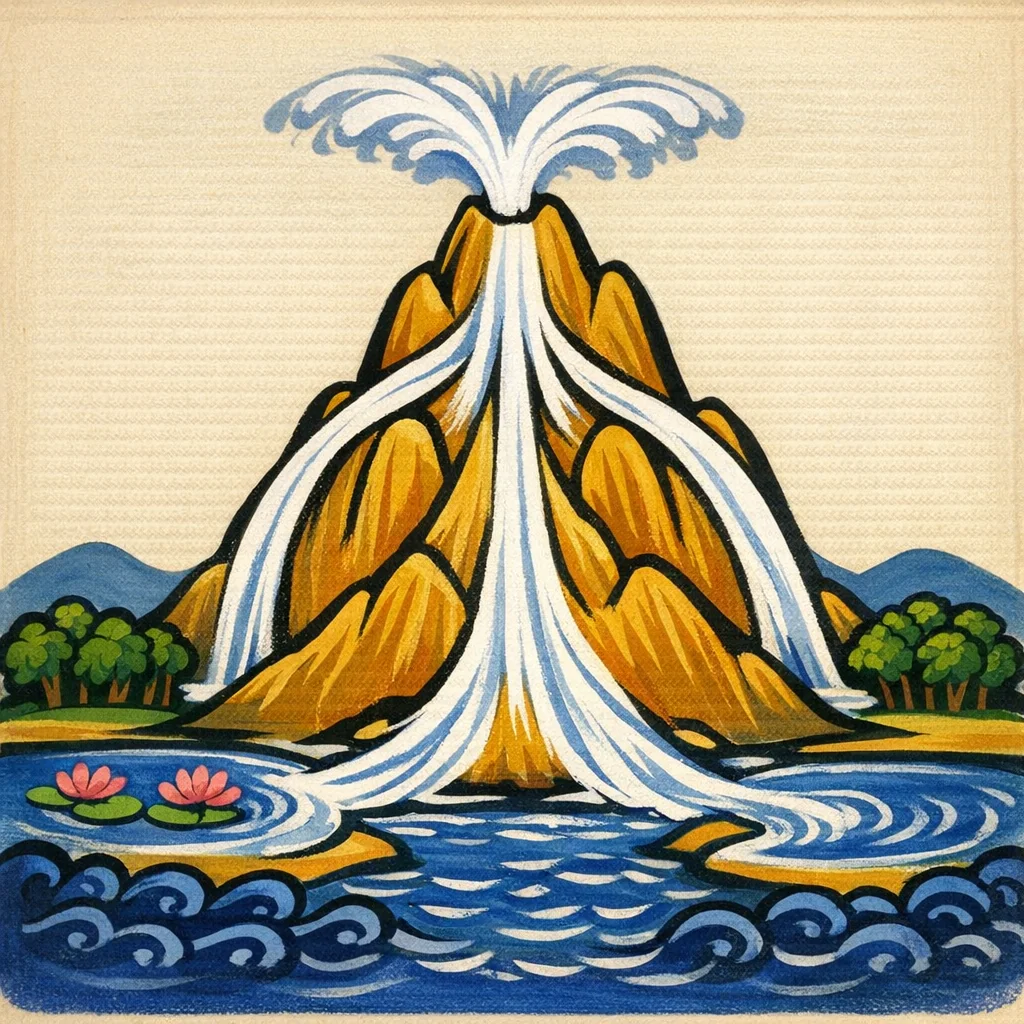
Adhyaya 56: The Descent and Fourfold Course of the Ganga; Jambudvipa’s Varshas and Their Conditions
गङ्गावतरण-चतुर्धाप्रवाह-वर्णनम् (Gaṅgāvataraṇa–Caturdhāpravāha–Varṇanam)
Seasons and Time
This adhyaya recounts the sacred Ganga’s descent from heaven: Lord Shiva receives her in his matted locks and releases her as four streams flowing to the four directions to purify the world. It then describes Jambudvipa and its varshas, outlining each region’s conditions of life, the manner of dharma observed there, and the differing fruits of karma experienced by beings.
Divine Beings
Celestial Realms
Key Content Points
Focus Keywords
Shlokas in Adhyaya 56
Verse 1
इति श्रीमार्कण्डेयपुराणे भुवनकोशे पञ्चपञ्चाशोऽध्यायः षट्पञ्चाशोऽध्यायः- ५६ मार्कण्डेय उवाच धराधरां जगद्योनॆः पदं नारायणस्य च । ततः प्रवृत्ता या देवी गङ्गा त्रिपथगामिनी ॥
Mārkaṇḍeya said: From the lofty support of the earth—the source of the world—and from the footstep of Nārāyaṇa, there issued forth the divine Gaṅgā, the river who moves along the three paths (heaven, earth, and the nether regions).
Verse 2
सा प्रविश्य सुधायोनिṃ सोममाधारमम्भसाम् । ततः सम्बध्यमानार्करश्मिसङ्गतिपावनी ॥
Entering the source of nectar—Soma, the support of waters—she then became purifying through her contact and connection with the rays of the sun.
Verse 3
पपात मेरुपृष्ठे च सा चतुर्धा ततो ययौ । मेरुकूटतटान्तेभ्यो निपतन्ती ववर्तिता ॥
She fell upon the back of Mount Meru; then she proceeded in four streams. Falling from the edges of Meru’s peaks and slopes, she was diverted into distinct courses.
Verse 4
विकीryमाणसलिला निरालम्बा पपात सा । मन्दराद्येषु पादेषु प्रविभक्तोदका समम् ॥
Her waters scattering, unsupported she plunged downward; and at the feet of mountains such as Mandara, her waters became evenly divided into separate streams.
Verse 5
चतुर्ष्वपि पपाताम्बुविभिन्नाङ्घ्रिशिलॊच्चया । पूर्वा सीतेऽति विख्याता ययौ चैत्ररथं वनम् ॥
Thus, in all four directions the water fell, split by lofty masses of rock. The eastern stream, renowned as Sītā, went to the Caitraratha forest.
Verse 6
तत् प्लावयित्वा च ययौ वरुणोदं सरोवनम् । शीतान्तञ्च गिरिं तस्मात् ततश्चान्यान् गिरिन् क्रमात् ॥
After inundating that region/forest, she went to Varuṇoda, the lake-forest; from there to the mountain called Śītānta, and then in succession to other mountains.
Verse 7
गत्वा भुवं समासाद्य भद्राश्वाज्जलधिं गता । तथैवालकनन्दाख्या दक्षिणे गन्धमादने ॥
Reaching the earth, she went from Bhadrāśva to the ocean. Likewise, in the south at Gandhamādana, that branch is known as Alakanandā.
Verse 8
मेरुपादवनं गत्वा नन्दनं देवनन्दनम् । मानसञ्च महावेगात् प्लापयित्वा सरोवरम् ॥
Going to the forest at the foot of Meru, to Nandana—the delight of the gods—she, with great force, inundated the Mānasā lake as well.
Verse 9
आसाद्य शैलराजानं रम्यं हि शिखरन्तथा । तस्माच्च पर्वतान् सर्वान् दक्षिणोपक्रमोदितान् ॥
Reaching the king of mountains and his lovely peak, she then passed from there over all the mountains that are described as arising in the southern sequence.
Verse 10
तान् प्लावयित्वा सम्प्राप्ता हिमवन्तं महागिरिम् । दधार तत्र तां शम्भुर्न मुमोच वृषध्वजः ॥
After flooding those mountains/regions, she reached Himavān, the great mountain. There Śambhu (Śiva), the Bull-bannered one, bore her and did not release her at once.
Verse 11
भगहीरथेनोपवासैः स्तुत्या चाराधितो विभुः । तत्र मुक्ताऽऽ च शर्वेण सप्तधा दक्षिणोदधिम् ॥
The Lord (Śiva), worshipped by Bhagīratha with fasts and hymns of praise, released her there; and, set free by Śarva, she flowed in seven streams toward the southern ocean.
Verse 12
प्रविवेश त्रिधा प्राच्यां प्लावयन्ती महानदी । भगिरथरथस्यानु स्रोतसैकेन दक्षिणाम् ॥
That great river entered the eastern direction in three branches, flooding (watering) the land; and by one stream she flowed southward, following the course of Bhagīratha’s chariot.
Verse 14
तथैव पश्चिमे पादे विपुले सा महानदी । सुचक्षुरिति विख्याता वैभ्राजं साचलं ययौ ॥ शीतोदञ्च सरस्तस्मात् प्लावयन्ती महानदी । सुचक्षुः पर्वतं प्राप्ता ततश्च त्रिशिखं गता ॥
Likewise, on the broad western quarter, that great river—known there as Sucakṣu—went to Vaibhrāja together with its mountain. From there, flooding the Śītoda lake, the great river reached the mountain Sucakṣu, and then went on to Triśikha.
Verse 15
तस्मात् क्रमेण चाद्रीणां शिखरेषु निपत्य सा । केतुमालं समासाद्य प्रविष्टा लवणोदधिम् ॥
From there, descending in due order upon the mountain-peaks, she reached Ketumāla and entered the salt ocean.
Verse 16
सुपार्श्वन्तु तथैवाद्रिं मेरुपादं हि सा गता । (भद्रसोमेति) तत्र सोमेतिविख्याता सा ययौ सवितुर्वनम् ॥
Likewise she went to the mountain Supārśva at the foot of Meru. There she was known as Soma (Bhadrasomā, according to the reading), and she went to the forest of Savitṛ.
Verse 17
तत्पावयन्ती संप्राप्ता महाभद्रं सरोवरम् । ततश्च शङ्खकूटं सा प्रयाता वै महानदी ॥
Purifying that region, the great river reached the Mahābhadra lake; and from there that great river went on to Śaṅkhakūṭa.
Verse 18
तस्माच्च वृषभादीन् सा क्रमात् प्राप्य शिलोच्चयान् । महर्णवमनुप्राप्ता प्लावयित्वोत्तरान् कुरून् ॥
From there, having successively reached the rocky elevations beginning with Vṛṣabha, and having flooded the Uttara Kurus, she arrived at the great ocean.
Verse 19
एवमेषा मया गङ्गां कथिता ते द्विजर्षभ । जम्बूद्वीपनिवेशश्च वर्षाणि च यथातथम् ॥
Thus I have described to you, O best of the twice-born, this Gaṅgā—along with the arrangement of Jambudvīpa and its regions (varṣas), as it is.
Verse 20
वसन्ति तेषु सर्वेषु प्रजाः किंपुरुषादिषु । सुखप्राया निरातङ्का न्यूनतोत्कर्षवर्जिताः ॥
In all those regions, among the Kimpuruṣas and others, the peoples dwell mostly in happiness, free from affliction, and without the conditions of inferiority or superiority.
Verse 21
नवस्वपि च वर्षेषु सप्त सप्त कुलाचलाः । एकैकस्मिंस्तथा देशे नद्यश्चाद्रिविनिःसृताः ॥
And in each of the nine varṣas there are seven and seven principal mountains; likewise, in each land there are rivers that issue forth from the mountains.
Verse 22
यानि किंपुरुषाद्यानि वर्षाण्यष्टौ द्विजोत्तम । तेषूद्भिज्जानि तोयानि मेघवार्यत्र भारतॆ ॥
O best of the twice-born, in the eight varṣas beginning with Kiṃpuruṣa the waters arise from plants; but here in Bhārata the waters come from rain-clouds.
Verse 23
वार्क्षो स्वाभाविकी देश्या तोयोत्था मानसী तथा । कर्मजा च नृणां सिद्धर्वर्षेष्वेतेषु चाष्टसु ॥
In those eight varṣas, the attainments (modes of fulfillment) for humans are: tree-derived, natural (innate), local (regional), water-born, mental, and also karma-born—these are found among them in the Siddharva-varṣas.
Verse 24
कामप्रदेभ्यो वृक्षेभ्यो वार्क्षो सिद्धिः स्वभावजा । स्वाभाविकी समाख्याता तृप्तिर्देश्या च दैशिकी ॥
From wish-granting trees comes the tree-based attainment, arising naturally. That is called ‘natural’ (svābhāvikī); and satisfaction that is regional is termed ‘local’ (daiśikī).
Verse 25
अपां शौक्ष्म्याच्च तोयोत्था ध्यानोपेता च मानसī । उपासनादिकार्यात्तु धर्मजा साप्युदाहृता ॥
Because of the subtlety of the waters, that attainment is called ‘water-born’ (toyotthā); and that which is accompanied by meditation is ‘mental’ (mānasī). But that which arises from acts such as worship is also said to be ‘dharma-born’ (dharmajā).
Verse 26
न चैतॆषु युगावस्था नाध्यो व्याधयो न च । पुण्यापुण्यसमारम्भो नैव तेषु द्विजोत्तम ॥
And in those regions there are no conditions of the yugas, no afflictions or diseases; and there is no undertaking there that generates merit or demerit, O best of the twice-born.
Frequently Asked Questions
The chapter uses Gaṅgā’s mapped descent as a cosmological proof-text for purity, mediation, and ordered flow, then shifts to an ethical-anthropological contrast: in several varṣas beings live with minimal affliction and without the usual oscillations of social excess or deficit, implying a different moral economy than Bhārata.
It does not introduce a new Manu or a manvantara transition; instead, it supports the broader purāṇic world-model (bhuvanakośa) that underlies manvantara historiography by situating rivers, varṣas, and human conditions within Jambūdvīpa’s stable cosmic geography.
This Adhyaya is outside the Devi Mahatmyam (Adhyayas 81–93). Its Shakti-relevance is indirect: Gaṅgā is named as Devī and treated as a sanctifying, cosmically-originating power, but there is no stuti, goddess battle-cycle, or Medhas-frame theology typical of the Devi Mahatmyam section.