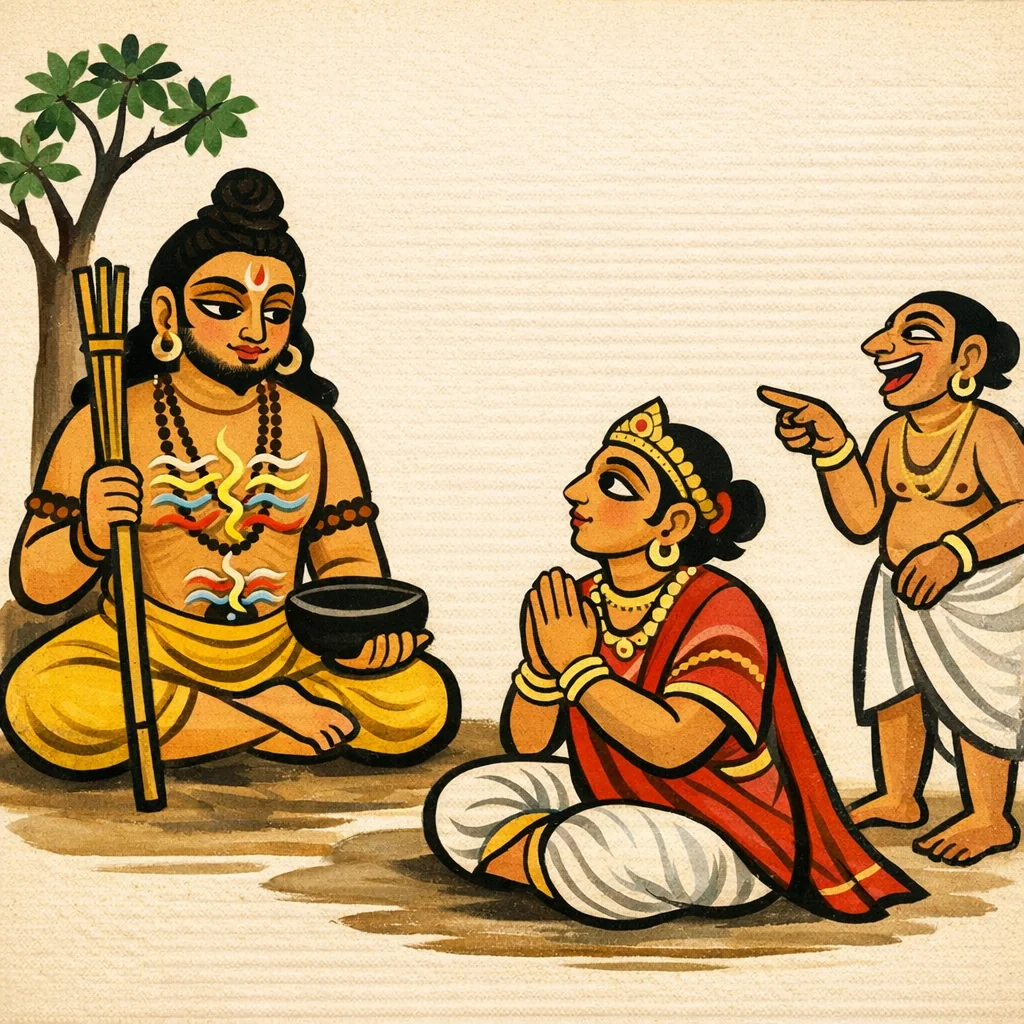
Adhyaya 41: Yogic Conduct and the Discipline Leading to Siddhi
योगसिद्धिः (Yogasiddhi)
Secondary Creation
Adhyaya 41, “Yogasiddhi,” teaches the yogin’s proper conduct and the sacred discipline that leads to siddhi. It stresses mastery of the senses, inner stillness, patience, and steadfast truthfulness; through samādhi the mind becomes united with the Divine and gains the fruits of spiritual practice and the powers born of concentration.
Key Content Points
Focus Keywords
Shlokas in Adhyaya 41
Verse 1
इति श्रीमार्कण्डेयपुराणे योगसिद्धिर्नाम चत्वारिंशोऽध्यायः । एकचत्वारिंशोऽध्यायः । अलर्क उवाच— भगवन्! योगिनश्चर्यां श्रोतुमिच्छामि तत्त्वतः । ब्रह्मवर्त्मन्यनुसरन् यथा योगी न सीदति ॥
Alarka said: “O Blessed One, I wish to hear truly the proper conduct of a yogin—how, by following the path of Brahman, a yogin does not fall into dejection (or decline).”
Verse 2
दत्तात्रेय उवाच— मानापमानौ यावेतौ प्रत्युद्वेगकरौ नृणाम् । तावेव विपरीतार्थौ योगिनः सिद्धिकारकौ ॥
Dattātreya said: “Honor and dishonor—these two that agitate men—become, in the opposite sense, causes of accomplishment (siddhi) for a yogin.”
Verse 3
मानापमानौ यावेतौ तावेवाहुर्विषामृते । अपमानोऽमृतं तत्र मानस्तु विषमं विषम् ॥
These two—honor and dishonor—are said to be poison and nectar: here, dishonor is nectar, while honor is a most dreadful poison.
Verse 4
चक्षुः पूतं न्यसेत्पादं वस्त्रपूतं जलं पिबेत् । सत्यपूतां वदेद्वाणीं बुद्धिपूतञ्च चिन्तयेत् ॥
Let him place his foot where his eyes have made it ‘pure’ (that is, after looking carefully); let him drink water purified by cloth; let him speak words purified by truth; and let him think thoughts purified by discernment (viveka).
Verse 5
आतिथ्यश्राद्धयज्ञेषु देवयात्रोत्सवेषु च । महाजनञ्च सिद्ध्यार्थं न गच्छेद्योगवित् क्वचित् ॥
At hospitality-feasts, śrāddhas, sacrifices, divine processions, and festivals—and at gatherings of many people—a knower of yoga should not go anywhere for the sake of attaining siddhi.
Verse 6
व्यस्ते विधूमे व्यङ्गारे सर्वस्मिन् भुक्तवज्जने । अटेत योगविद् भैक्ष्यं न तु त्रिष्वेव नित्यशः ॥
When the cooking has been put away, the smoke has cleared, the embers have died down, and everyone has eaten, then the knower of yoga should go for alms; but he should not do so every day at only three houses.
Verse 7
यथैवमवमन्यन्ते जनाः परिभवन्ति च । तथा युक्तश्चरेद्योगी सतां वर्त्म न दूषयन् ॥
Just as people may thus disrespect and insult him, so should the yogin, remaining disciplined, continue his conduct—without defiling the path of the good.
Verse 8
भैक्ष्यञ्चरेद् गृहस्थेषु यायावरगृहेषु च । श्रेष्ठा तु प्रथमा चेति वृत्तिरस्योपदिश्यते ॥
He should seek alms among householders and also in the homes of yāyāvaras (wandering mendicants/itinerants). Of these, the first is taught as the better livelihood for him.
Verse 9
अथ नित्यं गृहस्थेषु शालीनैषु चरेद्यतिः । श्रद्धधानेषु दान्तेषु श्रोत्रियेṣu महात्मसु ॥
Therefore, the renunciant should regularly go among householders who are śālīna (respectable, settled, disciplined), who are faithful, self-controlled, learned in scripture (śrotriya), and noble-minded.
Verse 10
अत ऊर्ध्वं पश्चापि अदुष्टापतितेषु च । भैक्ष्यचर्या विवर्णेषु जघन्या वृत्तिरिष्यते ॥
Beyond that (in a lower order), even among those who are not wicked though fallen (from proper conduct), and among those outside the varṇa order (vivarṇa), the practice of living by alms is regarded as the lowest livelihood.
Verse 11
भैक्ष्यं यवागूं तक्रं वा पयो यावकमेव वा । फलं मूलं प्रियङ्गुं वा कणपिण्याकसक्तवः ॥
Alms-food, barley gruel, buttermilk, milk, or simply barley; fruit, roots, or priyaṅgu grain; and food made from grains, oil-cake, and flour—these are the recommended simple foods.
Verse 12
इत्येते च शुभाहारा योगिनः सिद्धिकारकाः । तत् प्रयुञ्ज्यान्मुनिर्भक्त्या परमेण समाधिना ॥
Thus these wholesome foods for yogins are productive of success (siddhi). Therefore the sage should adopt them with devotion and with the highest concentration (samādhi).
Verse 13
अपः पूर्वं सकृत् प्राश्य तूष्णीं भूत्वा समाहितः । प्राणायेति ततस्तस्य प्रथमा ह्याहुतिः स्मृता ॥
First, having sipped water once, becoming silent and collected, he should then (make the offering) with the formula ‘to Prāṇa’; this is remembered as the first oblation.
Verse 14
अपानाय द्वितीया तु समानायते चापरा । उदानाय चतुर्थो स्याद्व्यानायेति च पञ्चमी ॥
The second (oblation) is to Apāna; the next to Samāna. The fourth should be to Udāna, and the fifth to Vyāna.
Verse 15
प्राणायामैः पृथक् कृत्वा शेषं भुञ्जीत कामतः । अपः पुनः सकृत् प्राश्य आचम्य हृदयं स्पृशेत् ॥
Having separately performed the prāṇāyāma-offerings, he may eat the remainder as he wishes. Then, sipping water once again and performing ācamana, he should touch his heart.
Verse 16
अस्तेयं ब्रह्मचर्यञ्च त्यागो 'लोभस्तथैव च । व्रतानि पञ्च भिक्षूणामहिंसापरमाणि वै ॥
Non-stealing, celibacy (brahmacarya), renunciation, and non-greed—these are counted among the five vows of mendicants, whose highest principle indeed is non-violence (ahiṃsā).
Verse 17
अक्रोधो गुरुशुश्रूषा शौचमाहारलाघवम् । नित्यस्वाध्याय इत्येते नियमाः पञ्च कीर्तिताः ॥
Freedom from anger, service to the teacher (guru), purity, lightness of diet, and daily self-study—these five are declared to be the niyamas.
Verse 18
सारभूतमुपासीत ज्ञानं यत्कार्यसाधकम् । ज्ञानानां बहुता येयं योगविघ्रकरा हि सा ॥
One should cultivate essential knowledge—the knowledge that accomplishes the purpose. This multiplicity of merely nominal knowledges is indeed an obstacle to yoga.
Verse 19
इदं ज्ञेयमिदं ज्ञेयमिति यस्तृषितश्चरेत् । अपि कल्पसहस्रेषु नैव ज्ञेयमवाप्नुयात् ॥
Whoever, driven by thirst, wanders thinking, ‘This must be known, this must be known,’—even in thousands of kalpas he would not attain the truly knowable goal.
Verse 20
त्यक्तसङ्गो जितक्रोधो लघ्वाहारो जितेन्द्रियः । पिधाय बुद्ध्या द्वाराणि मनो ध्याने निवेशयेत् ॥
Having abandoned attachment, having conquered anger, eating lightly, and having mastered the senses—closing the ‘doors’ with the intellect, one should place the mind in meditation.
Verse 21
शून्येष्वेवावकाशेषु गुहासु च वनेषु च । नित्ययुक्तः सदा योगी ध्यानं सम्यगुपक्रमेत् ॥
In solitary open places, in caves, and in forests, the yogin—ever disciplined and constantly united with yoga—should duly begin meditation.
Verse 22
वाग्दण्डः कर्मदण्डश्च मनोदण्डश्च ते त्रयः । यस्यैते नियता दण्डाः स त्रिदण्डी महायतिḥ ॥
The rod of speech, the rod of action, and the rod of mind—these are the three. He in whom these rods are restrained is a tridaṇḍin, a great ascetic.
Verse 23
सर्वमात्ममयं यस्य सदसज्जगदीदृशम् । गुणागुणमयन्तस्य कः प्रियः को नृपाप्रियः ॥
For him to whom all this world—seen as being and non-being—consists of the Self, and who is beyond qualities and non-qualities, what is dear to him and what is disliked, O king?
Verse 24
विशुद्धबुद्धिः समलोष्टकाञ्चनः समस्तभूतेṣu च तत्समाहितः । स्थानं परं शाश्वतमव्ययञ्च परं हि मत्वा न पुनः प्रजायते ॥
With purified understanding, regarding a clod of earth and gold as equal, and remaining steadily collected toward That in all beings—knowing the supreme abode to be eternal and imperishable—one is not born again.
Verse 25
वेदाच्छ्रेṣ्ठाḥ सर्वयज्ञक्रियाś्च यज्ञाज्जप्यं ज्ञानमार्गश्च जप्यात् । ज्ञानाद्ध्यानं सङ्गरागव्यपेतं तस्मिन् प्राप्ते शाश्वतस्योपलब्धिः ॥
Higher than mere Vedic recitation are all sacrificial rites; higher than sacrifice is japa; higher than japa is the path of knowledge. Higher than knowledge is meditation free from attachment and passion; when that is attained, there is realization of the Eternal.
Verse 26
समाहितो ब्रह्मपरोऽप्रमादी शुचिस्तथैकान्तरतिर्यतेंद्रियः । समाप्नुयाद्योगमिमं महात्मा विमुक्तिमाप्रोति ततः स्वयोगतः ॥
A great-souled one—collected, devoted to Brahman, vigilant, pure, delighting in solitude, and restrained in the senses—may attain this yoga; and thereafter, by his own yoga, he reaches liberation (mokṣa).
Frequently Asked Questions
It investigates how a yogin can follow the brahma-vartman (path toward Brahman) without “sinking” into social-reactive emotions, teaching that honor and dishonor must be metabolized as spiritual disciplines, with inner steadiness valued over public esteem.
The chapter emphasizes graded bhaikṣā-caryā (regulated begging), simple sattvic foods, ritualized prāṇa-offerings aligned with the five vāyus, and the paired ethical frameworks of five vratas (including ahiṃsā, asteya, brahmacarya, tyāga, alobha) and five niyamas (including akrodha, guru-śuśrūṣā, śauca, āhāra-lāghava, svādhyāya), culminating in secluded dhyāna and tri-daṇḍa control of speech, action, and mind.
This Adhyaya is not part of the Devi Mahatmyam (81–93) and does not advance Manvantara chronology; its prominence lies in the Alarka–Dattātreya instructional frame, focusing on ascetic lineages of practice (yati/bhikṣu discipline) rather than dynastic or Manu-based genealogy.