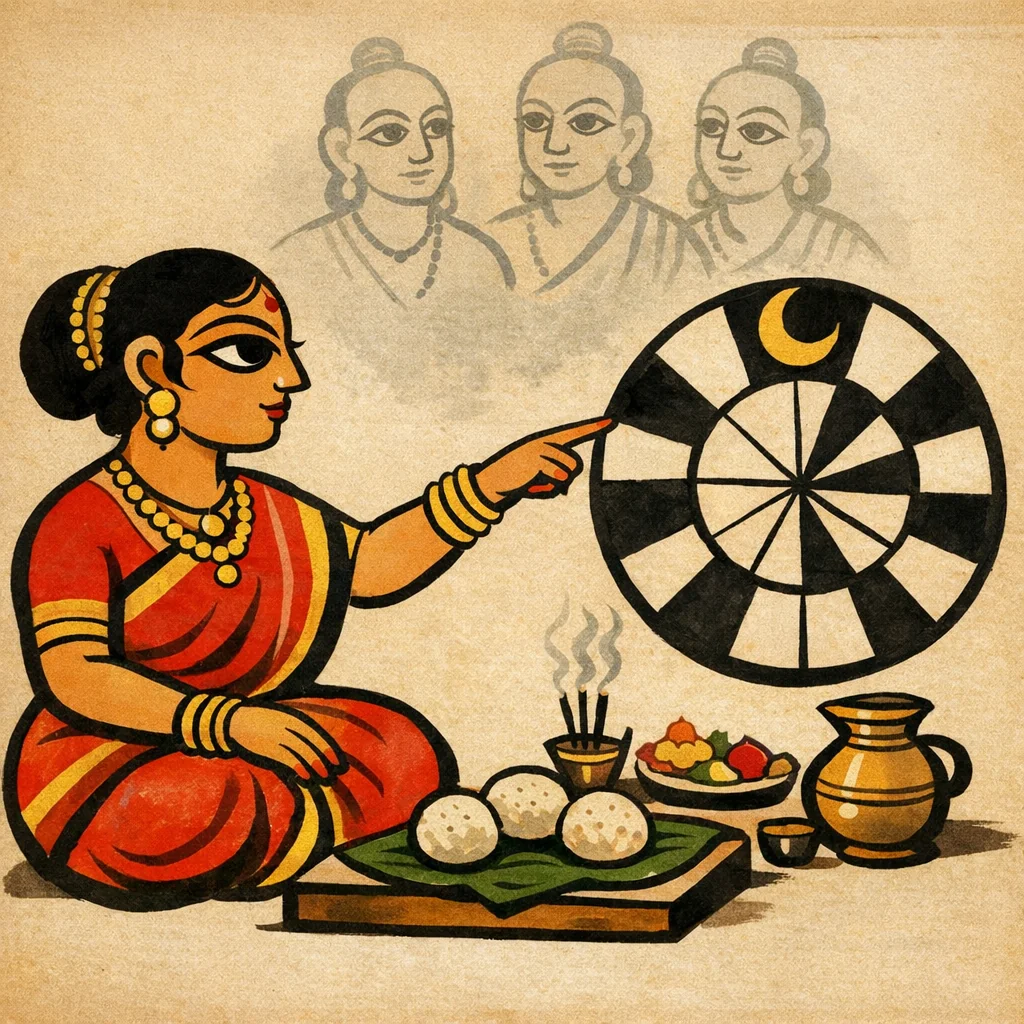
Adhyaya 33: Madālasa on the Fruit of Śrāddha Performed on Lunar Days and Nakṣatras
श्राद्धफलनिर्णयः (Śrāddha-phala-nirṇayaḥ)
Nature of the Self
In Adhyaya 33, Madālasa explains the fruits of performing Śrāddha for the Pitṛs (ancestors) according to lunar days (tithi) and Nakṣatras. She teaches that choosing the proper tithi and constellation, and offering food, gifts, and rites with reverence, greatly increases merit, brings peace to the ancestors, and bestows blessing and welfare upon the performer.
Celestial Realms
Key Content Points
Focus Keywords
Shlokas in Adhyaya 33
Verse 1
इति श्रीमार्कण्डेयपुराणे श्राद्धकल्पो नाम द्वात्रिंशोऽध्यायः । त्रयस्त्रिंशोऽध्यायः मदालसोवाच— प्रतिपद्धनलाभाय द्वितीया द्विपदप्रदा । वरार्थिनी तृतीया तु चतुर्थो शत्रुनाशिनी ॥
Here ends the thirty-second chapter, called ‘Śrāddha-kalpa,’ in the Śrī Mārkaṇḍeya Purāṇa. Now begins the thirty-third chapter. Madālasā said: Performing a kāmya śrāddha on Pratipat brings increase of wealth; on Dvitīyā it grants cattle and other animals; Tṛtīyā is for one seeking boons; Caturthī destroys enemies.
Verse 2
श्रियां प्राप्रोति पञ्चम्यां षष्ठ्यां पूज्यो भवेन्नरः । गणाधिपत्यं सप्तम्यामष्टम्यां वृद्धिमुत्तमाम् ॥
On Pañcamī one attains prosperity; on Ṣaṣṭhī a man becomes worthy of honor. On Saptamī he gains leadership over groups and retinues, and on Aṣṭamī he attains excellent growth and advancement.
Verse 3
स्त्रियो नवम्यां प्राप्रोति दशम्यां पूर्णकामताम् । वेदांस्तथाप्नुयात् सर्वानेकादश्यां क्रियापरः ॥
On Navamī one obtains women (i.e., success in marriage and companionship); on Daśamī one attains complete fulfillment of desires. And on Ekādaśī, one devoted to rites gains all the Vedas (i.e., comprehensive sacred learning).
Verse 4
द्वादश्यां जयलाभञ्च प्राप्रोति पितृपूजकः । प्रजां मेधां पशुं वृद्धिं स्वातन्त्र्यं पुष्टमुत्तमाम् ॥
One who worships the ancestors by performing śrāddha on the twelfth lunar day (dvādaśī) attains victory and gain; he obtains progeny, intelligence, cattle/wealth, growth and prosperity, independence, and excellent nourishment and strength.
Verse 5
दीर्घमायुरथैश्वर्यं कुर्वाणस्तु त्रयोदशीम् । अवाप्रोति न सन्देहः श्राद्धं श्रद्धापरो नरः ॥
A man devoted to faith, performing śrāddha on the thirteenth lunar day (trayodaśī), obtains long life and prosperity—of this there is no doubt.
Verse 6
यथासम्भावितान्नेन श्राद्धसम्पत्समन्वितः । युवानः पितरो यस्य मृताः शस्त्रेण वा हताः ॥
Furnished with the proper requisites of śrāddha and with food offered according to one’s means, in the case of a person whose parents died young or were slain by a weapon…
Verse 7
तेन कार्यं चतुर्दश्यां तेषां प्रीतिमभीप्सता । श्राद्धं कुर्वन्नमावास्यां यत्नेन पुरुषः शुचिः ॥
Therefore, desiring their satisfaction, a pure man should diligently perform śrāddha for them on the fourteenth lunar day (caturdaśī), and also perform śrāddha on the new-moon day (amāvāsyā).
Verse 8
सर्वान् कामानवाप्रोति स्वर्गञ्चानन्तमश्नुते । कृत्तिकासु पितॄन् अर्च्य स्वर्गमाप्रोति मानवः ॥
He obtains all desired objects and enjoys unending heaven. Worshipping the ancestors under the Kṛttikā nakṣatra, a man attains heaven.
Verse 9
अपत्यकामो रोहिण्यां सौम्ये चोजस्वितां लभेत् । शौर्यमार्द्रासु चाप्रोति क्षेत्रादि च पुनर्वसौ ॥
One who desires offspring should perform the rite on Rohiṇī; on Saumya (Mṛgaśīrṣa) he gains vigor. On Ārdrā he attains valor, and on Punarvasu he gains fields and the like (property).
Verse 10
पुष्टिं पुष्ये सदाभ्यर्च्य आश्लेषासु वरान् सुतान् । मघासु स्वजनश्रैष्ठ्यं सौभाग्यं फाल्गुनीषु च ॥
By worship (of the ancestors) on Puṣya one gains nourishment and prosperity; on Āśleṣā, excellent sons. On Maghā, eminence among one’s people; and on the Phālgunīs, good fortune.
Verse 11
प्रदानशीलो भवति सापत्यश्चोत्तरासु च । प्रयाति श्रेष्ठतां सत्यं हस्ते श्राद्धप्रदो नरः ॥
On the Uttarās he becomes generous and possessed of offspring; and a man who offers śrāddha on Hasta truly attains excellence and pre-eminence.
Verse 12
रूपयुक्तश्च चित्रासु तथापत्यान्यवाप्नुयात् । वाणिज्यलाभदा स्वातिर्विशाखा पुत्रकामदा ॥
On Citrā he becomes endowed with beauty and attractiveness and obtains offspring. Svātī grants gains in trade, and Viśākhā grants the desired son.
Verse 13
कुर्वन्तश्चानुराधासु लभन्ते चक्रवर्तिताम् । आधिपत्यञ्च ज्येष्ठासु मूले चारोग्यमुत्तमम् ॥
Performing (śrāddha) on Anurādhā they obtain sovereign rulership (cakravartin status); on Jyeṣṭhā, lordship; and on Mūla, excellent health.
Verse 14
आषाढासु यशः प्राप्तिरुत्तरासु विषोकता । श्रवणे च शुभान् लोकान् धनिष्ठासु धनं महत् ॥
If a desire-motivated śrāddha (kāmya-śrāddha) is performed under the Āṣāḍhā nakṣatras, one attains fame; under the Uttarā nakṣatras, freedom from sorrow; under Śravaṇa, auspicious worlds; and under Dhaniṣṭhā, great wealth.
Verse 15
वेदवित्त्वमभिजिति भिषक्सिद्धन्तु वारुणे । अजाविकं प्रौष्ठपदे विन्देद् गास्तु तथोत्तरे ॥
Under Abhijit one gains mastery of the Veda; under Vāruṇa one attains success as a physician; under Prauṣṭhapada one obtains goats and sheep; and under Uttarā one obtains cows.
Verse 16
रेवतीषु तथा कुप्यमश्विनीषु तुरङ्गमान् । श्राद्धं कुर्वंस्तथाप्रोति भरणीष्वायुरुत्तमम् । तस्मात् काम्यानि कुर्वोत ऋक्षेष्वेतेषु तत्त्ववित् ॥
Under Revatī one obtains metals and implements (kupyāni); under Aśvinī, horses; performing śrāddha under Bharaṇī one gains excellent longevity. Therefore, one who knows the principle should perform desire-motivated rites under these constellations.
Frequently Asked Questions
The chapter investigates how ritual timing (tithi and nakṣatra) functions as a disciplined ethical-ritual mechanism: śrāddha performed with śraddhā (faith), śauca (purity), and proper offering is presented as both a duty to the pitṛs and a regulated means for obtaining defined outcomes (phala).
It does not advance a Manvantara sequence or cosmic chronology; instead, it contributes to the Purāṇic dharma-analytic layer by codifying ancestral rites and their results within a calendrical framework.
This Adhyaya is outside the Devi Mahatmyam (Adhyāyas 81–93) and contains no śākta stuti, goddess-epithets, or battle narrative; its focus is pitṛ-ritual jurisprudence (śrāddha-kalpa/phala) delivered by Madālasa.