Adhyaya 9
सहदेवस्य गोसंख्य-तन्तिपाल-रूपेण विराट-समागमः | Sahadeva’s Audience with Virāṭa as Cattle-Enumerator (Tantipāla)
Upa-parva: Ajñātavāsa-praveśa (Entry into Incognito Service at Virāṭa’s Court)
Vaiśaṃpāyana reports Sahadeva’s arrival at Virāṭa’s court after adopting an excellent disguise and the speech-register of cowherds. Virāṭa observes the newcomer’s radiance and questions him directly about identity, origin, intent, skills, residence terms, and expected remuneration. Sahadeva replies with a constructed professional biography: he presents himself as a vaiśya named Ariṣṭanemi, formerly serving the Kuru king Yudhiṣṭhira as a gosāṃkhyā (cattle enumerator) known as Tantipāla. He details large herd figures under Yudhiṣṭhira and asserts comprehensive numerical knowledge within a ten-yojana radius, framing his competence as administrative precision. He further claims expertise in cattle health and breeding, including identifying superior bulls by auspicious characteristics and practical tests. Virāṭa, unconvinced that such capability fits ordinary vaiśya-work, nonetheless grants him extensive livestock with herdsmen, placing royal herds under his supervision. The narrator concludes that Sahadeva remains unrecognized by the king and others, living comfortably while receiving appropriate maintenance.
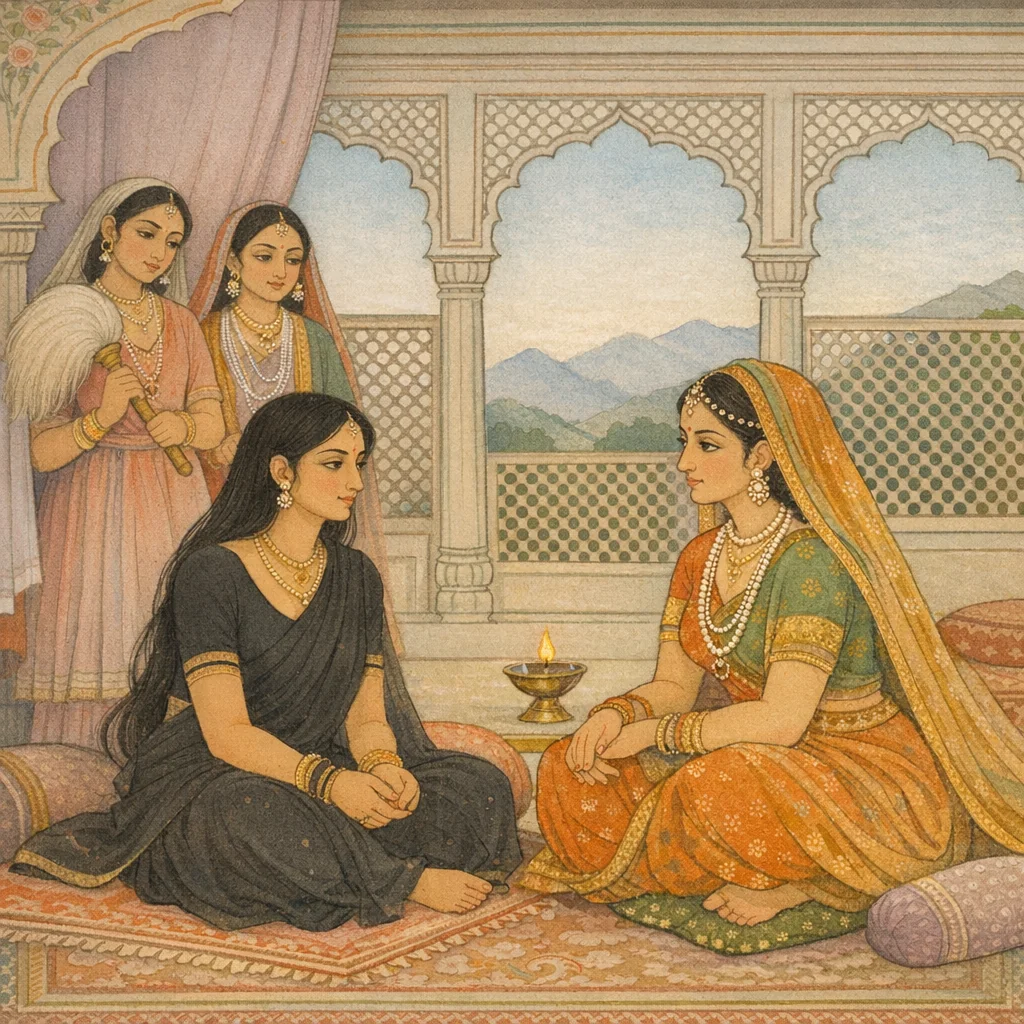
Chapter Arc: अज्ञातवास की कठोर शर्तों के बीच द्रौपदी अपने तेज को ढँककर ‘सैरन्ध्री’ का वेष धरती है—मृदु-हास, कजरारे नेत्र, पर मलिन वस्त्र; और सीधे विराट के अन्तःपुर की ओर बढ़ती है। → रानी सुदेष्णा के सामने वह अपना नाम ‘मालिनी’ बताकर दासी-कार्य माँगती है, पर साथ ही एक कठोर सीमा रेखा खींच देती है: जो भी पुरुष उसे साधारण स्त्री समझकर लोभ करेगा, उसके लिए वह विनाश का कारण बनेगी। सुदेष्णा के मन में सौन्दर्य-आकर्षण और राजमहल की मर्यादा—दोनों का द्वन्द्व जागता है। → द्रौपदी का निर्भीक प्रतिज्ञा-वचन: ‘जो मुझे अन्य प्राकृत स्त्रियों की भाँति गृद्धि करेगा, वह उसी रात दण्ड पाएगा’—और यह भी कि उसके ‘गन्धर्व’ (अर्थात् उसके रक्षक/पति) प्रच्छन्न रूप से उसकी रक्षा करते हैं; इसलिए कोई उसे सतीत्व से विचलित नहीं कर सकता। → सुदेष्णा द्रौपदी की शर्तें स्वीकार करती है—उसे अन्तःपुर में स्थान देती है, उसके आचरण की मर्यादा (जैसे जूठा/पाँव आदि न छूने की शर्तें) मानती है, और उसे सुरक्षित रखने का आश्वासन देती है। द्रौपदी का अज्ञातवास-योजनाबद्ध प्रवेश सफल होता है। → अन्तःपुर में ‘एकमात्र सुन्दरी’ का आगमन अब दृष्टि-लोभ को बुलाएगा—विशेषतः कीचक जैसे बलशाली पुरुषों की; द्रौपदी की चेतावनी शीघ्र ही परीक्षा में पड़ेगी।
Shlokas
Verse 1
/ हि आय >> () हि 2 7 नवमो<्ध्याय: द्रौोपदीका सैरन्ध्रीके वेशमें विराटके रनिवासमें जाकर रानी सुदेष्णासे वार्तालाप करना और वहाँ निवास पाना वैशम्पायन उवाच ततः केशान् समुत्क्षिप्य वेल्लिताग्राननिन्दितान् कृष्णान् सूक्ष्मान् मृदून् दीर्घान् समुद्ग्रथ्य शुचिस्मिता
Vaiśampāyana said: Then she lifted up her hair—dark, fine, soft, long, and with beautifully curled ends, beyond reproach—gathered it, and bound it up, smiling with composed purity.
Verse 2
जुगूहे दक्षिणे पाश्वे मृदूनसितलोचना । वासश्न परिधायैकं कृष्णा सुमलिनं महत्
Kṛṣṇā (Draupadī), whose eyes were soft and dark, concealed herself at the right side. She put on a single large garment, soiled and worn—an outward sign of distress and concealment.
Verse 3
कृत्वा वेषं च सैरन्ध्रयास्ततो व्यचरदार्तवत् । वैशम्पायनजी कहते हैं--जनमेजय! तदनन्तर पवित्र मन्द मुसकान और कजरारे नेत्रोंवाली द्रौपदीने अपने सुन्दर
Vaiśampāyana said: Having taken on the disguise of a sairandhrī (a lady’s attendant and hairdresser), she moved about as one afflicted and helpless. She braided her thick, black, curling hair, hid her soft locks to the right, donned a most soiled garment, and wandered through the city like a destitute woman. As she went, men ran after her, and women too pressed in around her—drawn by curiosity at the sight of a seemingly distressed woman in disguise.
Verse 4
सा तानुवाच राजेन्द्र सैरन्ध्रयहमिहागता
Vaiśampāyana said: When they questioned her, Draupadī replied, “O king, I have come here as a sairandhrī (a lady’s attendant). Whoever appoints me in his household, in that very house I wish to perform the duties of a sairandhrī; that is why I have come.” Yet because of her beauty, her composed attire, and her gentle speech, no one believed she was truly a servant who had come merely seeking food and clothing.
Verse 5
कर्म चेच्छामि वै कर्तु तस्य यो मां युयुक्षति । तस्या रूपेण वेषेण श्लक्षणया च तथा गिरा । न श्रद्दधत तां दासीमन्नहेतोरुपस्थिताम्
Vaiśampāyana said: She said, “I wish to do service for the one who would employ me.” Yet because of her appearance, her attire, and her refined, gentle speech, no one believed she was truly a maidservant who had come merely seeking food and clothing.
Verse 6
विराटस्य तु कैकेयी भार्या परमसम्मता | आलोकयन्ती ददृशे प्रासादाद् द्रुपदात्मजाम्
Vaiśampāyana said: Virāṭa’s queen, the Kaikeyī princess Sudeshṇā—dearly beloved and highly esteemed by him—stood upon the palace, gazing over the city’s splendor. From there she caught sight of Drupada’s daughter.
Verse 7
सा समीक्ष्य तथारूपामनाथामेकवाससम् | समाहूयाब्रवीद् भद्रे का त्वं कि च चिकीर्षसि
Vaiśampāyana said: Seeing her—so radiant in form, yet clad in a single garment and seeming without refuge—the queen summoned the young woman and asked, “Gentle lady, who are you, and what do you seek to do?”
Verse 8
सा तामुवाच राजेन्द्र सैरन्ध्रयहमुपागता । कर्म चेच्छाम्यहं कर्तु तस्य यो मां युयुक्षति
Vaiśampāyana said: She (Draupadī), addressing the queen, spoke: “O lady of kingly rank, I have come here as a sairandhrī (a lady’s attendant). I wish to perform the duties of that role in the household of whoever will appoint me.”
Verse 9
सुदेष्णोवाच नैवंरूपा भवन्त्येव यथा वदसि भामिनि | प्रेषयन्तीव वै दासीर्दासांश्व विविधान् बहुन्
Sudeṣṇā said: “It cannot be as you claim, O fair lady. Women of such beauty do not become a sairandhrī (a maidservant). You appear rather like a queen—one who commands many maidservants and numerous male attendants of various kinds.”
Verse 10
नोच्चगुल्फा संहतोरुस्त्रिगम्भीरा षद्धुन्नता । रक्ता पञ्चसु रक्तेषु हंसगद्वदभाषिणी
Vaiśampāyana said: “Her ankles were not overly prominent, and her thighs were close-set. She possessed three kinds of depth—at the navel, in speech, and in understanding. Six features were elevated and well-formed (such as the nose, ears, eyes, breasts, nails, and neck). Five were naturally reddish (such as the palms and soles, the corners of the eyes, the lips, the tongue, and the nails). Her voice was sweet and tremulous like that of a swan.”
Verse 11
सुकेशी सुस्तनी श्यामा पीनश्रोणिपयोधरा । तेन तेनैव सम्पन्ना काश्मीरीव तुरज्रमी
Vaiśampāyana said: “She had beautiful hair, well-formed breasts, and a dark, lustrous complexion; her hips and bosom were full and well-rounded. Endowed with each of these auspicious features, she moved with the graceful gait of a Kashmiri mare.”
Verse 12
अरालपक्ष्मनयना बिम्बोष्ठी तनुमध्यमा । कम्बुग्रीवा गूढशिरा पूर्णचन्द्रनिभानना
Vaiśampāyana said: “She had eyes adorned with gracefully curved lashes; her lips were red like the ripe bimba fruit; her waist was slender. Her neck was like a conch in beauty; her veins were hidden beneath firm flesh; and her face resembled the full moon.”
Verse 13
शारदोत्पलपत्राक्ष्या शारदोत्पलगन्धया । शारदोत्पलसेविन्या रूपेण सदृशी श्रिया
Vaiśampāyana said: She had eyes like the petals of an autumn lotus, a fragrance like the autumn lotus, and a fondness for the autumn lotus; in beauty she resembled Śrī (Lakṣmī) herself.
Verse 14
तुम रूपमें उन्हीं लक्ष्मीके समान हो
Vaiśampāyana said: “Tell me truly, auspicious lady—who are you? You cannot be a maidservant in any way. Are you a Yakṣī, or a goddess? Are you a Gandharva maiden, or an Apsaras?”
Verse 15
देवकन्या भुजज्जी वा नगरस्याथ देवता । विद्याधरी किन्नरी वा यदि वा रोहिणी स्वयम्
Vaiśampāyana said: “Are you a celestial maiden, or a nāga-maiden? Or perhaps the very tutelary goddess of this city? Are you a Vidyādharī, a Kinnarī, or Rohiṇī herself? Auspicious lady, tell the truth—who are you really? In no way can you be a mere servant.”
Verse 16
अलनम्बुषा मिश्रकेशी पुण्डरीकाथ मालिनी । इन्द्राणी वारुणी वा व्वं त्वष्टूर्धातु: प्रजापते: । देव्यो देवेषु विख्यातास्तासां त्वं कतमा शुभे
Vaiśampāyana said: “Are you Alambuṣā, Miśrakeśī, Puṇḍarīkā, or Mālinī? Or are you Indrāṇī, or Vāruṇī, or the consort of Tvaṣṭṛ, or the power of Prajāpati? O auspicious lady, among the goddesses renowned in the world of the gods, which one are you?”
Verse 17
द्रौपहुवाच नास्मि देवी न गन्धर्वी नासुरी न च राक्षसी । सैरन्ध्री तु भुजिष्यास्मि सत्यमेतद् ब्रवीमि ते
Draupadī said, “I am neither a goddess nor a Gandharva-woman, neither an Asura-woman nor a Rākṣasī. I am only a sairandhrī, a woman in service and dependence. This is the truth I tell you.”
Verse 18
केशान् जानाम्यहं कर्तु पिंषे साधु विलेपनम् । मल्लिकोत्पलपदडानां चम्पकानां तथा शुभे
Vaiśampāyana said: “I know how to dress and arrange hair, and how to grind and prepare fine cosmetic unguents. I also know how to make fragrant preparations from jasmine, lotus, and campaka flowers, O auspicious lady.”
Verse 19
आराधयं सत्यभामां कृष्णस्य महिषीं प्रियाम्
Vaiśampāyana said: “(He/they) paid devoted homage to Satyabhāmā, the beloved chief queen of Kṛṣṇa,” indicating a deliberate act of respectful service and alliance-building through honoring a revered figure within Kṛṣṇa’s household.
Verse 20
तत्र तत्र चराम्येवं लभमाना सुभोजनम्
“Thus I have wandered from place to place, serving in different households and obtaining good food. Whatever garments I happen to receive, with just those I remain content. The noble lady Draupadī herself once gave me the name ‘Mālinī.’ O Queen Sudeṣṇā, today that same I—now as a maidservant (sairandhrī)—have come to your palace.”
Verse 21
वासांसि यावन्ति लभे तावत् तावद् रमे तथा । मालिनीत्येव मे नाम स्वयं देवी चकार सा । साहमपद्यागता देवि सुदेष्णे त्वन्निवेशनम्
Vaiśampāyana said: “I live content with whatever garments I obtain, taking joy in just that much. The noble lady herself—Draupadī—once gave me the name ‘Mālinī.’ Now, O queen Sudeṣṇā, I have come to your residence as a distressed woman seeking refuge, ready to serve in different places and live on whatever good food is earned by honest service.”
Verse 22
सुदेष्णोवाच मूर्थ्नि त्वां वासयेयं वै संशयो मे न विद्यते । न चेदिच्छति राजा त्वां गच्छेत् सर्वेण चेतसा
Sudeṣṇā said: “I would gladly place you upon my very head—of this I have no doubt. But if the king should not desire you, if his whole mind does not become attached to you, then there would be no obstacle to your staying (here).”
Verse 23
स्त्रियो राजकुले याश्व याश्चैमा मम वेश्मनि । प्रसक्तास्त्वां निरीक्षन्ते पुमांसं कं न मोहये:
Vaiśampāyana said: “The women of the royal household, and these ladies in my own residence as well, are all gazing at you without blinking. What man could there be whom you would not be able to enchant?”
Verse 24
वक्षांशक्षावस्थितान् पश्य य इमे मम वेश्मनि । तेडपि त्वां संनमन्तीव पुमांसं क॑ न मोहये:
Vaiśampāyana said: “Look at these trees standing within my residence. Even they seem, as it were, to bow down just to behold you. Then what man could there be whom you would not enchant?”
Verse 25
राजा विराट: सुश्रोणि दृष्टवा वपुरमानुषम् । विहाय मां वरारोहे गच्छेत् सर्वेण चेतसा
Vaiśampāyana said: “O fair-hipped lady, when King Virāṭa beholds your unearthly beauty, he will abandon me, O noble maiden, and with his whole mind become wholly attached to you.”
Verse 26
यं हि त्वमनवद्याज़ि तरलायतलोचने । प्रसक्तमभिवीक्षेथा: स कामवशगो भवेत्,निर्दोष अंगों तथा चंचल एवं विशाल नेत्रोंवाली सैरन्ध्री! जिस पुरुषकी ओर तुम ध्यानसे देख लोगी, वही कामके अधीन हो जायगा
Vaiśampāyana said: “O blameless Sairandhrī, you whose eyes are wide and tremulous—whichever man you were to gaze upon with fixed attention would fall under the sway of desire.”
Verse 27
यश्न त्वां सततं पश्येत् पुरुषश्चारुहासिनि । एवं सर्वानवद्याड़ि स चानज्रवशो भवेत्,शुभांगि! चारुहासिनि! इसी प्रकार जो पुरुष प्रतिदिन तुम्हें देखेगा, वह भी कामदेवके वशीभूत हो जायगा
Vaiśampāyana said: “O fair-limbed one with a lovely smile—whoever, any man, were to behold you continually, he too would become overpowered by desire. Thus, O blameless-bodied, auspicious-limbed lady of charming laughter, even a steady man would be drawn under the sway of passion.”
Verse 28
अध्यारोहेद् यथा वृक्षान् वधायैवात्मनो नर: । राजवेश्मनि ते सुभ्रु गृहे तु स्थात् तथा मम
O fair-browed lady! Just as a foolish man climbs trees only to fall and end his own life, so too, to keep you in the royal palace or even in my own house may bring misfortune upon me.
Verse 29
यथा च कर्कटी गर्भमाधत्ते मृत्युमात्मन: । तथाविधमहं मन्ये वासं तव शुचिस्मिते
Vaiśampāyana said: “Just as a female crab bears a pregnancy that becomes the very cause of her own death, so too, O pure-smiling lady, I regard your staying in this house as something of that same kind—like death for me.”
Verse 30
द्रौपहुुवाच नास्मि लभ्या विराटेन न चान्येन कदाचन । गन्धर्वा: पतयो महां युवान: पठच भामिनि,द्रौपदी बोली--भामिनि! मुझे राजा विराट या दूसरा कोई पुरुष कभी नहीं पा सकता। पाँच तरुण गन्धर्व मेरे पति हैं
Draupadī said: “O fair lady, I cannot be won by King Virāṭa—nor by any other man at any time. Five youthful Gandharvas are my husbands.”
Verse 31
पुत्रा गन्धर्वराजस्य महासत्त्वस्य कस्यचित् | रक्षन्ति ते च मां नित्यं दु:खाचारा तथा हाहम्
Vaiśampāyana said: “They are the sons of a certain mighty Gandharva-king, endowed with great prowess. Those very ones protect me every day; and I too am hard to assail.”
Verse 32
यो मे न दद्यादुच्छिष्टं न च पादौ प्रधावयेत् । प्रीणेरंस्तेन वासेन गन्धर्वा: पतयो मम,जो मुझे जूँठा अन्न नहीं देता और मुझसे अपने पैर नहीं धुलवाता, उसके उस व्यवहारसे मेरे पति गन्धर्वलोग प्रसन्न रहते हैं
Vaiśampāyana said: “Whoever does not offer me leftover food and does not have me wash his feet—by such conduct my Gandharva husbands are pleased.”
Verse 33
यो हि मां पुरुषो गृद्धयेद् यथान्या: प्राकृता: स्त्रिय: । तामेव निवसेदू रात्रि प्रविश्य च परां तनुम्
Vaiśampāyana said: “If any man, driven by lust, should desire me as he would ordinary women and seek to take me by force, then that very night—upon entering another, higher body—he departs to the other world.”
Verse 34
न चाप्यहं चालयितुं शक््या केनचिदड़ने । दुःखशीला हि गन्धर्वास्ति च मे बलिन: प्रिया:
Nor, in battle, can anyone shake me or drive me from my stand. For the Gandharvas are fierce and hard to endure, and those dear to me are mighty as well.
Verse 35
सुदेष्णोवाच एवं त्वां वासयिष्यामि यथा त्वं नन्दिनीच्छसि
Sudeṣṇā said: “So I shall lodge you in such a way, just as you desire, O Nandinī.”
Verse 36
अपृच्छंश्वैव तां दृष्टवा का त्वं कि च चिकीर्षसि । उसे इधर-उधर भटकती देख बहुत-सी स्त्रियाँ और पुरुष उसके पास दौड़े आये तथा पूछने लगे--'तुम कौन हो? और क्या करना चाहती हो?”
Vaiśampāyana said: Seeing her, they questioned her at once: “Who are you, and what do you wish to do?” In this episode, the emphasis falls on guarded speech and self-restraint under danger: Draupadī, protected and reassured by Virāṭa’s queen, continues to live in the city while preserving her chastity and dignity; none there is able to discern her true identity.
Verse 37
उवास नगरे तस्मिन् पतिधर्मवती सती । न चैनां वेद तत्रान्यस्तत्त्वेन जनमेजय
Vaiśampāyana said: In that city she lived—Draupadī, a virtuous woman steadfast in the dharma of fidelity to her husbands. O Janamejaya, no other person there came to know her true identity.
Verse 183
ग्रथयिष्ये विचित्राश्ष॒ ्रज: परमशो भना: । मैं केशोंका शृंगार करना जानती हूँ तथा उबटन या अंगराग बहुत अच्छा पीस लेती हूँ। शुभे! मैं मल्लिका
Vaiśampāyana said: “I can weave garlands of many kinds, exceedingly beautiful and varied. I know how to adorn the hair, and I can grind and prepare fine cosmetic pastes—ubtan and fragrant body-unguents. O auspicious one, I can also braid and string very lovely, intricate necklaces and garlands from flowers such as jasmine, blue lotus, lotus, and champaka.”
Verse 196
कृष्णां च भार्या पाण्डूनां कुरूणामेकसुन्दरीम् । पहले मैं श्रीकृष्णकी प्यारी रानी सत्यभामा तथा कुरुकुलकी एकमात्र सुन्दरी पाण्डवोंकी धर्मपत्नी द्रौपदीकी सेवामें रह चुकी हूँ
Vaiśampāyana said: “And Kṛṣṇā (Draupadī)—the lawful wife of the Pāṇḍavas and the singular beauty of the Kuru line.” The line foregrounds Draupadī’s recognized status and dignity within the Kuru household, implicitly stressing rightful marital dharma and the honor due to her.
Verse 343
प्रच्छन्नाश्चापि रक्षन्ति ते मां नित्यं शुचिस्मिते । अतः कल्याणि! मुझे कोई भी सतीत्वसे विचलित नहीं कर सकता। शुचिस्मिते! यद्यपि मेरे पति गन्धर्वगण इस समय दु:खमें पड़े हैं; तथापि वे बड़े बलवान् हैं और गुप्तरूपसे सदा मेरी रक्षा करते रहते हैं
Vaiśampāyana said: “Even while remaining concealed, they protect me constantly, O you of pure smile. Therefore, auspicious lady, no one can shake me from my chastity. O pure-smiling one, although my Gandharva husbands are at present in distress, they are still exceedingly powerful and, in hidden form, continually keep watch over me and protect me.”
Verse 353
नच पादौ न चोच्छिष्टं स्प्रक्ष्यसि त्वं कथंचन । सुदेष्णाने कहा--आनन्ददायिनी सुन्दरी! यदि (तुम्हारा शील-स्वभाव) ऐसा है
Vaiśampāyana said: “You shall not touch my feet, nor shall you ever touch what is left over from my food. O Sudeṣṇā—beautiful one, giver of joy—if such is your conduct and disposition, then I will certainly keep you in my house exactly as you wish. In no way will you be made to come into contact with feet or with leftovers.”
Frequently Asked Questions
Sahadeva must answer a ruler’s legitimate inquiries while preserving the exile-vow of concealment; the chapter frames strategic self-presentation as permissible when it protects a prior lawful commitment and avoids broader harm.
Competence and verifiable skill can be ethically leveraged to secure protection and livelihood; simultaneously, prudent governance requires structured questioning about origin, craft, and compensation before entrusting public resources.
No explicit phalaśruti appears here; the meta-function is narrative verification—confirming that Sahadeva remains unrecognized and properly provisioned, reinforcing the incognito framework essential to the parva’s continuity.
Read Mahabharata in the Vedapath app
Scan the QR code to open this directly in the app, with audio, word-by-word meanings, and more.