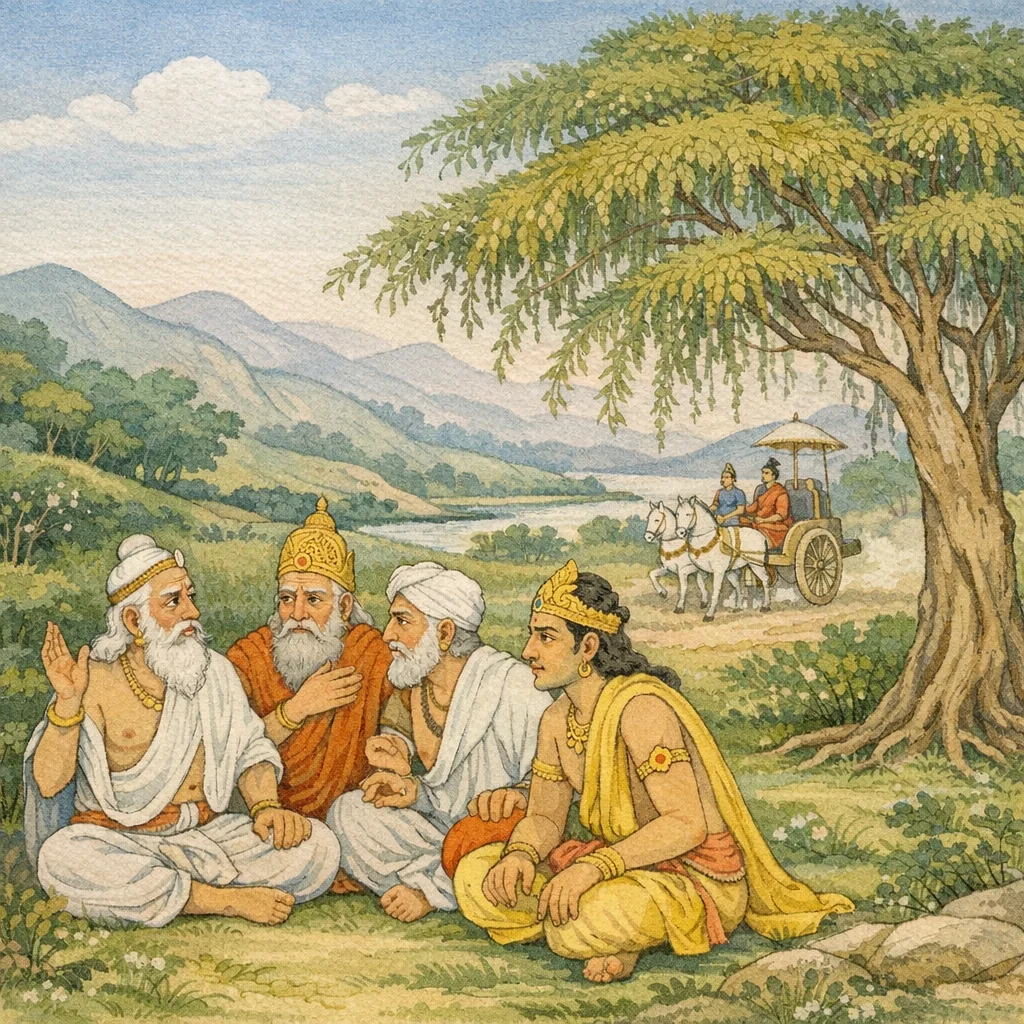
Adhyaya 39
Arjuna’s Self-Identification and the Ten Names (Uttara–Arjuna Saṃvāda)
Upa-parva: Gograhaṇa / Go-haraṇa Upākhyāna (Cattle-Raid Episode within Virāṭa-parva)
Chapter 4.39 stages a verification dialogue during the Matsya crisis. Uttara observes the distinctive, gold-adorned weapons associated with the Pandavas and questions the whereabouts of Arjuna, Yudhiṣṭhira, Bhīma, Nakula, Sahadeva, and Draupadī, noting their disappearance after the dice-loss and exile. Arjuna then discloses the brothers’ concealed roles in Virāṭa’s court: Yudhiṣṭhira as a hall-attendant/adviser figure, Bhīma as a cook, Nakula as a horse-handler, Sahadeva as a cattle-tender, and Draupadī as a maid (sairandhrī), connecting her situation to the slaying of Kīcaka. Uttara requests confirmation through Arjuna’s famed ‘ten names’; Arjuna enumerates them—Arjuna, Phalguna, Jiṣṇu, Kirīṭī, Śvetavāhana, Bībhatsu, Vijaya, Kṛṣṇa, Savyasācī, Dhanaṃjaya—and explains their etymological rationales (victory, white horses, divine crown, avoidance of ignoble acts, ambidextrous archery, brightness/purity, conquest of wealth, etc.). The narrator Vaiśaṃpāyana records Uttara’s respectful salutation, self-introduction, apology for prior ignorance, and the shift from fear to confidence grounded in Arjuna’s established capabilities.
Chapter Arc: कौरव-रथियों के बीच एक विचित्र दृश्य उभरता है—नपुंसक-वेषधारी ‘बृहन्नला’ रथ पर है, पर उसकी चाल-ढाल और निर्भीकता किसी साधारण सारथि की नहीं; और उसी क्षण कुरुवीरों के मन में धनंजय-भय की पुरानी छाया लौट आती है। → भीष्म, द्रोण, कृप और अश्वत्थामा जैसे महाबली संकेतों को जोड़ते हैं—ध्वज पर हनुमान, रथ-गति, धनुष-विद्या की आभा, और वह स्मृति कि यही अर्जुन कभी किरात-वेष में महादेव को भी युद्ध में तुष्ट कर चुका है। फिर भी दुर्योधन संशय का सहारा लेता है: ‘यदि यह अर्जुन नहीं, कोई और क्लीब-वेषधारी है, तो इसे तीक्ष्ण बाणों से गिरा दूँगा।’ → सभा-सा क्षण बनता है—कौरवों के अग्रणी रथिसत्तम एक स्वर में उस ‘नपुंसक-वेष’ के भीतर छिपे पराक्रम को पहचानते/स्वीकारते हैं: ‘यह वही सव्यसाची है जो सुरासुरों से भी न युद्ध में लौटे।’ दुर्योधन के संदेह के सामने भीष्म-द्रोणादि का निर्णायक सम्मान और प्रशंसा अध्याय का शिखर बनती है। → वैशम्पायन के कथनानुसार, दुर्योधन के बोलने पर भी भीष्म, द्रोण, कृप और द्रौणि उसके (अर्जुन-संबंधी) पराक्रम-वर्णन/स्वीकृति की प्रशंसा करते हैं—कौरव-पक्ष के भीतर ही अर्जुन की अलौकिक क्षमता पर एक अनकहा ‘निर्णय’ स्थापित हो जाता है। → कौरव-सेना के मन में भय और सम्मान साथ-साथ जाग चुके हैं—अब अगला क्षण यही पूछता है: क्या वे इस ‘बृहन्नला’ को सचमुच अर्जुन मानकर भी भिड़ेंगे, और टकराव किस रूप में फूटेगा?
Shlokas
Verse 1
(दाक्षिणात्य अधिक पाठके ९६ श्लोक मिलाकर कुल ६० ३ “लोक हैं।) #++ # ० (0) अप आन एकोनचत्वारिशोड ध्याय: द्रोणाचार्यद्वारा अर्जुनके अलौकिक पराक्रमकी प्रशंसा वैशम्पायन उवाच त॑ दृष्टवा क्लीबवेषेण रथस्थं नरपुड्भवम् । शमीमभिमुखं यान्तं रथमारोप्य चोत्तरम्
Vaiśampāyana said: They beheld Arjuna, the foremost of men, seated upon his chariot in the guise of a klība (eunuch); and, having set Uttara upon the chariot, he went forth facing the śamī tree.
Verse 2
भीष्मद्रोणमुखास्तत्र कुरवो रथिसत्तमा: । वित्रस्तमनस: सर्वे धनंजयकृताद् भयात्
Vaiśampāyana said: There, the Kurus—foremost of chariot-warriors, led by Bhīṣma and Droṇa—were all shaken at heart, terrified by the fear that Dhanañjaya (Arjuna) had caused.
Verse 3
वैशम्पायनजी कहते हैं--राजन्! नपुंसकवेषमें रथपर बैठे हुए नरश्रेष्ठ अर्जुनको, जो उत्तरको रथपर बिठाकर शमीवृक्षकी ओर जा रहे थे, भीष्म-द्रोण आदि कौरव महारथियोंने देखा। यह देखकर अर्जुनकी आशंका होनेसे वे सबके सब मन-ही-मन भयभीत हो उठे ।। तानवेक्ष्य हतोत्साहानुत्पातानपि चाद्भुतान् । गुरु: शस्त्रभृतां श्रेष्ठो भारद्वाजो5भ्यभाषत,उन सब महारथियोंको हतोत्साह देख तथा अद्भुत उत्पातोंको भी देखकर शस्त्रधारियोंमें श्रेष्ठ भरद्वाजनन्दन आचार्य द्रोण बोले--
Vaiśampāyana said: “O King, the Kaurava great chariot-warriors—Bhīṣma, Droṇa, and the rest—caught sight of Arjuna, the foremost of men, seated on a chariot in the guise of a eunuch, with Uttara placed upon the chariot as he proceeded toward the śamī tree. Seeing him, and suspecting Arjuna’s presence, they all became inwardly afraid. Observing those mighty warriors dispirited, and also noticing strange and ominous portents, the preceptor—Droṇa, Bhāradvāja’s son, the best among weapon-bearers—addressed them.”
Verse 4
चण्डाश्न वाता: संवान्ति रूक्षा: शर्करवर्षिण: | भस्मवर्णप्रकाशेन तमसा संवृतं नभ:,“इस समय कंकड़ बरसानेवाली प्रचण्ड एवं रूखी हवा चल रही है। राखके समान रंगवाले अन्धकारसे आकाश आच्छादित हो रहा है
Vaiśampāyana said: “Fierce, harsh winds are blowing, pelting down gravel; and the sky is being veiled in darkness, lit with an ashen hue.”
Verse 5
रूक्षवर्णाश्ष जलदा अनबन ्शना: । निःसरन्ति च कोशेभ्य: १ विविधानि च
Vaiśampāyana said: “Clouds of a harsh, dark hue—without forming a continuous canopy—surge forth; and from their coverings, various forms emerge.”
Verse 6
“रूक्ष वर्णवाले अद्भुत बादल भी दृष्टिगोचर हो रहे हैं। म्यानोंसे अनेक प्रकारके शस्त्र निकल रहे हैं ।। शिवाश्चव विनदन्त्येता दीप्तायां दिशि दारुणा: | हयाश्चाश्रूणि मुज्चन्ति ध्वजा: कम्पन्त्यकम्पिता:
Vaiśampāyana said: “In the blazing quarter, dreadful jackals are howling. Horses are shedding tears, and banners—though normally steady—are trembling. These are ominous portents, hinting at an approaching crisis and the moral turbulence that precedes conflict.”
Verse 7
“दिशाओंमें आग-सी लग रही है और उनमें ये भयंकर गीदड़ियाँ चीत्कार करती हैं। घोड़े आँसू बहाते हैं और रथोंकी ध्वजाएँ बिना हिलाये ही हिल रही हैं ।। यादृशान्यत्र रूपाणि संदृश्यन्ते बहूनि च यत्ता भवन्तस्तिष्ठन्तु साध्यसं समुपस्थितम्,'यहाँ जैसे-जैसे बहुत-से रूप (लक्षण) दिखायी दे रहे हैं, उनसे यह सूचित होता है कि कोई महान् भय उपस्थित होनेवाला है; आप सब लोग सावधान हो जायाँ
Vaiśampāyana said: “In every direction it seems as though fire has broken out, and dreadful jackals cry out. The horses shed tears, and the banners on the chariots tremble even without being stirred. Such numerous ominous signs—seen elsewhere and now appearing here—indicate that a great terror is about to descend. Therefore, all of you must stand alert; the decisive task is at hand.”
Verse 8
रक्षध्वमपि चात्मानं व्यूहध्वं वाहिनीमपि । वैशसं च प्रतीक्षध्व॑ं रक्षध्वं चापि गोधनम्,“आपलोग अपने आपकी रक्षा तो करें ही, सेनाका भी व्यूह बना लें। युद्धमें बहुत बड़ा नरसंहार होनेवाला है। उसकी प्रतीक्षा करें और इस गोधनकी भी रखवाली करते रहें
Vaiśampāyana said: “Protect yourselves, and also array the army in proper battle-formation. A dreadful slaughter is impending—be prepared for it—and keep vigilant guard over this wealth of cattle as well.”
Verse 9
एष वीरो महेष्वास: सर्वशस्त्रभृतां वर: । आगत: क्लीबवेषेण पार्थों नास्त्यत्र संशय:,“नपुंसकवेशमें ये समस्त शस्त्रधारियोंमें श्रेष्ठ महान् धनुर्धर वीर अर्जुन ही आ गये हैं, इसमें संदेह नहीं है
Vaiśampāyana said: “This hero, the great bowman—best among all who bear weapons—has arrived disguised in the attire of a eunuch. He is Pārtha (Arjuna); of this there is no doubt.”
Verse 10
नदीज लड्केशवनारिकेतु- न॑गाह्वयो नाम नगारिसूनु: । एषो<ड्रनावेषधर: किरीटी जित्वा5व य॑ नेष्यति चाद्य गा व:,“गंगानन्दन! जिनकी ध्वजापर हनुमानजी विराजमान होते हैं, एक वृक्षका नाम (अर्जुन) ही जिनका नाम है और जो इन्द्रके पुत्र हैं, वे किरीटधारी धनंजय ही नारी-वेश धारण किये यहाँ आ रहे हैं। ये जिसको जीतकर आज हमारी इन गौओंको लौटा ले जायूँगे, उस दुर्योधनकी रक्षा कीजिये
Vaiśampāyana said: “O son of Gaṅgā! The crown-wearing Dhanañjaya—Indra’s son—whose banner bears Hanumān, and whose very name is also the name of a tree, is coming here disguised in a woman’s attire. He will defeat the one who has seized these cattle and will take our cows back today. Therefore, protect Duryodhana.”
Verse 11
स एष पार्थो विक्रान्त: सव्यसाची परंतप: । नायुद्धेन निवर्तेत सर्वैरपि सुरासुरै:,'ये वे ही शत्रुओंको संताप देनेवाले महापराक्रमी सव्यसाची अर्जुन हैं, जो (सामना होनेपर) सम्पूर्ण देवताओं तथा असुरोंके साथ भी बिना युद्ध किये पीछे नहीं लौट सकते
Vaiśampāyana said: “This is Pārtha—valiant Arjuna, Savyasācī, master of the bow with both hands, a scorcher of foes. Even if faced by all the gods and the asuras together, he would not turn back without entering battle.”
Verse 12
क्लेशितश्न वने शूरो वासवेनापि शिक्षित: । अमर्षवशमापन्नो वासवप्रतिमो युधि । नेहास्य प्रतियोद्धारमहं पश्यामि कौरवा:,“कौरवो! साक्षात् इन्द्रने भी इन्हें अस्त्रविद्याकी शिक्षा दी है। युद्धमें कुपित होनेपर ये साक्षात् इन्द्रके समान पराक्रम दिखाते हैं। तुम लोगोंने इन शूरवीरको वनमें (अनुचित) क्लेश पहुँचाया है। मुझे इनका सामना करनेवाला कोई योद्धा यहाँ नहीं दिखायी देता
Vaiśampāyana said: “This hero was made to suffer unjustly in the forest, and even Vāsava (Indra) trained him in the science of weapons. When seized by righteous wrath in battle, he shows prowess equal to Indra himself. O Kauravas, I see no warrior here who can truly stand against him.”
Verse 13
महादेवो<पि पार्थेन श्रूयते युधि तोषित: । किरातवेषप्रच्छन्नो गिरौ हिमवति प्रभु:,“सुना जाता है, हिमालय पर्वतपर किरातवेशमें छिपे हुए साक्षात् भगवान् शंकरको भी अर्जुनने युद्धमें संतुष्ट किया था"
Vaiśampāyana said: “It is heard that even Mahādeva himself—the Lord—was pleased by Pārtha (Arjuna) in battle, when, concealed in the guise of a Kirāta hunter, he appeared on the Himalayan mountain.”
Verse 14
कर्ण उवाच सदा भवान् फाल्गुनस्य गुणैरस्मान् विकत्थसे । न चार्जुन: कलापूर्णो मम दुर्योधनस्य च
Karna said: “You are always boasting to us about Phalguna’s (Arjuna’s) virtues. But Arjuna is not complete in all accomplishments—nor are I and Duryodhana.”
Verse 15
कर्णने कहा--आचार्य! आप सदा हमारे सामने अर्जुनके गुणोंकी श्लाघा करते रहते हैं, परंतु अर्जुन मेरी और दुर्योधनकी सोलहवीं कलाके भी बराबर नहीं है ।। दुर्योधन उवाच यद्येष पार्थो राधेय कृतं कार्य भवेन््मम | ज्ञाता: पुनश्नरिष्यन्ति द्वादशाब्दान् विशाम्पते,दुर्योधनने कहा--राधानन्दन! यदि यह अर्जुन है; तब तो मेरा काम ही बन गया। अंगराज! अब ये पाण्डव पहचान लिये जानेके कारण फिर बारह वर्षोतक वनमें भटकेंगे
Duryodhana said: “O son of Rādhā (Karna), if this indeed is Pārtha (Arjuna), then my purpose is accomplished. Once the Pāṇḍavas are recognized, they will again be forced to live out twelve years in exile in the forest, O lord of the people.”
Verse 16
अथैष वक्चिदेवान्य: क्लीबवेषेण मानव: । शरैरेनं सुनिशितै: पातयिष्यामि भूतले,और यदि यह नपुंसकवेशमें कोई दूसरा ही मनुष्य है, तो इसे अत्यन्त तीखे बाणोंद्वारा अभी इस भूतलपर मार गिराऊँगा
Duryodhana said: “Or else, if this is some other man disguised in the guise of a eunuch, then with my razor-sharp arrows I shall strike him down here upon the earth.”
Verse 17
वैशम्पायन उवाच तस्मिन् ब्रुवति तद् वाक्य धार्तराष्ट्रे परंतप । भीष्मो द्रोण: कृपो द्रौणि: पौरुषं तदपूजयन्
Vaiśampāyana said: As Dhṛtarāṣṭra’s son, the scorcher of foes, spoke those words, Bhīṣma, Droṇa, Kṛpa, and Droṇa’s son (Aśvatthāmā) praised that display of manly valor.
Verse 38
इस प्रकार श्रीमहाभारत विराटप्वके अन्तर्गत गोहरणपर्वमें उत्तर दिशासे गौओंके अपहरण के प्रसंगमें उत्तरके आश्वासनसे सम्बन्ध रखनेवाला अड़तीसवाँ अध्याय पूरा हुआ
Thus, in the Śrī Mahābhārata, within the Virāṭa Parva—specifically in the Goharaṇa (Cattle-Raid) sub-episode—concerning the incident of cattle being carried off toward the northern direction and connected with Prince Uttara’s reassurance, the thirty-eighth chapter comes to an end.
Verse 39
वैशम्पायनजी कहते हैं--परंतप! धृतराष्ट्रपुत्र दुर्योधनके ऐसा कहनेपर भीष्म, द्रोण, कृप और अभश्वत्थामाने उसके इस पराक्रमकी बड़ी प्रशंसा की ।। इति श्रीमहाभारते विराटपर्वणि गोहरणपर्वणि उत्तरगोग्रहे अर्जुनप्रशंसायामेकोनचत्वारिंशो 5 ध्याय:,इस प्रकार श्रीमहाभारत विराटपर्वके अन्तर्गत गोहदरणपर्वमें उत्तर दिशाकी ओरसे गौओके अपहरण के प्रसंगमें अ्जुनकी प्रशंसाविषयक उनतालीसवाँ अध्याय पूरा हुआ
Vaiśampāyana said: “O scorcher of foes! Even after Dhṛtarāṣṭra’s son Duryodhana spoke thus, Bhīṣma, Droṇa, Kṛpa, and Aśvatthāmā greatly praised his display of valor.” Thus ends the thirty-ninth chapter in the Virāṭa Parva of the Mahābhārata, within the Goharaṇa episode, concerning the seizure of the cattle from the northern side and the praise of Arjuna.
Frequently Asked Questions
The tension between maintaining the vow of concealment and fulfilling protective duty: Arjuna reveals identity selectively to stabilize Uttara and enable legitimate defense without uncontrolled public exposure.
Reputation is framed as ethically grounded action over time: epithets encode conduct (restraint, victory through perseverance, skill, and avoidance of ignoble acts), turning biography into moral taxonomy.
No formal phalaśruti is stated; the closest meta-layer is Vaiśaṃpāyana’s narrative closure emphasizing reconciliation—Uttara’s apology, Arjuna’s acknowledged stature, and the resulting confidence that reorients the episode’s strategic momentum.