Adhyaya 66
Damayantī’s Recognition by the Piplū Mark and Her Return to Vidarbha
Upa-parva: Nalopākhyāna (The Tale of Nala and Damayantī)
Sudeva reports to the court that Vidarbha’s princess Damayantī—wife of Naiṣadha king Nala—has been located, describing her unmatched beauty and a distinctive natural mark (piplū) between her eyebrows that remains obscured by grime. Bṛhadaśva narrates how Sunandā and the queen mother cleanse the covering dirt, revealing the mark and confirming identity through recognition signs. The queen mother identifies Damayantī through familial relations and shared lineage, affirming household protection and equivalence of refuge as in her paternal home. Damayantī, though previously unrecognized, acknowledges the care received and requests permission and rapid conveyance to return to Vidarbha, motivated by concern for her children separated from their father. Arrangements are made for guarded travel with provisions and attendants; she reaches Vidarbha swiftly, is welcomed by relatives, reunites with family and children, performs proper worship of deities and Brahmins, and her father rewards Sudeva for his role in locating her. The chapter closes with Damayantī, rested in her father’s house, preparing to speak further to her mother.
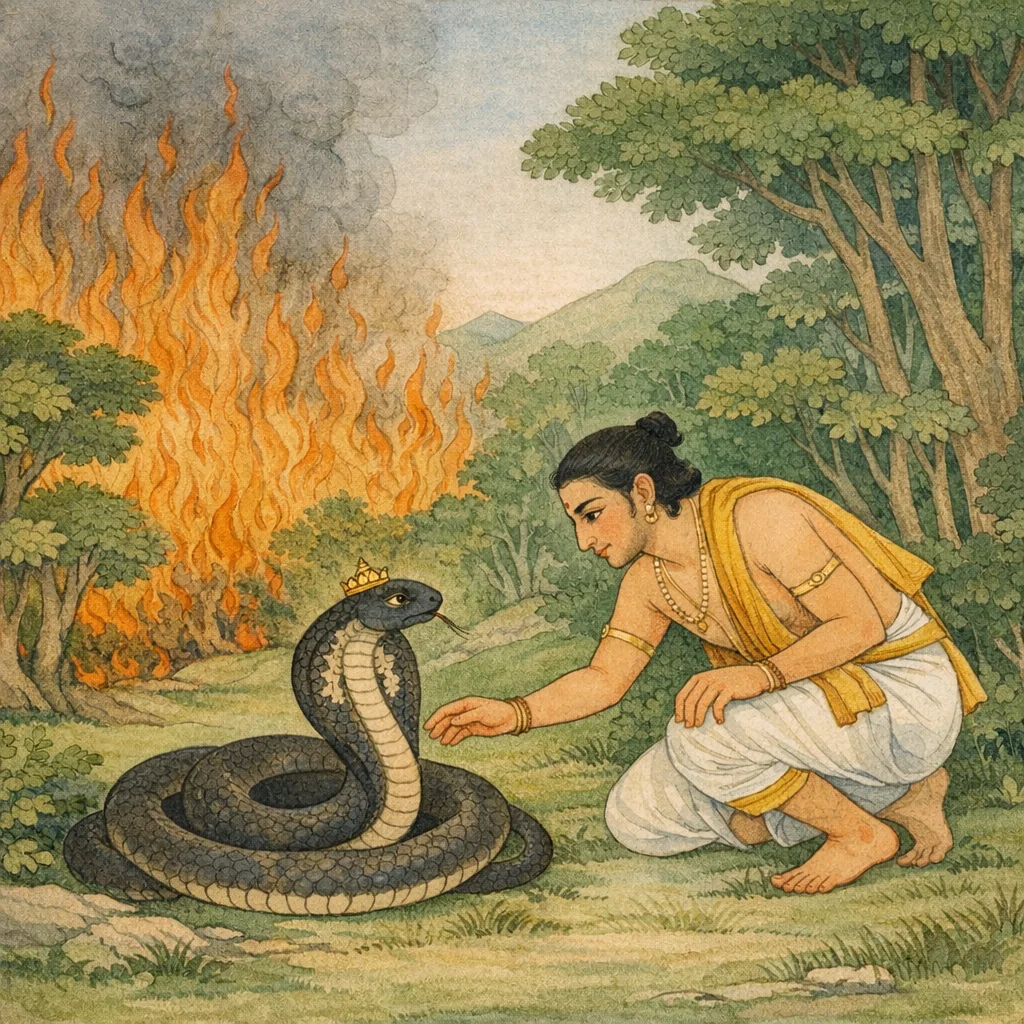
Chapter Arc: दमयन्ती को त्यागकर वन में भटकते नल के कानों में अग्नि के बीच से किसी प्राणी की करुण पुकार पड़ती है—“नले! पुण्यश्लोक!” → दावानल के बीच प्रवेश करना स्वयं मृत्यु को बुलाना है, फिर भी नल “मा भैः” कहकर धधकती ज्वालाओं में उतरते हैं और वहाँ कुण्डली मारे पड़े नागराज कर्कोटक को देखते हैं—अग्नि, भय और करुणा एक साथ टकराते हैं। → कर्कोटक नल से कहता है कि वह उनका मित्र बनेगा और उन्हें शीघ्रता से उठा ले चलने को कहता है; फिर वह नल को आश्वासन देता है कि कलि के कपट से जो दुःख नल ने पाया, उसका प्रतिकार वह अपने विष-प्रभाव से करेगा—दुःख का कारण अब दण्ड और शमन की दिशा में मुड़ता है। → कर्कोटक नल को अयोध्या जाने की सलाह देता है और ‘अश्वहृदय’ (घोड़ों का हृदय/विद्या) देने वाले राजा ऋतुपर्ण की ओर संकेत करता है; साथ ही दिव्य वस्त्र-युगल देता है—जिसे धारण कर नल अपने पूर्व रूप को पुनः पा सकेंगे। → नागराज अन्तर्धान हो जाता है; नल के सामने अब अयोध्या की ओर एक अनिश्चित यात्रा और ऋतुपर्ण से मिलने का रहस्यपूर्ण मार्ग खुलता है।
Shlokas
Verse 1
अऑडआ कर (0) है ० षट्षष्टितमो<5 ध्याय: राजा नलके द्वारा दावानलसे कर्कोटक नागकी रक्षा तथा नागद्धवारा नलको आश्वासन ब॒हदश्व उवाच उत्सृज्य दमयन्तीं तु नलो राजा विशाम्पते । ददर्श दावं दहान्तं, महान्तं गहने वने,बृहदश्वच मुनि कहते हैं--युधिष्ठिर! दमयन्तीको छोड़कर जब राजा नल आगे बढ़ गये, तब एक गहन वनमें उन्होंने महान् दावानल प्रज्वलित होते देखा
Bṛhadaśva said: “O lord of men, after leaving Damayantī behind, King Nala went on and beheld, in a dense forest, a vast wildfire blazing fiercely.”
Verse 2
तत्र शुश्राव शब्दं वै मध्ये भूतस्य कस्यचित् । अभिधाव नलेत्युच्चै: पुण्यश्लोकेति चासकृत्,उसीके बीचमें उन्हें किसी प्राणीका यह शब्द सुनायी पड़ा--'पुण्यश्लोक महाराज नल! दौड़िये, मुझे बचाइये।” उच्च स्वरसे बार-बार दुहरायी गयी इस वाणीको सुनकर राजा नलने कहा--'डरो मत'। इतना कहकर वे आगके भीतर घुस गये। वहाँ उन्होंने देखा, एक नागराज कुण्डलाकार पड़ा हुआ सो रहा है
There he heard a sound, as if from some living being in the midst of the fire: “Run, O Nala!”—and again and again, loudly, “O Puṇyaśloka!” Hearing this repeatedly cried appeal, King Nala responded with fearless resolve—“Do not be afraid”—and, having said so, he entered the fire to give protection. (In the ensuing scene, he discovers a serpent-king lying coiled and asleep.)
Verse 3
मा भैरिति नलश्नोक्त्वा मध्यमग्ने: प्रविश्य तम् । ददर्श नागराजानं शयानं कुण्डलीकृतम्,उसीके बीचमें उन्हें किसी प्राणीका यह शब्द सुनायी पड़ा--'पुण्यश्लोक महाराज नल! दौड़िये, मुझे बचाइये।” उच्च स्वरसे बार-बार दुहरायी गयी इस वाणीको सुनकर राजा नलने कहा--'डरो मत'। इतना कहकर वे आगके भीतर घुस गये। वहाँ उन्होंने देखा, एक नागराज कुण्डलाकार पड़ा हुआ सो रहा है
Saying, “Do not be afraid,” King Nala entered the very midst of the fire. There he saw the lord of serpents lying asleep, coiled up in a ring.
Verse 4
स नाग: प्राञ्जलि भूत्वा वेपमानो नलं तदा | उवाच मां विद्धि राजन् नाग॑ कर्कोटकं नृूप
Then that serpent, trembling and with hands joined in reverence, addressed Nala: “O king, know me—I am the serpent Karkoṭaka, O ruler.”
Verse 5
मया प्रलब्धो ब्रह्मर्षिनरिद: सुमहातपा: । तेन मन्युपरीतेन शप्तो5स्मि मनुजाधिप
Bṛhadaśva said: “I once deceived the brahmarṣi Nārada, a sage of exceedingly great austerity. Overcome with anger because of that, he pronounced a curse upon me, O lord of men.”
Verse 6
तिष्ठ त्वं स्थावर इव यावदेव नलः क्वचित् । इतो नेता हि तत्र त्वं शापान्मोक्ष्यसि मत्कृतात्
Bṛhadaśva said: “Stay here, unmoving like a tree, until Nala comes to this place. From here you will lead him onward; and by doing so you will be released from the curse that I laid upon you.”
Verse 7
उस नागने हाथ जोड़कर काँपते हुए नलसे उस समय इस प्रकार कहा--*राजन्! मुझे कर्कोटक नाग समझिये। नरेश्वर! एक दिन मेरे द्वारा महातपस्वी ब्रह्मर्षि नारद ठगे गये, अतः मनुजेश्वर! उन्होंने क्रोधसे आविष्ट होकर मुझे शाप दे दिया--“तुम स्थावर वृक्षकी भाँति एक जगह पड़े रहो, जब कभी राजा नल आकर तुम्हें यहाँसे अन्यत्र ले जायँगे, तभी तुम मेरे शापसे छुटकारा पा सकोगे” ।। तस्य शापाजन्न शक्तो5स्मि पदाद् विचलितुं पदम् | उपदेक्ष्यामि ते श्रेयस्त्रातुमहति मां भवान्,“राजन! नारदजीके उस शापसे मैं एक पग भी चल नहीं सकता; आप मुझे बचाइये, मैं आपको कल्याणकारी उपदेश दूँगा
Bṛhadaśva said: “Because of that curse, I am unable to move even a single step from where I stand. If you will rescue me, O king, I shall instruct you in what is truly beneficial.” In this moment the serpent appeals to the king’s compassion and sense of dharma: deliverance of one in distress becomes the condition for receiving guidance that leads to welfare.
Verse 8
सखा च ते भविष्यामि मत्समो नास्ति पन्नग: । लघुश्न ते भविष्यामि शीघ्रमादाय गच्छ माम्,'साथ ही मैं आपका मित्र हो जाऊँगा। सर्पोमें मेरे-जैसा प्रभावशाली दूसरा कोई नहीं है। मैं आपके लिये हलका हो जाऊँगा। आप शीघ्र मुझे लेकर यहाँसे चल दीजिये”
Bṛhadaśva said: “I shall become your friend as well. Among serpents there is none equal to me in power. I will make myself light for you; quickly take me up and go from here.” The statement frames an alliance grounded in capability and protection: the speaker offers friendship and practical aid, urging swift action to avert danger and secure the next step in the journey.
Verse 9
एवमुक्त्वा स नागेन्द्रो बभूवाड्गुष्ठमात्रक: । त॑ गृहीत्वा नलः प्रायाद् देशं दावविवर्जितम्,इतना कहकर नागराज कर्कोटक अँगूठेके बराबर हो गया। उसे लेकर राजा नल वनके उस प्रदेशकी ओर चले गये, जहाँ दावानल नहीं था
Having spoken thus, the lord of serpents became no larger than a thumb. Taking him in hand, King Nala set out toward a region of the forest that was free from the raging wildfire—choosing safety and steadiness over peril as he continued his difficult journey.
Verse 10
आकाशदेशमासाद्य विमुक्तं कृष्णवर्त्मना । उत्स्रष्टकामं त॑ नाग: पुन: कर्कोटको<ब्रवीत्,अग्निके प्रभावसे रहित आकाश-देशमें पहुँचनेपर जब नलने उस नागको छोड़नेका विचार किया, उस समय कर्कोटकने फिर कहा--
Bṛhadaśva said: Having reached an open stretch of sky and being released from the dark path, when Nala was about to let the serpent go, the nāga Karkoṭaka spoke to him again—signaling that the encounter was not merely accidental but carried a deliberate moral purpose and a further counsel yet to be given.
Verse 11
पदानि गणयन् गच्छ स्वानि नैषध कानिचित् | तत्र ते5हं महाबाहों श्रेयो धास्यामि यत् परम्,“नैषध! आप अपने कुछ पग गिनते हुए चलिये। महाबाहो! ऐसा करनेपर मैं आपके लिये परम कल्याणका साधन करूँगा'
Bṛhadaśva said: “O Naiṣadha, walk on, counting a few of your own steps. O mighty-armed one, when you do so, I shall confer upon you the highest means of welfare.”
Verse 12
ततः संख्यातुमारब्धमदशदू दशमे पदे । तस्य दष्टस्य तद् रूप॑ क्षिप्रमन््तरधीयत,तब राजा नलने अपने पग गिनने आरम्भ किये। पग गिनते-गिनते जब राजा नलने “दश' कहा, तब नागने उन्हें डँस लिया। उसके डँसते ही उनका पहला रूप तत्काल अन्तर्हित (होकर श्यामवर्ण) हो गया
Then, as he began to count his steps, the serpent bit him at the tenth pace. The moment he was bitten, his former appearance swiftly vanished from sight—signaling an abrupt, fateful change brought about by the power of the curse and the consequences now ripening in his life.
Verse 13
स दृष्टवा विस्मितस्तस्थावात्मानं विकृतं नलः । स्वरूपधारिणं नागं ददर्श स महीपति:,अपने रूपको इस प्रकार विकृत (गौरवर्णसे श्यामवर्ण) हुआ देख राजा नलको बड़ा विस्मय हुआ। उन्होंने अपने पूर्वस्वरूपको धारण करके खड़े हुए कर्कोटक नागको देखा
Seeing himself thus altered in appearance, King Nala stood astonished. Then that lord of the earth beheld the serpent (Nāga) Karkoṭaka standing there, having assumed his own true form.
Verse 14
ततः कर्कोटको नाग: सान्त्वयन् नलमब्रवीत् । मया तेडन्तर्हितं रूप॑ न त्वां विद्युर्जजा इति,तब कर्कोटक नागने राजा नलको सान्त्वना देते हुए कहा--'राजन्! मैंने आपके पहले रूपको इसलिये अदृश्य कर दिया है कि लोग आपको पहचान न सकें
Then the serpent Karkoṭaka, consoling King Nala, said: “I have concealed your former appearance, so that people may not recognize you.”
Verse 15
यत्कृते चासि निकृतो दुःखेन महता नल । विषेण स मदीयेन त्वयि दुःखं निवत्स्यति,“महाराज नल! जिस कलियुगके कपटसे आपको महान् दुःखका सामना करना पड़ा है, वह मेरे विषसे दग्ध होकर आपके भीतर बड़े कष्टसे निवास करेगा
“O King Nala, because of whom you were deceived and made to suffer such great misery—he (Kali) will now, scorched by my poison, dwell within you in pain.”
Verse 16
वह # ज्ज्वम ह## विषेण संवृतैगत्रियवत् त्वां न विमोक्ष्यति । तावत् त्वयि महाराज दु:खं वै स निवत्स्यति,“कलियुगके सारे अंग मेरे विषसे व्याप्त हो जायँगे। महाराज! वह जबतक आपको छोड़ नहीं देगा, तबतक आपके भीतर बड़े दुःखसे निवास करेगा
Bṛhadaśva said: “With all his limbs pervaded by poison, he will not release you, O king, as a kṣatriya would not abandon his grip. So long as he does not let you go, that very sorrow will dwell within you, O great king.”
Verse 17
अनागा येन निकृतस्त्वमनहों जनाधिप । क्रोधादसूययित्वा तं रक्षा मे भवत: कृता,“नरेश्वरर आप छल-कपदटद्वारा सताये जानेयोग्य नहीं थे, तो भी जिसने बिना किसी अपराधके आपके साथ कपटका व्यवहार किया है, उसीके प्रति क्रोधसे दोषदृष्टि रखकर मैंने आपकी रक्षा की है
Bṛhadaśva said: “O lord of men, though you were blameless and not fit to be harassed, the one who deceived you without any fault on your part became the object of my anger and reproach; moved by that indignation, I acted to protect you.”
Verse 18
न ते भयं नरव्याघ्र दंष्टिभ्य: शत्रुतो5पि वा । ब्रह्मविद्धयश्न भविता मत्प्रसादान्नराधिप,“नरव्याप्र महाराज! मेरे प्रसादसे आपको दाढ़ोंवाले जन्तुओं और शत्रुओंसे तथा वेदवेत्ताओंके शाप आदिसे भी कभी भय नहीं होगा
Bṛhadaśva said: “O tiger among men, you shall have no fear—neither from fanged beasts nor even from enemies. By my favor, O king, you will also be free from the peril of curses and other harms arising from those who know Brahman (the Veda-knowers).”
Verse 19
राजन् विषनिमित्ता च न ते पीडा भविष्यति । संग्रामेषु च राजेन्द्र शश्वज्जयमवाप्स्यसि,“राजन! आपको विषजनित पीड़ा कभी नहीं होगी। राजेन्द्र! आप युद्धमें भी सदा विजय प्राप्त करेंगे
“O King, you will never suffer pain arising from poison. And, O best of kings, in battles you will continually attain victory.”
Verse 20
गच्छ राजन्नितः सूतो बाहुको5हमिति ब्रुवन् । समीपमृतुपर्णस्य स हि चैवाक्षनैपुण:,“राजन! अब आप यहाँसे अपनेको बाहुक नामक सूत बताते हुए राजा ऋतुपर्णके समीप जाइये। वे द्यूतविद्यामें बड़े निपुण हैं
Bṛhadaśva said: “O King, depart from here and go to King Ṛtuparṇa, presenting yourself as a charioteer named Bāhuka. He is indeed highly skilled in the science of dice.”
Verse 21
अयोध्यां नगरीं रम्यामद्य वै निषधेश्वर । स तेक्षहृदयं दाता राजाश्वह्ददयेन वै,“निषधेश्वर! आप आज ही रमणीय अयोध्यापुरीको चले जाइये। इक्ष्वाकुकुलमें उत्पन्न श्रीमान् राजा ऋतुपर्ण आपसे अश्वविद्याका रहस्य सीखकर बदलेमें आपको चद्यूतक्रीड़ाका रहस्य बतलायेंगे और आपके मित्र भी हो जायँगे। जब आप द्यूतविद्याके ज्ञाता होंगे, तब पुनः कल्याणभागी हो जायँगे
Bṛhadaśva said: “O lord of Niṣadha, go today itself to the delightful city of Ayodhyā. There the illustrious king Ṛtuparṇa—out of goodwill—will teach you the secret of horsemanship, the science of horses. In return, he will receive from you the secret of dice-play and will become your friend. When you have mastered the knowledge of dice, you will again be able to regain your welfare and good fortune.”
Verse 22
इक्ष्वाकुकुलज: श्रीमान् मित्र चैव भविष्यति । भविष्यसि यदाक्षज्ञ: श्रेयसा योक्ष्यसे तदा,“निषधेश्वर! आप आज ही रमणीय अयोध्यापुरीको चले जाइये। इक्ष्वाकुकुलमें उत्पन्न श्रीमान् राजा ऋतुपर्ण आपसे अश्वविद्याका रहस्य सीखकर बदलेमें आपको चद्यूतक्रीड़ाका रहस्य बतलायेंगे और आपके मित्र भी हो जायँगे। जब आप द्यूतविद्याके ज्ञाता होंगे, तब पुनः कल्याणभागी हो जायँगे
Bṛhadaśva said: “A fortunate king born in the Ikṣvāku line will become your friend as well. When you become skilled in the knowledge of dice, then you will again be joined with prosperity and well-being.”
Verse 23
सममेष्यसि दारैस्त्वं मा सम शोके मन: कृथा: । राज्येन तनयाभ्यां च सत्यमेतद् ब्रवीमि ते,“मैं सच कहता हूँ, आप एक ही साथ अपनी पत्नी, दोनों संतानों तथा राज्यको प्राप्त कर लेंगे; अत: अपने मनमें चिन्ता न कीजिये
Bṛhadaśva said: “You will regain, all at once, your wife, your two sons, and your kingdom. Therefore do not let your mind fall into grief. This I tell you as the truth.”
Verse 24
स्वं रूपं च यदा द्रष्टमिच्छेथास्त्वं नराधिप । संस्मर्तव्यस्तदा ते5हं वासश्षेद॑ निवासये:,“नरेश्वरर जब आप अपने (पहलेवाले) रूपको देखना चाहें, उस समय मेरा स्मरण करें और इस कपड़ेको ओढ़ लें
Bṛhadaśva said: “O king, whenever you wish to behold your own former form again, then remember me; and at that time, put on this garment.”
Verse 25
अनेन वाससाच्छन्न: स्वं रूप॑ प्रतिपत्स्यसे । इत्युक्त्वा प्रददौ तस्मै दिव्यं वासोयुगं तदा,“इस वस्त्रसे आच्छादित होते ही आप अपना पहला रूप प्राप्त कर लेंगे।! ऐसा कहकर नागने उन्हें दो दिव्य वस्त्र प्रदान किये
Bṛhadaśva said: “When you cover yourself with this garment, you will regain your own former appearance.” Having said this, he then bestowed upon him a divine pair of garments.
Verse 26
एवं नलं च संदिश्य वासो दत्त्वा च कौरव । नागराजस्ततो राजंस्तत्रैवान्तरधीयत
Thus, having instructed Nala and also given him garments, O Kaurava, the king of serpents then—O king—vanished from that very spot.
Verse 66
कुरुनन्दन युधिष्ठिर! इस प्रकार राजा नलको संदेश और वस्त्र देकर नागराज कर्कोटक वहीं अन्तर्धान हो गया ।। इति श्रीमहाभारते वनपर्वणि नलोपाख्यानपर्वणि नलकर्कोटकसंवादे षट्षष्टितमो<5ध्याय:
Bṛhadaśva said: “O Yudhiṣṭhira, joy of the Kurus! Having thus delivered his message and given the garments, King Nala saw the serpent-king Karkoṭaka vanish from that very spot.” Here ends the sixty-sixth chapter in the Vana Parva of the Mahābhārata, in the Nalopākhyāna section, in the dialogue between Nala and Karkoṭaka.
Frequently Asked Questions
How to verify and protect a displaced royal woman whose identity is uncertain: the chapter models cautious recognition (signs + testimony) followed by lawful guardianship and safe transport.
Social order is restored through verifiable truth, compassionate custody, and kinship responsibility—especially when misfortune has obscured status and identity.
No explicit phalaśruti appears in the provided passage; the chapter’s function is primarily narrative-ethical, reinforcing recognition, refuge, and familial duty within the Nalopākhyāna.