Adhyaya 51
दमयन्त्याः व्याकुलता — स्वयंवरसंनिपातः — देवदूतयाचनम् (Damayantī’s Distress, Proclamation of the Svayaṃvara, and the Gods’ Request)
Upa-parva: Nalopākhyāna (Tale of Nala and Damayantī) — Svayaṃvara Preparations and Divine Interest
Bṛhadaśva narrates Damayantī’s immediate transformation after hearing the haṃsa describe Nala: she becomes restless, emaciated, absorbed in inward contemplation, sleepless by night and day, repeatedly voicing grief. Her companions infer her inner condition from behavioral signs and report it to her father, King Bhīma of Vidarbha. Bhīma reflects on an appropriate remedy and, seeing his daughter at marriageable age, determines that arranging her svayaṃvara is the suitable course. He summons rulers with a formal invitation to attend the selection rite; kings arrive with conspicuous retinues and ceremonial display. In parallel, the ancient sages Nārada and Parvata visit Indra; asked why notable kings are not visible in heaven, Nārada explains that they are traveling to Damayantī’s imminent svayaṃvara, drawn by her exceptional reputation and beauty. Hearing this, the lokapālas resolve to go as well. On the road they see Nala, radiant in appearance, and request that the truth-bound king assist them by acting as their messenger—setting up a tension between duty to guests/divine authorities and personal attachment to Damayantī.
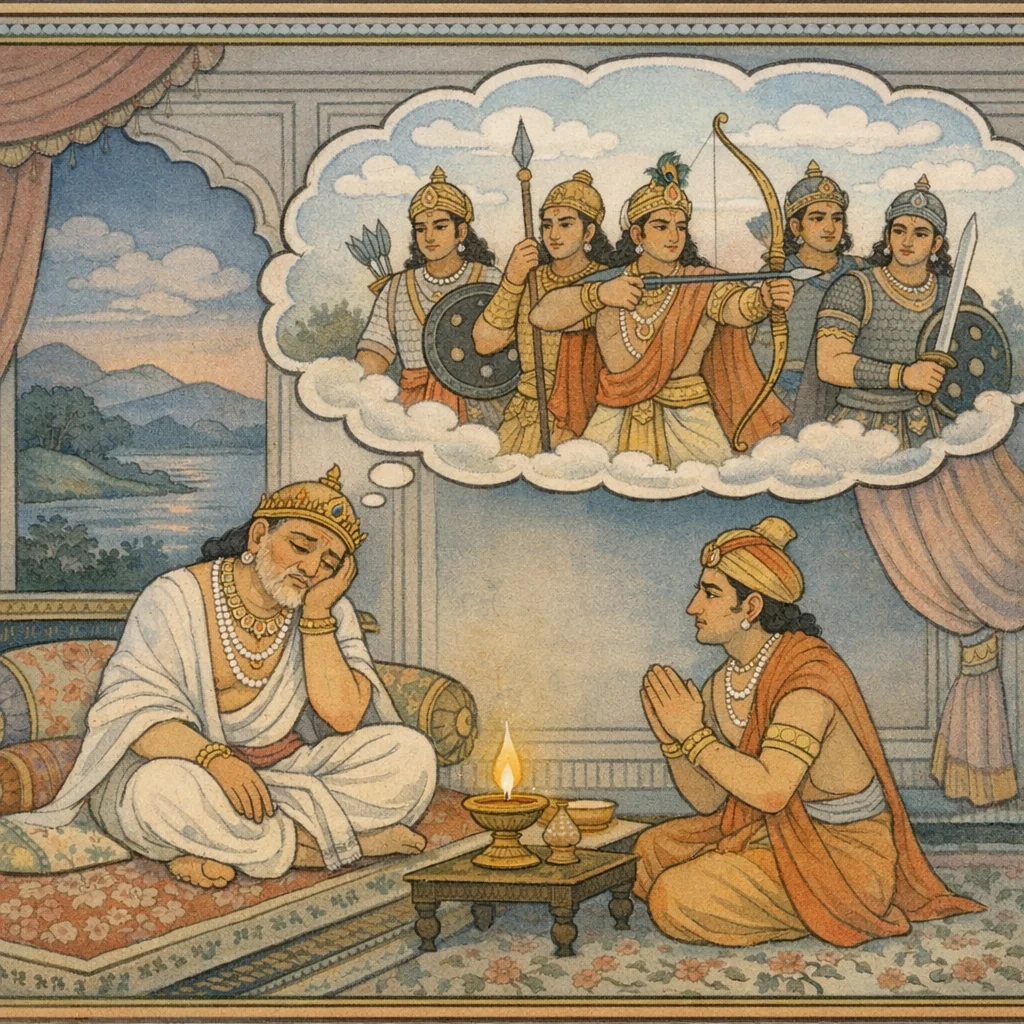
Chapter Arc: हस्तिनापुर के अन्धे सम्राट धृतराष्ट्र लम्बी, गरम साँस छोड़ते हुए संजय को बुलाते हैं—नींद और दिन का चैन दोनों जुए की उस भयावह नीति-भ्रष्टता ने छीन लिए हैं। → धृतराष्ट्र अपने ही निर्णयों की आग में जलते हुए पाण्डवों की बढ़ती शक्ति का स्मरण करते हैं—विशेषतः अश्विनीकुमारों-से तेजस्वी नकुल-सहदेव, और उनके आगे भीम-अर्जुन जैसे सिंहविक्रान्त योद्धा। यह स्मृति उनके भीतर भय को भविष्यवाणी में बदल देती है: यदि ये रणभूमि में खड़े हुए तो कौरव-पक्ष का टिकना कठिन है। → द्रौपदी के अपमान और पाण्डवों के वनवास की परिणति का साक्षात्कार—धृतराष्ट्र के मुख से यह तीखा निष्कर्ष फूट पड़ता है कि दुर्योधन अपने क्रोध और अधर्म के कारण जीवन तक त्याग देगा; और वासुदेव (कृष्ण) के रहते पाण्डव-पक्ष का विनाश असम्भव-सा है। → अध्याय धृतराष्ट्र के विलाप-स्वर में ठहरता है—पश्चात्ताप, भय, और अनिवार्य दण्ड की प्रतीक्षा। संजय श्रोता-रूप में उपस्थित है; भविष्य का युद्ध अभी घटित नहीं, पर उसकी छाया राजसभा पर उतर आती है। → युधिष्ठिर का कृष्ण से प्रतिज्ञा-स्मरण—तेरहवें वर्ष के बाद शत्रुओं का समूल नाश—आगामी निर्णायक संघर्ष की घोषणा बनकर लटकती है।
Shlokas
Verse 1
इस प्रकार श्रीमहाभारत वनपरव्वके अन्तर्गत इन्रलोकाभिगमनपर्वमें पाण्डवोंके भोजनका वर्णनविषयक पचासवाँ अध्याय पूरा हुआ ॥/ ५० ॥ #:73:.8 #::3::.7 () है 7 7-3 - सिंह-व्याप्रादि हिंसक जानवरोंको मार देनेसे वे मारनेवालेको पवित्र करनेवाले हैं; इसलिये उनको पवित्र कहा गया है। एकपज्चाशत्तमो< ध्याय: 80000 (80 ष्टके प्रति श्रीकृष्णादिके द्वारा की हुई दुर्यो वधकी प्रतिज्ञाका वृत्तान्त सुनाना वैशम्पायन उवाच तेषां तच्चरितं श्रुत्वा मनुष्यातीतमद्भुतम् । चिन्ताशोकपरीतात्मा मन्युनाभिपरिप्लुत:,वैशम्पायनजी कहते हैं--पुरुषरत्न जनमेजय! पाण्डवोंका वह अद्भुत एवं अलौकिक चरित्र सुनकर अम्बिकानन्दन राजा धृतराष्ट्रका मन चिन्ता और शोकमें डूब गया। वे अत्यन्त खिन्न हो उठे और लंबी एवं गरम साँसें खींचकर अपने सारथि संजयको निकट बुलाकर बोले--
Vaiśampāyana said: Having heard of the Pāṇḍavas’ wondrous deeds—marvels that seemed to surpass the ordinary limits of human life—King Dhṛtarāṣṭra, son of Ambikā, found his mind overwhelmed by anxiety and grief. Consumed by anger and inner turmoil, he grew deeply distressed and, drawing long, heated breaths, summoned his charioteer Sañjaya to his side to speak.
Verse 2
दीर्घमुष्णं च नि:श्वस्य धृतराष्ट्रोडम्बिकासुत: । अब्रवीत् संजयं सूतमामन्त्रय पुरुषर्षभ,वैशम्पायनजी कहते हैं--पुरुषरत्न जनमेजय! पाण्डवोंका वह अद्भुत एवं अलौकिक चरित्र सुनकर अम्बिकानन्दन राजा धृतराष्ट्रका मन चिन्ता और शोकमें डूब गया। वे अत्यन्त खिन्न हो उठे और लंबी एवं गरम साँसें खींचकर अपने सारथि संजयको निकट बुलाकर बोले--
Vaiśampāyana said: O bull among men, having heaved a long, hot sigh, Dhṛtarāṣṭra—the son of Ambikā—summoned Sañjaya the charioteer and spoke. Hearing of the Pāṇḍavas’ extraordinary and almost otherworldly conduct, his mind sank into anxiety and grief, and in that troubled state he called for his trusted messenger to give voice to his inner turmoil.
Verse 3
नरात्रौ न दिवा सूत शान्तिं प्राप्रोमि वै क्षणम् । संचिन्त्य दुर्नयं घोरमतीतं द्यूतजं हि तत्
Vaiśaṃpāyana said: “O Sūta, neither by night nor by day do I find even a moment’s peace, as I keep reflecting on that dreadful, ill-judged course of action—born of the dice—that has already taken place.”
Verse 4
'सूत! मैं बीते हुए द्यूतजनित घोर अन्यायका स्मरण करके दिन तथा रातमें क्षणभर भी शान्ति नहीं पाता ।। तेषामसहावीर्याणां शौर्य धैर्य धृतिं पराम् । अन्योन्यमनुरागं च भ्रातृणामतिमानुषम्,“मैं देखता हूँ, पाण्डवोंके पराक्रम असह्ा हैं। उनमें शौर्य, धैर्य तथा उत्तम धारणाशक्ति है। उन सब भाइयोंमें परस्पर अलौकिक प्रेम है
O Sūta, remembering the dreadful injustice that arose from the gambling match, I find no peace even for a moment, by day or by night. I see that the Pāṇḍavas’ prowess is irresistible: in them are supreme valor, steadfast courage, and sustaining resolve; and among those brothers there is a mutual affection that is beyond the ordinary.
Verse 5
देवपुत्रौ महाभागौ देवराजसमझ्ुती | नकुल: सहदेवश्न पाण्डवौ युद्धदुर्मदौ,'देवपुत्र महाभाग नकुल-सहदेव देवराज इन्द्रके समान तेजस्वी हैं। वे दोनों ही पाण्डव युद्धमें प्रचण्ड हैं
Vaiśampāyana said: The two sons of the gods, greatly fortunate and radiant like Indra, lord of the gods—Nakula and Sahadeva—those Pāṇḍava brothers, were fierce and unrestrained in the fury of battle. The narration highlights their divinely endowed prowess and the formidable martial spirit that supports the Pāṇḍavas’ dharmic struggle.
Verse 6
दृढायुधौ दूरपातौ युद्धे च कृतनिश्चयौ । शीघ्रहस्ती दृढकोधौ नित्ययुक्तो तरस्विनौ,“उनके आयुध दृढ़ हैं। वे दूरतक निशाना मारते हैं। युद्धके लिये उनका भी दृढ़ निश्चय है। वे दोनों ही बड़ी शीघ्रतासे हस्तसंचालन करते हैं। उनका क्रोध भी अत्यन्त दृढ़ है। वे सदा उद्योगशील और बड़े वेगवान् हैं
Vaiśampāyana said: Both are firm in their weapons and can strike from afar; they are resolute in their decision to fight. Their hands move with great speed, their wrath is unyielding, and they are ever engaged in effort—men of powerful momentum.
Verse 7
भीमार्जुनौ पुरोधाय यदा तौ रणमूर्थनि । स्थास्येते सिंहविक्रान्तावश्विनाविव दुःसहौ,“जिस समय भीमसेन और अर्जुनको आगे रखकर वे दोनों सिंहके समान पराक्रमी और अश्विनीकुमारोंके समान दुःसह वीर युद्धके मुहानेपर खड़े होंगे, उस समय मुझे अपनी सेनाका कोई वीर शेष रहता नहीं दिखायी देता है। संजय! देवपुत्र महारथी नकुल-सहदेव युद्धमें अनुपम हैं। कोई भी रथी उनका सामना नहीं कर सकता
Vaiśampāyana said: When those two—placing Bhīma and Arjuna at the fore—stand at the very head of battle, lion-like in their stride and as unendurable as the Aśvin twins, then I see no warrior of my host left remaining. O Sañjaya, the divine-born great chariot-fighters Nakula and Sahadeva are peerless in war; no charioteer can withstand them.
Verse 8
न शेषमिह पश्यामि मम सैन्यस्य संजय । तो ह्ाप्रतिरथौ युद्धे देवपुत्रो महारथी,“जिस समय भीमसेन और अर्जुनको आगे रखकर वे दोनों सिंहके समान पराक्रमी और अश्विनीकुमारोंके समान दुःसह वीर युद्धके मुहानेपर खड़े होंगे, उस समय मुझे अपनी सेनाका कोई वीर शेष रहता नहीं दिखायी देता है। संजय! देवपुत्र महारथी नकुल-सहदेव युद्धमें अनुपम हैं। कोई भी रथी उनका सामना नहीं कर सकता
Vaiśampāyana said: Sañjaya, I see no remnant of my army left here. For those two—sons of the gods, great chariot-warriors—are without equal in battle; no opposing chariot-fighter can stand against them.
Verse 9
द्रौपद्यास्तं परिकलेशं न क्षंस्येते त्वमर्षिणौ । वृष्णयो5थ महेष्वासा: पञ्चाला वा महौजस:,“अमर्षमें भरे हुए माद्रीकुमार द्रौपदीको दिये गये उस कष्टको कभी क्षमा नहीं करेंगे। महान् धनुर्धर वृष्णिवंशी, महातेजस्वी पांचाल योद्धा और युद्धमें सत्यप्रतिज्ञ वासुदेव श्रीकृष्णसे सुरक्षित कुन्तीपुत्र निश्चय ही मेरे पुत्रोंकी सेनाको भस्म कर डालेंगे
Vaiśampāyana said: “Those who cannot endure insult will never forgive the suffering inflicted upon Draupadī. The Vṛṣṇis—mighty archers—and the Pāñcālas of great prowess will not let it pass. Protected by Vāsudeva Kṛṣṇa, the sons of Kuntī will surely reduce my sons’ army to ashes.”
Verse 10
युधि सत्याभिसंधेन वासुदेवेन रक्षिता: । प्रधक्ष्यन्ति रणे पार्था: पुत्राणां मम वाहिनीम्,“अमर्षमें भरे हुए माद्रीकुमार द्रौपदीको दिये गये उस कष्टको कभी क्षमा नहीं करेंगे। महान् धनुर्धर वृष्णिवंशी, महातेजस्वी पांचाल योद्धा और युद्धमें सत्यप्रतिज्ञ वासुदेव श्रीकृष्णसे सुरक्षित कुन्तीपुत्र निश्चय ही मेरे पुत्रोंकी सेनाको भस्म कर डालेंगे
Vaiśampāyana said: “Protected in battle by Vāsudeva—whose resolve is grounded in truth—the Pārthas will, in the fight, surely burn to ashes the army of my sons.”
Verse 11
रामकृष्णप्रणीतानां वृष्णीनां सूतनन्दन । न शक््य: सहितुं वेग: सर्वैस्तैरपि संयुगे,'सूतनन्दन! बलराम और श्रीकृष्णसे प्रेरित वृष्णि-वंशी योद्धाओंके वेगको युद्धमें समस्त कौरव मिलकर भी नहीं सह सकते
Vaiśampāyana said: “O son of a charioteer, the onrush of the Vṛṣṇi warriors—set in motion and led by Balarāma and Kṛṣṇa—cannot be withstood in battle, even if all the opponents were to unite together.”
Verse 12
तेषां मध्ये महेष्वासो भीमो भीमपराक्रम: । शैक्यया वीरघातिन्या गदया विचरिष्यति,“उनके बीचमें जब भयानक पराक्रमी महान् धनुर्थर भीमसेन बड़े-बड़े वीरोंका संहार करनेवाली आकाशगमें ऊपर उठी हुई गदा लिये विचरेंगे तब उन भीमकी गदाके वेगको तथा वज्रगर्जके समान गाण्डीव धनुषकी टंकारको भी कोई नरेश नहीं सह सकता
Vaiśampāyana said: “In the midst of them will move Bhīma—terrible in prowess—roaming with his mace, a weapon that brings down heroes. When Bhīma strides among the ranks with that upraised, death-dealing club, no king can endure the rush of his mace.”
Verse 13
तथा गाण्डीवनिर्घोषं विस्फूर्जितमिवाशने: । गदावेगं च भीमस्य नाल॑ सोढुं नराधिपा:,“उनके बीचमें जब भयानक पराक्रमी महान् धनुर्थर भीमसेन बड़े-बड़े वीरोंका संहार करनेवाली आकाशगमें ऊपर उठी हुई गदा लिये विचरेंगे तब उन भीमकी गदाके वेगको तथा वज्रगर्जके समान गाण्डीव धनुषकी टंकारको भी कोई नरेश नहीं सह सकता
Vaiśampāyana said: “Likewise, no king will be able to endure the thunder-like roar of the Gāṇḍīva bow, as if it were the crack of Indra’s lightning, nor the crushing momentum of Bhīma’s mace.”
Verse 14
ततो<हं सुहृदां वाचो दुर्योधनवशानुग: । स्मरणीया: स्मरिष्यामि मया या न कृता: पुरा,“उस समय मैं दुर्योधनके वशमें होनेके कारण अपने हितैषी सुहृदोंकी उन याद रखनेयोग्य बातोंको याद करूँगा, जिनका पालन मैंने पहले नहीं किया”
Then I—having been under Duryodhana’s sway—will now recall the words of my well-wishing friends, words worthy of remembrance, which I did not follow in earlier days.
Verse 15
संजय उवाच व्यतिक्रमो<यं सुमहांस्त्वया राजन्नुपेक्षित: । समर्थेनापि यन्मोहात् पुत्रस्ते न निवारित:,संजयने कहा--राजन्! आपके द्वारा यह बहुत बड़ा अन्याय हुआ है, जिसकी आपने जान-बूझकर उपेक्षा की है (उसे रोकनेकी चेष्टा नहीं की है); वह यह है कि आपने समर्थ होते हुए भी मोहवश अपने पुत्रको कभी रोका नहीं
Sanjaya said: “O King, you have overlooked a very grave transgression. Though you had the power to restrain him, you did not—out of delusion—ever check your son.”
Verse 16
श्र॒त्वा हि निर्जितान् द्यूते पाण्डवान् मधुसूदन: । त्वरित: काम्यके पार्थान्ू समभावयदच्युत:,भगवान् मधुसूदनने ज्यों ही सुना कि पाण्डव द्यूतमें पराजित हो गये, त्यों ही वे काम्यकवनमें पहुँचकर कुन्तीपुत्रोंसे मिले और उन्हें आश्वासन दिया
Sañjaya said: When Madhusūdana heard that the Pāṇḍavas had been defeated in the game of dice, the Lord Acyuta hastened to the Kāmyaka forest, met the sons of Pṛthā, and reassured them.
Verse 17
द्रुपदस्य तथा पुत्रा धृष्टद्युम्नपुरोगमा: । विराटो धृष्टकेतुश्च केकयाश्व महारथा:,इसी प्रकार ट्रुपदके धृष्टद्युम्न आदि पुत्र, विराट, धृष्टकेतु और महारथी कैकय--इन सबने पाण्डवोंसे भेंट की
Sañjaya said: Likewise, the sons of Drupada—led by Dhṛṣṭadyumna—together with King Virāṭa, Dhṛṣṭaketu, and the mighty chariot-warriors of the Kekaya country, all came forward and met the Pāṇḍavas.
Verse 18
तैश्व॒ यत् कथितं राजन् दृष्टवा पार्थान् पराजितान् | चारेण विदितं सर्व तन्मया5<5वेदितं च ते,राजन्! पाण्डवोंको जूएमें पराजित देखकर उन सबने जो बातें कहीं, उन्हें गुप्तचरोंद्वारा जानकर मैंने आपकी सेवामें निवेदन कर दिया था
Sañjaya said: “O King, whatever those people said upon seeing the sons of Pṛthā defeated, all of it was learned through spies; and I have duly reported that entire matter to you, O King.”
Verse 19
समागम्य वृतस्तत्र पाण्डवैर्मधुसूदन: । सारथ्ये फाल्गुनस्याजौ तथेत्याह च तान् हरि:,पाण्डवोंने मिलकर मधुसूदन श्रीकृष्णको युद्धमें अर्जुनका सारथि होनेके लिये वरण किया और श्रीहरिने “तथास्तु' कहकर उनका अनुरोध स्वीकार कर लिया
Having assembled there, the Pāṇḍavas chose Madhusūdana (Śrī Kṛṣṇa) to serve as Phālguna’s (Arjuna’s) charioteer in battle; and Hari, saying “So be it,” accepted their request.
Verse 20
अमर्षितो हि कृष्णोडपि दृष्टवा पार्थासतथा गतान् | कृष्णाजिनोत्तरासंगानब्रवीच्च युधिष्ठिरम्,भगवान् श्रीकृष्ण भी कुन्तीपुत्रोंकी उस अवस्थामें काला मृगचर्म ओढ़कर आये हुए देख उस समय अमर्षमें भर गये और युधिष्ठिरसे इस प्रकार बोले---
Sañjaya said: Even Kṛṣṇa, on seeing the sons of Pṛthā (Kuntī’s sons) reduced to such a condition—wearing black antelope-skins as their upper garments—was filled with indignation, and he addressed Yudhiṣṭhira in these words.
Verse 21
या सा समृद्धि: पार्थानामिन्द्रप्रस्थे बभूव ह । राजसूये मया दृष्टा नृपैरन्यै: सुदुर्लभा,इन्द्रप्रस्थमें कुन्तीकुमारोंक पास जो समृद्धि थी तथा राजसूययज्ञके समय जिसे मैंने अपनी आँखों देखा था, वह अन्य नरेशोंके लिये अत्यन्त दुर्लभ थी
Sañjaya said: The prosperity that belonged to the Pārthas in Indraprastha—indeed, the very splendor I myself witnessed at their Rājasūya sacrifice—was something exceedingly hard for other kings to attain.
Verse 22
यत्र सर्वान् महीपालाउछस्त्रतेजो भयार्दितान् । सवज्ाज्रान् सपौण्ड्रोड़़ान् सचोलद्राविडान्ध्रकान्,“उस समय सब भूमिपाल पाण्डवोंके शस्त्रोंके तेजसे भयभीत थे। अंग, वंग, पुण्ड्र, उड़, चोल, द्राविड़, आन्ध्र, सागरतटवर्ती द्वीप तथा समुद्रके समीप निवास करनेवाले जो राजा थे, वे सभी राजसूययज्ञमें उपस्थित थे। सिंहल, बर्बर, म्लेच्छ, लंकानिवासी, पश्चिमके राष्ट्र सागरके निकटवर्ती सैकड़ों प्रदेश, पह्लव, दरद, समस्त किरात, यवन, शक, हारहूण, चीन, तुषार, सैन्धव, जागुड़, रामठ, मुण्ड, स्त्रीराज्य, तंगण, केकय, मालव तथा काश्मीरदेशके नरेश भी राजसूययज्ञमें बुलाये गये थे और मैंने उन सबको आपके यज्ञमें रसोई परोसते देखा था
Sañjaya said: There, all the kings of the earth—struck with fear by the blazing prowess of the Pāṇḍavas’ weapons—were present: the rulers of Aṅga and Vaṅga, of Pauṇḍra and Uḍa, and of the Coḷa, Drāviḍa, and Āndhra lands.
Verse 23
सागरानूपकांश्वैव ये च प्रान्ताभिवासिन: । सिंहलान् बर्बरान् म्लेच्छान् ये च लड़कानिवासिन:,“उस समय सब भूमिपाल पाण्डवोंके शस्त्रोंके तेजसे भयभीत थे। अंग, वंग, पुण्ड्र, उड़, चोल, द्राविड़, आन्ध्र, सागरतटवर्ती द्वीप तथा समुद्रके समीप निवास करनेवाले जो राजा थे, वे सभी राजसूययज्ञमें उपस्थित थे। सिंहल, बर्बर, म्लेच्छ, लंकानिवासी, पश्चिमके राष्ट्र सागरके निकटवर्ती सैकड़ों प्रदेश, पह्लव, दरद, समस्त किरात, यवन, शक, हारहूण, चीन, तुषार, सैन्धव, जागुड़, रामठ, मुण्ड, स्त्रीराज्य, तंगण, केकय, मालव तथा काश्मीरदेशके नरेश भी राजसूययज्ञमें बुलाये गये थे और मैंने उन सबको आपके यज्ञमें रसोई परोसते देखा था
Sañjaya said: “And also those who dwell along the seacoasts and watery lowlands, and those who live on the frontiers—Sinhala people, Barbarians, and Mlecchas, and those residing in Laṅkā as well.”
Verse 24
पश्चिमानि च राष्ट्राणि शतश: सागरान्तिकान् । पह्ववान् दरदान् सर्वान् किरातान् यवनाछ्छकान्,“उस समय सब भूमिपाल पाण्डवोंके शस्त्रोंके तेजसे भयभीत थे। अंग, वंग, पुण्ड्र, उड़, चोल, द्राविड़, आन्ध्र, सागरतटवर्ती द्वीप तथा समुद्रके समीप निवास करनेवाले जो राजा थे, वे सभी राजसूययज्ञमें उपस्थित थे। सिंहल, बर्बर, म्लेच्छ, लंकानिवासी, पश्चिमके राष्ट्र सागरके निकटवर्ती सैकड़ों प्रदेश, पह्लव, दरद, समस्त किरात, यवन, शक, हारहूण, चीन, तुषार, सैन्धव, जागुड़, रामठ, मुण्ड, स्त्रीराज्य, तंगण, केकय, मालव तथा काश्मीरदेशके नरेश भी राजसूययज्ञमें बुलाये गये थे और मैंने उन सबको आपके यज्ञमें रसोई परोसते देखा था
Sañjaya said: “And there were, in hundreds, the western realms lying along the sea-coast—together with the Pahlavas, the Daradas, all the Kirātas, and the Yavanas and Śakas.”
Verse 25
हारह्णांश्व चीनांश्व तुषारान् सैन्धवांस्तथा । जागुडान् रामठान् मुण्डान् स्त्रीराज्यमथ तड्णान्,“उस समय सब भूमिपाल पाण्डवोंके शस्त्रोंके तेजसे भयभीत थे। अंग, वंग, पुण्ड्र, उड़, चोल, द्राविड़, आन्ध्र, सागरतटवर्ती द्वीप तथा समुद्रके समीप निवास करनेवाले जो राजा थे, वे सभी राजसूययज्ञमें उपस्थित थे। सिंहल, बर्बर, म्लेच्छ, लंकानिवासी, पश्चिमके राष्ट्र सागरके निकटवर्ती सैकड़ों प्रदेश, पह्लव, दरद, समस्त किरात, यवन, शक, हारहूण, चीन, तुषार, सैन्धव, जागुड़, रामठ, मुण्ड, स्त्रीराज्य, तंगण, केकय, मालव तथा काश्मीरदेशके नरेश भी राजसूययज्ञमें बुलाये गये थे और मैंने उन सबको आपके यज्ञमें रसोई परोसते देखा था
Sañjaya said: “And also the Hārahūṇas and the Cīnas, the Tuṣāras, and likewise the Saindhavas; the Jāguḍas, the Rāmaṭhas, the Muṇḍas, the realm of women, and the Taṅgaṇas.”
Verse 26
केकयान् मालवांश्वैव तथा काश्मीरकानपि । अद्राक्षमहमाहूतान् यज्ञे ते परिवेषकान्,“उस समय सब भूमिपाल पाण्डवोंके शस्त्रोंके तेजसे भयभीत थे। अंग, वंग, पुण्ड्र, उड़, चोल, द्राविड़, आन्ध्र, सागरतटवर्ती द्वीप तथा समुद्रके समीप निवास करनेवाले जो राजा थे, वे सभी राजसूययज्ञमें उपस्थित थे। सिंहल, बर्बर, म्लेच्छ, लंकानिवासी, पश्चिमके राष्ट्र सागरके निकटवर्ती सैकड़ों प्रदेश, पह्लव, दरद, समस्त किरात, यवन, शक, हारहूण, चीन, तुषार, सैन्धव, जागुड़, रामठ, मुण्ड, स्त्रीराज्य, तंगण, केकय, मालव तथा काश्मीरदेशके नरेश भी राजसूययज्ञमें बुलाये गये थे और मैंने उन सबको आपके यज्ञमें रसोई परोसते देखा था
Sañjaya said: “I saw the Kekayas, the Mālavas, and the Kāśmīras as well—summoned to your sacrifice—serving as attendants who distributed the offerings and food.”
Verse 27
सा ते समृद्धिर्यैरात्ता चपला प्रतिसारिणी । आदाय जीवितं तेषामाहरिष्यामि तामहम्,“सब ओर फैली हुई आपकी उस चंचल समृद्धिको जिन लोगोंने छलसे छीन लिया है, उनके प्राण लेकर भी मैं उसे पुनः: वापस लाऊँगा
Sañjaya said: “That fickle, ever-shifting prosperity of yours, which certain men have seized from you by deceit—I shall bring it back to you, even if I must take their very lives to do so.”
Verse 28
रामेण सह कौरव्य भीमार्जुनयमैस्तथा । अक्रूरगदसाम्बैश्व प्रद्युम्नेनाहुकेन च
Sañjaya said: “Along with Rāma, O scion of the Kuru line, there were also Bhīma, Arjuna, and Yama; and likewise Akrūra, Gada, Sāmba, Pradyumna, and Ahuka.”
Verse 29
धृष्टय्युम्नेन वीरेण शिशुपालात्मजेन च | दुर्योधनं रणे हत्वा सद्य: कर्ण च भारत
Sañjaya said: “O Bhārata, when Duryodhana has been slain in battle by the heroic Dhṛṣṭadyumna and by the son of Śiśupāla, Karṇa too will be killed at once.”
Verse 30
दुःशासनं सौबलेयं यश्चान्य: प्रतियोत्स्यते । ततस्त्वं हास्तिनपुरे भ्रातृभि: सहितो वसन्
Sañjaya said: “Let Duḥśāsana, Śakuni the son of Subala, and any other who wishes to oppose come forward to fight. As for you—remain in Hāstināpura, living there together with your brothers.”
Verse 31
धार्तरष्ट्रीं श्रियं प्राप्प प्रशाधि पृथिवीमिमाम् | “कुरुनन्दन! भरतकुलतिलक! बलराम, भीमसेन, अर्जुन, नकुल-सहदेव, अक्रूर, गद, साम्ब, प्रद्युम्न, आहुक, वीर धृष्टद्युम्न और शिशुपालपुत्र धृष्टकेतुके साथ आक्रमण करके युद्धमें दुर्योधन, कर्ण, दुःशासन एवं शकुनिको तथा और जो कोई योद्धा सामना करने आयेगा, उसे भी शीघ्र ही मारकर मैं आपकी सम्पत्ति लौटा लाऊँगा। तदनन्तर आप भाइयोंसहित हस्तिनापुरमें निवास करते हुए धृतराष्ट्रकी राज्यलक्ष्मीको पाकर इस सारी पृथ्वीका शासन कीजिये” || २८--३० ह || अथैनमब्रवीद् राजा तस्मिन् वीरसमागमे
“Having regained the royal fortune that belongs to the Dhārtarāṣṭras, rule this earth. O joy of the Kurus, ornament of the Bharata line! I will march to war together with Balarāma, Bhīmasena, Arjuna, Nakula and Sahadeva, as well as Akrūra, Gada, Sāmba, Pradyumna, Āhuka, the valiant Dhṛṣṭadyumna, and Dhṛṣṭaketu, son of Śiśupāla. In battle I will swiftly slay Duryodhana, Karṇa, Duḥśāsana, Śakuni, and any other warrior who comes to oppose us, and I will restore your possessions to you. Then you, dwelling in Hastināpura with your brothers, having obtained Dhṛtarāṣṭra’s royal prosperity, should govern the whole earth.” After this, in that gathering of heroes, the king spoke to him.
Verse 32
युधिछिर उवाच प्रतिगृह्नामि ते वाचमिमां सत्यां जनार्दन,युधिष्ठिर बोले--जनार्दन! मैं आपकी सत्य वाणीको शिरोधार्य करता हूँ
Yudhiṣṭhira said: “O Janārdana, I accept and uphold this truthful statement of yours.”
Verse 33
अमित्रान् मे महाबाहो सानुबन्धान् हनिष्यसि । वर्षात् त्रयोदशादूर्ध्व सत्यं मां कुरु केशव
Yudhiṣṭhira said: “O mighty-armed one, you will slay my enemies together with their allies and supporters. After the completion of thirteen years, O Keśava, make this promise to me come true.”
Verse 34
तद् धर्मराजवचन प्रतिश्रुत्य सभासद:,धर्मराजकी वह बात सुनकर धृष्टद्युम्म आदि सभासदोंने समयोचित मधुर वचनोंद्वारा अमर्षमें भरे हुए श्रीकृष्णको शीघ्र ही शान्त किया
Having heard the words of Dharmarāja (Yudhiṣṭhira), the courtiers assembled—led by Dhṛṣṭadyumna—took in his statement and, with timely and gentle speech, quickly soothed Śrī Kṛṣṇa, who was filled with indignation.
Verse 35
धृष्टद्युम्नपुरोगास्ते शभयामासुरञ्जसा । केशवं मधुरैर्वाक्यै: कालयुक्तैरमर्षितम्,धर्मराजकी वह बात सुनकर धृष्टद्युम्म आदि सभासदोंने समयोचित मधुर वचनोंद्वारा अमर्षमें भरे हुए श्रीकृष्णको शीघ्र ही शान्त किया
Yudhiṣṭhira said: “With Dhṛṣṭadyumna at their head, those assembled quickly soothed Keśava—burning with indignation—by addressing him with sweet, timely, and well-judged words.”
Verse 36
पाज्चालीं प्राहुरक्लिष्टां वासुदेवस्य शृण्वतः । दुर्योधनस्तव क्रोधाद् देवि त्यक्ष्यति जीवितम्,तत्पश्चात् उन्होंने क्लेशरहित हुई द्रौपदीसे भगवान् श्रीकृष्णके सुनते हुए कहा--'देवि! दुर्योधन तुम्हारे क्रोधसे निश्चय ही प्राण त्याग देगा
Then, in the hearing of Vāsudeva, Yudhiṣṭhira said to the untroubled Pāñcālī (Draupadī): “O goddess-like lady, through the force of your righteous anger Duryodhana will surely abandon his life.”
Verse 37
प्रतिजानीमहे सत्यं मा शुचो वरवर्णिनि । ये सम ते$क्षजितां कृष्णे दृष्टवा त्वां प्राहसंस्तदा । मांसानि तेषां खादन्तो हरिष्यन्ति वृकद्विजा:,“वरवर्णिनि! हम यह सच्ची प्रतिज्ञा करते हैं, तुम शोक न करो। कृष्णे! उस समय तुम्हें जूएमें जीती हुई देखकर जिन लोगोंने हँसी उड़ायी है, उनके मांस भेड़िये और गीध खायँगे और नोच-नोचकर ले जायूँगे
Yudhiṣṭhira said: “We make this true vow—do not grieve, O fair-complexioned lady. O Kṛṣṇā (Draupadī), those who, at that time, mocked you when they saw you won in the game of dice—wolves and carrion-birds will devour their flesh and tear it away.”
Verse 38
पास्यन्ति रुर्धिर तेषां गृध्रा गोमायवस्तथा । उत्तमाड़ानि कर्षन्तो यै: कृष्टासि सभातले,“इसी प्रकार जिन्होंने तुम्हें सभाभवनमें घसीटा है, उनके कटे हुए सिरोंको घसीटते हुए गीध और गीदड़ उनके रक्त पीयेंगे
Yudhiṣṭhira said: “Vultures and jackals will drink their blood, dragging along their severed heads—those very men who dragged you across the floor of the royal assembly.”
Verse 39
तेषां द्रक्ष्यसि पाउ्चालि गात्राणि पृथिवीतले । क्रव्यादे: कृष्पमाणानि भक्ष्यमाणानि चासकृत्,'पांचालराजकुमारि! तुम देखोगी कि उन दुष्टोंके शरीर इस पृथ्वीपर मांसाहारी गीदड़- गीध आदि पशु-पक्षियोंद्वारा बार-बार घसीटे और खाये जा रहे हैं
Yudhiṣṭhira said: “O Pāñcālī, you will see their bodies lying upon the earth—dragged about and repeatedly devoured by flesh-eating creatures such as jackals and vultures.”
Verse 40
परिक्लिष्टासि यैस्तत्र यैश्वासि समुपेक्षिता । तेषामुत्कृत्तशिरसां भूमि: पास्यति शोणितम्,“जिन लोगोंने तुम्हें सभामें क्लेश पहुँचाया और जिन्होंने चुपचाप रहकर उस अन्यायकी उपेक्षा की है, उन सबके कटे हुए मस्तकोंका रक्त यह पृथ्वी पीयेगी'
Yudhiṣṭhira said: “Those who there caused you suffering in the royal hall, and those who, by remaining silent, looked on and ignored that injustice—of all of them, with their heads cut off, this very earth shall drink their blood.”
Verse 41
एवं बहुविधा वाचस्त ऊचुर्भरतर्षभ । सर्वे तेजस्विन: शूरा: सर्वे चाहतलक्षणा:,भरतकुलतिलक! इस प्रकार उन वीरोंने अनेक प्रकारकी बातें कही थीं। वे सब-के-सब तेजस्वी और शूरवीर हैं। उनके शुभ लक्षण अमिट हैं
Thus, O bull among the Bharatas, they spoke many kinds of words. All of them were radiant and heroic, and all bore auspicious marks that were undiminished—signs of steadfast worth and enduring excellence.
Verse 42
ते धर्मराजेन वृता वर्षादूर्ध्व त्रयोदशात् । पुरस्कृत्योपयास्यन्ति वासुदेव॑ महारथा:,धर्मराजने तेरहवें वर्षके बाद युद्ध करनेके लिये उनका वरण किया है। वे महारथी वीर भगवान् श्रीकृष्णको आगे रखकर आक्रमण करेंगे
Yudhiṣṭhira said: “Chosen by King Dharma (myself), after the completion of the thirteen years, those great chariot-warriors will advance to battle—placing Vāsudeva (Kṛṣṇa) at their forefront.”
Verse 43
रामश्न कृष्णश्व धनंजयश्न प्रद्युम्नसाम्बी युयुधानभीमौ । माद्रीसुतीो केकयराजपुत्रा: पाञ्चालपुत्रा: सह मत्स्यराज्ञा,बलराम, श्रीकृष्ण, अर्जुन, प्रद्युम्न, साम्ब, सात्यकि, भीमसेन, नकुल, सहदेव, केकयराजकुमार, द्रपद और उनके पुत्र तथा मत्स्यनरेश विराट--ये सब-के-सब विश्वविख्यात अजेय वीर हैं। ये महामना जब अपने सगे-सम्बन्धियों और सेनाके साथ धावा करेंगे, उस समय क्रोधमें भरे हुए केसरी सिंहोंके समान उन महावीरोंका समरमें जीवनकी इच्छा रखनेवाला कौन पुरुष सामना करेगा?
Yudhiṣṭhira said: “Balarāma and Śrī Kṛṣṇa, and Arjuna (Dhanañjaya); Pradyumna and Sāmba; Sātyaki (Yuyudhāna) and Bhīmasena; the two sons of Mādrī (Nakula and Sahadeva); the princes of Kekaya; and the sons of the Pāñcālas together with the Matsya king—these are all world-renowned, unconquerable heroes. When such great-souled warriors, inflamed with wrath, charge into battle with their own kinsmen and their armies, like lions in fury—what man who still wishes to live could stand against them in combat?”
Verse 44
एतान् सर्वान् लोकवीरानजेयान् महात्मन: सानुबन्धान् ससैन्यान् । को जीवितार्थी समरे< भ्युदीयात् क्रुद्धान सिंहानू केसरिणो यथैव,बलराम, श्रीकृष्ण, अर्जुन, प्रद्युम्न, साम्ब, सात्यकि, भीमसेन, नकुल, सहदेव, केकयराजकुमार, द्रपद और उनके पुत्र तथा मत्स्यनरेश विराट--ये सब-के-सब विश्वविख्यात अजेय वीर हैं। ये महामना जब अपने सगे-सम्बन्धियों और सेनाके साथ धावा करेंगे, उस समय क्रोधमें भरे हुए केसरी सिंहोंके समान उन महावीरोंका समरमें जीवनकी इच्छा रखनेवाला कौन पुरुष सामना करेगा?
Yudhiṣṭhira said: “All these world-renowned heroes are unconquerable—great-souled men, advancing together with their kinsmen and their armies. When they charge into battle, who, still wishing to live, would rise to face them—like one confronting enraged, maned lions?”
Verse 45
ध्तराष्ट्र उवाच यन्माब्रवीद् विदुरो द्यूतकाले त्वं पाण्डवाग्जेष्यसि चेन्नरेन्द्र । ध्रुवं कुरूणामयमन्तकालो महाभयो भविता शोणितौघ:,धृतराष्ट्र बोले--संजय! जब जूआ खेला जा रहा था, उस समय विदुरने मुझसे जो यह बात कही थी कि नरेन्द्र! यदि आप पाण्डवोंको जूएमें जीतेंगे तो निश्चय ही यह कौरवोंके लिये खूनकी धारासे भरा हुआ अत्यन्त भयंकर विनाशकाल होगा
Dhṛtarāṣṭra said: “Sañjaya, what Vidura told me at the time of the dice-game—that, ‘O king, if you win the Pāṇḍavas by gambling, this will surely become the Kurus’ hour of destruction’—is proving true: a dreadful end, a great terror, a flood of blood.”
Verse 46
मन्ये तथा तद् भवितेति सूत यथा क्षत्ता प्राह वच: पुरा माम् | असंशयं भविता युद्धमेतद् गते काले पाण्डवानां यथोक्तम्,सूत! विदुरने पहले जो बात कही थी, वह अवश्य ही उसी प्रकार होगी, ऐसा मेरा विश्वास है। वनवासका समय व्यतीत होनेपर पाण्डवोंके कथनानुसार यह घोर युद्ध होकर ही रहेगा, इसमें संशय नहीं
Dhṛtarāṣṭhira said: “O Sūta, I believe it will indeed come to pass exactly as the Chamberlain once told me. When the appointed time has elapsed, this war will surely occur, just as the Pāṇḍavas have declared—of this there is no doubt.”
Verse 51
इति श्रीमहा भारते वनपर्वणि इन्द्रलोकाभिगमनपर्वणि धृतराष्ट्रविलापे एकपज्चाशत्तमो5ध्याय:
Thus ends the fifty-first chapter in the Vana Parva of the Śrī Mahābhārata, within the section on the journey to Indra’s world, in the episode known as Dhṛtarāṣṭra’s lament.
Verse 313
शण्वसत्स्वेतेषु वीरेषु धृष्टद्युम्नमुखेषु च । तब राजा युधिष्ठिरने उस वीरसमुदायमें इन धृष्टद्युम्न आदि शूरवीरोंके सुनते हुए श्रीकृष्ससे कहा
Sañjaya said: While those heroes—led by Dhṛṣṭadyumna—were listening, King Yudhiṣṭhira then addressed Śrī Kṛṣṇa.
Verse 333
प्रतिज्ञातो वने वासो राजमध्ये मया हायम् । महाबाहो! केशव! तेरहवें वर्षके बाद आप मेरे सम्पूर्ण शत्रुओंको उनके बन्धु- बान्धवोंसहित नष्ट कीजियेगा। ऐसा करके आप मेरे सत्य (वनवासके लिये की गयी प्रतिज्ञा)-की रक्षा कीजिये। मैंने राजाओंकी मण्डलीमें वनवासकी प्रतिज्ञा की है
Yudhiṣṭhira said: “In the midst of the assembled kings I truly vowed to dwell in the forest. O mighty-armed Keśava, when the thirteenth year is complete, destroy all my enemies together with their kinsmen and allies. By doing so, safeguard my truth—my pledge of exile. For I made this vow of forest-dwelling in the royal assembly.”
Frequently Asked Questions
Nala is asked to serve as a messenger for the lokapālas; the dilemma arises from balancing satyavrata and obligations to powerful guests/divine authorities against his personal inclination and emerging commitment toward Damayantī.
Inner states are legible through disciplined observation: the text treats emotion as ethically consequential, showing how desire can destabilize bodily and social functioning, requiring governance through legitimate institutions rather than secrecy or coercion.
No explicit phalaśruti appears in this excerpt; the chapter functions as narrative causation, establishing the conditions and obligations that will later be evaluated within broader dharma reasoning.