Adhyaya 317
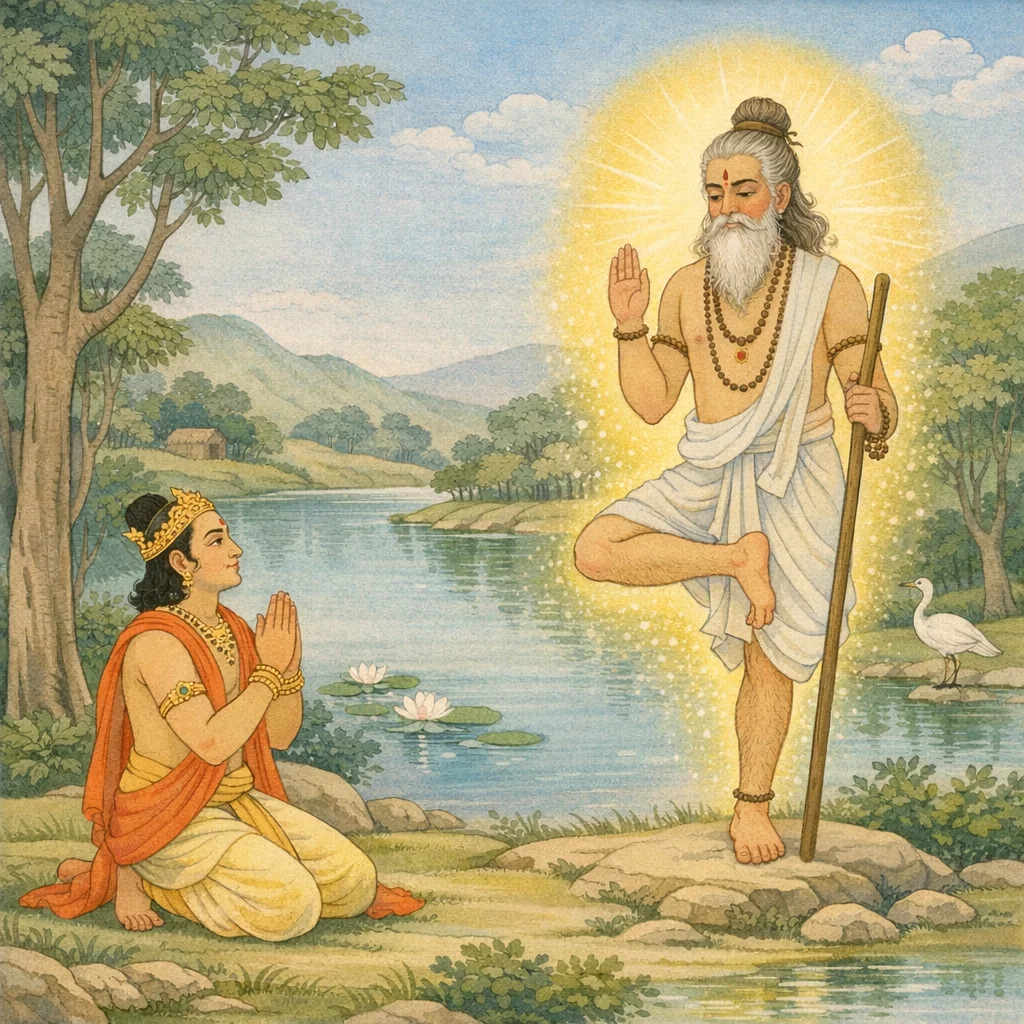
Chapter Arc: सरोवर के तट पर युधिष्ठिर एक अद्भुत तपस्वी को देखते हैं—वह एक पाँव पर स्थिर, अजेय-सा, मानो किसी लोक का रक्षक। राजा के मन में कौतूहल उठता है: यह यक्ष नहीं, फिर कौन? → युधिष्ठिर उस दिव्य पुरुष की पहचान टटोलते हैं—क्या वह वसु है, रुद्र है, मरुतों में श्रेष्ठ है, या स्वयं इन्द्र? प्रश्नों के साथ-साथ यह भी तनाव है कि यह साक्षात्कार केवल पहचान का नहीं, परीक्षा का भी हो सकता है; धर्म और व्यवहार की कसौटी सामने है। → तपस्वी स्वयं उद्घोष करता है—‘मैं धर्म हूँ; तुम्हारे आनृशंस्य (करुणा/धर्मशीलता) से प्रसन्न हूँ; वर माँगो।’ यह क्षण युधिष्ठिर के जीवन-धर्म का सार्वजनिक अनुमोदन बन जाता है, और धर्मदेव का प्रत्यक्ष प्राकट्य अध्याय का शिखर है। → युधिष्ठिर धर्मदेव को ‘सनातन देवाधिदेव’ जानकर वर स्वीकारते हैं। धर्मदेव वरदान देकर यह भी संकेत करते हैं कि युधिष्ठिर अपने ही रूप में पृथ्वी पर विचरेंगे, फिर भी तीनों लोकों में उनकी कीर्ति/पहचान सुरक्षित रहेगी। तत्पश्चात धर्मदेव अंतर्धान हो जाते हैं; पाण्डव विश्राम कर श्रमरहित होकर एकत्र होते हैं।
Shlokas
Verse 1
(दाक्षिणात्य अधिक पाठका १ श्लोक मिलाकर कुल १३४ श्लोक हैं।) #::73:.8 #::3.:7 (0) हि 7 - धर्मानुकूल प्राप्त भार्यासे धर्मका विरोध नहीं होता एवं वह पातित्रत्यधर्मका पालन करनेवाली हो, तो धर्मसे उसका विरोध नहीं होता। इस प्रकार धर्मानुसार प्राप्त पातिव्रत्यधर्मका पालन करनेवाली स्त्री और धर्म दोनों जिसके अनुकूल हो जाते हैं, वह धर्मात्मा गृहस्थ कभी दरिद्र नहीं होता। इसलिये उसके घरमें धर्म, अर्थ और काम तीनों बिना विरोधके एक साथ रह सकते हैं। चतुर्दशाधिकत्रिशततमो< ध्याय: यक्षका चारों भाइयोंको जिलाकर धर्मके रूपमें प्रकट हो युधिष्ठिरको वरदान देना वैशमग्पायन उवाच ततस्ते यक्षवचनादुदतिष्ठन्त पाण्डवा: । क्षुत्पिपासे च सर्वेषां क्षणेन व्यपगच्छताम्,वैशम्पायनजी कहते हैं--राजन्! तदनन्तर यक्षके कहते ही सब पाण्डव उठकर खड़े हो गये तथा एक क्षणमें ही उन सबकी भूख-प्यास जाती रही
Vaiśaṃpāyana said: Then, at the Yakṣa’s words, the Pāṇḍavas rose up. In a single moment, the hunger and thirst of them all vanished.
Verse 2
युधिछ्िर उवाच सरस्येकेन पादेन तिष्ठन्तमपराजितम् | पृच्छामि को भवान् देवो न मे यक्षो मतो भवान्,युधिष्ठिर बोले--इस सरोवरमें एक पैरसे खड़े हुए, किसीसे भी पराजित न होनेवाले आपसे मैं पूछता हूँ--आप कौन देवश्रेष्ठ हैं? मुझे तो आप यक्ष नहीं मालूम होते
Yudhiṣṭhira said: “Standing in this lake upon a single foot, unconquered by anyone, I ask you—who are you, O foremost of gods? You do not seem to me to be a Yakṣa.”
Verse 3
वसूनां वा भवानेको रुद्राणामथवा भवान् | अथवा मरुतां श्रेष्ठो वज्नी वा त्रिदशेश्वर:,आप वसुओंमेंसे, रुद्रोमेंसे अथवा मरुदगणोंमेंसे कोई एक श्रेष्ठ पुरुष तो नहीं हैं? अथवा आप स्वयं वजधारी देवराज इन्द्र ही हैं?
Yudhiṣṭhira asked with reverent wonder: “Are you perhaps one among the Vasus, or one among the Rudras? Or are you the foremost of the Maruts? Or are you yourself Vajrī—Indra, the lord of the thirty-three gods?”
Verse 4
मम हि भ्रातर इमे सहस्रशतयोधिन: । त॑ योध॑ न प्रपश्यामि येन सर्वे निपातिता:,मेरे ये भाई तो लाखों वीरोंसे युद्ध करनेवाले हैं। ऐसा तो मैंने कोई योद्धा नहीं देखा, जिसने इन सभीको रणभूमिमें गिरा दिया हो
Yudhiṣṭhira said: “These brothers of mine are warriors capable of facing hundreds and thousands in battle. Yet I do not perceive any single fighter by whom all of them could have been struck down together on the battlefield.”
Verse 5
सुखं प्रतिप्रबुद्धानामिन्द्रियाण्युपलक्षये । स भवान् सुहृदो5स्माकमथवा न: पिता भवान्,अब जीवित होनेपर भी इनकी इन्द्रियाँ सुखकी नींद सोकर उठे हुए पुरुषोंके समान स्वस्थ दिखायी देती हैं, अत: आप हमारे कोई सुहृद् हैं अथवा पिता?
Yudhiṣṭhira said: “I observe that their senses appear sound and steady, like those of people who have awakened refreshed from a pleasant sleep. Therefore, you must be a well-wisher of ours—or indeed, you are like a father to us.”
Verse 6
यक्ष उवाच अहं ते जनकस्तात धर्मो5मृदुपराक्रम । त्वां दिदृक्षुरनुप्राप्तो विद्धि मां भरतर्षभ,यक्षने कहा--प्रचण्ड पराक्रमी भरतश्रेष्ठ तात! युधिष्छिर! मैं तुम्हारा जन्मदाता पिता धर्मराज हूँ। तुम्हें देखनेकी इच्छासे ही मैं यहाँ आया हूँ, मुझे पहचानो
The Yakṣa said: “Dear child—O Dharma’s son, of unyielding valor—know me, O bull among the Bharatas. I am your begetter, Dharma himself. It is out of the desire to see you that I have come here.”
Verse 7
यश: सत्यं दम: शौचमार्जवं ह्वीरचापलम् | दानं तपो ब्रह्मचर्यमित्येतास्तनवो मम,यश, सत्य, दम, शौच, सरलता, लज्जा, अचंचलता, दान, तप और ब्रह्मचर्य--ये सब मेरे शरीर हैं
The Yakṣa said: “Fame, truthfulness, self-restraint, purity, straightforwardness, modesty, and steadiness; and also generosity, austerity, and celibate discipline—these are my very limbs.”
Verse 8
अहिंसा समता शान्तिरानृशंस्यममत्सर: । द्वाराण्येतानि मे विद्धि प्रियो हासि सदा मम,अहिंसा, समता, शान्ति, दया और अमत्सर--डाहका न होना--इन्हें मेरे पास पहुँचनेके द्वार समझो। तुम मुझे सदा प्रिय हो
The Yakṣa said: “Non-violence, even-mindedness, inner peace, compassion, and freedom from envy—know these to be the gateways to reach me. You are always dear to me.”
Verse 9
दिष्ट्या पञ्चसु रक्तो5सि दिष्ट्या ते घट्पदी जिता । द्वे पूर्वे मध्यमे द्वे च द्वे चान्ते साम्परायिके,सौभाग्यवश तुम्हारा शम, दम, उपरति, तितिक्षा, समाधान--इन पाँचों साधनोंपर अनुराग है तथा सौभाग्यसे तुमने भूख-प्यास, शोक-मोह और जरा-मृत्यु--इन छहों दोषोंको जीत लिया है। इनमेंसे पहले दो दोष आरम्भसे ही रहते हैं, बीचके दो तरुणावस्था आनेपर होते हैं तथा बादवाले दो दोष अन्तिम समयपर आते हैं
The Yakṣa said: “By good fortune you are devoted to the five inner disciplines; by good fortune you have conquered the sixfold ‘footed’ afflictions. Of these, two are present from the very beginning, two arise in the middle of life, and two come at the end, at the time of departure.”
Verse 10
धर्मोड्हमिति भद्र ते जिज्ञासुस्त्वामिहागत: । आनुृशंस्येन तुष्टोडस्मि वरं दास्यामि तेडनघ,तुम्हारा मंगल हो। मैं धर्म हूँ और तुम्हारा व्यवहार जाननेकी इच्छासे ही यहाँ आया हूँ। निष्पाप राजन! तुम्हारी दयालुता और समदर्शितासे मैं तुमपर प्रसन्न हूँ और तुम्हें वर देना चाहता हूँ
The Yakṣa said: “Blessings to you. I am Dharma, and I have come here wishing to test and understand your conduct. O sinless king, I am pleased with your compassion and impartial regard for others; therefore I desire to grant you a boon.”
Verse 11
वरं वृणीष्व राजेन्द्र दाता हास्मि तवानघ । ये हि मे पुरुषा भक्ता न तेषामस्ति दुर्गति:,पापरहित राजेन्द्र! तुम मनो$नुकूल वर माँग लो। मैं तुम्हें अवश्य दे दूँगा। जो मनुष्य मेरे भक्त हैं, उनकी कभी दुर्गति नहीं होती
The Yakṣa said: “O best of kings, O sinless one, choose a boon as you wish; I am ready to grant it to you. For those men who are devoted to me never fall into misfortune or a ruinous end.”
Verse 12
युधिछिर उवाच अरणीसहितं यस्य मृगो हयादाय गच्छति । तस्याग्नयो न लुप्येरन् प्रथमो5स्तु वरो मम,युधिष्ठिर बोले--भगवन्! पहला वर तो मैं यही माँगता हूँ कि जिस ब्राह्मणके अरणीसहित मन्थन-काष्ठको मृग लेकर भाग गया है, उसके अन्निहोत्रका लोप न हो
Yudhiṣṭhira said: “Revered sir, my first boon is this: may the sacred fires of that brāhmaṇa not be extinguished or interrupted—of him whose fire-drill sticks (araṇīs), together with the horse, have been carried off as a deer runs away. Let his daily fire-ritual not lapse.”
Verse 13
यक्ष उवाच अरणीसहितं हास्य ब्राह्मणस्य हृतं॑ मया । मृगवेषेण कौन्तेय जिज्ञासार्थ तव प्रभो
The Yakṣa said: “I have taken away the Brahmin’s fire-drill set (araṇī) along with his kindling. O son of Kuntī, I did so while disguised as a deer, to test your understanding, O lord.”
Verse 14
यक्षने कहा--कुन्तीनन्दन महाराज युधिष्ठिर! उस ब्राह्मणके अरणीसहित मन्थनकाष्ठको तो तुम्हारी परीक्षाके लिये मैं ही मृगरूपसे लेकर भाग गया था ।। वैशम्पायन उवाच ददानीत्येव भगवानुत्तरं प्रत्यपद्यत । अन्यं वरय भद्रं ते वरं त्वममरोपम,वैशम्पायनजी कहते हैं--इसके बाद भगवान् धर्मने उत्तर दिया कि (लो, अरणी और मन्थनकाष्ठ) तुम्हें दे ही देता हूँ। देवोपम नरेश! तुम्हारा कल्याण हो, अब तुम कोई दूसरा वर माँगो
Vaiśampāyana said: Then the Blessed Lord (Dharma) assented, replying, “I give it,” and restored the fire-drill and the churning-sticks. “O king, like an immortal, may good befall you; now choose another boon.” In that moment the tester became the benefactor: having proved Yudhiṣṭhira’s truthfulness and restraint, Dharma returned what was taken and invited him to ask further—framing boons as rewards for ethical steadiness rather than mere desire.
Verse 15
युधिछिर उवाच वर्षाणि द्वादशारण्ये त्रयोदशमुपस्थितम् । तत्र नो नाभिजानीयुर्वसतो मनुजा: क्वचित्,युधिष्ठिर बोले--हम बारह वर्षतक वनमें रह चुके। अब तेरहवाँ वर्ष आ लगा है। अतः ऐसा वर दीजिये कि इसमें कहीं भी रहनेपर लोग हमें पहचान न सकें
Yudhiṣṭhira said: “We have completed twelve years in the forest, and now the thirteenth year has arrived. Grant us such a boon that, wherever we may dwell during it, people will not recognize us at any time.”
Verse 16
वैशम्पायन उवाच ददानीत्येव भगवानुत्तरं प्रत्यपद्यत । भूयश्चाश्वासयामास कौन्तेयं सत्यविक्रमम्,वैशम्पायनजी कहते हैं--राजन्! यह सुनकर भगवान् धर्मने उत्तरमें कहा---'मैं तुम्हें यह वर भी देता हूँ।” इसके बाद धर्मराजने पुनः सत्यपराक्रमी युधिष्ठिरको आश्वासन देते हुए कहा--
Vaiśampāyana said: Hearing this, the Blessed Lord Dharma replied, “I grant it”—thus giving his answer. Then, once again, Dharma reassured the son of Kuntī, Yudhiṣṭhira of steadfast and truthful valor, strengthening his resolve in the path of righteousness.
Verse 17
यद्यपि स्वेन रूपेण चरिष्यथ महीमिमाम् | नवो विज्ञास्यते वक्षित् त्रिषु लोकेषु भारत,“भरतनन्दन! यद्यपि तुम इस पृथ्वीपर इसी रूपसे विचरोगे, तो भी तीनों लोकोंमें कोई भी तुम्हें नहीं पहचान सकेगा
Vaiśampāyana said: “Even if you move about this earth in your own true form, no one will be able to recognize you—so it has been declared—throughout the three worlds, O Bhārata.”
Verse 18
वर्ष त्रयोदशमिदं मत्प्रसादात् कुरूद्वहा: | विराटनगरे गूढा अविज्ञाताश्चरिष्यथ,“कुरुनन्दन पाण्डवगण! मेरी कृपासे तुमलोग तेरहवें वर्षमें गुप्तरूपसे विराटनगरमें रहते हुए किसीसे भी पहचाने न जाकर विचरण करोगे
Vaiśampāyana said: “O best of the Kurus, by my favor you will pass this thirteenth year in concealment—living hidden in the city of Virāṭa and moving about without being recognized.”
Verse 19
यद् वः संकल्पितं रूपं मनसा यस्य यादृशम् | तादृशं तादृशं सर्वे छन््दतो धारयिष्यथ,“तथा तुममेंसे जो-जो मनसे जैसा संकल्प करेगा, वह इच्छानुसार वैसा-वैसा ही रूप धारण कर सकेगा
Vaiśampāyana said: “Whatever form each of you envisions in the mind—of whatever kind it may be—each of you will be able to assume that very form, as you wish.”
Verse 20
अरणीसत्ितं॑ चेदं ब्राह्मणाय प्रयच्छत । जिज्ञासार्थ मया होतदाह्ृतं मृगरूपिणा,“यह अरणीसहित मन्थनकाष्ठ उस ब्राह्मणको दे दो। तुम्हारी परीक्षाके लिये ही मैंने मृगका रूप धारण करके इसका हरण किया था
Vaiśampāyana said: “Give this fire-drill set, complete with the araṇis, to the brāhmaṇa. It was taken by me only to test you—I assumed the form of a deer and carried it off.”
Verse 21
प्रवृणीष्वापरं सौम्य वरमिष्टं ददानि ते । न तृप्यामि नरश्रेष्ठ प्रयच्छन् वै वरांस्तथा,'सौम्य! इसके अतिरिक्त तुम एक और भी अभीष्ट वर माँग लो। वह मैं तुम्हें दूँगा। नरश्रेष्ठ! तुम्हें वर देते हुए मुझे तृप्ति नहीं हो रही है
Vaiśampāyana said: “O gentle one, choose yet another boon that you desire; I will grant it to you. O best of men, even while granting boons in this way, I do not feel satisfied.”
Verse 22
तृतीयं गृह्यृतां पुत्र वरमप्रतिमं महत् । त्वं हि मत्प्रभवों राजन् विदुरश्चन ममांशज:,“बेटा! तुम तीसरा भी महान् एवं अनुपम वर माँग लो। राजन्! तुम मेरे पुत्र हो और विदुरने भी मेरे ही अंशसे जन्म लिया है”
Vaiśampāyana said: “My son, choose a third boon as well—great and without equal. O king, you are born from me; and Vidura too was born from a portion of my own being.”
Verse 23
युधिछिर उवाच देवदेवो मया दृष्टो भवान् साक्षात् सनातन: । य॑ं ददासि वर तुष्टस्तं ग्रहीष्याम्यहं पित:,युधिषछ्टिर बोले--पिताजी! आप सनातन देवाधिदेव हैं। आज मुझे साक्षात् आपके दर्शन हो गये। आप प्रसन्न होकर मुझे जो भी वर देंगे, उसे मैं शिरोधार्य करूँगा
Yudhiṣṭhira said: “O Father, I have beheld you directly—the eternal God of gods. Whatever boon you, being pleased, choose to grant, I will accept it with reverence.”
Verse 24
जयेय॑ लोभमोहौ च क्रोधं चाहं सदा विभो । दाने तपसि सत्ये च मनो मे सततं भवेत्,विभो! मुझे ऐसा वर दीजिये कि मैं लोभ, मोह और क्रोधको जीत सकूँ तथा दान, तप और सत्यमें सदा मेरा मन लगा रहे
Yudhiṣṭhira said: “O Lord, grant me this boon—that I may always conquer greed and delusion, and also anger; and that my mind may remain continually devoted to generosity, austerity, and truth.”
Verse 25
धर्म उवाच उपपन्नो गुणैरेतै: स्वभावेनासि पाण्डव | भवान् धर्म: पुनश्चैव यथोक्तं ते भविष्यति,धर्मराजने कहा--पाएबुपुत्र! तुम तो स्वयं धर्म-स्वरूप ही हो। अतः इन गुणोंसे तो स्वभावसे ही सम्पन्न हो। आगे भी तुम्हारे कथनानुसार तुममें ये सब धर्म बने रहेंगे
Dharma said: “O Pāṇḍava, by your very nature you are endowed with these virtues. Indeed, you yourself are Dharma in embodied form; and, as you have declared, these qualities of righteousness will continue to abide in you.”
Verse 26
वैशम्पायन उवाच इत्युक्त्वान्तर्दथे धर्मों भगवॉललोकभावन: । समेता: पाण्डवाश्वैव सुखसुप्ता मनस्विन:
Vaiśampāyana said: Having spoken thus, Dharma—the blessed one, the sustainer of the worlds—vanished from sight. And the Pāṇḍavas too, gathered together, those high-minded men, fell into a peaceful sleep.
Verse 27
उपेत्य चाश्रमं वीरा: सर्व एव गतकक््लमा: । आरणेयं ददुस्तस्मै ब्राह्णाय तपस्विने
Vaiśaṃpāyana said: The heroes, having reached the hermitage, all now free from fatigue, presented Āraṇeya to that ascetic brāhmaṇa—honouring him with a fitting gift in accordance with righteous conduct toward a man of tapas.
Verse 28
वैशम्पायनजी कहते हैं--राजन्! ऐसा कहकर लोकरक्षक भगवान् धर्म अन्तर्धान हो गये एवं सुखपूर्वक सोकर उठनेसे श्रमरहित हुए मनस्वी वीर पाण्डवगण एकत्र होकर आश्रममें लौट आये। वहाँ आकर उन्होंने उस तपस्वी ब्राह्मणको उसकी अरणी एवं मन्थनकाष्ठ दे दिये ।। इदं समुत्थानसमागतं महत् पितुश्च पुत्रस्य च कीर्तिवर्धनम् । पठन् नर: स्याद् विजितेन्द्रियो वशी सपुत्रपौत्र: शतवर्षभाग् भवेत्,भीम, अर्जुन, नकुल और सहदेवके पुनः जीवनलाभ करनेसे सम्बन्ध रखनेवाले तथा पिता धर्म और पुत्र युधिष्ठिके संवाद तथा समागमरूप कीर्तिको बढ़ानेवाले इस प्रशस्त उपाख्यानका जो पुरुष पाठ करता है, वह जितेन्द्रिय, वशी तथा पुत्र-पौत्रोंसे सम्पन्न होकर सौ वर्षतक जीवित रहता है
Vaiśampāyana said: “O King, having spoken thus, the Lord Dharma—protector of the worlds—vanished from sight. Then the heroic Pāṇḍavas, high-minded and free from fatigue after sleeping and rising comfortably, gathered together and returned to the hermitage. On arriving there, they handed back to that ascetic Brāhmaṇa his fire-drill (araṇī) and the churning-stick used for kindling. This great and auspicious episode—marked by reunion and restoration—enhances the fame of both father and son: Dharma and Yudhiṣṭhira. A man who recites this account becomes self-controlled, master of his senses, blessed with sons and grandsons, and attains a full span of a hundred years.”
Verse 29
न चाप्यधर्मे न सुहृद्विभेदने परस्वहारे परदारमर्शने । कदर्यभावे न रमेन्मन: सदा नृणां सदाख्यानमिदं विजानताम्,तथा जो लोग सदा इस मनोहर उपाख्यानको स्मरण रखेंगे; उनका मन अधर्ममें, सुहृदोंके भीतर फ़ूट डालनेमें, दूसरोंका धन हरनेमें, परस्त्रीगमनमें अथवा कृपणतामें कभी प्रवृत्त नहीं होगा
Vaiśampāyana said: Let the mind of those who truly understand and keep this ever-auspicious tale delight in none of these—unrighteousness, sowing division among friends, stealing another’s wealth, approaching another’s wife, or sinking into miserly meanness. For those who continually remember this beautiful narrative, the heart does not turn toward such wrongdoing.
Verse 314
इति श्रीमहाभारते वनपर्वणि आरणेयपर्वणि नकुलादिजीवनादिवरप्राप्तौ चतुर्दशाधिकत्रिशततमो<5ध्याय:
Thus ends, in the Śrī Mahābhārata, within the Vana Parva—specifically the Āraṇeya section—the three-hundred-and-fourteenth chapter (the 314th), concerning the obtaining of boons such as the restoration of life beginning with Nakula.