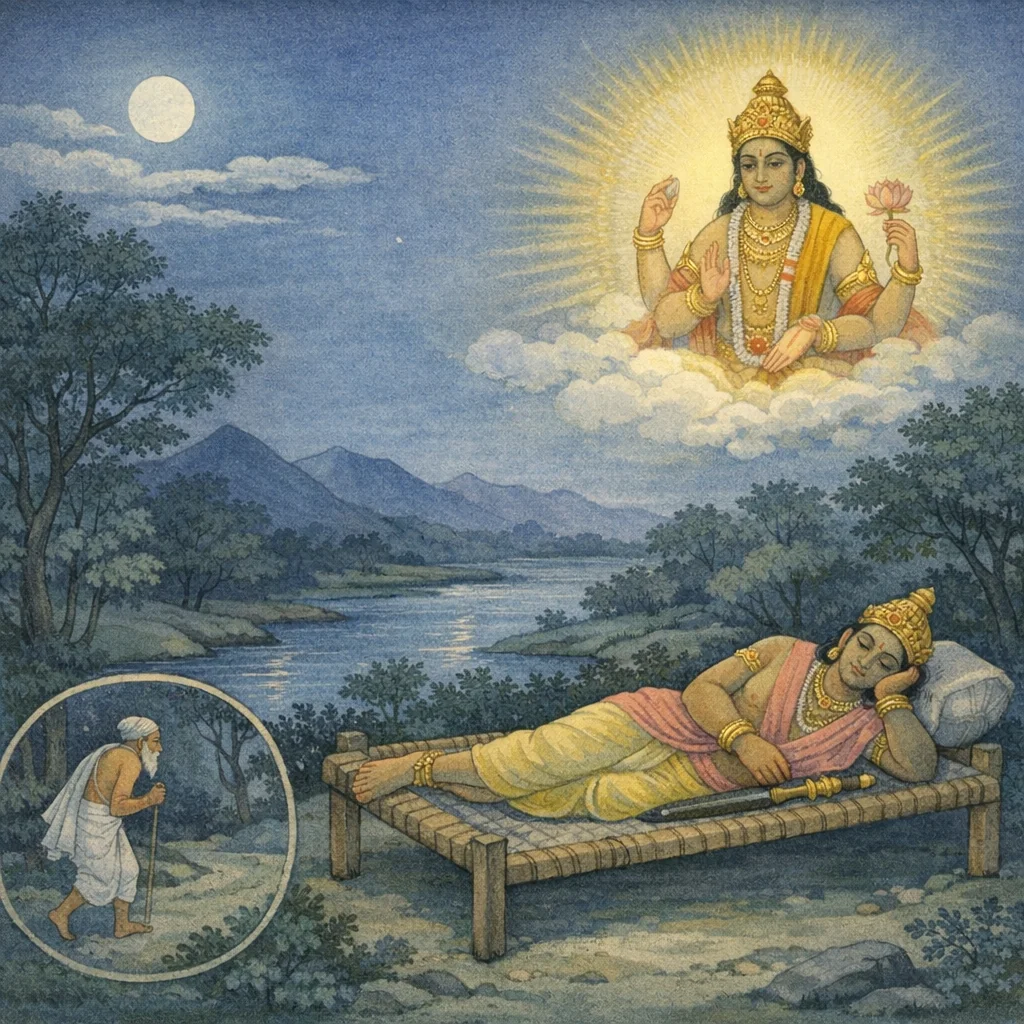
Adhyaya 303
Chapter Arc: वनपर्व के शांत वन-आकाश में एक अलौकिक संकेत उतरता है—सूर्यदेव स्वप्न में कर्ण को दर्शन देकर आने वाले छल की गंध दिखाते हैं, मानो दानवीरता की परीक्षा का शंख बज उठा हो। → सूर्य कर्ण के भीतर छिपे उस ‘तीव्र भय’ को नाम देता है जिसे वह किसी से कहता नहीं—इन्द्र पाण्डवों के हित के लिए ब्राह्मण-वेष में आकर कुण्डल-कवच माँगेंगे। सूर्य चेतावनी देता है कि कर्ण का स्वभाव (दान-व्रत) ही उसकी ढाल भी है और उसकी कमजोरी भी; इसलिए सावधान रहो, दान को विवेक से बाँधो। → कर्ण अपने व्रत को सर्वोपरि रखता है—वह कहता है कि संसार उसके दान-धर्म को जानता है; वह ब्राह्मणमुख्य से प्राण भी दे सकता है, पर कीर्ति की रक्षा करेगा। वह स्पष्ट करता है कि यदि इन्द्र ही भिक्षा माँगने आएँ, तब भी वह ‘अनुत्तम भिक्षा’ देकर स्वर्ग्य यश और परम गति प्राप्त करेगा। → सूर्य की चेतावनी के बावजूद कर्ण का निश्चय अडिग रहता है: दान-प्रतिज्ञा का त्याग नहीं, चाहे परिणाम शरीर-रक्षा के विरुद्ध ही क्यों न जाए। अध्याय का निष्कर्ष कर्ण के व्रत-आत्मविश्वास और सूर्य की आशंका—दोनों को साथ रखकर आगे की घटना के लिए भूमि तैयार करता है। → इन्द्र का ब्राह्मण-छद्म में आगमन अब केवल भविष्यवाणी नहीं, निकट आती हुई अनिवार्यता बन जाता है—क्या कर्ण दान देगा, और यदि देगा तो किस शर्त पर?
Shlokas
Verse 1
#::73:.8 #::3-...7 (0) हि २ 7 (कुण्डलाहरणपर्व) त्रिशततमो< ध्याय: सूर्यका स्वप्नमें कर्णको दर्शन देकर उसे इन्द्रको कुण्डल और कवच न देनेके लिये सचेत करना तथा कर्णका आग्रहपूर्वक कुण्डल और कवच देनेका ही निश्चय रखना जनमेजय उवाच यत् तत् तदा महद् बहाँलल्लोमशो वाक्यमत्रवीत् | इन्द्रस्य वचनादेव पाण्डुपुत्रं युधिष्ठिरम्
Janamejaya said: “What was that weighty statement the sage Lomasha spoke on that occasion—spoken, as it were, at Indra’s behest—concerning Yudhiṣṭhira, the son of Pāṇḍu?”
Verse 2
यच्चापि ते भयं तीव्र न च कीर्तयसे क्वचित् । तच्चाप्यपहरिष्यामि धनंजय इतो गते
“And even that intense fear of yours, which you never speak of anywhere—when Dhanaṃjaya (Arjuna) has departed from here, I too shall remove that fear.”
Verse 3
कि नु तज्जपतां श्रेष्ठ कर्ण प्रति महद् भयम् । आसीज्न च स धर्मात्मा कथयामास कस्यचित्
Janamejaya asked: “O best among reciters of sacred lore, what was that great fear concerning Karṇa? And why did that righteous-souled one not disclose it to anyone?”
Verse 4
जनमेजयने पूछा--ब्रह्मन! लोमशजीने इन्द्रके कथनानुसार उस समय पाएण्डुपुत्र युधिष्ठिससे जो यह महत्वपूर्ण वचन कहा था कि “तुम्हें जो बड़ा भारी भय लगा रहता है और जिसकी तुम किसीके सामने चर्चा भी नहीं करते, उसे भी मैं अर्जुनके यहाँ (स्वर्ग)-से चले जानेपर दूर कर दूँगा।” जप करनेवालोंमें श्रेष्ठ वैशम्पायनजी! धर्मात्मा महाराज युधिष्ठिरको कर्णसे वह कौन-सा भारी भय था, जिसकी वे किसीके सम्मुख बात भी नहीं चलाते थे ।। १ रे ।। वैशम्पायन उवाच अहं ते राजशार्टूल कथयामि कथामिमाम् | पृच्छतो भरतश्रेष्ठ शुश्रूषस्व गिरं मम,वैशम्पायनजीने कहा--नृपश्रेष्ठ] भरतकुलभूषण! तुम्हारे प्रश्नके अनुसार मैं यह कथा सुनाऊँगा। तुम ध्यान देकर मेरी बात सुनो
Vaiśampāyana said: “O tiger among kings, O best of the Bharatas—since you ask, I shall recount this tale to you. Listen attentively to my words.”
Verse 5
द्वादशे समत्तिक्रान्ते वर्षे प्राप्ते त्रयोदशे । पाण्डूनां हितकृच्छक्र: कर्ण भिक्षितुमुद्यत:,जब पाण्डवोंके वनवासके बारह वर्ष बीत गये और तेरहवाँ वर्ष आस्मभ हुआ, तब पाण्डवोंके हितकारी इन्द्र कर्णसे कवच-कुण्डल माँगनेको उद्यत हुए
When the twelve years of the Pāṇḍavas’ forest exile had fully passed and the thirteenth year had arrived, Śakra (Indra)—intent on securing the Pāṇḍavas’ welfare—prepared to beg from Karṇa his divine armor and earrings.
Verse 6
अभिप्रायमथो ज्ञात्वा महेन्द्रस्य विभावसु: । कुण्डलार्थे महाराज सूर्य: कर्णमुपागत:,महाराज! कुण्डलके विषयमें देवराज इन्द्रका मनोभाव जानकर भगवान् सूर्य कर्णके पास गये
Vaiśaṃpāyana said: Having understood Mahendra’s (Indra’s) intention concerning the earrings, Vibhāvasu—the Sun-god—came to Karṇa, O king, to warn and guide him, mindful of the moral peril in yielding a gift that would strip him of his natural protection.
Verse 7
महाहें शयने वीरं स्पर्द्धयास्तरणसंवृते । शयानमतिविश्वस्तं ब्रह्मण्यं सत्यवादिनम्,ब्राह्मणभक्त और सत्यवादी वीर कर्ण अत्यन्त निश्चिन्त होकर एक सुन्दर बिछौनेवाली बहुमूल्य शय्यापर सोया था
Vaiśampāyana said: Upon a highly valuable couch, covered with a splendid spread, the hero lay asleep—utterly unguarded and at ease—renowned for reverence toward Brahmins and for speaking the truth. The scene underscores how a warrior’s virtues and confidence can coexist with vulnerability when vigilance is set aside.
Verse 8
स्वप्नान्ते निशि राजेन्द्र दर्शयामास रश्मिवान् | कृपया परया<<विष्ट: पुत्रस्नेहाच्य भारत,राजेन्द्र! भरतनन्दन! अंशुमाली भगवान् सूर्यने पुत्रस्नेहवश अत्यन्त दयाभावसे युक्त हो रातको सपनेमें कर्णको दर्शन दिया
Vaiśampāyana said: “O king, in the depth of night, at the end of a dream, the radiant Sun appeared in a vision—overcome with profound compassion, moved by paternal affection, O Bhārata.”
Verse 9
ब्राह्मणो वेदविद् भूत्वा सूर्यो योगर्द्धिरूपवान् | हितार्थमब्रवीत् कर्ण सान्त्वपूर्वमिदं वच:,उस समय उन्होंने वेदवेत्ता ब्राह्मणका रूप धारण कर रखा था। उनका स्वरूप योग- समृद्धिसे सम्पन्न था। उन्होंने कर्णके हितके लिये उसे समझाते हुए इस प्रकार कहा --[
Vaiśampāyana said: Assuming the guise of a Veda-knowing brāhmaṇa, the Sun—endowed with the majestic power born of yogic attainment—spoke to Karṇa for his welfare, addressing him first with conciliatory words.
Verse 10
कर्ण मद्गबचनं तात शृणु सत्यभूतां वर । ब्रुवतो5द्य महाबाहो सौहृदात् परमं हितम्,'सत्यधारियोंमें श्रेष्ठ तात कर्ण! मेरी बात सुनो। महाबाहो! मैं सौहार्दवश आज तुम्हारे परम हितकी बात कहता हूँ
Vaiśampāyana said: “O Karṇa, dear child—best among those devoted to truth—listen to my words. O mighty-armed one, today I speak out of friendship, declaring what is supremely for your welfare.”
Verse 11
उपायास्यति शक्रस्त्वां पाण्डवानां हितेप्सया । ब्राह्मणच्छञ्मना कर्ण कुण्डलापजिहीर्षया,“कर्ण! देवराज इन्द्र पाण्डवोंके हितकी इच्छासे तुम्हारे दोनों कुण्डल (और कवच) लेनेके लिये ब्राह्मगका छद्यवेष धारण करके तुम्हारे पास आयँगे
Vaiśampāyana said: “Śakra (Indra) will come to you, Karṇa, seeking the welfare of the Pāṇḍavas. Disguised as a brāhmaṇa, he will approach you with the intent to take your earrings (and your inborn armor).”
Verse 12
विदितं तेन शीलं ते सर्वस्य जगतस्तथा । यथा त्वं भिक्षित: सद्भिर्ददास्थेव न याचसे,“तुम्हारी दानशीलताका उन्हें ज्ञान है तथा सम्पूर्ण जगत्को तुम्हारे इस नियमका पता है कि किसी सत्पुरुषके माँगनेपर तुम उसकी अभीष्ट वस्तु देते ही हो, उससे कुछ माँगते नहीं हो
He knows your noble disposition, and so does the whole world. For this is your established rule: when worthy men request something, you give them what they desire—yet you do not ask anything in return.
Verse 13
त्वं हि तात ददास्येव ब्राह्मणेभ्य: प्रयाचितम् । वित्तं यच्चान्यदप्याहुर्न प्रत्याख्यासि कस्यचित्,“तात! तुम ब्राह्मणोंको उनकी माँगी हुई वस्तु दे ही देते हो; साथ ही धन तथा और जो कुछ भी वे माँग लें, सब दे डालते हो। किसीको “नहीं! कहकर निराश नहीं लौटाते
Vaiśampāyana said: “Dear child, whenever brāhmaṇas ask, you indeed give them what they request. Wealth—and whatever else they may ask for—you do not refuse to anyone.”
Verse 14
त्वां तु चैवंविध॑ ज्ञात्वा स्वयं वै पाकशासन: । आगन्ता कुण्डलार्थाय कवचं चैव भिक्षितुम्,“तुम्हारे ऐसे स्वभावको जानकर साक्षात् इन्द्र तुमसे तुम्हारे कवच और कुण्डल माँगनेके लिये आनेवाले हैं
But knowing you to be of such a nature, Pākaśāsana (Indra) himself will come to you, seeking your earrings, and also begging for your armor.
Verse 15
तस्मै प्रयाचमानाय न देये कुण्डले त्वया । अनुनेय: परं शक््त्या श्रेय एतद्धि ते परम्,“उनके माँगनेपर तुम उन्हें अपने दोनों कुण्डल दे न देना। यथाशक्ति अनुनय-विनय करके उन्हें समझा देना; इससे तुम्हारा परम मंगल होगा
Vaiśampāyana said: “If he comes begging, you must not give him your two earrings. Instead, with all the persuasion and respectful entreaty you can muster, try to dissuade him; for this course is your highest welfare.”
Verse 16
कुण्डलार्थ ब्रुवंस्तात कारणैर्बहुभिस्त्वया । अन्यैर्बहुविधैरवित्ति: सन्निवार्य: पुनः पुनः:,“इस प्रकार वे जब-जब कुण्डलके लिये बात करें तब-तब बहुत-से कारण बताकर तथा दूसरे नाना प्रकारके धन आदि देनेकी बात कहकर बार-बार उन्हें कुण्डल माँगनेसे मना करना
Vaiśaṃpāyana said: “Dear one, whenever he speaks with the aim of obtaining the earrings, you must repeatedly dissuade him—citing many reasons, and also by offering other kinds of wealth in various forms—so that he is turned back again and again from asking for the earrings.”
Verse 17
रत्नैः स्त्रीभिस्तथा गोभिर्धनैर्बहुविधैरपि । निदर्शनैश्व बहुभि: कुण्डलेप्सु: पुरन्दर:,“नाना प्रकारके रत्न, स्त्री, गो, भाँति-भाँतिके धन देकर तथा बहुत-से दृष्टन्तोंद्वारा बहलाकर कुण्डलार्थी इन्द्रको टालनेका प्रयत्न करना
Vaiśampāyana said: With jewels, with women, with cattle, and with many kinds of wealth besides—indeed, by offering numerous examples and inducements—Purandara (Indra), eager to obtain the earrings, sought to persuade (and thereby avert) the intended gift.
Verse 18
यदि दास्यसि कर्ण त्वं सहजे कुण्डले शुभे । आयुष: प्रक्षयं गत्वा मृत्योर्वशमुपैष्यसि,“कर्ण! यदि तुम अपने जन्मके साथ ही उत्पन्न हुए ये सुन्दर कुण्डल इन्द्रको दे दोगे तो तुम्हारी आयु क्षीण हो जायगी और तुम मृत्युके अधीन हो जाओगे
Vaiśampāyana said: “Karna, if you give away to Indra those beautiful earrings that were born with you, your lifespan will be diminished, and you will come under the dominion of death.”
Verse 19
कवचेन समायुक्तः कुण्डलाभ्यां च मानद | अवध्यस्त्वं रणेडरीणामिति विद्धि वचो मम,“मानद! तुम अपने कवच और कुण्डलोंसे संयुक्त होनेपर रणमें शत्रुओंके लिये भी अवध्य बने रहोगे, मेरी इस बातको समझ लो
Vaiśampāyana said: “O generous one, when you are equipped with your armor and your earrings, know this as my word: in battle you will be invulnerable even to your enemies.”
Verse 20
अमृतादुत्थितं होतदुभयं रत्नसम्भवम् | तस्माद् रक्ष्यं त्वया कर्ण जीवितं चेत् प्रियं तव,"कर्ण! ये दोनों रत्नमय कवच और कुण्डल अमृतसे उत्पन्न हुए हैं; अतः यदि तुम्हें अपना जीवन प्रिय हो तो इन दोनों वस्तुओंकी रक्षा अवश्य करना”
Vaiśampāyana said: “O Karṇa, these two—your jewel-like armor and earrings—are said to have arisen from ambrosia. Therefore, if your life is dear to you, you must carefully protect them.”
Verse 21
कर्ण उवाच को मामेवं भवान् प्राह दर्शयन् सौहृद॑ परम् । कामया भगवन् ब्रूहि को भवान् द्विजवेषधृक्,कर्णने पूछा--भगवन्! आप मेरे प्रति अत्यन्त स्नेह दिखाते हुए जो इस प्रकार हितकर सलाह दे रहे हैं इससे मैं जानना चाहता हूँ कि आप कौन हैं? यदि इच्छा हो, तो बताइये। इस प्रकार ब्राह्मणवेष धारण करनेवाले आप कौन हैं?
Karna said: “Who are you, sir, that you speak to me in this manner, displaying such extraordinary goodwill? If you so desire, revered one, tell me—who are you, wearing the guise of a brahmin?”
Verse 22
ब्राह्मण उवाच अहं तात सहस्रांशु: सौहृदात् त्वां निदर्शये । कुरुष्वैतद् वचो मे त्वमेतच्छेय: परं हि ते,ब्राह्मणने कहा--तात! मैं सहसारांशु सूर्य हूँ। स्नेहवश ही तुम्हें दर्शन देकर सामयिक कर्तव्य सुझा रहा हूँ। तुम मेरा कहना मान लो। इससे तुम्हारा परम कल्याण होगा
The brahmin said: “My child, I am Sahasrāṃśu—the Sun. Out of affection I have shown myself to you and counsel you on the duty of this hour. Follow my words; in this lies your highest good.”
Verse 23
कर्ण उवाच श्रेय एव ममात्यन्तं यस्य मे गोपति: प्रभु: । प्रवक्ताद्य हितान्वेषी शृणु चेदं वचो मम,कर्णने कहा--जिसके हितका अनुसंधान साक्षात् भगवान् सूर्य करते और हितकी बात बताते हैं, उस कर्णका तो परम कल्याण है ही। भगवन्! आप मेरी यह बात सुनें
Karna said: “Indeed, my welfare is assured—since my lord, the Sun, is my protector and master, and today he himself, seeking my good, has come to counsel me. O revered one, please listen to these words of mine.”
Verse 24
प्रसादये त्वां वरदं प्रणयाच्च ब्रवीम्यहम् । न निवार्यों व्रतादस्मादहं यद्यस्मि ते प्रिय:,प्रभो! आप वरदायक देवता हैं। मैं आपसे प्रसन्न रहनेका अनुरोध करता हूँ और प्रेमपूर्वक यह कहता हूँ कि यदि मैं आपका प्रिय हूँ तो आप मुझे इस व्रतसे विचलित न करें
O Lord, bestower of boons, I seek to please you and speak in affection: if I am dear to you, then do not restrain me from this vow.
Verse 25
व्रतं वै मम लोको<यं वेत्ति कृत्स्नं विभावसो | यथाहं द्विजमुख्येभ्यो दद्यां प्राणानपि ध्रुवम्,सूर्यदेव! संसारमें सब लोग मेरे इस व्रतके विषयमें पूर्णरूपसे जानते हैं कि मैं श्रेष्ठ ब्राह्मणोंके याचना करनेपर उन्हें निश्चय ही अपने प्राण भी दे सकता हूँ
Karna said: “O Vibhāvasu, O Sun-god! All the people in this world fully know my vow—that whenever the foremost of the twice-born (brāhmaṇas) ask, I would surely give even my very life. Such is the firmness of my pledge of generosity.”
Verse 26
यद्यागच्छति मां शक्रो ब्राह्मणच्छझमना वृत: । हितार्थ पाण्डुपुत्राणां खेचरोत्तम भिक्षितुम्,आकाशमें विचरनेवालोंमें उत्तम सूर्यदेव! यदि पाण्डवोंके हितके लिये ब्राह्मणके छठद्मवेशमें अपनेको छिपाकर साक्षात् इन्द्रदेव मेरे पास भिक्षा माँगने आ रहे हैं तो देवेश्वर! मैं उन्हें दोनों कुण्डल और उत्तम कवच अवश्य दे दूँगा, जिससे तीनों लोकोंमें विख्यात हुई मेरी कीर्ति नष्ट न होने पाये
Karna said: “If Śakra (Indra) comes to me, concealing himself under the guise of a brāhmaṇa, to beg for the welfare of the sons of Pāṇḍu—O best of the sky-goers (Sun)—then I will surely give him my two earrings and my excellent armor, so that my fame, renowned in the three worlds, may not be diminished.”
Verse 27
दासस््यामि विबुधश्रेष्ठ कुण्डले वर्म चोत्तमम् । न मे कीर्ति: प्रणश्येत त्रिषु लोकेषु विश्रुता,आकाशमें विचरनेवालोंमें उत्तम सूर्यदेव! यदि पाण्डवोंके हितके लिये ब्राह्मणके छठद्मवेशमें अपनेको छिपाकर साक्षात् इन्द्रदेव मेरे पास भिक्षा माँगने आ रहे हैं तो देवेश्वर! मैं उन्हें दोनों कुण्डल और उत्तम कवच अवश्य दे दूँगा, जिससे तीनों लोकोंमें विख्यात हुई मेरी कीर्ति नष्ट न होने पाये
Karna said: “O best of the gods, I will give the earrings and the finest armor. Let not my fame—already renowned in the three worlds—be diminished.”
Verse 28
मद्विधस्य यशस्यं हि न युक्त प्राणरक्षणम् । युक्त हि यशसा युक्त मरणं लोकसम्मतम्,मेरे-जैसे शूरवीरको प्राण देकर भी यशकी ही रक्षा करनी चाहिये; अपयश लेकर प्राणोंकी रक्षा करनी कदापि उचित नहीं है। सुयशके साथ यदि मृत्यु हो जाय तो वह वीरोचित एवं सम्पूर्ण लोकके लिये सम्मानकी वस्तु है
Karna declares that for a man of his kind—one who lives for honor—it is not fitting to preserve life at the cost of fame. To die while still joined to good repute is, he says, the proper course and is approved by the world; survival purchased through disgrace is never worthy of a warrior.
Verse 29
सो5हमिन्द्राय दास्यामि कुण्डले सह वर्मणा । यदि मां बलवृत्रघ्नो भिक्षार्थमुपयास्यति,ऐसी स्थितिमें यदि बलासुर और वृत्रासुरके विनाशक देवराज इन्द्र मेरे पास भिक्षाके लिये पधारेंगे तो मैं कवचसहित दोनों कुण्डल उन्हें अवश्य दे दूँगा
Karna declares: “I will give these two earrings, along with my armor, to Indra—if that mighty slayer of Bala and Vṛtra should come to me seeking alms.”
Verse 30
हितार्थ पाण्डुपुत्राणां कुण्डले मे प्रयाचितुम् । तन्मे कीर्तिकरं लोके तस्याकीर्तिर्भविष्यति,यदि इन्द्र पाण्डवोंके हितके लिये मेरे कुण्डल माँगने आयेंगे तो इससे संसारमें मेरी कीर्ति बढ़ेगी और उनका अपयश होगा
Karna said: “If Indra comes to beg my earrings for the welfare of the sons of Pandu, that will increase my fame in the world, while it will bring him disrepute.”
Verse 31
वृणोमि कीर्ति लोके हि जीवितेनापि भानुमन् । कीर्तिमानश्षुते स्वर्ग हीनकीर्तिस्तु नश्यति,अतः सूर्यदेव! मैं जीवन देकर भी जगतमें कीर्तिका ही वरण करूँगा। कीर्तिमान् पुरुष स्वर्गका सुख भोगता है। जिसकी कीर्ति नष्ट हो जाती है, वह स्वयं भी नष्ट ही है
Karna declares that, even at the cost of his very life, he chooses fame and lasting renown in this world. One who is endowed with good repute attains the joys of heaven, but the one whose fame is lost is, in effect, ruined as well. Addressing the Sun, he frames his resolve as a dharmic commitment: life is transient, but honor and the moral weight of one’s name can outlive the body and determine one’s posthumous destiny.
Verse 32
कीर्तिहि पुरुषं लोके संजीवयति मातृवत् । अकीर्तिरजीवितं हन्ति जीवतो5पि शरीरिण:,कीर्ति इस संसारमें माताकी भाँति मनुष्यको नूतन जीवन प्रदान करती है। परंतु अकीर्ति जीवित पुरुषके भी जीवनको नष्ट कर देती है
Karna said: “Indeed, a person’s fame in this world revives him like a mother, granting him renewed life and standing. But disgrace destroys life itself—striking down even one who still breathes in a living body.”
Verse 33
अयं पुराण: श्लोको हि स्वयं गीतो विभावसो । धात्रा लोकेश्वर यथा कीर्तिरायुर्नरस्य ह,विभावसो! लोकेश्वर! साक्षात् ब्रह्माजीके द्वारा गाया हुआ यह प्राचीन श्लोक है कि कीर्ति मनुष्यकी आयु है
“O Vibhāvasu, O Lord of the world! This is an ancient verse, sung of itself as a timeless truth. It was sung by the Creator: just as a man’s lifespan is measured in years, so his true ‘life’ in the world is his fame—his enduring reputation.”
Verse 34
पुरुषस्य परे लोके कीर्तिरेव परायणम् | इह लोके विशुद्धा च कीर्तिरायुर्विवर्द्धनी,परलोकमें कीर्ति ही पुरुषके लिये सबसे महान् आश्रय है। इस लोकमें भी विशुद्ध कीर्ति आयु बढ़ानेवाली होती है
Karna said: “For a man, in the world beyond, fame alone is the highest refuge. And in this world too, stainless renown sustains life and is said to increase one’s span of years.”
Verse 35
सो<हं शरीरजे दत्त्वा कीर्ति प्राप्स्पामि शाश्वतीम् | दत्त्वा च विधिवद् दान ब्राह्म॒णेभ्यो यथाविधि,अतः मैं अपने शरीरके साथ उत्पन्न हुए कवच-कुण्डल इन्द्रको देकर सनातन कीर्ति प्राप्त करूँगा। ब्राह्मणोंको विधिपूर्वक दान देकर, अत्यन्त दुष्कर पराक्रम करके समराम्निमें शरीरकी आहुति देकर तथा शत्रुओंको संग्राममें जीतकर मैं केवल सुयशका उपार्जन करूँगा
Karna said: “Thus I shall give away the armor and earrings that were born with my very body, even to Indra, and by that gift I will attain imperishable fame. And having also bestowed gifts upon the Brahmins in the proper manner, I will win only noble renown—by undertaking deeds of the hardest valor, by offering my body as an oblation in the fire of battle, and by conquering my enemies in war.”
Verse 36
हुत्वा शरीर संग्रामे कृत्वा कर्म सुदुष्करम् । विजित्य च परानाजौ यश: प्राप्स्पामि केवलम्,अतः मैं अपने शरीरके साथ उत्पन्न हुए कवच-कुण्डल इन्द्रको देकर सनातन कीर्ति प्राप्त करूँगा। ब्राह्मणोंको विधिपूर्वक दान देकर, अत्यन्त दुष्कर पराक्रम करके समराम्निमें शरीरकी आहुति देकर तथा शत्रुओंको संग्राममें जीतकर मैं केवल सुयशका उपार्जन करूँगा
Karna declares: “In battle I shall offer up my very body, accomplish deeds of utmost difficulty, and, having conquered my foes in the fight, attain nothing but pure renown. Therefore I will give to Indra the armor and earrings born with my body, and win imperishable fame. By giving to Brahmins according to rite, by daring what is hardest, by offering my body as an oblation in war, and by defeating my enemies, I shall gather only good name.”
Verse 37
भीतानामभयं दत्त्वा संग्रामे जीवितार्थिनाम् । वृद्धान् बालान् द्विजातींश्व मोक्षयित्वा महाभयात्,संग्राममें भयभीत होकर प्राणोंकी भीख माँगनेवाले सैनिकोंको अभय देकर तथा बालक, वृद्ध और ब्राह्मणोंको महान् भयसे छुड़ाकर संसारमें परम उत्तम स्वर्गीय यशका उपार्जन करूँगा। मुझे प्राण देकर भी अपनी कीर्ति सुरक्षित रखनी है। यही मेरा व्रत समझें
Karna said: “In battle I will grant safety to the fear-stricken—soldiers who beg only for their lives. And I will rescue the aged, the young, and the twice-born (Brahmins) from great terror. By such conduct I shall win, in this world, the highest fame that reaches to heaven. Even at the cost of my life, I must keep my renown unbroken—know this to be my vow.”
Verse 38
प्राप्स्यामि परमं लोके यश: स्वर्ग्यमनुत्तमम् | जीवितेनापि मे रक्ष्या कीर्तिस्तद् विद्धि मे व्रचम्,संग्राममें भयभीत होकर प्राणोंकी भीख माँगनेवाले सैनिकोंको अभय देकर तथा बालक, वृद्ध और ब्राह्मणोंको महान् भयसे छुड़ाकर संसारमें परम उत्तम स्वर्गीय यशका उपार्जन करूँगा। मुझे प्राण देकर भी अपनी कीर्ति सुरक्षित रखनी है। यही मेरा व्रत समझें
Karna declares: “In this world I shall win the highest, unsurpassed, heaven-leading fame. Even at the cost of my life, my renown must be safeguarded—know this to be my vow. Therefore, in battle I will grant fearlessness to soldiers who, terrified, beg for their lives, and I will rescue children, the aged, and Brahmins from great peril.”
Verse 39
सो<हं दत्त्वा मघवते भिक्षामेतामनुत्तमाम् | ब्राह्मणच्छझिने देव लोके गन्ता परां गतिम्,इसलिये देव! इस प्रकारके व्रतवाला मैं ब्राह्मण-वेषधारी इन्द्रको यह परम श्रेष्ठ भिक्षा देकर जगतमें उत्तम गति प्राप्त करूँगा
Karna said: “Therefore, O god, I—bound by such a vow—shall give this unsurpassed alms to Maghavan, Indra who has come disguised as a Brahmin; and I shall go to the divine world and attain the highest state.”
Verse 300
इति श्रीमहाभारते वनपर्वणि कुण्डलाहरणपर्वणि सूर्यकर्णसंवादे त्रिशततमो<ध्याय:
Thus, in the Śrī Mahābhārata, within the Vana Parva, in the section called the Kundalāharaṇa Parva (the taking away of the earrings), in the dialogue between Sūrya and Karṇa, the three-hundredth chapter ends.