Adhyaya 298
Dharma-pratyabhijñāna and Vara-pradāna (धर्मप्रत्यभिज्ञानम्—वरप्रदानम्)
Upa-parva: Yakṣa–Dharma Saṃvāda (Yakṣa Praśna / Dharma-revelation episode)
After the Yakṣa’s utterance, the Pandavas rise and their hunger and thirst subside immediately, indicating a reversal of the prior crisis condition. Yudhiṣṭhira addresses the standing figure at the lake, rejecting the ‘Yakṣa’ label and hypothesizing higher divine identities, noting the improbability of his brothers’ incapacitation by ordinary means. The interlocutor identifies himself as Dharma—Yudhiṣṭhira’s father—stating he has come to see him and enumerating Dharma’s moral ‘tanus’ (manifest limbs) such as truth, restraint, purity, straightforwardness, modesty, generosity, austerity, and celibacy; he also lists ‘doors’ or gateways like non-violence, equanimity, peace, austerity, purity, and non-envy. Dharma declares satisfaction with Yudhiṣṭhira’s compassion and offers boons. Yudhiṣṭhira first requests protection of a brahmin’s stolen araṇī (fire-sticks), which Dharma admits he took in a deer-disguise to test him, and agrees to return. Yudhiṣṭhira then requests that during the thirteenth year the Pandavas remain unrecognized; Dharma grants concealment even if they retain their own forms, specifying Virāṭa’s city and the ability to assume desired appearances. A further boon is invited; Yudhiṣṭhira petitions for victory over greed, delusion, and anger, and for steady commitment to giving, austerity, and truth. Dharma affirms Yudhiṣṭhira’s innate alignment with these virtues, then disappears. The Pandavas reunite, return to the hermitage, restore the araṇī to the ascetic brahmin, and the chapter concludes with a phalaśruti praising the account’s ethical effects and discouraging delight in wrongdoing such as theft, adultery, and social rupture.
Chapter Arc: नारद के वचन की छाया में सावित्री दिन-गिनती करती है—जिस दिन सत्यवान् का अंत निश्चित कहा गया था, वह निकट आता जा रहा है। → चौथे दिन के निकट आते ही सावित्री त्रिरात्र-व्रत (दिन-रात जागरण/उपवास) में स्थिर हो जाती है; तपस्वियों के आशीर्वचनों को ध्यानयोग में ग्रहण करती है, पर भीतर-ही-भीतर उसी एक वाक्य को हृदय में धारण किए रहती है। → भोजन-समय के प्रसंग में सत्यवान् कंधे पर परशु लेकर वन को निकलता है; सावित्री उपवास के बावजूद थकान-रहित उत्साह का दावा कर साथ चलने का आग्रह करती है, और सत्यवान् उसे माता-पिता की आज्ञा लेने को कहकर धर्म-शुचिता का आग्रह करता है। → आज्ञा लेकर सावित्री पति के पीछे-पीछे वन-मार्ग पर चल पड़ती है—एक ओर पति का अनुवर्तन, दूसरी ओर नियत ‘काल’ पर सतत दृष्टि; उसका मन दो भागों में बँटा हुआ-सा हो जाता है। → वन-गमन आरम्भ हो चुका है; जिस ‘नियत दिन’ की सावित्री गणना कर रही थी, उसी दिन का सामना अब प्रत्यक्ष होने वाला है।
Shlokas
Verse 1
#:73:.7 #::3-...7 () हि २ 7 षण्णवर्त्याधिकद्विशततमो< ध्याय: सावित्रीकी व्रतचर्या तथा सास-ससुर और पतिकी आज्ञा लेकर सत्यवान्के साथ उसका वनमें जाना मार्कण्डेय उवाच ततः काले बहुतिथे व्यतिक्रान्ते कदाचन । प्राप्त: स कालो मर्तव्यं यत्र सत्यवता नूप,मार्कण्डेयजी कहते हैं--युधिष्ठिर! तदनन्तर बहुत दिन बीत जानेपर एक दिन वह समय भी आ पहुँचा जब कि सत्यवान्की मृत्यु होनेवाली थी
Mārkaṇḍeya said: “O king, after many days had passed, there came at last that very time—the destined moment—when Satyavān was to die.”
Verse 2
गणयन्त्याश्ष सावित्रया दिवसे दिवसे गते । यद् वाक्यं नारदेनोक्तं वर्तते हृदि नित्यश:,सावित्री एक-एक दिन बीतनेपर उसकी गणना करती रहती थी। नारदजीने जो बात कही थी, वह उसके हृदयमें सदा विद्यमान रहती थी
Mārkaṇḍeya said: As each day passed, Sāvitrī counted them one by one; and the words spoken by Nārada remained ever present in her heart.
Verse 3
चतुर्थे5हनि मर्तव्यमिति संचिन्त्य भाविनी । व्रतं त्रिरात्मुद्दिश्य दिवारात्रं स्थिताभवत्,भाविनी सावित्रीको जब यह निश्चय हो गया कि मेरे पतिको आजसे चौथे दिन मरना है, तब उसने तीन रातका व्रत धारण किया और उसमें वह दिन-रात खड़ी ही रही
Markandeya said: Having reflected, “On the fourth day he is destined to die,” the resolute Sāvitrī undertook a three-night vow; throughout day and night she remained standing—steadfast in disciplined devotion and in her wifely duty.
Verse 4
त॑ं श्रुत्वा नियम तस्या भृशं दुःखान्वितो नृपः । उत्थाय वाक्यं सावित्रीमब्रवीत् परिसान्त्वयन्,सावित्रीका यह कठोर नियम सुनकर राजा झचुमत्सेनको बड़ा दुःख हुआ। उन्होंने उठकर सावित्रीको सान्त्वना देते हुए कहा
Hearing of her austere vow, the king was overwhelmed with sorrow. Rising from his seat, he addressed Sāvitrī with words meant to console her—seeking to soften the severity of her resolve through gentle counsel.
Verse 5
इुमत्सेन उवाच अतितीव्रो5यमारम्भस्त्वया55रब्धो नृपात्मजे | तिसृणां वसतीनां हि स्थान परमदुश्चरम्,द्युमत्सेन बोले--राजकुमारी! तुमने यह बड़ा कठोर व्रत आरम्भ किया है। तीन दिनोंतक निराहार रहना तो अत्यन्त दुष्कर कार्य है
Dyumatsena said: “O princess, you have undertaken a very severe observance. To remain without food for three nights is indeed an exceedingly difficult discipline.”
Verse 6
सावित्रयुवाच न कार्यस्तात संताप: पारयिष्याम्यहं व्रतम् व्यवसायकृतं हीदं व्यवसायश्न॒ कारणम्,सावित्री बोली--पिताजी! आप चिन्ता न करें। मैं इस व्रतको पूर्ण कर लूँगी। दृढ़ निश्चय ही व्रतके निर्वाहमें कारण हुआ करता है, सो मैंने भी दृढ़ निश्चयसे ही इस व्रतको आरम्भ किया है
Sāvitrī said: “Father, you should not grieve. I shall carry this vow through to completion. This undertaking has been begun through firm resolve, and it is resolve that becomes the true cause for successfully sustaining a vow.”
Verse 7
इुमत्सेन उवाच व्रतं भिन्धीति वक्तुं त्वां नास्मि शक्त: कथउ्चन । पारयस्वेति वचन युक्तमस्मद्विधो वदेत्,द्युमत्सेनने कहा--यह तो मैं तुम्हें किसी तरह नहीं कह सकता कि “बेटी! तुम व्रत भंग कर दो।' मेरे-जैसा मनुष्य यही समुचित बात कह सकता है कि “तुम व्रतको निर्विघ्न पूर्ण करो”
Dyumatsena said: “I am in no way capable of telling you, ‘Break your vow.’ What is fitting for a person like me to say is this: ‘Carry it through—complete your vow without obstruction.’”
Verse 8
मार्कण्डेय उवाच एवमुक््त्वा द्युमत्सेनो विरराम महामना: । तिष्ठन्ती चैव सावित्री काष्ठभूतेव लक्ष्यते,मार्कण्डेयजी कहते हैं--युधिष्ठि!! ऐसा कहकर महामना ट्ुमत्सेन चुप हो गये। सावित्री एक स्थानपर खड़ी हुई काठ-सी दिखायी देती थी
Mārkaṇḍeya said: Having spoken thus, the great-souled Dyumatsena fell silent. And Sāvitrī, standing there, appeared as if turned to wood—motionless, stunned by the weight of what was unfolding.
Verse 9
श्वोभूते भर्तमरणे सावित्र्या भरतर्षभ । दुःखान्वितायास्तिष्ठन्त्या सा रात्रिवर्यत्यवर्तत,भरतश्रेष्ठ कल ही पतिदेवकी मृत्यु होनेवाली है, यह सोचकर दुःखमें डूबी हुई सावित्रीकी वह रात खड़े-ही-खड़े बीत गयी
Mārkaṇḍeya said: “O bull among the Bharatas, knowing that her husband’s death would come on the morrow, Sāvitrī—overwhelmed with grief—remained standing; and thus that excellent night passed away for her as she kept vigil.”
Verse 10
अद्य तद् दिवसं चेति हुत्वा दीप्तं हुताशनम् । युगमात्रोदिते सूर्ये कृत्वा पौर्वाह्निकी: क्रिया:,दूसरे दिन यह सोचकर कि आज ही वह दिन है, उसने सूर्यदेवके चार हाथ ऊपर उठते- उठते पूर्वाह्नकालके सब कृत्य पूरे कर लिये और प्रज्वलित अग्निमें आहुति दी
Mārkaṇḍeya said: “Thinking, ‘Indeed, today is that very day,’ she offered oblations into the blazing sacred fire. When the sun had risen only a short while, she completed all the prescribed forenoon rites.”
Verse 11
ततः सर्वान् द्विजान वृद्धान् श्वश्रूं श्वशुरमेव च । अभिवाद्यानुपूरव्येण प्राउ्जलिनियता स्थिता,फिर सभी ब्राह्मणों, बड़े-बूढ़ों और सास-ससुरको क्रमश: प्रणाम करके वह नियमपूर्वक हाथ जोड़कर उनके सामने खड़ी रही
Then, after paying respectful obeisance in due order to all the Brahmins, the elders, and also her mother-in-law and father-in-law, she stood before them with joined palms, composed and disciplined in her conduct.
Verse 12
अवैधव्याशिषस्ते तु सावित्र्यर्थ हिता: शुभा: । ऊचुस्तपस्विन: सर्वे तपोवननिवासिन:,उस तपोवनमें रहनेवाले सभी तपस्वियोंने सावित्रीके लिये अवैधव्यसूचक-- सौभाग्यवर्धक, शुभ और हितकर आशीर्वाद दिये
Mārkaṇḍeya said: Then all the ascetics dwelling in that forest of austerities spoke auspicious and beneficial blessings for Sāvitrī—blessings that signified freedom from widowhood and the increase of her good fortune.
Verse 13
एवमस्त्विति सावित्री ध्यानयोगपरायणा । मनसा ता गिर: सर्वा प्रत्यगृह्नात् तपस्विनाम्,सावित्रीने ध्यानयोगमें स्थित हो तपस्वियोंकी उस आशीर्वादमयी वाणीको “एवमस्तु (ऐसा ही हो)! कहकर मन-ही-मन शिरोधार्य किया
Markandeya said: “So be it,” Savitri—steadfast in the discipline of meditation—accepted in her heart all those blessing-laden words spoken by the ascetics, taking them as an inward vow and sacred assurance.
Verse 14
तं कालं त॑ मुहूर्त च प्रतीक्षन्ती नृपात्मजा । यथोक्तं नारदवचद्रिन्तयन्ती सुदु:ःखिता,फिर पतिकी मृत्युसे सम्बन्ध रखनेवाले समय और मुहूर्तकी प्रतीक्षा करती हुई राजकुमारी सावित्री नारदजीके पूर्वोक्त वचनका चिन्तन करके बहुत दुःखी हो गयी
Markandeya said: The king’s daughter (Sāvitrī), waiting for that destined time and that very moment connected with her husband’s death, kept turning over in her mind Nārada’s earlier words; and, overwhelmed by foreknowledge, she became deeply sorrowful.
Verse 15
ततस्तु श्वश्रूश्वशुरावूचतुस्तां नृपात्मजाम् । एकान्तमास्थितां वाक्य प्रीत्या भरतसत्तम,भरतश्रेष्ठी] तदनन्तर सास और ससुरने एकान्तमें बैठी हुई राजकुमारी सावित्रीसे प्रेमपूर्वक इस प्रकार कहा
Then her mother-in-law and father-in-law addressed that princess, who was seated in private. With affectionate regard they spoke these words—O best of the Bharatas.
Verse 16
वच्ुयावृचतु: व्रतं यथोपदिष्ट॑ तु तथा तत् पारितं॑ त्वया । आहारकाल: सम्प्राप्त: क्रियतां यदनन्तरम्,सास-ससुर बोले--बेटी! तुमने शास्त्रके उपदेशके अनुसार अपना व्रत पूरा कर लिया है, अब पारण करनेका समय हो गया है। अतः जो कर्तव्य है, वह करो
Markandeya said: The mother-in-law and father-in-law spoke to the young bride, “You have completed your vow exactly as the scriptures prescribed. Now the proper time for taking food has arrived; therefore perform what comes next—break the fast in the rightful manner.”
Verse 17
सावित्रयुवाच अस्तं गते मया55दित्ये भोक्तव्यं कृतकामया । एष मे हृदि संकल्प: समयश्न कृतो मया,सावित्री बोली--सूर्यास्त होनेपर जब मेरा मनोरथ पूर्ण हो जायगा तभी मैं भोजन करूँगी। यह मेरे मनका संकल्प है और मैंने ऐसा करनेकी प्रतिज्ञा कर ली है
Sāvitrī said: “When the sun has set and my purpose has been fulfilled, only then will I eat. This is the resolve held in my heart, and I have bound myself to it by a solemn vow.”
Verse 18
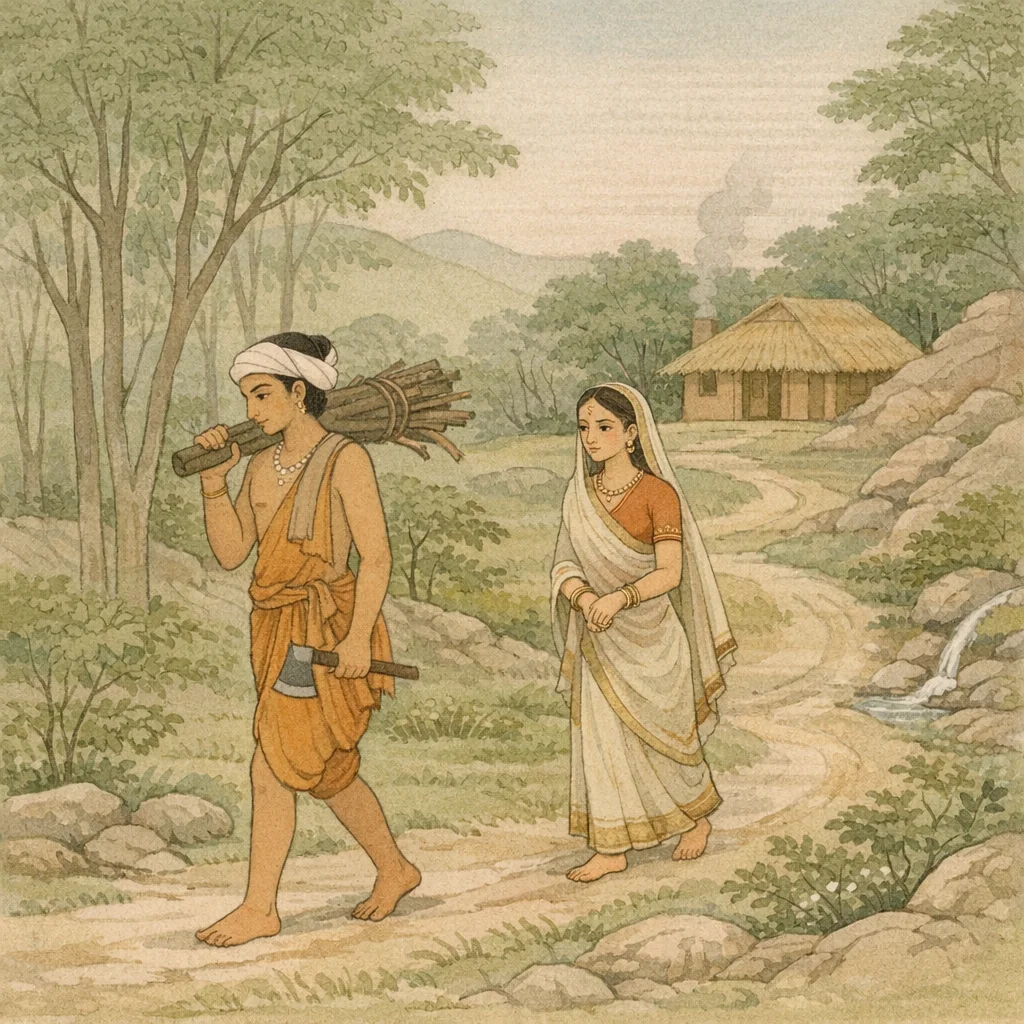
मार्कण्डेय उवाच एवं सम्भाषमाणाया: सावित्र्या भोजन प्रति । स्कन्धे परशुमादाय सत्यवान् प्रस्थितो वनम,मार्कण्डेयजी कहते हैं--युधिष्ठिर! जब सावित्री भोजनके सम्बन्धमें इस प्रकार बातें कर रही थी, उसी समय सत्यवान् कंधेपर कुल्हाड़ी रखकर (फल-फूल, समिधा आदि लानेके लिये) वनकी ओर चले
Mārkaṇḍeya said: While Sāvitrī was speaking in this manner about the meal, Satyavān, taking an axe upon his shoulder, set out toward the forest (to gather fruits, flowers, and fuel).
Verse 19
सावित्री त्वाह भर्तरं नैकस्त्वं गन्तुमहसि । सह त्वया गमिष्यामि न हि त्वां हातुमुत्सहे,उस समय सावित्रीने अपने पतिसे कहा--नाथ! आप अकेले न जाइये। मैं भी आपके साथ चलूँगी। आज मैं आपको अकेला नहीं छोड़ सकती
Sāvitrī said to her husband: “You should not go alone. I will go with you. I do not have the strength to leave you by yourself.”
Verse 20
हे & ॥ सत्यवानुवाच वनं न गतपूर्व ते दुःख: पन्थाश्न भाविनि । व्रतोपवासक्षामा च कथं पद्धयां गमिष्यसि,सत्यवानने कहा--सुन्दरि! तुम पहले कभी वनमें नहीं गयी हो। वनका रास्ता बड़ा दुःखदायक होता है, तुम व्रत और उपवास करनेके कारण दुर्बल हो रही हो। ऐसी दशामें पैदल कैसे चल सकोगी?
Satyavān said: “You have never gone into the forest before; the path will be arduous for you. And you are weakened by vows and fasting—how will you be able to go on foot?”
Verse 21
सावित्रयुवाच उपवासान्न मे ग्लानिर्नास्ति चापि परिश्रम: । गमने च कृतोत्साहां प्रतिषेद्धुं न माहसि
Sāvitrī said: “Fasting has not made me faint, nor am I weary. I am resolved and fully prepared to go; you ought not to forbid me.”
Verse 22
सावित्री बोली--उपवासके कारण मुझे किसी प्रकारकी शिथिलता और थकावट नहीं है। चलनेके लिये मेरे मनमें पूर्ण उत्साह है, अतः आप मुझे मना न कीजिये ।। सत्यवानुवाच यदि ते गमनोत्साह: करिष्यामि तव प्रियम् मम त्वामन्त्रय गुरून् न मां दोष: स्पृशेदयम्
Sāvitrī said: “Because of my fast, I feel no slackness or weariness at all. My heart is full of eagerness to walk—so do not forbid me.” Satyavān said: “If you truly have the desire to go, I will do what pleases you. But first seek leave from my elders, so that no blame may touch me in this matter.”
Verse 23
सत्यवानने कहा--यदि तुम्हें चलनेका उत्साह है तो मैं तुम्हारा प्रिय मनोरथ पूर्ण करूँगा। परंतु तुम मेरे माता-पितासे पूछ लो, जिससे मुझे दोषका भागी न होना पड़े ।। मार्कण्डेय उदाच साभिवद्याब्रवीच्छवश्रूं श्वशुरं च महाव्रता । अयं गच्छति मे भर्ता फलाहारो महावनम्
Mārkaṇḍeya said: Having respectfully saluted her mother-in-law and father-in-law, Sāvitrī, steadfast in her great vow, spoke: “My husband, who lives on fruits, is going to the great forest.”
Verse 24
इच्छेयमभ्यनुज्ञाता आर्यया श्वशुरेण ह । अनेन सह निर्गन्तुं न मेडद्य विरह: क्षम:
Mārkaṇḍeya said: “If I have the permission of my noble mother-in-law and my father-in-law, I wish to go out together with him. For today, I cannot endure separation.”
Verse 25
गुर्वग्निहोत्रार्थकृते प्रस्थितश्च॒ सुतस्तव । न निवार्यों निवार्य: स्यथादन्यथा प्रस्थितो वनम्
Mārkaṇḍeya said: “Your son has set out to fulfill the duties owed to his teacher and to maintain the sacred fire-ritual (Agnihotra). He should not be restrained; if he were restrained, the course of events would turn otherwise—for he has already departed for the forest.”
Verse 26
संवत्सर: किंचिदूनो न निष्क्रान्ताहमाश्रमात् । वन॑ कुसुमितं द्रष्ट॑ परं कौतूहलं हि मे
Mārkaṇḍeya said: “For almost a full year—only a little short of it—I have not gone out from my hermitage. Indeed, I am seized with great curiosity to go and see the forest in bloom.”
Verse 27
मार्कण्डेयजी कहते हैं--तब महान व्रतका पालन करनेवाली सावित्रीने अपने सास- ससुरको प्रणाम करके कहा--'ये मेरे पतिदेव फल आदि लानेके लिये महान् वनमें जा रहे हैं। यदि सासजी और ससुरजी मुझे आज्ञा दें तो मैं भी इनके साथ जाना चाहती हूँ। आज मुझे इनका एक क्षणका भी विरह सहा नहीं जाता। आपके पुत्र आज गुरुजनोंके लिये तथा अन्निहोत्रके उद्देश्स्से फल, फ़ूल और समिधा आदि लानेके लिये वनमें जा रहे हैं, अतः उनको रोकना उचित नहीं है। हाँ, यदि किसी दूसरे कार्यके लिये वनमें जाते होते तो उन्हें रोका भी जा सकता था। एक वर्षसे कुछ ही कम हुआ, मैं आश्रमसे बाहर नहीं निकली। अतः आज फूलोंसे भरे हुए वनको देखनेके लिये मेरे मनमें बड़ी उत्कण्ठा है | २३-- २६ || हुमत्सेन उवाच यतः प्रभृति सावित्री पित्रा दत्ता स््नुषा मम | नानयाभ्यर्थनायुक्तमुक्तपूर्व स्मराम्यहम्,द्युमत्सेन बोले--जबसे सावित्रीके पिताने इसे मेरी पुत्रवधू बनाकर दिया है, तबसे आजतक इसने पहले कभी मुझसे किसी बातके लिये प्रार्थना की हो, इसका मुझे स्मरण नहीं है
Dyumatsena said: Ever since Savitri was given to me by her father as my daughter-in-law, I do not recall that she has ever before spoken to me with a request.
Verse 28
तदेषा लभतां काम॑ यथाभिलषितं वधू: । अप्रमादश्न कर्तव्य: पुत्रि सत्यवत: पथि,अत: आज मेरी पुत्रवधू अपना अभीष्ट मनोरथ प्राप्त करे। बेटी! जा, सत्यवानके मार्ममें सावधानी रखना
“Therefore, let this bride attain the desire she has longed for. And you, my daughter, must act with constant vigilance on Satyavān’s path.”
Verse 29
मार्कण्डेय उदाच उभाभ्यामभ्यनुज्ञाता सा जगाम यशस्विनी । सह भर्त्रां हसन्तीव हृदयेन विदूयता,मार्कण्डेयजी कहते हैं--युधिष्ठिर! इस प्रकार सास और ससुर दोनोंकी आज्ञा पाकर यशस्विनी सावित्री अपने पतिदेवके साथ चल दी, वह ऊपरसे तो हँसती-सी जान पड़ती थी, किंतु उसका हृदय दुःखकी ज्वालासे दग्ध हो रहा था
Mārkaṇḍeya said: Having received permission from both her mother-in-law and father-in-law, the illustrious Sāvitrī set out together with her husband. Outwardly she seemed almost to smile, yet within, her heart was being torn and scorched by grief.
Verse 30
सा वनानि विचित्राणि रमणीयानि सर्वश: । मयूरगणजुष्टानि ददर्श विपुलेक्षणा,विशाल नेत्रोंवाली सावित्रीने सब ओर घूम-घूमकर मयूरसमूहोंसे सेवित रमणीय और विचित्र वन देखे
Sāvitrī, the large-eyed maiden, wandered about on every side and beheld forests that were delightful and wondrous—haunts frequented by flocks of peacocks.
Verse 31
नदी: पुण्यवहाश्वैव पुष्पितांश्व नगोत्तमान् सत्यवानाह पश्येति सावित्रीं मधुरं वच:,पवित्र जल बहानेवाली नदियों तथा फूलोंसे लदे हुए सुन्दर वृक्षोंकों लक्ष्य करके सत्यवान् सावित्रीसे मधुर वाणीमें कहते--'प्रिये! देखो, कैसा मनोहर दृश्य है”
Pointing out rivers whose waters carry sanctity and the finest trees laden with blossoms, Satyavān spoke to Sāvitrī in gentle words: “Beloved, look—how delightful this scene is.”
Verse 32
निरीक्षमाणा भर्तारं सर्वावस्थमनिन्दिता | मृतमेव हि भर्तारें काले मुनिवच: स्मरन्,सती-साध्वी सावित्री अपने पतिकी सभी अवस्थाओंका निरीक्षण करती थी। नारदजीके वचनोंको स्मरण करके उसे निश्चय हो गया था कि समयपर मेरे पतिकी मृत्यु अवश्यम्भावी है
The blameless Savitrī kept watch over her husband in every condition. Remembering the sage’s words, she became certain that, when the destined time arrived, her husband would indeed meet death; therefore she observed him with unwavering, chaste resolve.
Verse 33
अनुव्रजन्ती भर्तारें जगाम मृदुगामिनी । द्विधेव हृदयं कृत्वा तं च कालमवेक्षती,मन्दगतिसे चलनेवाली सावित्री मानो अपने हृदयके दो भाग करके एकसे अपने पतिका अनुसरण करती और दूसरेसे प्रतिक्षण उनके मृत्युकालकी प्रतीक्षा कर रही थी
Sāvitrī, gentle in her steps, went on following her husband. It was as though she had divided her heart in two—one part steadfastly accompanying him, and the other watching, moment by moment, for the appointed time of his death.
Verse 295
इस प्रकार श्रीमह्याभारत वनपर्वके अन्तर्गत पतिव्रतामाहात्म्यपर्वमें सावित्री- उपाख्यानविषयक दो सौ पंचानबेवाँ अध्याय पूरा हुआ
Thus ends the two hundred and ninety-fifth chapter of the Mahābhārata’s Vana Parva, within the section on the glory of devoted wives (Pativratā-māhātmya), specifically concerning the Savitrī episode. The narrative closes by affirming the ethical ideal of steadfast marital fidelity and dharma as a source of spiritual power.
Verse 296
इति श्रीमहा भारते वनपर्वणि पतिव्रतामाहात्म्यपर्वणि सावितयुपाख्याने षण्णवत्यधिकद्विशततमो< ध्याय:,इस प्रकार श्रीमह्याभारत वनपर्वके अन्तर्गत पतित्रतामाहात्म्यपर्वमें सावित्री- उपाख्यानविषयक दो सौ छानबेवाँ अध्याय पूरा हुआ
Thus, in the revered Mahābhārata, within the Vana Parva, in the section extolling the greatness of the devoted wife (Pativratā-māhātmya), the Savitrī episode concludes here as the two-hundred-and-ninety-sixth chapter. The colophon marks the completion of the narrative unit, underscoring the ethical ideal of steadfast marital fidelity and dharma upheld through resolve and virtue.
Frequently Asked Questions
The resolution tests whether Yudhiṣṭhira prioritizes compassionate restitution and brahminic ritual welfare over immediate personal advantage; his first boon request repairs harm done to another before seeking strategic benefit.
Dharma is presented as a composite of practiced virtues—truth, restraint, purity, non-violence, equanimity, and non-envy—implying that legitimate authority and successful action depend on inner governance rather than coercive capacity.
Yes. The concluding verses function as phalaśruti: recitation/understanding is said to support self-control and well-being, while explicitly warning against delight in adharma such as theft, adultery, and divisive conduct.