Adhyaya 279
Sāvitrī–Satyavān Vivāha: Kanyāpradāna and Āśrama-Śīla (सावित्री-सत्यवान्विवाहः)
Upa-parva: Sāvitrī-Upākhyāna (Legend of Sāvitrī)
Mārkaṇḍeya narrates that, upon deciding to give his daughter in marriage, King Aśvapati prepares the requisite wedding articles and summons senior Brahmins, officiants, and his chaplain on an auspicious date. He travels with Sāvitrī to the sacred forest and reaches Dyumatsena’s hermitage, approaching on foot with the Brahmins. Dyumatsena is described as a sightless king seated beneath a śāla tree; Aśvapati offers due honors and presents his intention, specifying Sāvitrī as a daughter to be accepted as Satyavān’s wife. Dyumatsena voices a pragmatic concern: as an exiled ruler living by forest discipline, he doubts whether a princess can endure the hardships of āśrama life. Aśvapati replies that Sāvitrī understands both pleasure and pain and that his resolve is firm; he requests that his hope not be rejected and argues the alliance is mutually appropriate. Dyumatsena acknowledges that he had earlier desired this connection but hesitated due to his fallen state; he now consents and welcomes the guest. The two kings assemble hermitage-dwelling Brahmins and conduct the marriage according to rite. After giving the bride with suitable gifts, Aśvapati returns home rejoicing; Satyavān and Sāvitrī rejoice in the union. With her father departed, Sāvitrī sets aside ornaments and adopts bark garments and ochre cloth, then pleases her mother-in-law and father-in-law through attentive care, restraint of speech, and proper religious services, and she pleases her husband through gentle speech and skillful conduct. Time passes in the hermitage, but Nārada’s earlier statement remains present in Sāvitrī’s mind day and night, sustaining narrative foreboding.
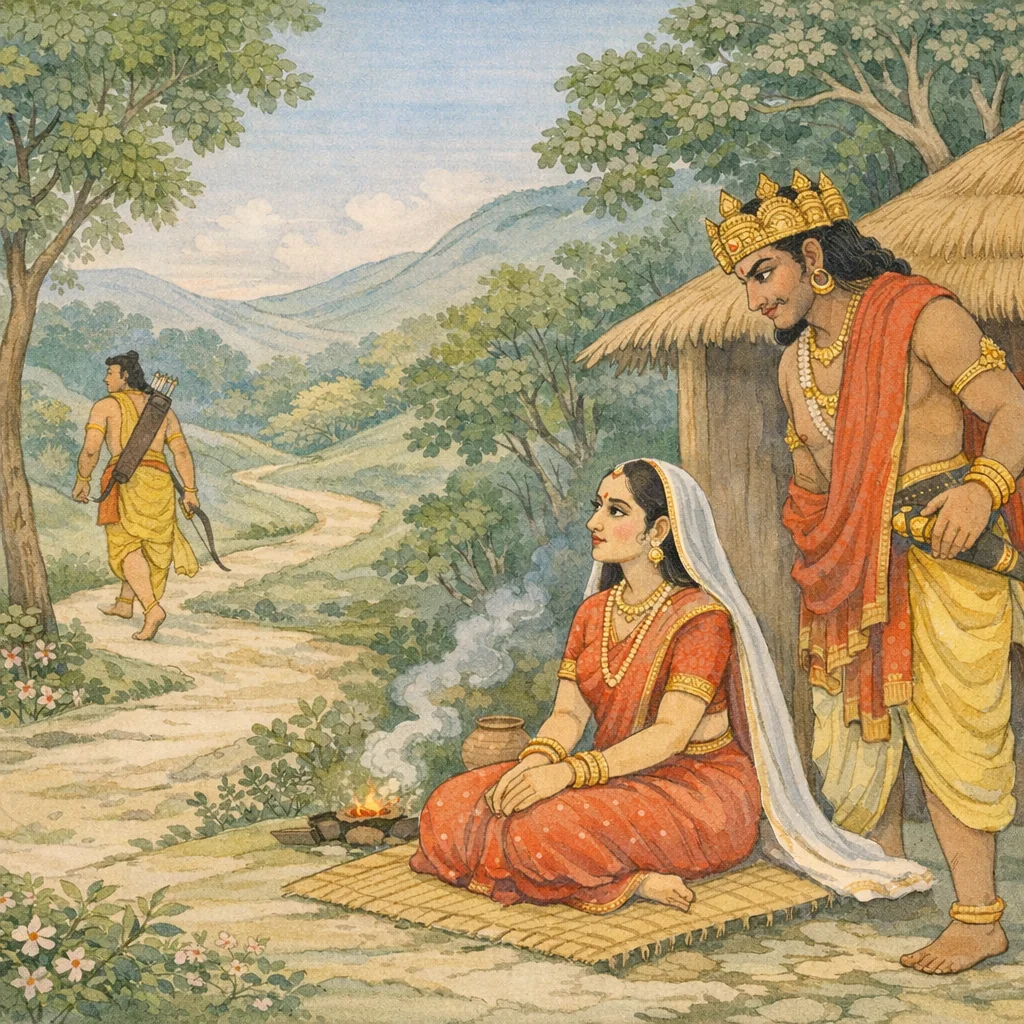
Chapter Arc: मृगरूपधारी मारीच के वध के बाद वन में एक करुण पुकार गूँजती है—राम की-सी आवाज़, जो सीता के हृदय को चीर देती है। → सीता उस करुण ध्वनि को सुनकर व्याकुल होती है और लक्ष्मण पर कठोर वचन बरसाती है, उसे राम की सहायता को जाने के लिए बाध्य करती है। लक्ष्मण, राम-भक्त और धर्मनिष्ठ, भीतर से टूटता हुआ भी सीता की आज्ञा मानने को विवश होता है। → लक्ष्मण के जाते ही रावण अवसर पाकर सीता के सामने अपना वास्तविक रूप प्रकट करता है—‘सीते! मैं राक्षसराज रावण हूँ’—और भय, लोभ, तथा प्रभुत्व के शब्दों से उसे डिगाने का प्रयास करता है। → सीता रावण के प्रस्ताव और दर्प को अस्वीकार करती है; रावण अपनी शक्ति और लंका की महिमा का बखान कर अपहरण की भूमिका बाँधता है, जबकि वन-आश्रम की रक्षा-रेखा टूट चुकी होती है। → सीता के अडिग प्रतिरोध के सामने रावण का क्रोध और हरण-निश्चय सघन होता है—अगला क्षण सीता-हरण की ओर लुढ़कता है।
Shlokas
Verse 1
(दाक्षिणात्य अधिक पाठका $ “लोक मिलाकर कुल ५६३ श्लोक हैं) 3 “+(>9) #2<# # 5-7 अष्टस प्तरत्याधिकद्विशततमो< ध्याय: मृगरूपधारी मारीचका वध तथा सीताका अपहरण मार्कण्डेय उवाच मारीचस्त्वथ सम्भ्रान्तो दृष्टवा रावणमागतम् । पूजयामास सत्कारै: फलमूलादिभिस्तत:,मार्कण्डेयजी कहते हैं--युधिष्ठिरे रावणको आया देख मारीच सहसा उठकर खड़ा हो गया और उसने फल-मूल आदि अतिथिसत्कारकी सामग्रियोंद्वारा उसका विधिवत् पूजन किया
Mārīca, startled at the sight of Rāvaṇa’s arrival, rose at once and received him with due honor, offering the customary tokens of hospitality—fruits, roots, and the like.
Verse 2
विश्रान्तं चैनमासीनमन्वासीन: स राक्षस: । उवाच प्रश्नितं वाक््यं वाक्यज्ञो वाक्यकोविदम्,जब रावण बैठकर विश्राम कर चुका, तब उसके पास बैठकर बातचीत करनेमें कुशल राक्षस मारीचने वाक्यका मर्म समझनेमें निपुण रावणसे विनयपूर्वक कहा--
When Rāvaṇa had sat down and rested, the rākṣasa Mārīca sat near him. Skilled in speech and discerning the intent behind words, Mārīca addressed Rāvaṇa with a carefully framed, respectful counsel.
Verse 3
न ते प्रकृतिमान् वर्ण: कच्चित् क्षेमं पुरे तव । कच्चित् प्रकृतय: सर्वा भजन्ते त्वां यथा पुरा,'लंकेश्वर! तुम्हारे शरीरका रंग ठीक हालतमें नहीं है। तुम उदास दिखायी देते हो। तुम्हारे नगरमें कुशल तो है न? समस्त प्रजा और मन्त्री आदि पहलेकी भाँति तुम्हारी सेवा करते हैं न?
Mārkaṇḍeya said: “Your complexion seems unnatural—are you well? Is your city secure? And do all your subjects and officials still attend upon you as before?”
Verse 4
किमिहागमने चापि कार्य ते राक्षसेश्वर । कृतमित्येव तद् विद्धि यद्यपि स्यात् सुदुष्करम्,'राक्षसराज! कौन-सा ऐसा कार्य आ गया है, जिसके लिये तुम्हें यहाँतक आना पड़ा? यदि वह मेरेद्वारा साथ्य है तो कितना ही कठिन क्यों न हो, उसे किया हुआ ही समझो”
Mārkaṇḍeya said: “O lord of the Rākṣasas, what task has arisen that has brought you all the way here? If it lies within my power, then—even if it is exceedingly difficult—know it as already done.”
Verse 5
शशंस रावणस्तस्मै तत् सर्व रामचेष्टितम् । समासेनैव कार्याणि क्रोधामर्षसमन्वित:,रावण क्रोध और अमर्षमें भरा हुआ था। उसने एक-एक करके रामद्वारा किये हुए सब कार्य संक्षेपसे कह सुनाये
Mārkaṇḍeya said: Filled with wrath and wounded pride, Rāvaṇa recounted to him—briefly yet in sequence—all the deeds and undertakings performed by Rāma.
Verse 6
मारीचस्त्वब्रवीच्छुत्वा समासेनैव रावणम् । अलं ते राममासाद्य वीर्यज्ञो हास्मि तस्य वै,मारीचने सारी बातें सुनकर थोड़ेमें ही रावणको समझाते हुए कहा--“दशानन! तुम श्रीरामसे भिड़नेका साहस न करो। मैं उनके पराक्रमको जानता हूँ
Mārīca, having heard Rāvaṇa’s words, replied with brief counsel: “Enough—do not provoke Rāma or seek a confrontation with him. I truly know his might.”
Verse 7
बाणवेगं हि कस्तस्य शक्त: सोढ़ं महात्मन: । प्रत्रज्यायां हि मे हेतु: स एव पुरुषर्षभ:
Mārkaṇḍeya said: “Who could possibly endure the rush of arrows from that great-souled one? Indeed, the very reason for my turning away and withdrawing was he alone—that bull among men.”
Verse 8
तमुवाचाथ सक्रोधो रावण: परिभर्त्सयन्
Mārkaṇḍeya said: Then Rāvaṇa, inflamed with anger, addressed him, rebuking and insulting him in harsh words.
Verse 9
मारीचश्चिन्तयामास विशिष्टान्मरणं वरम्
Mārīca reflected that, for the noble and distinguished, death is preferable—implying that an honorable end is better than a life sustained through disgrace or wrongdoing.
Verse 10
ततस्तं प्रत्युवाचाथ मारीचो रक्षसां वरम्
Then Mārīca replied to him—addressing that foremost of the rākṣasas—continuing the exchange in a way that frames the coming action as a deliberate choice rather than a mere impulse.
Verse 11
तमब्रवीद् दशग्रीवो गच्छ सीतां प्रलोभय,तब दशाननने उससे कहा--“'तुम एक ऐसे मनोहर मृगका रूप धारण करो जिसके सींग रत्नमय प्रतीत हों और शरीरके रोएँ भी रत्नोंके ही समान चित्र-विचित्र दिखायी दें। फिर रामके आश्रमपर जाओ और सीताको लुभाओ। सीता तुम्हें देख लेनेपर निश्चय ही रामसे यह अनुरोध करेगी कि “आप इस मृगको पकड़ लाइये'
Mārkaṇḍeya said: Then Daśagrīva (Rāvaṇa) addressed him, “Go and entice Sītā.” In narrative and ethical terms, this is the moment where deliberate deception is set in motion: Rāvaṇa chooses manipulation over righteous means, aiming to provoke desire and distraction so that Sītā will urge Rāma to pursue the alluring object—thus creating the opportunity for abduction. The episode highlights how adharma often operates through temptation, illusion, and the exploitation of another’s innocent curiosity.
Verse 12
रत्नशूज्री मृगो भूत्वा रत्नचित्रतनूरुह: । ध्रुवं सीता समालक्ष्य त्वां रामं चोदयिष्यति,तब दशाननने उससे कहा--“'तुम एक ऐसे मनोहर मृगका रूप धारण करो जिसके सींग रत्नमय प्रतीत हों और शरीरके रोएँ भी रत्नोंके ही समान चित्र-विचित्र दिखायी दें। फिर रामके आश्रमपर जाओ और सीताको लुभाओ। सीता तुम्हें देख लेनेपर निश्चय ही रामसे यह अनुरोध करेगी कि “आप इस मृगको पकड़ लाइये'
Mārkaṇḍeya said: “Become a deer with jewel-like horns, whose body and even its hairs appear wondrously variegated like gems. Go to Rāma’s hermitage and entice Sītā; once she sees you, she will surely urge Rāma to pursue you, saying in effect, ‘Please catch that deer.’” The verse highlights a deliberate strategy of deception: exploiting desire and curiosity to provoke a righteous person into action that leads to harm.
Verse 13
अफक्रान्ते च काकुत्स्थे सीता वश्या भविष्यति । तामादायापनेष्यामि ततः स न भविष्यति
Mārkaṇḍeya said: “When Rāma, the scion of Kakutstha, has been overcome, Sītā will become subject to my control. Taking her away, I shall carry her off; and then he will be no more.”
Verse 14
इत्येवमुक्तो मारीच: कृत्वोदकमथात्मन:
Thus addressed, Mārīca then performed the prescribed water-rite for himself—an act of ritual composure and self-discipline—signaling readiness to proceed in accordance with what had been spoken and with the demands of dharma.
Verse 15
ततस्तस्याश्रमं गत्वा रामस्याक्लिष्टकर्मण:
Then, going to the hermitage of Rāma—whose deeds were unwearied and steadfast—the narrative turns toward his austere dwelling, suggesting a movement from wandering and trial toward the counsel and moral clarity found in a life of disciplined action.
Verse 16
रावणस्तु यतिर्भूत्वा मुण्ड: कुण्डी त्रिदण्डधूक्ू,रावण मूँड़ मुड़ाने, भिक्षापात्र हाथमें लिये एवं त्रिदण्डधारी संन्यासीका रूप धारण करके और मारीच मृग बनकर--दोनों उस स्थानपर गये। मारीचने विदेहनन्दिनी सीताके समक्ष अपना मृगरूप प्रकट किया
Mārkaṇḍeya said: Rāvaṇa, assuming the guise of an ascetic—shaven-headed, carrying a begging bowl, and bearing the triple staff—set out for that place, while Mārīca took the form of a deer. Together they went there, and Mārīca displayed his deer-form before Sītā, the beloved daughter of Videha. The episode shows how adharma advances through deception: sacred appearances are exploited to mislead the virtuous, testing discernment and restraint.
Verse 17
मृगश्न भूत्वा मारीचस्तं देशमुपजग्मतु: । दर्शयामास मारीचो वैदेहीं मृगरूपधृक्,रावण मूँड़ मुड़ाने, भिक्षापात्र हाथमें लिये एवं त्रिदण्डधारी संन्यासीका रूप धारण करके और मारीच मृग बनकर--दोनों उस स्थानपर गये। मारीचने विदेहनन्दिनी सीताके समक्ष अपना मृगरूप प्रकट किया
Mārīca, taking on the form of a deer, went with him to that place. There, Mārīca—wearing the guise of a deer—displayed himself before Vaidehī (Sītā). In the narrative’s ethical frame, this moment marks the deliberate use of disguise and deception to provoke desire and distraction, setting in motion a chain of adharma-driven actions and their consequences.
Verse 18
चोदयामास तस््यार्थे सा रामं विधिचोदिता । रामस्तस्या: प्रियं कुर्वन् धनुरादाय सत्वर:
Urged on by destiny, she pressed Rāma to act for that purpose. Rāma, intent on doing what was pleasing to her, quickly took up his bow.
Verse 19
स धन्वी बद्धतुणीर: खड़्गगोधाडूगुलित्रवान्
Mārkaṇḍeya said: He stood as an armed warrior—bearing a bow, his quiver fastened on, and equipped with sword, mace, and a finger-guard for archery—fully prepared for righteous combat and protection.
Verse 20
सोडन्न्तर्हित: पुनस्तस्य दर्शन राक्षसो ब्रजन्,अमोघं शरमादाय जघान मृगरूपिणम् । मायावी राक्षस मारीच कभी छिप जाता और कभी नेत्रोंके समक्ष प्रकट हो जाता था। इस प्रकार वह श्रीरामचन्द्रजीको आश्रमसे बहुत दूर खींच ले गया। तब श्रीरामचन्द्रजी यह ताड़ गये कि यह कोई मायावी राक्षस है। यह बात ध्यानमें आते ही प्रतिभाशाली श्रीरघुनाथजीने एक अमोघ बाण लेकर उस मृगरूपधारी निशाचरको मार डाला
Markandeya said: Vanishing from sight and then appearing again before him, the rākṣasa kept moving about; and taking up an unfailing arrow, he struck down the one who had assumed the form of a deer. The episode underscores a moral clarity in action: when deception is recognized as adharma, decisive and proportionate force is employed to protect the righteous path and prevent further harm.
Verse 21
चकर्ष महदध्वानं रामस्तं बुबुधे ततः । निशाचरं विदित्वा तं राधव: प्रतिभानवान्,अमोघं शरमादाय जघान मृगरूपिणम् । मायावी राक्षस मारीच कभी छिप जाता और कभी नेत्रोंके समक्ष प्रकट हो जाता था। इस प्रकार वह श्रीरामचन्द्रजीको आश्रमसे बहुत दूर खींच ले गया। तब श्रीरामचन्द्रजी यह ताड़ गये कि यह कोई मायावी राक्षस है। यह बात ध्यानमें आते ही प्रतिभाशाली श्रीरघुनाथजीने एक अमोघ बाण लेकर उस मृगरूपधारी निशाचरको मार डाला
Marīca, the night-ranging demon, kept vanishing and reappearing before the eyes, and by this deceit he drew Rāma far away from the hermitage. Then Rāma understood that this was no ordinary creature but a sorcerous rākṣasa. Realizing the truth, the discerning Rāghava took up an unfailing arrow and struck down that nocturnal being who had assumed the form of a deer—showing that clear judgment and timely action are required when illusion is used to disrupt dharma.
Verse 22
स रामबाणाभिहत: कृत्वा रामस्वरं तदा
Struck by Rāma’s arrow, he then at once assumed the very sound and manner of Rāma—an act suggesting a deceptive imitation in the face of righteous force.
Verse 23
शुश्राव तस्य वैदेही ततस्तां करुणां गिरम्
Vaidehī (Sītā) heard his words; then she listened to that compassionate, sorrow-laden speech—an appeal that underscores how suffering calls forth empathy and tests one’s steadiness in dharma.
Verse 24
सा प्राद्रवद् यतः शब्दस्तामुवाचाथ लक्ष्मण: । अलं ते शड्कया भीरु को राम॑ प्रहरिष्यति
Hearing the sound, she ran swiftly toward the place it came from. Then Lakṣmaṇa said to her: “Enough of this fear and suspicion, timid one. Who would dare strike Rāma?”
Verse 25
मुहूर्ताद् द्रक्ष्यसे राम॑ भर्तरं त्वं शुचिस्मिते । विदेहनन्दिनी सीताने भी उसकी वह करुणाभरी पुकार सुनी। उसकी पुकार सुनते ही जिस ओरसे वह आवाज आयी थी, उसी ओर वे दौड़ पड़ीं। तब लक्ष्मणने उनसे कहा --'भीरु! डरनेकी कोई बात नहीं है। भला, कौन ऐसा है, जो भगवान् रामको मार सकेगा? शुचिस्मिते! तुम दो ही घड़ीमें अपने पति भगवान् श्रीरामको यहाँ उपस्थित देखोगी ।। २३-२४ $ ।। इत्युक्ता सा प्ररुदती पर्यशड्कत लक्ष्मणम्,लक्ष्मणकी यह बात सुनकर रोती हुई सीताने उन्हें संदेहकी दृष्टिसे देखा। यद्यपि शुद्ध सदाचार ही उनका आभूषण था। वे साध्वी और पतिव्रता थीं; तथापि स्त्री स््वभाववश उस समय उनकी बुद्धि मारी गयी। उन्होंने लक्ष्मणको कठोर बातें सुनानी आरम्भ कीं --
“In but a short while, O Sītā—daughter of Videha, whose smile is pure—you will see your husband Rāma.” The reassurance underscores steadfast trust in Rāma’s invincibility and seeks to calm fear with confidence grounded in dharma and devotion.
Verse 26
हता वै स्त्रीस्वभावेन शुक्लचारित्रभूषणा । सा तं परुषमारब्धा वक्तुं साध्वी पतिव्रता,लक्ष्मणकी यह बात सुनकर रोती हुई सीताने उन्हें संदेहकी दृष्टिसे देखा। यद्यपि शुद्ध सदाचार ही उनका आभूषण था। वे साध्वी और पतिव्रता थीं; तथापि स्त्री स््वभाववश उस समय उनकी बुद्धि मारी गयी। उन्होंने लक्ष्मणको कठोर बातें सुनानी आरम्भ कीं --
Markandeya said: Though she was adorned with spotless conduct, her judgment was, for that moment, overcome by the impulsiveness natural to her womanly condition. That virtuous, faithful wife then began to address him with harsh words.
Verse 27
नैष कामो भवेन्मूढ यं त्वं प्रार्थयसे हृदा । अप्यहं शस्त्रमादाय हन्यामात्मानमात्मना,निहीनमुपतिष्ठेयं शार्दूली क्रोष्टकं यथा । 'ओ मूढ़! तुम मन-ही-मन जिस वस्तुको पाना चाहते हो, तुम्हारा वह मनोरथ कभी पूर्ण न होगा। मैं स्वयं तलवार लेकर अपना गला काट लूँगी, पर्वतके शिखरसे कूद पड़ूँगी अथवा जलती हुई आगमें समा जाऊँगी; परंतु” राम-जैसे स्वामीको छोड़कर तुम-जैसे नीच पुरुषका कदापि वरण न करूँगी। जैसे सिंहिनी सियारको नहीं स्वीकार कर सकती, उसी प्रकार मैं तुम्हें नहीं ग्रहण करूँगी'
Verse 28
पतेयं गिरिशृज्भाद् वा विशेयं वा हुताशनम् | रामं भर्तारमुत्सज्य न त्वहं त्वां कथंचन
Markandeya said: “I would rather fall from a mountain peak, or enter the blazing fire; but having abandoned Rama, my husband, I will not accept you—under any circumstance.”
Verse 29
एतादृशं वच: श्रुत्वा लक्ष्मण: प्रियराघव:,अवीक्षमाणो बिम्बोष्ठीं प्रययौँ लक्ष्मणस्तदा । लक्ष्मण सदाचारी तथा श्रीरामचन्द्रजीके प्रेमी थे। उन्होंने सीताके ये कठोर वचन सुनकर अपने दोनों कान बंद कर लिये और उसी मार्गसे चल दिये, जिससे श्रीरामचन्द्रजी गये थे। उस समय लक्ष्मणके हाथमें धनुष था। उन्होंने बिम्बफलके समान अरुण अधरोंवाली सीताकी ओर आँख उठाकर देखातक नहीं। श्रीरामके पदचिह्ञोंका अनुसरण करते हुए उन्होंने वहाँसे प्रस्थान कर दिया
Mārkaṇḍeya said: Hearing such words, Lakṣmaṇa—devoted to Rāghava—set out at once. Without even looking toward Sītā, whose lips were red like the bimba fruit, he departed, following the very path by which Śrī Rāma had gone. His bow was in his hand, and he restrained his gaze out of discipline and loyalty, choosing obedience to Rāma over engagement with harsh speech.
Verse 30
पिधाय कर्णो सद्वृत्त: प्रस्थितो येन राघव: । स रामस्य पद गृहा[ प्रससार धनुर्धर:
Markandeya said: Having covered his ears, the virtuous one set out along the very path by which Rāghava had departed. That bow-bearing hero then hastened forward, intent on following in Rāma’s footsteps—choosing disciplined conduct and loyal adherence over distraction and temptation.
Verse 31
एतस्मिन्नन्तरे रक्षो रावण: प्रत्यदृश्यत,इसी समय अवसर पाकर राक्षस रावण साध्वी सीताको हर ले जानेकी इच्छासे वहाँ दिखायी दिया। वह भयानक निशाचर सुन्दर रूप धारण करके राखमें छिपी हुई आगके समान संन्यासीके वेषमें अपने यथार्थ रूपको छिपाये हुए था
At that very moment, the rākṣasa Rāvaṇa appeared, seizing the opportunity. Intent on abducting the chaste Sītā, the fearsome night-stalker concealed his true nature by assuming an attractive disguise—like fire hidden beneath ashes—presenting himself outwardly in the guise of a renunciant.
Verse 32
अभव्यो भव्यरूपेण भस्मच्छन्न इवानल: । यतिवेषप्रतिच्छन्नो जिहीर्षुस्तामनिन्दिताम्,इसी समय अवसर पाकर राक्षस रावण साध्वी सीताको हर ले जानेकी इच्छासे वहाँ दिखायी दिया। वह भयानक निशाचर सुन्दर रूप धारण करके राखमें छिपी हुई आगके समान संन्यासीके वेषमें अपने यथार्थ रूपको छिपाये हुए था
Mārkaṇḍeya said: “Though unworthy and evil at heart, he appeared in a pleasing guise—like fire hidden beneath ashes. Concealing his true nature under the dress of an ascetic, he came with the intent to abduct that blameless woman.”
Verse 33
सा तमालक्ष्य सम्प्राप्तं धर्मज्ा जनकात्मजा । निमन्त्रयामास तदा फलमूलाशनादिभि:
Seeing him arrive, Sītā—wise in dharma and the daughter of Janaka—invited him to partake of simple forest fare: fruits, roots, and other such foods.
Verse 34
उस समय यतिको अपने आश्रमपर आया हुआ देख धर्मको जाननेवाली जनकनन्दिनी सीता फल-मूलके भोजन आदिके अतिथिसत्कारके लिये उसे निमन्त्रित किया ।। अवमन्य तत: सर्व स्वरूपं प्रत्यपद्यत । सान्त्वयामास वैदेहीमिति राक्षसपुजड्भव:,राक्षसराज रावण सीताकी दी हुई उन सभी वस्तुओंकी अवहेलना करके अपने असली रूपमें प्रकट हो गया और विदेहराजकुमारीको इस प्रकार सान्त्वना देने लगा--
Then, seeing an ascetic arrive at her hermitage, Sītā—daughter of Janaka and a knower of dharma—invited him to receive the customary hospitality of a guest, offering fruits, roots, and other simple fare. But he scorned all that, cast off the disguise, and revealed his true form. Thus the foremost of Rākṣasas—Rāvaṇa, king of the Rākṣasas—having contemptuously rejected everything Sītā had offered, manifested himself as he really was and began to address the princess of Videha with words meant to ‘console’ her.
Verse 35
सीते राक्षसराजो<हं रावणो नाम विश्रुतः । मम लड्कापुरी नाम्ना रम्या पारे महोदथे:,'सीते! मैं राक्षसोंका राजा हूँ। मेरा 'रावण” नाम सर्वत्र विख्यात है। समुद्रके पार बसी हुई रमणीय लंकापुरी मेरी राजधानी है
Rāvaṇa addressed Sītā: “Sītā, I am the king of the Rākṣasas, renowned everywhere by the name Rāvaṇa. Across the great ocean lies my delightful city called Laṅkā—my royal capital.”
Verse 36
तत्र त्वं नरनारीषु शोभिष्यसि मया सह | भार्या मे भव सुश्रोणि तापसं त्यज राघवम्,“वहाँ नर-नारियोंके बीच मेरे साथ रहकर तुम बड़ी शोभा पाओगी। अतः सुन्दरी! तुम मेरी पत्नी हो जाओ और इस तपस्वी रामको छोड़ दो”
Mārkaṇḍeya said: “There, among men and women, you will shine in my company. Therefore, O fair-hipped lady, become my wife and abandon this ascetic Rāghava.”
Verse 37
एवमादीनि वाक्यानि श्रुत्वा तस्याथ जानकी । पिधाय कर्णो सुश्रोणी मैवमित्यब्रवीद् वच:,रावणके ऐसे वचन सुनकर सुन्दरी जनककिशोरीने अपने दोनों कान बंद कर लिये और उससे इस प्रकार कहा--“बस, अब ऐसी बातें मुँहसे न निकाल। नक्षत्रोंसहित आकाश फट पड़े, पृथ्वी टूक-टूक हो जाय और अग्नि अपनी उष्णताका त्याग करके शीतल हो जाय, परंतु मैं रघुकुलनन्दन श्रीरामचन्द्रजीको नहीं छोड़ सकती
Mārkaṇḍeya said: Hearing such words from him, Jānakī (Sītā)—the fair-hipped lady—covered both her ears and replied, “Do not speak like this.”
Verse 38
प्रपतेद् द्यौ: सनक्षत्रा पृथिवी शकलीभवेत् । शैत्यमग्निरियान्नाहं त्यजेयं रघुनन्दनम्,रावणके ऐसे वचन सुनकर सुन्दरी जनककिशोरीने अपने दोनों कान बंद कर लिये और उससे इस प्रकार कहा--“बस, अब ऐसी बातें मुँहसे न निकाल। नक्षत्रोंसहित आकाश फट पड़े, पृथ्वी टूक-टूक हो जाय और अग्नि अपनी उष्णताका त्याग करके शीतल हो जाय, परंतु मैं रघुकुलनन्दन श्रीरामचन्द्रजीको नहीं छोड़ सकती
Mārkaṇḍeya said: “Let the sky, along with its stars, fall apart; let the earth be shattered into fragments; let fire abandon its heat and become cold—yet I would not abandon Raghunandana (Rāma).”
Verse 39
कथं हि भिन्नकरटं पद्मिनं वनगोचरम् । उपस्थाय महानागं करेणु: सूकरं स्पृशेत्,“गण्डस्थलसे मदकी धारा बहानेवाले पद्ममाला-मण्डित वनवासी गजराजकी सेवामें उपस्थित होकर कोई हथिनी किसी शूकरको कैसे छू सकती है?
Mārkaṇḍeya said: “How could a she-elephant, having approached in attendance upon a great lordly elephant—his temples streaming with rut and adorned with a garland of lotuses, a forest-roamer—ever touch a boar?”
Verse 40
कथं हि पीत्वा माध्वीक॑ पीत्वा च मधुमाधवीम् | लोभ॑ सौवीरके कुर्यानज्नारी काचिदिति स्मरेत्,“जो फूलोंके रससे बने हुए मधुर पेय तथा मधुमक्षिकाओंद्वारा तैयार किया हुआ मधु पी चुकी हो, ऐसी कोई भी नारी काँजीके रसका लोभ कैसे कर सकती है?”
Mārkaṇḍeya said: “How could any woman, having already drunk the sweet liquor distilled from flowers and the honey prepared by bees, still feel desire for sour gruel (kāñjika)? Let one remember this: once a higher taste is known, the mind should not sink back into craving what is inferior.”
Verse 41
इति सा तं समाभाष्य प्रविवेशाश्रमं तत: । क्रोधात् प्रस्फुरमाणौष्ठी विधुन्वाना करौ मुहुः,रावणसे इस प्रकार कहकर सीता अपने आश्रममें प्रवेश करने लगीं। उस समय क्रोधके मारे उनके ओंठ फड़क रहे थे और वे अपने दोनों हाथोंको बार-बार हिला रही थीं
So, having spoken to him in this way, she then moved to enter the hermitage. But anger made her lips tremble, and again and again she shook both her hands—her outward gestures revealing the inner surge of wrath and wounded dignity.
Verse 42
तामभिद्रुत्य सुश्रोणी रावण: प्रत्यषेधयत् । भर्त्सयित्वा तु रूक्षेण स्वरेण गतचेतनाम्,इसी समय रावणने दौड़कर उनका मार्ग रोक लिया और कठोर स्वरसे उन्हें डराना, धमकाना आरम्भ किया। इससे वे भयके मारे मूर्च्छित हो गयीं
Markandeya said: Rāvaṇa rushed toward that fair-hipped lady and blocked her path. Then, with a harsh voice, he began to threaten and intimidate her; overwhelmed by fear, she lost consciousness. The episode underscores how coercion and terror are adharma—violence of speech and intent that violates a woman’s safety and dignity.
Verse 43
मूर्थजेषु निजग्राह ऊर्ध्वमाचक्रमे तत: । तां ददर्श ततो गृध्रो जटायुर्गिरिगोचर: । रुदतीं राम रामेति हियमाणां तपस्विनीम्,तब रावणने उनके केश पकड़ लिये और आकाशमार्गसे लंकाकी ओर प्रस्थान किया। उस समय वे तपस्विनी सीता “हा राम-हा रामकी” रट लगाती हुई रो रही थीं और वह राक्षस उन्हें हरकर लिये जा रहा था। इसी अवस्थामें एक पर्वतकी गुफामें रहनेवाले गृध्रराज जटायुने उन्हें देखा
Markandeya said: Then Ravana seized her by the hair and rose upward, setting out through the sky toward Lanka. As the ascetic Sita was being carried off, she wept, crying again and again, “Rama, Rama!” At that moment the vulture-king Jatayu, who ranged among the mountains, saw her in this plight—an outrage against dharma that would soon call forth resistance and sacrifice.
Verse 73
विनाशमुखमेतत् ते केनाख्यातं दुरात्मना | “भला! इस जगत्में कौन ऐसा वीर है, जो परमात्मा श्रीरामके बाणोंका वेग सह सके? मैं जो यहाँ संन्यासी बना बैठा हूँ, इसमें भी वे पुरुषरत्न श्रीराम ही कारण हैं। श्रीरामसे वैर मोल लेना विनाशके मुखमें जाना है, किस दुरात्माने तुम्हें ऐसी सलाह दी है?”
Mārkaṇḍeya said: “This course you are taking leads straight to ruin. Which wicked-minded person has told you such a thing? Who in this world could possibly endure the force of Lord Rāma’s arrows? Even my sitting here in the guise of a renunciant is due to that jewel among men, Śrī Rāma. To take enmity with Rāma is to step into the very mouth of destruction.”
Verse 83
अकुर्वतोस्मद्वचन स्यान्मृत्युरपि ते ध्रुवम् । मारीचकी बात सुनकर रावण और भी कुपित हो उठा और उसे डाँटते हुए बोला --'मारीच! यदि तू मेरी बात नहीं मानेगा तो भी तेरी मृत्यु निश्चित ही है
Mārkaṇḍeya said: “If you do not carry out my command, then even so, your death is certain.” The line conveys the harsh coercion of power: refusal to comply is met not with dialogue but with an inevitable threat, underscoring the ethical collapse that follows when authority is driven by anger and domination rather than dharma.
Verse 93
अवश्यं मरणे प्राप्ते करिष्याम्यस्य यन्मतम् । मारीचने सोचा, “यदि मृत्यु निश्चित ही है तो श्रेष्ठ पुरुषके हाथसे ही मरना अच्छा होगा; अतः रावणका जो अभीष्ट कार्य है, उसे अवश्य करूँगा”
Mārīca reflected: “When death has inevitably arrived, I will do what he intends. If death is certain, it is better to die at the hands of a noble man; therefore I shall surely carry out the task that Rāvaṇa desires.”
Verse 103
कि ते साहां मया कार्य करिष्याम्यवशो5पि तत् | तदनन्तर उसने राक्षसराज रावणसे कहा--'अच्छा; बताओ, मुझे तुम्हारी क्या सहायता करनी होगी? इच्छा, न होनेपर भी मैं विवश होकर उसे करूँगा”
Mārkaṇḍeya said: “What help is it that I must render you? Even if I have no wish to do it, I shall still be compelled to carry it out.” Thereafter he addressed the rākṣasa-king Rāvaṇa, asking him to state plainly what assistance he sought.
Verse 133
भार्यावियोगाद् दुर्बुद्धिरेतत् साहां कुरुष्व मे । “तुम्हारे पीछे रामके अपने आश्रमसे दूर निकल जानेपर सीताको वशमें लाना सहज हो जायगा। मैं उसे आश्रमसे हरकर ले जाऊँगा और दुर्बुद्धि राम अपनी प्यारी पत्नीके वियोगसे व्याकुल होकर प्राण दे देगा। बस, मेरी इतनी ही सहायता कर दो”
“Once you lure Rāma far from his hermitage, Sītā will be easy to overpower. I will abduct her from the āśrama and carry her away, and Rāma—deluded in counsel—will be so shaken by separation from his beloved wife that he will waste away and even die. Give me only this much assistance.”
Verse 143
रावणं पुरतो यान्तमन्वगच्छत् सुदु:ःखित: । रावणके ऐसा कहनेपर मारीच स्वयं ही अपना श्राद्ध-तर्पण करके अत्यन्त दु:ःखी होकर आगे जाते हुए रावणके पीछे-पीछे चला
When Rāvaṇa spoke thus, Mārīca performed for himself the śrāddha and tarpaṇa, and, overwhelmed with sorrow, followed behind Rāvaṇa as he went on ahead.
Verse 156
चक्रतुस्तत् तथा सर्वमुभौ यत् पूर्वमन्त्रितम् । तदनन्तर अनायास ही महान् कर्म करनेवाले श्रीरामचन्द्रजीके आश्रमके समीप जाकर उन दोनोंने पहले जैसी सलाह कर रखी थी, उसके अनुसार सब कार्य किया
Mārkaṇḍeya said: “Both of them carried out everything exactly as they had previously agreed. Thereafter, without strain, they went near the hermitage of the great doer of mighty deeds, Śrī Rāmacandra, and, in accordance with their earlier counsel, they accomplished all that was to be done.”
Verse 186
रक्षार्थे लक्ष्मणं न्यस्य प्रययौ मृगलिप्सया । विधिके विधानसे प्रेरित होकर सीताने उस मृगको लानेके लिये श्रीरामचन्द्रजीको भेजा। श्रीरामचन्द्रजी सीताका प्रिय करनेके लिये धनुष हाथमें ले लक्ष्मणको सीताकी रक्षाका भार सौंपकर मृगको लानेकी इच्छासे तुरंत चल दिये
Mārkaṇḍeya said: Entrusting Lakṣmaṇa with the duty of protection, he set out at once, driven by the desire to obtain the deer. The episode underscores a moral tension: even a well-intended act—seeking to please a loved one—can expose dependents to danger if vigilance and protective duty are compromised.
Verse 193
अन्वधावन्मृगं रामो रुद्रस्तारामृगं यथा । वे धनुष-बाण ले, पीठपर तरकस बाँधकर, कटिमें कृपाण लटकाये तथा हाथोंमें दस्ताने पहने उस मृगके पीछे उसी प्रकार दौड़े, जैसे मृगशिरा नक्षत्रके पीछे भगवान् रुद्र दौड़े थे
Mārkaṇḍeya said: Rāma pursued the deer, running after it as Rudra once ran after the star-deer. With bow and arrows in hand, a quiver strapped upon his back, a sword hanging at his waist, and gloves upon his hands, he chased it with single-minded intensity—an image that foreshadows how unchecked pursuit of desire or fascination can draw even the virtuous into peril and moral testing.
Verse 226
हा सीते लक्ष्मणेत्येवं चुक्रोशार्तस्वरेण ह । श्रीरामचन्द्रजीके बाणसे आहत हो मरते समय मारीचने उनके ही स्वरमें “हा सीते, हा लक्ष्मण” कहकर आर्तनाद किया
Mārkaṇḍeya said: Struck down by Śrī Rāmacandra’s arrow and dying, Mārīca cried out in a voice of anguish, imitating Rāma’s own tone—“O Sītā! O Lakṣmaṇa!” The episode highlights how deceit weaponizes trust and familial duty, turning compassion and vigilance into a moral test.
Verse 277
इस प्रकार श्रीमहाभारत वनपर्वके अन्तर्गत रामोपाख्यानपर्वमें श्रीरयमवनगमनविषयक दो सौ सतहत्तरवाँ अध्याय पूरा हुआ
Thus ends the two-hundred and seventy-seventh chapter of the Mahābhārata’s Vana Parva, within the Rāmopākhyāna section, dealing with Śrī Rāma’s departure to the forest. The colophon signals the completion of this narrative unit, underscoring the ethical theme of accepting hardship in obedience to dharma and rightful duty.
Verse 278
इति श्रीमहाभारते वनपर्वणि रामोपाख्यानपर्वणि मारीचवधे सीताहरणे च अष्टसप्तत्यधिकद्धिशततमो<5ध्याय:
Thus, in the Śrī Mahābhārata, within the Vana Parva, in the section known as the Rāmopākhyāna, in the episode of Mārīca’s slaying and Sītā’s abduction, ends the two-hundred-and-seventy-eighth chapter. This is a concluding colophon marking the close of the chapter and situating the narrative within the ethical frame of the Rāma story—where deception and desire culminate in wrongdoing, and the consequences set the stage for dharmic response.
Verse 283
निहीनमुपतिष्ठेयं शार्दूली क्रोष्टकं यथा । 'ओ मूढ़! तुम मन-ही-मन जिस वस्तुको पाना चाहते हो, तुम्हारा वह मनोरथ कभी पूर्ण न होगा। मैं स्वयं तलवार लेकर अपना गला काट लूँगी, पर्वतके शिखरसे कूद पड़ूँगी अथवा जलती हुई आगमें समा जाऊँगी; परंतु” राम-जैसे स्वामीको छोड़कर तुम-जैसे नीच पुरुषका कदापि वरण न करूँगी। जैसे सिंहिनी सियारको नहीं स्वीकार कर सकती, उसी प्रकार मैं तुम्हें नहीं ग्रहण करूँगी'
Mārkaṇḍeya said: “I would never accept a base man, any more than a tigress would accept a jackal. The desire you nurse within and seek to win by force will never be fulfilled. I could take up a sword and cut my own throat, leap from a mountain peak, or enter the blazing fire; yet I will not abandon a lord like Rāma to choose a wretch like you. As a lioness cannot accept a jackal, so I will not accept you.”
Verse 303
अवीक्षमाणो बिम्बोष्ठीं प्रययौँ लक्ष्मणस्तदा । लक्ष्मण सदाचारी तथा श्रीरामचन्द्रजीके प्रेमी थे। उन्होंने सीताके ये कठोर वचन सुनकर अपने दोनों कान बंद कर लिये और उसी मार्गसे चल दिये, जिससे श्रीरामचन्द्रजी गये थे। उस समय लक्ष्मणके हाथमें धनुष था। उन्होंने बिम्बफलके समान अरुण अधरोंवाली सीताकी ओर आँख उठाकर देखातक नहीं। श्रीरामके पदचिह्ञोंका अनुसरण करते हुए उन्होंने वहाँसे प्रस्थान कर दिया
Mārkaṇḍeya said: Then Lakṣmaṇa departed without so much as raising his eyes to Sītā, whose lips were red like the bimba fruit. Hearing her harsh words, he held fast to propriety and devotion to Rāma, mastering himself so completely that he would not grant even a glance. Bow in hand, he set out along the very path by which Śrī Rāma had gone, following his footprints, and left that place.
Frequently Asked Questions
Dyumatsena’s concern frames the dilemma: whether it is ethically appropriate to accept a royal bride into a life of forest austerity and exile, where hardship is expected and comfort cannot be guaranteed.
Dharma is enacted through disciplined roles: proper rites, truthful commitments, and sustained service and restraint in daily life—especially the bride’s deliberate shift from status-display to conduct-based virtue within an āśrama household.
No explicit phalaśruti is stated here; instead, the chapter functions as narrative preparation, emphasizing ethical formation and foreshadowing through the note that Nārada’s earlier warning remains continually in Sāvitrī’s mind.