Adhyaya 260
Daśagrīva-boonāvaraṇa, Viṣṇv-avatāra-niyoga, Vānara-sahāya-janana, Mantharā-nirmāṇa
Upa-parva: Mārkaṇḍeya-samvāda / Rāvaṇa-avadha-upāya (Vānara-sṛṣṭi-kathā)
This chapter presents a compact chain of reported speech. Mārkaṇḍeya narrates how accomplished brahmarṣis and devarājarṣis, led by Agni, approach Brahmā seeking refuge from the disruptive power of Daśagrīva (Rāvaṇa), who is described as protected by a prior boon. Agni articulates the crisis: widespread affliction of beings and the absence of any alternative protector. Brahmā responds with a constraint-based assessment—Daśagrīva is not readily conquerable in direct battle by devas or asuras—and then identifies the appointed corrective mechanism: Viṣṇu, the foremost among combatants, has descended by Brahmā’s commission to execute the necessary work. Brahmā further instructs the assembled deities to incarnate on earth and to generate heroic sons among vānaras and ṛkṣas, endowed with strength and transformative capacities, thereby establishing a support network for Viṣṇu’s mission. The narrative then specifies particular implementations: groups of devas, gandharvas, and dānavas descend in apportioned fashion; the gandharvī Dundubhī is directed for the success of the divine objective and becomes Mantharā, a hunchbacked figure in the human world. The chapter concludes by describing the extraordinary physical and martial capacities of these offspring and notes that the divine agent subsequently instructs Mantharā in role-specific tasks, which she undertakes with purposeful movement aimed at intensifying enmity.
Chapter Arc: वनवास की कठोरता में फल-मूलाहार करते हुए भी पाण्डवों की तेजस्विता बनी रहती है, पर युधिष्ठिर का मन भीतर-भीतर जलता है—भाइयों के दुःख का कारण वह अपने ही कर्म-दोष को मानते हैं। → राजर्षि युधिष्ठिर बार-बार उसी चिंता में डूबते हैं: ‘सुख के योग्य होकर भी ये महापुरुष कष्ट क्यों भोग रहे हैं?’ इसी मानसिक भार के बीच महर्षि व्यास का आगमन होता है—उनकी वाणी युधिष्ठिर की आत्मग्लानि को धर्म-चिन्तन में रूपान्तरित करने लगती है। → व्यास दान के विषय में कठोर सत्य उद्घाटित करते हैं—पृथ्वी पर दान से बढ़कर दुष्कर कुछ नहीं, क्योंकि अर्थ की तृष्णा महान है और धन दुःख से मिलता है; फिर भी समय पर आए अतिथि को प्रसन्नचित्त, मत्सर-रहित होकर यथाशक्ति देना ही धर्म है। → व्यास युधिष्ठिर को तप और काल-स्वीकार का मार्ग दिखाते हैं: सुख-दुःख पर्याय से आते हैं; विवेकी पुरुष को प्राप्त सुख का त्यागपूर्वक उपभोग और स्वतः आए दुःख का धैर्यपूर्वक वहन करना चाहिए—कृषक की भाँति काल की प्रतीक्षा और साधना में स्थिर रहना ही विजय है। → व्यास की शिक्षा के बाद भी प्रश्न शेष रहता है—क्या युधिष्ठिर इस उपदेश को केवल सुनेंगे, या दान-तप-धैर्य को अपने राजधर्म की अग्नि बनाकर आगामी परीक्षाओं में उतारेंगे?
Shlokas
Verse 1
््स् “+(>9) #::.# #55-7 (व्रीहिद्रोणिकपर्व) एकोनषष्ट्यधिकद्वधिशततमो< ध्याय: युधिष्ठिरकी चिन्ता, व्यासजीका पाण्डवोंके पास आगमन और दानकी महत्ताका प्रतिपादन वैशम्पायन उवाच वने निवसतां तेषां पाण्डवानां महात्मनाम् | वर्षण्येकादशातीयु: कृच्छेण भरतर्षभ,वैशम्पायनजी कहते हैं--भरतश्रेष्ठ जनमेजय! इस प्रकार वनमें रहते हुए उन महात्मा पाण्डवोंके ग्यारह वर्ष बड़े कष्टसे बीते
Vaiśampāyana said: O bull among the Bharatas (Janamejaya), while those great-souled Pāṇḍavas were dwelling in the forest, eleven years passed for them only with hardship.
Verse 2
फलमूलाशनास्ते हि सुखारहँ दुःखमुत्तमम् प्राप्तकालमनुध्यान्त: सेहिरे वरपूरुषा:,वे फल-मूल खाकर रहते थे। सुख भोगनेके योग्य होकर भी महान् कष्ट भोगते थे और यह सोचकर कि यह हमारे कष्टका समय है, इसे धैर्यपूर्वक सहन करना चाहिये, चुपचाप सब दु:ख झेलते थे। उनमें ऐसा विवेक इसलिये था कि वे सब-के-सब श्रेष्ठ पुरुष थे
They lived on fruits and roots. Though worthy of comfort, those noble men endured severe hardship; reflecting that this was the appointed season for suffering, they bore every pain in silence and with steadfast patience—because they were, each of them, men of true excellence.
Verse 3
युधिष्ठिरस्तु राजर्षिरात्मकर्मापराधजम् | चिन्तयन् स महाबाहुर्भातृणां दुःखमुत्तमम्,महाबाहु राजर्षि युधिष्ठिर सदा यही सोचते रहते थे कि “मेरे भाइयोंपर जो यह महान् दुःख आ पड़ा है, मेरी ही करनीका फल है। मेरे ही अपराधसे इन्हें कष्ट भोगना पड़ रहा है!
Vaiśaṃpāyana said: King Yudhiṣṭhira, the royal sage, kept reflecting that the great suffering that had fallen upon his brothers had arisen from the fault of his own actions. He judged their hardship as the consequence of his own wrongdoing, and bore the moral weight of it within himself.
Verse 4
न सुष्वाप सुखं राजा हृदि शल्यैरिवार्पिति: । दौरात्म्यमनुपश्यंस्तत् काले द्यूतोद््भवस्य हि,इसी चिन्तामें पड़े-पड़े राजा युधिष्ठिर रातमें सुखकी नींद नहीं सो पाते थे। ये बातें उनके हृदयमें चुभे हुए काँटोंके समान दुःख दिया करती थीं। जूआ खेलनेके कारणभूत शकुनि आदिकी दुष्टतापर दृष्टिपात करके तथा सूतपुत्र कर्णकी कठोर बातोंको स्मरण करके पाण्डुनन्दन युधिष्ठिर दीनभावसे लंबी साँसें लेते रहते और महान् क्रोधरूपी विषको अपने हृदयमें धारण करते थे
Vaiśampāyana said: The king could not sleep peacefully, as though his heart had been pierced by barbs. For, reflecting at that time on the wickedness that had arisen from the gambling—its cruel, corrupt intent—his mind remained tormented and restless.
Verse 5
संस्मरन् परुषा वाच: सूतपुत्रस्य पाण्डव: । निःश्वासपरमो दीनो बिभ्रत् कोपविषं महत्,इसी चिन्तामें पड़े-पड़े राजा युधिष्ठिर रातमें सुखकी नींद नहीं सो पाते थे। ये बातें उनके हृदयमें चुभे हुए काँटोंके समान दुःख दिया करती थीं। जूआ खेलनेके कारणभूत शकुनि आदिकी दुष्टतापर दृष्टिपात करके तथा सूतपुत्र कर्णकी कठोर बातोंको स्मरण करके पाण्डुनन्दन युधिष्ठिर दीनभावसे लंबी साँसें लेते रहते और महान् क्रोधरूपी विषको अपने हृदयमें धारण करते थे
Vaiśampāyana said: Remembering the harsh words spoken by Karṇa, the charioteer’s son, the Pāṇḍava (Yudhiṣṭhira) became despondent and given to deep sighs, while inwardly bearing a great poison of anger. The verse highlights how humiliation and injustice can lodge in the heart like a thorn—testing one’s restraint and commitment to dharma even in exile.
Verse 6
अर्जुनों यमजौ चोभौ द्रौपदी च यशस्विनी । स च भीमो महातेजा: सर्वेषामुत्तमो बली
Vaiśaṃpāyana said: Arjuna, the two twins, and the illustrious Draupadī—and Bhīma as well, radiant with great splendor—were the foremost in strength among them all. The narration underscores the Pandavas’ exceptional capability and moral resolve, presenting their power as a support for righteous endurance rather than mere domination.
Verse 7
अवशिष्टमल्पकाल मन्वाना: पुरुषर्षभा:
Vaiśampāyana said: Thinking that only a little time remained, those bull-like men—foremost among persons—set their resolve accordingly, mindful of the urgency of the moment.
Verse 8
कस्यचित् त्वथ कालस्य व्यास: सत्यवतीसुत:
Vaiśampāyana said: After some time had passed, Vyāsa—the son of Satyavatī—arrived, marking a decisive moment when a revered sage intervenes in the course of events.
Verse 9
आजगाम महायोगी पाण्डवानवलोकक: । तमागतमभिप्रेक्ष्य कुन्तीपुत्रो युधिष्ठिर:
Vaiśampāyana said: The great yogin arrived, intent on seeing the Pāṇḍavas. Seeing him come, Yudhiṣṭhira—the son of Kuntī—looked upon the visitor with attentive regard, ready to receive him in a manner befitting dharma and hospitality.
Verse 10
प्रत्युद्गम्य महात्मान प्रत्यगृह्नाद् यथाविधि । तदनन्तर किसी समय महायोगी सत्यवतीनन्दन व्यास पाण्डवोंको देखनेके लिये वहाँ आये। उन महात्माको आया देख कुन्तीनन्दन युधिष्ठिर उनकी अगवानीके लिये कुछ दूर आगे बढ़ गये और विधिपूर्वक स्वागत-सत्कारके साथ उन्हें अपने साथ लिवा लाये ।। ८-९ >॥ तमासीनमुपासीन: शुश्रूषुर्नियतेन्द्रिय:
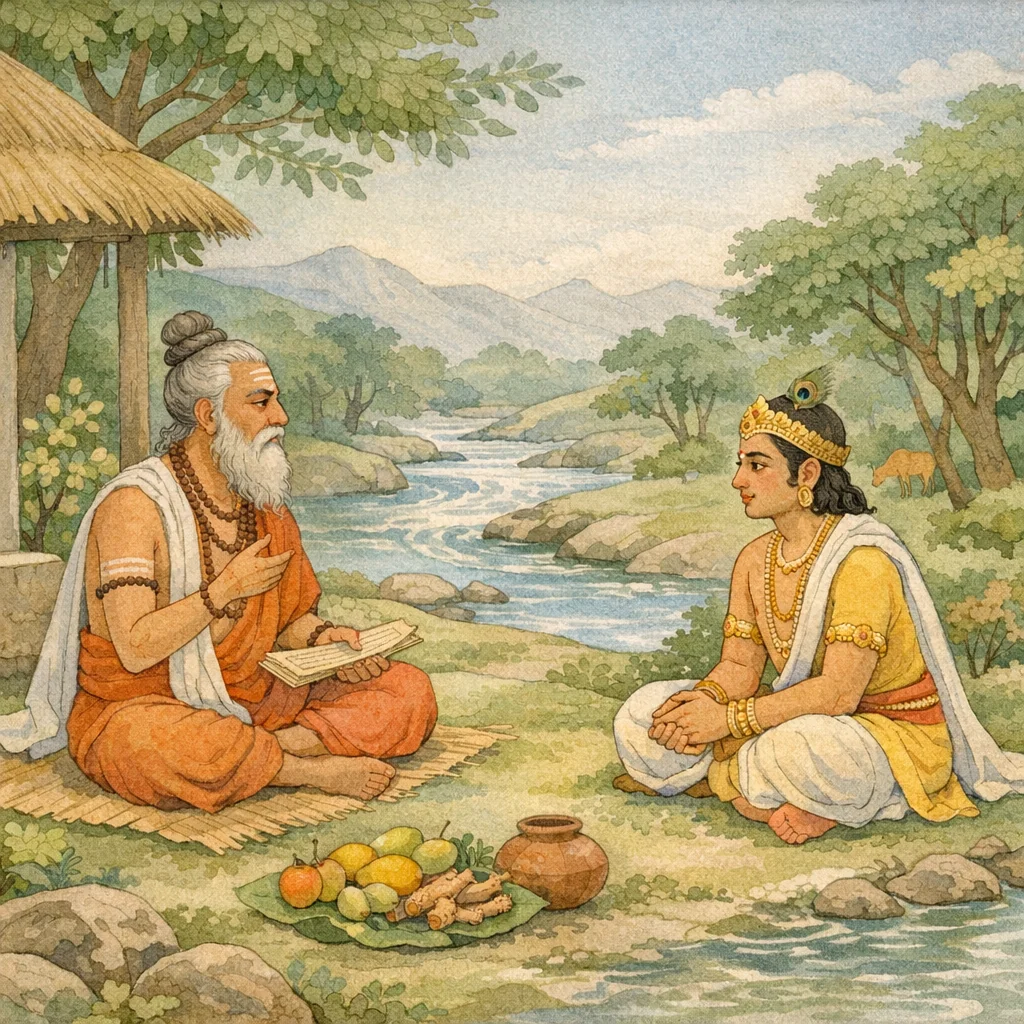
Vaiśaṃpāyana said: After going forward to meet that great sage, Yudhiṣṭhira received him in the proper manner. Some time later, the great yogin Vyāsa—son of Satyavatī—came there to see the Pāṇḍavas. Seeing the venerable one arrive, Yudhiṣṭhira, son of Kuntī, walked a little distance ahead to welcome him, and with due rites of hospitality brought him in. When Vyāsa had taken his seat, Yudhiṣṭhira sat near him, attentive and self-controlled, eager to serve and to listen—showing that reverence to the wise and disciplined hospitality are themselves forms of dharma.
Verse 11
तानवेक्ष्य कृशान् पौत्रान् वने वन््येन जीवत:
Seeing his grandsons grown emaciated—living in the forest on wild fare—Vaiśampāyana evokes a poignant sight that underscores the hardship of exile and the moral weight borne by the family in adversity.
Verse 12
युधिष्ठटिर महाबाहो शृणु धर्मभूतां वर,“धर्मात्माओंमें श्रेष्ठ महाबाहु युधिष्ठिर! मेरी बात सुनो, संसारमें जिन्होंने तपस्या नहीं की है, वे महान् सुखकी उपलब्धि नहीं कर पाते हैं। मनुष्य बारी-बारीसे सुख और दुःख दोनोंका सेवन करता है
Vaiśaṃpāyana said: “O mighty-armed Yudhiṣṭhira, best among the righteous, listen to my words. Those in this world who have not undertaken tapas—ascetic discipline and self-restraint—do not attain great happiness. A human being, in the course of time, experiences both happiness and sorrow in turn.”
Verse 13
नातप्ततपसो लोके प्राप्रुवन्ति महासुखम् | सुखदु:खे हि पुरुष: पर्यायेणोपसेवते,“धर्मात्माओंमें श्रेष्ठ महाबाहु युधिष्ठिर! मेरी बात सुनो, संसारमें जिन्होंने तपस्या नहीं की है, वे महान् सुखकी उपलब्धि नहीं कर पाते हैं। मनुष्य बारी-बारीसे सुख और दुःख दोनोंका सेवन करता है
Vaiśampāyana said: “O mighty-armed Yudhiṣṭhira, listen to my words. In this world, those who have not undertaken austerity do not attain great happiness, for a human being experiences both pleasure and pain in alternation.”
Verse 14
& ॥ | [5 है £ | 80५, 204८ ॥/.%% (जज 00॥7₹ 7 ॥:20॥067//॥ 4 , है. ब् हि: 006५2 | ४: ३< न हानन्तं सुखं कक्षित् प्राप्नोति पुरुषर्षभ । प्रज्ञावांस्त्वेव पुरुष: संयुक्त: परया घधिया
O bull among men, no one attains unbroken, uninterrupted happiness. Rather, it is the wise person—endowed with the highest discernment—who remains rightly composed and steady amid changing fortunes.
Verse 15
सुखमापतितं सेवेद् दुः:खमापतितं वहेत्
Vaiśampāyana said: “When happiness comes of its own accord, one should accept and enjoy it; when sorrow comes unbidden, one should endure and bear it.”
Verse 16
तपसो हि परं नास्ति तपसा विन्दते महत्
Vaiśampāyana said: “There is nothing higher than tapas, ascetic discipline; through tapas one attains what is truly great.”
Verse 17
सत्यमार्जवमक्रोध: संविभागो दम: शम:,“महाराज! सत्य, सरलता, क्रोधका अभाव, देवता और अतिथियोंको देकर अन्न आदि ग्रहण करना, इन्द्रियसंयम, मनोनिग्रह, दूसरोंके दोष न देखना, हिंसा न करना, बाहर- भीतरकी पवित्रता रखना तथा सम्पूर्ण इन्द्रियोंको काबूमें रखना--ये पुण्यात्मा पुरुषोंके सद्गुण सबको पवित्र करनेवाले हैं
Vaiśampāyana said: “O great king, truthfulness, straightforwardness, freedom from anger, sharing one’s food and goods (especially after offering to the gods and receiving guests), restraint of the senses, and inner calm—these are the purifying virtues of righteous men, cleansing both the individual and the community.”
Verse 18
अनसूयाविहिंसा च शौचमिन्द्रियसंयम: । पावनानि महाराज नराणां पुण्यकर्मणाम्,“महाराज! सत्य, सरलता, क्रोधका अभाव, देवता और अतिथियोंको देकर अन्न आदि ग्रहण करना, इन्द्रियसंयम, मनोनिग्रह, दूसरोंके दोष न देखना, हिंसा न करना, बाहर- भीतरकी पवित्रता रखना तथा सम्पूर्ण इन्द्रियोंको काबूमें रखना--ये पुण्यात्मा पुरुषोंके सद्गुण सबको पवित्र करनेवाले हैं
Vaiśaṃpāyana said: “O great king, freedom from envy and non-violence, purity, and restraint of the senses—these are the purifying virtues of men devoted to righteous deeds.”
Verse 19
अधर्मरुचयो मूढास्तिर्यग्गतिपरायणा: । कृच्छाां योनिमनुप्राप्ता न सुखं विन्दते जना:,“जो लोग अधर्ममें रुचि रखनेवाले हैं, वे मूढ़ मानव पशु-पक्षी आदि तिर्यग्-योनियोंमें जन्म ग्रहण करते हैं। उन कष्टदायक योनियोंमें पड़कर वे कभी सुख नहीं पाते हैं
Vaiśampāyana said: Those deluded people who take pleasure in adharma become devoted to an animal-like course of existence, taking birth among the lower (tiryak) wombs such as beasts and birds. Having fallen into those painful births, they do not find happiness.
Verse 20
इह यत् क्रियते कर्म तत् परत्रोपयुज्यते । तस्माच्छरीरं युञज्जीत तपसा नियमेन च,“इस लोकमें जो कर्म किया जाता है, उसका फल परलोकमें भोगना पड़ता है। इसलिये अपने शरीरको तप और नियमोंके पालनमें लगावे
Vaiśampāyana said: Whatever action is performed here in this world becomes effective for the hereafter, where its results must be experienced. Therefore, one should discipline and employ the body in austerity and in the observance of moral restraints, so that one’s future state is shaped by deliberate, righteous effort.
Verse 21
यथाशक्ति प्रयच्छेत सम्पूज्याभिप्रणम्य च । काले प्राप्ते च हृष्टात्मा राजन् विगतमत्सर:,“राजन! समयपर यदि कोई अतिथि आ जाय तो क्रोधरहित और प्रसन्नचित्त होकर अपनी शक्तिके अनुसार उसे दान दे; और विधिवत् पूजन करके उसे प्रणाम करे
Vaiśampāyana said: “O King, when the proper time comes and a guest arrives, one should, free from anger and jealousy, welcome him with a glad heart; give according to one’s capacity, honor him with due worship, and bow respectfully.”
Verse 22
सत्यवादी लभेतायुरनायासमथार्जवम् | अक्रोधनो5नसूयश्न निर्वतिं लभते पराम्,'सत्यवादी मनुष्य दीर्घ आयु, क्लेशशून्यता (सुख) तथा सरलता प्राप्त करता है। जो क्रोध नहीं करता और दूसरोंके दोष नहीं देखता है, उसे परमानन्दपदकी प्राप्ति होती है
Vaiśampāyana said: “One who speaks the truth gains long life, an ease free from strain, and straightforwardness of character. One who is free from anger and who does not fault-find in others attains the highest peace and contentment.”
Verse 23
दान्त: शमपर: शश्वत् परिक्लेशं न विन्दति । न च तप्यति दान्तात्मा दृष्टवा परगतां श्रियम्,“जो सदा अपनी इन्द्रियोंकों संयममें रखकर मनका निग्रह करता है, उसे कभी क्लेशका सामना नहीं करना पड़ता। जिसने अपने मनको वशमें कर लिया है, वह दूसरोंकी सम्पत्तिको देखकर संतप्त नहीं होता है”
Vaiśampāyana said: “One who is self-restrained and devoted to inner calm does not continually fall into distress. The person who has mastered the mind is not burned by envy on seeing another’s prosperity.”
Verse 24
संविभक्ता च दाता च भोगवान् सुखवान् नर: । भवत्यहिंसकश्चैव परमारोग्यमश्चुते,“जो देवताओं और अतिथियोंको उनका भाग समर्पित करता है वह भोगसामग्रीसे सम्पन्न होता है। दान करनेवाला मनुष्य सुखी होता है। जो किसी भी प्राणीकी हिंसा नहीं करता उसे उत्तम आरोग्यकी प्राप्ति होती है
Vaiśampāyana said: “A man who duly apportions and offers the rightful shares—especially to the gods and to guests—becomes endowed with the means of enjoyment. One who gives in charity lives happily. And one who is non-violent toward all beings attains the highest health.”
Verse 25
मान्यमानयिता जन्म कुले महति विन्दति । व्यसनैर्न तु संयोगं प्राप्रोति विजितेन्द्रिय:,(विन्दते सुखमत्यन्तमिह लोके परत्र च ।) “जो माननीय पुरुषोंका सम्मान करता है वह महान् कुलमें जन्म पाता है। जितेन्द्रिय पुरुष कभी दुर्व्यसनोंमें नहीं फँसता है। उसे इस लोक और परलोकमें भी अत्यन्त सुखकी प्राप्ति होती है
Vaiśampāyana said: “One who honours those worthy of honour gains birth in a great lineage. A self-controlled person does not fall into association with vices and calamities; rather, he attains supreme happiness both in this world and in the next.”
Verse 26
शुभानुशयबुद्धिह्हि संयुक्त: कालधर्मणा । प्रादुर्भवति तद्योगात् कल्याणमतिरेव स:,“जिसकी बुद्धि शुभमें ही आसक्त होती है, वह मनुष्य मृत्युको प्राप्त होनेपर उस शुभके संयोगसे कल्याणबुद्धि होकर ही उत्पन्न होता है”
Vaiśampāyana said: “One whose mind is habitually inclined toward the good, when joined with the law of time (i.e., at the moment of death), is reborn through that very association with a wholesome and auspicious disposition.”
Verse 27
युधिछिर उवाच भगवन् दानधर्माणां तपसो वा महामुने । किंस्विद् बहुगुणं प्रेत्य कि वा दुष्करमुच्यते,युधिष्ठिरने पूछा--भगवन्! महामुने! दानधर्म एवं तपस्या--इनमेंसे किसका फल परलोकमें अधिक माना गया है? और इन दोनोंमें कौन दुष्कर बताया जाता है
Yudhiṣṭhira said: “O Blessed one, O great sage—between the dharma of giving (dāna) and the practice of austerity (tapas), which is held to bear the greater fruit after death? And of these two, which is said to be harder to accomplish?”
Verse 28
व्यास उवाच दानान्न दुष्करं तात पृथिव्यामस्ति किंचन | अर्थ च महती तृष्णा स च दुःखेन लभ्यते,व्यासजीने कहा--तात! दानसे बढ़कर दुष्कर कार्य इस पृथ्वीपर दूसरा कोई नहीं है। लोगोंको धनका लोभ अधिक होता है और धन मिलता भी बड़े कष्टसे है
Vyāsa said: “Dear child, on this earth there is nothing more difficult than giving. For people’s craving for wealth is great, and wealth itself is obtained only through hardship.”
Verse 29
परित्यज्य प्रियान् प्राणाम् धनार्थ हि महामते । प्रविशन्ति नरा वीरा: समुद्रमटवीं तथा,महामते! कितने ही साहसी मनुष्य रत्नोंके लिये अपने प्यारे प्राणोंका मोह छोड़कर समुद्रमें गोते लगाते हैं और धनके लिये घोर जंगलोंमें भटकते फिरते हैं
Vyāsa said: “O wise one, for the sake of wealth men of daring cast aside attachment even to their beloved lives. Some plunge into the ocean, and others roam terrible forests—risking everything for gain.”
Verse 30
कृषिगोरक्ष्यमित्येके प्रतिपद्यन्ति मानवा: । पुरुषा: प्रेष्पतामेके निर्गच्छन्ति धनार्थिन:,कुछ मनुष्य कृषि तथा गोरक्षाको अपनी जीविकाका साधन बनाते हैं, कुछ लोग धनकी इच्छासे नौकरी करनेके लिये दूर निकल जाते हैं
Vyāsa said: “Some people take up farming and the tending of cattle as their means of livelihood. Others, driven by the desire for wealth, go far away to enter service under others.”
Verse 31
तस्माद् दु:खार्जितस्यैव परित्याग: सुदुष्कर: । न दुष्करतरं दानात् तस्माद् दान॑ मतं मम,अतः दुःख सहकर कमाये हुए धनका परित्याग करना अत्यन्त कठिन है। दानसे बढ़कर दूसरा कोई दुष्कर कार्य नहीं है। इसलिये मेरे मतमें दान ही सर्वश्रेष्ठ है
Therefore, relinquishing wealth that has been earned through hardship is exceedingly difficult. Nothing is more difficult than giving; hence, in my view, generosity (dāna) is the highest course.
Verse 32
विशेषस्त्वत्र विज्ञेयो न्यायेनोपार्जितं धनम् | पात्रे काले च देशे च साधुभ्य: प्रतिपादयेत्,यहाँ विशेष बात यह जाननी चाहिये कि मनुष्य न्यायसे कमाये गये धनको उत्तम देश, काल और पात्रका विचार करते हुए श्रेष्ठ पुरुषोंको दे
Vyāsa said: “A special point should be understood here: wealth earned by righteous means should be given away—after considering the worthiness of the recipient, and the proper time and place—to virtuous and deserving persons.”
Verse 33
अन्यायात् समुपात्तेन दानधर्मो धनेन यः । क्रियते न स कर्तरिं त्रायते महतो भयात्,अन्यायसे प्राप्त किये हुए धनके द्वारा जो दानधर्म किया जाता है वह कर्ताकी महान् भयसे रक्षा नहीं कर पाता
Vyāsa said: Charity and other acts of dharma performed with wealth acquired through injustice do not protect the doer from great fear. Ethical ends cannot be secured by unethical means; tainted wealth cannot become a true refuge for the giver.
Verse 34
पात्रे दानं स्वल्पमपि काले दत्तं युधिष्ठिर मनसा हि विशुद्धेन प्रेत्यानन्तफलं स्मृतम्,युधिष्ठिर! यदि विशुद्ध मनसे उत्तम समयपर सत्पात्रको थोड़ा-सा भी दान दिया गया हो तो वह परलोकमें अनन्त फल देनेवाला माना गया है
Vyāsa said: “O Yudhiṣṭhira, even a small gift, when given at the proper time to a worthy recipient, and offered with a purified mind, is remembered as yielding endless fruit after death. If, with a clean intention, one gives even a little to a deserving person at an excellent moment, it is held to bring infinite reward in the next world.”
Verse 35
अत्राप्युदाहरन्तीममितिहासं पुरातनम् । ब्रीहिद्रोणपरित्यागाद् यत् फलं प्राप मुदूगल:,इस विषयमें जानकार लोग इस पुराने इतिहासका उदाहरण दिया करते हैं कि मुद्गल ऋषिने एक द्रोण धानका दान करके महान् फल प्राप्त किया था
Here too, the learned cite an ancient precedent: by giving away a single droṇa-measure of rice, the sage Mudūgala attained a great reward. The point is that sincere renunciation and charity, even when materially small, can yield vast spiritual merit when offered with purity of intent.
Verse 66
युधिष्ठिरमुदी क्षन्तः सेहुर्दु:खमनुत्तमम् । अर्जुन, दोनों भाई नकुल-सहदेव, यशस्विनी द्रौपदी तथा सर्वश्रेष्ठ बलवान् महातेजस्वी भीमसेन भी राजा युधिष्ठिरकी ओर देखते हुए महान्-से-महान् दुःखको चुपचाप सहते रहे
Vaiśampāyana said: Fixing their gaze upon King Yudhiṣṭhira, they endured an unsurpassed sorrow. Arjuna, the two brothers Nakula and Sahadeva, the illustrious Draupadī, and Bhīmasena—best of men, mighty and radiant—silently bore even the greatest grief, looking only toward Yudhiṣṭhira.
Verse 76
वपुरन्यदिवाकार्षुरुत्साहामर्षचेष्टितै: । “अब तो वनवासका थोड़ा-सा ही समय शेष रह गया है, ऐसा समझकर नरश्रेष्ठ पाण्डवोंने उत्साह एवं अमर्षयुक्त चेष्टाओंसे अपने शरीरको किसी और ही प्रकारका बना लिया था
Vaiśampāyana said: As they realized that only a little time remained of their forest-exile, the best of men—the Pāṇḍavas—through actions charged with renewed zeal and righteous indignation, seemed to transform their very bodies, as though becoming altogether different.
Verse 103
तोषयन् प्रणिपातेन व्यासं पाण्डवनन्दन: । जब वे आसनपर बैठ गये तब पाण्डवोंका आनन्द बढ़ानेवाले युधिष्ठिर अपनी इन्द्रियोंको संयममें रखते हुए सेवाकी इच्छासे व्यासजीके पास ही बैठ गये और उनके चरणोंमें प्रणाम करके उन्होंने महर्षिको संतुष्ट किया
Vaiśampāyana said: The delight of the Pāṇḍavas, Yudhiṣṭhira, pleased Vyāsa by bowing at his feet. When the others had taken their seats, Yudhiṣṭhira—restraining his senses and moved by a desire to serve—sat close to Vyāsa, offered reverent obeisance at the sage’s feet, and thus gratified the great seer.
Verse 116
महर्षिरनुकम्पार्थमब्रवीद् बाष्पगद्गदम् | अपने पौत्रोंको वनवासके कष्टसे दुर्बल तथा जंगली फल-मूल खाकर जीवननिर्वाह करते देख महर्षि व्यासको बड़ी दया आयी। वे उनपर कृपा करनेके लिये नेत्रोंसे आँसू बहाते हुए गदगद कण्ठसे बोले--
Vaiśampāyana said: Moved by compassion, the great sage spoke, his voice choked with tears. Seeing his grandsons weakened by the hardships of exile in the forest, sustaining their lives on wild fruits and roots, the sage Vyāsa was overcome with pity. Wishing to show them grace, he wept and addressed them in a trembling, tear-filled voice.
Verse 146
उदयास्तमनज्ञो हि न हृष्पति न शोचति । “नरश्रेष्ठी कोई भी इस जगत्में ऐसा सुख नहीं पाता, जिसका कभी अन्त न हो। उत्तम बुद्धिसे युक्त ज्ञानवान् पुरुष ही उत्पत्ति, स्थिति और लयके अधिष्ठानरूप परमात्माको जानकर कभी हर्ष और शोक नहीं करता है
Vaiśampāyana said: One who is unaware of the rising and setting—who does not measure life by gain and loss—neither exults nor grieves. For, O best of men, no one in this world attains a happiness that never ends. But the wise person, endowed with refined understanding, recognizes the Supreme Self as the ground of origination, continuance, and dissolution; therefore he remains free from both joy and sorrow.
Verse 153
कालप्राप्तमुपासीत सस्यानामिव कर्षक: । “अतः विवेकी पुरुषको उचित है कि प्राप्त हुए सुखका (त्यागपूर्वक) सेवन करे और स्वतः आये हुए दुःखका भार भी (टैर्यपूर्वक) वहन करे। जैसे किसान बीज बोकर समयके अनुसार प्रारब्धवश जितना अन्न मिलता है, उसे ग्रहण करता है; उसी प्रकार मनुष्य समय- समयपर दैववश प्राप्त हुए सुख तथा दुःखको स्वीकार करें
Vaiśampāyana said: One should accept and make use of what comes in its proper time, like a farmer with his crops. As a farmer, having sown seed, receives whatever grain ripens according to season and fate, so too should a discerning person partake of the happiness that arrives (without grasping) and patiently bear the burden of sorrow that comes of itself—accepting both as time- and destiny-allotted.
Verse 166
नासाध्यं तपस: किंचिदिति बुद्धयस्व भारत । “भारत! तपसे बढ़कर दूसरा कोई साधन नहीं है। तपसे मनुष्य महत्पद (परमात्मा)-को प्राप्त कर लेता है। तुम इस बातको अच्छी तरह जान लो कि तपस्यासे कुछ भी असाध्य नहीं है
Vaiśampāyana said: “O Bhārata, understand this well: there is nothing that cannot be accomplished through tapas (austerity). Tapas is the supreme means; by it a person can attain the highest state.”
Verse 259
इति श्रीमहा भारते वनपर्वणि व्रीहिद्रौणिकपर्वणि दानदुष्करत्वक थने एकोनषष्ट्यधिकद्विशततमो<ध्याय:
Thus, in the revered Mahābhārata, within the Vana Parva—specifically in the Vrīhidrauṇika sub-section—ends the chapter that treats the theme of how difficult true giving (dāna) can be. This is the 259th chapter, marking the close of that narrative unit.
Frequently Asked Questions
The problem is how to stop a powerful aggressor protected by a boon without violating the constraints that make direct defeat infeasible; the chapter frames a rule-aware solution through incarnation and alliance-building rather than unrestricted force.
The text models governance as multi-layered causality: cosmic order responds to disorder through authorized, proportionate mechanisms—delegation, embodiment, and the creation of enabling conditions—highlighting that efficacy operates within normative limits.
No explicit phalaśruti appears in this excerpted chapter; its meta-function is etiological and explanatory, situating later events within a broader causal architecture rather than promising a stated recitational benefit.