Adhyaya 257
Yudhiṣṭhira’s Lament on Kāla and Daiva after Draupadī’s Recovery (आरण्यक पर्व, अध्याय २५७)
Upa-parva: Draupadī-haraṇa–Jayadratha-nigraha (Aftermath Discourse with the Sages)
Janamejaya asks what the Pandavas did after Draupadī had been abducted and the group had suffered acute distress. Vaiśaṃpāyana reports that once Draupadī was freed and Jayadratha was decisively subdued, Yudhiṣṭhira convened (or settled) with assemblies of sages. In the presence of listening and sympathetic ṛṣis, Yudhiṣṭhira addresses Mārkaṇḍeya with a grief-laden inquiry: he interprets events through the force of kāla (time), daiva (destiny), and inevitability (bhavitavya), stressing that such forces are not transgressed. He articulates the ethical dissonance that a dharma-knowing, dharma-practicing spouse could be subjected to violation-like misfortune, likening the intrusion of disgrace to an untruth touching purity. He asserts that Draupadī has committed no blameworthy act and has practiced exemplary dharma, especially in relation to brahmins. He notes Jayadratha’s coercive act and the consequent punitive outcomes—humiliation (head-shaving motif) and defeat with allies—followed by Draupadī’s retrieval and the destruction of the Saindhava forces. The chapter closes with Yudhiṣṭhira’s broader lament on forest hardships: subsistence by hunting, the violence implicit in it, separation from kin, and the sense of misarranged destiny, culminating in a self-assessment of extreme misfortune.
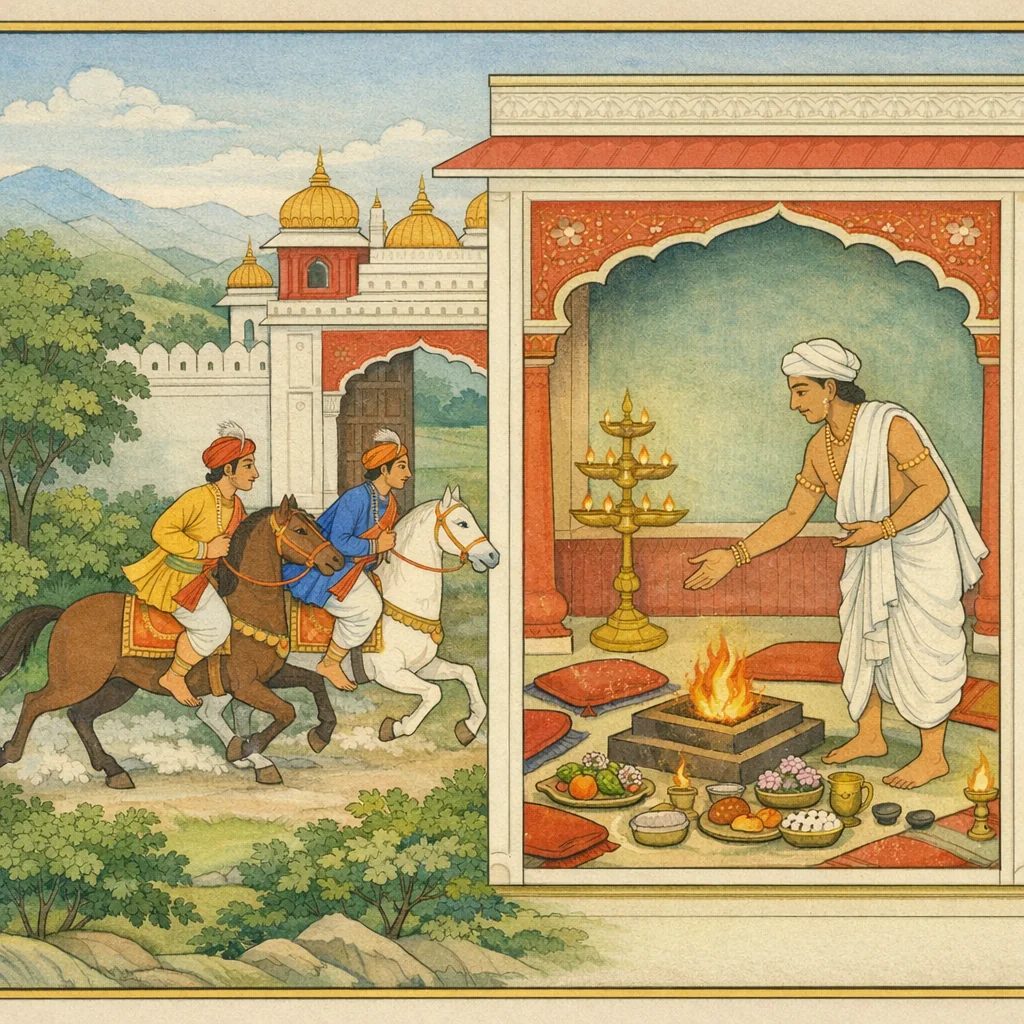
Chapter Arc: वैष्णव-क्रतु (यज्ञ) की समस्त सामग्री—स्वर्ण, अन्न, धन और विधि-विधान—समय पर तैयार होने का समाचार दुर्योधन के कानों में पड़ता है; राजसभा में एक उत्सव का उद्घोष भीतर-भीतर सत्ता-प्रदर्शन का स्वर बन जाता है। → दुर्योधन ‘क्रतुराज’ के प्रवर्तन की आज्ञा देता है और दूतों को तीव्र वाहनों पर चढ़ाकर दिशाओं में भेजता है—राजाओं, ब्राह्मणों और प्रतिष्ठित जनों को आमंत्रित करने हेतु। यज्ञमण्डप में अतिथियों की सुविधा, अन्न-व्यवस्था और सम्मान-क्रम की चिंता उठती है; विदुर को व्यवस्था-संचालन का दायित्व मिलता है, जिससे धर्म और राजनीति का सूक्ष्म द्वंद्व उभरता है। → दूतों के मुख से औपचारिक निमंत्रण गूंजता है—‘महाराज दुर्योधन आप सबको यज्ञ में बुलाते हैं’—और उसी के साथ विदुर द्वारा ‘यथा-प्रमाण’ (योग्यता/मर्यादा के अनुसार) पूजन-व्यवस्था का क्रियान्वयन आरम्भ होता है; यज्ञ का वैभव अब केवल धार्मिक कर्म नहीं, राजकीय शक्ति का सार्वजनिक प्रदर्शन बनकर चमक उठता है। → दुर्योधन कर्ण और शकुनि सहित हस्तिनापुर में प्रवेश करता है; अतिथियों के लिए निवास-गृह बनवाकर उन्हें शास्त्रानुसार ठहराया जाता है, ब्राह्मणों और राजाओं का यथायोग्य सत्कार कर अंततः विसर्जन (विदाई/समापन-व्यवस्था) भी किया जाता है—यज्ञ-आयोजन की मशीनरी सफलतापूर्वक चल पड़ती है। → यज्ञ का यह वैभव और आमंत्रण-राजनीति आगे किसे लक्ष्य करेगी—धर्म के नाम पर प्रतिष्ठा-युद्ध का अगला मोड़ किस पर टूटेगा?
Shlokas
Verse 1
इस प्रकार श्रीमह्ा भारत वनपर्वके अन्तर्गत घोषयात्रापर्वमें दुर्योधनयज्ञसमारम्भविषयक दो सौ पचपनवाँ अध्याय पूरा हुआ ॥/ २५५ ॥। (दाक्षिणात्य अधिक पाठका १ श्लोक मिलाकर कुल २६ श्लोक हैं) अऑड हर (0) है षट्पज्चाशर्दाधेकद्विशततमो< ध्याय: दुर्योधनके यज्ञका आरम्भ एवं समाप्ति वैशम्पायन उवाच ततस्तु शिल्पिन: सर्वे अमात्यप्रवराश्न ये । विदुरश्न महाप्राज्ञो धार्तराष्ट्रे न्यवेदयन्,वैशम्पायनजी कहते हैं--जनमेजय! तदनन्तर समस्त शिल्पियों, श्रेष्ठ मन्त्रियों तथा परम बुद्धिमान् विदुरजीने दुर्योधनको सूचना दी--
Thus ends the two hundred and fifty-fifth chapter of the Mahābhārata’s Vana Parva, within the Ghoṣa-yātrā section, concerning Duryodhana’s commencement of a sacrifice. Vaiśampāyana said: “Then all the artisans, along with the foremost ministers, and the highly wise Vidura, reported the matter to Dhṛtarāṣṭra’s son (Duryodhana).”
Verse 2
सज्जं क्रतुवरं राजन् प्राप्तकालं च भारत | सौवर्ण च कृतं सर्व लाज्लं च महाधनम्,“भारत! क्रतुश्रेष्ठ वैष्णवयज्ञकी सारी सामग्री जुट गयी है। यज्ञका नियत समय भी आ पहुँचा है और सोनेका बहुमूल्य हल भी पूर्णरूपसे बन गया है”
Vaiśampāyana said: “O King, O Bhārata, the excellent sacrifice is fully prepared; its appointed time has arrived. And the golden plough—an object of great value—has also been completely made.”
Verse 3
एतच्छुत्वा नृपश्रेष्ठो धार्तराष्ट्रो विशाम्पते । आज्ञापयामास नृप: क्रतुराजप्रवर्तनम्,राजन! यह सुनकर नृपश्रेष्ठ दुर्योधनने उस क्रतुराजको प्रारम्भ करनेकी आज्ञा दी
Vaiśampāyana said: Hearing this, the foremost of kings—Dhṛtarāṣṭra’s son (Duryodhana), O lord of the people—issued the command to set in motion the “king of sacrifices” (kratūrāja).
Verse 4
ततः प्रववृते यज्ञ: प्रभूतार्थ: सुसंस्कृत: । दीक्षितश्नापि गान्धारियथाशास्त्रं यथाक्रमम्,फिर तो उत्तम संस्कारसे युक्त और प्रचुर धन-धान्यसे सम्पन्न वह वैष्णवयज्ञ आरम्भ हुआ। गान्धारीनन्दन दुर्योधनने शास्त्रकी आज्ञाके अनुसार विधिपूर्वक उस यज्ञकी दीक्षा ली
Then the sacrifice began—abundantly supplied and well prepared. Duryodhana, Gāndhārī’s son, duly underwent the dīkṣā (ritual consecration) according to the śāstras and in proper order.
Verse 5
प्रहष्टो धृतराष्ट्रश्न विदुरश्ष महायशा: । भीष्मो द्रोण: कृप, कर्णो गान्धारी च यशस्विनी,धृतराष्ट्रग महायशस्वी विदुर, भीष्म, द्रोण, कृपाचार्य, कर्ण तथा यशस्विनी गान्धारीको इस यज्ञसे बड़ी प्रसन्नता हुई
Vaiśampāyana said: Dhṛtarāṣṭra was delighted, and so too was the illustrious Vidura. Bhīṣma, Droṇa, Kṛpa, Karṇa, and the renowned Gāndhārī were also greatly pleased with this sacrifice.
Verse 6
निमन्त्रणार्थ दूतांश्व प्रेषयामास शीघ्रगान् । पार्थिवानां च राजेन्द्र ब्राह्मणानां तथैव च,राजेन्द्र! तदनन्तर समस्त भूपालों तथा ब्राह्मणोंको निमन्त्रित करनेके लिये बहुत-से शीघ्रगामी दूत भेजे
Vaiśampāyana said: “O best of kings, he then dispatched swift-moving messengers to issue invitations—summoning both the rulers of the land and the Brāhmaṇas as well.”
Verse 7
ते प्रयाता यथोद्दिष्टा दूतास्त्वरितवाहना: । तत्र कंचित् प्रयातं तु दूतं दःशासनो<ब्रवीत्,दूतगण तेज चलनेवाले वाहनोंपर सवार हो जिन्हें जैसी आज्ञा मिली थी, उसके अनुसार कर्तव्यपालनके लिये प्रस्थित हुए। उन्हींमेंसे एक जाते हुए दूतसे दुःशासनने कहा --
The messengers set out as instructed, mounted on swift conveyances to fulfill their charge. And among them, Duḥśāsana spoke to one envoy as he was departing—
Verse 8
गच्छ द्वैतवनं शीघ्रं पाण्डवान् पापपूरुषान् | निमन्त्रय यथान्यायं विप्रांस्तस्मिन् वने तदा,“तुम शीघ्रतापूर्वक द्वैतवनमें जाओ और पापात्मा पाण्डवों तथा उस वनमें रहनेवाले ब्राह्मणोंको यथोचित रीतिसे निमन्त्रण दे आओ”
Vaiśampāyana said: “Go quickly to the Dvaitavana forest. Invite, in due and lawful form, the Pāṇḍavas—those sinful men—and also the brāhmaṇas dwelling in that wood.”
Verse 9
स गत्वा पाण्डवान् सर्वनुवाचाभिप्रणम्य च | दुर्योधनो महाराज यजते नृपसत्तम:,उस दूतने समस्त पाण्डवोंके पास जाकर प्रणाम किया और इस प्रकार कहा --“महाराज! कुरुकुलके श्रेष्ठ पुरुष नृपतिशिरोमणि दुर्योधन अपने पराक्रमसे अतुल धनराशि प्राप्तकर एक यज्ञ कर रहे हैं। उसमें (विभिन्न स्थानोंसे) बहुत-से राजा और ब्राह्मण पधार रहे हैं
Vaiśampāyana said: Having gone to all the Pāṇḍavas and bowing respectfully, the messenger spoke: “O King, Duryodhana—the foremost among rulers—is performing a sacrifice. Having amassed immense wealth through his own prowess, he is conducting this rite, and many kings and brāhmaṇas are arriving there from various regions.”
Verse 10
स्ववीर्यार्जितमर्थौघमवाप्य कुरुसत्तम: । तत्र गच्छन्ति राजानो ब्राह्मणाश्व॒ ततस्तत:,उस दूतने समस्त पाण्डवोंके पास जाकर प्रणाम किया और इस प्रकार कहा --“महाराज! कुरुकुलके श्रेष्ठ पुरुष नृपतिशिरोमणि दुर्योधन अपने पराक्रमसे अतुल धनराशि प्राप्तकर एक यज्ञ कर रहे हैं। उसमें (विभिन्न स्थानोंसे) बहुत-से राजा और ब्राह्मण पधार रहे हैं
Vaiśampāyana said: Having obtained a vast accumulation of wealth by his own prowess, the best of the Kurus (Duryodhana) is conducting a sacrifice. To that rite, kings and brāhmaṇas are arriving from various regions.
Verse 11
अहं तु प्रेषितो राजन् कौरवेण महात्मना | आमन्त्रयति वो राजा धार्तराष्ट्रो जनेश्वर:
Vaiśampāyana said: “O King, I have been dispatched by the noble Kaurava. King Dhṛtarāṣṭra, lord of men, sends you an invitation (a summons).”
Verse 12
टूट 22222 22222 4 2 222 ततो युधिष्ठिरो राजा तच्छुत्वा दूतभाषितम्,दूतका यह कथन सुनकर राजाओंमें सिंहके समान महाराज युधिष्छिरने इस प्रकार उत्तर दिया--'सौभाग्यकी बात है कि पूर्वजोंकी कीर्ति बढ़ानेवाले राजा सुयोधन श्रेष्ठ यज्ञके द्वारा भगवान्का यजन कर रहे हैं
Then King Yudhiṣṭhira, lion-like among kings, hearing the messenger’s words, replied: “It is well and auspicious that Suyodhana, a king who increases the fame of his forefathers, is worshipping the Lord through an excellent sacrifice.”
Verse 13
अब्रवीन्नूषशार्दूलो दिष्ट्या राजा सुयोधन: । यजते क्रतुमुख्येन पूर्वेषां कीर्तिवर्धन:,दूतका यह कथन सुनकर राजाओंमें सिंहके समान महाराज युधिष्छिरने इस प्रकार उत्तर दिया--'सौभाग्यकी बात है कि पूर्वजोंकी कीर्ति बढ़ानेवाले राजा सुयोधन श्रेष्ठ यज्ञके द्वारा भगवान्का यजन कर रहे हैं
Vaiśampāyana said: “The tiger among kings, Yudhiṣṭhira, replied: ‘It is indeed fortunate that King Suyodhana, who increases the fame of his forefathers, is worshipping the Lord through a foremost sacrificial rite.’”
Verse 14
वयमप्युपयास्यामो न त्विदानीं कथंचन । समय: परिपाल्यो नो यावद् वर्ष त्रयोदशम्,“हम भी उस यज्ञमें चलते, परंतु इस समय यह किसी तरह सम्भव नहीं है। हमें तेरह वर्षतक वनमें रहनेकी अपनी प्रतिज्ञाका पालन करना है”
Vaiśampāyana said: “We too would have gone to that sacrifice; but at this time it is in no way possible. We must keep our pledged agreement—until the completion of thirteen years.”
Verse 15
श्रुत्वैतद् धर्मराजस्य भीमो वचनमत्रवीत् । तदा तु नृपतिर्गन्ता धर्मराजो युधिष्ठिर:,धर्मराजकी यह बात सुनकर भीमसेनने दूतसे इस प्रकार कहा--'दूत! तुम राजा दुर्योधनसे जाकर यह कह देना कि सम्राट् धर्मराज युधिष्ठिर तेरह वर्ष बीतनेके पश्चात् उस समय वहाँ पधारेंगे जब कि रणयज्ञमें अस्त्र-शस्त्रोंद्वारा प्रजजलित की हुई रोषान्निमें वे तुम्हारी आहुति देंगे। जब रोषकी आगमें जलते हुए धृतराष्ट्रके पुत्रोंपर पाण्डव अपने क्रोधरूपी घीकी आहुति डालनेको उद्यत होंगे, उस समय मैं (भीमसेन) वहाँ पदार्पण करूँगा”
Vaiśaṃpāyana said: Hearing the words of Dharmarāja Yudhiṣṭhira, Bhīma spoke: “Tell Suyodhana this: when the thirteen years are complete, Yudhiṣṭhira will come at the appointed time—not for compromise, but to offer the sons of Dhṛtarāṣṭra as oblations into the blazing fire of wrath, kindled by weapons, in the sacrifice of battle. And when the Pāṇḍavas, burning with righteous anger, are ready to pour the ghee of their fury upon the Kauravas, then I, Bhīma, will come as well.”
Verse 16
अस्त्रशस्त्रप्रदीप्ते5ग्नौ यदा त॑ पातयिष्यति । वर्षात् त्रयोदशादूर्ध्व रणसत्रे नराधिप:,धर्मराजकी यह बात सुनकर भीमसेनने दूतसे इस प्रकार कहा--'दूत! तुम राजा दुर्योधनसे जाकर यह कह देना कि सम्राट् धर्मराज युधिष्ठिर तेरह वर्ष बीतनेके पश्चात् उस समय वहाँ पधारेंगे जब कि रणयज्ञमें अस्त्र-शस्त्रोंद्वारा प्रजजलित की हुई रोषान्निमें वे तुम्हारी आहुति देंगे। जब रोषकी आगमें जलते हुए धृतराष्ट्रके पुत्रोंपर पाण्डव अपने क्रोधरूपी घीकी आहुति डालनेको उद्यत होंगे, उस समय मैं (भीमसेन) वहाँ पदार्पण करूँगा”
Vaiśampāyana said: “After the completion of the thirteen years, when the king (Yudhiṣṭhira) will cast him down in the fire kindled by weapons and missiles—at the great ‘battle-sacrifice’—then the sovereign will come.”
Verse 17
यदा क्रोधहविर्मोक्ता धार्तराष्ट्रेषु पाण्डव: । आगगन्ताहं तदास्मीति वाच्यस्ते स सुयोधन:,धर्मराजकी यह बात सुनकर भीमसेनने दूतसे इस प्रकार कहा--'दूत! तुम राजा दुर्योधनसे जाकर यह कह देना कि सम्राट् धर्मराज युधिष्ठिर तेरह वर्ष बीतनेके पश्चात् उस समय वहाँ पधारेंगे जब कि रणयज्ञमें अस्त्र-शस्त्रोंद्वारा प्रजजलित की हुई रोषान्निमें वे तुम्हारी आहुति देंगे। जब रोषकी आगमें जलते हुए धृतराष्ट्रके पुत्रोंपर पाण्डव अपने क्रोधरूपी घीकी आहुति डालनेको उद्यत होंगे, उस समय मैं (भीमसेन) वहाँ पदार्पण करूँगा”
Vaiśampāyana said: “Tell Suyodhana this on my behalf: when the Pāṇḍavas, as offerers of the oblation of wrath, are ready to pour their anger upon the sons of Dhṛtarāṣṭra—then I will come. After the thirteen years are completed, Dharmarāja Yudhiṣṭhira will arrive at that time when, in the sacrifice of battle, he will consign you as an offering into the blaze of indignation kindled by weapons.”
Verse 18
शेषास्तु पाण्डवा राजन् नैवोचु: किंचिदप्रियम् । दूतश्वापि यथावृत्तं धार्तराष्ट्रेी न्यवेदयत्,राजन! शेष पाण्डवोंने कोई अप्रिय वचन नहीं कहा। दूतने भी लौटकर दुर्योधनसे सब समाचार ठीक-ठीक बता दिया
Vaiśampāyana said: “O King, the remaining Pāṇḍavas did not utter anything harsh or displeasing. And the messenger, on returning, reported to the Dhārtarāṣṭra (Duryodhana) the entire account exactly as it had occurred.”
Verse 19
अथाजममुर्नरश्रेष्ठा नानाजनपदेश्वरा: । ब्राह्मणाश्न महाभाग धार्तराष्ट्रपुरं प्रति,महाभाग! तदनन्तर विभिन्न देशोंके अधिपति नरश्रेष्ठ भूपाल तथा ब्राह्मण दुर्योधनकी राजधानी हस्तिनापुरमें आये
Vaiśampāyana said: “Thereafter, eminent kings—lords of many different realms—along with illustrious brāhmaṇas, set out and arrived at the city of the Dhārtarāṣṭra, namely Hastināpura, the capital of Duryodhana.”
Verse 20
ते त्वर्चिता यथाशास्त्रं यथाविधि यथाक्रमम् | मुदा परमया युक्ता: प्रीताश्चापि नरेश्वरा:,उन सबकी शास्त्रीय विधिसे यथोचित सेवा-पूजा की गयी। इससे वे नरेशगण अत्यन्त प्रसन्न हो मन-ही-मन आनन्दका अनुभव करने लगे
They were honored with worship and service exactly as the scriptures prescribe—according to proper rule and in due order. As a result, those royal lords, filled with the highest joy, became pleased and inwardly experienced deep contentment.
Verse 21
धृतराष्ट्रो5पि राजेन्द्र संवृत: सर्वकौरवै: । हर्षेण महता युक्तो विदुरं प्रत्यभाषत,राजेन्द्र! समस्त कौरवोंसे घिरे हुए धृतराष्ट्रको भी बड़ा हर्ष हुआ। उन्होंने विदुरसे कहा --
Vaiśampāyana said: “O king, Dhṛtarāṣṭra too—surrounded by all the Kauravas—was filled with great joy. In that elation, he addressed Vidura.”
Verse 22
यथा सुखी जन: सर्व: क्षत्त: स्यादन्नसंयुत: । तुष्येत् तु यज्ञसदने तथा क्षिप्रं विधीयताम्,'भैया! शीघ्र ऐसी व्यवस्था करो, जिससे इस यज्ञमण्डपमें पधारे हुए सभी लोग खान- पानसे संतुष्ट एवं सुखी हों”
Vaiśampāyana said: “O steward, arrange it quickly so that everyone here may be happy and well provided with food, and so that all who have come to the sacrificial hall are promptly satisfied.”
Verse 23
विदुरस्तु तदाज्ञाय सर्ववर्णानरिंदम । यथा प्रमाणतो विद्वान् पूजयामास धर्मवित्,शत्रुदमन जनमेजय! धर्मज्ञ एवं विद्वान् विदुरजीने सब मनुष्योंकी ठीक-ठीक संख्याका ज्ञान करके उन सबका यथोचित स्वागत-सत्कार किया
Vaiśampāyana said: Having understood the situation and the proper protocol, Vidura—wise and devoted to dharma—accurately ascertained the number and standing of people of every social order. Then, O Janamejaya, subduer of foes, he received and honored them all with fitting welcome and respectful hospitality, in accordance with due measure and propriety.
Verse 24
भक्ष्यपेयान्नपानेन माल्यैश्नापि सुगन्धिभि: । वासोभिर्विविधैश्नैव योजयामास हृष्टवत्,वे बड़े हर्षक साथ सभी अतिथियोंको उत्तम भक्ष्य, पेय, अन्न-पान, सुगन्धित पुष्पहार तथा नाना प्रकारके वस्त्र देने लगे
Vaiśampāyana said: Rejoicing, he attended to the guests by providing them with excellent foods and drinks, provisions for eating and drinking, fragrant garlands, and garments of many kinds—honouring them generously and with evident delight.
Verse 25
कृत्वा ह्यावसथान् वीरो यथाशास्त्र यथाक्रमम् । सान्त्वयित्वा च राजेन्द्रो दत्त्वा च विविधं वसु
Vaiśampāyana said: Having duly arranged the lodgings in accordance with the prescriptions of the śāstras and in proper order, the heroic king then consoled them and bestowed various kinds of wealth—acting with courtesy, generosity, and regard for right procedure.
Verse 26
विसृज्य च नृपान् सर्वान् भ्रातृभि: परिवारित:,इस प्रकार सब राजाओंको विदा देकर भाइयोंसे घिरे हुए दुर्योधनने कर्ण और शकुनिके साथ हस्तिनापुरमें प्रवेश किया
Vaiśampāyana said: Having dismissed all the kings, Duryodhana—surrounded by his brothers—entered Hastināpura together with Karṇa and Śakuni. The scene underscores his calculated consolidation of allies and kinship power, hinting at the ethical tension between political maneuvering and righteous conduct.
Verse 27
विवेश हास्तिनपुरं सहित: कर्णसौबलै:,इस प्रकार सब राजाओंको विदा देकर भाइयोंसे घिरे हुए दुर्योधनने कर्ण और शकुनिके साथ हस्तिनापुरमें प्रवेश किया
Vaiśampāyana said: Having dismissed the assembled kings, Duryodhana—surrounded by his brothers—entered Hastināpura together with Karṇa and Śakuni. The verse underscores how political consolidation and counsel from close allies shape the Kaurava course, as Duryodhana returns to the capital with the very companions who will intensify his resolve and strategy.
Verse 116
मनो5भिलपियतं राज्ञस्तं क्रतु द्रष्टमर्हथ । “राजन! महामना दुःशासनने मुझे आपके पास भेजा है। जननायक महाराज दुर्योधन आपलोगोंको उस यज्ञमें बुला रहे हैं। आपलोग चलकर राजाके मनोवांछित उस यज्ञका दर्शन कीजिये'
Vaiśaṃpāyana said: “You should go and behold that sacrifice (kratu) which the king has long desired.” In the story, this is an invitation—sent on Duryodhana’s behalf and conveyed through Duḥśāsana—meant to draw others into witnessing a royal rite, where beneath the outward form of dharma may lie display, prestige, and political intent.
Verse 256
विसर्जयामास नृपान ब्राद्मणांश्व सहस्रश: | वीर राजा दुर्योधनने सभीको शास्त्रानुसार यथायोग्य निवासगृह बनवाकर उनमें ठहराया था। उसने सब प्रकारसे आश्वासन तथा भाँति-भाँतिके रत्न देकर सहस्रों राजाओं तथा ब्राह्मणोंको विदा किया,इति श्रीमहाभारते वनपर्वणि घोषयात्रापर्वणि दुर्योधनयज्ञे षट्पञज्चाशदधिकद्विशततमो<ध्याय:
Vaiśampāyana said: The heroic king Duryodhana dismissed—by the thousands—kings and brāhmaṇas. Having arranged suitable lodgings in accordance with proper custom, he reassured them in every way and sent them off with gifts of various jewels. The passage underscores how royal generosity and correct hospitality can be performed outwardly with great splendor, even when the giver’s inner motives may be politically driven.
Frequently Asked Questions
Yudhiṣṭhira confronts the dilemma of moral causality: how severe misfortune can befall a demonstrably virtuous person (Draupadī), and whether kāla/daiva overrides the expected linkage between conduct and outcome.
The chapter frames ethical resilience: acknowledging inevitability (bhavitavya) while continuing to interpret events through dharma, seeking counsel, and maintaining accountability for coercive wrongdoing.
No explicit phalaśruti appears in this passage; its meta-function is archival and interpretive—positioning the episode as a case study in dharma’s endurance amid trauma and the explanatory categories of kāla and daiva.