Adhyaya 248
कामीकवने द्रौपदी-दर्शनम् (Draupadī Observed at the Kāmyaka Hermitage)
Upa-parva: Kāmyaka-vana Episode (Jayadratha–Draupadī Encounter Cycle)
Vaiśaṃpāyana describes the Pāṇḍavas enjoying and ranging through a game-filled forest landscape in Kāmyaka, surveying diverse woodland vistas in seasonal bloom. The brothers then disperse in four directions for hunting, explicitly framed as undertaken for a brahmin-related purpose, after placing Draupadī at the hermitage with the permission of the sage Tṛṇabindu and under the presence of the purohita Dhaumya. At this juncture Jayadratha, king of Sindhu (Vārddhakṣatri), arrives with a substantial royal entourage and allied kings, described as travelling with marriage intent. He sees Draupadī standing at the hermitage entrance in the solitude of the forest, radiant in appearance; the onlookers momentarily compare her to an apsaras or divine manifestation. Jayadratha, astonished and desirous, questions King Koṭikāśya about her identity and declares an intention to take her, instructing his agent to ascertain who she is, where she is from, and who her protector is. Koṭikāśya dismounts and approaches to question her, concluding the chapter on the threshold of direct interaction.
Chapter Arc: गोषयात्रा के प्रसंग में दुर्योधन, सेना सहित, मार्ग में ऐसे स्थान पर ठहरता है जहाँ घास और जल की सुविधा है—पर बाह्य विश्राम के भीतर अपमान और क्रोध की आग धधक रही है। → कर्ण दुर्योधन के स्वभाव पर तीखा प्रकाश डालता है—वह कथनों में अवलिप्त, गर्वित, और पाण्डवों का निरन्तर अवमान करने वाला है। इसी पृष्ठभूमि में कर्ण को आशंका होती है कि ऐसे पापी, अहंकार-वादी दुर्योधन का हस्तिनापुर में प्रवेश अब ‘दुष्कर’ होगा; लज्जा और शोक से व्याकुल राजा की मनःस्थिति गहराती जाती है। → कर्ण के वचनों से दुर्योधन का अंतःकरण टूटता है—वह बाणों के आघात से क्षत-विक्षत देह और पराजय/अपमान की स्मृति के साथ, आँसुओं से भरे गले में कर्ण से संवाद करता है; राजकीय तेज के ऊपर लज्जा का आवरण पड़ जाता है। → दुर्योधन मार्ग में ही सेना को यथास्थान व्यवस्थित कर, रम्य भूमिभाग में ठहरता है; बाह्य व्यवस्था बनती है, पर भीतर की ग्लानि और क्रोध शांत नहीं होते। अध्याय का अंत ‘कर्ण-दुर्योधन संवाद’ के रूप में इस मनोवैज्ञानिक ठहराव को स्थिर कर देता है। → रात्रि के अंत में राहु से आच्छादित चन्द्रमा-सा दुर्योधन—अग्नि-सम दीप्त शय्या पर बैठा—आगे क्या निर्णय करेगा: लज्जा से लौटेगा या प्रतिशोध की अग्नि को और भड़काएगा?
Shlokas
Verse 1
(दाक्षिणात्य अधिक पाठका १ श्लोक मिलाकर कुल २८ श्लोक हैं) ८५+# ०० ()) पल अप सप्तचत्वारिशर्दाधिकद्विशततमो< ध्याय: सेनासहित दुर्योधनका मार्गमें ठहरना और कर्णके द्वारा उसका अभिनन्दन जनमेजय उवाच शतन्रुभिर्जितबद्धस्य पाण्डवैश्व महात्मभि: । मोक्षितस्य युधा पश्चान्मानिन: सुदुरात्मन:
Janamejaya said: After Duryodhana—vain and of wicked disposition—had been defeated and bound by his enemies, and then released by the great-souled Pāṇḍavas through battle, what happened next? How did he proceed, and with what intent?
Verse 2
कत्थनस्यावलिप्तस्य गर्वितस्य च नित्यश: । सदा च पौरुषौदार्य: पाण्डवानवमन्यतः
Janamejaya said: “He was ever boastful and self-conceited, constantly swollen with pride; and, while always parading his ‘manly greatness’ and supposed nobility, he repeatedly showed contempt for the Pāṇḍavas.”
Verse 3
दुर्योधनस्य पापस्य नित्याहंकारवादिन: । प्रवेशो हास्तिनपुरे दुष्कर: प्रतिभाति मे
Janamejaya said: “To me it seems that entry into Hāstinapura would be exceedingly difficult for the sinful Duryodhana, who is ever given to speaking from pride and self-importance.”
Verse 4
तस्य लज्जान्वितस्यैव शोकव्याकुलचेतस: । प्रवेशं विस्तरेण त्वं वैशम्पायन कीर्तय
Janamejaya said: “O Vaiśampāyana, please recount in detail how he entered—he who was overcome with shame and whose mind was distressed by grief.”
Verse 5
जनमेजय बोले--मुने! दुर्योधनको शत्रुओंने जीता और बाँध लिया। फिर महात्मा पाण्डवोंने गन्धर्वोके साथ युद्ध करके उसे छुड़ाया। ऐसी दशामें उस अभिमानी और दुरात्मा दुर्योधनका हस्तिनापुरमें प्रवेश करना मुझे तो अत्यन्त कठिन प्रतीत होता है; क्योंकि वह अपने शौर्यके विषयमें बहुत डींग हाँका करता था, घमंडमें भरा रहता था और सदा गर्वके नशेमें चूर रहा करता था। उसने अपने पौरुष और उदारताद्वारा सदा पाण्डवोंका अपमान ही किया था। पापी दुर्योधन सदा अहंकारकी ही बातें करता था। पाण्डवोंकी सहायतासे मेरे जीवनकी रक्षा हुई, यह सोचकर तो वह लज्जित हो गया होगा; उसका हृदय शोकसे व्याकुल हो उठा होगा। वैशम्पायनजी! ऐसी स्थितिमें उसने अपनी राजधानीमें कैसे प्रवेश किया? यह विस्तारपूर्वक कहिये ।। वैशम्पायन उवाच धर्मराजनिसष्ट स्तु धार्तराष्ट्र: सुयोधन: । लज्जयाधोमुख: सीदन्नुपासर्पत् सुदु:ःखित:,वैशम्पायनजी बोले--राजन्! धर्मराजसे विदा होकर धूृतराष्ट्रपुत्र दुर्योधन लज्जासे मुँह नीचा किये अत्यन्त दुःखी और खिन्न होकर वहाँसे चल दिया
Janamejaya said: “Sage, Duryodhana was defeated and bound by his enemies; then the great-souled Pāṇḍavas fought the Gandharvas and freed him. In such a condition, it seems to me exceedingly hard for that proud and wicked Duryodhana to enter Hastināpura—he who boasted so much of his valor, was swollen with arrogance, and lived intoxicated by pride. By his supposed manliness and ‘generosity’ he continually insulted the Pāṇḍavas; the sinful Duryodhana spoke only the language of ego. Thinking, ‘My life was saved through the Pāṇḍavas’ help,’ he must have been ashamed; his heart would have been shaken with grief. Vaiśampāyana, how did he enter his capital in such a state? Tell me in detail.” Vaiśampāyana said: “O King, having taken leave of Dharmarāja, Dhṛtarāṣṭra’s son Suyodhana, downcast with shame, dejected and deeply distressed, departed from that place.”
Verse 6
स्वपुरं प्रययौ राजा चतुरंगबलानुग: । शोकोपहतया बुद्धया चिन्तयान: पराभवम्,राजा दुर्योधनकी बुद्धि शोकसे मारी गयी थी। वह अपने अपमानपर विचार करता हुआ चतुरंगिणी सेनाके साथ नगरकी ओर चल पड़ा
Vaiśampāyana said: The king set out for his own city, accompanied by the fourfold army. His judgment, struck down by grief, he went on brooding over his defeat and humiliation as he departed.
Verse 7
विमुच्य पथि यानानि देशे सुयवसोदके । संनिविष्ट: शुभे रम्ये भूमिभागे यथेप्सितम्
Vaiśaṃpāyana said: Having unyoked and set aside the vehicles on the road, he settled down—just as he desired—upon a pleasant, auspicious tract of ground, in a place rich with good grass and water.
Verse 8
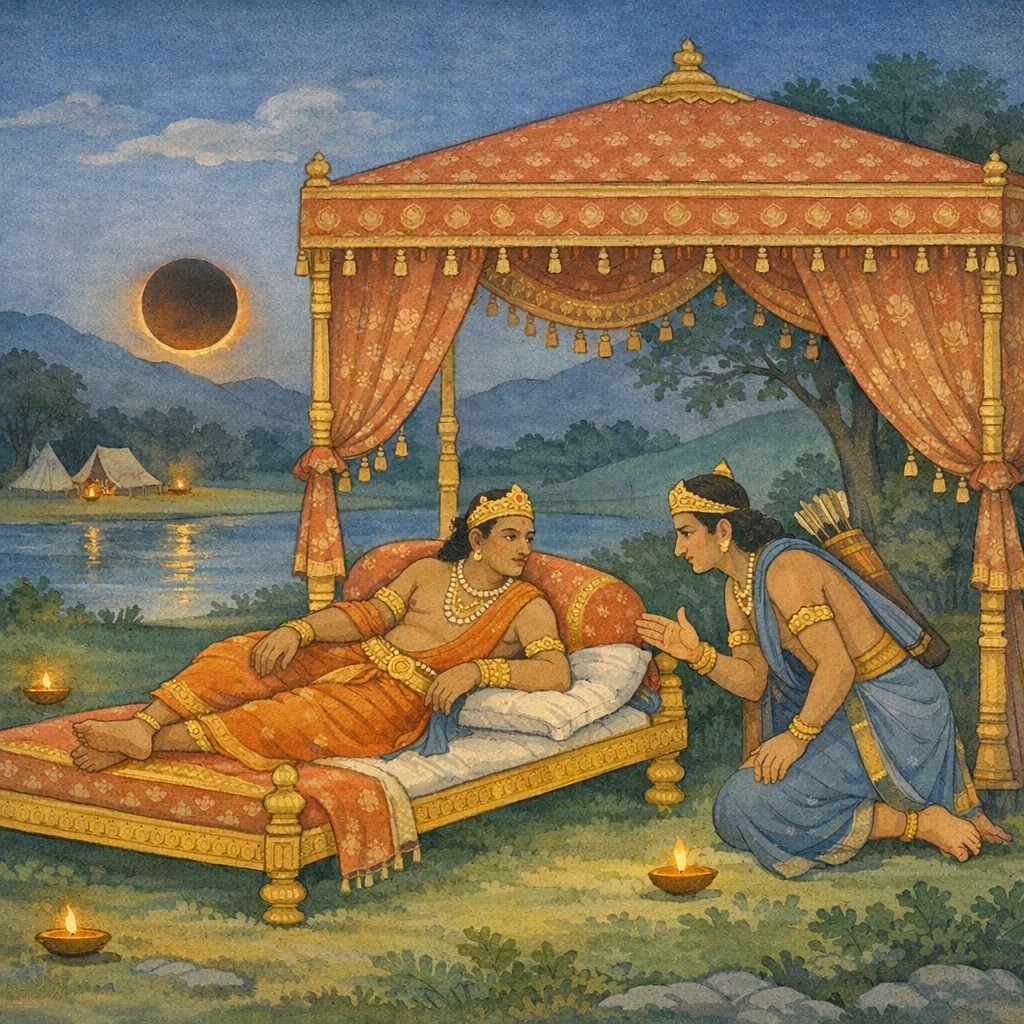
अथोपटिष्टं राजानं पर्यड्के ज्वलनप्रभे
Then the king, having been duly attended upon, lay upon a couch radiant like fire.
Verse 9
उपागम्याब्रवीत् कर्णो दुर्योधनमिदं तदा,उस समय कर्णने समीप आकर दुर्योधनसे इस प्रकार कहा--'गान्धारीनन्दन! बड़े सौभाग्यकी बात है कि तुम जीवित हो। सौभाग्यवश हमलोग पुन: एक-दूसरेसे मिल गये। भाग्यसे तुमने इच्छानुसार रूप धारण करनेवाले गन्धर्वोपर विजय पायी, यह और भी प्रसन्नताकी बात है
Then Karṇa approached Duryodhana and spoke: “O son of Gāndhārī, it is a great piece of good fortune that you are alive. By good luck we have met one another again. And by fortune you have even overcome the Gandharvas who can assume forms at will—this too is a cause for joy.”
Verse 10
दिष्ट्या जीवसि गान्धारे दिष्ट्या न: सड़म: पुन: । दिष्ट्या त्वया जिताश्षैव गन्धर्वा: कामरूपिण:,उस समय कर्णने समीप आकर दुर्योधनसे इस प्रकार कहा--'गान्धारीनन्दन! बड़े सौभाग्यकी बात है कि तुम जीवित हो। सौभाग्यवश हमलोग पुन: एक-दूसरेसे मिल गये। भाग्यसे तुमने इच्छानुसार रूप धारण करनेवाले गन्धर्वोपर विजय पायी, यह और भी प्रसन्नताकी बात है
Vaiśampāyana said: “Fortune indeed that you live, O son of Gāndhārī! Fortune again that we have met once more. And it is a further cause for joy that, by good destiny, you have overcome the Gandharvas who can assume forms at will.”
Verse 11
दिष्ट्या समग्रान् पश्यामि भ्रातृंस्ते कुरुनन्दन । विजिगीषून् रणे युक्तान् निर्जितारीन् महारथान्,“कुरुनन्दन! मैं तुम्हारे सम्पूर्ण महारथी भाइयोंको, जो शत्रुओंपर विजय पा चुके हैं, युद्धके लिये उद्यत तथा पुनः: विजयकी अभिलाषासे युक्त देख रहा हूँ, यह भी सौभाग्यका ही सूचक है
Vaiśampāyana said: “By good fortune I behold all your brothers, O delight of the Kurus—those great chariot-warriors who have already overcome their foes, now arrayed for battle and still intent on further victory. This sight itself is an auspicious sign.”
Verse 12
अहं त्वभिद्रुत: सर्वैर्गन्धर्वै: पश्यतस्तव । नाशबनुवं स्थापयितु दीर्यमाणां च वाहिनीम्,“मैं तो तुम्हारे देखते-देखते ही समस्त गन्धवोंसे पराजित होकर भाग गया था। तितर- बितर होकर भागती हुई सेनाको स्थिर न रख सका
Vaiśaṃpāyana said: “Before your very eyes I was routed by all those Gandharvas and fled. I was unable to steady the army as it broke apart and scattered in panic.”
Verse 13
शरक्षताड्श्च भृशं॑ व्यपयातो5भिपीडित: । इदं त्वत्यद्भुतं मन्ये यद् युष्मानिह भारत,“बाणोंके आघातसे मेरा सारा शरीर क्षत-विक्षत हो गया था। समस्त अंगोंमें बड़ी वेदना हो रही थी; इसीलिये मुझे भागना पड़ा। भारत! तुमलोग, जो उस अमानुषिक युद्धसे छूटकर यहाँ स्त्री, सेना और वाहनोंसहित सकुशल तथा क्षतिसे रहित दिखायी देते हो; यह बात मुझे बड़ी अद्भुत जान पड़ती है
Vaiśampāyana said: “Sorely afflicted and driven back, my body was torn and wounded by the blows of arrows; in great pain I had to flee. But, O Bhārata, I find it utterly astonishing that you are seen here—having escaped that inhuman battle—safe and unharmed, together with your womenfolk, your army, and your vehicles.”
Verse 14
अरिष्टानक्षतां क्षापि सदारबलवाहनान् । विमुक्तान् सम्प्रपश्यामि युद्धात् तस्मादमानुषात्,“बाणोंके आघातसे मेरा सारा शरीर क्षत-विक्षत हो गया था। समस्त अंगोंमें बड़ी वेदना हो रही थी; इसीलिये मुझे भागना पड़ा। भारत! तुमलोग, जो उस अमानुषिक युद्धसे छूटकर यहाँ स्त्री, सेना और वाहनोंसहित सकुशल तथा क्षतिसे रहित दिखायी देते हो; यह बात मुझे बड़ी अद्भुत जान पड़ती है
Vaiśampāyana said: “I see you all here—unharmed and uninjured—having escaped that inhuman battle, and you are safe together with your wives, your forces, and your vehicles. This seems astonishing to me.”
Verse 15
नैतस्य कर्ता लोके5स्मिन् पुमान् भारत विद्यते । यत् कृतं ते महाराज सह भ्रातृभिराहवे,“भरतनन्दन महाराज! इस युद्धमें भाइयोंसहित तुमने जो पराक्रम कर दिखाया है, उसे करनेवाला दूसरा कोई पुरुष इस संसारमें नहीं है”
Vaiśampāyana said: “O Bhārata, in this world there exists no man who could be the doer of a deed like this. O great king, the valorous feat you accomplished in battle together with your brothers is without equal.”
Verse 16
वैशग्पायन उवाच एवमुक्तस्तु कर्णेन राजा दुर्योधनस्तदा । उवाच चाड़राजानं वाष्पगद्भधदया गिरा,वैशम्पायनजी कहते हैं--राजन्! कर्णके ऐसा कहनेपर राजा दुर्योधन उस समय अश्रुगद्वद वाणीद्वारा अंगराज (कर्ण)-से इस प्रकार बोला
Vaiśampāyana said: When Karṇa had spoken thus, King Duryodhana at that time, his voice choked with tears, addressed the Aṅga-king (Karṇa) and spoke to him in this manner.
Verse 76
हस्त्यश्वरथपादातं यथास्थानं न्यवेशयत् । रास्तेमें एक ऐसा स्थान मिला जहाँ घास और जलकी सुविधा थी। दुर्योधन अपने वाहनोंको वहीं छोड़कर एक सुन्दर एवं रमणीय भूभागमें अपनी रुचिके अनुसार ठहर गया। हाथी, घोड़े, रथ और पैदल सैनिकोंको भी उसने यथास्थान ठहरनेकी आज्ञा दे दी
Vaiśampāyana said: Duryodhana had the elephants, horses, chariots, and foot-soldiers stationed in their proper places. Finding a suitable spot along the road with grass and water, he left his vehicles there and settled, according to his own preference, in a pleasant and charming tract of land.
Verse 247
इति श्रीमहाभारते वर्नपर्वणि घोषयात्रापर्वणि कर्णदुर्योधनसंवादे सप्तचत्वारिंशदधिकद्धिशततमो 5 ध्याय:,इस प्रकार श्रीमह्याभारत वनपर्वके अन्तर्गत घोषयात्रापर्वमें कर्णदुर्योधनसंवादविषयक दो सौ सैतालीसवाँ अध्याय पूरा हुआ
Thus ends, in the Śrī Mahābhārata, within the Vana Parva, in the section known as the Ghoṣa-yātrā Parva, the chapter concerning the dialogue between Karṇa and Duryodhana—being the two-hundred-and-forty-seventh chapter.
Verse 836
उपप्लुतं यथा सोम॑ राहुणा रात्रिसंक्षये । राजा दुर्योधन अग्निके समान उद्दीप्त होनेवाले (सोनेके) पलंगपर बैठा हुआ था। रात्रिके अन्तमें चन्द्रमापर राहुद्वारा ग्रहण लग जानेपर जैसे उसकी शोभा नष्ट हो जाती है, वही दशा उस समय दुर्योधनकी भी थी
Vaiśaṃpāyana said: King Duryodhana sat upon a blazing, fire-like golden couch, yet his splendor was as if eclipsed. Just as the moon at the end of night loses its radiance when seized by Rāhu, so too did Duryodhana’s glory fade at that moment.
Frequently Asked Questions
The dilemma is the tension between immediate desire and dharmic verification: Jayadratha’s impulse to claim a woman based on appearance conflicts with the obligation to ascertain identity, consent, and rightful protection.
The episode models how misrecognition in liminal spaces (forest/āśrama) can trigger adharma; disciplined inquiry and restraint are prerequisites for legitimate action, especially for rulers.
No explicit phalaśruti appears in this unit; its significance is structural—establishing causal conditions for later accountability and illustrating how desire becomes a narrative engine for ethical consequence.