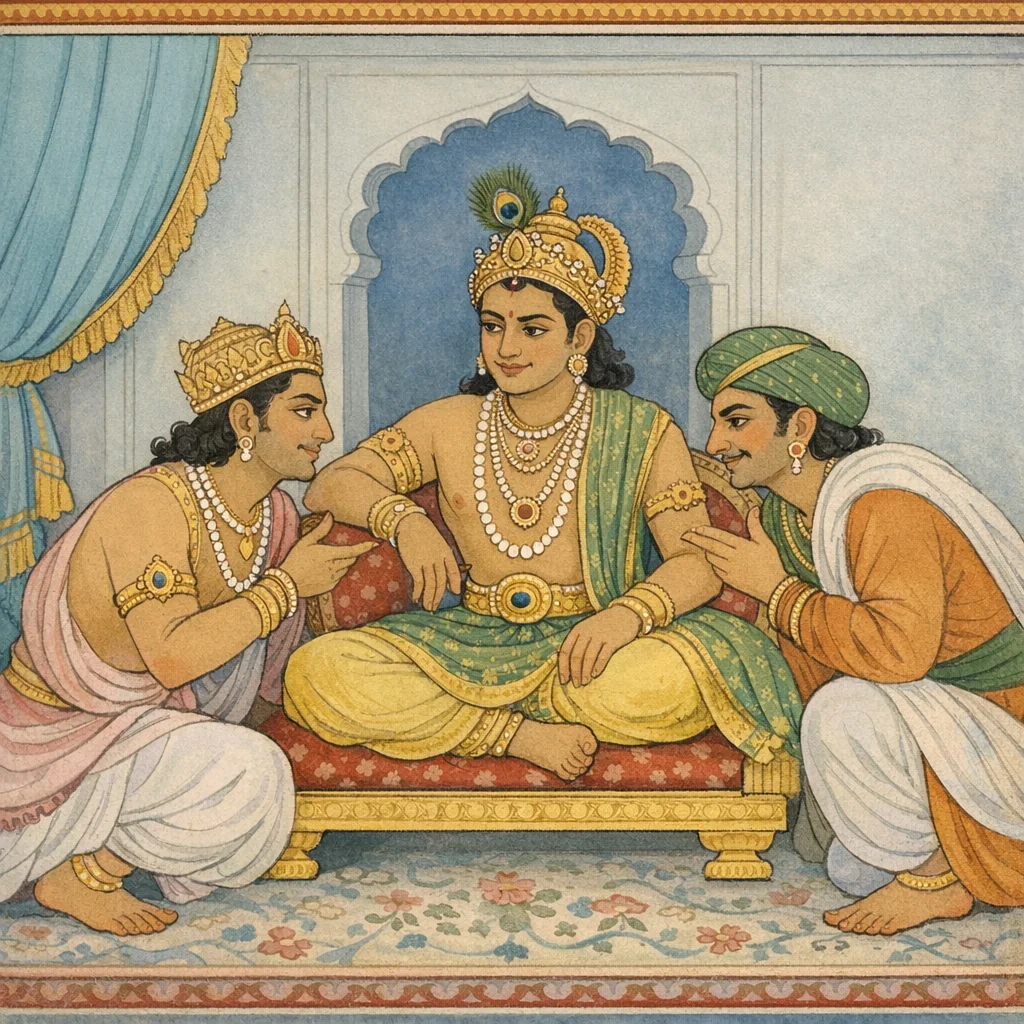
Adhyaya 238
दुर्योधनस्य लज्जा-प्रायोपवेशविचारः (Duryodhana’s Shame and Consideration of Prāyopaveśa)
Upa-parva: Gandharva-Mokṣaṇa Episode (Duryodhana’s humiliation and response)
This chapter presents a post-encounter political-psychological crisis. Duryodhana articulates the humiliation of being bound and brought before Yudhiṣṭhira, emphasizing dishonor in the presence of women and enemies, and reframes his survival as an intolerable reversal of status. He expresses a preference for death in battle over life marked by ridicule, and he contemplates prāyopaveśa (a resolve to end life through fasting) as an escape from reputational collapse. In a consequential gesture, he offers Duhśāsana an abhiṣeka (investiture) and instructs him to rule with attention to kin, Brahmins, elders, and allies—indicating an attempt to convert shame into orderly succession. Duhśāsana refuses with hyperbolic oaths, reaffirming Duryodhana’s primacy. Karṇa then intervenes as a stabilizing advisor: he criticizes excessive lamentation, argues that release by adversaries is not inherently disgraceful, and stresses that retainers and subjects often act to preserve royal interest. The chapter ends with Duryodhana still fixed on a ‘heavenward’ resolve, leaving the crisis ethically and politically unresolved.
Chapter Arc: वन में निर्वासित पाण्डवों की छाया अभी ताज़ी है, और हस्तिनापुर के राजसभा-परिसर में शकुनि और कर्ण दुर्योधन के कानों में विजय का मधु घोलते हैं—‘तुमने अपने पराक्रम से पाण्डवों को देशनिकाला दिया।’ → दोनों उसे बताते हैं कि पृथ्वी अब उसके अधीन है, अन्य राजा उसके शासन में किंकरवत् हैं, और पाण्डव शोक से शीघ्र ही दुर्बल हो चुके हैं। इसी उकसावे के साथ वे दुर्योधन को ‘वन में जाकर’ पाण्डवों के सामने अपने वैभव का प्रदर्शन करने और उन्हें और अधिक जलाने के लिए प्रेरित करते हैं। → कर्ण और शकुनि दुर्योधन के सामने साम्राज्य-स्वामित्व, राजाओं की अधीनता और पाण्डवों की कथित पराजय का चित्र खींचकर उसे निर्णायक रूप से ‘घोषयात्रा/वन-यात्रा’ के लिए उभारते हैं—यह क्षण दुर्योधन के अहंकार को नीति पर भारी कर देता है। → वैशम्पायन के कथनानुसार, इतना कहकर कर्ण और शकुनि दोनों वाक्यांत में मौन हो जाते हैं—मानो अब निर्णय का भार दुर्योधन के भीतर उठती वासना और दर्प पर छोड़ दिया गया हो। → दुर्योधन इस उकसावे पर क्या आदेश देगा—क्या वह सचमुच पाण्डवों के पास वन में जाकर अपमान का नया अध्याय खोलेगा?
Shlokas
Verse 1
हि >> आय न () आफ अप सप्तत्रिशर्दाधिकद्विशततमो< ध्याय: शकुनि और कर्णका दुर्योधनकी प्रशंसा करते हुए उसे वनमें पाण्डवोंके पास चलनेके लिये उभाड़ना वैशम्पायन उवाच धृतराष्ट्रस्य तद् वाक्यं निशम्य शकुनिस्तदा । दुर्योधनमिदं काले कर्णेन सहितो<ब्रवीत्,वैशम्पायनजी कहते हैं--जनमेजय! धृतराष्ट्रके पूर्वोिक्त वचन सुनकर उस समय कर्णसहित शकुनिने अवसर देखकर दुर्योधनसे इस प्रकार कहा--
Vaiśampāyana said: Hearing those words of Dhṛtarāṣṭra, Śakuni—together with Karṇa—seized the moment and addressed Duryodhana.
Verse 2
प्रत्राज्य पाण्डवान् वीरान् स्वेन वीर्येण भारत । भुड्क्ष्वेमां प्थिवीमेको दिवि शम्बरहा यथा,“भरतनन्दन! तुमने अपने पराक्रमसे पाण्डव-वीरोंको देशनिकाला देकर वनवासी बना दिया है। अब तुम स्वर्गमें इन्द्रकी भाँति अकेले ही इस पृथ्वीका राज्य भोगो
Vaiśampāyana said: “O Bhārata, by your own might you have driven the heroic Pāṇḍavas into exile, making them dwellers of the forest. Now enjoy this earth’s sovereignty alone—like Śambarahā (Indra) in heaven.”
Verse 3
(तवाद्य पृथिवी राजन्नखिला सागराम्बरा | सपर्वतवनारामा सह स्थावरजड़मा ।।) “राजन! पर्वत, वन, उद्यान एवं स्थावर-जड़मोंसहित यह सारी समुद्रपर्यना पृथ्वी आज तुम्हारे अधिकारमें है ।। प्राच्याश्न दाक्षिणात्याश्व प्रतीच्योदीच्यवासिन: । कृता: करप्रदा: सर्वे राजानस्ते नराधिप,“नरेश्वर! पूर्व, दक्षिण, पश्चिम और उत्तर दिशाके सभी राजाओंको तुम्हारे लिये करदाता बना दिया है
Vaiśampāyana said: “O King, today this entire earth—girdled by the ocean—together with its mountains, forests, and pleasure-groves, even with all that is immovable and inanimate, lies under your authority. The rulers dwelling in the eastern, southern, western, and northern regions have all been made tributary to you, O lord of men.”
Verse 4
या हि सा दीप्यमानेव पाण्डवानभजत् पुरा । साद्य लक्ष्मीस्त्वया राजन्नवाप्ता भ्रातृभि: सह,“राजन! जो दीप्तिमती श्री पहले पाण्डवोंकी सेवा करती थी, वही आज भाइयोंसहित तुम्हारे अधिकारमें आ गयी है
Vaiśampāyana said: “O King, that very radiant Fortune (Śrī) who once attended upon the Pāṇḍavas has now been obtained by you—together with your brothers.”
Verse 5
इन्द्रप्रस्थगते यां तां दीप्यमानां युधिष्ठिरे । अपश्याम श्रियं राजन् दृश्यते सा तवाद्य वै,“महाराज! इन्द्रप्रस्थमें जानेपर युधिष्ठिरके यहाँ हम लोग जिस राजलक्ष्मीको प्रकाशित होते देखते थे, वही आज तुम्हारे यहाँ उद्भासित होती दिखायी देती है
Vaiśampāyana said: “O King, the very same radiant royal fortune (śrī) that we used to behold shining at Yudhiṣṭhira’s court when we went to Indraprastha—today it is indeed seen manifest in you.”
Verse 6
शत्रवस्तव राजेन्द्र न चिरं शोककर्शिता: । सातु बुद्धिबलेनेयं राज्ञस्तस्माद् युधिष्ठिरात्
Vaiśampāyana said: “O king, your enemies will not remain long, worn down by grief. For this outcome is secured by the strength of counsel and understanding that belongs to that king—Yudhiṣṭhira.”
Verse 7
तथैव तव राजेन्द्र राजान: परवीरहन्
Vaiśampāyana said: “So too, O king of kings, in your case—those kings who strike down enemy-heroes will be dealt with accordingly.”
Verse 8
तवेयं पृथिवी राजन् निखिला सागराम्बरा,“राजन! इस समय यह सारी समुद्रवसना पृथ्वीदेवी पर्वत, वन, ग्राम, नगर तथा खानोंके साथ तुम्हारे अधिकारमें आ गयी है। यह नाना प्रकारके प्रदेशोंसे युक्त तथा पर्वतोंसे सुशोभित है
Vaiśampāyana said: “O King, this entire earth—clad by the ocean—has now come under your authority.”
Verse 9
सपर्वतवना देवी सग्रामनगराकरा | नानावनोद्देशवती पर्वतैरुपशोभिता,“राजन! इस समय यह सारी समुद्रवसना पृथ्वीदेवी पर्वत, वन, ग्राम, नगर तथा खानोंके साथ तुम्हारे अधिकारमें आ गयी है। यह नाना प्रकारके प्रदेशोंसे युक्त तथा पर्वतोंसे सुशोभित है
Vaiśampāyana said: “O King, at this moment the Earth-goddess—girdled by the ocean—together with her mountains and forests, her villages and cities, and her mines, has come under your authority. She is marked by many kinds of regions and is beautified by mountains.”
Verse 10
(नानाध्वजपताकाड्का स्फीतराष्ट्रा महाबला) “नाना प्रकारकी ध्वजा-पताकाओंसे चिह्नित इस भूतलपर कितने ही समृद्धिशाली राष्ट्र हैं और वहाँ बहुत-सी विशाल सेनाएँ संगठित हैं ।। वन्द्यमानो द्विजै राजन् पूज्यमानश्व राजभि: । पौरुषाद् दिवि देवेषु भ्राजसे रश्मिवानिव,“राजन! तुम अपने पुरुषार्थसे द्विजोंद्वारा सम्मानित तथा राजाओंद्वारा पूजित होकर स्वर्ग एवं देवताओं में अंशुमाली सूर्यकी भाँति इस भूतलपर प्रकाशित हो रहे हो
Vaiśampāyana said: “Across this earth are many prosperous realms, marked by diverse banners and standards, and in them stand assembled many mighty armies. O King, by your own valor you are honored by the twice-born and revered by other kings; among the gods in heaven you shine forth like the radiant sun.”
Verse 11
रुद्रैरिव यमो राजा मरुद्धिरिव वासव: । कुरुभिस्त्वं वृतो राजन् भासि नक्षत्रराडिव
Vaiśampāyana said: “O King, surrounded by the Kurus, you shine forth—like Yama among the Rudras, like Indra among the Maruts, and like the sovereign of the stars (the Moon) amid the constellations.”
Verse 12
“महाराज! जिस प्रकार रुद्रोंसे यमराज, मरुद्रणोंसे इन्द्र तथा नक्षत्रोंसे उनके स्वामी चन्द्रमाकी शोभा होती है, उसी प्रकार कौरवोंसे घिरे हुए तुम शोभा पा रहे हो ।। यै: सम ते नाद्रियेताज्ञा न च ये शासने स्थिता: । पश्यामस्तान् श्रिया हीनान् पाण्डवान् वनवासिन:,“जिन्होंने तुम्हारी आज्ञाका आदर नहीं किया था और जो तुम्हारे शासनमें नहीं थे, उन पाण्डवोंकी दशा हम प्रत्यक्ष देख रहे हैं। वे राजलक्ष्मीसे वज्चित हो वनमें निवास करते हैं
Vaiśampāyana said: “O great king! Just as Yama stands out among the Rudras, Indra among the hosts of the Maruts, and the Moon—lord of the constellations—among the stars, so you shine, surrounded by the Kauravas. Those who once did not honor your command and did not remain within your rule—the Pāṇḍavas—we now see them with our own eyes: bereft of royal fortune, living as exiles in the forest.”
Verse 13
श्रूयते हि महाराज सरो द्वैतवनं प्रति । वसन्तः पाण्डवाः सार्ध ब्राह्मुणैर्वनवासिभि:,“महाराज! सुननेमें आया है कि पाण्डवलोग द्वैतवनमें सरोवरके तटपर वनवासी ब्राह्मणोंके साथ रहते हैं
Vaiśampāyana said: “O great king, it is indeed reported that the Pāṇḍavas are dwelling by the lake on the edge of the Dvaitavana forest, together with Brahmins who live in the wilderness.”
Verse 14
स प्रयाहि महाराज श्रिया परमया युत: । तापयन् पाण्डुपुत्रांस्त्वं >श्मिवानिव तेजसा,“महाराज! तुम उत्कृष्ट राजलक्ष्मीसे सुशोभित होकर वहाँ चलो और जैसे सूर्य अपने तेजसे जगत्को संतप्त करते हैं, उसी प्रकार पाण्डुपुत्रोंकोी संताप दो
Vaiśampāyana said: “O great king, go there adorned with the highest royal fortune. And, like the sun blazing with its rays, afflict the sons of Pāṇḍu with the heat of your power.”
Verse 15
स्थितो राज्ये च्युतान् राज्याच्छिया हीनाञ्छ़िया वृत: । असमृद्धान् समृद्धार्थ: पश्य पाण्डुसुतान् नृप,“इस समय तुम राजाके पदपर प्रतिष्ठित हो और पाण्डव राज्यसे भ्रष्ट हो गये हैं। तुम श्रीसम्पन्न हो और वे श्रीहीन हैं। तुम समृद्धिशाली हो और वे निर्धन हो गये हैं। नरेश्वर! तुम इसी दशामें चलकर पाण्डवोंको देखो
Vaiśampāyana said: “You are now established upon the throne, while the sons of Pāṇḍu have fallen away from their kingdom. You are surrounded by prosperity, and they are bereft of fortune. You are rich in resources, and they have become destitute. O king, go and look upon the Pāṇḍavas in this very condition.”
Verse 16
महाभिजनसम्पन्नं भद्रे महति संस्थितम् । पाण्डवास्त्वाभिवीक्षन्तां ययातिमिव नाहुषम्,'पाण्डव तुम्हें नहुषनन्दन ययातिकी भाँति महान वंशमें उत्पन्न तथा परम मंगलमयी स्थितिमें प्रतिष्ठित देखें
Vaiśampāyana said: “O noble lady, may the Pāṇḍavas behold you—endowed with the greatness of an illustrious lineage and established in a lofty, auspicious station—like Yayāti, the son of Nahuṣa.”
Verse 17
यां श्रियं सुहृदश्चैव दुर्हदश्च विशाम्पते । पश्यन्ति पुरुषे दीप्तां सा समर्था भवत्युत,'प्रजापालक नरेश! पुरुषमें प्रकाशित होनेवाली जिस लक्ष्मीको उसके सुहृद् और शत्रु दोनों देखते हैं, वही सबल होती है
Vaiśampāyana said: “O lord of the people, that prosperity which shines in a man and is seen alike by his friends and by his enemies—only that is truly effective and powerful.”
Verse 18
समस्थो विषमस्थान् हि दुर्हददो योडभिवीक्षते । जगतीस्थानिवाद्रिस्थ: किमत: परमं सुखम्,'जैसे पर्वतकी चोटीपर खड़ा हुआ मनुष्य भूतलपर स्थित हुई सभी वस्तुओंको नीची और छोटी देखता है, उसी प्रकार जो पुरुष स्वयं सुखमें रहकर शत्रुओंको संकटमें पड़ा हुआ देखता है, उसके लिये इससे बढ़कर सुखकी बात और क्या होगी?
Vaiśampāyana said: “What happiness could be greater than this—that a man, himself secure and at ease, looks upon his ill-wishers fallen into distress? Just as one standing on a mountain peak sees all things on the plain below as low and small, so does the person established in comfort view those set in adversity.”
Verse 19
न पुत्रधनलाभेन न राज्येनापि विन्दति । प्रीतिं नृपतिशार्दूल याममित्राघदर्शनात्,“नृपश्रेष्ठ! मनुष्यको अपने शत्रुओंकी दुर्दशा देखनेसे जो प्रसन्नता प्राप्त होती है, वह धन, पुत्र तथा राज्य मिलनेसे भी नहीं होती। हमलोगोंमेंसे जो भी स्वयं सिद्धमनोरथ होकर आश्रममें अर्जुनको वल्कल और मृगछाला पहने देखेगा, उसे कौन-सा सुख नहीं मिल जायगा?
Vaiśampāyana said: “O tiger among kings, the delight a man feels on seeing the downfall and suffering of his enemies is not obtained even by gaining wealth, sons, or a kingdom.”
Verse 20
कि नु तस्य सुखं न स्यादाश्रमे यो धनंजयम् । अभिवीक्षेत सिद्धार्थो वल्कलाजिनवाससम्,“नृपश्रेष्ठ! मनुष्यको अपने शत्रुओंकी दुर्दशा देखनेसे जो प्रसन्नता प्राप्त होती है, वह धन, पुत्र तथा राज्य मिलनेसे भी नहीं होती। हमलोगोंमेंसे जो भी स्वयं सिद्धमनोरथ होकर आश्रममें अर्जुनको वल्कल और मृगछाला पहने देखेगा, उसे कौन-सा सुख नहीं मिल जायगा?
Vaiśampāyana said: “What happiness would not come to the man who, having fulfilled his purpose, beholds Dhanañjaya in the hermitage, clad in bark-garments and a deerskin?”
Verse 21
सुवाससो हि ते भार्या वल्कलाजिनसंवृताम् । पश्यन्तु दुःखितां कृष्णां सा च निर्विद्यतां पुन:,“तुम्हारी रानियाँ सुन्दर साड़ियाँ पहनकर चलें और वनमें वल्कल एवं मृगचर्म लपेटकर दुःखमें डूबी हुई द्रपदकुमारी कृष्णाको देखें तथा द्रौपदी भी इन्हें देखकर बार-बार संताप करे
Vaiśampāyana said: “Let your wives, dressed in fine garments, behold Kṛṣṇā (Draupadī) sunk in sorrow, wrapped in bark-cloth and deer-skin in the forest; and seeing them, let Draupadī again and again feel a renewed anguish and revulsion.”
Verse 22
विनिन्दतां तथा5७त्मानं जीवितं च धनच्युतम् । न तथा हि सभामध्ये तस्या भवितुमहति । वैमनस्यं यथा दृष्टवा तव भार्या: स्वलंकृता:,“वह धनसे वज्चित हुए अपने आत्मा तथा जीवनकी निन्दा करे--उन्हें बार-बार धिकक्कारे। सभामें उसके साथ जो बर्ताव किया गया था, उससे उसके हृदयमें इतना दुःख नहीं हुआ होगा, जितना कि तुम्हारी रानियोंको वस्त्राभूषणोंसे विभूषित देखकर हो सकता है!
Vaiśampāyana said: “Let her again and again condemn herself, even her very life, now that she has been stripped of wealth. For the grief that may rise in her heart on seeing your wives richly adorned with garments and ornaments would be greater than the pain she ought to have felt from the treatment she received in the assembly.”
Verse 23
वैशम्पायन उवाच एवमुक््त्वा तु राजानं कर्ण: शकुनिना सह । तृष्णीम्बभूवतुरुभौ वाक्यान्ते जनमेजय,वैशम्पायनजी कहते हैं--जनमेजय! शकुनि और कर्ण दोनों राजा दुर्योधनसे ऐसा कहकर (अपनी बात पूरी होनेपर) चुप हो गये
Vaiśampāyana said: Having thus spoken to the king, Karṇa, together with Śakuni, fell silent. When their words had come to an end, both of them became quiet—O Janamejaya—leaving the king to bear the moral weight of the decision that followed.
Verse 63
त्वया$5क्षिप्ता महाबाहो दीप्यमानेव दृश्यते । राजेन्द्र! तुम्हारे शत्रु शीघ्र ही शोकसे दीन-दुर्बल हो गये हैं। महाबाहो! तुमने राजा युधिष्ठिरसे इस लक्ष्मीको अपने बुद्धिबलसे छीन लिया है। अतः अब तुम्हारे यहाँ यह प्रकाशित होती-सी दिखायी दे रही है
Vaiśampāyana said: “O mighty-armed one, the fortune you have seized appears as though it were blazing. O best of kings, your enemies have quickly become wretched and weakened by grief. O mighty-armed one, by the strength of your own cunning you have taken this royal prosperity away from King Yudhiṣṭhira; therefore now it seems to shine forth in your house.”
Verse 76
शासने<5धिष्तिता: सर्वे कि कुर्म इति वादिन: । शत्रुवीरोंका संहार करनेवाले महाराज! इसी प्रकार सब राजा अपनेको किंकर बताते हुए आपकी आज्ञाके अधीन रहते हैं
Vaiśampāyana said: “All of them remain established under your command, repeatedly asking, ‘What shall we do?’ O king who brings about the destruction of hostile heroes—thus do all the rulers, declaring themselves your servants, abide under your authority.”
Verse 237
इति श्रीमहाभारते वनपर्वणि घोषयात्रापर्वणि कर्णशकुनिवाक्ये सप्तत्रिंशदधिकद्विशततमो<5ध्याय:
Thus ends, in the Śrī Mahābhārata, within the Vana Parva, in the section concerning the cattle-expedition (Ghoṣa-yātrā), the chapter titled “The words of Karṇa and Śakuni”—the two-hundred-and-thirty-seventh chapter. This colophon marks the formal close of a narrative unit, declaring that the preceding discourse and its moral tensions—counsel, provocation, and political intent—have reached their appointed conclusion.
Frequently Asked Questions
The conflict between preserving life and political responsibility versus treating public dishonor as worse than death—raising the question of whether self-termination for shame can be reconciled with duties to kin, allies, and dependents.
The text contrasts emotion-driven absolutism with counsel-based restraint: Karṇa’s intervention frames adversity and temporary subjugation as contingencies that should be met with steadiness, strategic recalibration, and responsibility to one’s social order.
No explicit phalaśruti is stated here; the chapter’s meta-function is contextual—illustrating how honor culture, counsel, and succession anxieties shape decision-making, thereby informing the epic’s broader inquiry into governance and ethical agency.