Adhyaya 230
चित्रसेनगन्धर्वैः कौरवसंनिपातः (Citrasena and the Kaurava engagement)
Upa-parva: Gandharva–Kaurava Saṃgharṣa (Citrasena episode)
Vaiśaṃpāyana reports that the Kaurava party collectively approaches Duryodhana and then moves against a Gandharva-restrained situation in the forest. The Dhārtarāṣṭra forces disregard verbal checks and press inward with martial display. When speech fails to halt them, the Gandharva cohort informs King Citrasena, who condemns the Kauravas’ impropriety and authorizes armed action. Gandharvas advance rapidly; most Kaurava troops break formation and flee in visible disorder, while Karṇa (Vaikartana/Rādheya) alone initially refuses to turn away, checking the Gandharva host with intense arrow volleys and inflicting heavy losses. Duryodhana, Śakuni, Duḥśāsana, Vikarṇa, and other Dhṛtarāṣṭra sons re-engage with Karṇa at the front, producing a tumultuous clash. Citrasena escalates by deploying māyā (illusion/strategic deception), causing confusion; Kaurava fighters become isolated and overwhelmed in groups. Under pressure, many retreat toward the area where Yudhiṣṭhira is located. Karṇa continues to resist “like a mountain,” but Gandharvas concentrate on disabling his chariot—cutting yoke, dropping banner, and striking horses and charioteer—forcing Karṇa to dismount, take up sword and shield, and withdraw by mounting Vikarṇa’s chariot to effect escape.
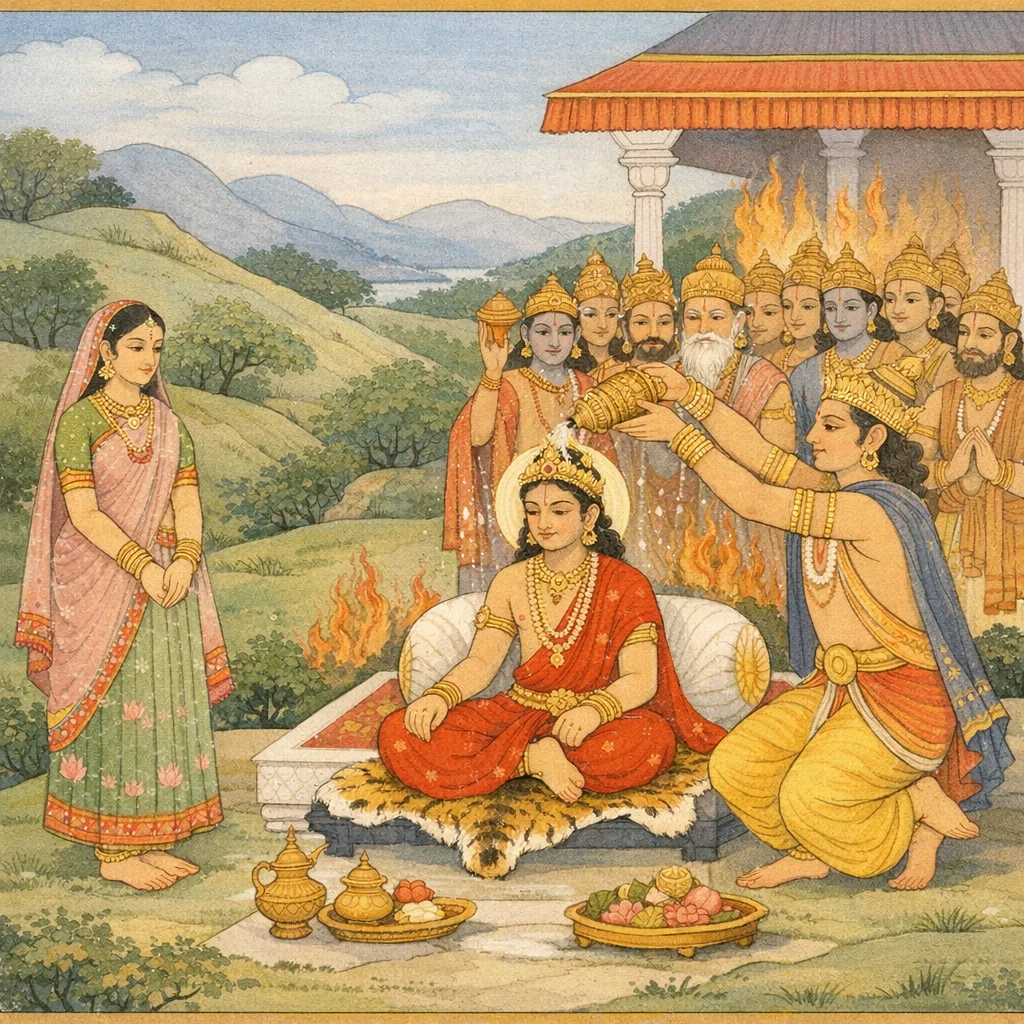
Chapter Arc: वनपर्व के प्रवाह में कथा अचानक दिव्य लोकों की ओर मुड़ती है—इन्द्र के सम्मुख तेजस्वी, लोहिताम्बरधारी, तीक्ष्णदंष्ट्र, सर्वलक्षणसम्पन्न कुमार प्रकट होता है; त्रैलोक्य को प्रिय यह कौन है, और किस हेतु से उसका आविर्भाव हुआ? → स्कन्द अपने उद्गम और प्रयोजन का उद्घोष करता है—दानव-विनाश और देवकार्य-सिद्धि के लिए उसका प्राकट्य हुआ। रुद्र और अग्नि के रहस्यपूर्ण संयोग से जन्म की कथा, देवताओं की आशा और भय को एक साथ जगाती है: क्या यह कुमार देवसेनाओं को एक सूत्र में बाँध पाएगा, और क्या देवगण उसके तेज को धारण कर पाएँगे? → इन्द्र स्कन्द का देवसेनापति-पद पर अभिषेक करता है; लक्ष्मी-तुल्य श्री स्वयं उस युवा शूर पर आसीन होती है, और देवसेना के साथ उसका विधिवत पाणिग्रहण होता है—देव-शक्ति का केन्द्र एक नाम में स्थिर हो जाता है: महासेन स्कन्द। → अभिषिक्त महासेन देवगणों और समस्त भूतगणों से घिरकर देवसेनाओं को सान्त्वना देता है, उन्हें आश्वस्त करता है, और देव-व्यवस्था में अनुशासन व विजय-विश्वास स्थापित करता है; देवकार्य के लिए नेतृत्व अब अनिश्चित नहीं रहता। → अभिषेक के पश्चात् इन्द्र को उस कुमारी देवसेना का स्मरण होता है जिसे स्कन्द ने मुक्त किया था—यह स्मृति संकेत देती है कि देव-युद्ध का अगला चरण अब महासेन के नेतृत्व में शीघ्र ही घटित होगा।
Shlokas
Verse 1
#::3:.8 #::3...7 (0) हि २ 7 एकोनत्रिशर्दाधिकद्धिशततमो< ध्याय: स्कन्दका इन्द्रके साथ वार्तालाप, देवसेनापतिके पदपर अभिषेक तथा देवसेनाके साथ उनका विवाह मार्कण्डेय उवाच उपविष्टं तु तं स्कन्दं हिरण्यकवचस्त्रजम् । हिरण्यचूडमुकुटं हिरण्याक्षं महाप्रभम्,मार्कण्डेयजी कहते हैं--राजन्! स्कन्द सोनेका कवच, सोनेकी माला और सोनेकी कलँगीसे सुशोभित मुकुट धारण किये (सुन्दर आसनपर) बैठे थे। उनके नेत्रोंसे सुवर्णकी- सी ज्योति छिटक रही थी और उनके शरीरसे महान् तेज:पुंज प्रकट हो रहा था
Mārkaṇḍeya said: “O King, Skanda was seated, adorned with a golden cuirass and a golden garland. He wore a crown with a golden crest; his eyes shone like gold, and from his person there blazed a mighty radiance.”
Verse 2
लोहिताम्बरसंवीतं तीक्ष्णदंष्टं मनोरमम् । सर्वलक्षणसम्पन्नं त्रैलोक्यस्यापि सुप्रियम्,उन्होंने लाल रंगके वस्त्रसे अपने अंगोंको आच्छादित कर रखा था। उनके दाँत बड़े तीखे थे और उनकी आकृति मनको लुभा लेनेवाली थी। वे समस्त शुभ लक्षणोंसे सम्पन्न तथा तीनों लोकोंके लिये अत्यन्त प्रिय थे
Mārkaṇḍeya said: “Clad in crimson garments, with sharp fangs and a captivating form, he was endowed with every auspicious mark and was exceedingly dear to all the three worlds.”
Verse 3
ततस्तं वरदं शूरं युवानं मृष्टकुण्डलम् | अभजत् पद्मरूपा श्री: स्वयमेव शरीरिणी,तदनन्तर वर देनेमें समर्थ, शौर्यसम्पन्न, युवा अवस्थासे सुशोभित तथा सुन्दर कुण्डलोंसे अलंकृत कुमार कार्तिकेयका कमलके समान कान्तिवाली मूर्तिमती शोभाने स्वयं ही सेवन किया
Then Śrī—embodied splendour, lotus-like in form—of her own accord attached herself to that youthful hero, the boon-bestower, adorned with polished earrings.
Verse 4
श्रिया जुष्ट: पृथुयशा: स कुमारवरस्तदा । निषण्णो दृश्यते भूतै: पौर्णमास्यां यथा शशी,मूर्तिमती शोभासे सेवित हो वहाँ बैठे हुए महा-यशस्वी सुन्दरकुमारको उस समय सब प्राणी पूर्णमासीके चन्द्रमाकी भाँति देखते थे
Markandeya said: Endowed with auspicious fortune and far-spreading fame, that excellent prince was then seen seated there by all beings—shining like the full moon on the night of the full moon.
Verse 5
अपूजयन् महात्मानो ब्राह्मणास्तं महाबलम् | इदमाहुस्तदा चैव स्कन्दं तत्र महर्षय:,महामना ब्राह्मणोंने महाबली स्कन्दकी पूजा की और सब महर्षियोंने वहाँ आकर उनका इस प्रकार स्तवन किया
Then the great-souled Brahmins honored that mighty one. And at that time, the sages there addressed Skanda with words of praise.
Verse 6
ऋषय ऊचु: हिरण्यगर्भ भद्रें ते लोकानां शड्करो भव । त्वया षड्रात्रजातेन सर्वे लोका वशीकृता:,ऋषि बोले--हिरण्यगर्भ! तुम्हारा कल्याण हो। तुम समस्त जगतके लिये कल्याणकारी बनो। तुम्हारे पैदा हुए अभी छ: रातें ही बीती होंगी। इतनेमें ही तुमने समस्त लोकोंको अपने वशमें कर लिया है
The sages said: “O Hiraṇyagarbha, may auspiciousness be yours. Become a benefactor to all the worlds. Though only six nights have passed since your birth, you have already brought all the worlds under your sway.”
Verse 7
अभयं च पुनर्दत्तं त्वयैवैषां सुरोत्तम । तस्मादिन्द्रो भवानस्तु त्रैलोक्यस्याभयंकर:,सुरश्रेष्ठ! फिर तुम्हींने इन सब लोकोंको अभय दान दिया है। अत: आजसे तुम इन्द्र होकर रहो और तीनों लोकोंके भयका निवारण करो
Markandeya said: “O best of the gods, it is you alone who have restored fearlessness to these worlds. Therefore, from this day onward, be Indra—be the one who removes fear for the three worlds.”
Verse 8
स्कन्द उवाच किमिन्द्र: सर्वलोकानां करोतीह तपोधना: । कथं देवगणांश्वैव पाति नित्य सुरेश्वर:,स्कन्द बोले--तपोधनो! इन्द्र इस पदपर रहकर सम्पूर्ण लोकोंके लिये क्या करते हैं तथा वे देवेश्वर सदा समस्त देवताओंकी किस प्रकार रक्षा करते हैं?
Skanda said: “O rich in austerity, what does Indra, holding this office, accomplish here for all the worlds? And how does that Lord of the gods continually protect the hosts of the devas?”
Verse 9
ऋषय ऊचु: इन्द्रो दधाति भूतानां बल॑ तेज: प्रजा: सुखम् । तुष्ट: प्रयच्छति तथा सर्वान् कामान् सुरेश्वर:,ऋषि बोले--देवराज इन्द्र संतुष्ट होनेपर सम्पूर्ण प्राणियोंको बल, तेज, संतान और सुखकी प्राप्ति कराते हैं तथा उनकी समस्त कामनाएँ पूर्ण करते हैं
The sages said: When Indra, lord of the gods, is pleased, he bestows upon all beings strength and vigor, offspring, and happiness; and likewise he grants the fulfillment of every desire.
Verse 10
दुर्वृत्तानां संहरति व्रतस्थानां प्रयच्छति । अनुशास्ति च भूतानि कार्येषु बलसूदन:,वे दुष्टोंका संहार करते और उत्तम व्रतका पालन करनेवाले सत्पुरुषोंको जीवन दान देते हैं। बल नामक दैत्यका विनाश करनेवाले इन्द्र सभी प्राणियोंको आवश्यक कार्योंमें लगनेका आदेश देते हैं
He destroys those of wicked conduct and grants life to the righteous who abide in noble vows. Indra, slayer of the asura named Bala, also disciplines all beings, commanding them to apply themselves to the duties that must be done.
Verse 11
असूर्ये च भवेत् सूर्यस्तथाचन्द्रे च चन्द्रमा: । भवत्यन्निश्च वायुश्न पृथिव्यापश्च॒ कारणै:,सूर्यके अभावमें वे स्वयं ही सूर्य होते हैं और चन्द्रमाके न रहनेपर स्वयं ही चन्द्रमा बनकर उनका कार्य सम्पादन करते हैं। आवश्यकता पड़नेपर वे ही अग्नि, वायु, पृथिवी और जलका स्वरूप धारण कर लेते हैं
Where there is no sun, he himself becomes the sun; and where there is no moon, he himself becomes the moon, accomplishing their functions. When the need arises, he likewise assumes the forms of fire, wind, earth, and water, becoming the operative cause behind them.
Verse 12
एतदिन्द्रेण कर्तव्यमिन्द्रे हि विपुलं बलम् । त्वंच वीर बली श्रेष्ठस्तस्मादिन्द्रो भवस्व न:,यह सब इन्द्रका कार्य है। इन्द्रमें अपरिमित बल होता है। वीर! तुम भी श्रेष्ठ बलवान् हो। अतः तुम्हीं हमारे इन्द्र हो जाओ
This is a task that should be done by Indra, for Indra possesses vast power. Yet you too, O hero, are a foremost man of strength; therefore, become our Indra—our leader and protector.
Verse 13
शक्र उवाच भवस्वेन्द्रो महाबाहो सर्वेषां न: सुखावह: । अभिषिच्यस्व चैवाद्य प्राप्तरूपो$सि सत्तम,इन्द्रने कहा--महाबाहो! तुम्हीं इन्द्र बनो और हम सबको सुख पहुँचाओ। सज्जनशिरोमणे! तुम इस पदके सर्वथा योग्य हो। अतः आज ही इस पदपर अपना अभिषेक करा लो
Śakra said: “O mighty-armed one, become Indra and bring happiness to all of us. O best of the good, you are fully fit for this rank; therefore, have yourself consecrated to this office today.”
Verse 14
स्कन्द उवाच शधि त्वमेव त्रैलोेक्यमव्यग्रो विजये रत: । अहं ते किड्कर: शक्र न ममेन्द्रत्वमीप्सितम्,स्कन्द बोले--इन्द्रदेव! आप ही स्वस्थचित्त होकर तीनों लोकोंका शासन कीजिये और विजयप्राप्तिके कार्यमें संलग्न रहिये। मैं तो आपका सेवक हूँ। मुझे इन्द्र बननेकी इच्छा नहीं है
Skanda said: “You alone should govern the three worlds, O Śakra, with an undistracted mind, devoted to the work of victory. I am your servant; I do not desire the sovereignty of Indra.”
Verse 15
श॒क्र उवाच हलक: वीर त्वं देवानामरीन् जहि । अवज्ञस्यन्ति मां लोका वीर्येण तव विस्मिता:,इन्द्रने कहा--वीर! तुम्हारा बल अद्भुत है, अतः तुम्हीं देव-शत्रुओंका संहार करो। वीरवर! मैं तुम्हारे सामने पराजित होकर बलहीन सिद्ध हो गया हूँ। अतः तुम्हारे पराक्रमसे चकित होकर लोग मेरी अवहेलना करेंगे। यदि मैं इन्द्र पदपर स्थित रहूँ, तो भी सब लोग मेरा उपहास करेंगे और आलस्य छोड़कर हम दोनोंमें परस्पर फूट डालनेका प्रयत्न करेंगे
Śakra (Indra) said: “O Halaka, hero—slay the enemies of the gods. People, astonished by your prowess, will come to slight me. Before you I appear defeated and powerless; and even if I remain seated in the rank of Indra, all will mock me and, casting off restraint, will try to sow discord between us.”
Verse 16
इन्द्रत्वे तु स्थितं वीर बलहीनं पराजितम् । आवयोश्व मिथो भेदे प्रयतिष्यन्त्यतन्द्रिता:,इन्द्रने कहा--वीर! तुम्हारा बल अद्भुत है, अतः तुम्हीं देव-शत्रुओंका संहार करो। वीरवर! मैं तुम्हारे सामने पराजित होकर बलहीन सिद्ध हो गया हूँ। अतः तुम्हारे पराक्रमसे चकित होकर लोग मेरी अवहेलना करेंगे। यदि मैं इन्द्र पदपर स्थित रहूँ, तो भी सब लोग मेरा उपहास करेंगे और आलस्य छोड़कर हम दोनोंमें परस्पर फूट डालनेका प्रयत्न करेंगे
Śakra (Indra) said: “O hero, even while I remain established in the rank of Indra, I stand defeated and bereft of strength. And if there is any mutual division between the two of us, people—casting off indolence—will tirelessly strive to create a rift.”
Verse 17
भेदिते च त्वयि विभो लोको द्वैधमुपेष्यति । द्विधाभूतेषु लोकेषु निश्चितेष्वावयोस्तथा,तस्मादिन्द्रो भवानेव भविता मा विचारय । प्रभो! यदि तुम फ़ूट जाओगे तो जगतके प्राणी दो भागोंमें बट जायँगे। महाबलवान् वीर! सम्पूर्ण लोकोंके निश्चय ही दो दलोंमें बट जाने तथा लोगोंके द्वारा भेदबुद्धि उत्पन्न किये जानेपर हम लोगोंमें युद्ध प्रारम्भ हो सकता है। तात! उस युद्धमें जैसा कि मेरा विश्वास है, तुम्हीं विजयी होओगे। अतः तुम्हीं इन्द्र हो जाओ। इस विषयमें कोई दूसरी बात मत सोचो
Śakra said: “O mighty one, if you are split, the world will fall into division. And when the worlds are certainly divided into two camps—aligned with you and with me—conflict between us may begin. Therefore, you alone should become Indra; do not deliberate further.”
Verse 18
विग्रह: सम्प्रवर्तेत भूतभेदान्महाबल । तत्र त्वं मां रणे तात यथाश्रद्ध॑ विजेष्यसि
O mighty-armed one, if a conflict should arise because of divisions among beings, then there—on the battlefield, dear child—you will conquer me according to the measure of your faith and resolve. The outcome will follow the sincerity of your inner commitment, not mere force alone.
Verse 19
स्कन्द उवाच त्वमेव राजा भद्र ते त्रैलोक्यस्थ ममैव च
Skanda said: “You alone are the king—blessings upon you—both for the One who abides in the three worlds and for me as well.”
Verse 20
इन्द्र उवाच अहमिन्द्रो भविष्यामि तव वाक्यान्महाबल,अभिषिच्यस्व देवानां सैनापत्ये महाबल । इन्द्रने कहा--महाबलवान् स्कन्द! मैं तुम्हारे कहनेसे इन्द्र-पदपर प्रतिष्ठित रहूँगा। यदि वास्तवमें तुम मेरी आज्ञाका पालन करना चाहते हो, यदि तुमने यह निश्चित बात कही है, अथवा यदि तुम्हारा यह कथन सत्य है तो मेरी यह बात सुनो--महावीर! तुम देवताओंके सेनापतिके पदपर अपना अभिषेक करा लो
Indra said: “O mighty one, in accordance with your word I shall remain established in the office of Indra. Therefore, O great hero, have yourself consecrated to the post of commander of the gods’ armies.”
Verse 21
यदि सत्यमिदं वाक्यं निश्चयाद् भाषितं त्वया । यदि वा शासन स्कन्द कर्तुमिच्छसि मे शृूणु
Indra said: “If this statement of yours is true—spoken with firm resolve—or if you truly wish to carry out my command, O Skanda, then listen to me.”
Verse 22
स्कन्द उवाच दानवानां विनाशाय देवानामर्थसिद्धये
Skanda said: “For the destruction of the Dānavas, and for the fulfillment of the gods’ purpose.”
Verse 23
मार्कण्डेय उवाच सो5भिषिक्तो मघवता सर्वैर्देवगणै: सह
Mārkaṇḍeya said: “He was duly consecrated by Maghavat (Indra), with all the hosts of gods present.”
Verse 24
अतीव शुशुभे तत्र पूज्यमानो महर्षिभि: | तत्र तत् काउ्चनं छत्र प्रियमाणं व्यरोचत
There he shone with exceptional splendor, honored by the great seers. In that very place a golden parasol—bestowed with affectionate regard as a mark of esteem—glittered brilliantly above him.
Verse 25
यथैव सुसमिद्धस्य पावकस्यात्ममण्डलम् | मार्कण्डेयजी कहते हैं--युधिष्ठिर! तदनन्तर समस्त देवताओंसहित इन्द्रने कुमारका देवसेनापतिके पदपर अभिषेक कर दिया। उस सयम वहाँ महर्षियोंद्वारा पूजित होकर स्कन्दकी बड़ी शोभा हुई। उनके ऊपर तना हुआ वह सुवर्णमय छत्र उद्धासित हो रहा था, मानो प्रज्वलित अग्निका अपना ही मण्डल प्रकाशित होता हो || २३-२४ $ ।। विश्वकर्मकृता चास्य दिव्या माला हिरण्मयी,नरश्रेष्ठ परंतप युधिष्ठिर! साक्षात् त्रिपुरनाशक यशस्वी भगवान् शिव तथा देवी पार्वतीने वहाँ पधारकर स्कनन््दके गलेमें विश्वकर्माकी बनायी हुई सोनेकी दिव्य माला पहनायी
Mārkaṇḍeya said: “As the radiant orb of a well-kindled fire shines by its own nature.” So was Skanda’s splendor made manifest after his consecration as commander of the gods’ host—self-evident and irresistible, like fire’s own circle of light.
Verse 26
आबद्धा त्रिपुरघ्नेन स्वयमेव यशस्विना । आगम्य मनुजव्याप्र सह देव्या परंतप,नरश्रेष्ठ परंतप युधिष्ठिर! साक्षात् त्रिपुरनाशक यशस्वी भगवान् शिव तथा देवी पार्वतीने वहाँ पधारकर स्कनन््दके गलेमें विश्वकर्माकी बनायी हुई सोनेकी दिव्य माला पहनायी
Mārkaṇḍeya said: “O tiger among men, O scorcher of foes—best of men, Yudhiṣṭhira! The glorious Lord Śiva himself, the destroyer of Tripura, came there together with the Goddess Pārvatī. Then they placed upon Skanda’s neck a radiant, divine golden garland, fashioned by Viśvakarmā.”
Verse 27
अर्चयामास सुप्रीतो भगवान् गोवृषध्वज: । रुद्रमग्निं द्विजा:ः प्राहू रुद्रसूनुस्ततस्तु सः,भगवान् वृषध्वज (शिव)-ने अत्यन्त प्रसन्न होकर स्कन्दका समादर किया। ब्राह्मणलोग अग्निको रुद्रका स्वरूप बताते हैं, इसलिये स्कन्द भगवान् रुद्रके ही पुत्र हैं
Mārkaṇḍeya said: The blessed Lord whose banner bears the bull, exceedingly pleased, honored Skanda with reverent worship. The Brahmins declare Agni to be a form of Rudra; therefore Skanda is indeed the son of Rudra.
Verse 28
रुद्रेण शुक्रमुत्सृष्टं तच्छवेत: पर्वतो5भवत् | पावकस्येन्द्रियं श्वेते कृत्तिकाभि: कृतं नगे,रुद्रने जिस वीर्यका त्याग किया था, वही श्वेत पर्वतके रूपमें परिणत हो गया। फिर कृत्तिकाओंने अग्निके वीर्यको श्वेत पर्वतपर पहुँचाया था
Mārkaṇḍeya said: “The semen discharged by Rudra became transformed into the White Mountain. There, upon that White Mountain, the Kṛttikās placed the generative essence of Pāvaka (Agni).”
Verse 29
पूज्यमान तु रुद्रेण दृष्टवा सर्वे दिवौकस: । रुद्रसूनुं ततः प्राहुर्गुहं गुणवर्ता वरम्,भगवान् रुद्रके द्वारा गुणवानोंमें श्रेष्ठ कुमार कार्तिकेयका सम्मान होता देख सब देवता कहने लगे, ये रुद्रके ही पुत्र हैं
Mārkaṇḍeya said: Seeing Guha honored by Rudra, all the gods—the dwellers of heaven—declared, “This Guha, most excellent and most virtuous, is indeed the son of Rudra.”
Verse 30
अनुप्रविश्य रुद्रेण वह्लिं जातो हायं शिशु: । तत्र जातस्तत:ः स्कन्दो रुद्रसूनुस्ततो5भवत्,'रुद्रने अग्निमें प्रवेश करके इस शिशुको जन्म दिया है। रुद्रस्वरूप अग्निसे उत्पन्न होनेके कारण स्कन्द रुद्रके ही पुत्र कहलाये”
Mārkaṇḍeya said: “By Rudra’s power, entering into Agni (Fire), this child was born. Born there from the fire that bore Rudra’s own nature, he later came to be known as Skanda—thus regarded as Rudra’s son.”
Verse 31
रुद्रस्य वहल्लेः स्वाहाया: षण्णां स्त्रीणां च भारत | जात: स्कनन््द: सुरश्रेष्ठो रुद्रसूनुस्ततो5भवत्,भारत! सुरश्रेष्ठ स्कन्दका जन्म रुद्रस्वरूप अग्निसे, स्वाहासे तथा छः स्त्रियोंसे हुआ था। इसलिये वे भगवान् रुद्रके पुत्र हुए
Mārkaṇḍeya said: “O Bhārata, Skanda—the foremost among the gods—was born from Rudra, from Vahni (Agni), from Svāhā, and from six women. Therefore he came to be regarded as the son of Lord Rudra.”
Verse 32
अरजे वाससी रक्ते वसान: पावकात्मज: । भाति दीप्तवपु: श्रीमान् रक्ताभ्राभ्यामिवांशुमान्,अग्निनन्दन स्कन्द लाल रंगके दो स्वच्छ वस्त्र धारण किये कान्तिमान् एवं तेजस्वी शरीरसे ऐसी शोभा पा रहे थे, मानो दो लाल बादलोंके साथ भगवान् अंशुमाली (सूर्य) सुशोभित हो रहे हों
Mārkaṇḍeya said: Wearing two spotless garments dyed red, Skanda—the son of Fire—shone with a radiant, auspicious body. He appeared like the sun (Aṃśumān) adorned with two crimson clouds, his brilliance heightened rather than concealed.
Verse 33
कुक्कुटश्नाग्निना दत्तस्तस्य केतुरलंकृत: । रथे समुच्छितो भाति कालाग्निरिव लोहितः,अग्निदेवने स्कन्दके लिये कुक्कुटके चिह्लसे अलंकृत ऊँचा ध्वज प्रदान किया था, जो रथपर अपनी अरुण प्रभासे प्रलयाग्निके समान उद्धासित होता था
Mārkaṇḍeya said: “Agni—known as Kukkūṭaśnā—granted him an ornamented banner. Raised high upon the chariot, that crimson standard shone like the fire of dissolution itself.”
Verse 34
या चेष्टा सर्वभूतानां प्रभा शान्तिर्बलं तथा । अग्रतस्तस्य सा शक्तिदेवानां जयवर्धिनी,सम्पूर्ण भूतोंमें जो चेष्टा, प्रभा, शान्ति और बल है, वही कुमार कार्तिकेयके सम्मुख शक्तिरूपमें उपस्थित है। वह देवताओंकी विजयश्रीको बढ़ानेवाली है
Mārkaṇḍeya said: “That very impulse of action found in all beings—along with their radiance, their calm, and their strength—now stands before him embodied as Śakti. She is the power that increases the gods’ victorious fortune.”
Verse 35
विवेश कवचं चास्य शरीरे सहजं तथा । युध्यमानस्य देवस्य प्रादुर्भवीति तत् सदा,तथा उन स्कन्ददेवके शरीरमें सहज (स्वाभाविक) कवचका प्रवेश हो गया, जो सदा उनके युद्ध करते समय प्रकट होता था
Mārkaṇḍeya said: “And into his body there entered a natural, inborn coat of mail. That armor would always manifest of itself whenever the god was engaged in battle.”
Verse 36
शक्तिर्धर्मो बल॑ तेज: कान्तत्वं सत्यमुन्नतिः । ब्रह्माण्यत्वमसम्मोहो भक्तानां परिरक्षणम्,राजन! शक्ति, धर्म, बल, तेज, कान्ति, सत्य, उन्नति, ब्राह्मणभक्ति, असम्मोह (विवेक), भक्तजनोंकी रक्षा, सुनका संहार और समस्त लोकोंका पालन--ये सारे गुण स्कन्दके साथ ही उत्पन्न हुए थे
Mārkaṇḍeya said: “Power, righteousness, strength, splendor, radiant beauty, truthfulness, and exalted rise; devotion to the Brahmins, unwavering discernment, and the protection of the devoted—O king—these virtues were born together with Skanda.”
Verse 37
निकृन्तनं च शत्रूणां लोकानां चाभिरक्षणम् | स्कन्देन सह जातानि सर्वाण्येव जनाधिप,राजन! शक्ति, धर्म, बल, तेज, कान्ति, सत्य, उन्नति, ब्राह्मणभक्ति, असम्मोह (विवेक), भक्तजनोंकी रक्षा, सुनका संहार और समस्त लोकोंका पालन--ये सारे गुण स्कन्दके साथ ही उत्पन्न हुए थे
Mārkaṇḍeya said: “O lord of men, the hewing down of enemies and the safeguarding of the worlds—these too were born together with Skanda.”
Verse 38
एवं देवगणै: सर्वे: सो5भिषिक्त: स्वलंकृत: । बभौ प्रतीत: सुमना: परिपूर्णेन्दुमण्डल:,इस प्रकार समस्त देवताओंद्वारा सेनापतिके पदपर अभिषिक्त होकर विविध आभूषणोंसे विभूषित, विशुद्ध एवं प्रसन्न हृदयवाले स्कन्द पूर्ण चन्द्रमण्डलके समान सुशोभित हुए
Thus, anointed by all the hosts of gods to the office of commander of the divine forces and adorned with splendid ornaments, Skanda—pure and inwardly delighted—shone forth like the disk of the full moon.
Verse 39
इष्टे: स्वाध्यायघोषैश्व देवतूर्यवरैरपि । देवगन्धर्वगीतैश्नल सर्वैरप्सरसां गणै:,उस समय अत्यन्त प्रिय लगनेवाले वेदमन्त्रोंकी ध्वनि सब ओर गूँज उठी, देवताओंके उत्तम वाद्य भी बजने लगे, देव और गन्धर्व गीत गाने लगे और समस्त अप्सराएँ नृत्य करने लगीं। ये तथा और भी बहुत-से देवगण एवं पिशाचसमूह विविध अलंकारोंसे अलंकृत, हर्षोत्फुल्ल और संतुष्ट हो स्कन्दको घेरकर खड़े थे
Mārkaṇḍeya said: “Then, on every side, the most delightful sounds arose—the resonant chanting of Vedic recitation and auspicious hymns. The finest celestial instruments were played; gods and Gandharvas sang; and the hosts of Apsarases danced. Many other divine beings as well as bands of Piśācas, adorned with varied ornaments, stood around Skanda—joyful, gratified, and exultant—honouring him with their presence.”
Verse 40
एतैश्वान्यैश्व बहुभिस्तुषशट्एष्टै: स्वलंकृतैः । सुसंवृतः पिशाचानां गणैर्देवगणैस्तथा,उस समय अत्यन्त प्रिय लगनेवाले वेदमन्त्रोंकी ध्वनि सब ओर गूँज उठी, देवताओंके उत्तम वाद्य भी बजने लगे, देव और गन्धर्व गीत गाने लगे और समस्त अप्सराएँ नृत्य करने लगीं। ये तथा और भी बहुत-से देवगण एवं पिशाचसमूह विविध अलंकारोंसे अलंकृत, हर्षोत्फुल्ल और संतुष्ट हो स्कन्दको घेरकर खड़े थे
Mārkaṇḍeya said: Thus, and by many other hosts as well—adorned with their own ornaments and exultant with satisfaction—he was closely surrounded by companies of Piśācas and likewise by companies of gods. At that moment, the sound of Vedic chants, exceedingly pleasing to hear, resounded in every direction; the finest divine instruments were played; gods and Gandharvas sang; and all the Apsarases danced—forming a joyous, reverent circle around Skanda.
Verse 42
अथैनमभ्ययु: सर्वा देवसेना: सहस्रशः
Then all the celestial armies, in their thousands, surged forward against him.
Verse 43
अस्माकं त्वं पतिरिति ब्रुवाणा: सर्वतो दिश: । तदनन्तर सारी देवसेनाएँ सहस्रोंकी संख्यामें सब दिशाओंसे उनके पास आयीं और कहने लगीं--'आप ही हमारे पति हैं” ।। ४२ ई ।। ता: समासाद्य भगवान् सर्वभूतगणैर्वृत:
“You are our husband,” they cried from every direction. Immediately thereafter, countless divine armies, arriving from all quarters, came near him and proclaimed, “You alone are our lord.” Having thus approached him, the Blessed One stood surrounded by hosts of beings.
Verse 44
शतक्रतुश्चाभिषिच्य स्कन्दे सेनापतिं तदा
Mārkaṇḍeya said: Then Śatakratu (Indra), having duly consecrated Skanda, appointed him at that time as commander of the gods’ army.
Verse 45
अयं तस्या: पतिर्नूनं विहितो ब्रह्मणा स्वयम्
Mārkaṇḍeya said: “Surely, this man has been appointed as her husband by Brahmā himself.”
Verse 46
विचिन्त्येत्यानयामास देवसेनां हालंकृताम् । उन्होंने सोचा, स्वयं ब्रह्माजीने निश्चय ही कुमार कार्तिकेयको ही उसका पति नियत किया है। यह सोचकर वे देवसेनाको वस्त्राभूषणोंसे भूषित करके ले आये ।। स्कन्दं प्रोवाच बलभिदियं कन्या सुरोत्तम,फिर बलसंहारक इन्द्रने स्कन्दसे कहा--'सुरश्रेष्ठ! तुम्हारे जन्म लेनेके पहलेसे ही ब्रह्माजीने इस कन्याको तुम्हारी पत्नी नियत की है, अतः तुम वेदमन्त्रोंके उच्चारणपूर्वक इसका विधिवत पाणिग्रहण करो। अपने कमलकी-सी कान्तिवाले हाथसे इस देवीका दायाँ हाथ पकड़ो। “इन्द्रके ऐसा कहनेपर स्कन्दने विधिपूर्वक देवसेनाका पाणिग्रहण किया
Mārkaṇḍeya said: Having reflected, he brought Devasenā, adorned with ornaments. Then Indra, the slayer of Bala, addressed Skanda: “O best of the gods, this maiden has been destined for you as wife by Brahmā even before your birth. Therefore accept her hand according to sacred rite.”
Verse 47
अजाते त्वयि निर्दिष्टा तव पत्नी स्वयम्भुवा । तस्मात् त्वमस्या विधिवत पार्णिं मन्त्रपुरस्कृतम्,फिर बलसंहारक इन्द्रने स्कन्दसे कहा--'सुरश्रेष्ठ! तुम्हारे जन्म लेनेके पहलेसे ही ब्रह्माजीने इस कन्याको तुम्हारी पत्नी नियत की है, अतः तुम वेदमन्त्रोंके उच्चारणपूर्वक इसका विधिवत पाणिग्रहण करो। अपने कमलकी-सी कान्तिवाले हाथसे इस देवीका दायाँ हाथ पकड़ो। “इन्द्रके ऐसा कहनेपर स्कन्दने विधिपूर्वक देवसेनाका पाणिग्रहण किया
Mārkaṇḍeya said: “Even before you were born, the Self-born Brahmā had already designated this maiden as your wife. Therefore, take her hand in the proper rite, with Vedic mantras placed foremost.”
Verse 48
गृहाण दक्षिणं देव्या: पाणिना पद्मवर्चसा । एवमुक्त: स जग्राह तस्या: पार्णिं यथाविधि,फिर बलसंहारक इन्द्रने स्कन्दसे कहा--'सुरश्रेष्ठ! तुम्हारे जन्म लेनेके पहलेसे ही ब्रह्माजीने इस कन्याको तुम्हारी पत्नी नियत की है, अतः तुम वेदमन्त्रोंके उच्चारणपूर्वक इसका विधिवत पाणिग्रहण करो। अपने कमलकी-सी कान्तिवाले हाथसे इस देवीका दायाँ हाथ पकड़ो। “इन्द्रके ऐसा कहनेपर स्कन्दने विधिपूर्वक देवसेनाका पाणिग्रहण किया
Mārkaṇḍeya said: “Take the goddess’s right hand with your lotus-radiant hand.” Thus instructed, Skanda duly accepted her hand according to the prescribed rite.
Verse 49
(५॥॥ बृहस्पतिर्मन्त्रविद्धि जजाप च जुहाव च । एवं स्कन्दस्य महिषीं देवसेनां विदुर्जना:,उस समय मन्त्रवेत्ता बृहस्पतिजीने वेदमन्त्रोंका जप और होम किया। इस प्रकार सब लोग यह जान गये कि देवसेना कुमार कार्तिकेयकी पटरानी है
Mārkaṇḍeya said: Bṛhaspati, the knower of sacred mantras, performed mantra-recitation and offered oblations into the fire. Thus people came to recognize that Devasenā was the consecrated chief queen of Skanda (Kārttikeya).
Verse 50
षष्ठी यां ब्राह्मणा: प्राहुर्लक्ष्मीमाशां सुखप्रदाम् । सिनीवालीं कुहूं चैव सदवृत्तिमपराजिताम्
Mārkaṇḍeya said: “That sixth lunar day, which the Brahmins proclaim to be Lakṣmī herself—Hope that bestows happiness—is also called Sinīvālī and Kuhū; it is further praised as ‘Good Conduct’ and as ‘Unconquered.’”
Verse 51
उसीको ब्राह्मणलोग पष्ठछी, लक्ष्मी, आशा, सुखप्रदा, सिनीवाली, कुहू, सदवृत्ति तथा अपराजिता कहते हैं ।। यदा स्कन्द: पतिर्लब्ध: शाश्वतो देवसेनया । तदा तमाश्रयल्लक्ष्मी: स्वयं देवी शरीरिणी,जब देवसेनाने स्कन्दको अपने सनातन पतिके रूपमें प्राप्त कर लिया, तब (शोभास्वरूपा) लक्ष्मीदेवीने स्वयं मूर्तिमती होकर उनका आश्रय लिया
Mārkaṇḍeya said: “When Devasenā obtained Skanda as her eternal husband, then Lakṣmī—herself the embodied goddess—took refuge in him. In the narrative frame, this affirms that divine fortune and splendor naturally abide where rightful union, steadfastness, and ordained order are established.”
Verse 52
श्रीजुष्ट: पठचमीं स्कन्दस्तस्माच्छीपज्चमी स्मृता । षष्ठ्यां कृतार्थो5भूद् यस्मात् तस्मात् षष्ठी महातिथि:,पंचमी तिथिको स्कन्ददेव श्री अर्थात् शोभासे सेवित हुए, इसलिये उस तिथिको श्रीपड्चमी कहते हैं और षष्ठीको कृतार्थ हुए थे, इसलिये षप्ठी महातिथि मानी गयी
“On the fifth lunar day (Pañcamī), Skanda was attended by Śrī—splendor and fortune—therefore that day is remembered as Śrīpañcamī. And because on the sixth lunar day (Ṣaṣṭhī) he achieved his purpose, the sixth is regarded as the great tithi, Mahātithi.”
Verse 183
तस्मादिन्द्रो भवानेव भविता मा विचारय । प्रभो! यदि तुम फ़ूट जाओगे तो जगतके प्राणी दो भागोंमें बट जायँगे। महाबलवान् वीर! सम्पूर्ण लोकोंके निश्चय ही दो दलोंमें बट जाने तथा लोगोंके द्वारा भेदबुद्धि उत्पन्न किये जानेपर हम लोगोंमें युद्ध प्रारम्भ हो सकता है। तात! उस युद्धमें जैसा कि मेरा विश्वास है, तुम्हीं विजयी होओगे। अतः तुम्हीं इन्द्र हो जाओ। इस विषयमें कोई दूसरी बात मत सोचो
Śakra (Indra) said: “Therefore you alone must become Indra—do not deliberate further. O Lord, if you were to split apart, the beings of the world would be divided into two factions. O mighty hero, once all the worlds are surely split into two camps and people generate a sense of difference and rivalry, war could begin among us. Dear one, in that war—so I am convinced—you would be the victor. Therefore, you become Indra. Do not entertain any other thought in this matter.”
Verse 193
करोमि किं च ते शक्र शासन तद् ब्रवीहि मे । स्कन्द बोले--देवेन्द्र! आप ही देवराजके पदपर प्रतिष्ठित रहें। आपका कल्याण हो। आप ही तीनों लोकोंके तथा मेरे भी स्वामी हैं। आपकी किस आज्ञाका पालन करूँ---? यह मुझे बतानेकी कृपा करें
Skanda said: “O Śakra (Indra), tell me what command of yours I should carry out. May you remain firmly established in the sovereignty of the gods; may welfare attend you. You are the lord of the three worlds—and my lord as well. Therefore, instruct me: which of your orders am I to obey?”
Verse 213
अभिषिच्यस्व देवानां सैनापत्ये महाबल । इन्द्रने कहा--महाबलवान् स्कन्द! मैं तुम्हारे कहनेसे इन्द्र-पदपर प्रतिष्ठित रहूँगा। यदि वास्तवमें तुम मेरी आज्ञाका पालन करना चाहते हो, यदि तुमने यह निश्चित बात कही है, अथवा यदि तुम्हारा यह कथन सत्य है तो मेरी यह बात सुनो--महावीर! तुम देवताओंके सेनापतिके पदपर अपना अभिषेक करा लो
Indra said: “O mighty one, be consecrated to the office of commander of the gods’ army. If you truly intend to honor my command, and if your resolve is firm and truthful, then hear my decision: I shall remain established in the Indra-status as you have urged, and you shall accept instead the consecration as the devas’ general. Thus authority is upheld without rivalry, and duty is assigned where strength and merit best serve the common good.”
Verse 226
गोब्राह्मणहितार्थाय सैनापत्येडभिषिज्च माम् | स्कन्द बोले--देवराज! दानवोंके विनाश, देवताओंके कार्यकी सिद्धि तथा गौओं और ब्राह्मणोंके हितके लिये आप सेनापतिके पदपर मेरा अभिषेक कीजिये
Skanda said: “O Lord of the gods, for the destruction of the Dānavas, for the fulfillment of the devas’ work, and for the welfare of cows and Brahmins, consecrate me to the office of commander-in-chief.”
Verse 228
इस प्रकार श्रीमहाभारत वनपर्वके अन्तर्गत मार्कण्डेयसमास्यापर्वमें आंगिरसोपाख्यानके प्रयंगनें कुमारोत्पत्तिविषयक दो सौ अट्ठाईसवाँ अध्याय पूरा हुआ
Thus, in the Śrī Mahābhārata, within the Vana Parva—specifically in the Markandeya Summary Section—concludes the two-hundred-and-twenty-eighth chapter, which, as part of the Āṅgirasa episode, treats the theme of the birth of a son.
Verse 229
इति श्रीमहाभारते वनपर्वणि मार्कण्डेयसमास्यापर्वणि आज्धिरसे स्कन्दोपाख्याने एकोनत्रिंशदधिकद्विशततमो<ध्याय:
Thus, in the Śrī Mahābhārata, within the Vana Parva—specifically in the Markandeya Samāsya section—this concludes the Skanda episode, marking the two-hundred-and-twenty-ninth chapter.
Verse 413
विनिहत्य तम: सूर्य यथेहाभ्युदितं तथा । उस समय इन सबसे घिरे हुए अग्निनन्दन कार्तिकेय देवताओंद्वारा अभिषिक्त हो भाँति-भाँतिकी क्रीडाएँ करते हुए बड़ी शोभा पा रहे थे। देवताओंने सेनापति पदपर अभिषिक्त हुए कुमार महासेनको इस प्रकार देखा, मानो सूर्यदेव अन्धकारका नाश करके उदित हुए हों
Mārkaṇḍeya said: “Just as the sun rises here after destroying darkness, so too did Kumāra Kārttikeya—Agni’s beloved son—appear in splendid glory. Surrounded by the gods and consecrated by them to the office of commander, he shone while engaging in various divine sports; the gods beheld the newly anointed Mahāsena as though the Sun himself had risen after dispelling night.”
Verse 433
अर्चितस्तु स्तुतश्वैव सान्त्वयामास ता अपि | समस्त भूतगणोंसे घिरे हुए भगवान् स्कन्दने उन देवसेनाओंको अपने समीप पाकर उन्हें सान्त्वना दी और स्वयं भी उनके द्वारा पूजित तथा प्रशंसित हुए
Mārkaṇḍeya said: Having been duly worshipped and praised, the Lord Skanda also consoled those divine hosts. Surrounded by the assembled multitudes of beings, he received the armies of the gods near him, reassured them, and in turn was honored and extolled by them—showing the leader’s duty to steady the fearful and accept reverence without pride.
Verse 443
सस्मार तां देवसेनां या सा तेन विमोक्षिता । उस समय इन्द्रने स्कन्दको सेनापति पदपर अभिषिक्त करनेके पश्चात् उस कुमारी देवसेनाका स्मरण किया, जिसका उन्होंने केशीके हाथसे उद्धार किया था
Mārkaṇḍeya said: After Indra had installed Skanda as the commander of the gods’ army, he remembered that maiden Devasenā—the very one whom he had earlier rescued and set free from Keśī. The episode underscores a ruler’s duty to honor past obligations and to remember those who have been protected, not treating rescue as a momentary act but as an enduring responsibility.
Verse 4131
क्रीडन् भाति तदा देवैरभिषिक्तश्चन पावकि: । अभिषिक्त महासेनमपश्यन्त दिवौकस:
Then, as the gods performed the consecration, he shone forth, sporting in radiant splendor. Yet the Fire-god himself was not seen—while the celestials beheld Mahāsena as the one anointed. The scene underscores that true eminence is recognized by the wise through rightful consecration and divine sanction, not merely by outward presence or claim.
Frequently Asked Questions
The chapter contrasts coercive assertion of will against norms of restraint: the Kauravas ignore verbal prohibition, prompting a response framed as enforcement of propriety and boundary order.
Prideful escalation can dissolve cohesion and expose leaders to rapid reversal; disciplined restraint and legitimate authority are portrayed as stabilizing, while confusion (māyā) amplifies tactical vulnerability.
No explicit phalaśruti appears in this passage; its function is primarily narrative-ethical, illustrating consequences of conduct and the strategic costs of disregarding counsel and boundaries.