Adhyaya 228
Duryodhana’s Departure toward Dvaītavana; Dhṛtarāṣṭra’s Caution and Śakuni’s Assurance
Upa-parva: Dvaītavana-gamana / Ghoṣa-smāraṇa Episode (Kaurava expedition toward Dvaītavana)
Vaiśaṃpāyana reports that the Kauravas approach and consult Dhṛtarāṣṭra, after which a herdsman (ballava) named Samaṅga informs the king about nearby cattle and the timing for herd-related procedures (including calf-marking). Karṇa and Śakuni then invite Dhṛtarāṣṭra to permit Duryodhana’s outing, framed as customary hunting and cattle inspection. Dhṛtarāṣṭra responds with a structured risk assessment: the Pandavas are nearby, disciplined by austerity, and potentially provoked; Yudhiṣṭhira may remain controlled, but Bhīma is intolerant of insult and Draupadī is fierce; arrogance could lead to offense and retaliation. He emphasizes Arjuna’s return from Indraloka with divine weapons, arguing that even a formerly unarmed Arjuna conquered widely, so a now-armed Arjuna would be formidable. He recommends delegating the task to suitable agents rather than going personally. Śakuni replies with procedural confidence that the Pandavas will adhere to the twelve-year exile vow and that the Kauravas intend no improper conduct or direct encounter. Persuaded, Dhṛtarāṣṭra grants reluctant permission. The narrative closes with a logistical panorama: Duryodhana departs with Karṇa, Duḥśāsana, Śakuni, many followers, chariots, elephants, infantry, horses, traders, entertainers, and hunting enthusiasts; the march produces a great roar, and the party proceeds toward Dvaītavana, camping at a measured distance before advancing.
Chapter Arc: मार्कण्डेय युधिष्ठिर को बताते हैं कि त्रिदिव के भयावह ग्रह-उपग्रह, ऋषि और मातृगण महासेन (स्कन्द) के चारों ओर घिरकर खड़े हैं—देवताओं के भीतर ही भीतर भय और असमंजस उमड़ रहा है। → इन्द्र, विजय की लालसा रखते हुए भी विजय को संदिग्ध देखता है; फिर भी ऐरावत पर चढ़कर, वज्र धारण कर, विचित्र ध्वज-धारण वाली देवसेना को उकसाता हुआ स्कन्द-वध के लिए बढ़ता है। दोनों पक्षों की गर्जनाएँ—इन्द्र का सिंहनाद और गुह (स्कन्द) की समुद्र-सी प्रतिध्वनि—आकाश को कंपा देती हैं। → भयानक शब्द-युद्ध और देव-गणों की आक्रामक चेष्टा के बीच, इन्द्र के भीतर भय निर्णायक बन जाता है; वह स्कन्द के तेज को देखकर हाथ जोड़कर शरण में जाता है—देवेश्वर का अहं टूटकर अभय-याचना में बदलता है। → स्कन्द, शरणागत इन्द्र सहित देवताओं को अभयदान देता है; देव-समाज में संतुलन लौटता है और स्कन्द का देवसेनापति-स्वरूप भय से नहीं, धर्म-रक्षा और करुणा से प्रतिष्ठित होता है। → देवताओं का संघर्ष टल गया, पर स्कन्द की महाशक्ति और उसके भावी कार्य—दैत्य-निग्रह तथा देव-व्यवस्था में उसकी भूमिका—अगले प्रसंगों के लिए उत्कंठा छोड़ते हैं।
Shlokas
Verse 1
हम >> () आन अप सप्तविशर्त्याधिकद्विशततमो< ध्याय: पराजित होकर शरणमें आये हुए इन्द्रसहित देवता ओंको स्कन्दका अभयदान मार्कण्डेय उवाच ग्रहा: सोपग्रहाश्वैव ऋषयो मातरस्तथा । हुताशनमुखाश्रैव दृप्ता: पारिषदां गणा:,मार्कण्डेयजी कहते हैं--राजन! ग्रह, उपग्रह, ऋषि, मातृकागण और मुखसे आग उगलनेवाले दर्पयुक्त पार्षदगण--ये तथा दूसरे बहुत-से भयंकर स्वर्गवासी प्राणी मातृकागणोंके साथ रहकर महासेनको सब ओरसे घेरे हुए उनकी रक्षाके लिये खड़े थे
Mārkaṇḍeya said: “O King, the Grahas and the Upagrahas, the seers, and the Mother-goddess hosts, along with proud bands of attendant spirits whose mouths blazed like fire—these and many other fearsome celestial beings stood on every side, surrounding Mahāsena to guard and protect him.”
Verse 2
एते चान्ये च बहवो घोरास्त्रिदिववासिन: । परिवार्य महासेनं स्थिता मातृगणै: सह,मार्कण्डेयजी कहते हैं--राजन! ग्रह, उपग्रह, ऋषि, मातृकागण और मुखसे आग उगलनेवाले दर्पयुक्त पार्षदगण--ये तथा दूसरे बहुत-से भयंकर स्वर्गवासी प्राणी मातृकागणोंके साथ रहकर महासेनको सब ओरसे घेरे हुए उनकी रक्षाके लिये खड़े थे
Mārkaṇḍeya said: “O King, these and many other fearsome dwellers of heaven, together with the hosts of the Mothers (Mātṛgaṇas), stood surrounding Mahāsena on every side, stationed there for his protection.”
Verse 3
संदिग्धं॑ विजयं दृष्टवा विजयेप्सु: सुरेश्वर: । आरुह्ैरावतस्कन्ध॑ प्रययौ दैवतै: सह
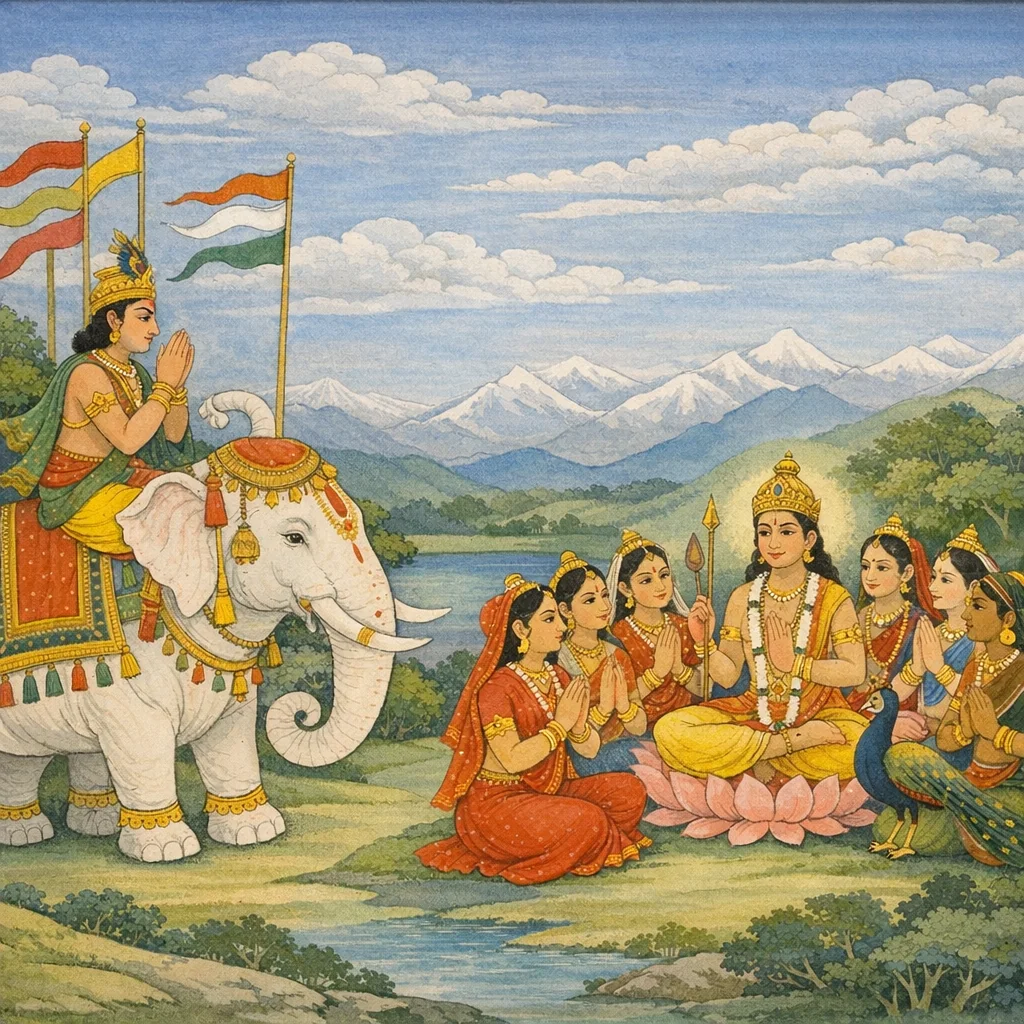
Mārkaṇḍeya said: Seeing that victory was uncertain, the Lord of the gods—eager to secure triumph—mounted the back of Airāvata and set out, accompanied by the divine hosts.
Verse 4
देवेश्वर इन्द्रको अपनी विजयके विषयमें संदेह ही दिखायी देता था, तो भी वे विजयकी अभिलाषासे ऐरावत हाथीपर आरुढ़ हो देवताओंके साथ आगे बढ़े ।। आदाय वज्ं बलवान सर्वैर्देवगणैर्वृत: । विजिधघांसुर्महासेनमिन्द्रस्तूर्णतरं ययौ,सब देवताओंसे घिरे हुए बलवान इन्द्र महासेनको मार डालनेकी इच्छासे हाथमें वज्र ले बड़े वेगसे अग्रसर हो रहे थे
Mārkaṇḍeya said: Though Indra, lord of the gods, still showed a trace of doubt about the outcome of his victory, he nevertheless rose with the desire to prevail. Surrounded by all the hosts of the gods, the mighty Indra took up his thunderbolt and, intent on slaying Mahāsena, advanced with even greater speed—his resolve overcoming hesitation as he moved toward battle.
Verse 5
उग्र तं च महानादं देवानीकं॑ महाप्रभम् | विचित्रध्वजसंनाहं नानावाहनकार्मुकम्,देवताओंकी सेना बड़ी भयानक थी। उसमें जोर-जोरसे विकट गर्जना हो रही थी। उसकी प्रभाका विस्तार महान् था। उसके ध्वज संनाह (कवच) विचित्र थे। सभी सैनिकोंके वाहन और धुनष नाना प्रकारके दिखायी देते थे। सबने श्रेष्ठ वस्त्रोंस अपने शरीरको आच्छादित कर रखा था। सभी लोग श्रीसम्पन्न तथा विविध आभूषणोंसे विभूषित दिखायी देते थे। इन्द्रको अपने वधके लिये आते देख कुमारने भी उनपर धावा बोल दिया
Mārkaṇḍeya said: “That divine host was fierce, raising a tremendous roar and blazing with great splendor. Its banners and armor were strikingly varied; its warriors bore many kinds of mounts and bows.” In context, the scene underscores how overwhelming power and martial magnificence can appear—yet such force, when driven by anger or rivalry, becomes a test of restraint and right conduct (dharma) for all who confront it.
Verse 6
प्रवराम्बरसंवीतं श्रिया जुष्टमलड्कृतम् । विजिघांसुं तमायान्तं कुमार: शक्रमन्वयात्,देवताओंकी सेना बड़ी भयानक थी। उसमें जोर-जोरसे विकट गर्जना हो रही थी। उसकी प्रभाका विस्तार महान् था। उसके ध्वज संनाह (कवच) विचित्र थे। सभी सैनिकोंके वाहन और धुनष नाना प्रकारके दिखायी देते थे। सबने श्रेष्ठ वस्त्रोंस अपने शरीरको आच्छादित कर रखा था। सभी लोग श्रीसम्पन्न तथा विविध आभूषणोंसे विभूषित दिखायी देते थे। इन्द्रको अपने वधके लिये आते देख कुमारने भी उनपर धावा बोल दिया
Mārkaṇḍeya said: Clad in splendid garments, graced by fortune and richly adorned, Indra advanced with the intent to slay. Seeing Śakra coming for his death, the Kumāra in turn rushed forward to meet him in battle. The scene underscores a stark ethical tension: divine authority moving to punish, and a resolute warrior meeting fate with fearless resistance rather than submission.
Verse 7
विनदन् पार्थ देवेशो द्रुतं याति महाबल: । संहर्षयन् देवसेनां जिघांसु: पावकात्मजम्,युधिष्ठिर! महाबली देवराज इन्द्र अग्निनन्दन स्कन्दको मार डालनेकी इच्छासे देवताओंकी सेनाका हर्ष बढ़ाते हुए तीव्र गतिसे विकट गर्जनाके साथ आगे बढ़ रहे थे
Mārkaṇḍeya said: “O Pārtha (Arjuna), the mighty Lord of the gods, Indra, moved swiftly forward with a fearsome roar. Intent on slaying the son of Fire (Skanda/Kārttikeya), he stirred the gods’ army to heightened ardor and confidence, urging them on toward battle.”
Verse 8
सम्पूज्यमानस्त्रिदशैस्तथैव परमर्षिभि: । समीपमथ सम्प्राप्त: कार्तिकेयस्थ वासव:,उस समय सम्पूर्ण देवता और महर्षि उनका बड़ा सम्मान कर रहे थे। जब देवराज इन्द्र कुमार कार्तिकेयके निकट पहुँचे, तब उन्होंने देवताओंके साथ सिंहके समान गर्जना की। उनका वह सिंहनाद सुनकर कुमार कार्तिकेय भी समुद्रके समान भयंकर गर्जना करने लगे
Mārkaṇḍeya said: While he was being duly honored by the gods and by the highest seers, Vāsava (Indra) then came near Kārttikeya. In that charged moment of divine encounter, the gods’ reverence and Indra’s approach signal the recognition of Kārttikeya’s extraordinary power and status, setting the stage for a display of strength that is nonetheless framed by proper respect and order.
Verse 9
सिंहनादं ततकश्नक्रे देवेश: सहित: सुरै: । गुहो5पि शब्दं त॑ श्रुत्वा व्यनदत् सागरो यथा,उस समय सम्पूर्ण देवता और महर्षि उनका बड़ा सम्मान कर रहे थे। जब देवराज इन्द्र कुमार कार्तिकेयके निकट पहुँचे, तब उन्होंने देवताओंके साथ सिंहके समान गर्जना की। उनका वह सिंहनाद सुनकर कुमार कार्तिकेय भी समुद्रके समान भयंकर गर्जना करने लगे
Then Indra, Lord of the gods, accompanied by the deities, let out a lion-like roar. Hearing that sound, Guha (Kumāra Kārttikeya) roared back—terrible and deep like the ocean. Thus was mutual honor shown among divine powers: strength displayed not in arrogance, but as a ceremonial affirmation of alliance and shared purpose.
Verse 10
तस्य शब्देन महता समुद्धूतोदधिप्रभम् । बश्राम तत्र तत्रेव देवसैन्यमचेतनम्,देवताओंकी सेना उमड़ते हुए समुद्रके समान जान पड़ती थी। परंतु स्कन्दकी भारी गर्जनासे अचेत-सी होकर वहीं चक्कर काटने लगी
Mārkaṇḍeya said: “By his mighty roar, the host of the gods—stirred up like the heaving ocean—became as if senseless and, right there on the spot, reeled and wandered in confusion.”
Verse 11
जिघांसूनुपसम्प्राप्तान् देवान् दृष्टवा स पावकि: । विससर्ज मुखात् क्रुद्धः प्रवृद्धा: पावकार्चिष:,अग्निकुमार स्कन्द यह देखकर कि देवतालोग मेरा वध करनेकी इच्छासे यहाँ एकत्र हुए हैं, कुपित हो उठे और अपने मुँहसे आगकी बढ़ती हुई लपटें छोड़ने लगे
Mārkaṇḍeya said: Seeing the gods assembled and approaching with the intent to kill him, the Fire-born one flared up in anger and, from his mouth, discharged ever-growing tongues of flame. The episode shows how fear and hostility can provoke destructive retaliation, and how unchecked wrath—especially in the powerful—quickly becomes a danger to all.
Verse 12
अदहदू देवसैन्यानि वेपमानानि भूतले । ते प्रदीप्तशिरोदेहा: प्रदीप्तायुधवाहना:,इस प्रकार उन्होंने देवताओंकी सेनाको जलाना प्रारम्भ किया। सारे सैनिक पृथ्वीपर गिरकर छटपटाने लगे। किसीका शरीर जल गया, किसीका सिर, किसीके आयुध जल गये और किसीके वाहन
Mārkaṇḍeya said: “He began to burn the armies of the gods as they trembled upon the earth. Those warriors, their heads and bodies aflame, with their weapons and mounts also blazing, fell to the ground in agony.” The passage underscores the moral gravity of unrestrained destructive power in battle—when violence exceeds dharmic limits, even the mighty are reduced to helpless suffering.
Verse 13
प्रच्युता: सहसा भान्ति व्यस्तास्तारागणा इव | दह्ामाना: प्रपन्नास्ते शरणं पावकात्मजम्,वे सब-के-सब सहसा तितर-बितर हो आकाशमें बिखरे हुए तारोंके समान जान पड़ते थे। इस तरह जलते हुए देवता वज्रधारी इन्द्रका साथ छोड़कर अग्निनन्दन स्कन्दकी ही शरणमें आये, तब उन्हें शान्ति मिली। देवताओंके त्याग देनेपर इन्द्रने स्कन्दपर अपने वज्रका प्रहार किया
Mārkaṇḍeya said: “All at once they seemed to have fallen away and scattered, like clusters of stars dispersed across the sky. Burning with distress, those gods abandoned Indra and sought refuge in Skanda, the son of Agni; and by taking shelter in him they found peace.”
Verse 14
देवा वज्रधरं त्यक्त्वा ततः शान्तिमुपागता: । त्यक्तो देवैस्तत: स्कन्दे वज्॑ शक्रो न््यपातयत्,वे सब-के-सब सहसा तितर-बितर हो आकाशमें बिखरे हुए तारोंके समान जान पड़ते थे। इस तरह जलते हुए देवता वज्रधारी इन्द्रका साथ छोड़कर अग्निनन्दन स्कन्दकी ही शरणमें आये, तब उन्हें शान्ति मिली। देवताओंके त्याग देनेपर इन्द्रने स्कन्दपर अपने वज्रका प्रहार किया
Mārkaṇḍeya said: The gods, abandoning Indra the wielder of the thunderbolt, then attained peace. When he was thus forsaken by the gods, Śakra (Indra) hurled his thunderbolt at Skanda.
Verse 15
तद्विसृष्टं जघानाशु पार्श्व स्कन्दस्य दक्षिणम् | बिभेद च महाराज पार्श्न तस्य महात्मन:
Mārkaṇḍeya said: “That which had been hurled struck at once the right flank of Skanda, and, O king, it pierced the side of that great-souled one.”
Verse 16
महाराज! इन्द्रके छोड़े हुए उस वज्ने शीघ्र ही कुमार कार्तिकेयकी दायीं पसलीपर गहरी चोट पहुँचायी और उन महामना स्कन्दके पार्श्रभागको क्षत-विक्षत कर दिया ।। वज्प्रहारात् स्कन्दस्य संजात: पुरुषो5पर: । युवा काञ्चनसंनाह: शक्तिधृग् दिव्यकुण्डल:,वज्रका प्रहार होनेपर स्कन्दके (उस दक्षिण पार्श्वसे) एक दूसरा वीर पुरुष प्रकट हुआ, जिसकी युवावस्था थी। उसने सुवर्णमय कवच धारण कर रखा था। उसके एक हाथमें शक्ति चमक रही थी और कानोंमें दिव्य कुण्डल झलमला रहे थे
Mārkaṇḍeya said: “O great king, the thunderbolt released by Indra swiftly struck Kumāra Kārttikeya on his right side, tearing and mangling the flank of the high-souled Skanda. From that very blow of the vajra, another heroic man sprang forth from Skanda—youthful, clad in golden armor, holding a spear-weapon, and shining with divine earrings.”
Verse 17
यद्धज़विशनाज्जातो विशाखस्तेन सो5भवत् | संजातमपरं दृष्टवा कालानलसमपद्युतिम्
Mārkaṇḍeya said: “Because he was born from that ‘Viśana’, he came to be known as Viśākha. Then, seeing yet another being arise—radiant like the fire of Time at the end of an age—he understood the fearful power that had manifested.”
Verse 18
तस्याभयं ददौ स्कनन््द: सह सैन्यस्य सत्तम: । ततः प्रद्ृष्टास्त्रिदशा वादित्राण्यभ्यवादयन्,तब सत्पुरुषोंमें श्रेष्ठ कुमार स्कन्दने सेनासहित इन्द्रको अभयदान दिया। इससे प्रसन्न होकर सब देवता (हर्षसूचक) बाजे बजाने लगे
Mārkaṇḍeya said: Skanda, the foremost among the virtuous, granted him fearlessness, along with his army. Thereupon, the gods, delighted at what they witnessed, sounded their musical instruments in celebration.
Verse 173
भयादिनन््द्रस्तु तं स्कन्दं प्राउजलि: शरणं गत: । वज्के प्रविष्ट होनेसे उसकी उत्पत्ति हुई थी, इसलिये वह विशाख नामसे प्रसिद्ध हुआ। प्रलयकालकी अग्निके समान अत्यन्त तेजस्वी उस द्वितीय वीरको प्रकट हुआ देख इन्द्र भयसे थर्रा उठे और हाथ जोड़कर उन स्कन्ददेवकी शरणमें आये
Mārkaṇḍeya said: Struck with fear, Indra approached Skanda with folded hands and sought his protection. Seeing that second hero blaze forth with a radiance like the fire of cosmic dissolution, Indra trembled and, abandoning pride, took refuge in Skanda—affirming the ethical primacy of humility and surrender before overwhelming divine power.
Verse 226
इस प्रकार श्रीमहाभारत वनपर्वके अन्तर्गत मार्कण्डेयसमास्यापर्वमें आंड्रियोपाख्यानके प्रसंगर्ें स्कन््दकी उत्पत्तिविषयक दो सौ छब्बीसवाँ अध्याय पूरा हुआ
Thus, in the Śrī Mahābhārata, within the Vana Parva—specifically in the Markandeya Samasya section—on the occasion of the Āṇḍriya episode, the two-hundred-and-twenty-sixth chapter, dealing with the birth/origin of Skanda, is concluded. The colophon signals a transition: the narrative frame (Markandeya’s discourse) closes this unit and prepares the listener to move onward, emphasizing orderly transmission of sacred history and its moral exemplars.
Verse 227
इति श्रीमहाभारते वनपर्वणि मार्कण्डेयसमास्यापर्वणि आज्धिरसे इन्द्रस्कन्दसमागमे सप्तविंशत्यधिकद्धिशततमो< ध्याय:,इस प्रकार श्रीमहाभारत वनपर्वके अन्तर्गत मार्कण्डेयसमास्यापर्वमें आंगिरसोपाख्यानके प्रसंगमें इन्द्र-स्कन्दसमागमविषयक दो सौ सत्ताईसवाँ अध्याय पूरा हुआ
Thus, in the Śrī Mahābhārata, within the Vana Parva—under the section known as the Mārkaṇḍeya-samāsya sub-parvan—on the occasion of the Āṅgirasa narrative, the chapter concerning the meeting of Indra and Skanda comes to an end (being the 227th chapter). This colophon signals the completion of the episode, marking a formal pause in the teaching-through-story that frames divine encounters as confirmations of cosmic order and rightful authority.
Frequently Asked Questions
The risk of converting a lawful, routine expedition (hunting/cattle oversight) into an unethical provocation through pride or misconduct—triggering retaliatory action and wider political fallout.
Sound policy prefers restraint and delegation over display: avoid unnecessary contact with capable adversaries, recognize their enhanced capacities, and prevent minor errors from escalating into irreversible conflict.
No explicit phalaśruti appears in this unit; the meta-function is narrative-structural—foreshadowing confrontation by documenting counsel, consent, and the material scale of mobilization.