Adhyaya 225
Kaurava Court Hears of the Pāṇḍavas’ Forest Hardship (वैचित्रवीर्यवंशीयस्य राज्ञः करुणाविचारः)
Upa-parva: Araṇya-vihāra and Kuru Court Reflection Episode (contextual unit for Chapter 225)
Janamejaya asks what the Pāṇḍavas did after reaching a lake and sacred forest. Vaiśaṃpāyana explains that the Pāṇḍavas, after settling arrangements and leaving the crowd, move through forests, mountains, and river-regions, living with svādhyāya and ascetic discipline, while learned elders visit and are honored. A brāhmaṇa adept in discourse then reaches the Kaurava realm and, upon respectful reception by the aged Kuru king of the Vaicitravīrya line, narrates the Pāṇḍavas’ emaciated condition and Draupadī’s distress. The king, moved by compassion, reflects on the incongruity of Yudhiṣṭhira and his brothers sleeping on the ground, and anticipates Arjuna’s and Bhīma’s suppressed but intensifying resolve. The discourse turns to causality: the agent awaits the fruit of good or bad action; karmic results are inescapable, likened to agriculture where seed, field, and timely rain yield inevitable produce. The king laments complicity in wrongful outcomes, foresees destructive consequences, and notes Arjuna’s attainment of divine weapons. The report concludes with Duryodhana and Śakuni relaying the king’s words to Karṇa, who reacts without satisfaction, indicating hardened political posture despite ominous ethical forecasting.
Chapter Arc: दक्षिणात्य पाठ-भेद का संकेत देते हुए कथा इन्द्र और देवसेना के ब्रह्मा-समागम की ओर मुड़ती है—जहाँ एक कन्या-स्वर से देवताओं के भाग्य का प्रश्न उठ खड़ा होता है। → दो बहिनें अपनी सखियों सहित प्रजापति की आज्ञा लेकर क्रीड़ा-विहार को आती हैं, पर उनके सुख पर छाया है: केशी नामक महासुर नित्य उन्हें हर लेने की चेष्टा करता है; दैत्य-सेना का उद्दंड संकल्प और इन्द्र की असमर्थता/विवशता का संकेत भय को गाढ़ा करता है। → अमावस्या के रौद्र मुहूर्त में अपशकुनों का प्रलय-सा दृश्य उभरता है—देवासुर संग्राम का पूर्वाभास, उलटी धारा में बहती सिन्धु, रक्त-स्रोत, शृगालिनियों की अग्नि-सी मुखाकृति और सूर्य-विरोधी विकराल ध्वनियाँ; उसी घड़ी कन्या इन्द्र से ‘दुष्ट दैत्यों के जेता’ महावीर रक्षक की याचना करती है। → इन्द्र कन्या को साथ लेकर ब्रह्मा के पास जाता है; वसिष्ठ आदि महर्षि-श्रेष्ठ उपस्थित हैं। यज्ञ-परिसर में देवता शतक्रतु के नेतृत्व में सोमपान/यज्ञ-भाग हेतु आते हैं और ऋषिगण विधिपूर्वक हवि-आहुति देकर देव-व्यवस्था को स्थिर करते हैं—कथा का स्वर संकट से विधान (ऋषि-यज्ञ, ब्रह्म-आदेश) की ओर लौटता है। → ब्रह्मा के सम्मुख पहुँची याचना का निर्णायक उत्तर और केशी-उपद्रव के निवारण हेतु कौन-सा दिव्य उपाय/वीर नियुक्त होगा—यह अगले प्रसंग पर टिका रह जाता है।
Shlokas
Verse 1
(दाक्षिणात्य अधिक पाठके २६ श्लोक मिलाकर कुल १७३ “लोक हैं) ८५० (3) अ+ अप चतुर्विशर्त्याधेकद्विशततमो<ध्याय: इन्द्रका देवसेनाके साथ ब्रह्माजीके पास तथा ब्रद्यरर्षियोंके आश्रमपर जाना, अग्निका मोह और वनगमन कन्योवाच अहं प्रजापते: कन्या देवसेनेति विश्रुता । भगिनी दैत्यसेना मे सा पूर्व केशिना हृता,कन्या बोली--देवेन्द्र! मैं प्रजापतिकी पुत्री हूँ। मेरा नाम देवसेना है। मेरी बहिनका नाम दैत्यसेना है, जिसे इस केशीने पहले ही हर लिया था
The maiden said: “O Indra, I am the daughter of Prajāpati, renowned by the name Devasenā. I have a sister named Daityasenā; she was earlier abducted by Keśin.” Thus she set forth her lineage and her wrong, appealing—though unspoken—to the king of the gods to restore order and uphold dharma against unlawful seizure.
Verse 2
सदैवावां भगिन्यौ तु सखीभि: सह मानसम् | आगच्छावेह रत्यर्थमनुज्ञाप्य प्रजापतिम्,हम दोनों बहिनें अपनी सखियोंके साथ प्रजापतिकी आज्ञा लेकर सदा क्रीडाविहारके लिये इस मानस पर्वतपर आया करती थीं
Yudhiṣṭhira said: “We two sisters, accompanied by our friends, would always come here to Mānasaparvata for play and recreation, only after obtaining the permission of Prajāpati.”
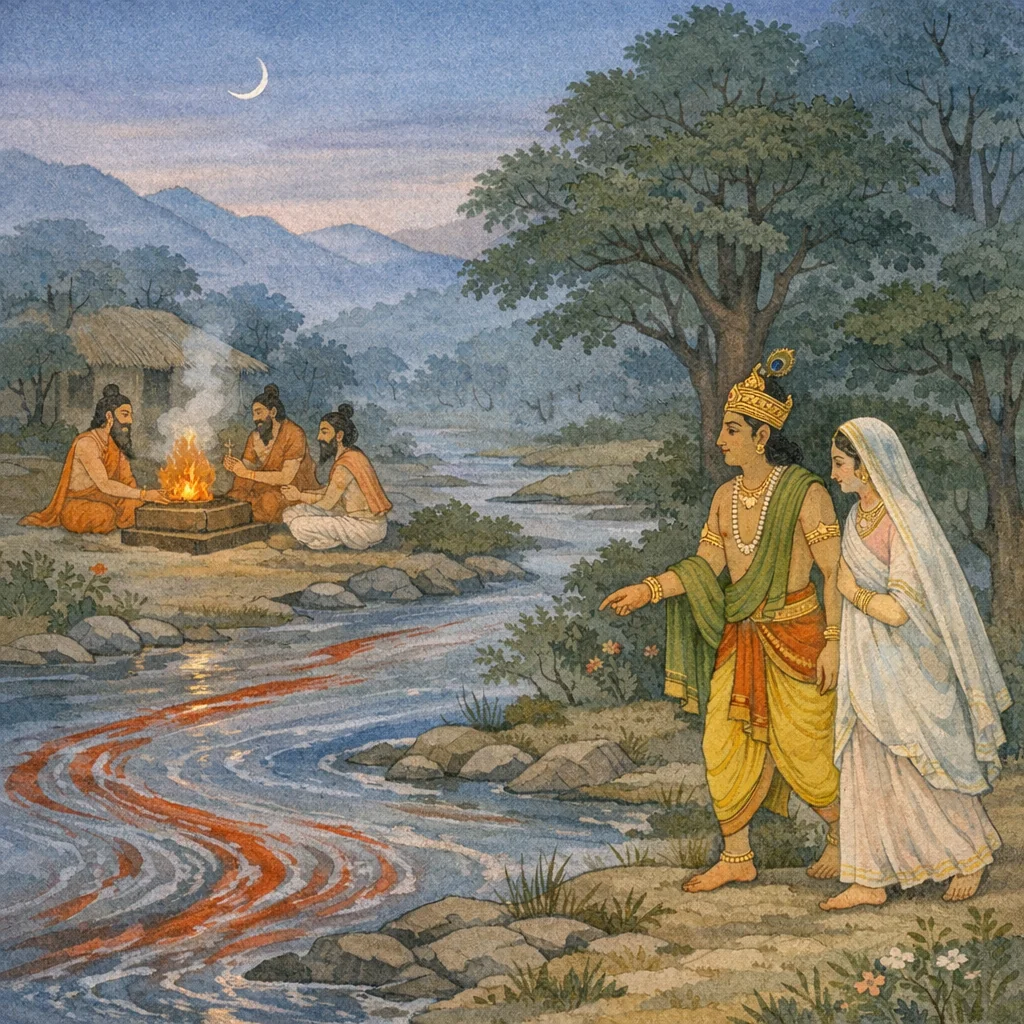
Verse 3
नित्यं चावां प्रार्थयते हर्तुं केशी महासुर: । इच्छत्येनं दैत्यसेना न चाहं पाकशासन
Yudhiṣṭhira said: “That great demon Keśī continually seeks to carry us off. The host of Dānavas desires him for this purpose; yet I am not Pākaśāsana (Indra) to subdue such a threat by sheer divine might.”
Verse 4
पाकशासन! महान् असुर केशी प्रतिदिन यहाँ आकर हम दोनोंको हर ले जानेके लिये फुसलाया करता था। दैत्यसेना इसे चाहती थी, परंतु मेरा इसपर प्रेम नहीं था ।। सा ह्तानेन भगवन मुक्ताहं त्वद्धलेन तु । त्वया देवेन्द्र निर्दिष्ट पतिमिच्छामि दुर्जयम्,अतः दैत्यसेनाको तो यह हर ले गया, परंतु मैं आपके पराक्रमसे बच गयी। भगवन्! देवेन्द्र! अब मैं आपके आदेशके अनुसार किसी दुर्जय वीरको अपना पति बनाना चाहती हूँ
O Pākaśāsana (Indra)! A mighty asura named Keśī used to come here every day and try to entice us with stratagems, intending to carry us both away. The host of the Daityas desired it, but I had no love for him. When he was slain, I was set free by your strength. Therefore, O blessed Devendra, in accordance with the husband you have indicated, I now wish to choose as my husband a hero who is hard to conquer. He did carry off Daityasenā, but I was saved by your valor; so, O Lord of the gods, I seek a worthy, unconquerable husband as you have directed.
Verse 5
इन्द्र वाच मम मातृष्वसेयी त्वं माता दाक्षायणी मम । आख्यातुं त्वहमिच्छामि स्वयमात्मबलं त्वया,इन्द्र बोले--शुभे! तुम मेरी मौसेरी बहिन हो। मेरी माता भी दक्षकी ही पुत्री हैं। मेरी इच्छा है कि तुम स्वयं ही अपने बलका परिचय दो
Indra said: “O auspicious one, you are my maternal cousin-sister; my own mother too is Dakṣa’s daughter. I wish that you yourself should declare and demonstrate your personal strength.”
Verse 6
कन्योवाच अबलाहं महाबाहो पतिस्तु बलवान् मम । वरदानात् _पितुर्भावी सुरासुरनमस्कृत:,कन्या बोली--महाबाहो! मैं तो अबला हूँ। पिताजीके वरदानसे मेरे भावी पति बलवान तथा देवदानव-वन्दित होंगे
The maiden said: “O mighty-armed one, I am but a helpless girl. Yet, by my father’s boon, my future husband will be powerful and honored even by gods and demons.”
Verse 7
इन्द्र रवाच कीदृशं तु बल॑ देवि पत्युस्तव भविष्यति । एतदिच्छाम्यहं श्रोतुं तव वाक्यमनिन्दिते,इन्द्रने पूछा--देवि! तुम्हारे पतिका बल कैसा होगा? अनिन्दिते! यह बात मैं तुम्हारे ही मुँहसे सुनना चाहता हूँ
Indra said: “O goddess, what sort of strength will your husband possess? I wish to hear this matter from your own lips, O blameless one.”
Verse 8
कन्योवाच देवदानवयक्षाणां किन्नरोरगरक्षसाम् | जेता यो दुष्टदैत्यानां महावीयों महाबल:,कन्या बोली--देवराज! जो देवता, दानव, यक्ष, किन्नर, नाग, राक्षस तथा दुष्ट दैत्योंको जीतनेवाला हो; जिसका पराक्रम महान् और बल असाधारण हो तथा जो तुम्हारे साथ रहकर समस्त प्राणियोंपर विजय प्राप्त कर सके, वह ब्राह्मणहितैषी तथा अपने यशकी वृद्धि करनेवाला वीर पुरुष मेरा पति होगा
The maiden said: “O lord of the gods! He who can conquer devas, dānavas, yakṣas, kinnaras, nāgas, and rākṣasas—who is a vanquisher of wicked daityas, possessed of great valor and extraordinary strength—and who, standing by your side, can win victory over all beings: that heroic man, a well-wisher of brāhmaṇas and one who increases his own fame, shall be my husband.”
Verse 9
यस्तु सर्वाणि भूतानि त्वया सह विजेष्यति । स हि मे भविता भर्ता ब्रह्मण्य: कीर्तिवर्धन:,कन्या बोली--देवराज! जो देवता, दानव, यक्ष, किन्नर, नाग, राक्षस तथा दुष्ट दैत्योंको जीतनेवाला हो; जिसका पराक्रम महान् और बल असाधारण हो तथा जो तुम्हारे साथ रहकर समस्त प्राणियोंपर विजय प्राप्त कर सके, वह ब्राह्मणहितैषी तथा अपने यशकी वृद्धि करनेवाला वीर पुरुष मेरा पति होगा
The maiden said: “He who, standing together with you, can conquer all beings—he shall indeed become my husband: a champion devoted to the welfare of the Brahmins and one who increases his own fame through righteous prowess.”
Verse 10
मार्कण्डेय उवाच इन्द्रस्तस्या वच: श्रुत्वा दु:खितो5चिन्तयद् भृशम् । अस्या देव्या: पतिर्नास्ति यादृशं सम्प्रभाषते,मार्कण्डेयजी कहते हैं--राजन्! देवसेनाकी बात सुनकर इन्द्र अत्यन्त दुःखी हो सोचने लगे “इस देवीको जैसा यह बता रही है, वैसा पति मिलना सम्भव नहीं जान पड़ता”
Markandeya said: Hearing her words, Indra became deeply distressed and pondered intensely. He thought, “For this divine lady, there seems to be no husband in existence matching what she describes and asks for.”
Verse 11
अथापश्यत् स उदये भास्करं भास्करघ्युति: | सोम॑ चैव महाभागं विशमानं दिवाकरम्,तदनन्तर सूर्यके समान तेजस्वी इन्द्रने देखा, सूर्य उदयाचलपर आ गये हैं। महाभाग चन्द्रमा भी सूर्यमें ही प्रवेश कर रहे हैं
Mārkaṇḍeya said: Then, at sunrise, he beheld the Sun—radiant with the Sun’s own splendor. And he also saw the illustrious Moon entering into the Sun.
Verse 12
अमावास्यां प्रवृत्तायां मुहुर्ते रौद्र एव तु । देवासुरं च संग्रामं सो5पश्यदुदये गिरो,अमावस्या आरम्भ हो गयी थी। उस रौद्र (भयंकर) मुहूर्तमें ही उदयगिरिके शिखरपर उन्हें देवासुर-संग्रामका लक्षण दिखायी दिया
Mārkaṇḍeya said: When the new-moon night had just begun, at that very dreadful hour, he beheld upon the peak of the Udaya mountain the ominous sign of a battle between the gods and the asuras.
Verse 13
लोहितैश्व धनैर्युक्तां पूर्वा संध्यां शतक्रतुः । अपश्यल्लोहितोदं च भगवान् वरुणालयम्,ऐश्वर्यशाली इन्द्रने देखा, पूर्वसंध्या (प्रभात)-का समय है, प्राचीके आकाशमें लाल रंगके घने बादल घिर आये हैं और समुद्रका जल भी लाल ही दृष्टिगोचर हो रहा है
Mārkaṇḍeya said: Indra, the lord of a hundred sacrifices, beheld the eastern twilight suffused with dense crimson clouds; and he also saw the august abode of Varuṇa, its waters appearing red.
Verse 14
भगुभिश्नन्विरोेभ्यश्व हुतं मन्त्र: पृथग्विधै: । हव्यं गृहीत्वा वह्निं च प्रविशन््तं दिवाकरम्,भूगु तथा अंगिरा गोत्रके ऋषियोंद्वारा पृथक्ू-पृथक् मन्त्र पढ़कर हवन किये हुए हविष्यको ग्रहण करके अग्निदेव भी सूर्यमें ही प्रवेश करते हैं
Mārkaṇḍeya said: With distinct mantras, the sages of the Bhṛgu and Aṅgiras lineages perform offerings. Taking up the oblation, Agni too enters into the Sun.
Verse 15
पर्व चैव चतुर्विशं तदा सूर्यमुपस्थितम् । तथा धर्मगतं रौद्रं सोम॑ सूर्यगतं च तम्,उस समय भगवान् सूर्यके निकट चौबीसवाँ पर्व उपस्थित था; अर्थात् पहले जिस अमावस्यापर्वमें देवासुर-संग्राम हुआ था; उससे पूरे एक वर्षके बाद पुनः वैसा अवसर आया था। धर्मकी अर्थात् होम और संध्याकी वेलामें वह रौद्र मुहूर्त उपस्थित था और चन्द्रमा सूर्यकी राशिमें स्थित हो गये थे
Mārkaṇḍeya said: At that time the twenty-fourth parvan (the lunar fortnightly junction) had again arrived in relation to the Sun. The fierce muhūrta had come at the very hour prescribed for dharma—rites such as the homa and the twilight worship—and the Moon had entered the Sun’s sign, bringing on the darkness of conjunction.
Verse 16
समालोक्यैकतामेव शशिनो भास्करस्य च । समवायं तु त॑ रौद्रं दृष्टवा शक्रो5न्वचिन्तयत्,इस प्रकार चन्द्रमा और सूर्यकी एकता (एक राशिपर स्थिति) तथा रौद्र मुहूर्तका संयोग देखकर इन्द्र मन-ही-मन इस प्रकार चिन्तन करने लगे---
Mārkaṇḍeya said: Seeing that the Moon and the Sun had come into a single alignment, and observing the ominous conjunction of the fierce (raudra) moment, Indra began to reflect inwardly—considering what such a sign might portend and what course of action would be right.
Verse 17
सूर्याचन्द्रमसोर्घोरें दृश्यते परिवेषणम् । एतस्मिन्नेव रात्रयन्ते महद् युद्ध तु शंसति,“अहो! इस समय चन्द्रमा और सूर्यपर यह भयंकर घेरा दिखायी दे रहा है। इससे सूचित होता है कि रात बीतते-बीतते भारी युद्ध छिड़ जायगा
Mārkaṇḍeya said: “A dreadful halo is seen around the Sun and the Moon. This omen foretells that before this very night has run its course, a great battle will break out.”
Verse 18
सरित्सिन्धुरपीयं तु प्रत्यसूृग्वाहिनी भृशम् । शृगालिन्यग्निवक्त्रा च प्रत्यादित्यं विराविणी,“यह सिन्धु नदी भी उलटी धारामें बहकर रक्तके स्रोत बहा रही है। सियारिन मुँहसे आग उगलती हुई-सी सूर्यकी ओर देखकर रोती है
Markandeya said: “Even this river Sindhu is flowing violently against its natural course, as though carrying streams of blood. And the she-jackal, with a mouth as if spewing fire, wails while facing the sun.”
Verse 19
एष रौद्रश्न सड्घातो महान् युक्तश्न तेजसा । सोमस्य वल्लिसूर्याभ्यामद्भुतोड5यं समागम:
Mārkaṇḍeya said: “This is a vast and formidable mass, charged with blazing energy. Truly wondrous is this conjunction—of Soma on the one side, and of the Sun together with the creeper (valli) on the other.”
Verse 20
“अनेक योगोंका यह भयंकर तथा महान् संघात (सम्मेलन) तेजसे आलोकित हो रहा है। अग्नि और सूर्यके साथ चन्द्रमाका यह अद्भुत समागम दृष्टिगोचर होता है ॥। जनयेद् यं सुतं सोम: सो<स्या देव्या: पतिर्भवेत् । अम्निश्ैैतैर्गुणैर्युक्त: सर्वैरग्निश्च देवता
Mārkaṇḍeya said: “This formidable and mighty convergence of many powers shines with blazing radiance. Before our eyes appears a wondrous meeting of the Moon together with Fire and the Sun. The son whom Soma begets will become the husband of this goddess; and Agni too—endowed with all these qualities—stands forth as a divine power.”
Verse 21
“जान पड़ता है, इस समय चन्द्रमा जिस पुत्रको जन्म देंगे, वही इस देवीका पति होगा अथवा अग्नि भी इन सभी अभीष्ट गुणोंसे युक्त हैं। वे भी देवकोटियें ही हैं ।। एष चेज्जनयेद् गर्भ सो<स्या देव्या: पतिर्भवेत् । एवं संचिन्त्य भगवान् ब्रह्मलोक॑ तदा गतः,“अत: ये यदि किसी बालकको उत्पन्न करें तो वही इस देवीका पति होगा।” ऐसा सोच- विचारकर ऐश्वर्यशाली इन्द्र उस समय उस देवसेनाको साथ ले ब्रह्मलोकमें गये और ब्रह्माजीसे इस प्रकार बोले--'भगवन्! आप इस देवीके लिये कोई अच्छे स्वभावका शूरवीर पति प्रदान कीजिये”
Mārkaṇḍeya said: “If this one should beget a child, that child would become the husband of this goddess.” Having reflected thus, the illustrious one then went to Brahmaloka. The sense is that the gods, weighing who among them possessed the desired qualities and rightful fitness, sought a divinely sanctioned match rather than acting from impulse; therefore they approached Brahmā to secure a worthy, virtuous, and heroic husband for the goddess.
Verse 22
गृहीत्वा देवसेनां तामवदत् स पितामहम् । उवाच चास्या देव्यास्त्वं साधुशूरं पतिं दिश,“अत: ये यदि किसी बालकको उत्पन्न करें तो वही इस देवीका पति होगा।” ऐसा सोच- विचारकर ऐश्वर्यशाली इन्द्र उस समय उस देवसेनाको साथ ले ब्रह्मलोकमें गये और ब्रह्माजीसे इस प्रकार बोले--'भगवन्! आप इस देवीके लिये कोई अच्छे स्वभावका शूरवीर पति प्रदान कीजिये”
Having taken that Devasenā with him, Indra addressed Pitāmaha (Brahmā). He said, “For this goddess, please grant a husband—one who is noble in conduct and heroic in valor.” The request frames marriage not as mere possession but as a dharmic placement: the deity is to be matched with a worthy protector whose character and courage uphold cosmic and social order.
Verse 23
फ्ः स्य ब्रह्मोवाच मयैतच्चिन्तितं कार्य त्वया दानवसूदन । तथा स भविता गर्भो बलवानुरुविक्रम:,ब्रह्माजीने कहा--दानवसूदन! इस विषयमें तुमने जो विचार किया है वही मैंने भी सोचा है। वैसा होनेपर ही एक महान् पराक्रमी बलवान वीरका प्रादुर्भाव होगा
Brahmā said: “O slayer of the Dānavas, the very course of action you have reflected upon is the same that I too have resolved. If it is carried out in that manner, then indeed a mighty embryo will come to be—powerful and of vast prowess.”
Verse 24
स भविष्यति सेनानीस्त्वया सह शतक्रतो । अस्या देव्या:पतिश्वैव स भविष्यति वीर्यवान्,शतक्रतो! वही तुम्हारे साथ रहकर देवसेनाका पराक्रमी सेनापति होगा और वही इस देवीका भी पति होगा
Mārkaṇḍeya said: “O Śatakratu (Indra), he will become the valiant commander of the army, remaining by your side; and that same hero will also be the husband of this goddess.”
Verse 25
एतच्छुत्वा नमस्तस्मै कृत्वासौ सह कन्यया | तत्राभ्यगच्छद् देवेन्द्रो यत्र देवर्षयो5भवन्
Hearing this, he offered reverent homage to that one; and together with the maiden he proceeded there—Indra, lord of the gods—toward the place where the divine seers were assembled. The verse underscores the ethic of humility and proper respect (namas) even for the mighty, and presents right conduct as the fitting response to sacred counsel.
Verse 26
भागार्थ तपसो धातु तेषां सोम॑ तथाध्वरे
Mārkaṇḍeya said: “For them, Soma in the sacrificial rite is the sustaining essence and the rightful share—the very substance that nourishes their austerity and supports their sacred undertaking.”
Verse 27
इष्टिं कृत्वा यथान्यायं सुसमिद्धे हुताशने
Having duly performed the iṣṭi-sacrifice according to prescribed rule, with the sacred fire blazing brightly, (he proceeded further in the rite).
Verse 28
समाहूतो हुतवह: सो<द्धुतः सूर्यमण्डलातू
Mārkaṇḍeya said: “When Agni, the bearer of oblations, was duly invoked, he rose forth—marvellously—out of the orb of the sun.”
Verse 29
विनि:सृत्य ययौ वदल्िवग्यितो विधिवत् प्रभु: । आगम्याहवनीयं वै तैर्द्धिजैर्मन्त्रतो हुतम्
Markandeya said: Having gone forth, the lord proceeded, duly instructed and in accordance with proper rite. Reaching the sacred āhavanīya fire, he found that the twice-born priests had offered oblations into it with Vedic mantras.
Verse 30
स तत्र विविध हव्यं प्रतिगृह्य हुताशन:ः । ऋषिभ्यो भरतश्रेष्ठ प्रायच्छत दिवौकसाम्
Having received there the various sacrificial offerings, Agni (the Fire-god) distributed them—O best of the Bharatas—to the sages on behalf of the dwellers of heaven.
Verse 31
भरतश्रेष्ठ! मन्त्रोंद्वारा आवाहन होनेपर वे अद्भुत नामक अग्नि सूर्यमण्डलसे निकलकर मौनभावसे वहाँ आये और ब्रह्मर्षियोंद्वारा मन्त्रोच्चारणपूर्वक विधिवत् हवन किये हुए भाँति- भाँतिके हवनीय पदार्थोंको उन महर्षियोंसे प्राप्त करके उन्होंने सम्पूर्ण देवताओंकी सेवामें अर्पित किया ।। निष्क्रामंश्वाप्पपश्यत् स पत्नीस्तेषां महात्मनाम् | स्वेष्वासनेषूपविष्टा: स्वपन्तीक्ष तथा सुखम्,देवताओंको हविष्य पहुँचाकर जब अग्निदेव वहाँसे जाने लगे, तब उनकी दृष्टि उन महात्मा सप्तर्षियोंकी पत्नियोंपर पड़ी। उनमेंसे कुछ तो अपने आसनोंपर बैठी थीं और कुछ सुखपूर्वक सो रही थीं”
Mārkaṇḍeya said: “O best of the Bharatas! When the fires called ‘Adbhuta’ were invoked by mantra, they emerged from the orb of the sun and came there in solemn silence. Receiving from those great seers the various oblation-materials duly offered with Vedic recitation, they conveyed them onward in service to all the gods. And when Agni, having delivered the offerings to the deities, was departing from that place, his gaze fell upon the wives of the great sages, the Seven Ṛṣis—some seated upon their own seats, and some sleeping comfortably.”
Verse 32
रुक्मवेदिनिभास्तास्तु चन्द्रलेखा इवामला: । हुताशनार्चिप्रतिमा: सर्वास्तारा इवाद्भुता:,उनकी अंगकान्ति सुवर्णमयी वेदीके समान गौर थी, वे चन्द्रमाकी कलाके समान निर्मल थीं, अग्निकी लपटोंके समान प्रभा बिखेर रही थीं और तारिकाओंके समान अद्भुत सौन्दर्यसे प्रकाशित हो रही थीं
Mārkaṇḍeya said: “Their bodily radiance was fair like a golden altar; they were spotless like the crescent of the moon. They cast forth brilliance like tongues of fire, and shone with wondrous beauty like the stars.”
Verse 33
स तत्र तेन मनसा बभूव क्षुभितेन्द्रिय: । पतन्नीर्दृष्टवा द्विजेन्द्राणां वह्निः कामवशं ययौ,इस प्रकार वहाँ (आसक्तियुक्त) मनसे उन ब्रह्मर्षियोंकी पत्नियोंको देखकर अग्निदेवकी सारी इन्द्रियाँ क्षोभसे चञज्चल हो उठीं। वे सर्वधा कामके अधीन हो गये
There, with his mind thus drawn in attachment, Agni’s senses became agitated. On seeing the wives of the foremost Brahmin sages, the Fire-god fell wholly under the sway of desire.
Verse 34
भूय: संचिन्तयामास न न्याय्य॑ क्षुभितो हाहम् । साध्व्य: पत्न्यो द्विजेन्द्राणामकामा: कामयाम्यहम्,फिर उन्होंने मन-ही-मन विचार किया कि "मेरा यह कार्य कदापि उचित नहीं है। मेरे मनमें विचार आ गया है। इन ब्रह्मर्षियोंकी पत्नियाँ पतिव्रता हैं। ये मुझे बिलकुल नहीं चाहतीं, तो भी मैं इनकी कामना करता हूँ
Markandeya said: Again he reflected inwardly, agitated: “Alas, this is not proper for me. These are the virtuous, faithful wives of the foremost Brahmins; they do not desire me at all—yet I am still desiring them.”
Verse 35
नैता: शकक््या मया द्रष्टं स्प्रष्टं वाप्पनिमित्तत: । गार्हपत्यं समाविश्य तस्मात् पश्याम्यभीक्षणश:,“मैं अकारण न तो इन्हें देख सकता हूँ और न इनका स्पर्श ही कर सकता हूँ। ऐसी दशामें यदि मैं गार्हपत्य अग्निमें प्रविष्ट हो जाऊँ तो बार-बार इनके दर्शनका अवसर पा सकता हूँ'
Mārkaṇḍeya said: “Without any proper occasion or cause, I am not able either to see them or even to touch them. Therefore, if I enter the Gārhapatya (household) fire, I may gain the opportunity to behold them again and again.”
Verse 36
मार्कण्डेय उवाच संस्पृशन्निव सर्वास्ता: शिखाभि: काउचनप्रभा: । पश्यमाननश्च मुमुदे गार्हपत्यं समाश्रित:,मार्कण्डेयजी कहते हैं--राजन! ऐसा निश्चय करके अग्निदेवने गार्हपत्य अग्निका आश्रय लिया और अपनी लपटोंसे स्वर्गकी-सी कान्तिवाली उन ऋषि-पत्नियोंका स्पर्श तथा दर्शन-सा करते हुए वे बड़ी प्रसन्नताका अनुभव करने लगे
Mārkaṇḍeya said: Having resolved thus, Agni took refuge in the Gārhapatya fire. With his flames—golden in radiance—he seemed, as it were, to touch and behold all those sages’ wives, and in that (restrained) contact and vision he experienced great delight.
Verse 37
निरुष्य तत्र सुचिरमेवं वल्निर्वशं गत: । मनस्तासु विनिक्षिप्य कामयानो वराड़ना:
Mārkaṇḍeya said: Having restrained himself there for a long time, he at last fell under the sway of passion. Fixing his mind upon those women, he began to desire the fair-limbed maidens.
Verse 38
इस प्रकार बहुत देरतक वहाँ टिके रहकर अग्निदेव कामके वशमें हो गये। वे अपना हृदय उन सुन्दरियोंपर निछावर करके उनसे मिलनेकी कामना कर रहे थे ।। कामसंतप्तह्दयो देहत्यागविनिश्चित: । अलाभे ब्राह्मणस्त्रीणामग्निर्वनमुपागमत्
Mārkaṇḍeya said: Tormented at heart by desire and resolved to abandon his body when he could not obtain the wives of the Brahmins, Agni departed and went into the forest.
Verse 39
उनका हृदय कामाग्निसे संतप्त हो रहा था। वे उन ब्रह्मर्षियोंकी पत्नियोंके न मिलनेसे अपने शरीरको त्याग देनेका निश्चय कर चुके थे। अतः वनमें चले गये ।। स्वाहा त॑ दक्षदुहिता प्रथमं कामयत् तदा । सा तस्य छिद्रमन्वैच्छच्चिरात्प्रभूति भाविनी,प्रजापति दक्षकी पुत्री स्वाहा पहलेसे ही अग्निदिवको अपना पति बनाना चाहती थी और इसके लिये बहुत दिनोंसे वह अग्निका छिढद्र ढूँढ़ रही थी
Mārkaṇḍeya said: Svāhā, the daughter of Prajāpati Dakṣa, had long desired Agni as her husband. From that time onward, intent on her purpose, she kept searching for some vulnerability—some opening—in him by which her wish might be fulfilled.
Verse 40
अप्रमत्तस्य देवस्य न च पश्यत्यनिन्दिता | सातं ज्ञात्वा यथावत् तु वह्नि वनमुपागतम्,तत्त्वतः कामसंतप्तं चिन्तयामास भाविनी । परंतु अग्निदेवके सदा सावधान रहनेके कारण साध्वी स्वाहा उनका कोई दोष नहीं देख पाती थी। जब उसे अच्छी तरह मालूम हो गया कि अग्नि कामसंतप्त होकर वनमें चले गये हैं, तब उसने मन-ही-मन इस प्रकार विचार किया
Mārkaṇḍeya said: The blameless lady could perceive no fault in the ever-vigilant god. But when she came to know clearly that Agni had gone into the forest, truly scorched by desire, the thoughtful woman began to reflect within herself.
Verse 41
।। अहं सप्तर्षिपत्नीनां कृत्वा रूपाणि पावकम्,मैं अग्निके प्रति कामभावसे पीड़ित हूँ। अतः स्वयं ही सप्तर्षिपत्नियोंके रूप धारण करके अग्निदेवकी कामना करूँगी; क्योंकि वे उनके रूपसे मोहित हो रहे हैं। ऐसा करनेसे उन्हें प्रसन्नता होगी और मेरी कामना भी पूर्ण हो जायगी”
Mārkaṇḍeya said: “I am tormented by desire for Agni. Therefore I shall myself assume the forms of the wives of the Seven Sages and seek union with the Fire-god, for he is already being deluded by those very forms. By this he will be satisfied, and my own longing will also be fulfilled.”
Verse 42
कामयिष्यामि कामार्ता तासां रूपेण मोहितम् । एवं कृते प्रीतिरस्य कामावाप्तिश्न मे भवेत्,मैं अग्निके प्रति कामभावसे पीड़ित हूँ। अतः स्वयं ही सप्तर्षिपत्नियोंके रूप धारण करके अग्निदेवकी कामना करूँगी; क्योंकि वे उनके रूपसे मोहित हो रहे हैं। ऐसा करनेसे उन्हें प्रसन्नता होगी और मेरी कामना भी पूर्ण हो जायगी”
Mārkaṇḍeya said: “Afflicted by desire, I shall seek him in love by assuming their very forms, for he is deluded by their beauty. If this is done, he will be pleased, and my own longing will also be fulfilled.”
Verse 223
इस प्रकार श्रीमहाभारत वनपर्वके अन्तर्गत मार्कण्डेययमास्यापर्वमें आंगिरसोपाख्यानप्रकरणमें स्कन्दकी उत्पत्तिके विषयमें केशिपराभवविषयक दो यौ तेईसवाँ अध्याय समाप्त हुआ
Thus ends the two-hundred-and-twenty-third chapter of the Vana Parva of the Śrī Mahābhārata, within the Markandeya Samasya sub-section, in the episode of the Āṅgirasa narrative—treating the birth of Skanda and, in particular, the theme of Keśi’s defeat. The chapter concludes as a formal colophon marking the completion of this portion of the sacred history.
Verse 224
इति श्रीमहा भारते वनपर्वणि मार्कण्डेयसमास्यापर्वणि आद्धिरसोपाख्याने स्कन्दोत्पत्तौ चतुर्विशत्यधिकद्विशततमो<ध्याय:
Thus ends the two-hundred-and-twenty-fourth chapter of the Vana Parva of the Śrī Mahābhārata, within the Markandeya Samasya sub-section, in the narrative called the Āddhirāsa episode, concerning the birth of Skanda. This closing colophon marks the completion of the chapter’s account and signals a transition to what follows in the larger ethical and mythic discourse.
Verse 256
वसिष्ठ प्रमुखा मुख्या विप्रेन्द्रा:सुमहाबला: । यह सुनकर देवराज इन्द्र ब्रद्माजीको नमस्कार करके उस कन्याको साथ ले जहाँ महान् शक्तिशाली वसिष्ठ आदि श्रेष्ठ ब्राह्मण एवं देवर्षि थे, वहाँ उनके आश्रमपर आये
Mārkaṇḍeya said: “There were foremost and eminent brahmin-sages, led by Vasiṣṭha, endowed with great spiritual power. Hearing this, Indra, king of the gods, bowed to Brahmā and, taking the maiden with him, went to the hermitage where those mighty sages and divine seers such as Vasiṣṭha were residing.”
Verse 263
पिपासवो ययुर्देवा: शतक्रतुपुरोगमा: । उन दिनों वे महर्षिगण जो यज्ञ कर रहे थे, उसमें भाग लेनेके लिये तथा सोमपान करनेके लिये इन्द्र आदि सभी देवता वहाँ पधारे थे। उन सबके मनमें सोमपान की इच्छा थी
Mārkaṇḍeya said: Thirsting for Soma, the gods set forth, led by Śatakratu (Indra). Drawn by the sacrifice the great seers were performing, they came to claim their appointed share and to drink Soma—showing that even the gods are bound by the order of yajña and by the rights allotted within the rite.
Verse 273
जुह॒वुस्ते महात्मानो हव्यं सर्वदिवौकसाम् । उन महात्मा ऋषियोंने प्रज्वलित अग्निमें शास्त्रीय विधिसे इष्टिका सम्पादन करके सम्पूर्ण देवताओंके लिये हविष्यकी आहुति दी
Mārkaṇḍeya said: Those great-souled sages offered the sacred oblation into the kindled fire, duly according to scriptural rule, presenting havis for all the dwellers of heaven—the gods. The passage highlights disciplined ritual action done to honor the divine order, not for personal gain.
Frequently Asked Questions
The tension is between lawful restraint and justified retaliation: the Pāṇḍavas endure hardship without abandoning dharma, while the court anticipates that suppressed injury and injustice will mature into unavoidable consequence.
Karma is presented as inescapably fructifying: the doer awaits results of auspicious or inauspicious action, illustrated through the agrarian analogy where proper conditions necessarily yield a corresponding outcome.
No explicit phalaśruti is stated; however, the chapter’s meta-logic frames ethical causality and restraint as prerequisites for orderly life and moral clarity, indirectly aligning conduct with longer-term soteriological concerns.