Adhyaya 224
सत्यभामया द्रौपद्याश्वासनम् (Satyabhāmā’s Consolation of Draupadī)
Upa-parva: Draupadī-āśvāsana (Consolation of Draupadī) episode
Vaiśaṃpāyana narrates that Janārdana (Kṛṣṇa), after spending time in agreeable discourse with the Pāṇḍavas and eminent sages, completes formal leave-taking and prepares to mount his chariot. Satyabhāmā turns to Draupadī (Kṛṣṇā, Drupada’s daughter) and delivers a composed reassurance: Draupadī should not yield to longing, distress, or sleepless anxiety, for her husbands—likened to divine figures—will secure the earth and restore stable rule. Satyabhāmā frames Draupadī’s suffering as temporary and inconsistent with her virtues and honored status, forecasting that the realm will become ‘thornless’ (free of affliction) and enjoyed without inner conflict. She anticipates the removal of hostile forces and a future in which those who mocked Draupadī during exile will be seen bereft of resolve. She further reports domestic assurances: Draupadī’s sons—Prativindhya, Sutasoma, Śrutakarmā, Śatānīka, and Śrutasena—are well, trained in arms, and content in Dvārakā, cared for within the Yādava household; Subhadrā and other family members maintain affectionate guardianship, and elders provide food and clothing. Having spoken these heartening words, Satyabhāmā circumambulates Draupadī, boards Kṛṣṇa’s chariot, and Kṛṣṇa departs swiftly after further calming Draupadī.
Chapter Arc: मार्कण्डेय ऋषि युधिष्ठिर से कहते हैं—अब मैं अग्नि के अद्भुत पुत्र, अमित-तेजस्वी कार्तिकेय (स्कन्द) से जुड़ी एक और विस्मयकारी कथा सुनाता हूँ, जो कीर्ति-वर्धक है। → पूर्वकाल में देव-दानव संग्राम में घोररूप दानव देवताओं को बार-बार पराजित करते हैं। इन्द्र देखता है कि देवसेना छिन्न-भिन्न हो रही है और देवताओं को एक ऐसे सेनानायक की आवश्यकता है जो युद्ध-भाग्य पलट दे। इसी बीच देवसेना (देवताओं की सेना/देवसेना नामक देवी) संकट में पड़ती है और रक्षा के लिए पुकार उठती है—‘कोई वीर मेरी रक्षा करे, मुझे मेरे पति तक पहुँचा दे।’ → इन्द्र देवसेना को आश्वस्त करता है, तभी केशी सामने आकर दावा करता है कि देवसेना ने उसे वरण किया है और इन्द्र उसे छोड़ दे। विवाद युद्ध में बदलता है—केशी क्रोध में पर्वत-शिखर/चट्टान इन्द्र पर फेंकता है; इन्द्र वज्र से उसे चूर-चूर कर देता है और केशी का पराभव सुनिश्चित हो जाता है। → केशी के परास्त होने पर इन्द्र देवसेना का उद्धार करता है—उसकी रक्षा कर उसे भयमुक्त करता है और देवताओं के पक्ष में व्यवस्था/नेतृत्व की आवश्यकता (स्कन्द-सम्बन्धी प्रसंग) को आगे बढ़ाने का मार्ग प्रशस्त होता है। → केशी के पराभव के बाद स्कन्दोत्पत्ति और देवसेना-सम्बन्ध की अगली कड़ी—देवताओं को सेनानायक कैसे प्राप्त होता है—इसका संकेत देकर कथा अगले अध्याय की ओर मुड़ती है।
Shlokas
Verse 1
3 “+/( 9) #:<-+ #2६] - 'सहस: पुत्रो5द्भुत:' इति मन्त्रवर्ण:। त्रयोविशर्त्याधेकद्विशततमो< ध्याय: इन्द्रके द्वारा केशीके हाथसे देवसेनाका उद्धार (वैशम्पायन उवाच श्र॒त्वेमां धर्मसंयुक्तां धर्मराज: कथां शुभाम् । पुन: पप्रच्छ तमृषिं मार्कण्डेयं तपस्विनम् ।। वैशम्पायनजी कहते हैं--जनमेजय! यह धर्मयुक्त कल्याणमयी कथा सुनकर धर्मराज युधिष्ठिरने पुन: उन तपस्वी मुनि मार्कण्डेयजीसे पूछा ।। युधिषछ्िर उवाच कुमारस्तु यथा जातो यथा चाग्ने: सुतो5भवत् । यथा रुद्राच्च सम्भूतो गड़ायां कृत्तिकासु च ।। एतदिच्छाम्यहं श्रोतुं कौतूहलमतीव मे ।।) युधिष्ठिर बोले--मुने! कुमार (स्कन्द)-का जन्म कैसे हुआ? वे अग्निके पुत्र किस प्रकार हुए? भगवान् शिवसे उनकी उत्पत्ति किस प्रकार हुई? तथा वे गंगा और छहों कृत्तिकाओंके गर्भसे कैसे प्रकट हुए? मैं यह सुनना चाहता हूँ। इसके लिये मेरे मनमें बड़ा कौतूहल है ।। मार्कण्डेय उदाच अग्नीनां विविधा वंशा: कीर्तितास्ते मयानघ । शृणु जन्म तु कौरव्य कार्तिकेयस्य धीमत:,मार्कण्डेयजीने कहा--निष्पाप युधिष्ठिर! मैंने तुमसे अग्नियोंके विविध वंशोंका वर्णन किया। अब तुम परम बुद्धिमान् कार्तिकेयके जन्मका वृत्तान्त सुनो
Vaiśampāyana said: “Having heard this auspicious tale, grounded in dharma, Dharmarāja Yudhiṣṭhira once again questioned the ascetic seer Mārkaṇḍeya.” Yudhiṣṭhira said: “O sage, how was the divine Youth (Skanda) born? In what way did he become the son of Agni? How did he arise from Rudra (Śiva)? And how did he manifest through the Gaṅgā and among the six Kṛttikās? I wish to hear this; my curiosity is very great.” Mārkaṇḍeya said: “O sinless one, I have already recounted to you the various lineages of the fires. Now, O Kaurava, listen to the birth-story of wise Kārtikeya.”
Verse 2
अद्भुतस्याद्धुतं पुत्र प्रवक्ष्याम्यमितौजसम् । जात॑ ब्रद्मर्षिभार्या्भिव्रल्याण्यं कीर्तिवर्धनम्,अद्भुत अग्निके अद्भुत पुत्र कार्तिकेयके बल और तेज असीम हैं। उनका जन्म ब्रह्मर्षियोंकी पत्नियोंके गर्भसे हुआ है। वे अपने उत्तम यशको बढ़ानेवाले तथा ब्राह्मणभक्त हैं। मैं उनके जन्मका वृत्तान्त बता रहा हूँ, सुनो
Mārkaṇḍeya said: “My child, I shall recount to you a marvel—one of immeasurable might. Born through the wives of great seers, he is a true friend of the Brahmins and an increaser of noble fame. Listen as I tell the account of his birth.”
Verse 3
देवासुरा: पुरा यत्ता विनिध्नन्त: परस्परम् । तत्राजयन् सदा देवान् दानवा घोररूपिण:,पूर्वकालकी बात है, देवता और असुर युद्धके लिये उद्यत हो एक-दूसरेको अस्त्र- शस्त्रोंद्रारा चोट पहुँचाया करते थे। उस संघर्षके समय भयंकर रूपवाले दानव सदा ही देवताओंपर विजय पाते थे
In ancient times the gods and the Asuras readied themselves for war, striking one another with weapons. In that struggle, the Dānavas of dreadful form would always prevail over the gods.
Verse 4
वध्यमानं बल दृष्टवा बहुशस्तै: पुरंदर: । स सैन्यनायकार्थाय चिन्तामाप भृशं तदा,जब इन्द्रने देखा कि दानव बार-बार देवताओंकी सेनाका वध कर रहे हैं, तब उन्हें एक सुयोग्य सेनापतिकी आवश्यकता हुई। इसके लिये वे बहुत चिन्तित हुए
Seeing his forces repeatedly cut down by many weapons, Purandara (Indra) grew deeply troubled. At that time he fell into intense reflection, realizing the urgent need for a capable commander to lead the army.
Verse 5
देवसेनां दानवैहि भरनां दृष्टवा महाबल: । पालयेद् वीर्यमाश्रित्य स ज्ञेय: पुरुषो मया,उन्होंने सोचा “मुझे ऐसे पुरुषका पता लगाना चाहिये जो महान् बलवान् हो और अपने पराक्रमका आश्रय ले देवताओंकी उस सेनाका, जिनका दानव नाश कर देते हैं, संरक्षण करे”
He thought: “I must find that man—mighty in strength—who, relying on his own valor, can protect the army of the gods that the Dānavas are destroying.”
Verse 6
स शैलं मानसं गत्वा ध्यायन्नर्थमिदं भृशम् | शुश्रावार्तस्वरं घोरमथ मुक्त स्त्रिया तदा,इसी बातका बार-बार विचार करते हुए इन्द्र मानसपर्वतपर गये। वहाँ उन्हें एक स्त्रीके मुखसे निकला हुआ भयंकर आर्तनाद सुनायी दिया
Having gone to the Mānasā mountain, he pondered this matter intensely. Then, at that moment, he heard a dreadful cry of distress, uttered by a woman.
Verse 7
अभिधावतु मां वक्ित् पुरुषस्त्रातु चैव ह । पतिं च मे प्रदिशतु स्वयं वा पतिरस्तु मे,वह कह रही थी “कोई वीर पुरुष दौड़कर आये और मेरी रक्षा करे। वह मेरे लिये पति प्रदान करे या स्वयं ही मेरा पति हो जाय”
She was crying out: “Let some valiant man run to me and protect me. Let him secure a husband for me—or else let him himself become my husband.”
Verse 8
ट कट प्टपुछ 92: कल ८; प््छः क- €्छ पुरंदरस्तु तामाह मा भैर्नास्ति भयं तव । एवमुक्त्वा ततो5पश्यत् केशिनं स्थितमग्रत:,यह सुनकर इन्द्रने उससे कहा--“भद्रे! डरो मत, अब तुम्हें कोई भय नहीं है।” ऐसा कहकर जब उन्होंने उधर दृष्टि डाली, तब केशी दानव सामने खड़ा दिखायी दिया
Hearing this, Purandara (Indra) said to her, “O fair one, fear not; now there is no danger for you.” Having spoken thus, he cast his gaze ahead and beheld Keśī the demon standing before him.
Verse 9
किरीटिनं गदापारणिं धातुमन्तमिवाचलम् । हस्ते गृहीत्वा कन्यां तामथैनं वासवोडब्रवीत्,उसने मस्तकपर किरीट धारण कर रखा था। उसके हाथमें गदा थी और वह एक कन्याका हाथ पकड़े विविध धातुओंसे विभूषित पर्वत-सा जान पड़ता था। यह देख इन्द्रने उससे कहा--
A diadem crowned his head; a mace was in his hand, and holding that maiden by the hand he seemed like an unmoving mountain gleaming with many ores. Seeing him thus, Vāsava (Indra) addressed him—
Verse 10
अनार्यकर्मन् कस्मात् त्वमिमां कन्यां जिहीरषसि | वज्िणं मां विजानीहि विरमास्या: प्रबाधनात्,'रे नीच कर्म करनेवाले दानव! तू कैसे इस कनन््याका अपहरण करना चाहता है? समझ ले, मैं वज्रधारी इन्द्र हूँ। अब इस अबलाको सताना छोड़ दे
“O asura of ignoble deeds, why do you seek to carry off this maiden? Know me to be Indra, the wielder of the thunderbolt. Desist at once from harassing this helpless girl.”
Verse 11
केश्युवाच विसृजस्व त्वमेवैनां शक्रैषा प्रार्थिता मया । क्षमं ते जीवतो गन्तुं स्वपुरं पाकशासन,केशी बोला--इन्द्र! तू ही इसे छोड़ दे। मैंने इसका वरण कर लिया है। पाकशासन! ऐसा करनेपर ही तू जीता-जागता अपनी अमरावती पुरीको लौट सकता है
Keśī said, “O Śakra (Indra), you yourself must release her. I have chosen her and asked for her. O Pākaśāsana, only by doing this will you return alive to your own city, Amarāvatī.”
Verse 12
एवमुकक््त्वा गदां केशी चिक्षेपेन्द्रवधाय वै । तामापतन्तीं चिच्छेद मध्ये वज़ेण वासव:,ऐसा कहकर केशीने इन्द्रका वध करनेके लिये अपनी गदा चलायी। परंतु इन्द्रने अपने वज्द्वारा उस आती हुई गदाको बीचसे ही काट डाला
Having spoken thus, Keśī hurled his mace with the intent to slay Indra. But Vāsava (Indra), with his thunderbolt, cut that onrushing mace in the middle.
Verse 13
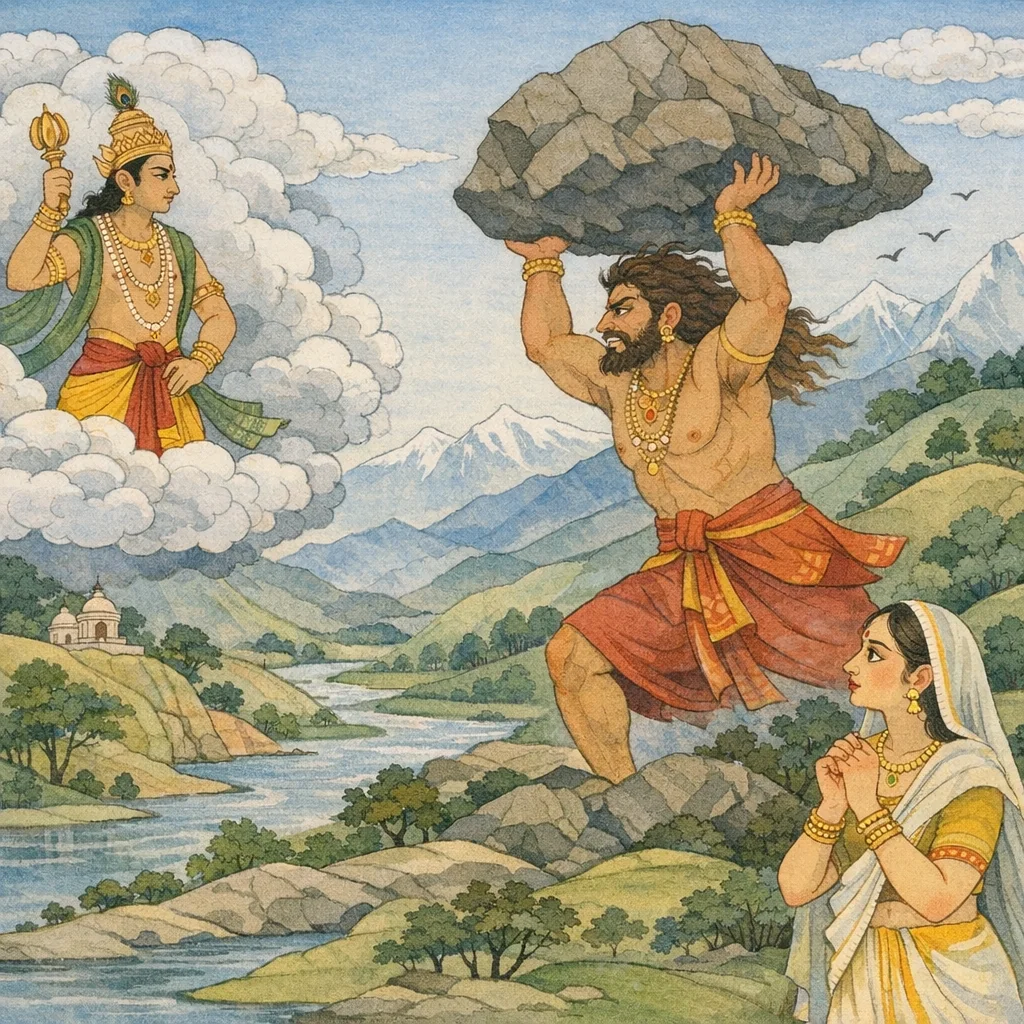
अथास्य शैलशिखरं केशी क्रुद्धो व्यवासृजत् । तदा पतन्तं सम्प्रेक्ष्य शैलशूजं शतक्रतु:
Then Keśī, enraged, hurled a mountain-peak at him. Seeing that rocky crag hurtling down, Śatakratu (Indra) watched in alarm—an image of how ungoverned wrath turns strength into reckless violence, inviting divine and moral scrutiny.
Verse 14
बिभेद राजन् वज्ेण भुवि तन्निपपात ह । पतता तु तदा केशी तेन शृज्ञेण ताडित:
Yudhiṣṭhira said: “O King, he was split as if by a thunderbolt and fell upon the earth. And as Keśī was falling then, he was struck by that horn.”
Verse 15
तब केशीने कुपित होकर इन्द्रपर पर्वतकी एक चट्टान फेंकी। राजन्! उस शैलशिखरको अपने ऊपर सरिता देख इन्द्रने वज़से उसके टुकड़े-टुकड़े कर दिये और वह चूर-चूर होकर पृथ्वीपर गिर पड़ा। उस समय गिरते हुए उस शिलाखण्डने केशीको ही भारी चोट पहुँचायी ।। हित्वा कन्यां महाभागां प्राद्रवद् भूशपीडित: । अपयाते<सुरे तस्मिंस्तां कनन््यां वासवो<ब्रवीत् | कासि कस्यासि किज्चेह कुरुषे त्वं शुभानने,उस आधघातसे अत्यन्त पीडित हो वह दानव उस परम सौभाग्यशालिनी कन्याको छोड़कर भाग गया। उस असुरके भाग जानेपर इन्द्रने उस कन्यासे पूछा--'सुमुखि! तुम कौन हो? किसकी पुत्री हो? और यहाँ क्या करती हो?”
Crushed by the blow, the demon—tormented by the weight of the fallen rock—abandoned the highly fortunate maiden and fled. When that Asura had gone, Vāsava (Indra) addressed the girl: “Fair-faced one, who are you? Whose daughter are you? And what are you doing here?”
Verse 222
इस प्रकार श्रीमहाभारत वनपर्वके अन्तर्गत मार्कण्डेययमास्यापर्वमें आंगिरसोपाख्यानविषयक अग्निप्रादुर्भावसम्बन्धी दो सौ बाईसवाँ अध्याय पूरा हुआ
Thus ends the two hundred and twenty-second chapter of the Vana Parva of the Śrī Mahābhārata, within the Markandeya-samāsya section, dealing with the Āṅgirasa episode and the manifestation of Agni. This closing colophon signals the completion of the narrative unit and frames the episode as a remembered sacred account, emphasizing the ordered transmission of dharma through tradition.
Verse 223
इति श्रीमहा भारते वनपर्वणि मार्कण्डेयसमास्यापर्वणि आद्धिरसोपाख्याने स्कन्दोत्पत्तौ केशिपराभवे त्रयोविंशत्यधिकद्धिशततमो<ध्याय:
Thus ends, in the Śrī Mahābhārata, within the Vana Parva—under the section summarizing Mārkaṇḍeya’s narration—within the tale of Āddhirāsa, in the account of Skanda’s birth and the defeat of Keśin, the two-hundred-and-twenty-third chapter (i.e., the 223rd).
Frequently Asked Questions
The pressure point is sustaining composure and moral confidence during unjust suffering: Draupadī’s anxiety is met with counsel that aligns endurance with the expectation of lawful restoration rather than impulsive despair.
Reassurance is grounded in a dharmic horizon: virtue and rightful order are presented as ultimately reassertive, and emotional steadiness is treated as a disciplined response that preserves agency and cohesion.
No explicit phalaśruti is stated in the provided passage; the chapter functions as narrative-ethical reinforcement, emphasizing consolation, social support, and the anticipated restoration of order within the epic’s broader teleology.