Adhyaya 219
स्कन्दग्रहवर्णनम् (Skanda-graha-varṇanam) — Description and Pacification of the Skanda-afflictions
Upa-parva: Mārkaṇḍeya–Skanda-graha Upākhyāna (Embedded Discourse on Skanda and the Grahas)
Mārkaṇḍeya narrates how revered female collectives—identified as saptarṣi-patnīs and other devīs—approach Skanda, newly established as the divine commander, seeking protection and status after being repudiated and displaced due to a reported (and denied) claim concerning Skanda’s birth. Skanda acknowledges them as maternal figures and promises fulfillment. The narration then shifts to Indra’s concern about celestial ordering: Abhijit, competing with Rohiṇī, undertakes austerity and is described as falling from the sky; Brahmā’s calendrical arrangement is recalled (with a sequence beginning at Dhaniṣṭhā and earlier at Rohiṇī), and the Kṛttikās ascend to heaven, associated with the fire-deity and a cart-shaped constellation. Further petitions arise: Vinatā requests enduring proximity as a maternal figure; Skanda grants honor and worship mediated through relational structures. A broader mātṛgaṇa petitions to replace earlier “mothers of the world” in public veneration and to reclaim progeny; Skanda refuses to revoke what has already been allotted but offers an alternative: a new domain of “progeny” to be guarded, coupled with permissions that define their sphere of action. Skanda stipulates a time-bound afflictive capacity up to sixteen years of age, after which their influence becomes auspicious. From Skanda’s body emerges a golden, forceful being who becomes an authorized raudra graha, named Skandāpasmaragraha. The discourse enumerates additional grahas and maternal figures with specific functions (including forms associated with taking embryos/infants, and named entities such as Pūtanā/Śītapūtanā, Revatī, Mukhamāṇḍikā, and others), and notes sets of grahas that frequent the sūtikāgṛha for defined durations. The chapter then extends the taxonomy beyond childhood: it outlines post-sixteen afflictions characterized by visionary and cognitive disturbances (e.g., seeing devas, pitṛs, or being affected by siddhas, rākṣasas, gandharvas, yakṣas, piśācas), and distinguishes causation from internal doṣa disturbance, fear, or alarming perceptions. It concludes with prescriptions for pacification—bathing, incense, unguents, bali offerings, and especially worship of Skanda—asserting that proper reverence yields welfare (āyus and vīrya), while disciplined, pure, faithful persons are avoided by grahas; devotion to Maheśvara is stated as protective.
Chapter Arc: मार्कण्डेय ऋषि कुरुकुलोद्वह युधिष्ठिर से कहते हैं—अब मैं अंगिरा-वंश की संतति का वर्णन करता हूँ, जहाँ ब्रह्मा के तृतीय पुत्र से आगे की दिव्य परम्परा प्रकट होती है। → वंश-परम्परा के साथ-साथ अंगिरा की कन्याओं का क्रमशः परिचय आता है—उनके नाम, गुण, और लोक-व्यापी प्रभाव; प्रत्येक कन्या किसी न किसी ब्रह्माण्डीय तत्त्व (रूप, राग, तिथि/चन्द्र-प्रभाव, यज्ञ-दीप्ति) को जैसे मूर्त कर देती है। → अंगिरा की कन्याओं के नाम-गुणों का उत्कर्ष बृहस्पति-संबद्ध ‘बृहत्’ विशेषणों और फिर ‘कुहू/एकानंशा’ के विस्मय-उद्बोधन तक पहुँचता है—जहाँ केवल वंश नहीं, देवत्व का प्रत्यक्ष संकेत बनकर कथा चमक उठती है। → मार्कण्डेय स्थिर स्वर में इस दिव्य संतति-वर्णन को सूत्रबद्ध करते हैं—अंगिरा की कन्याएँ अपने-अपने नामों के अनुरूप लोक-व्यवहार, तिथि-चक्र और यज्ञ-प्रकाश में प्रतिष्ठित मानी जाती हैं। → अगले अध्याय में इस वंश-प्रवाह का आगे विस्तार और इन दिव्य नामों का व्यापक प्रसंग (अन्य संतति/सम्बन्ध) खुलने की प्रतीति रहती है।
Shlokas
Verse 1
हि >> आय न [हुक है 7-2 अष्टादर्शाधिकद्विशततमो< ध्याय: अंगिराकी संततिका वर्णन मार्कण्डेय उदाच ब्रह्मणो यस्तृतीयस्तु पुत्र: कुरुकुलोद्वह । तस्याभवत् सुभा भार्या प्रजास्तस्यां च मे शूणु,मार्कण्डेयजी कहते हैं--कुरुकुलधुरन्धर युधिष्ठिर! ब्रह्माजीके जो तीसरे पुत्र अंगिरा हैं, उनकी पत्नीका नाम सुभा है। उसके गर्भसे जो संतानें उत्पन्न हुईं, उनका वर्णन करता हूँ, सुनो
Mārkaṇḍeya said: “O foremost bearer of the Kuru line, the third son of Brahmā was Aṅgiras. His wife was named Subhā. Now listen from me as I describe the offspring that were born from her.”
Verse 2
बृहत्कीर्तिरेहज्ज्योतिर्बहद्ब्रह्मा बृहन्मना: । बृहन्मन्त्रो बृहद्भधासस्तथा राजन् बृहस्पति:,राजन! बृहत्कीर्ति, बृहज्ज्योति, बृहदब्ह्मया, बृहन्मना, बृहन्मन्त्र, बृहद्भास तथा बृहस्पति (ये अंगिरासे सुभाके सात पुत्र हुए)
Mārkaṇḍeya said: “O King, (among them were) Bṛhatkīrti, Ehajjyoti, Bahadbrahmā, Bṛhanmanas, Bṛhanmantra, Bṛhadbhāsa, and also Bṛhaspati. These were the seven illustrious sons born in the lineage of Aṅgiras.”
Verse 3
प्रजासु तासु सर्वासु रूपेणाप्रतिमाभवत् | देवी भानुमती नाम प्रथमाज्िरस: सुता,अंगिराकी प्रथम पुत्रीका नाम देवी भानुमती है। वह उनकी संतानोंमें सबसे अधिक रूपवती है; उसके रूपकी कहीं तुलना ही नहीं है (भानु अर्थात् सूर्यसे युक्त होनेके कारण यह दिनकी अभिमानिनी है)
Mārkaṇḍeya said: “Among all those offspring, one became incomparable in beauty. She was the first daughter of Aṅgiras, a goddess named Bhānumatī—radiant like the sun, without any equal in form.”
Verse 4
भूतानामेव सर्वेषां यस्यां रागस्तदाभवत् | रागाद्वागेति यामाहुर्द्धितीयाज्ञिरस: सुता,अंगिरा मुनिकी दूसरी कन्या “रागा' नामसे विख्यात है। उसपर समस्त प्राणियोंका विशेष अनुराग प्रकट हुआ था। इसीलिये उसका ऐसा नाम प्रसिद्ध हुआ। (यह रात्रिकी अभिमानिनी है)
Mārkaṇḍeya said: “In her, indeed, all beings felt a special attachment. Because of that ‘rāga’ (affection/attraction), she is spoken of as ‘Vāk’ (speech). She is the second daughter of the sage Aṅgiras.”
Verse 5
यां कपर्दिसुतामाहुर्दृश्यादृश्येति देहिन: । तनुत्वात् सा सिनीवाली तृतीयाज्धिरस: सुता,अंगिराकी तीसरी पुत्री 'सिनीवाली” (चतुर्दशीयुक्ता अमावास्या) है जो अत्यन्त कृश होनेके कारण कभी दीखती है और कभी नहीं दीखती; इसीलिये लोग उसे “दृश्यादृश्या' कहते हैं। भगवान् रुद्र उसे ललाटमें धारण करते हैं, इस कारण उसे सब लोग “रूद्रसुता, भी कहते हैं
Mārkaṇḍeya said: “She whom embodied beings call ‘the visible-and-invisible’—Kapardin’s daughter—is Sinīvālī, the third daughter of Aṅgiras. Because she is exceedingly slender, she is at times seen and at times not seen; therefore people describe her as ‘dṛśyādṛśyā’ (visible yet invisible).”
Verse 6
पश्यत्यर्चिष्मती भाभिह्॑विर्भिश्न हविष्मती । षष्ठीमज्ञिरस: कन्यां पुण्यामाहुर्महिष्मतीम्,उनकी चौथी पुत्री “अर्चिष्मती” है, (यही पूर्ण चन्द्रमासे युक्त होनेके कारण शुद्ध पौर्णमासी कही जाती है) इसकी प्रभासे लोग रातमें भी सब वस्तुओंको स्पष्ट देखते हैं। पाँचवीं कन्या “हविष्मती' (प्रतिपदयुक्ता पूर्णिमा 'राका”) है, जिसके सांनिध्यमें हविष्यद्वारा देवताओंका यजन किया जाता है। अंगिरा मुनिकी जो छठी पुण्यात्मा कन्या है, उसे “महिष्मती” कहते हैं (यही चतुर्दशीयुक्ता पूर्णिमा है, जिसे “अनुमति” भी कहते हैं)
Mārkaṇḍeya said: “Arcīṣmatī is beheld by her radiance; and Haviṣmatī is associated with the oblations (havis). The sixth auspicious daughter of the sage Aṅgiras, they declare, is named Mahiṣmatī.”
Verse 7
महामखेष्वाड्िरसी दीप्तिमत्सु महामते । महामतीति विख्याता सप्तमी कथ्यते सुता,महामते! जो दीप्तिशाली सोमयाग आदि महायज्ञोंमें प्रकाशित होनेके कारण “महामती' नामसे विख्यात है, वह (प्रतिपद्युक्त अमावास्या) अंगिरा मुनिकी सातवीं पुत्री कहलाती है
Mārkaṇḍeya said: “O wise one, among the radiant great sacrifices—such as the Soma-yāga and other mighty rites—there is a lunar observance famed by the name ‘Mahāmatī’. She is spoken of as the seventh daughter (of the sage Aṅgiras).”
Verse 8
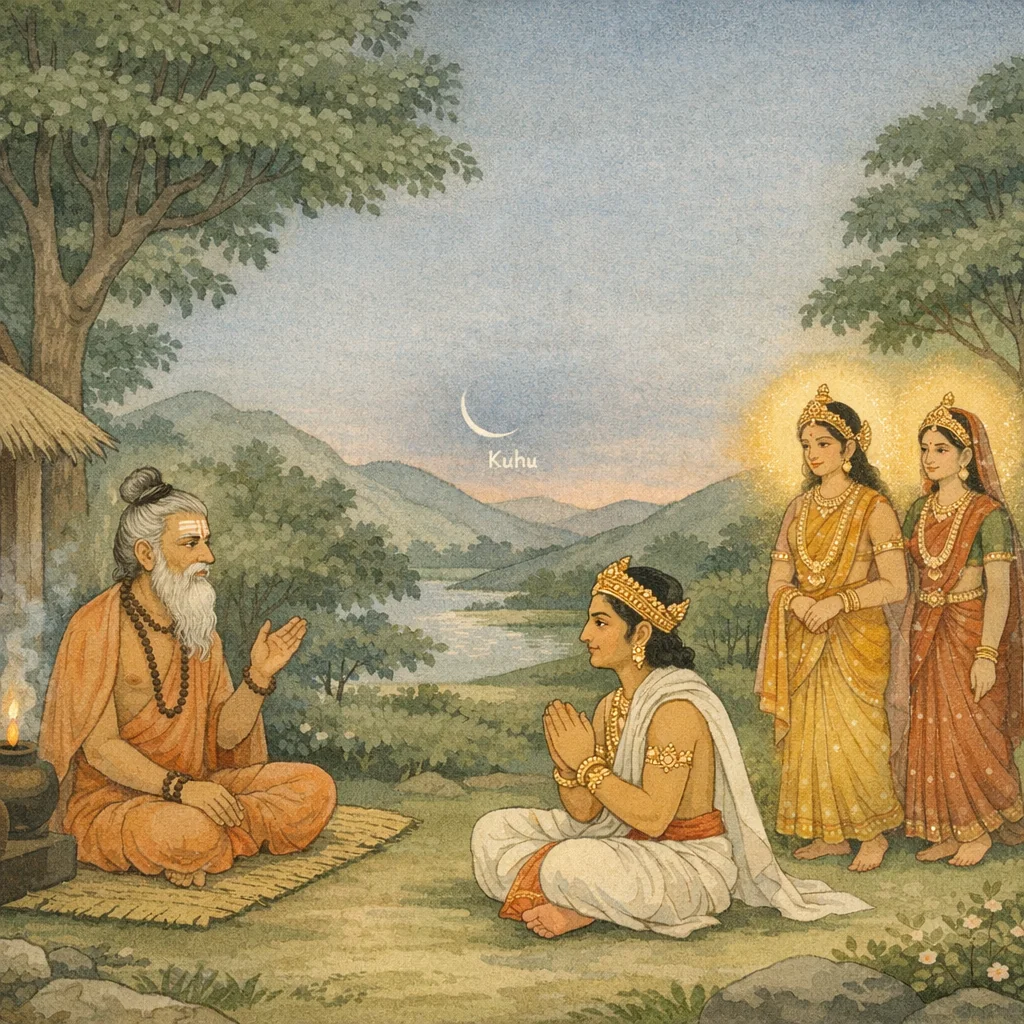
यां तु दृष्टया भगवती जन: कुहुकुहायते । एकानंशेति तामाहु: कुहूमज्जिरस: सुताम्,जिस भगवती अमाको देखकर लोग “कुहु-कुह” ध्वनि कर उठते (चकित हो जाते) हैं, अंगिरा मुनिकी वह आठवीं पुत्री 'कुहद! नामसे विख्यात है। उसमें चन्द्रमाकी एकमात्र कला अत्यन्त सूक्ष्म अंशसे शेष रहती है। (यही शुद्ध अमावस्या है)
Mārkaṇḍeya said: “But when people behold that revered goddess, they are struck with wonder and cry out ‘kuhu-kuhu.’ She is therefore called ‘Ekānaṃśā’—the one in whom only a single, exceedingly subtle portion remains—and she is known as Kuhū, the daughter of the sage Aṅgiras.”
Verse 218
इति श्रीमहाभारते वनपर्वणि मार्कण्डेयसमास्यापर्वणि अड्धिरसोपाख्याने अष्टादशाधिकद्विशततमो< ध्याय:,इस प्रकार श्रीमहाभारत वनपर्वके अन्तर्गत मार्कण्डेययमास्यापर्वमें अंगिरसोपाख्यानविषयक दो सौ अठारहवाँ अध्याय पूरा हुआ
Thus, in the Śrī Mahābhārata, within the Vana Parva, in the section known as the Mārkaṇḍeya-samāsya Parva, the narrative episode concerning Aṅgiras comes to its close; here ends the two-hundred-and-eighteenth chapter.
Frequently Asked Questions
The petitioners seek justice and protection after social-cosmic displacement caused by a disputed attribution; the dilemma is how authority (Skanda) adjudicates competing claims—status, worship, and “progeny”—without overturning prior allotments, while still restoring order through alternative grants.
Affliction is framed as both classificatory (named agencies and conditions) and governable through disciplined purity, faith, and prescribed rites; the text emphasizes that ethical self-regulation and devotional orientation reduce vulnerability.
Yes: the chapter asserts that proper worship and pacification practices yield auspicious outcomes such as welfare, longevity (āyus), and vigor (vīrya), and that grahas do not affect those who are disciplined, pure, faithful, and devoted to Maheśvara.