Adhyaya 213
कार्त्तिकेय-जन्मोपक्रमः (Prelude to the Birth of Kārttikeya/Skanda)
Upa-parva: Skanda–Kārttikeya Janma-Ākhyāna (Narrative of Skanda’s Birth; Mārkaṇḍeya’s discourse)
Mārkaṇḍeya announces a detailed account of Kārttikeya’s origin, characterized as extraordinary and connected with the wives of the Seven Sages. A prior deva–asura struggle is recalled in which the dānavas repeatedly prevail, prompting Indra to seek a capable commander. Indra reaches Mānasa mountain and hears a distressed call from a woman; he reassures her and confronts Keśin, who attempts to seize her. Indra neutralizes Keśin’s attacks (a thrown mace and a falling peak) with the vajra, forcing the aggressor to withdraw. The rescued woman identifies herself as Devasenā, daughter of Prajāpati, and explains Keśin’s persistent coercion and her desire for a spouse of unmatched victorious capability. Indra recognizes the difficulty of her stated criterion and observes an ominous/charged celestial conjunction involving Sūrya, Soma, and Agni at a fierce (raudra) moment; he infers that such a convergence could generate the requisite being. He consults Brahmā, who affirms that a powerful embryo will arise and that this future figure will serve as Indra’s senānī and also Devasenā’s husband. The narrative then transitions to a sacrificial setting with the devarṣis; Agni emerges from the solar sphere to receive offerings, sees the sages’ wives, becomes mentally agitated, and withdraws to the forest in distress. Svāhā, desiring Agni, resolves to assume the forms of the saptarṣi wives to attract him—establishing the proximate cause for the extraordinary birth account to continue.
Chapter Arc: मार्कण्डेय के कथन-प्रवाह में ब्राह्मण, धर्मव्याध से तीनों गुणों—सत्त्व, रजस्, तमस्—का यथार्थ स्वरूप और फल जानने की जिज्ञासा प्रकट करता है। → प्रश्न केवल परिभाषा का नहीं रहता; ब्राह्मण चाहता है कि गुणों की पहचान मनुष्य के व्यवहार, वाणी, अहंकार, वैराग्य और निर्णय-शक्ति में कैसे दिखती है—यह स्पष्ट हो। व्याध क्रमशः गुण-लक्षणों को जीवन-स्थितियों से जोड़कर बताने लगता है। → व्याध सत्त्व के उत्कर्ष का निर्णायक संकेत देता है—वैराग्य का पहले ही उदय, अहंकार का मृदु होना, द्वन्द्वों (राग-द्वेष आदि) का शांत हो जाना और संशय का लय होना; साथ ही रजस के लक्षणों में प्रवृत्ति-प्रधान वाणी, मंत्री-भाव, मान-स्तम्भ और प्रदर्शन-प्रियता का चित्र खींचता है। → गुणों के फल को सामाजिक-आध्यात्मिक उन्नति से जोड़कर निष्कर्ष आता है—जन्म से नहीं, गुण-आचरण से वर्ण-गति संभव है: शूद्र-योनि में जन्मा भी सद्गुणों से वैश्य/क्षत्रियत्व पा सकता है; और आर्जव (सरलता) में स्थित होकर ब्राह्मण्य तक पहुँच सकता है। व्याध कहता है—गुणों का वर्णन कर दिया, अब और क्या सुनना है? → व्याध का प्रश्न—‘किं भूयः श्रोतुमिच्छसि?’—संवाद को अगले विषय/अगली जिज्ञासा की ओर मोड़ देता है।
Shlokas
Verse 1
हि मो न (0) हि २ 7 दादशाधिकंद्विशततमो< ध्याय: तीनों गुणोंके स्वरूप और फलका वर्णन मार्कण्डेय उवाच एवं तु सूक्ष्मे कथिते धर्मव्याधेन भारत । ब्राह्मण: स पुन: सूक्ष्म पप्रच्छ सुसमाहित:,मार्कण्डेयजी कहते हैं--भारत! इस प्रकार धर्मव्याथके द्वारा सूक्ष्म तत््वका निरूपण होनेपर कौशिक ब्राह्मणने एकाग्रचित्त होकर पुन: एक सूक्ष्म प्रश्न उपस्थित किया
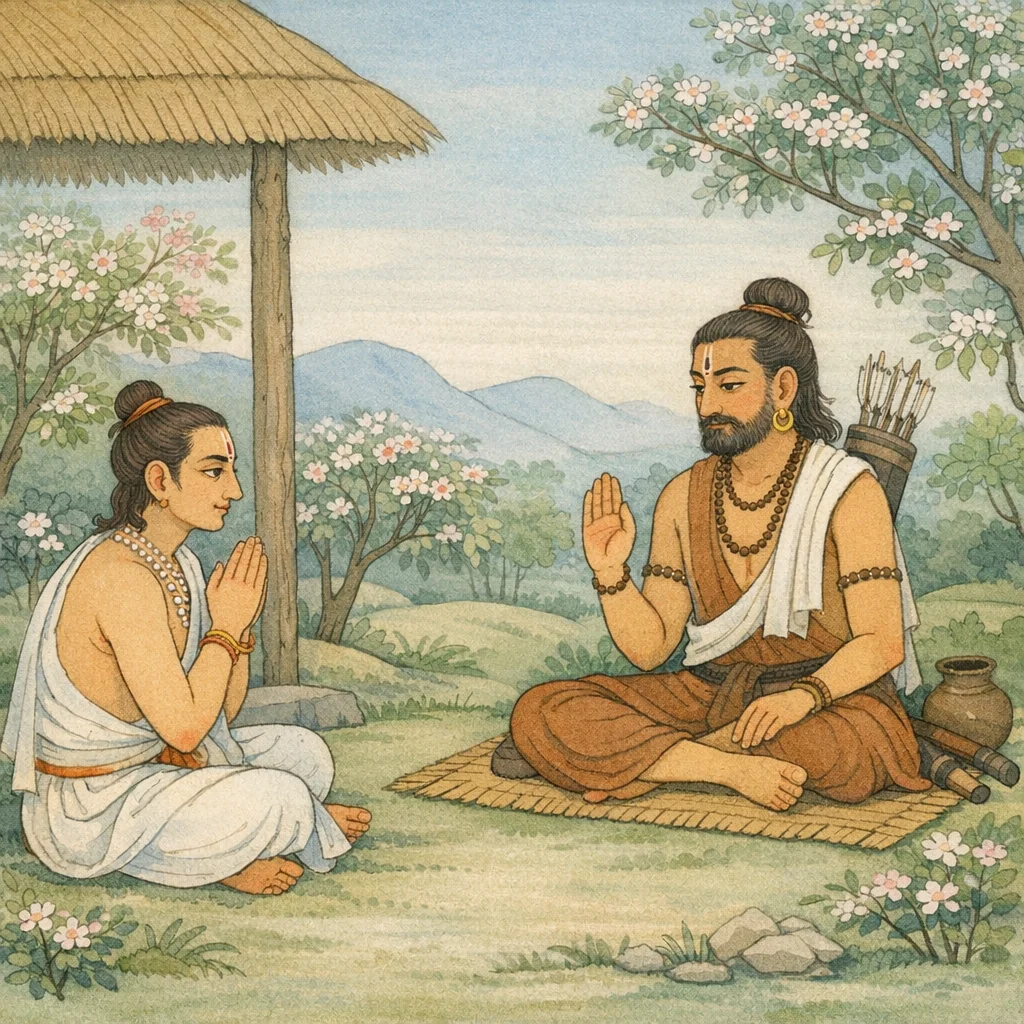
Mārkaṇḍeya said: “O Bhārata, when the subtle truth had thus been explained by the righteous hunter, that brāhmaṇa—fully composed and attentive—again put forward another subtle question.”
Verse 2
ब्राह्मण उवाच सत्त्वस्य रजसश्वैव तमसश्न यथातथम् । गुणांस्तत्त्वेन मे ब्रूहि यथावदिह पृच्छत:,ब्राह्मण बोला--्याध! मैं यहाँ यथोचितरूपसे एक प्रश्न उपस्थित करता हूँ। वह यह है कि सत्त्व, रज और तमका गुण (स्वरूप) क्या है? यह मुझे यथार्थरूपसे बताओ
The Brahmin said: “Tell me, as they truly are, the qualities of sattva, rajas, and tamas. Since I am asking here in the proper manner, explain to me their real nature accurately.”
Verse 3
व्याध उवाच हन्त ते कथयिष्यामि यन्मां त्वं परिपृच्छसि । एषां गुणान् पृथक्त्वेन निबोध गदतो मम,धर्मव्याधने कहा--ब्रह्मन्! आप मुझसे जो बात पूछ रहे हैं, मैं अब उसे कहूँगा। सत्त्व, रज और तम--इन तीनोंके गुणोंका पृथक्-पृथक् वर्णन करता हूँ, सुनिये
The hunter said: “Well then, I shall tell you what you are asking me. Listen as I explain—distinctly and in order—the qualities (guṇas) of these three: sattva, rajas, and tamas.”
Verse 4
मोहात्मकं तमस्तेषां रज एषां प्रवर्तकम् । प्रकाशबहुलत्वाच्च सत्त्वं ज्याय इहोच्यते,इन तीनों गुणोंमें जो तमोगुण है वह मोहात्मक--मोह उत्पन्न करनेवाला है। रजोगुण कर्मोमें प्रवृत्त करनेवाला है। परंतु सत्त्वगुणमें प्रकाशकी बहुलता है, इसलिये वह सबसे श्रेष्ठ कहा जाता है
The hunter said: “Among these three guṇas, tamas is of the nature of delusion—it generates bewilderment. Rajas impels beings toward action and activity. But sattva abounds in clarity and illumination; therefore, in this world it is declared the highest.”
Verse 5
अविद्याबहुलो मूढ: स्वप्रशीलो विचेतन: । दुर्हषीकस्तमो ध्वस्त: सक्रोधस्तामसो&5लस:,जिसमें अज्ञानकी बहुलता है, जो मूढ़ (मोहग्रस्त) और अचेत होकर सदा नींद लेता रहता है, जिसकी इन्द्रियाँ वशमें न होनेके कारण दूषित हैं, जो अविवेकी, क्रोधी और आलसी है, ऐसे मनुष्यको तमोगुणी जानना चाहिये
The hunter said: “One in whom ignorance predominates—deluded, lacking awareness, habitually given to sleep; whose senses are hard to restrain and therefore corrupted; who is undiscerning, prone to anger, and lazy—such a person should be understood as tamasic, ruled by the quality of darkness.”
Verse 6
प्रवृत्तवाक्यो मन्त्री च यो नराग्रयोडनसूयक: । विधित्समानो विप्रर्षे स्तब्धो मानी स राजस:,ब्रह्मर्षे! जो प्रवृत्तिमार्गकी ही बातें करनेवाला, सलाह देनेमें कुशल और दूसरोंके गुणोंमें दोष न देखनेवाला है; जो सदा कुछ-न-कुछ करनेकी इच्छा रखता है, जिसमें कठोरता और अभिमानकी अधिकता है, वह मनुष्योंपर रोब जमानेवाला पुरुष रजोगुणी कहा गया है
The hunter said: “O best of brahmins, that foremost among men is called ‘rajasic’ who is inclined to speak in terms of worldly activity, is skilled at giving counsel, and is not fault-finding toward others’ merits; who is ever intent on undertaking actions, yet is marked by stiffness (haughtiness) and pride—such a person seeks to assert dominance over people through the force of passion.”
Verse 7
प्रकाशबहुलो धीरो निर्विधित्सोडनसूयक: । अक्रोधनो नरो धीमान् दान्तश्वैव स सात्विक:,जिसमें प्रकाश (ज्ञान)-की बहुलता है, जो धीर और नये-नये कार्य आरम्भ करनेकी उत्सुकतासे रहित है, जिसमें दूसरोंके दोष देखनेकी प्रवृत्तिका अभाव है जो क्रोधशून्य, बुद्धिमान् और जितेन्द्रिय है, वह मनुष्य सात्विक माना जाता है
The hunter said: “A person in whom the light of knowledge is abundant—steady, free from restless eagerness to launch ever-new undertakings, not given to fault-finding, devoid of anger, intelligent, and self-controlled—such a man is regarded as sāttvika.”
Verse 8
सात्त्विकस्त्वथ सम्बुद्धो लोकवृत्तेन क्लिश्यते । यदा बुध्यति बोद्धव्यं लोकवृत्तं जुगुप्सते,सात््विक पुरुष ज्ञानसम्पन्न हो रजोगुण और तमोगुणके कार्यभूत लौकिक व्यवहारमें पड़नेका कष्ट नहीं उठाता। वह जब जाननेयोग्य तत्त्वको जान लेता है, तब उसे सांसारिक व्यवहारसे ग्लानि हो जाती है
The hunter said: “A person established in sattva, once fully awakened, is no longer tormented by the ways of the world. When he comes to know the truth that ought to be known, he feels revulsion toward worldly conduct.”
Verse 9
वैराग्यस्य च रूपं तु पूर्वमेव प्रवर्तते । मृदुर्भवत्यहड्कार: प्रसीदत्यार्जव॑ च यत्,सात््विक पुरुषमें वैराग्यका लक्षण पहले ही प्रकट हो जाता है। उसका अहंकार ढीला पड़ जाता है और सरलता प्रकाशमें आने लगती है
The hunter said: “The outward signs of dispassion (vairāgya) arise even beforehand. A person’s ego softens, and a calm, straightforward simplicity begins to shine forth. These are the marks by which a sāttvika person’s detachment becomes evident.”
Verse 10
ततोअसस््य सर्दद्वन्द्धानि प्रशाम्यन्ति परस्परम् | न चास्य संशयो नाम क्वचिद् भवति कश्नन,तदनन्तर इसके राग-द्वेष आदि सम्पूर्ण द्वन्द्ध परस्पर शान्त हो जाते हैं। इसके हृदयमें कभी कोई संशय नहीं उठता
Thereafter, all his pairs of opposites—such as attachment and aversion—subside, each cancelling the other. In his heart no doubt arises at any time.
Verse 11
शूद्रयोनौ हि जातस्य सद्गुणानुपतिष्ठत: । वैश्यत्वं लभते ब्रद्दन् क्षत्रियत्वं तथैव च,ब्रह्मन! शूद्रयोनिमें उत्पन्न मनुष्य भी यदि उत्तम गुणोंका आश्रय ले, तो वह वैश्य तथा क्षत्रियभावको प्राप्त कर लेता है
The hunter said: “O brāhmaṇa, even one born in a Śūdra womb—if he steadfastly cultivates and abides by noble virtues—can attain the standing of a Vaiśya, and likewise that of a Kṣatriya.”
Verse 12
आर्जवे वर्तमानस्य ब्राह्म॒ुण्यमभिजायते । गुणास्ते कीर्तिता: सर्वे कि भूय: श्रोतुमिच्छसि,जो “सरलता” नामक गुणमें प्रतिष्ठित है, उसे ब्राह्मणत्व प्राप्त हो जाता है। ब्रह्मन! इस प्रकार मैंने आपसे सम्पूर्ण गुणोंका वर्णन किया है, अब और क्या सुनना चाहते हैं?
For one who abides in straightforwardness, true brahminhood arises. I have thus recounted to you all the virtues; what more do you wish to hear?
Verse 211
इस प्रकार श्रीमहाभारत वनपव॑के अन्तर्गत मार्कण्डेयसमास्यापर्वमें ब्राह्मण-व्याध- संवादविषयक दो सौ ग्यारहवाँ अध्याय पूरा हुआ
Thus ends the two-hundred-and-eleventh chapter of the Mahābhārata’s Vana Parva, within the Markandeya Samasya sub-section, dealing with the dialogue between the Brahmin and the hunter.
Verse 212
इति श्रीमहाभारते वनपर्वणि मार्कण्डेयसमास्यापर्वणि ब्राह्मणव्याधसंवादे दादशाधिकद्विशततमो< ध्याय:,इस प्रकार श्रीमहाभारत वनपवके अन्तर्गत मार्कण्डेयसमास्यापर्वमें ब्राह्मण-व्याध- संवादविषयक दो सौ बारहवाँ अध्याय पूरा हुआ
Thus, in the Śrī Mahābhārata, within the Vana Parva—specifically in the section known as the Mārkaṇḍeya-samāsya Parvan—ends the dialogue between the brāhmaṇa and the hunter (vyādha): the two-hundred-and-twelfth chapter is concluded. This closing colophon marks the completion of the teaching narrative in which dharma is clarified through the hunter’s ethical instruction to the brāhmaṇa.
Frequently Asked Questions
How sovereign force should be used: Indra must prevent coercion against Devasenā while seeking a lawful, cosmic-ritual pathway to fulfill her stated marital criterion without arbitrary imposition.
Effective leadership is not merely martial capacity; it is ethically bounded protection aligned with higher order (ṛta) and validated through counsel, ritual legitimacy, and responsibility toward vulnerable persons.
No explicit phalaśruti appears in the provided chapter segment; the text functions as etiological narration, establishing causal premises for Skanda’s advent rather than promising a direct recitational reward.