Adhyaya 198
धर्मव्याधोपदेशः (Dharma-vyādha’s Instruction on Śiṣṭācāra and Dharma)
Upa-parva: Dharma-vyādha Upākhyāna (The Discourse of the Righteous Hunter/Butcher)
Mārkaṇḍeya narrates how a brāhmaṇa, reflecting on prior admonitions and the subtle movement of dharma, journeys to Mithilā to seek the dharma-vyādha. The city is described as prosperous and orderly under King Janaka, marked by structured streets, commerce, and continual civic festivity. The brāhmaṇa locates the dharma-vyādha in a slaughter-market setting, yet the latter receives him with reverence, anticipates the purpose of his visit, and invites him home. In dialogue, the brāhmaṇa expresses moral discomfort at the hunter/butcher’s occupation; the dharma-vyādha responds by articulating svadharma as inherited vocation maintained without cruelty of intent, coupled with service to elders, truthful speech, non-envy, measured giving, and hospitality. He outlines a model of polity: rulers sustain dharma by ensuring subjects remain in their proper duties and by correcting deviations. The discourse then turns to śiṣṭācāra: its purifiers (yajña, dāna, tapas, Veda, satya), its restraints (control of desire and anger, rejection of hypocrisy and greed), and its defining virtues (ahiṃsā, satya, compassion, humility, patience, self-control). The chapter culminates in a normative catalogue of ‘conduct of the good’ and a caution against disparaging dharma, presenting ethical life as a disciplined, socially embedded practice that yields stability and spiritual ascent.
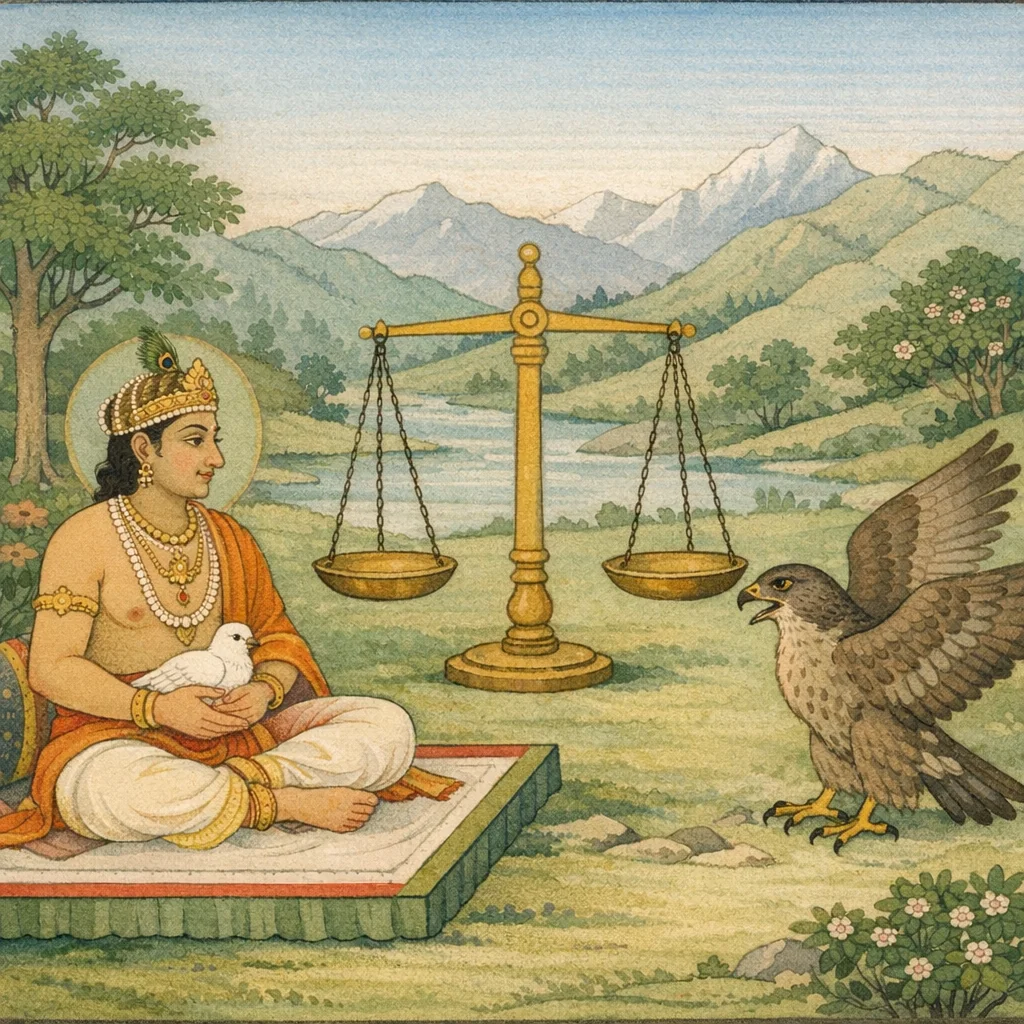
Chapter Arc: मार्कण्डेय ऋषि देवताओं की एक अद्भुत कथा छेड़ते हैं—धरती पर उतरकर इन्द्र और अग्नि ने धर्मराज शिबि की परीक्षा लेने का निश्चय किया। → अग्नि कबूतर बनकर प्राण-रक्षा की याचना करता हुआ शिबि की गोद में आ गिरता है; उसी क्षण इन्द्र श्येन (बाज) बनकर उसका पीछा करता है और अपना ‘आहार’ माँगता है। राजा के सामने दो धर्म खड़े हो जाते हैं—शरणागत की रक्षा और हिंसक शिकारी के ‘न्याय’ का प्रतिकार। → राजा शिबि कबूतर के प्राणों के बदले अपने शरीर का मांस देने को तैयार होते हैं; तुला मँगाई जाती है, पर जितना मांस वे काटकर रखते हैं, कबूतर फिर भी भारी पड़ता है। अंततः शिबि स्वयं को ही तुला पर चढ़ाने को उद्यत होते हैं—स्व-त्याग की पराकाष्ठा। → देवता अपना रूप प्रकट करते हैं; शिबि की कीर्ति, करुणा और सत्य-प्रतिज्ञा की प्रशंसा होती है। शिबि के त्याग को ‘शिव’ (कल्याणकारी) कहा जाता है और वर/आशीर्वाद के साथ कथा धर्म-प्रतिष्ठा पर ठहरती है। → पुत्र-प्राप्ति और नाम-व्युत्पत्ति का संकेत दिया जाता है—भविष्य में उत्पन्न पुत्र परीक्षा-भेदन से प्रकट होगा, इसीलिए वह ‘औद्धिद’ कहलाएगा।
Shlokas
Verse 1
ऑरड.2 23: | हि 7 7 सप्तनवर्त्याधेकशततमो< ध्याय: इन्द्र और अग्निद्वारा राजा शिबिकी परीक्षा मार्कण्डेय उवाच देवानां कथा संजाता महीतलं गत्वा महीपतिं शिबिमौशीनरं साध्वेनं शिबिं जिज्ञास्याम इति। एवं भो इत्युक्त्वा अग्नीन्द्रावुपतिछेताम्,मार्कण्डेयजी कहते हैं--युधिष्ठिर![ एक समय देवताओंमें परस्पर यह बातचीत हुई कि “पृथ्वीपर चलकर हम उशीनरके पुत्र राजा शिबिकी श्रेष्ठताकी परीक्षा करें।' "ऐसा ही हो” यह कहकर अग्नि और इन्द्र वहाँ जानेके लिये उद्यत हुए
Mārkaṇḍeya said: Among the gods a discussion arose: “Let us go down to the earth and test King Śibi Auśīnara, the lord of the land—let us ascertain the true worth of this righteous Śibi.” Saying, “So be it,” Agni and Indra prepared to set out and approached for that purpose.
Verse 2
अग्नि: कपोतरूपेण तमभ्यधावदामिषार्थमिन्द्र: श्येनरूपेण,अग्निदेव कबूतरका रूप धारण करके मानो अपने प्राण बचानेके लिये राजाके पास भागते हुए गये और इन्द्रने बाज पक्षीका रूप धारण कर मांसके लिये उस कबूतरका पीछा किया
Mārkaṇḍeya said: Agni, assuming the form of a dove, rushed toward him seeking protection; and Indra, taking the form of a hawk, pursued that dove for the sake of flesh.
Verse 3
अथ कपोतो राज्ञो दिव्यासनासीनस्योत्सड्रं न््यपतत्,राजा शिबि अपने दिव्य सिंहासनपर बैठे हुए थे। कबूतर उनकी गोदमें जा गिरा
Then a dove suddenly fell into the lap of King Śibi as he sat upon his splendid, divine throne—seeking refuge at the very seat of royal authority, where protection and righteousness are tested.
Verse 4
अथ पुरोहितो राजानमब्रवीत् । प्राणरक्षार्थ श्येनादू भीतो भवन्तं प्राणार्थी प्रपद्यते,यह देखकर पुरोहितने राजासे कहा--“महाराज! यह कबूतर बाजके डरसे अपने प्राणोंकी रक्षाके लिये आपकी शरणमें आया है। किसी तरह प्राण बच जायँ--यही इसका प्रयोजन है
Then the royal priest addressed the king: “O King, this pigeon, terrified of the hawk, has come to you seeking refuge in order to save its life. Its sole purpose is to preserve its breath—somehow to survive.”
Verse 5
वसु ददातु अन्तवान् पार्थिवोडस्यथ निष्कृतिं कुर्याद् घोरं कपोतस्य निपातमाहु:,'परंतु विद्वान् पुरुष कहते हैं कि 'इस तरह कबूतरका आकर गिरना भयंकर अनिष्टका सूचक है।' आपकी मृत्यु निकट जान पड़ती है; अतः आपको इस उत्पातकी शान्ति करनी चाहिये। आप धन दान करें'
Mārkaṇḍeya said: “Let the king give wealth as an expiation; for the sudden fall of a pigeon is declared a dreadful omen. The wise say that such a descent foretells grave misfortune. Your death seems near; therefore you should perform rites to pacify this portent and give gifts of wealth.”
Verse 6
अथ कपोतो राजानमब्रवीत् | प्राणरक्षार्थ श्येनाद्ू भीतो भवन्तं प्राणार्थी प्रपद्ये अज्जैरड्रनि प्राप्यार्थी मुनिर्भूत्वा प्राणांस्त्वां प्रपद्ये,तदनन्तर कबूतरने राजासे कहा--“महाराज! मैं बाजके डरसे प्राण बचानेके लिये प्राणार्थी होकर आपकी शरणमें आया हूँ। मैं वास्तवमें कबूतर नहीं ऋषि हूँ। मैंने स्वेच्छासे पूर्व शरीरसे यह शरीर बदल लिया है। प्राणरक्षक होनेके कारण आप ही मेरे प्राण हैं। मैं आपकी शरणमें हूँ, मुझे बचाइये
Then the pigeon spoke to the king: “Frightened of the hawk and seeking to save my life, I come to you for refuge. I seek life itself and therefore surrender to you. Know that I am not truly a pigeon; I am a sage who has assumed this form by choice. Since you are the protector of life, you are my very life. I take shelter in you—save me.”
Verse 7
स्वाध्यायेन कर्शितं ब्रह्माचारिणं_ मां विद्धि | तपसा दमेन युक्तमाचार्यस्याप्रतिकूलभाषिणम् | एवं युक्तमपापं मां विद्धि,“मुझे ब्रह्मचारी समझिये। मैंने वेदोंका स्वाध्याय करते हुए अपने शरीरको दुर्बल किया है। मैं तपस्वी और जितेन्द्रिय हूँ। आचार्यके प्रतिकूल कभी कोई बात नहीं करता। इस प्रकार मुझे योगयुक्त और निष्पाप जानिये
Markandeya said: “Know me to be a celibate student, worn lean by constant Vedic self-study. I am disciplined through austerity and self-restraint, and I never speak in a manner contrary to my teacher. Thus, understand me as one who is steadfast in yogic discipline and free from sin.”
Verse 8
गदामि वेदान् विचिनोमि छन््द: सर्वे वेदा अक्षरशो मे अधीता: । न साधु दान श्रोत्रियस्य प्रदानं मा प्रादा: श्येनाय न कपोतो5स्मि,“मैं वेदोंका प्रवचन और छन्दोंका संग्रह करता हूँ। मैंने सम्पूर्ण वेदोंके एक-एक अक्षरका अध्ययन किया है। मैं श्रोत्रिय विद्वान् हूँ। मुझ-जैसे व्यक्तिको किसी भूखे प्राणीकी भूख बुझानेके लिये उसके हवाले कर देना उत्तम दान नहीं है। अतः आप मुझे बाजको न सौंपिये। मैं कबूतर नहीं हूँ
Mārkaṇḍeya said: “I expound the Vedas and I compile and examine the Vedic metres. I have studied all the Vedas, letter by letter. I am a learned śrotriya. To hand over a person like me as ‘alms’ merely to satisfy the hunger of some creature is not a good gift. Therefore, do not give me to the hawk—I am not a pigeon.”
Verse 9
अथ श्येनो राजनमब्रवीत्,तदनन्तर बाजने राजासे कहा--“महाराज! प्रायः सभी जीवोंको बारी-बारीसे विभिन्न योनियोंमें जन्म लेकर रहना पड़ता है। मालूम होता है, आप इस सृष्टि-परम्परामें पहले कभी इस कबूतरसे जन्म ग्रहण कर चुके हैं; तभी तो इसे अपने आश्रयमें ले रहे हैं! राजन! मैं आग्रहपर्वूक कहता हूँ, आप इस कबूतरको लेकर मेरे भोजनके कार्यमें विघ्न न डालें"
Then the hawk addressed the king: “O great king, almost all beings must, in turn, take birth in many different wombs. It seems that, in the succession of this world’s creation, you were once born as this very dove—only for that reason do you now take it into your protection. O king, I say this insistently: do not, by keeping this dove, obstruct my need for food.”
Verse 10
पर्यायेण वसतिर्वा भवेषु सर्गे ज्ञात: पूर्वमस्मात् कपोतात् । त्वमाददानो5थ कपोतमेनं मा त्वं राजन् विघ्नकर्ता भवेथा:,तदनन्तर बाजने राजासे कहा--“महाराज! प्रायः सभी जीवोंको बारी-बारीसे विभिन्न योनियोंमें जन्म लेकर रहना पड़ता है। मालूम होता है, आप इस सृष्टि-परम्परामें पहले कभी इस कबूतरसे जन्म ग्रहण कर चुके हैं; तभी तो इसे अपने आश्रयमें ले रहे हैं! राजन! मैं आग्रहपर्वूक कहता हूँ, आप इस कबूतरको लेकर मेरे भोजनके कार्यमें विघ्न न डालें"
Mārkaṇḍeya said: “In the course of creation, beings must dwell again and again in various states of existence, taking birth in different wombs in turn. It seems you have, in some former cycle of this world, been born as this very pigeon—hence you are now taking it under your protection. Therefore, O king, I urge you: do not, by keeping this pigeon, become an obstacle to my obtaining food.”
Verse 11
राजोवाच केनेद्शी जातु परा हि दृष्टा वागुच्यमाना शकुनेन संस्कृता । यां वै कपोतो वदते यां च श्येन उभौ विदित्वा कथमस्तु साधु,राजा बोले--अहो! आजसे पहले किसने कभी भी किसी पक्षीके मुखसे ऐसी उत्तम संस्कृत भाषाका उच्चारण देखा या सुना है, जैसी कि ये कबूतर और बाज बोल रहे हैं? किस प्रकार इन दोनोंका स्वरूप जानकर इनके प्रति न््यायोचित बर्ताव किया जा सकता है?
The king said: “Who has ever before seen such excellent speech—refined and Sanskritic—being uttered by a bird? The very language that this dove speaks, and that the hawk too speaks—having understood the true nature of them both, how may one act rightly and justly toward them?”
Verse 12
नास्य वर्ष वर्षति वर्षकाले नास्य बीजं॑ रोहति काल उप्तम् | भीतं प्रपन्नं यो हि ददाति शत्रवे नत्राणं लभेत् त्राणमिच्छन् स काले,जो राजा अपनी शरणमें आये हुए भयभीत प्राणीको उसके शत्रुके हाथमें दे देता है, उसके देशमें समयपर वर्षा नहीं होती। उसके बोये हुए बीज भी समयपर नहीं उगते हैं। वह कभी संकटके समय जब अपनी रक्षा चाहता है, तब उसे कोई रक्षक नहीं मिलता
Mārkaṇḍeya said: “For that king, rain does not fall in its proper season, and seed sown at the right time does not sprout. For whoever hands over a frightened being who has sought refuge into the enemy’s power—when he himself longs for protection in a time of crisis, he finds no protector.”
Verse 13
जाता हस्वा प्रजा प्रमीयते सदा न वासं पितरो<स्य कुर्वते । भीतं प्रपन्नं यो हि ददाति शत्रवे नास्य देवा: प्रतिगृह्नन्ति हव्यम्,जो राजा अपनी शरणमें आये हुए भयभीत प्राणीको उसके शत्रुके हाथमें दे देता है, उसकी पैदा हुई संतान छोटी अवस्थामें ही मर जाती है। उसके पितरोंको कभी पितृलोकमें रहनेके लिये स्थान नहीं मिलता और देवता उसका दिया हुआ हविष्य नहीं ग्रहण करते हैं
Mārkaṇḍeya declares that a king who betrays the frightened person who has sought his protection—handing that refugee over to the enemy—incurs grave moral ruin: his offspring perish while still young, his ancestors find no secure abode in the ancestral world, and even the gods refuse the sacrificial oblations he offers.
Verse 14
मोघमन्नं विन्दति चाप्रचेता: स्वर्गाल्लोकाद् भ्रश्यति शीघ्रमेव । भीतं प्रपन्नं यो हि ददाति शत्रवे सेन्द्रा देवा: प्रहरन्त्यस्य वज़ञम्,जो राजा शरणमें आये हुए भयभीत प्राणीको उसके शत्रुके हाथमें दे देता है, उसका खाना-पीना निष्फल है। वह अनुदार हृदयका मनुष्य शीघ्र ही स्वर्गलोकसे भ्रष्ट हो जाता है और इन्द्र आदि देवता उसके ऊपर वज्रका प्रहार करते हैं
Mārkaṇḍeya said: “The man of poor judgment gains food in vain; he quickly falls away from the heavenly world. For whoever hands over to an enemy one who is frightened and has sought refuge, the gods—Indra at their head—strike him down with the thunderbolt.”
Verse 15
उक्षाणं पकक्त्वा सह ओदनेन अस्मात् कपोतात् प्रति ते नयन्तु । यस्मिन् देशे रमसे5तीव श्येन तत्र मांसं शिबयस्ते वहन्तु,“अत: बाज! इस कबूतरके बदले मेरे सेवक ले जाय तुम्हारी पुष्टिके लिये भातके साथ ऋषभकन्द पकाकर दूँगा। तुम जिस स्थानपर प्रसन्नतापूर्वक रह सको, वहीं चलकर रहो। ये शिबिवंशी क्षत्रिय वहीं तुम्हारे लिये भात और ऋषभकन्दका गूदा पहुँचा दें
Mārkaṇḍeya said: “Let them cook a bull (or ox) together with rice and bring it to you in exchange for this pigeon. O hawk, in whatever place you can dwell with full contentment, stay there; the Śibi-descended men will carry meat and provisions to you there.”
Verse 16
श्येन उवाच नोक्षाणं राजन् प्रार्थयेयं न चान्य- दस्मान्मांसमधिकं वा कपोतात् | देवैर्दत्त: सोउद्य ममैष भक्ष- स्तन्मे ददस्व शकुनानामभावात्,बाज बोला--राजन! मैं आपसे ऋषभकन्द नहीं माँगता और न मुझे इस कबूतरसे अधिक कोई दूसरा मांस ही चाहिये। आज दूसरे पक्षियोंके अभावमें यह कबूतर ही मेरे लिये देवताओंका दिया हुआ भोजन है। अतः यही मेरा आहार होगा। इसे ही मुझे दे दीजिये
The hawk said: “O King, I do not ask you for an ox, nor do I desire any other flesh greater than this pigeon. Today, for me, in the absence of other birds, this pigeon itself is the food granted by the gods. Therefore this is my rightful meal—give it to me.”
Verse 17
राजोवाच उक्षाणं वेहतमनूनं नयन्तु ते पश्यन्तु पुरुषा ममैव । भयाहितस्य दायं ममान्तिकात् त्वां प्रत्याम्नाय॑ तु त्वं होनं मा हिंसी:,राजाने कहा--बाज! उक्षा (ऋषभकन्द) अथवा वेहत नामक ओषधियाँ बड़ी पुष्टिकारक होती हैं। मेरे सेवक जाकर उनकी खोज करें और पर्याप्त मात्रामें भातके साथ उन्हें पकाकर तुम्हारे पास पहुँचा दें। भयभीत कपोतके बदलेमें मेरे पाससे मिलनेवाला यह उचित मूल्य होगा। इसे ले लो, किंतु इस कबूतरको न मारो
The king said: “Let my own men go and look for the nourishing herbs called ukṣā and vehata, and bring them back in ample quantity. From my side, this shall be the proper recompense for the frightened pigeon that has sought refuge. Accept this offering from me, but do not harm this pigeon.”
Verse 18
त्यजे प्राणान् नैव दद्यां कपोतं॑ सौम्यो हायं कि न जानासि श्येन । यथा क्लेशं मा कुरुष्वेह सौम्य नाहं कपोतमर्पयिष्ये कथंचित्,मैं अपने प्राण दे दूँगा, किंतु इस कबूतरको नहीं दूँगा। बाज! कया तुम नहीं जानते, यह कितना सुन्दर स्वयं कैसा भोला-भाला है? सौम्य! अब तुम यहाँ व्यर्थ कष्ट न उठाओ। मैं इस कबूतरको किसी तरह तुम्हारे हाथमें नहीं दूँगा
“I would give up my very life, but I will not hand over the dove. O Śyena, do you not know how gentle and innocent this one is? Noble one, do not trouble yourself here in vain; I will not, under any circumstance, surrender this dove into your hands.”
Verse 19
यथा मां वै साधुवादै: प्रसन्ना: प्रशंसेयु: शिबय: कर्मणा तु । यथा श्येन प्रियमेव कुर्या प्रशाधि मां यद् वदेस्तत् करोमि,बाज! जिस कर्मसे शिबिदेशके लोग प्रसन्न होकर मुझे साधुवाद देते हुए मेरी भूरि-भूरि प्रशंसा करें और जिससे मेरेद्वारा तुम्हारा भी प्रिय कार्य बन सके, वह बताओ। उसीके लिये मुझे आज्ञा दो। मैं वही करूँगा
The Hawk said: “Tell me what deed I should do—one by which the people of Śibi, pleased, will praise me with words of approval, and by which your own cherished purpose will also be fulfilled. Command me for that; whatever you say, I will do.”
Verse 20
श्येन उवाच उरोर्दक्षिणादुत्कृत्य स्वपिशितं तावद् राजन् यावन्मांसं कपोतेन समम् | तथा तस्मात् साधु त्रात: कपोतः प्रशंसेयुश्न शिबय: कृतं च प्रियं स्थान्ममेति,बाज बोला--राजन्! अपनी दायीं जाँघसे उतना ही मांस काटकर दो, जितना इस कबूतरके बराबर हो सके। ऐसा करनेसे कबूतरकी भलीभाँति रक्षा हो सकती है। इसीसे शिबिदेशकी प्रजा आपकी भूरि-भूरि प्रशंसा करेगी और मेरा भी प्रिय कार्य सम्पन्न हो जायगा
The hawk said: “O King, cut from your right thigh a portion of your own flesh—only as much as will equal the pigeon’s weight in meat. In that way the pigeon will be properly protected. Then the people of the Śibi land will praise you for having saved it well, and my own desired purpose will also be fulfilled.”
Verse 21
अथ स दक्षिणादूरोरुत्कृत्य स्वमांसपेशीं तुलया55धारयत् । गुरुतर एव कपोत आसीत्,तब राजाने अपनी दायीं जाँघसे मांस काटकर उसे तराजूके एक पलड़ेपर रखा, किंतु कबूतरके साथ तौलनेपर वही अधिक भारी निकला
Then the king cut a piece of flesh from his right thigh and placed it on one pan of the balance. Yet, when weighed against the dove, the dove still proved heavier.
Verse 22
पुनरन्यमुज्चकर्त गुरुतर. एव कपोतः । एवं सर्व समधिकृत्य शरीरं तुलायामारोपयामास । तत् तथापि गुरुतर एव कपोत आसीत्,राजाने फिर दूसरी बार अपने शरीरका मांस काटकर रखा, तो भी कबूतरका ही पलड़ा भारी रहा। इस प्रकार क्रमश: उन्होंने अपने सभी अंगोंका मांस काट-काटकर तराजूपर चढ़ाया तो भी कबूतर ही भारी रहा
Again the king cut off more flesh and placed it on the scale; yet the pigeon’s side remained heavier. In this manner, step by step, he offered the flesh of all his limbs upon the balance, but even then the pigeon alone outweighed it.
Verse 23
अथ राजा स्वयमेव तुलामारुरोह । न च व्यलीकमासीदू् राज्ञ एतद् वृत्तान्तं दृष्टवा त्रात इत्युक्त्वा प्रालीयत श्येनो5थ राजा अब्रवीत्,तब राजा स्वयं ही तराजूपर चढ़ गये। ऐसा करते समय उनके मनमें क्लेश नहीं हुआ। यह घटना देखकर बाज बोल उठा--'हो गयी कबूतरकी प्राणरक्षा।/ ऐसा कहकर वह वहीं अन्तर्धान हो गया। अब राजा शिबि कबूतरसे बोले--
Then the king himself stepped onto the balance. In doing so, there was no deceit or inner reluctance in him. Seeing this turn of events, the hawk cried out, “The dove’s life has been saved,” and, having said so, vanished on the spot. Thereafter King Śibi spoke to the dove.
Verse 24
कपोतं विद्यु: शिबयस्त्वां कपोत पृच्छामि ते शकुने को नु श्येन: । नानीश्वर ईदृशं जातु कुर्या- देतं प्रश्न भगवन् मे विचक्ष्व,“कपोत! ये शिबिलोग तो तुम्हें कबूतर ही समझते थे। पक्षिप्रवर! मैं तुमसे पूछता हूँ, बताओ, यह बाज कौन था? ईश्वरके सिवा दूसरा कोई कभी ऐसा चमत्कारपूर्ण कार्य नहीं कर सकता। भगवन! मेरे इस प्रश्नका यथावत् उत्तर दो”
“O Pigeon, the people of the Śibi land regarded you as truly a pigeon. O best of birds, I ask you: who, then, was that hawk? None but the Lord could ever perform such a wondrous deed. O venerable one, explain this question to me exactly as it is.”
Verse 25
कपोत उवाच वैश्वानरो5हं ज्वलनो धूमकेतु- रथैव श्येनो वजहस्त: शचीपति: । साधु ज्ञातुं त्वामृषभं सौरथेय नौ जिज्ञासया त्वत्सकाशं प्रपन्नौ,कबूतर बोला--राजन्! मैं धूममयी ध्वजासे विभूषित वैश्वानर अग्नि हूँ और उस बाजके रूपमें साक्षात् वजधारी शचीपति इन्द्र थे। सुरथानन्दन! तुम एक श्रेष्ठ पुरुष हो। हम दोनों तुम्हारी श्रेष्ठताकी परीक्षाके लिये यहाँ आये थे
The pigeon said: “I am Vaiśvānara, the blazing Fire, marked by a banner of smoke; and that hawk was in truth Śacī’s lord, Indra, the wielder of the thunderbolt. O son of Sūratha, you are a foremost man. We two have come into your presence out of a desire to test and truly know your excellence.”
Verse 26
यामेतां पेशीं मम निष्क्रयाय प्रादाद् भवानसिनोत्कृत्य राजन् | एतद् वो लक्ष्म शिवं करोमि हिरण्यवर्ण रुचिरं पुण्यगन्धम्,राजन! तुमने मेरी रक्षाके लिये जो तलवारसे काटकर अपना यह मांस दिया है, इसके घावको मैं अभी अच्छा कर देता हूँ। यहाँकी चमड़ीका रंग सुन्दर और सुनहला हो जायगा तथा इससे बड़ी पवित्र सुगन्ध फैलती रहेगी, यह तुम्हारा राजचिह्न होगा
The pigeon said: “O King, the piece of flesh that you gave—cut from your own body with a sword—as the price for my deliverance: I now make that wound auspicious for you. Let it become a mark of royal fortune—beautiful, golden-hued, and fragrant with sacred purity.”
Verse 27
एतासां प्रजानां पालयिता यशस्वी सुररषीणामथ सम्मतो भृशम् । एतस्मात् पार्श्वात् पुरुषो जनिष्यति कपोतरोमेति च तस्य नाम,तुम्हारे इस दक्षिण पार्श्वस्नै एक पुत्र उत्पन्न होगा, जो इन प्रजाओंका पालक और यशस्वी होनेके साथ ही देवर्षियोंके अत्यन्त आदरका पात्र होगा। उसका नाम होगा, “कपोतरोमा”
The pigeon said: “From your side a son will be born, who will become the renowned protector of these creatures. He will be held in the highest esteem by the divine seers. His name will be Kapotaromā.”
Verse 28
कपोतरोमाणं शिबिनीद्धधिदं पुत्र प्रापस्पसि नृप वृषसंहननं यशोदीप्यमान द्रष्टासि शूरमृषभं सौरथानाम्
The pigeon said: “O son, O king—when you reach the famed land of the Śibis, you will behold a hero of bull-like strength, his glory blazing forth, the foremost among chariot-warriors.”
Verse 196
इस प्रकार श्रीमहाभारत वनपर्वके अन्तर्गत मार्कण्डेययमास्यापर्वमें सेदुकवृषदर्भचरितविषयक एक सौ छियानबेवाँ अध्याय पूरा हुआ
Thus ends the one hundred and ninety-sixth chapter of the Markandeya-Samasya sub-section within the Vana Parva of the sacred Mahabharata, dealing with the narrative concerning Seduka, Vrisha, and Darbha.
Verse 197
राजन! तुम्हारे द्वारा उत्पन्न किया हुआ वह पुत्र, जिसे तुम भविष्यमें प्राप्त करोगे, तुम्हारी जाँचका भेदन करके प्रकट होगा; इसीलिये औद्धिद कहलायेगा। उसके शरीरके रोएँ कबूतरके समान होंगे। उसका शरीर साँड़के समान हृष्ट-पुष्ट होगा। तुम देखोगे कि वह सुयशसे प्रकाशित हो रहा है। सुरथाके वंशजोंमें वह सर्वश्रेष्ठ शूरवीर होगा ।। (इतना कहकर अग्निदेव अन्तर्धान हो गये।) इति श्रीमहाभारते वनपर्वणि मार्कण्डेयसमास्यापर्वणि शिबिचरिते सप्तनवत्यधिकशततमो<ध्याय:
“O King! The son who will be born through you—whom you shall obtain in the future—will come forth by breaking through the barrier set to test you; therefore he will be known as Auddhida. The hair on his body will be like a pigeon’s plumage, and his frame will be robust and well-built like a bull’s. You will see him shining with noble fame. Among the descendants of Suratha he will be the foremost heroic warrior.” Having said this, Agni disappeared from sight.
Frequently Asked Questions
The brāhmaṇa confronts an apparent contradiction: how can a person engaged in an outwardly violent or impure livelihood be a reliable teacher of dharma? The chapter resolves this by distinguishing external occupation from internal discipline and sustained ethical conduct.
Dharma is best discerned through stable virtues—truthfulness, restraint, compassion, non-malice, service, and appropriate giving—implemented within one’s role; ethical authority is validated by consistent conduct (ācāra), not by status alone.
No formal phalāśruti formula is stated; however, the text implies outcomes: adherence to śiṣṭācāra supports social order, reduces moral error, and is associated with auspicious posthumous trajectories (e.g., ‘svarga’ language used for the conduct of the good).