Adhyaya 194
मधुकैटभवधोपाख्यानम् (The Account of the Slaying of Madhu and Kaiṭabha)
Upa-parva: Mārkaṇḍeya–Yudhiṣṭhira Saṃvāda (Cosmogonic Exemplum: Madhu-Kaiṭabha Episode)
Chapter 194 opens with Mārkaṇḍeya continuing a linked narrative: a rājarṣi, addressed by Uttanka, assures the sage that his visit will not be fruitless and commends his son Kuvalāśva as capable of fulfilling Uttanka’s aims; the king then withdraws to the forest after directing his son to act. The frame shifts to Yudhiṣṭhira’s inquiry about an extraordinarily powerful daitya, prompting Mārkaṇḍeya to recount a cosmogonic scene: in the terrifying ekārṇava, Viṣṇu sleeps alone on Śeṣa; from his navel-lotus arises Brahmā, four-faced and Veda-bearing. The asuras Madhu and Kaiṭabha discover Viṣṇu and Brahmā, intimidate Brahmā, and the agitation of the lotus-stalk awakens Keśava. Viṣṇu welcomes them and offers a boon; the asuras counter by offering a boon to him. Viṣṇu accepts and requests that they become subject to being slain for lokahita (world-benefit). They agree but stipulate death only in an “uncovered” space (anāvṛta). Viṣṇu finds no such place in earth or sky, then identifies his own thighs as uncovered; placing them there, he decapitates both with the sharp Sudarśana-cakra, resolving the boon-constraint through lawful precision.
Chapter Arc: जनमेजय के समक्ष वैशम्पायन कहते हैं—युधिष्ठिर ने मार्कण्डेय से एक अद्भुत प्रश्न किया: बक मुनि जैसे महातपस्वी दीर्घायु कैसे हुए, और इन्द्र से उनका संवाद किस हेतु हुआ? → मार्कण्डेय कथा खोलते हैं: देवराट् इन्द्र एक रम्य आश्रम में बक मुनि को देखते हैं। इन्द्र के मन में जिज्ञासा और संशय उठता है—क्या केवल तप से दीर्घायु मिलती है, या कोई सूक्ष्म धर्म-आचरण इसका कारण है? इन्द्र प्रश्नों की शृंखला आरम्भ करते हैं, और बक उत्तरों में गृहस्थ-धर्म, अतिथि-सत्कार, बलिवैश्वदेव, तथा संयमित जीवन की महिमा रखते हैं। → बक मुनि का निर्णायक उपदेश—जो द्विज अतिथि, भूत-प्राणी और पितरों को अर्पण कर (बलिवैश्वदेव करके) शेष अन्न स्वयं ग्रहण करता है, वही श्रेष्ठ सुख और दीर्घायु का अधिकारी है; और जो पराधीन होकर तिरस्कार सहता है, उससे अच्छा है कि मनुष्य अपने घर में फल-शाक खाकर स्वाभिमान और धर्म की रक्षा करे। इसी के साथ वे संसार की उलटी चाल (अज्ञानी का ऐश्वर्य, ज्ञानी का क्लेश) का भी कठोर सत्य उद्घाटित करते हैं। → इन्द्र को स्पष्ट होता है कि दीर्घायु का रहस्य केवल तप नहीं, बल्कि धर्म-निष्ठ गृहस्थाचार, दान-शेषभोजन, आत्मसंयम और स्वाभिमानयुक्त सादगी है। संवाद उपदेशात्मक स्थिरता में टिकता है—धर्म का फल बाह्य वैभव नहीं, अंतःशुद्धि और दीर्घकालिक कल्याण है। → इन्द्र पुनः पूछते हैं—‘चिरजीवियों का वास्तविक सुख क्या है?’—कथा आगे और गहन तत्त्व-चर्चा की ओर मुड़ती है।
Shlokas
Verse 1
अपना स२ (0 अवज असल त्रिनवर्त्याधेकशततमो< ध्याय: इन्द्र और बक मुनिका संवाद वैशम्पायन उवाच मार्कण्डेयमृषयो ब्राह्मणा युधिष्ठिरश्न॒ पर्यपृच्छ-न्नृषि: केन दीर्घायुरासीद् बको मार्कण्डेयस्तु तान् सर्वानुवाच,वैशम्पायनजी कहते हैं-जनमेजय! एक दिन ऋषियों, ब्राह्मणों तथा युधिष्छिरने मार्कण्डेय मुनिसे पूछा--“ब्रह्मन! महर्षि बक कैसे दीर्घायु हुए थे?” तब मार्कण्डेयजीने उन सबसे कहा--
Vaiśampāyana said: Once the sages, the brāhmaṇas, and Yudhiṣṭhira questioned the seer Mārkaṇḍeya: “O ṛṣi, by what cause did the sage Baka attain long life?” Then Mārkaṇḍeya addressed them all, preparing to explain the grounds of longevity as rooted in right conduct and spiritual merit.
Verse 2
महातपा दीर्घायुश्व॒ बको राजनू् नात्र कार्या विचारणा,“राजन्! बक महान् तपस्वी होनेके कारण दीर्घायु हुए थे। इस विषयमें कोई अन्यथा विचार नहीं करना चाहिये”
Vaiśampāyana said: “O King, Baka was a great ascetic and therefore long-lived; on this point there should be no doubt or second-guessing.”
Verse 3
एतच्छुत्वा तु कौन्तेयो भ्रातृभि: सह भारत | मार्कण्डेयं पर्यपृच्छद् धर्मराजो युधिष्ठिर:,भरतनन्दन जनमेजय! मार्कण्डेयजीका यह कथन सुनकर भाइयोंसहित कुन्तीकुमार धर्मराज युधिष्ठिरने मार्कण्डेयजीसे पुन: पूछा--
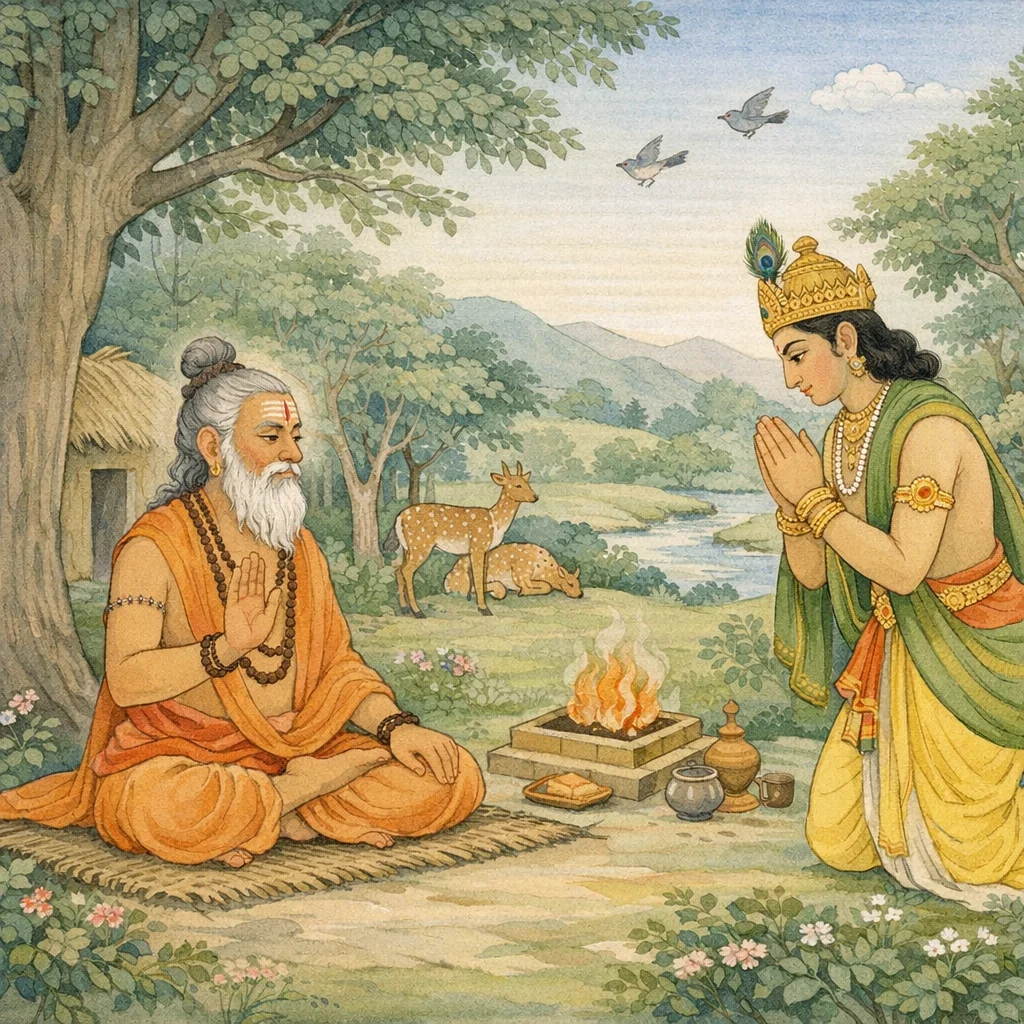
Hearing these words, the son of Kuntī—Dharma-king Yudhiṣṭhira—together with his brothers, questioned the sage Mārkaṇḍeya again.
Verse 4
श्रूयते हि महाभाग बको दाल्भ्यो महातपा: । प्रियः सखा च शक्रस्य चिरजीवी च सत्तम,महाभाग मुनिश्रेष्ठ दल्भके पुत्र महातपस्वी बक ऋषि चिरजीवी तथा देवराज इन्द्रके प्रिय मित्र सुने जाते हैं
Vaiśampāyana said: “O noble one, it is indeed heard in tradition that Baka Dālbhya is a great ascetic—an excellent man, long-lived, and a dear friend of Śakra (Indra).”
Verse 5
एतदिच्छामि भगवन् बकशक्रसमागमम् | सुखदुःखसमायुक्तं तत्त्वेन कथयस्व मे,“भगवन्! बक और इन्द्रका यह समागम (चिरजीवी पुरुषोंके) सुख और दुःखकी वातसि युक्त कहा गया है। मैं इसे सुनना चाहता हूँ; आप यथार्थरूपसे इसका वर्णन करें!
Vaiśaṃpāyana said: “Revered sir, I wish to hear this encounter between Baka and Śakra (Indra). It is said to be bound up with both joy and sorrow for the long-lived beings; therefore, please recount it to me truthfully, as it really happened.”
Verse 6
मार्कण्डेय उदाच वृत्ते देवासुरे राजन् संग्रामे लोमहर्षणे । त्रयाणामपि लोकानामिन्द्रो लोकाधिपो5भवत्,मार्कण्डेयजी बोले--राजन्! जब रोंगटे खड़े कर देनेवाला देवासुर-संग्राम समाप्त हो गया, उस समय लोकपाल इन्द्र तीनों लोकोंके अधिपति बना दिये गये
Mārkaṇḍeya said: “O King, when the hair-raising war between the gods and the Asuras had come to an end, Indra was established as the sovereign lord of all the three worlds.”
Verse 7
सम्यग् वर्षति पर्जन्ये सस्यसम्पद उत्तमा: । निरामया: सुधर्मिष्ठा: प्रजा धर्मपरायणा:,इन्द्रके शासनकालमें मेघ ठीक समयपर अच्छी वर्षा करते और खेतीकी उपज अच्छी होती थी। सारी प्रजा रोग-व्याधिसे रहित, धर्ममें स्थित तथा धर्मको ही अपना परम आश्रय माननेवाली थी
Vaiśampāyana said: When the rain-clouds poured at the proper time, the harvests were excellent. The people were free from disease, firmly established in good conduct, and took Dharma itself as their highest refuge.
Verse 8
मुदितश्न जन: सर्व: स्वधर्मेषु व्यवस्थित: । ता: प्रजा मुदिता: सर्वा दृष्टवा बलनिषूदन:,सब लोग बड़ी प्रसन्नताके साथ अपने-अपने धर्मोंमें स्थित रहते थे। अपनी उन सारी प्रजाको आनन्दित देखकर बलासुरके शत्रु देवराज इन्द्र बड़ी प्रसन्नताका अनुभव करते थे। एक दिनकी बात है, इन्द्र ऐगावत हाथीपर आरूढ़ हो चैनसे दिन बिताती हुई अपनी प्रजाको देखनेके लिये भ्रमण करने लगे
All the people were joyful and firmly established in their own duties. Seeing all those subjects content, Indra—the slayer of Bala—felt deep satisfaction, for the well-being of a realm rests on citizens who uphold dharma in their respective stations.
Verse 9
ततस्तु मुदितो राजन् देवराज: शतक्रतुः । ऐरावतं समास्थाय ता: पश्चन् मुदिता: प्रजा:,सब लोग बड़ी प्रसन्नताके साथ अपने-अपने धर्मोंमें स्थित रहते थे। अपनी उन सारी प्रजाको आनन्दित देखकर बलासुरके शत्रु देवराज इन्द्र बड़ी प्रसन्नताका अनुभव करते थे। एक दिनकी बात है, इन्द्र ऐगावत हाथीपर आरूढ़ हो चैनसे दिन बिताती हुई अपनी प्रजाको देखनेके लिये भ्रमण करने लगे
Then, O king, the divine king Indra—performer of a hundred sacrifices—felt delighted. Mounting Airāvata, he went about observing his subjects, who were themselves joyful and settled in their respective duties. Seeing the whole populace content and established in dharma, Indra, the foe of Bala, experienced deep satisfaction and set out to survey their well-being.
Verse 10
आश्रमांश्व विचित्रांश्व नदीश्ष विविधा: शुभा: । नगराणि समृद्धानि खेटान् जनपदांस्तथा,राजन! विचित्र आश्रमों, नाना प्रकारकी कल्याण-कारिणी नदियों, समृद्धिशाली नगरों, गाँवों, जनपदों, प्रजापालन-कुशल धर्मात्मा नरेशों, कुओं, पौसलों, बावलियों, तालाबों तथा ब्रह्मचर्यपरायण श्रेष्ठ ब्राह्मणोंद्वारा सेवित अनेकानेक सरोवरोंका अवलोकन करते हुए शतक्रतु इन्द्र एक रमणीय भूभागमें उतरे
Vaiśampāyana said: “O King, (Indra) beheld many wondrous hermitages, diverse auspicious rivers, prosperous cities, villages, and districts.”
Verse 11
प्रजापालनदक्षांश्व नरेन्द्रान् धर्मचारिण: । उदपानं प्रपा वापी तडागानि सरंसि च,राजन! विचित्र आश्रमों, नाना प्रकारकी कल्याण-कारिणी नदियों, समृद्धिशाली नगरों, गाँवों, जनपदों, प्रजापालन-कुशल धर्मात्मा नरेशों, कुओं, पौसलों, बावलियों, तालाबों तथा ब्रह्मचर्यपरायण श्रेष्ठ ब्राह्मणोंद्वारा सेवित अनेकानेक सरोवरोंका अवलोकन करते हुए शतक्रतु इन्द्र एक रमणीय भूभागमें उतरे
Vaiśaṃpāyana said: As Śatakratu Indra surveyed the land, he beheld righteous kings—skilled in protecting their subjects—along with public works that sustain life: wells, drinking-sheds for travelers, stepwells, ponds, and lakes. Observing these signs of dharmic governance and beneficence, Indra descended upon a delightful region.
Verse 12
नाना ब्रह्मसमाचारै: सेवितानि द्विजोत्तमै: | ततो<वतीर्य रम्यायां पृथ्व्यां राजज्छतक्रतु:,राजन! विचित्र आश्रमों, नाना प्रकारकी कल्याण-कारिणी नदियों, समृद्धिशाली नगरों, गाँवों, जनपदों, प्रजापालन-कुशल धर्मात्मा नरेशों, कुओं, पौसलों, बावलियों, तालाबों तथा ब्रह्मचर्यपरायण श्रेष्ठ ब्राह्मणोंद्वारा सेवित अनेकानेक सरोवरोंका अवलोकन करते हुए शतक्रतु इन्द्र एक रमणीय भूभागमें उतरे
Vaiśampāyana said: Having beheld many sacred waters and holy resorts—kept and frequented by the foremost twice-born, rich in diverse Vedic observances—Śatakratu (Indra) then descended upon a delightful region of the earth, O King. The scene underscores a land sustained by dharma: disciplined brahmacarya, well-tended places of worship and learning, and righteous rulers who protect their people, making the world fit for divine presence.
Verse 13
तत्र रम्ये शिवे देशे बहुवृक्षसमाकुले । पूर्वस्यां दिशि रम्यायां समुद्राभ्याशतो नूप
Vaiśampāyana said: There, in that delightful and auspicious region, thick with many trees, on the lovely eastern side, close to the sea—(the narrative goes on to specify the exact locale). The verse sets an ethically charged atmosphere: a pure, pleasant setting that frames the ensuing events as occurring in a place conducive to restraint, reflection, and right conduct.
Verse 14
तत्राश्रमपदं रम्यं मृगद्धिजनिषेवितम् । तत्राश्रमपदे रम्ये बक॑ पश्यति देवराट्
There he came upon a delightful hermitage-site, frequented by deer and by holy brahmins. At that charming hermitage-ground, Devarāṭ noticed a crane—an ominous detail that sets the scene for a moral encounter where outward calm contrasts with hidden danger.
Verse 15
राजन! परम सुन्दर पूर्वदिशामें समुद्रके निकट एक मनोहर एवं सुखद स्थानमें, जो बहुत-से वृक्षोंसे घिरा हुआ था, एक रमणीय आश्रम दिखायी दिया, जहाँ बहुत-से पशु और पक्षी निवास करते थे। देवराज इन्द्रने उस रमणीय आश्रममें जाकर बक मुनिका दर्शन किया ।। बकस्तु दृष्ट्वा देवेन्द्र दृढे प्रीतमनाभवत् । पाद्यासनार्घ्यदानेन फलमूलैरथार्चयत्,देवराज इन्द्रको उपस्थित देख बकके हृदयमें दृढ़ प्रेम उत्पन्न हुआ। उन्होंने पाद्य, आसन, अर्घ्य और फल-मूलादि देकर देवराजका पूजन किया
O king! In the supremely beautiful eastern quarter, near the sea, in a charming and pleasant spot ringed about with many trees, a lovely hermitage came into view, where many beasts and birds made their home. Devārāja Indra entered that delightful āśrama and beheld the sage Baka. Seeing Devendra, Baka’s heart was filled with steadfast affection; he worshiped the king of the gods with water for washing the feet (pādya), a seat (āsana), the arghya offering, and fruits and roots—thus fulfilling the dharma of hospitality toward a revered guest.
Verse 16
सुखोपविष्टो वरदस्ततस्तु बलसूदन: । ततः प्रश्न॑ बक॑ देव उवाच त्रिदशेश्वर:,सबको वर देनेवाले बलनिषूदन देवेश्वर इन्द्र जब सुखपूर्वक आसनपर बैठ गये, तब वे मुनिवर बकसे इस प्रकार बोले--
Vaiśampāyana said: When the boon-giving slayer of Bala (Indra) had seated himself comfortably, the sage Baka then addressed a question to that lord of the gods, speaking as follows.
Verse 17
शतं वर्षसहस्राणि मुने जातस्य तेडनघ । समाख्याहि मम ब्रद्मयन् कि दुःखं चिरजीविनाम्
Vaiśampāyana said: “O sinless sage, you have lived for a hundred thousand years. Tell me, O Brahman—what sorrow is there for those who live long?”
Verse 18
“निष्पाप मुने! आपकी अवस्था एक लाख वर्षकी हो गयी। ब्रह्म! आप अपने अनुभवके आधारपर यह बताइये कि चिरजीवी मनुष्योंको क्या दुःख होता है? ।। बक उवाच अप्रियै: सह संवास: प्रियैश्ञापि विनाभव: । असद्धिः सम्प्रयोगश्न तद् दुः:खं चिरजीविनाम्,बकने कहा--ेवेश्वर! अप्रिय मनुष्योंके साथ रहना पड़ता है। प्रियजनोंकी मृत्यु हो जानेसे उनके वियोगका दुःख सहते हुए जीवन व्यतीत करना पड़ता है और दुष्ट मनुष्योंका संग प्राप्त होता है। चिरजीवी मनुष्योंके लिये यही महान् दुःख है
Baka said: “For the long-lived, this is the sorrow: having to dwell with those who are unpleasant; being separated from loved ones when they are no more; and being forced into association with the wicked.”
Verse 19
पुत्रदारविनाशो>त्र ज्ञातीनां सुह्दामपि । परेष्वायत्तताकृच्छूं कि नु दुःखतरं तत:,अपनी आँखोंके सामने स्त्री और पुत्रोंकी मृत्यु होती है। भाई-बन्धु आदि जातिके लोगों और सुहृदोंका सदाके लिये वियोग हो जाता है तथा जीवन-निर्वाहके लिये दूसरोंके अधीन रहकर उनके तिरस्कारका कष्ट भोगना पड़ता है। इससे बढ़कर महान् दुःख और क्या हो सकता है?
Bakā says: “Here one witnesses the destruction of one’s wife and children before one’s very eyes; even separation from kinsmen and dear friends becomes permanent. And for the sake of mere livelihood one must live dependent on others, enduring hardship and humiliation. What sorrow could be greater than this?”
Verse 20
नान्यद् दुःखतरं किज्चिल्लोकेषु प्रतिभाति मे । अर्थविंहीन: पुरुष: परै: सम्परिभूयते,निर्धन मनुष्यको जो दूसरोंसे तिरस्कृत होना पड़ता है, इससे बढ़कर महान् कष्टकी बात संसारमें मुझे और कोई नहीं जान पड़ती है
Baka said: “To me, nothing in the worlds appears more painful than this: a man who is without wealth is despised and humiliated by others.”
Verse 21
अकुलानां कुले भावं कुलीनानां कुलक्षयम् | संयोगं विप्रयोगं च पश्यन्ति चिरजीविन:,चिरजीवी मनुष्य अकुलीनोंके कुलकी उन्नति, कुलीनोंके कुलका संहार तथा संयोग और वियोग देखते रहते हैं
Bak said: “Those who live long witness many reversals in the world: the rise of families once considered low, the ruin of families once esteemed, and again and again the meeting and parting of people. Such changes are what the long-lived continually see.”
Verse 22
अपि प्रत्यक्षमेवैतत् तव देव शतक्रतो । अकुलानां समृद्धानां कथं कुलविपर्यय:,देव शतक्रतो! आप भी तो यह प्रत्यक्ष ही देख रहे हैं कि किस प्रकार समृद्धिशाली अकुलीन मनुष्योंके कुलमें उलट-फेर हो जाता है
“Surely you yourself see this plainly, O divine Śatakratu: how even among those who are prosperous yet of no established lineage, their ‘family-status’ can suddenly be overturned.”
Verse 23
देवदानवगन्धर्वमनुष्योरगराक्षसा: । प्राप्रुवन्ति विपर्यासं कि नु दुःखतरं तत:,देवता, दानव, गन्धर्व, मनुष्य, नाग तथा राक्षस--ये सभी विपरीत अवस्थामें पहुँचकर क्यासे क्या हो जाते हैं? इससे बढ़कर महान् दुःख और क्या होगा?
Baka said: “Gods, demons, Gandharvas, human beings, serpents, and Rākṣasas—all of them can fall into reversal and ruin, losing their proper state and becoming something else. What sorrow could be greater than this?”
Verse 24
कुले जाताश्व क्लिश्यन्ते दौष्कुलेयवशानुगा: । आदयैर्दरिद्राश्चाक्रान्ता: कि नु दुःखतरं तत:,कुलीन मनुष्य भी नीच कुलके लोगोंके वशमें पड़कर क्लेश उठा रहे हैं और धनीलोग दरिद्रोंको सताते हैं। इससे बढ़कर दुःखकी बात और क्या हो सकती है?
Baka said: “Even those born in noble families are made to suffer when they fall under the control of men of base lineage; and the poor are oppressed by the wealthy. What could be more painful than this?”
Verse 25
लोके वैधर्म्यमेतत् तु दृश्यते बहुविस्तरम् । हीनज्ञानाश्न हष्यन्ते क्लिश्यन्ते प्राज़्कोविदा:
Baka said: “In this world, this very inversion of dharma is seen spread far and wide: those of inferior understanding rejoice, while the truly wise and discerning are the ones who suffer.”
Verse 26
इन्द्र उवाच पुनरेव महाभाग देवर्षिगणसेवित
Indra said: “Once again, O greatly fortunate one—this (place/assembly) is attended and honored by hosts of divine seers.”
Verse 27
बक उवाच अष्टमे द्वादशे वापि शाकं यः पचते गृहे,बकने कहा--जो दिनके आठवें या बारहवें भागमें अपने घरपर भोजनके लिये केवल शाक पका लेता है परंतु कुमित्रोंकी शरणमें नहीं जाता, उस पुरुषको जो सुख प्राप्त है, उससे बढ़कर सुख और कया हो सकता है? जहाँ दिन नहीं गिने जाते--जहाँ प्रतिदिन अन्नकी प्राप्तिके लिये चिन्ता नहीं करनी पड़ती; वही सुखी है। उसे लोग अधिक खानेवाला अथवा पेटू नहीं कहते हैं
Baka said: “Whether at the eighth or even the twelfth part of the day, the man who in his own house cooks only a simple vegetable dish for his meal—and does not go seeking refuge among false friends—what happiness could be greater than the happiness he attains? Where days are not anxiously counted, where one need not worry each day about obtaining food—there alone is true contentment. Such a person is not branded by others as a glutton or a belly-slave.”
Verse 28
कुमित्राण्यनपाश्रित्य कि वै सुखतरं ततः । यत्राहानि न गण्यन्ते नैनमाहुर्महाशनम्,बकने कहा--जो दिनके आठवें या बारहवें भागमें अपने घरपर भोजनके लिये केवल शाक पका लेता है परंतु कुमित्रोंकी शरणमें नहीं जाता, उस पुरुषको जो सुख प्राप्त है, उससे बढ़कर सुख और कया हो सकता है? जहाँ दिन नहीं गिने जाते--जहाँ प्रतिदिन अन्नकी प्राप्तिके लिये चिन्ता नहीं करनी पड़ती; वही सुखी है। उसे लोग अधिक खानेवाला अथवा पेटू नहीं कहते हैं
Baka said: “What could be happier than this—living without taking refuge in bad friends? In that state, days are not counted out in anxious calculation, and one is not branded as a great eater. The truly content person is the one who cooks simple greens at home and lives without the daily worry of securing food or leaning on corrupt companionship.”
Verse 29
अपि शाकं पचानस्य सुखं वै मघवन् गृहे । अर्जित स्वेन वीर्येण नाप्यपाश्रित्य कड्चन,इन्द्र! जो अपने पराक्रमसे उपार्जन करके घरमें केवल शाक बनाकर खाता है, परंतु दूसरे किसीका सहारा नहीं लेता, उसे ही सुख है
O Maghavan (Indra), true happiness belongs to the man who, in his own home, cooks and eats even mere greens—so long as he has earned them by his own strength and does not depend on anyone else.
Verse 30
फलशाकमपि श्रेयो भोक्तुं हकृपणं गृहे । परस्य तु गृहे भोक्तु: परिभूतस्य नित्यश:,धिगस्तु तस्य तद् भुक्ते कृपणस्य दुरात्मन: । दूसरेके सामने दीनता न दिखाकर अपने घरमें फल और शाक खाकर रहना अच्छा है। परंतु दूसरेके घरमें सदा तिरस्कार सहकर मीठे पकवान खाना भी अच्छा नहीं है; अतः दूसरेके आश्रित रहकर जीवन-निर्वाह करनेके सम्बन्धमें साधु पुरुषोंका सदासे ही विरोध रहा है। जो पराया अन्न खाना चाहता है, वह कुत्तेकी भाँति खून चाटता है। उस दुरात्मा और कृपणके वैसे भोजनको धिक्कार है
Baka said: “Even a poor meal of fruits and greens eaten in one’s own home is better. But to eat in another’s house while enduring constant humiliation is not good, even if the food is sweet and rich. Therefore, the wise have long opposed living by dependence on others. The meal of that mean-spirited, wicked man who seeks another’s food—like a dog licking blood—deserves only contempt.”
Verse 31
सुमृष्टमपि न श्रेयो विकल्पो5यमत: सताम् | श्ववत् कीलालपो यस्तु परान्नं भोक्तुमिच्छति
Even if it is neatly dressed up, this alternative is not truly beneficial for the good. For whoever wishes to eat another’s food is like a dog—one who laps up the dregs—living by what belongs to others.
Verse 32
यो दत्त्वातिथिभूतेभ्य: पितृभ्यश्न द्विजोत्तम:
Baka said: “That best of twice-born who, after giving (his due) to guests, living beings, and the ancestors, then partakes of his food…”
Verse 33
शिष्टान्यन्नानि यो भुड्धक्ते कि वै सुखतरं ततः । अतो मृष्टतरं नान्यत् पूतं किज्चिच्छतक्रतो
Baka said: “What could be more pleasant than eating food that is proper and approved by the virtuous? Indeed, O Śatakratu (Indra), there is nothing more delicious than that—nothing purer at all.”
Verse 34
जो श्रेष्ठ द्विज सदा अतिथियों, भूत-प्राणियों तथा पितरोंको अर्पण करके अर्थात् बलिवैश्वदेव करके शेष अन्न स्वयं भोजन करता है, उससे बढ़कर महान् सुख और क्या हो सकता है? देवेन्द्र! इस यज्ञशेष अन्नसे बढ़कर अत्यन्त मधुर और पवित्र दूसरा कोई भोजन नहीं है ।। दत्त्वा यस्त्वतिथिभ्यो वै भुद्धक्ते तेनेव नित्यश: । यावतो ह[ुन्धस: पिण्डानश्नाति सततं द्विज:,जो प्रतिदिन अतिथियोंको देकर शेष अन्नसे ही भोजनका काम चलाता है, उसके अन्नके जितने ग्रास अतिथि ब्राह्मण नित्य भोजन करता है, उतने ही हजार गौओंके दानका पुण्य उस दाताको प्राप्त होता है, तथा उसके द्वारा युवावस्थामें जो पाप हुए होते हैं, वे सब निश्चय ही नष्ट हो जाते हैं
Baka says: “The man who, day after day, first gives to guests—performing the offering that belongs to beings and ancestors—and then eats only what remains, attains a happiness beyond compare. O lord of the gods, no food is sweeter or purer than this sacrificial remainder. Indeed, for every mouthful that a guest-brāhmaṇa eats from what has been offered, the giver gains merit equal to the gift of a thousand cows; and the sins committed in youth are surely destroyed.”
Verse 35
तावतां गोसहस्राणां फल प्राप्रोति दायक: । यदेनो यौवनकृतं तत् सर्व नश्यते ध्रुवम्,जो प्रतिदिन अतिथियोंको देकर शेष अन्नसे ही भोजनका काम चलाता है, उसके अन्नके जितने ग्रास अतिथि ब्राह्मण नित्य भोजन करता है, उतने ही हजार गौओंके दानका पुण्य उस दाताको प्राप्त होता है, तथा उसके द्वारा युवावस्थामें जो पाप हुए होते हैं, वे सब निश्चय ही नष्ट हो जाते हैं
Baka said: “The giver attains the merit equal to donating that many thousands of cows. And whatever sin was committed in youth—indeed all of it—certainly perishes.”
Verse 36
सदक्षिणस्य भुक्तस्य द्विजस्य तु करे गतम् । यद् वारि वारिणा सिज्चेत् तद्धयेनस्तरते क्षणात्,ब्राह्मगके भोजन कर लेनेपर जो उसे दक्षिणा दी जाती है, उस समय उसके हाथमें जो प्रतिग्रहका जल रहता है, उसे दाता पुनः उत्सर्गके जलसे सींचे। ऐसा करनेसे वह तत्काल सब पापोंसे छूट जाता है
Baka said: When a twice-born (brāhmaṇa) has eaten a meal accompanied by a fee (dakṣiṇā), the water that has come into his hand as the ritual ‘acceptance-water’ should be sprinkled again by the giver with the water of release (utsarga). By doing so, the giver is freed at once from sin.
Verse 37
एताश्षान्याश्न वै बह्दी: कथयित्वा कथा: शुभा: । बकेन सह देवेन्द्र आपृच्छय त्रिदिवं गत:,इस प्रकार देवराज इन्द्र बकके साथ ये तथा और बहुत-सी उत्तम कथा-वार्ताएँ करके उनसे आज्ञा लेकर स्वर्गलोकको चले गये
After recounting these and many other auspicious tales in conversation with Baka, Devendra (Indra) took leave of him, asked his permission, and departed for Tridiva, the heavenly world.
Verse 192
इस प्रकार श्रीमह्याभारत वनपवके अन्तर्गत मार्कण्डेयसमास्यापर्वमें मण्ड्रकोपाख्यानविषयक एक सौ बानबेवाँ अध्याय पूरा हुआ
Thus ends the one hundred and ninety-second chapter, concerning the episode of Maṇḍraka, within the Mārkaṇḍeya-samāsya section of the Vana Parva of the revered Mahābhārata. This closing formula marks the completion of a narrative unit and signals the transition to the next portion of the forest-book’s moral and instructive discourse.
Verse 193
इति श्रीमहाभारते वनपर्वणि मार्कण्डेयसमास्यापर्वणि ब्राह्मणमहा भाग्ये बकशक्रसंवादे त्रिनवत्यधिकशततमो< ध्याय:,इस प्रकार श्रीमहाभारत वनपवके अन्तर्गत मार्कण्डेय समास्यापर्वमें ब्राह्मणोंके माहात्म्यके सम्बन्धरें बक-इन्द्रसंवादविषयक एक सौ तिरानबेवाँ अध्याय पूरा हुआ
Thus, in the Mahābhārata, within the Vana Parva—under the Mārkaṇḍeya-samāsya section—in the episode on the great blessedness and glory of the brāhmaṇas, the dialogue between Baka and Śakra (Indra) concludes here as the one hundred and ninety-third chapter.
Verse 253
बहुदुःखपरिवलेशं मानुष्यमिह दृश्यते । लोकमें यह विपरीत अवस्था बहुत अधिक दिखायी देती है। ज्ञानहीन मूढ़ मनुष्य तो मौज करते हैं और श्रेष्ठ ज्ञानी मनुष्य क्लेश भोग रहे हैं। यहाँ मानवयोनिमें दु:ख और क्लेशकी अधिकता ही दृष्टिगोचर होती है
Here in the human condition one clearly sees a state surrounded by many sorrows and afflictions. In the world, this inverted order is often evident: the ignorant and deluded seem to enjoy themselves, while the truly wise and noble endure hardship. Thus, in human life, suffering and strain appear to predominate.
Verse 316
धिगस्तु तस्य तद् भुक्ते कृपणस्य दुरात्मन: । दूसरेके सामने दीनता न दिखाकर अपने घरमें फल और शाक खाकर रहना अच्छा है। परंतु दूसरेके घरमें सदा तिरस्कार सहकर मीठे पकवान खाना भी अच्छा नहीं है; अतः दूसरेके आश्रित रहकर जीवन-निर्वाह करनेके सम्बन्धमें साधु पुरुषोंका सदासे ही विरोध रहा है। जो पराया अन्न खाना चाहता है, वह कुत्तेकी भाँति खून चाटता है। उस दुरात्मा और कृपणके वैसे भोजनको धिक्कार है
Bakā declares: “Shame upon that meal, when eaten by a miserly, wicked-minded man.” In ethical force, the line condemns a life sustained by degrading dependence—preferring simple self-earned food over sweet dishes obtained by enduring contempt in another’s house; living on another’s provisions is portrayed as morally corrosive and humiliating.
Verse 2636
समाख्याहि मम ब्रद्मान् कि सुखं चिरजीविनाम् | इन्द्रने पूछा--महाभाग! देवता तथा ऋषियोंके समुदाय आपकी सेवामें उपस्थित रहते हैं। ब्रह्म! अब मुझसे फिर यह बताइये कि चिरजीवी मनुष्योंको क्या सुख मिलता है?
Indra said: “O Brahman, tell me clearly: what happiness is obtained by those who live long?” In the narrative setting, Indra—seeing the sage attended by hosts of gods and seers—presses for a deeper account of the nature of well-being in a prolonged life, implying that mere longevity is not itself the highest good unless it is joined to right understanding and dharmic fulfillment.
Frequently Asked Questions
The dilemma is how to enact necessary corrective action (vadhya-making for lokahita) while remaining bound to the inviolability of boons and truth-conditions imposed by the recipients.
Legitimate power operates within rule-bound reality: even divine agency respects satya and conditions, demonstrating that ethical outcomes can require disciplined interpretation rather than rule-breaking.
No explicit phalaśruti appears in the provided passage; the meta-function is exemplary—embedding a cosmological narrative to clarify how dharma and constraint-resolution operate within the epic’s moral architecture.