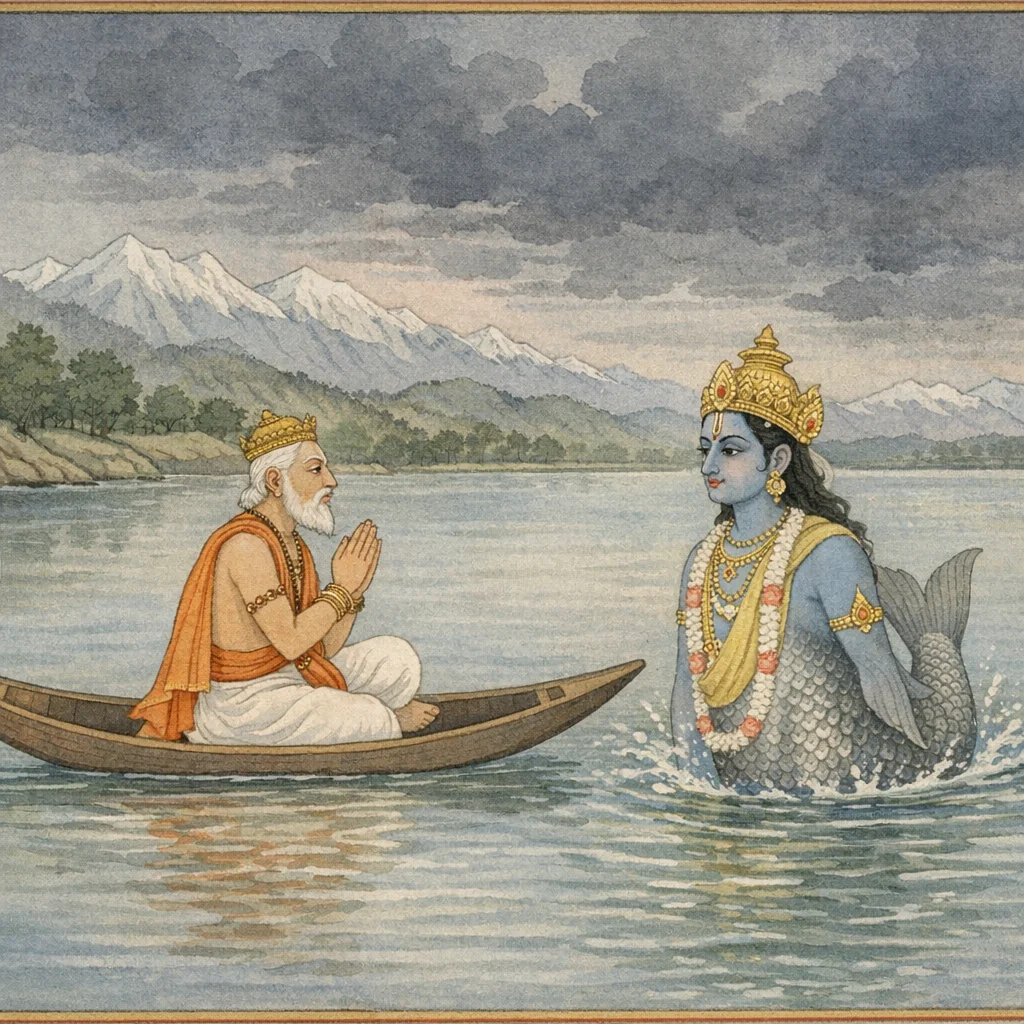
Adhyaya 188
Adhyāya 188: Mārkaṇḍeya’s Account of Yuga-Decline and the Restoration Motif (Kali-yuga to Kalki)
Upa-parva: Mārkaṇḍeya–Yuga-vṛttānta Upākhyāna (Kali-yuga and Yuga-anta discourse)
Vaiśaṃpāyana reports that the Pāṇḍavas, with the twins and Draupadī, offer reverence to Janārdana and are consoled appropriately. Yudhiṣṭhira then questions the great sage Mārkaṇḍeya about the world’s future course—asking how dharma remains when it becomes confused in Kali-yuga, what human strength, diet, lifespan, clothing, and conduct will be at yuga’s end, and by what stage Kṛta will re-emerge. Mārkaṇḍeya answers with a yuga-structure: in Kṛta dharma stands complete; in later yugas it is progressively mixed and diminished until Kali, where adharma predominates and human capacities (lifespan, vigor, intellect, strength) contract. He enumerates symptoms of late-age disorder across governance, learning, ritual life, economy, kinship, and public trust, along with portents in nature and society. The discourse then pivots to renewal: after the tumult of yuga-ending conditions, order reconstitutes; auspicious cosmic alignments and timely rains return; and Kalki, named Viṣṇuyaśā, arises in Śambhala as a dharma-restoring cakravartin figure who removes disruptive groups and inaugurates the return toward Kṛta-like stability.
Chapter Arc: मार्कण्डेय ऋषि युधिष्ठिर को एक प्राचीन, पापहर और लोक-व्यवस्था का मूल बताने वाला आख्यान सुनाने का संकल्प करते हैं—देवता भी अश्रोत्रिय के अर्पण को स्वीकार नहीं करते, जैसे अपरिचित के अन्न को मनुष्य नहीं खाता। → विवस्वान् के पुत्र, महातपस्वी मनु का उदय होता है—ओज, तेज, लक्ष्मी और तप से वह अपने पिता-समान तेजस्वियों को भी अतिक्रमित-सा प्रतीत होता है। इसी पृष्ठभूमि में ‘सनातन वृत्ति’ का कठोर नियम उभरता है: बलवान दुर्बल को निगलता है; संसार की गति करुणा नहीं, नियम से चलती है। → मत्स्य-रूप में प्रकट दिव्य सत्ता मनु को आदेश देती है कि वह नाव में बैठकर प्रतीक्षा करे—‘नौस्थश्च मां प्रतीक्षेथाः…’; मनु बिना शंका के वचन देता है—‘नाभिशङ्क्यमिदं…’। यह क्षण मनु के विश्वास, आज्ञापालन और आगामी प्रलय-रक्षा के संकल्प को निर्णायक रूप देता है। → आख्यान का फलश्रुति-स्वरूप निष्कर्ष आता है: मनु द्वारा समस्त प्रजा (देव-दानव-मनुष्य) और लोकों की सृष्टि/पुनर्स्थापना का विधान बताया जाता है; और यह कथा ‘सर्वपापहर’ कही जाती है—जो नित्य श्रद्धा से सुने, वह पूर्णार्थ और सुखी होता है। → प्रलय-रक्षा और पुनर्सृष्टि का संकेत देकर कथा आगे के विस्तार की ओर धकेलती है—मनु की प्रतीक्षा के बाद ‘क्या घटित होगा’ का उत्कंठा-बीज बना रहता है।
Shlokas
Verse 1
हि आन (9) आप आ आह - जैसे मनुष्य अपरिचित पुरुषका दिया हुआ अन्न नहीं खाता, उसी प्रकार अश्रोत्रियका दिया हुआ हविष्य देवता नहीं स्वीकार करते हैं। सप्ताशीरत्याधिकशततमो< ध्याय: वैवस्वत मनुका चरित्र तथा मत्स्यावतारकी कथा वैशम्पायन उवाच ततः स पाण्डवो विप्रं मार्कण्डेयमुवाच ह | कथयस्वेति चरितं मनोरवैंवस्वतस्य च,वैशम्पायनजी कहते हैं-जनमेजय! इसके बाद पाण्डुनन्दन युधिष्ठिरने मार्कण्डेयजीसे कहा--“अब आप हमसे वैवस्वत मनुके चरित्र कहिये'
Vaiśampāyana said: Then that Pāṇḍava (Yudhiṣṭhira) addressed the sage Mārkaṇḍeya and said, “Please narrate to us the life-story and conduct of Vaivasvata Manu.”
Verse 2
मार्कण्डेय उवाच विवस्वत: सुतो राजन् महर्षि: सुप्रतापवान् । बभूव नरशार्दूल प्रजापतिसमद्युति:,मार्कण्डेयजी बोले--नरश्रेष्ठ नरेश! विवस्वान् (सूर्य)-के एक अत्यन्त प्रतापी पुत्र हुआ, जो प्रजापतिके समान कान्तिमान् और महान् ऋषि था
Mārkaṇḍeya said: “O king, a son of Vivasvān (the Sun) was born—an exceedingly powerful great seer. O tiger among men, he shone with a splendor equal to that of Prajāpati.”
Verse 3
ओजसा तेजसा लक्ष्म्या तपसा च विशेषत:ः । अतिचक्राम पितरं मनु: स्वं च पितामहम्,वह बालक मनु ओज, तेज, कान्ति और विशेषतः तपस्याद्वारा अपने पिता भगवान् सूर्य तथा पितामह महर्षि कश्यपसे भी आगे बढ़ गया
Mārkaṇḍeya said: “By his innate vigor, spiritual radiance, auspicious splendor, and above all by the power of austerity, Manu surpassed even his own father and his grandfather.”
Verse 4
ऊर्ध्वबाहुर्विशालायं बदर्या स नराधिप । एकपादस्थितस्तीव्रं चकार सुमहत् तप:,महाराज! उसने बदरिकाश्रममें जाकर दोनों बाँहें ऊपर उठाये एक पैरसे खड़ा हो दस हजार वर्षोतक बड़ी भारी तपस्या की। उस समय उसका सिर नीचेकी ओर झुका हुआ था और वह एकटक नेत्रोंसे निरन्तर देखता रहता था। इस प्रकार बड़ी दृढ़ताके साथ उस बालकने घोर तप किया
Mārkaṇḍeya said: “O king, he went to the wide region of Badarī (Badarikāśrama). There, raising both arms upward and standing on a single foot, he undertook an exceedingly severe and immense austerity.”
Verse 5
अवाक्शिरास्तथा चापि नेत्रैरनिमिषैर्दढम् । सो5तप्यत तपो घोर वर्षाणामयुतं तदा,महाराज! उसने बदरिकाश्रममें जाकर दोनों बाँहें ऊपर उठाये एक पैरसे खड़ा हो दस हजार वर्षोतक बड़ी भारी तपस्या की। उस समय उसका सिर नीचेकी ओर झुका हुआ था और वह एकटक नेत्रोंसे निरन्तर देखता रहता था। इस प्रकार बड़ी दृढ़ताके साथ उस बालकने घोर तप किया
Mārkaṇḍeya said: “With his head bent downward and his eyes held steady without blinking, he performed a fierce austerity (tapas) with unwavering resolve. Thus, at that time, he undertook a terrible penance for ten thousand years.”
Verse 6
त॑ कदाचित् तपस्यन्तमार्द्रचीरजटाधरम् | चीरिणीतीरमागम्य मत्स्यो वचनमत्रवीत्,(वही बालक वैवस्वत मनुके नामसे प्रसिद्ध हुआ।) एक दिनकी बात है, मनु भीगे चीर और जटा धारण किये चीरिणी नदीके तटपर तपस्या कर रहे थे। उस समय एक मत्स्य आकर इस प्रकार बोला--
Mārkaṇḍeya said: “Once, as Manu was engaged in austerities on the bank of the Cīriṇī river—wearing damp bark-garments and matted locks—a fish came up to that shore and addressed him.”
Verse 7
भगवन क्षुद्रमत्स्यो5स्मि बलवद्धयो भयं मम । मत्स्येभ्यो हि ततो मां त्वं त्रातुमहसि सुव्रत,“'भगवन्! मैं एक छोटा-सा मत्स्य हूँ। मुझे (अपनी जातिके) बलवान् मत्स्योंसे बराबर भय बना रहता है। अतः उत्तम व्रतका पालन करनेवाले सहर्षे! आप उनसे मेरी रक्षा करें
The fish said: “O Blessed Lord, I am but a small fish, and I live in constant fear of the stronger fish. Therefore, O you of excellent vows, you ought to protect me from them.”
Verse 8
दुर्बलं बलवन्तो हि मत्स्या मत्स्यं विशेषतः । आस्वदन्ति सदा वृत्तिविहिता न: सनातनी,“बलवान मत्स्य विशेषत: दुर्बल मत्स्यको अपना आहार बना लेते हैं, यह सदासे हमारी मत्स्य-जातिकी नियत--वृत्ति है
Mārkaṇḍeya said: “Indeed, the strong fish consume the weak—fish devour fish above all. This has always been our ancient, inborn way of life, fixed as our natural livelihood.”
Verse 9
तस्माद् भयौघान्महतो मज्जन्तं मां विशेषतः । त्रातुमहसि कर्तास्मि कृते प्रतिकृतं तव,“इसलिये भयके महान समुद्रमें मैं डूब रहा हूँ। आप विशेष प्रयत्न करके मुझे बचानेका कष्ट करें। आपके इस उपकारके बदले मैं भी प्रत्युपकार करूँगा”
“Therefore, as I am sinking in this vast flood of fear, you should make a special effort to rescue me. In return for this kindness of yours, I too will repay you with a fitting counter-service.”
Verse 10
स मत्स्यवचन श्रुत्वा कृपयाभिपरिप्लुत: । मनुर्वैवस्वतो<गृह्नात् तं मत्स्यं पाणिना स्वयम्
Hearing the fish’s words, Manu Vaivasvata was overwhelmed with compassion; with his own hand he took up that fish.
Verse 11
उदकान्तमुपानीय मत्स्यं वैवस्वतो मनु: । अलिज्जरे प्राक्षिपत् तं चन्द्रांशुसदृशप्रभम्
Mārkaṇḍeya said: Vaivasvata Manu brought the fish to the water’s edge and placed that moonbeam-bright creature into a jar.
Verse 12
मत्स्यकी यह बात सुनकर वैवस्वत मनुको बड़ी दया आयी। उन्होंने स्वयं अपने हाथसे चन्द्रमाकी किरणोंके समान श्वेत रंगवाले उस मत्स्यको उठा लिया और पानीके बाहर लाकर मटकेमें डाल दिया ।। 0३७ कआ-> 27५ आम ५०:८2. &70- ---: स तत्र ववृधे राजन् मत्स्य: परमसत्कृत: । पुत्रवत् स्वीकरोत् तस्मै मनुर्भावं विशेषत:,राजन! वहाँ उन्होंने बड़े आदरके साथ उसका पालन-पोषण किया और वह दिन-दिन बढ़ने लगा। मनुने उसके प्रति पुत्रके समान विशेष वात्सल्य भाव प्रकट किया। तदनन्तर दीर्घकाल बीतनेपर वह मत्स्य इतना बड़ा हो गया कि मटकेमें उसका रहना असम्भव हो गया
Mārkaṇḍeya said: Hearing the fish’s plea, Vaivasvata Manu was moved by deep compassion. With his own hands he lifted that fish—white as moonbeams—brought it out of the water, and placed it in a jar. There, honored with great care, the fish grew day by day. Manu accepted it like a son and showed it special affection. After a long time, the fish became so large that it could no longer remain in the jar.
Verse 13
अथ कालेन महता स मत्स्य: सुमहानभूत् | अलिज्जरे यथा चैव नासौ समभवत् किल,राजन! वहाँ उन्होंने बड़े आदरके साथ उसका पालन-पोषण किया और वह दिन-दिन बढ़ने लगा। मनुने उसके प्रति पुत्रके समान विशेष वात्सल्य भाव प्रकट किया। तदनन्तर दीर्घकाल बीतनेपर वह मत्स्य इतना बड़ा हो गया कि मटकेमें उसका रहना असम्भव हो गया
Mārkaṇḍeya said: In the course of a long time, that fish grew exceedingly large. Just as something cannot properly remain confined within a small jar, so too, O king, it could no longer be kept there.
Verse 14
अथ मत्स्यो मनु दृष्टवा पुनरेवाभ्यभाषत । भगवन् साधु मेउद्यान्यत् स्थानं सम्प्रतिपादय,तब एक दिन मत्स्यने मनुको देखकर फिर कहा--“भगवन्! अब आप मेरे लिये इससे अच्छा कोई दूसरा स्थान दीजिये”
Then the fish, seeing Manu, spoke to him again: “O venerable one, please provide me now with another place—one better suited for me.”
Verse 15
उद्धृत्यालिज्जरात् तस्मात् ततः स भगवान् मनुः । त॑ मत्स्यमनयद् वापीं महतीं स मनुस्तदा,तब वे भगवान् मनु उस मत्स्यको उस मटकेसे निकालकर एक बहुत बड़ी बावलीके पास ले गये
Mārkaṇḍeya said: Then the venerable Manu lifted the fish out of that jar, and at that time he carried it to a very large pond.
Verse 16
तत्र त॑ प्राक्षिपच्चापि मनु: परपुरंजय । अथावर्धत मत्स्य: स पुनर्वर्षमणान् बहून्ू,शत्रुविजयी युधिष्ठिर! मनुने उसे वहीं डाल दिया। अब वह मत्स्य अनेक वर्षोतक उसीमें क्रमश: बढ़ता रहा
Mārkaṇḍeya said: “Thereupon Manu, O conqueror of hostile cities, placed that fish right there. Then the fish continued to grow, year after year, for many years. O Yudhiṣṭhira, victorious over enemies—Manu had deposited it in that very place, and the fish steadily increased in size within it over a long span of time.”
Verse 17
द्वियोजनायता वापी विस्तृता चापि योजनम् । तस्यां नासौ समभवन्मत्स्यो राजीवलोचन,कमलनयन! उस बावलीकी लम्बाई दो योजन और चौड़ाई एक योजनकी थी; परंतु उसमें भी उस मत्स्यका रहना कठिन हो गया
Mārkaṇḍeya said: “O lotus-eyed one! There was a reservoir two yojanas in length and one yojana in breadth; yet even in that expanse the fish could not comfortably remain.”
Verse 18
विचेष्टितुं च कौन्तेय मत्स्यो वाप्यां विशाम्पते । मनुं मत्स्यस्ततो दृष्टवा पुनरेवाभ्यभाषत,नराधिप कुन्तीनन्दन! वह उस बावलीमें हिल-डुल भी नहीं पाता था। अतः मनुको देखकर वह पुनः बोला--
Mārkaṇḍeya said: “O son of Kuntī, O lord of men! The fish could not even stir about in the pond. Then, seeing Manu, the fish addressed him again.”
Verse 19
नय मां भगवन् साधो समुद्रमहिषीं प्रियाम् । गड्गां तत्र निवत्स्यामि यथा वा तात मन्यसे,“भगवन्! साधुबाबा! अब आप मुझे समुद्रकी प्यारी पटरानी गंगाजीमें ले चलिये। मैं वहीं निवास करूँगा। अथवा तात! आप जहाँ उचित समझें, ले चलें। अनघ! मुझे दोषदृष्टिका परित्याग करके सदा आपके आज्ञापालनमें स्थिर रहना है; क्योंकि आपके कारण ही मैं भलीभाँति पुष्ट होकर इतना बड़ा हुआ हूँ"
Mārkaṇḍeya said: “The fish said: ‘O venerable one, O good sir, take me to Gaṅgā, the beloved chief queen of the Ocean. I shall dwell there—or, dear father, take me wherever you deem proper. I must abandon fault-finding and remain steadfast in obedience to your command, for it is through you that I have been well nourished and have grown to this stature.’”
Verse 20
निदेशे हि मया तुभ्यं स्थातव्यमनसूयता । वृद्धिर्हि परमा प्राप्ता त्वत्कृते हि मयानघ,“भगवन्! साधुबाबा! अब आप मुझे समुद्रकी प्यारी पटरानी गंगाजीमें ले चलिये। मैं वहीं निवास करूँगा। अथवा तात! आप जहाँ उचित समझें, ले चलें। अनघ! मुझे दोषदृष्टिका परित्याग करके सदा आपके आज्ञापालनमें स्थिर रहना है; क्योंकि आपके कारण ही मैं भलीभाँति पुष्ट होकर इतना बड़ा हुआ हूँ"
Mārkaṇḍeya said: “Indeed, I must remain obedient to your instruction, free from fault-finding or resentment. For through you, O blameless one, I have attained the highest growth and maturity.”
Verse 21
एवमुक्तो मनुर्मत्स्यमनयद् भगवान् वशी । नदीं गड्डां तत्र चैनं स्वयं प्राक्षिपदच्युत:,मत्स्यके ऐसा कहनेपर जितेन्द्रिय, अपनी मर्यादासे कभी च्युत न होनेवाले भगवान् मनुने उसे स्वयं ले जाकर गंगामें डाल दिया
Mārkaṇḍeya said: “Thus addressed, the self-controlled and blessed Manu took the fish and, remaining unwavering in his restraint and duty, personally cast it into the river Gaṅgā.”
Verse 22
स तत्र ववृधे मत्स्य: किंचित्कालमरिंदम । ततः पुनर्मनुं दृष्टवा मत्स्यो वचनमब्रवीत्,शत्रुदमन! फिर वह मत्स्य वहाँ कुछ कालतक बढ़ता रहा। फिर एक दिन मनुको देखकर उसने कहा--'प्रभो! मेरा शरीर अब इतना बड़ा हो गया है कि मैं गंगाजीमें हिल- डुल नहीं सकता। अतः मुझे शीघ्र ही समुद्रमें ले चलिये। भगवन्! आप प्रसन्न होकर मुझपर इतनी कृपा अवश्य कीजिये।' कुन्तीनन्दन! तब मनुने स्वयं उस मत्स्यको गंगाजीके जलसे निकालकर समुद्रतक पहुँचाया और उसमें छोड़ दिया
Mārkaṇḍeya said: “O subduer of foes, the fish grew there for some time. Then, seeing Manu again, the fish spoke: ‘Lord, my body has now become so large that I can no longer move about in the Gaṅgā. Therefore, take me quickly to the ocean. O venerable one, be gracious and show me this kindness.’ Thereupon Manu himself lifted the fish from the waters of the Gaṅgā, carried it to the sea, and released it there.”
Verse 23
गड़ायां हि न शक्नोमि बृहत्त्वाच्चेष्टितुं प्रभो । समुद्र नय मामाशु प्रसीद भगवज्निति,शत्रुदमन! फिर वह मत्स्य वहाँ कुछ कालतक बढ़ता रहा। फिर एक दिन मनुको देखकर उसने कहा--'प्रभो! मेरा शरीर अब इतना बड़ा हो गया है कि मैं गंगाजीमें हिल- डुल नहीं सकता। अतः मुझे शीघ्र ही समुद्रमें ले चलिये। भगवन्! आप प्रसन्न होकर मुझपर इतनी कृपा अवश्य कीजिये।' कुन्तीनन्दन! तब मनुने स्वयं उस मत्स्यको गंगाजीके जलसे निकालकर समुद्रतक पहुँचाया और उसमें छोड़ दिया
Mārkaṇḍeya said: “O Lord, because of my great size I can no longer move about in the Gaṅgā. Quickly take me to the ocean. O Blessed One, be gracious—show me this favor.”
Verse 24
उद्धृत्य गज़्ासलिलात् ततो मत्स्यं मनु: स्वयम् । समुद्रमनयत् पार्थ तत्र चैनमवासृजत्,शत्रुदमन! फिर वह मत्स्य वहाँ कुछ कालतक बढ़ता रहा। फिर एक दिन मनुको देखकर उसने कहा--'प्रभो! मेरा शरीर अब इतना बड़ा हो गया है कि मैं गंगाजीमें हिल- डुल नहीं सकता। अतः मुझे शीघ्र ही समुद्रमें ले चलिये। भगवन्! आप प्रसन्न होकर मुझपर इतनी कृपा अवश्य कीजिये।' कुन्तीनन्दन! तब मनुने स्वयं उस मत्स्यको गंगाजीके जलसे निकालकर समुद्रतक पहुँचाया और उसमें छोड़ दिया
Mārkaṇḍeya said: “Then Manu himself lifted the fish out of the water of the Ganges and, O Pārtha, brought it to the ocean; there he released it, O tamer of foes.”
Verse 25
सुमहानपि मत्स्यस्तु स मनोर्नयतस्तदा । आसीद् यथेष्टहार्यश्न॒ स्पर्शनन्धसुखस्य वै,राजन! यद्यपि वह मत्स्य बहुत विशाल था, तो भी जब मनु उसे ले जाने लगे, तब वह ऐसा बन गया, जिससे आसानीसे ले जाया जा सके। उसका स्पर्श और गन्ध दोनों मनुके लिये बड़े सुखकर थे
Mārkaṇḍeya said: “Though the fish was exceedingly large, when Manu lifted it up and carried it, it became as manageable as one could wish. Its touch—and even its fragrance—were truly delightful to Manu, O king.”
Verse 26
यदा समुद्रे प्रक्षिप्त: स मत्स्यो मनुना तदा । तत एनमिदं वाक््यं स्मयमान इवाब्रवीत्,जब मनुने उस मत्स्यको समुद्रमें डाल दिया, तब इसने उनसे मुसकराते हुए-से कहा --
Mārkaṇḍeya said: When Manu had cast that fish into the ocean, the fish spoke to him as if smiling, addressing him with these words—
Verse 27
भगवन् हि कृता रक्षा त्वया सर्वा विशेषतः । प्राप्तकालं तु यत् कार्य त्वया तच्छुयतां मम,“भगवन्! आपने विशेष मनोयोगके साथ सब प्रकारसे मेरी रक्षा की है, अब आपके लिये जिस कार्यका अवसर प्राप्त हुआ है, वह बताता हूँ, सुनिये--
“O venerable one, you have indeed protected me in every way, with special care. Now the time has come for a task that is to be undertaken by you; I shall tell you what it is—please listen to me.”
Verse 28
अचिराद् भगवन् भौममिदं स्थावरजड्रमम् | सर्वमेव महाभाग प्रलयं वै गमिष्यति,'भगवन्! यह सारा-का-सारा चराचर पार्थिव जगत् शीघ्र ही नष्ट होनेवाला है। महाभाग! सम्पूर्ण जगत्का प्रलय हो जायगा
Mārkaṇḍeya said: “O Blessed One, this earthly world—made of the immobile and the inert—will soon come to an end. O noble one, indeed the whole of it is destined to enter dissolution (pralaya).”
Verse 29
सम्प्रक्षालनकालो<यं लोकानां समुपस्थित: । तस्मात् त्वां बोधयाम्यद्य यत् ते हितमनुत्तमम्,“यह सब लोकोंके सम्प्रजक्ञालन (एकार्णवके जलसे धुलकर नष्ट होने)-का समय आ गया है। इसलिये मैं आपको सचेत करता हूँ और आपके लिये जो परम उत्तम हितकी बात है, उसे बताता हूँ
“The time has come for the great cleansing that washes away the worlds. Therefore I warn you today and tell you what is of the highest benefit to you.”
Verse 30
त्रसानां स्थावराणां च यच्चेड़ं यच्च नेड़ति । तस्य सर्वस्य सम्प्राप्त: काल: परमदारुण:,“सम्पूर्ण जंगमों तथा स्थावर पदार्थो्में जो हिल-डुल सकते हैं और जो हिलने- डुलनेवाले नहीं हैं, उन सबके लिये अत्यन्त भयंकर समय आ पहुँचा है
Mārkaṇḍeya said: “For all beings—both the moving and the unmoving, for whatever here can stir and whatever cannot—the most dreadful Time has now arrived.”
Verse 31
नौश्व कारयितव्या ते दृढा युक्तवटारका । तत्र सप्तर्षिभि: सार्थमारुहेथा महामुने,“आपको एक मजबूत नाव बनवानी चाहिये, जिसमें (मजबूत) रस्सी जुटी हो। महामुने! फिर आप सप्तर्षियोंके साथ उस नावपर बैठ जाइये
Mārkaṇḍeya said: “You should have a sturdy boat constructed, well-fitted with strong ropes. Then, O great sage, board that boat together with the Seven Ṛṣis.”
Verse 32
बीजानि चैव सर्वाणि यथोक्तानि द्विजै: पुरा । तस्यामारोहयेनावि सुसंगुप्तानि भागश:,'पूर्वकालमें ब्राह्मणोंने जो सब प्रकारके बीज बताये हैं, उनका पृथक्-पृथक् संग्रह करके उन्हें सुरक्षितरूपसे उस नावपर रख लें
“Gather together, each separately, all the various seeds that the Brahmins of old have prescribed, and place them upon that boat, well-protected and securely stored.”
Verse 33
नौस्थश्न मां प्रतीक्षेथास्ततो मुनिजनप्रिय । आगमिष्याम्यहं शुद्भी विज्ञेयस्तेन तापस,“मुनिजनोंके प्रेमी तपस्वी नरेश! उस नावमें बैठे रहकर आप मेरी प्रतीक्षा कीजियेगा। मैं आपके पास अपने मस्तकमें सींग धारण किये आऊँगा। उसीसे आप मुझे पहचान लेंगे। इस प्रकार यह सब कार्य आपको करना है। अब मैं आपसे आज्ञा चाहता हूँ और यहाँसे जाता हूँ। उस महान् जलराशिको आपलोग मेरी सहायताके बिना पार नहीं कर सकेंगे
Mārkaṇḍeya said: “O ascetic king, beloved of the sages, remain seated in the boat and wait for me. I shall return bearing a horn upon my head; by that sign you will recognize me. Do exactly thus. Now I take your leave and depart from here—for without my help you will not be able to cross this vast expanse of water.”
Verse 34
एवमेतत्् त्वया कार्यमापृष्टोडसि व्रजाम्पहम् । ता न शक््या महत्यो वै आपस्तर्तु मया विना,“मुनिजनोंके प्रेमी तपस्वी नरेश! उस नावमें बैठे रहकर आप मेरी प्रतीक्षा कीजियेगा। मैं आपके पास अपने मस्तकमें सींग धारण किये आऊँगा। उसीसे आप मुझे पहचान लेंगे। इस प्रकार यह सब कार्य आपको करना है। अब मैं आपसे आज्ञा चाहता हूँ और यहाँसे जाता हूँ। उस महान् जलराशिको आपलोग मेरी सहायताके बिना पार नहीं कर सकेंगे
Mārkaṇḍeya said: “So indeed you must act in this way. Having taken your leave, I now depart. Those vast waters cannot be crossed without my help.”
Verse 35
नाभिशड्क््यमिदं चापि वचन मे त्वया विभो । एवं करिष्य इति तं स मत्स्यं प्रत्यभाषत,'प्रभो! आप मेरी इस बातमें तनिक भी संदेह न करें।” तब राजाने उस मत्स्यसे कहा --“बहुत अच्छा! मैं ऐसा ही करूँगा”
“O mighty one, do not doubt my words in the least,” said (Mārkaṇḍeya). Then the king replied to that fish, “Very well—so shall I do.”
Verse 36
जम्मतुश्च॒ यथाकाममनुज्ञाप्य परस्परम् । ततो मनुर्महाराज यथोक्तं मत्स्यकेन ह,शत्रुदमन! वे दोनों एक-दूसरेसे विदा लेकर इच्छानुसार वहाँसे चले गये। महाराज! तदनन्तर मनु मत्स्यभगवान्के कथनानुसार सम्पूर्ण बीज लेकर एक सुन्दर नौकाद्वारा उत्ताल तरंगोंसे भरे हुए महासागरमें तैरने लगे
Mārkaṇḍeya said: “Having taken leave of one another as they wished, they departed. Then, O great king, O tamer of foes, Manu—acting exactly as the Fish had instructed—gathered all the seeds and set out in a fine boat, floating upon the great ocean swollen with towering waves.”
Verse 37
बीजान्यादाय सर्वाणि सागर पुप्लुवे तदा । नौकया शुभया वीर महोर्मिणमरिंदम,शत्रुदमन! वे दोनों एक-दूसरेसे विदा लेकर इच्छानुसार वहाँसे चले गये। महाराज! तदनन्तर मनु मत्स्यभगवान्के कथनानुसार सम्पूर्ण बीज लेकर एक सुन्दर नौकाद्वारा उत्ताल तरंगोंसे भरे हुए महासागरमें तैरने लगे
Mārkaṇḍeya said: “Then, having gathered all the seeds, he set out upon the ocean. O hero—crusher of foes, subduer of enemies—he floated upon that sea of towering waves in an auspicious boat, acting exactly as the divine Fish had instructed.”
Verse 38
चिन्तयामास च मनुस्तं मत्स्यं पृथिवीपते । सच तच्चिन्तितं ज्ञात्वा मत्स्य: परपुरंजय,शत्रुनगरविजयी नरेश्वर! तदनन्तर मनुने भगवान् मत्स्यका चिन्तन किया। यह जानकर शृंंगधारी भगवान् मत्स्य वहाँ शीघ्र आ पहुँचे। नरश्रेष्ठ भरतकुलशिरोमणे! समुद्रमें अपने पूर्वकथित रूपसे ऊँचे पर्वतकी भाँति शृंगंधारी मत्स्य भगवानको आया देख उनके मस्तकवर्ती सींगमें उन्होंने बँटी हुई रस्सी बाँध दी
Mārkaṇḍeya said: O lord of the earth, Manu began to meditate upon that Fish. Knowing exactly what Manu had conceived in his mind, the Fish—conqueror of hostile cities, O king—soon appeared there. Then, when Manu saw the horned divine Fish rising in the sea in the very form previously described, towering like a mountain, he tied a rope with a fastening-knot to the horn upon its head.
Verse 39
शृद्जी तत्राजगामाशु तदा भरतसत्तम | त॑ दृष्टवा मनुजव्याप्र मनुर्मत्स्यं जलार्णवे,शत्रुनगरविजयी नरेश्वर! तदनन्तर मनुने भगवान् मत्स्यका चिन्तन किया। यह जानकर शृंंगधारी भगवान् मत्स्य वहाँ शीघ्र आ पहुँचे। नरश्रेष्ठ भरतकुलशिरोमणे! समुद्रमें अपने पूर्वकथित रूपसे ऊँचे पर्वतकी भाँति शृंगंधारी मत्स्य भगवानको आया देख उनके मस्तकवर्ती सींगमें उन्होंने बँटी हुई रस्सी बाँध दी
Mārkaṇḍeya said: “Then, O best of the Bharatas, the horned One swiftly arrived there. Seeing that fish in the ocean, Manu—lion among men, conqueror of enemy cities, O king—reflected upon the divine Fish as he had been instructed. Knowing Manu’s thought, the Lord in the form of the horn-bearing Fish quickly came to that very place. O foremost of men, crest-jewel of Bharata’s line! When Manu saw the Lord Fish appear in the sea in the previously described form, towering like a lofty mountain, he tied a divided rope to the horn upon the Fish’s head.”
Verse 40
शड्डिणं तं यथोक्तेन रूपेणाद्रिमिवोच्छितम् । वटारकमयं पाशमथ मत्स्यस्य मूर्थनि,शत्रुनगरविजयी नरेश्वर! तदनन्तर मनुने भगवान् मत्स्यका चिन्तन किया। यह जानकर शृंंगधारी भगवान् मत्स्य वहाँ शीघ्र आ पहुँचे। नरश्रेष्ठ भरतकुलशिरोमणे! समुद्रमें अपने पूर्वकथित रूपसे ऊँचे पर्वतकी भाँति शृंगंधारी मत्स्य भगवानको आया देख उनके मस्तकवर्ती सींगमें उन्होंने बँटी हुई रस्सी बाँध दी
Mārkaṇḍeya said: “Then, seeing that horned Fish in the very form previously described—towering like a mountain—Manu fastened to the Fish’s head (upon its horn) a rope made of vaṭāra-fibres, prepared as a noose. Thereafter, having reflected upon the divine Fish, Manu understood the Lord’s presence; and the horn-bearing Fish swiftly arrived. O king, conqueror of enemy cities, when Manu beheld the Lord Fish rising in the sea like a lofty mountain, he tied the braided rope to the horn upon its head.”
Verse 41
मनुर्मनुजशार्दूल तस्मिन् शृद्गे न्यवेशयत् | संयतस्तेन पाशेन मत्स्य: परपुरंजय
Mārkaṇḍeya said: “O tiger among men, Manu set the noose upon that horn. Bound fast by that noose, the fish—conqueror of enemy cities—was held secure.”
Verse 42
वेगेन महता नावं प्राकर्षललवणाम्भसि । स च तांस्तारयन् नावा समुद्र मनुजेश्वर
Mārkaṇḍeya said: “With great speed he drew the boat across the salty waters. And, O lord among men, by that boat he carried those people safely over the sea.”
Verse 43
नृत्यमानमिवोर्मीभिर्गर्जमानमिवाम्भसा । क्षोभ्यमाणा महावातै: सा नौस्तस्मिन् महोदधौ
Mārkaṇḍeya said: “In that vast ocean, the boat—tossed by mighty winds—seemed to dance amid the waves and to roar with the surge of waters.”
Verse 44
घूर्णते चपलेव स्त्री मत्ता परपुरंजय । नैव भूमिर्न च दिश: प्रदिशो वा चकाशिरे
Mārkaṇḍeya said: “O conqueror of enemy cities, she reeled about like a fickle woman intoxicated; neither the earth nor the directions—nor even the intermediate quarters—appeared clear.”
Verse 45
शत्रुकी राजधानीपर विजय पानेवाले पुरुषसिंह! मनुने वह नाव उस सींगमें अटका दी। रस्सीसे बँधे हुए मत्स्यभगवान् उन सबको नौकाद्वारा पार उतारनेके लिये उस खारे पानीके समुद्रमें बड़े वेगसे नाव खींचने लगे। मनुजेश्वर! उस समय समुद्र अपनी लहरोंसे नृत्य करता-सा जान पड़ता था। पानीके हिलोरोंसे भयंकर गर्जना-सी कर रहा था। शत्रुविजयी नरेश्वर! उस महासागरमें प्रचण्ड वायुके झोंकोंसे विक्षुब्ध होकर हिलती-डुलती हुई वह नौका चंचल-चित्तवाली मतवाली स्त्रीके समान झूम रही थी। उस समय न तो भूमिका पता लगता था और न दिशाओं तथा विदिशाओंका ही भान होता था ।। सर्वमाम्भसमेवासीत् खं द्यौश्व नरपुज्गभव । एवंभूते तदा लोके संकुले भरतर्षभ,भरतकुलभूषण नरेश्वरर! आकाश और द्युलोक सब कुछ जलमय ही प्रतीत होता था। इस प्रकार जब सारा विश्व एकार्णवके जलमें डूबा हुआ था, उस समय केवल सप्तर्षि, मनु और मत्स्य भगवान्--ये ही नौ व्यक्ति दृष्टिगोचर होते थे। राजन! इस तरह बहुत वर्षोतक भगवान् मत्स्य आलस्यरहित होकर उस अगाध जलराशिमें उस नौकाको खींचते रहे। भरतकुलतिलक! तदनन्तर हिमालयका जो सर्वोच्च शिखर था, वहाँ मत्स्यभगवान् उस नावको खींचकर ले गये। कुरुनन्दन! तब वे धीरे-धीरे हँसते हुए उन समस्त ऋषियोंसे बोले --“आपलोग हिमालयके इस शिखरमें इस नावको शीघ्र बाँध दें।” भरतश्रेष्ठ! मत्स्यका वह वचन सुनकर उन महर्षियोंने तुरंत वहाँ हिमालयके शिखरमें वह नौका बाँध दी। तभीसे हिमालयका वह उत्तम शिखर “नौका-बन्धन' के नामसे विख्यात हुआ
Mārkaṇḍeya said: “O lion among men, conqueror of hostile capitals! Manu fastened the boat to the horn. The Lord in the form of a Fish, bound by a rope, then began to draw the boat at great speed across that salty ocean, intent on ferrying them all to safety. At that time the sea seemed to dance with its waves and to roar terribly with its surging swells. Shaken by fierce gusts of wind, the boat swayed and reeled upon the great ocean like an intoxicated woman with a restless mind. Then neither land could be discerned, nor any sense of direction or intermediate direction. Everything appeared to be nothing but water—sky and heaven alike, O best of men. When the whole world had sunk into the waters of a single ocean, only the Seven Sages, Manu, and the Fish-Lord—these nine alone—were visible. Thus for many years the Fish-Lord, never slack in effort, kept drawing the boat through that unfathomable expanse. Thereafter he brought it to the highest peak of the Himalaya. Then, smiling gently, he said to all the sages: ‘Quickly bind this boat to this Himalayan summit.’ Hearing the Fish’s words, the great seers at once tied the boat there. From that time onward, that excellent peak became famed by the name ‘Naukā-bandhana’—‘the place where the boat was moored.’ Ethical sense: in a world overwhelmed by chaos, steadfast guidance, disciplined effort, and trust in divine protection preserve the seeds of dharma and continuity of life.
Verse 46
अदृश्यन्तर्षय: सप्त मनुर्मत्स्यस्तथैव च । एवं बहून् वर्षगणांस्तां नावं सो5थ मत्स्यक:,भरतकुलभूषण नरेश्वरर! आकाश और द्युलोक सब कुछ जलमय ही प्रतीत होता था। इस प्रकार जब सारा विश्व एकार्णवके जलमें डूबा हुआ था, उस समय केवल सप्तर्षि, मनु और मत्स्य भगवान्--ये ही नौ व्यक्ति दृष्टिगोचर होते थे। राजन! इस तरह बहुत वर्षोतक भगवान् मत्स्य आलस्यरहित होकर उस अगाध जलराशिमें उस नौकाको खींचते रहे। भरतकुलतिलक! तदनन्तर हिमालयका जो सर्वोच्च शिखर था, वहाँ मत्स्यभगवान् उस नावको खींचकर ले गये। कुरुनन्दन! तब वे धीरे-धीरे हँसते हुए उन समस्त ऋषियोंसे बोले --“आपलोग हिमालयके इस शिखरमें इस नावको शीघ्र बाँध दें।” भरतश्रेष्ठ! मत्स्यका वह वचन सुनकर उन महर्षियोंने तुरंत वहाँ हिमालयके शिखरमें वह नौका बाँध दी। तभीसे हिमालयका वह उत्तम शिखर “नौका-बन्धन' के नामसे विख्यात हुआ
Mārkaṇḍeya said: “Only the Seven Ṛṣis, Manu, and the divine Fish were visible. Thus, for countless years, while the whole world appeared as a single expanse of water, the Fish—unceasing and vigilant—kept drawing that boat across the immeasurable flood.” In ethical sense, the passage highlights steadfast guardianship in crisis: when the world’s supports vanish, dharma is preserved through divine protection and the disciplined cooperation of the wise.
Verse 47
चकर्षतन्द्रितो राज॑स्तस्मिन् सलिलसंचये । ततो हिमवत: शृड्ूरं यत् परं भरतर्षभ,भरतकुलभूषण नरेश्वरर! आकाश और द्युलोक सब कुछ जलमय ही प्रतीत होता था। इस प्रकार जब सारा विश्व एकार्णवके जलमें डूबा हुआ था, उस समय केवल सप्तर्षि, मनु और मत्स्य भगवान्--ये ही नौ व्यक्ति दृष्टिगोचर होते थे। राजन! इस तरह बहुत वर्षोतक भगवान् मत्स्य आलस्यरहित होकर उस अगाध जलराशिमें उस नौकाको खींचते रहे। भरतकुलतिलक! तदनन्तर हिमालयका जो सर्वोच्च शिखर था, वहाँ मत्स्यभगवान् उस नावको खींचकर ले गये। कुरुनन्दन! तब वे धीरे-धीरे हँसते हुए उन समस्त ऋषियोंसे बोले --“आपलोग हिमालयके इस शिखरमें इस नावको शीघ्र बाँध दें।” भरतश्रेष्ठ! मत्स्यका वह वचन सुनकर उन महर्षियोंने तुरंत वहाँ हिमालयके शिखरमें वह नौका बाँध दी। तभीसे हिमालयका वह उत्तम शिखर “नौका-बन्धन' के नामसे विख्यात हुआ
Mārkaṇḍeya said: “In that vast accumulation of waters, the king—unceasing and untiring—kept towing (the boat). Then, O bull among the Bharatas, he drew it toward the highest peak of the Himavat. When the whole world appeared as a single ocean, only the Seven Seers, Manu, and the divine Fish were seen. For many years the Fish-Lord, free from sloth, pulled the boat through the immeasurable flood and finally brought it to the loftiest Himalayan summit, instructing the sages to fasten the boat there—hence that peak became famed as ‘Naukā-bandhana’ (the place where the boat was moored).”
Verse 48
तत्राकर्षत् ततो नावं स मत्स्य: कुरुनन्दन । अथाब्रवीत् तदा मत्स्यस्तानृषीन् प्रहसन् शनै:,भरतकुलभूषण नरेश्वरर! आकाश और द्युलोक सब कुछ जलमय ही प्रतीत होता था। इस प्रकार जब सारा विश्व एकार्णवके जलमें डूबा हुआ था, उस समय केवल सप्तर्षि, मनु और मत्स्य भगवान्--ये ही नौ व्यक्ति दृष्टिगोचर होते थे। राजन! इस तरह बहुत वर्षोतक भगवान् मत्स्य आलस्यरहित होकर उस अगाध जलराशिमें उस नौकाको खींचते रहे। भरतकुलतिलक! तदनन्तर हिमालयका जो सर्वोच्च शिखर था, वहाँ मत्स्यभगवान् उस नावको खींचकर ले गये। कुरुनन्दन! तब वे धीरे-धीरे हँसते हुए उन समस्त ऋषियोंसे बोले --“आपलोग हिमालयके इस शिखरमें इस नावको शीघ्र बाँध दें।” भरतश्रेष्ठ! मत्स्यका वह वचन सुनकर उन महर्षियोंने तुरंत वहाँ हिमालयके शिखरमें वह नौका बाँध दी। तभीसे हिमालयका वह उत्तम शिखर “नौका-बन्धन' के नामसे विख्यात हुआ
Then that Fish (the divine Matsya), O joy of the Kurus, began to tow the boat. At that time the Fish, smiling gently, spoke to those sages. In the midst of the flood that had swallowed the world, the Lord’s steady guidance preserves the righteous: the sages and Manu are not saved by force, but by dharma—by heeding wise instruction, remaining disciplined, and acting in timely cooperation (such as securing the boat when directed).
Verse 49
अस्मिन् हिमवत: शृज्रे नावं बध्नीत मा चिरम् | सा बद्धा तत्र तैस्तूर्णमृषिभिर्भरतर्षभ,भरतकुलभूषण नरेश्वरर! आकाश और द्युलोक सब कुछ जलमय ही प्रतीत होता था। इस प्रकार जब सारा विश्व एकार्णवके जलमें डूबा हुआ था, उस समय केवल सप्तर्षि, मनु और मत्स्य भगवान्--ये ही नौ व्यक्ति दृष्टिगोचर होते थे। राजन! इस तरह बहुत वर्षोतक भगवान् मत्स्य आलस्यरहित होकर उस अगाध जलराशिमें उस नौकाको खींचते रहे। भरतकुलतिलक! तदनन्तर हिमालयका जो सर्वोच्च शिखर था, वहाँ मत्स्यभगवान् उस नावको खींचकर ले गये। कुरुनन्दन! तब वे धीरे-धीरे हँसते हुए उन समस्त ऋषियोंसे बोले --“आपलोग हिमालयके इस शिखरमें इस नावको शीघ्र बाँध दें।” भरतश्रेष्ठ! मत्स्यका वह वचन सुनकर उन महर्षियोंने तुरंत वहाँ हिमालयके शिखरमें वह नौका बाँध दी। तभीसे हिमालयका वह उत्तम शिखर “नौका-बन्धन' के नामसे विख्यात हुआ
Mārkaṇḍeya said: “Upon this peak of the Himavat, bind the boat—do not delay.” Then, O bull among the Bharatas, the sages quickly fastened the boat there. In the larger flood narrative, this act marks disciplined, timely obedience to divine guidance: when the world is overwhelmed, survival and the preservation of dharma depend on prompt, coordinated action under wise leadership.
Verse 50
नौर्मत्स्यस्य वच: श्रुत्वा शुज़े हिमवतस्तदा । तच्च नौबन्धनं नाम शृज्रं हिमवत: परम्,भरतकुलभूषण नरेश्वरर! आकाश और द्युलोक सब कुछ जलमय ही प्रतीत होता था। इस प्रकार जब सारा विश्व एकार्णवके जलमें डूबा हुआ था, उस समय केवल सप्तर्षि, मनु और मत्स्य भगवान्--ये ही नौ व्यक्ति दृष्टिगोचर होते थे। राजन! इस तरह बहुत वर्षोतक भगवान् मत्स्य आलस्यरहित होकर उस अगाध जलराशिमें उस नौकाको खींचते रहे। भरतकुलतिलक! तदनन्तर हिमालयका जो सर्वोच्च शिखर था, वहाँ मत्स्यभगवान् उस नावको खींचकर ले गये। कुरुनन्दन! तब वे धीरे-धीरे हँसते हुए उन समस्त ऋषियोंसे बोले --“आपलोग हिमालयके इस शिखरमें इस नावको शीघ्र बाँध दें।” भरतश्रेष्ठ! मत्स्यका वह वचन सुनकर उन महर्षियोंने तुरंत वहाँ हिमालयके शिखरमें वह नौका बाँध दी। तभीसे हिमालयका वह उत्तम शिखर “नौका-बन्धन' के नामसे विख्यात हुआ
Mārkaṇḍeya said: Hearing the Fish’s words, they then approached the Himālaya. That highest peak of the Himālaya came to be known as “Nau-bandhana” (the ‘Boat-fastening’), for when the whole world appeared as a single ocean and only the Seven Seers, Manu, and the divine Fish were seen, the Fish tirelessly towed the boat for many years and finally drew it to the loftiest Himalayan summit. There, smiling gently, he instructed the sages to bind the boat quickly to that peak; and on doing so, the place became famed by that very act—memorializing divine guidance, human obedience, and the preservation of dharma through catastrophe.
Verse 51
ख्यातमगद्यापि कौन्तेय तद् विद्धि भरतर्षभ । अथाब्रवीदनिमिषस्तानृषीन् सहितस्तदा,भरतश्रेष्ठ कुन्तीनन्दन! तुम्हें मालूम होना चाहिये कि वह शिखर आज भी उसी नामसे प्रसिद्ध है। तदनन्तर एकटक दृष्टिवाले भगवान् मत्स्य एक साथ उन सब ऋषियोंसे बोले --
Mārkaṇḍeya said: “O son of Kuntī, O bull among the Bharatas, know that peak is renowned even today by that very name. Thereafter, the Lord Matsya, unblinking in gaze, addressed all those sages together.”
Verse 52
अहं प्रजापतिर्ब्रहद्या मत्परं नाधिगम्यते | मत्स्यरूपेण यूयं च मयास्मान्मोक्षिता भयात्
Mārkaṇḍeya said: “I am Prajāpati, the great progenitor; none can truly comprehend what lies beyond Me. And you too were delivered from fear by Me, when I assumed the form of a fish.”
Verse 53
मनुना च प्रजा: सर्वा: सदेवासुरमानुषा: । स्रष्टव्या: सर्वलोकाश्ष यच्चेड़ं यच्च नेड़ति
Mārkaṇḍeya said: “By Manu, all beings—gods, asuras, and humans—were to be brought forth, and all the worlds as well; indeed, whatever exists here, and whatever does not move (or is inert), was to be created.”
Verse 54
“मैं प्रजापति ब्रह्मा हूँ। मुझसे भिन्न दूसरी कोई वस्तु नहीं उपलब्ध होती। मैंने ही मत्स्यरूप धारण करके इस महान् भयसे तुमलोगोंकी रक्षा की है। अब मनुको चाहिये कि ये देवता, असुर और मनुष्य आदि समस्त प्रजाकी, सब लोकोंकी और सम्पूर्ण चराचरकी सृष्टि करें ।। तपसा चापि तीव्रेण प्रतिभास्य भविष्यति । मत्प्रसादात् प्रजासग्े न च मोहं गमिष्यति,“इन्हें तीव्र तपस्याके द्वारा जगत्की सृष्टि करनेकी प्रतिभा प्राप्त हो जायगी। मेरी कृपासे प्रजाकी सृष्टि करते समय इन्हें मोह नहीं होगा
Mārkaṇḍeya said: “I am Prajāpati Brahmā. Apart from me, no second reality is to be found. It was I alone who, taking the form of a fish, protected you all in this great terror. Now Manu should bring forth creation—gods, asuras, humans and all beings; all worlds; the entire moving and unmoving universe. Through intense austerity, the insight and capacity for creation will arise in him; and by my grace, while generating creatures he will not fall into delusion.”
Verse 55
इत्युक्त्वा वचन मत्स्य: क्षणेनादर्शनं गत: । स्रष्टकाम: प्रजाश्नापि मनुर्वैवस्वत: स्वयम्,ऐसा कहकर भगवान् मत्स्य क्षणभरमें अदृश्य हो गये। तदनन्तर स्वयं वैवस्वत मनुको प्रजाओंकी सृष्टि करनेकी इच्छा हुई, किंतु प्रजाकी सृष्टि करनेमें उनकी बुद्धि मोहाच्छन्न हो गयी थी। तब उन्होंने बड़ी भारी तपस्या की और महान् तपोबलसे सम्पन्न होकर उन्होंने सृष्टिका कार्य प्रारम्भ किया
Having spoken these words, the divine Fish vanished from sight in an instant. Thereafter Vaivasvata Manu himself longed to bring forth living beings; yet when he set about creation, his understanding was clouded by delusion. Then he undertook an immense austerity, and, endowed with great ascetic power, he began the work of creation.
Verse 56
प्रमूढो 5 भूत् प्रजासगे तपस्तेपे महत् ततः । तपसा महता युक्त: सो5थ स्रष्टूं प्रचक्रसे,ऐसा कहकर भगवान् मत्स्य क्षणभरमें अदृश्य हो गये। तदनन्तर स्वयं वैवस्वत मनुको प्रजाओंकी सृष्टि करनेकी इच्छा हुई, किंतु प्रजाकी सृष्टि करनेमें उनकी बुद्धि मोहाच्छन्न हो गयी थी। तब उन्होंने बड़ी भारी तपस्या की और महान् तपोबलसे सम्पन्न होकर उन्होंने सृष्टिका कार्य प्रारम्भ किया
Markandeya said: When Manu set his mind to the creation of beings, his understanding became clouded and he was at first bewildered about how to proceed. Therefore he undertook great austerities. Endowed with the power born of intense tapas, he then began the work of creation. The passage underscores that when the mind is obscured by delusion, disciplined self-restraint and concentrated effort restore clarity and enable one to fulfill one’s responsibility toward the world.
Verse 57
सर्वा: प्रजा मनु: साक्षाद् यथावद् भरतर्षभ । इत्येतन्मात्स्यकं नाम पुराणं परिकीर्तितम्,भरतकुलभूषण! फिर वे पूर्वकल्पके अनुसार सारी प्रजाकी यथावत् सृष्टि करने लगे। इस प्रकार यह संक्षेपसे मत्स्य पुराणका वृत्तान्त बताया गया है
Mārkaṇḍeya said: “O bull among the Bharatas, Manu himself then brought forth all creatures properly and in due order. Thus, O ornament of the Bharata lineage, the account known as the Mātsyaka Purāṇa has been succinctly related.”
Verse 58
आख्यानमिदमाख्यातं सर्वपापहरं मया । य इदं शृणुयान्नित्यं मनोश्वरितमादित: । स सुखी सर्वपूर्णार्थ: सर्वलोकमियान्नर:,मेरे द्वारा वर्णित यह उपाख्यान सब पापोंको नष्ट करनेवाला है। जो मनुष्य प्रतिदिन प्रारम्भसे ही मनुके इस चरित्रको सुनता है, वह सुखी हो सम्पूर्ण मनोरथोंको पा लेता और सब लोकोंमें जा सकता है
Mārkaṇḍeya said: “I have narrated this tale, which removes all sins. The man who listens to it every day, from the very beginning—this account of Manu’s noble conduct—becomes happy, attains the fulfillment of all aims, and gains access to all worlds.”
Verse 186
इस प्रकार श्रीमह्या भारत वनपवकि अन्तर्गत मार्कण्डेययमास्यापर्वमें सरस्वती- ताक्ष्यसंवादविषयक एक सौ छियासीवाँ अध्याय पूरा हुआ
Thus ends the one hundred and eighty-sixth chapter of the Mahābhārata’s Vana Parva, within the Markandeya (Samāsya) sub-section, dealing with the dialogue between Sarasvatī and Tākṣya. The colophon signals the completion of this teaching episode, framing it as a concluded unit of instruction and reflection within the forest narrative.
Verse 187
इति श्रीमहाभारते वनपर्वणि मार्कण्डेयसमास्यापर्वणि मत्स्योपाख्याने सप्ताशीत्यधिकशततमो<ध्याय:
Thus, in the Śrī Mahābhārata, within the Vana Parva—under the section called the Markandeya Samasya Parva—the Matsya episode here comes to its formal close, marking the one-hundred-and-eighty-seventh chapter.
Frequently Asked Questions
The dilemma is interpretive and practical: when dharma becomes socially “mixed” and unreliable in Kali-yuga, how can a conscientious ruler or householder identify what remains binding and preserve ethical order amid declining truth, learning, and trust?
Dharma is portrayed as historically variable in its public strength yet structurally intelligible; the listener is encouraged to safeguard truthfulness, disciplined conduct, and sound instruction as resilient anchors when institutions and social norms deteriorate.
No explicit phalaśruti formula is stated in the provided passage; the meta-function is archival and diagnostic—placing present suffering and uncertainty within a yuga-cycle that includes both decline and eventual restoration.