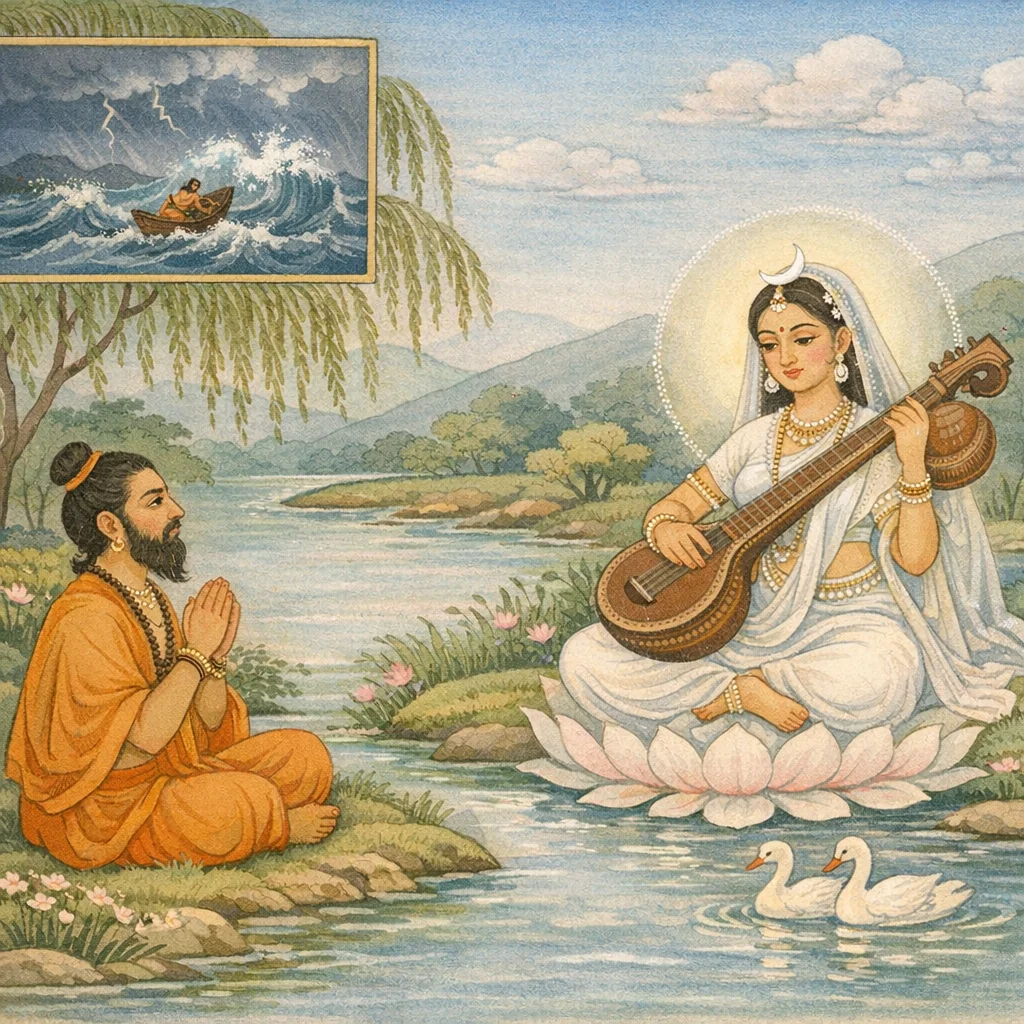
Adhyaya 187
Nārāyaṇopadeśa to Mārkaṇḍeya (Cosmic Self-Identification and Yuga Doctrine) | नारायणोपदेशः
Upa-parva: Mārkaṇḍeya–Nārāyaṇa Darśana (Cosmological-Theological Discourse Episode)
A deity addresses Mārkaṇḍeya (addressed as a learned brāhmaṇa) and explains, for the sage’s benefit, the logic of cosmic emission and reabsorption. The speaker self-identifies as Nārāyaṇa—etymologized through ‘nāra’ as waters—and asserts comprehensive divine immanence: major deities and cosmic functions are presented as aspects of the one principle. The body is described in cosmological correspondences (fire as mouth, earth as feet, sun and moon as eyes), and ritual worship by various social groups is acknowledged. The discourse includes mythic cosmology (supporting the earth as Śeṣa; lifting the earth as Varāha) and a cyclical theory of time: when dharma declines and adharma rises, the deity ‘creates’ or manifests the self in embodied form to pacify disorder. Yuga coloration is given (white in Kṛta, yellow in Tretā, red in Dvāpara, black in Kali), alongside an eschatological note on dissolution at the end-time. The chapter closes with Mārkaṇḍeya narrating that the deity vanished; he links the vision to Kṛṣṇa/Janārdana and attributes his own boons (memory, longevity, chosen death) to that divine favor, urging the Kaurava lineage to seek refuge in Mādhava.
Chapter Arc: Markandeya resumes his tale: the sage Takshya approaches Sarasvati, the self-luminous goddess of speech and inner knowing, and asks the one question that can steady a life—what is truly shreyas for a man, and how may one act without slipping from svadharma? → Takshya presses for practical certainty: how, when, and by what rites should one honor Agni and uphold dharma so it does not decay? Sarasvati answers by mapping the moral economy of gifts—especially go-dana—showing how specific offerings bear specific otherworldly fruits, and how charity becomes a vessel across darkness. → Sarasvati’s teaching peaks in a stark vision: a soul, hemmed in by its own deeds, falls into a fierce, blinding hell; yet the gift of cows becomes like a wind-driven boat on a vast ocean, ferrying the giver beyond peril—dana as rescue, not ornament. → She enumerates the graded destinies of giving—cow-gifts leading to higher worlds, other gifts to solar, lunar, or deathless states—then lifts the discourse from reward to ultimacy: the supreme station she points to is that Brahman which even Indra, Agni, and the Maruts worship through the best sacrifices. → Takshya, awed by her insight into karma and the beyond, seeks further clarification on the highest path—whether merit through gifts culminates in Brahman-realization or remains bound to heavenly recompense.
Shlokas
Verse 1
ऑड # (_) ऑणआ आए षडशीरत्याधेकशततमो< ध्याय: ताक्ष्यमुनि और सरस्वतीका संवाद मार्कण्डेय उवाच अन्रैव च सरस्वत्या गीत॑ं परपुरंजय । पृष्टया मुनिना वीर शृणु ताक्ष्येण धीमता,मार्कण्डेयजी कहते हैं--शत्रुओंकी राजधानी-पर विजय पानेवाले पाण्डुनन्दन! इसी विषयमें परम बुद्धिमान् ताक्ष्य मुनिने सरस्वतीदेवीसे कुछ प्रश्न किया था, उसके उत्तरमें सरस्वतीदेवीने जो कुछ कहा था, वह तुम्हें सुनाता हूँ, सुनो
Mārkaṇḍeya said: “O conqueror of enemy strongholds, it was on this very matter that the goddess Sarasvatī spoke. Hear, O hero, what the wise sage Tākṣya asked her, and what she replied.”
Verse 2
ताक्ष्य उवाच कि नु श्रेय: पुरुषस्येह भद्रे कथं कुर्वन् न च्यवते स्वधर्मात् । आचक्ष्व मे चारुसर्वाज्ञि कुर्या त्वया शिष्टो न च्यवेयं स्वधर्मात्,ताक्ष्यने पूछा--भद्रे! इस संसारमें मनुष्यका कल्याण करनेवाली वस्तु क्या है? किस प्रकार आचरण करनेवाला पुरुष अपने धर्मसे भ्रष्ट नहीं होता है? सर्वागसुन्दरी देवि! तुम मुझसे इसका वर्णन करो। मैं तुम्हारी आज्ञाका पालन करूँगा। मुझे विश्वास है कि तुमसे उपदेश ग्रहण करके मैं अपने धर्मसे गिर नहीं सकता
Takṣya said: “O auspicious lady, what truly brings welfare to a person in this world? By what kind of conduct does one not fall away from one’s own dharma? O lovely one, all-knowing lady—tell me. I will act as you instruct; for, guided by your teaching, I am confident I will not deviate from my rightful duty.”
Verse 3
कथं वाग्निं जुहुयां पूजये वा कस्मिन् काले केन धर्मो न नश्येत् । एतत् सर्व सुभगे प्रब्रवीहि यथा लोकान् विरजा: संचरेयम्,मैं कैसे और किस समय अग्निमें हवन अथवा उसका पूजन करूँ? क्या करनेसे धर्मका नाश नहीं होता है? सुभगे! तुम ये सारी बातें मुझसे बताओ। जिससे मैं रजोगुणरहित होकर सम्पूर्ण लोकोंमें विचरण करूँ
Takṣya said: “How should I offer oblations into the sacred fire, or worship it—and at what time? By doing what does dharma not perish? O auspicious lady, tell me all this, so that, freed from the dust of passion, I may move through all the worlds in purity.”
Verse 4
मार्कण्डेय उवाच एवं पृष्टा प्रीतियुक्तेन तेन शुश्रूषुमीक्ष्योत्तमबुद्धियुक्तम् । ताक्ष्य विप्रं धर्मयुक्त हितं॑ च सरस्वती वाक्यमिदं बभाषे,मार्कण्डेयजी कहते हैं--राजन्! उनके इस प्रकार प्रेमपूर्वक पूछनेपर सरस्वतीदेवीने ब्रह्मर्षि ताक्ष्यको धर्मात्मा, उत्तम बुद्धिसे युक्त एवं श्रवणके लिये उत्सुक देखकर उनसे यह हितकर वचन कहा--
Mārkaṇḍeya said: Thus questioned by him with affectionate intent, Sarasvatī—seeing the brahmarṣi Tākṣya eager to listen, endowed with excellent understanding and aligned with dharma—spoke to that brāhmaṇa these words, beneficial and righteous in purpose.
Verse 5
सरस्वत्युवाच यो ब्रह्म जानाति यथाप्रदेशं॑ स्वाध्यायनित्य: शुचिरप्रमत्त: | स वै पारं देवलोकस्य गन्ता सहामरे: प्राप्तुयात् प्रीतियोगम्,सरस्वती बोली--मुने! जो प्रमाद छोड़कर पवित्र भावसे नित्य स्वाध्याय करता है और अर्चि आदि मार्गोंसे प्राप्त होनेयोग्य सगुण ब्रह्मको जान लेता है, वह देवलोकसे उठकर ब्रह्मलोकमें जाता है और देवताओंके साथ प्रेमसम्बन्ध स्थापित कर लेता है
Sarasvatī said: “The one who, free from negligence, remains pure and constant in self-study, and who knows Brahman in the manner appropriate to his path and capacity—such a person crosses beyond the realm of the gods, reaches the further shore, and attains Brahma-loka. There, in the company of the gods, he enters into a state of harmonious, loving communion.”
Verse 6
तत्र सम रम्या विपुला विशोका: सुपुष्पिता: पुष्करिण्य: सुपुण्या: । अकर्दमा मीनवत्य: सुतीर्था हिरण्मयैरावृता: पुण्डरीकै:,वहाँ सुन्दर, विशाल, शोकरहित, अत्यन्त पवित्र तथा सुन्दर पुष्पोंसे सुशोभित छोटे- छोटे सरोवर हैं। उनमें कीचड़का नाम नहीं है। उनमें मछलियाँ निवास करती हैं। उन सरोवरोंमें उतरनेके लिये मनोहर सीढ़ियाँ बनी हुई हैं और वे सभी सरोवर सुवर्णमय कमल- पुष्पोंसे आच्छादित रहते हैं
There, delightful and expansive lotus-ponds lie—free from sorrow and filled with auspiciousness—abundantly blossoming with flowers. They are without any mire, alive with fish, and furnished with beautiful steps and landing-places for bathing. Each pond is spread over with golden lotuses, presenting a vision of purity and sacred calm.
Verse 7
तासां तीरेष्वासते पुण्यभाजो महीयमाना: पृथगप्सरोभि: । सुपुण्यगन्धाभिरलंकृताभि- हिरिण्यवर्णाभिरतीव हृष्टा:,उनके तटोंपर पूजनीय पुण्यात्मा पुरुष पृथक्ू-पृथक् अप्सराओंके साथ सानन्द प्रतिष्ठित होते हैं। वे अप्सराएँ अत्यन्त पवित्र सुगन्धसे सुवासित, विविध आभूषणोंसे विभूषित तथा स्वर्णकी-सी कान्तिसे प्रकाशित होती हैं
On the banks of those sacred waters dwell men who are worthy of merit and reverence, each seated joyfully in the company of apsarās. Those celestial women are fragrant with exceedingly pure perfume, adorned with varied ornaments, and radiant with a golden splendor—so that all present are filled with delight.
Verse 8
परं लोकं गोप्रदास्त्वाप्तुवन्ति दत्त्वानड्वाहं सूर्यलोक॑ व्रजन्ति । वासो दत्त्वा चान्द्रमसं तु लोकं दत्त्वा हिरण्यममरत्वमेति,गोदान करनेवाले मनुष्य उत्तम लोकमें जाते हैं। छकड़े ढोनेवाले बलवान् बैलोंका दान करनेसे दाताओंको सूर्यलोककी प्राप्ति होती है। वस्त्रदानसे चन्द्रलोक और सुवर्णदानसे अमरत्वकी प्राप्ति होती है
Mārkaṇḍeya said: Those who give cows attain the highest realms. By gifting strong oxen fit for drawing carts, donors reach the world of the Sun. By giving garments one attains the lunar world, and by giving gold one gains deathlessness—i.e., a state of enduring heavenly reward. The teaching frames charity (dāna) as a concrete ethical act whose fruits correspond to the gift’s life-sustaining value.
Verse 9
धेनुं दत्त्वा सुप्रभां सुप्रदोहां कल्याणवत्सामपलायिनीं च । यावन्ति रोमाणि भवन्ति तस्या- स्तावद् वर्षाण्यासते देवलोके,जो अच्छे रंगकी हो, सुगमतासे दूध दुहा लेती हो, सुन्दर बछड़े देनेवाली हो और बन्धन तुड़ाकर भागनेवाली न हो, ऐसी गौका जो लोग दान करते हैं, वे गौके शरीरमें जितने रोएँ हों, उतने वर्षतक देवलोकमें निवास करते हैं
Mārkaṇḍeya said: “Those who give in charity a cow that is of fine complexion, yields milk easily, bears auspicious calves, and does not run away by breaking its tether—such donors dwell in the world of the gods for as many years as there are hairs upon that cow’s body.”
Verse 10
अनड्वाहं सुव्रतं यो ददाति हलस्य वोढारमनन्तवीर्यम् । धुरन्धरं बलवन्तं युवानं प्राप्नोति लोकान् दश धेनुदस्य,जो मनुष्य अच्छे स्वभाववाले, अत्यन्त शक्तिशाली, हल खींचनेवाले, गाड़ीका बोझ ढोनेमें समर्थ, बलवान् और तरुण अवस्थावाले बैलका दान करता है, वह धेनुदान करनेवाले पुरुषसे दसगुने पुण्यलोक प्राप्त करता है
Markaṇḍeya said: Whoever donates a well-trained bull—fit to draw the plough, of unbounded strength, capable of bearing the yoke and heavy loads, powerful and in the prime of youth—attains merit-worlds ten times greater than one who gives a cow. The teaching praises discerning generosity: offering what truly sustains agriculture and communal livelihood yields exceptional spiritual reward.
Verse 11
ददाति यो वै कपिलां सचैलां कांस्योपदोहां द्रविणैरुत्तरीयै: । तैस्तैर्गुणै: कामदुहाथ भूत्वा नरं प्रदातारमुपैति सा गौ:,जो काँसेकी दोहनी, वस्त्र, उत्तरकालिक दक्षिणाद्रव्यके साथ कपिला गौका दान करता है, उसकी दी हुई वह गौ उन-उन गुणोंके साथ कामधेनु बनकर परलोकमें दाताके पास पहुँच जाती है
Mārkaṇḍeya said: Whoever donates a tawny cow (kapilā), adorned with a cloth, together with a bronze milking-vessel and additional gifts of wealth and an upper garment— that very cow, endowed with those same qualities, becomes like a wish-fulfilling cow and, in the world beyond, comes to the giver as his reward.
Verse 12
यावन्ति रोमाणि भवन्ति धेन्वा- स्तावत् फलं भवति गोप्रदाने । पुत्रांश्व पौत्रांश्॒ कुलं च सर्व- मासप्तमं तारयते परत्र,उस धेनुके शरीरमें जितने रोएँ होते हैं, उतने वर्षोतक दाता गोदानके पुण्य-फलका उपभोग करता है। साथ ही वह गौ परलोकमें दाताके पुत्रों, पौत्रों एवं सात पीढ़ीतकके समूचे कुलका उद्धार करती है
Mārkaṇḍeya said: “As many hairs as there are on a cow, so many are the years for which the giver enjoys the merit born of gifting a cow. Moreover, in the world beyond, that very cow becomes a means of deliverance—saving the donor’s sons and grandsons, and the entire lineage up to the seventh generation.”
Verse 13
सदक्षिणां काउ्चनचारुशड्रीं कांस्योपदोहां द्रविणैरुत्तरीयै: । धेनुं तिलानां ददतो द्विजाय लोका वसूनां सुलभा भवन्ति,जो सोनेके बने हुए सुन्दर सींग, काँसके दुग्धपात्र, द्रव्य तथा ओढ़नेके वस्त्र और दक्षिणासहित तिलकी धेनुका ब्राह्मणको दान करता है, उसके लिये वसुओंके लोक सुलभ हो जाते हैं। जैसे महासागरमें डूबते हुए मनुष्यको अनुकूल वायुके सहयोगसे चलनेवाली नाव बचा लेती है, उसी प्रकार जो अपने कर्मोद्वारा काम, क्रोध आदि दानवोंसे घिरे हुए घोर अज्ञानान्धकारसे परिपूर्ण नरकमें गिर रहा है, उसे गोदानजनित पुण्य परलोकमें उबार लेता है
Mārkaṇḍeya said: Whoever gives to a brāhmaṇa a ‘sesame-cow’—a ritual gift-cow—together with the proper honorarium (dakṣiṇā), with beautiful horns of gold, a milking-vessel of bronze, and accompanied by wealth and an upper garment, finds the worlds of the Vasus readily attainable.
Verse 14
स्वकर्मभिर्दानवसंनिरुद्धे तीव्रान्धकारे नरके सम्पतन्तम् । महार्णवे नौरिव वातयुक्ता दानं गवां तारयते परत्र,जो सोनेके बने हुए सुन्दर सींग, काँसके दुग्धपात्र, द्रव्य तथा ओढ़नेके वस्त्र और दक्षिणासहित तिलकी धेनुका ब्राह्मणको दान करता है, उसके लिये वसुओंके लोक सुलभ हो जाते हैं। जैसे महासागरमें डूबते हुए मनुष्यको अनुकूल वायुके सहयोगसे चलनेवाली नाव बचा लेती है, उसी प्रकार जो अपने कर्मोद्वारा काम, क्रोध आदि दानवोंसे घिरे हुए घोर अज्ञानान्धकारसे परिपूर्ण नरकमें गिर रहा है, उसे गोदानजनित पुण्य परलोकमें उबार लेता है
Mārkaṇḍeya said: “When a person, hemmed in by the ‘demons’ born of his own deeds, is plunging into the hell of fierce darkness, the gift of cows rescues him in the world beyond—just as a boat, driven by a favorable wind, saves one who is sinking in the great ocean.”
Verse 15
यो ब्राह्मदेयां तु ददाति कन्यां भूमिप्रदानं च करोति विदप्रे । ददाति दानं विधिना च यश्न॒ स लोकमाप्रोति पुरंदरस्य,जो ब्राह्म विवाहकी विधिसे दान करनेयोग्य कन्याका (श्रेष्ठ वरको) दान करता है, ब्राह्मणको भूदान देता है और विधिपूर्वक अन्यान्य वस्तुओंका दान सम्पन्न करता है, वह इन्द्रलोकमें जाता है
Mārkaṇḍeya said: Whoever gives a maiden in the proper Brahma form of marriage, grants land as a gift to a brāhmaṇa, and also performs other gifts according to prescribed rites—such a person attains the world of Purandara (Indra).
Verse 16
यः सप्त वर्षाणि जुहोति तार्क्ष्य हव्यं त्वग्नौी नियत: साधुशील: । सप्तावरान् सप्त पूर्वान् पुनाति पितामहानात्मना कर्मभि: स्वै:,ताक्ष्य! जो सदाचारी पुरुष संयम--नियमका पालन करते हुए सात वर्षोतक अम्निमें आहुति देता है, वह अपने सत्कर्मोंद्वारा अपने साथ ही सात पीढ़ीतककी भावी संतानोंको और सात पीढ़ी पूर्वतकके पितामहोंको भी पवित्र कर देता है
Mārkaṇḍeya said: “O Tārkṣya, the man of good conduct who, with self-restraint and regular observance, offers oblations into the sacred fire for seven years—by the merit of his own righteous deeds he purifies not only himself but also seven generations of his descendants and seven generations of his forefathers, up to the grandsires.”
Verse 17
ताक्ष्य उवाच किमन्निहोत्रस्य व्रतं पुराण- माचक्ष्व मे पृच्छतश्चानुरूपे । त्वयानुशिष्टो5हमिहाद्य विद्यां यदग्निहोत्रस्य व्रतं पुराणम्,ताक्ष्यने पूछा--मनोहर रूपवाली देवि! मैं पूछता हूँ कि अग्निहोत्रका प्राचीन नियम क्या है? यह बताओ। तुम्हारे उपदेश करनेपर आज मुझे यहाँ अग्निहोत्रके प्राचीन नियमका ज्ञान हो जाय
Tākṣya said: “Tell me, in a manner fitting to my question, what the ancient observance of the Agnihotra is. If you instruct me, may I today, here and now, come to know that venerable, time-honoured rule of the Agnihotra.”
Verse 18
सरस्वत्युवाच न चाशुचिरनप्यिनिर्णिक्तपाणि- नब्रिह्मविज्जुहुयान्नाविपश्चित् | बुभुत्सव: शुचिकामा हि देवा नाश्रद्धानाद्धि हविर्जुषन्ति,सरस्वतीने कहा--मुने! जो अपवित्र है, जिसने हाथ-पैर (भी) नहीं धोये हैं, जो वेदके ज्ञानसे वज्चित है, जिसे वेदार्थका कोई अनुभव नहीं है, ऐसे पुरुषको अग्निमें आहुति नहीं देनी चाहिये। देवता दूसरोंके मनोभावको जाननेकी इच्छा रखते हैं, वे पवित्रता चाहते हैं, अतः: श्रद्धाहीन मनुष्यके दिये हुए हविष्यको ग्रहण नहीं करते हैं
Sarasvatī said: “One who is impure, or who has not washed his hands (and limbs), who lacks knowledge of the Veda, and who is not discerning in its meaning—such a person should not offer oblations into the sacred fire. The gods seek to know the inner disposition of the worshipper and desire purity; therefore they do not accept the offering made by one who is without faith.”
Verse 19
नाश्रोत्रियं देवहव्ये नियुठ्ज्या- न्मोघं पुरा सिज्चति तादृशो हि । अपूर्वमश्रोत्रियमाह तार्क्ष्य न वै तादूग् जुहुयादग्निहोत्रम्,वेद-मन्त्रोंका ज्ञान न रखनेवाले पुरुषको देवताओंके लिये हविष्य प्रदान करनेके कार्यमें नियुक्त न करे; क्योंकि वैसा मनुष्य जो हवन करता है, वह व्यर्थ हो जाता है। तार्क्ष्य! अश्रोत्रिय पुरुषको वेदमें अपूर्व (कुलशीलसे अपरिचित) कहा गया है-। अतः वैसा पुरुष अग्निहोत्रका अधिकारी नहीं है
Tākṣya said: “One should not appoint an unlearned man (not trained in Vedic recitation and discipline) to offer oblations meant for the gods; for such a person’s pouring of offerings becomes fruitless. O Tārkṣya, the tradition calls a man who is not a śrotriya ‘apūrva’—one not recognized by established lineage and Vedic culture. Therefore, a person of that kind is not entitled to perform the Agnihotra.”
Verse 20
वृशाश्ष ये जुद्धति श्रद्दधाना: सत्यव्रता हुतशिष्टाशिनश्व । गवां लोकं प्राप्य ते पुण्यगन्धं पश्यन्ति देवं परमं चापि सत्यम्,जो तपसे कृश हो सत्य व्रतका पालन करते हुए प्रतिदिन श्रद्धापूर्वक हवन करते हैं और हवनसे बचे हुए अन्नका भोजन करते हैं, वे पवित्र सुगन्धसे भरे हुए गौओंके लोकमें जाते हैं और वहाँ परम सत्य परमात्माका दर्शन करते हैं
Takṣya said: “Those who fight with faith, who are steadfast in vows of truth, who perform daily offerings, and who eat only what remains after the oblation—having attained the fragrant, meritorious world of the cows, they behold the Divine, the Supreme, and also the highest Truth.”
Verse 21
ताक्ष्य उवाच क्षेत्रज्ञभूतां पपलोकभावे कर्मोदये बुद्धिमतिप्रविष्टाम् । प्रज्ञां च देवीं सुभगे विमृश्य पृच्छामि त्वां का हसि चारुरूपे
Tākṣya said: “Having reflected on you—who appear as the very ‘knower of the field’ (the inner witness), who are present in the unfolding of karma, and who have entered into discerning intelligence; and having considered you as divine Wisdom herself, O auspicious one—I ask you, O beautiful-formed lady: who are you?”
Verse 22
ताक्ष्यने पूछा--सुन्दर रूपवाली सौभाग्यशालिनी देवि! तुम आत्मस्वरूपा हो तथा परलोकके विषयमें एवं कर्म-फलके विचारमें प्रविष्ट हुई अत्यन्त उत्तृष्ट बुद्धि हो। प्रज्ञा देवी भी तुम्हीं हो। तुम्हींको इन दोनों रूपोंमें जानकर मैं पूछता हूँ, बताओ, वास्तवमें तुम क्या हो? ।। सरस्वत्युवाच अग्निहोत्रादहम भ्यागतास्मि विप्र्षभाणां संशयच्छेदनाय । त्वत्संयोगादहमेतमन्रुवं भावे स्थिता तथ्यमर्थ यथावत्,सरस्वती बोली--मुने! मैं [विद्यारूपा सरस्वती हूँ और] श्रेष्ठ ब्राह्मणोंके अग्निहोत्रसे यहाँ तुम्हारे संशयका निवारण करनेके लिये आयी हूँ। (तुम श्रद्धालु हो) तुम्हारा सांनिध्य पाकर ही मैंने यहाँ ये पूर्वोक्त सत्य बातें यथार्थरूपसे बतायी हैं; क्योंकि आन्तरिक श्रद्धाभावमें ही मेरी स्थिति है
Takṣya said: “O goddess of lovely form and auspicious fortune! You are of the nature of the Self, and you possess the highest intelligence that has entered into reflection on the other world and on the fruits of action. You are also the very goddess called Wisdom. Knowing you in these two aspects, I ask: tell me—what are you in truth?” Sarasvatī replied: “O sage, I have come here from the Agnihotra of the foremost Brahmins in order to cut through your doubt. It is through association with you—because you are full of faith—that I speak this true meaning exactly as it is; for my abiding place is the inner state of śraddhā (trustful reverence).”
Verse 23
ताक्ष्य उवाच न हि त्वया सदृशी काचिदस्ति विभ्राजसे ह्ृतिमात्र यथा श्री: | रूपं च ते दिव्यमनन्तकान्ति प्रज्ञां च देवीं सुभगे बिभर्षि,ताक्ष्यने पूछा--सुभगे! तुम्हारी-जैसी दूसरी कोई नारी नहीं है। तुम साक्षात् लक्ष्मीजीकी भाँति अत्यन्त प्रकाशमान दिखायी देती हो। तुम्हारा यह परम कान्तिमान् स्वरूप अत्यन्त दिव्य है। साथ ही तुम दिव्य प्रज्ञा भी धारण करती हो (इसका क्या कारण है?)
Tākṣya said: “Truly, there is no other woman comparable to you. You shine forth like Śrī (Lakṣmī) herself, captivating the heart at a glance. Your form is divine, of boundless radiance; and, O fortunate one, you also bear a godlike wisdom. What is the cause of this—how have you come to possess such splendor and such insight?”
Verse 24
सरस्वत्युवाच श्रेष्ठानि यानि द्विपदां वरिष्ठ यज्ञेषु विद्वन्नुपपादयन्ति । तैरेव चाहं सम्प्रवृद्धा भवामि चाप्यायिता रूपवती च विप्र,सरस्वती बोली--नरश्रेष्ठ! विद्वन! याज्ञिकलोग यज्ञोंमें जो श्रेष्ठ कार्य करते हैं अथवा श्रेष्ठ वस्तुओंका संकलन करते हैं, उन्हींसे मेरी पुष्टि तथा तृप्ति होती है और विप्रवर! उन्हींसे मैं रूपवती होती हूँ
Sarasvatī said: “O best of men, O learned one—whatever excellent offerings and acts the foremost among humans duly provide in sacrifices, by those alone I am nourished and made to flourish. By them I become satisfied and, O brahmin, I also become radiant in form.”
Verse 25
यच्चापि द्रव्यमुपयुज्यते ह वानस्पत्यमायसं पार्थिवं वा | दिव्येन रूपेण च प्रज्ञया च तेनैव सिद्धिरिति विद्धि विद्वन्ू,विद्वन! उन यज्ञोंमें जो समिधा-स्रुवा आदि वृक्षसे उत्पन्न होनेवाली वस्तुएँ, सुवर्ण आदि तैजस वस्तुएँ तथा व्रीहि आदि पार्थिव वस्तुएँ उपयोगमें लायी जाती हैं, उन्हींके द्वारा दिव्य रूप तथा प्रज्ञासे सम्पन्न मेरे स्वरूपकी पुष्टि होती है, यह बात तुम अच्छी तरह समझ लो
Takṣya said: Whatever materials are employed in those rites—whether plant-born implements and offerings, metal substances such as gold, or earth-born grains like rice—know this well, O wise one: by those very offerings my own fulfillment is effected, for my being is sustained and made manifest through a divine form and discerning intelligence.
Verse 26
ताक्ष्य उवाच इदं श्रेय: परमं मन्यमाना व्यायच्छन्ते मुनयः सम्प्रतीता: । आचक्ष्व मे तं परमं विशोक॑ मोक्ष परं यं प्रविशन्ति धीरा: । सांख्या योगा परम॑ यं विदन्ति परं पुराणं तमहं न वेझि,ताक्ष्यने पूछा--देवि! जिसे परम कल्याणस्वरूप मानते हुए मुनिजन अत्यन्त विश्वासपूर्वक इन्द्रियों आदिका निग्रह करते हैं तथा जिस परम मोक्ष-स्वरूपमें धीर पुरुष प्रवेश करते हैं, उस शोकरहित परम मोक्षपदका वर्णन करो; क्योंकि जिस परम मोक्षपदको सांख्ययोगी और कर्मयोगी जानते हैं, उस सनातन मोक्ष-तत्त्वको मैं नही जानता
Tākṣya said: “The sages, firmly convinced, restrain their senses and all the rest, holding this to be the highest good. Tell me of that supreme, sorrowless state—the highest liberation—into which the steadfast enter. That ancient and ultimate reality which the followers of Sāṅkhya and Yoga know as supreme, I do not know; therefore, describe it to me.”
Verse 27
सरस्वत्युवाच त॑ वै परं वेदविदः प्रपन्ना: परं परेभ्य: प्रथितं पुराणम् । स्वाध्यायवन्तो व्रतपुण्ययोगै- स्तपोधना वीतशोका विमुक्ता:,सरस्वती बोली--स्वाध्यायरूप योगमें लगे हुए तथा तपको ही धन माननेवाले योगी व्रत-पुण्य और योगके साधनोंसे जिस प्रख्यात, परात्पर एवं पुरातन पदको प्राप्तकर शोकरहित तथा मुक्त हो जाते हैं, वही सनातन ब्रह्मपद है। वेदवेत्ता उसी परमपदका आश्रय लेते हैं
Sarasvatī said: “That supreme state—ancient and widely renowned, higher than what is merely ‘higher’—is indeed the refuge sought by knowers of the Veda. Those who are devoted to self-study, who regard austerity as their true wealth, and who are disciplined through vows, merit, and yogic practice attain that celebrated highest goal; reaching it, they become free from grief and liberated.”
Verse 28
तस्याथ मध्ये वेतस: पुण्यगन्ध: सहस्रशाखो विपुलो विभाति । तस्य मूलात् सरित: प्रस्रवन्ति मधूदकप्रस्रवणा: सुपुण्या:,उस परब्रह्ममें ब्रह्माण्डरूपी एक विशाल बेंतका वृक्ष है, जो भोग-स्थानरूपी अनन्त शाखाओंसे युक्त तथा शब्दादि विषयरूपी पवित्र सुगन्धसे सम्पन्न है। (उस ब्रह्माण्डरूपी वृक्षका मूल अविद्या है।) उस अविद्यारूपी मूलसे भोगवासनामयी निरन्तर बहनेवाली अनन्त नदियाँ उत्पन्न होती हैं। वे नदियाँ ऊपरसे तो रमणीय और पवित्र सुवाससे युक्त प्रतीत होती हैं तथा मधुके समान मधुर एवं जलके समान तृप्तिकारक विषयोंको बहाया करती हैं
Takṣya said: In the midst of that reality there shines a vast vetasa-tree, fragrant with a holy scent and spreading into a thousand branches. From its root flow forth rivers—streams that pour honey-like sweetness and water-like satisfaction—appearing pure and delightful, yet continually carrying the currents of enjoyment and craving.
Verse 29
शाखां शाखां महानद्यः संयान्ति सिकताशया: । धानापूपा मांसशाका: सदा पायसकर्दमा:,परंतु वास्तवमें वे सब भूने हुए जौके समान फल देनेमें असमर्थ, पूओंके समान अनेक छिद्रोंवाली, हिंसासे मिल सकनेवाली अर्थात् मांसके समान अपवित्र, सूखे शाकके समान सारशून्य और खीरके समान रुचिकर लगनेवाली होनेपर भी कीचड़के समान चित्तमें मलिनता उत्पन्न करनेवाली हैं। बालूके कणोंके समान परस्पर विलग एवं ब्रह्माण्डरूपी बेंतके वृक्षकी शाखाओंमें बहनेवाली हैं
Tākṣya said: “Branch after branch, the great rivers flow on, their beds filled with sand. They are like roasted barley—incapable of yielding true fruit; like cakes—full of holes; like meat—impure and obtainable through violence; like dried vegetables—devoid of essence; and though they seem sweet and pleasing like rice-milk, they finally become like mud, breeding inner defilement.”
Verse 30
यस्मिन्नग्निमुखा देवा: सेन्द्रा: सहमरुद्गणा: । ईजिरे क्रतुभि: श्रे्ठस्तत् पदं परमं मम
Takṣya said: “That is my supreme abode—the very place where the gods, with Indra at their head and accompanied by the hosts of Maruts, performed the most excellent sacrificial rites with Agni as the foremost mouth (of oblation).”
Verse 186
मुने! इन्द्र, अग्नि और पवन आदि मरुदगणोंके साथ देवतालोग जिस ब्रह्मको प्राप्त करनेके लिये श्रेष्ठ यज्ञोंद्वारा उसका पूजन करते हैं, वह मेरा परमपद है ।। इति श्रीमहाभारते वनपर्वणि मार्कण्डेयसमास्यापर्वणि सरस्वतीताक्ष्यसंवादे षडशीत्यधिकशततमो<ध्याय:
Takṣya said: “O sage! That Brahman which Indra, Agni, and the Maruts—together with the other gods—seek to attain, worshipping It through the highest sacrifices: that is my supreme state.”
Frequently Asked Questions
The chapter addresses how order is preserved when moral norms erode: it frames disorder (adharma) as a systemic condition requiring restoration through regulated action, including the possibility of embodied intervention aligned with maryādā.
The discourse teaches a synthesis of immanence and governance: the divine principle pervades beings and institutions (cosmos, ritual, social functions) while also directing cyclical time, so disciplined virtues—truth, generosity, austerity, and non-injury—are presented as participation in that order.
A functional phala-theme appears when Mārkaṇḍeya states that, by that deity’s boon, he retains unbroken memory, long life, and the capacity for chosen death; the narrative also positions recognition of Kṛṣṇa as Janārdana as a soteriological orientation toward refuge.