Adhyaya 180
कामीकवन-समागमः (Kāmyaka Forest Meeting: Kṛṣṇa’s Visit; Mārkaṇḍeya and Nārada Arrive)
Upa-parva: Kāmyaka-vana Saṃvāda (Kṛṣṇa–Pāṇḍava meeting; arrival of Mārkaṇḍeya and Nārada)
Vaiśaṃpāyana describes the Pandavas reaching Kāmyaka and settling after being properly received by ascetics. Numerous brāhmaṇas gather; a dvija friendly to Arjuna announces that Kṛṣṇa will come, and Kṛṣṇa soon appears with Satyabhāmā, arriving in a well-equipped chariot. Kṛṣṇa greets Yudhiṣṭhira, Bhīma, Dhaumya, Arjuna, and Draupadī according to protocol, and the group honors him in return. Kṛṣṇa and Arjuna confer; Arjuna reports forest events and inquires about Subhadrā and Abhimanyu. Kṛṣṇa praises Yudhiṣṭhira’s disposition—truthfulness, restraint, generosity, patience—and frames his endurance during Draupadī’s public humiliation as exceptional ethical steadiness. He reports that Draupadī’s sons are devoted to archery and disciplined life among the Vṛṣṇis, guided by elders (including Subhadrā) and trained carefully, with Abhimanyu also active in instruction and martial readiness. Kṛṣṇa offers Vṛṣṇi forces at Yudhiṣṭhira’s command but advises adherence to the agreed exile terms, promising eventual restoration free from grief when the vow is completed. Yudhiṣṭhira acknowledges Kṛṣṇa as the Pandavas’ refuge and emphasizes completing the twelve-year forest term and the prescribed incognito year. Then the venerable ṛṣi Mārkaṇḍeya arrives, is honored by all, and is requested to narrate ancient, meritorious accounts concerning kings, women, and sages. Devarṣi Nārada also arrives, is received with due rites, and encourages Mārkaṇḍeya to speak; Mārkaṇḍeya asks for a brief pause before beginning an extensive narration.
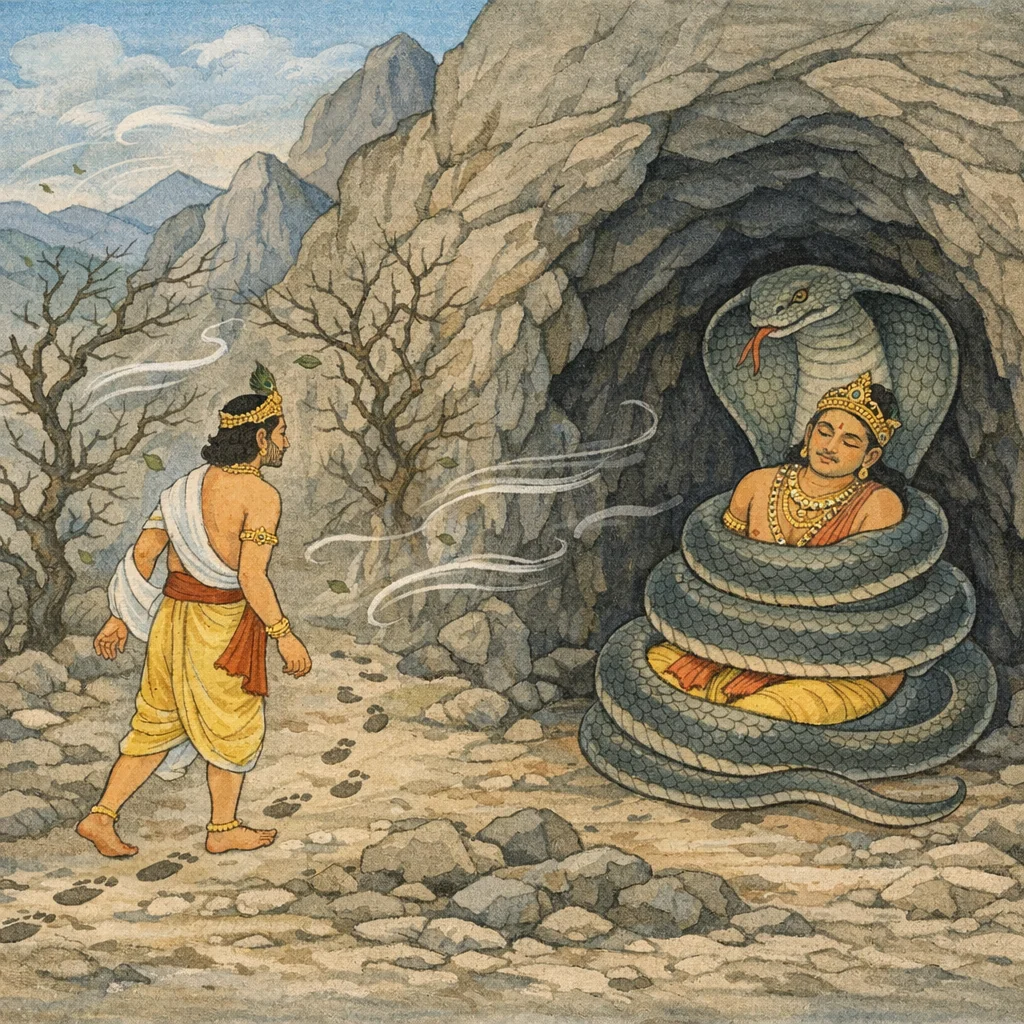
Chapter Arc: वन-निर्जनता में भीमसेन एक महाविशाल सर्प (नहुष) के वश में आकर जकड़े जाते हैं; सर्प स्वयं को अजेय बताकर संवाद की चुनौती देता है। → भीम अपना परिचय देकर बल-पराक्रम का स्मरण कराते हैं, पर सर्प कहता है कि जो भी उसकी पकड़ में आया, दिन के छठे भाग में कोई भी—हाथी-भैंसा तक—छूट नहीं सका। भीम जकड़े हुए विलाप करते हैं; उधर युधिष्ठिर भाई के न मिलने पर चिंतित होकर पदचिह्नों के सहारे खोज पर निकलते हैं। → रूखी, कंकड़-उड़ाती प्रचण्ड वायु और भयावह निर्जल प्रदेश के बीच युधिष्ठिर गुफा/कन्दरानुमा दुर्गम स्थल पर पहुँचते हैं और देखते हैं—भीम सर्पेन्द्र की कुंडलियों में निश्चेष्ट पड़े हैं। → युधिष्ठिर का भीम तक पहुँचना और स्थिति का प्रत्यक्ष दर्शन—अब संकट का सामना बुद्धि/धर्म से करने का अवसर उपस्थित होता है। → भीम को छुड़ाने के लिए युधिष्ठिर सर्प (नहुष) से किस प्रकार का संवाद/धर्म-प्रश्नोत्तर करेंगे—यह अगली कड़ी का द्वार खोलता है।
Shlokas
Verse 1
हि आय >> (0) हि २ 7 एकोनाशीरत्याधिकशततमो<् ध्याय: भीमसेन और सर्परूपधारी नहुषकी बातचीत, भीमसेनकी चिन्ता तथा युधिष्ठटिरद्वारा भीमकी खोज वैशम्पायन उवाच स भीमसेनस्तेजस्वी तथा सर्पवशं गतः चिन्तयामास सर्पस्य वीर्यमत्यद्भुतं महत्,वैशम्पायनजी कहते हैं-जनमेजय! इस प्रकार सर्पके वशमें पड़े हुए वे तेजस्वी भीमसेन उस अजगरकी अत्यन्त अद्भुत शक्तिके विषयमें विचार करने लग गये इस प्रकार श्रीमह्ाभारत वनपवके अन्तर्गत आजगरपर्वमें युधिष्ठिरको भीमसेनके दर्शनसे सम्बन्ध रखनेवाला एक सौ उनासीवाँ अध्याय पूरा हुआ ॥/ १७९ ॥। हि न (हुक है आस अशीर्त्याधिकशततमो<& ध्याय: युधिष्ठिरका भीमसेनके पास पहुँचना और सर्परूपधारी नहुषके प्रश्नोंका उत्तर देना वैशम्पायन उवाच युधिष्ठिरस्तमासाद्य सर्पभोगेन वेष्टितम् । दयितं भ्रातरं धीमानिदं वचनमब्रवीत्
Vaiśampāyana said: O Janamejaya, thus the radiant Bhīmasena, fallen under the serpent’s power, began to ponder the vast and wondrous might of that great constrictor. Then the wise Yudhiṣṭhira arrived and saw his beloved brother tightly wrapped in the serpent’s coils; troubled yet guided by dharmic discernment, he addressed him in these words.
Verse 2
उवाच च महासर्प कामया ब्रूहि पन्नग कस्त्वं भो भुजगश्रेष्ठ कि मया च करिष्यसि,फिर उन्होंने उस महान् सर्पसे कहा--“भुजंगप्रवर! आप स्वेच्छापूर्वक बताइये। आप कौन हैं? और मुझे पकड़कर क्या करेंगे? मैं धर्मराज युधिष्ठिरका छोटा भाई पाण्डुपुत्र भीमसेन हूँ। मुझमें दस हजार हाथियोंका बल है, फिर भी न जाने कैसे आपने मुझे अपने वशमें कर लिया? मेरे सामने सैकड़ों केसरी, सिंह, व्याप्र, महिष और गजराज आये, किंतु मैंने सबको युद्धमें मार गिराया। पन्नगश्रेष्ठ! राक्षस, पिशाच और महाबली नाग भी मेरी (इन) भुजाओंका वेग नहीं सह सकते थे। परंतु छूटनेके लिये मेरे उद्योग करनेपर भी आपने मुझे वशमें कर लिया, इसका क्या कारण है? क्या आपमें किसी विद्याका बल है अथवा आपको कोई न मिला है? नागराज! आज मेरी बुद्धिमें यही सिद्धान्त स्थिर हो रहा है कि का पराक्रम झूठा है। जैसा कि इस समय आपने मेरे इस महान् बलको कुण्ठित कर दिया है!
Bhīmasena said to the great serpent: “O best of snakes, speak freely—who are you, and what will you do with me, now that you have seized me?”
Verse 3
पाण्डवो भीमसेनो*हं धर्मराजादनन्तर: नागायुतसमप्राणस्त्वया नीत: कथं वशम्,फिर उन्होंने उस महान् सर्पसे कहा--“भुजंगप्रवर! आप स्वेच्छापूर्वक बताइये। आप कौन हैं? और मुझे पकड़कर क्या करेंगे? मैं धर्मराज युधिष्ठिरका छोटा भाई पाण्डुपुत्र भीमसेन हूँ। मुझमें दस हजार हाथियोंका बल है, फिर भी न जाने कैसे आपने मुझे अपने वशमें कर लिया? मेरे सामने सैकड़ों केसरी, सिंह, व्याप्र, महिष और गजराज आये, किंतु मैंने सबको युद्धमें मार गिराया। पन्नगश्रेष्ठ! राक्षस, पिशाच और महाबली नाग भी मेरी (इन) भुजाओंका वेग नहीं सह सकते थे। परंतु छूटनेके लिये मेरे उद्योग करनेपर भी आपने मुझे वशमें कर लिया, इसका क्या कारण है? क्या आपमें किसी विद्याका बल है अथवा आपको कोई न मिला है? नागराज! आज मेरी बुद्धिमें यही सिद्धान्त स्थिर हो रहा है कि का पराक्रम झूठा है। जैसा कि इस समय आपने मेरे इस महान् बलको कुण्ठित कर दिया है!
Vaiśampāyana said: “I am Bhīmasena, a Pāṇḍava, the next younger brother of Dharmarāja (Yudhiṣṭhira). My strength equals that of ten thousand elephants—how then have you brought me under your control? By what means have you subdued me?”
Verse 4
सिंहा: केसरिणो व्यात्रा महिषा वारणास्तथा समागताश्न शतशो निहताश्न मया युधि,फिर उन्होंने उस महान् सर्पसे कहा--“भुजंगप्रवर! आप स्वेच्छापूर्वक बताइये। आप कौन हैं? और मुझे पकड़कर क्या करेंगे? मैं धर्मराज युधिष्ठिरका छोटा भाई पाण्डुपुत्र भीमसेन हूँ। मुझमें दस हजार हाथियोंका बल है, फिर भी न जाने कैसे आपने मुझे अपने वशमें कर लिया? मेरे सामने सैकड़ों केसरी, सिंह, व्याप्र, महिष और गजराज आये, किंतु मैंने सबको युद्धमें मार गिराया। पन्नगश्रेष्ठ! राक्षस, पिशाच और महाबली नाग भी मेरी (इन) भुजाओंका वेग नहीं सह सकते थे। परंतु छूटनेके लिये मेरे उद्योग करनेपर भी आपने मुझे वशमें कर लिया, इसका क्या कारण है? क्या आपमें किसी विद्याका बल है अथवा आपको कोई न मिला है? नागराज! आज मेरी बुद्धिमें यही सिद्धान्त स्थिर हो रहा है कि का पराक्रम झूठा है। जैसा कि इस समय आपने मेरे इस महान् बलको कुण्ठित कर दिया है!
Vaiśampāyana said: “Lions with manes, tigers, buffaloes, and elephants too—hundreds have come against me, and I have slain them in battle.”
Verse 5
राक्षसाश्न पिशाचाश्न पन्नगाश्न महाबला: भुजवेगमशक्ता मे सोढुं पन्नगसत्तम,फिर उन्होंने उस महान् सर्पसे कहा--“भुजंगप्रवर! आप स्वेच्छापूर्वक बताइये। आप कौन हैं? और मुझे पकड़कर क्या करेंगे? मैं धर्मराज युधिष्ठिरका छोटा भाई पाण्डुपुत्र भीमसेन हूँ। मुझमें दस हजार हाथियोंका बल है, फिर भी न जाने कैसे आपने मुझे अपने वशमें कर लिया? मेरे सामने सैकड़ों केसरी, सिंह, व्याप्र, महिष और गजराज आये, किंतु मैंने सबको युद्धमें मार गिराया। पन्नगश्रेष्ठ! राक्षस, पिशाच और महाबली नाग भी मेरी (इन) भुजाओंका वेग नहीं सह सकते थे। परंतु छूटनेके लिये मेरे उद्योग करनेपर भी आपने मुझे वशमें कर लिया, इसका क्या कारण है? क्या आपमें किसी विद्याका बल है अथवा आपको कोई न मिला है? नागराज! आज मेरी बुद्धिमें यही सिद्धान्त स्थिर हो रहा है कि का पराक्रम झूठा है। जैसा कि इस समय आपने मेरे इस महान् बलको कुण्ठित कर दिया है!
Vaiśampāyana said: “Even rākṣasas, piśācas, and mighty serpents were unable to withstand the force of my arms, O best of nāgas.”
Verse 6
कि नु विद्याबलं कि नु वरदानमथो तव उद्योगमपि कुर्वाणो वशगो5स्मि कृतस्त्वया,फिर उन्होंने उस महान् सर्पसे कहा--“भुजंगप्रवर! आप स्वेच्छापूर्वक बताइये। आप कौन हैं? और मुझे पकड़कर क्या करेंगे? मैं धर्मराज युधिष्ठिरका छोटा भाई पाण्डुपुत्र भीमसेन हूँ। मुझमें दस हजार हाथियोंका बल है, फिर भी न जाने कैसे आपने मुझे अपने वशमें कर लिया? मेरे सामने सैकड़ों केसरी, सिंह, व्याप्र, महिष और गजराज आये, किंतु मैंने सबको युद्धमें मार गिराया। पन्नगश्रेष्ठ! राक्षस, पिशाच और महाबली नाग भी मेरी (इन) भुजाओंका वेग नहीं सह सकते थे। परंतु छूटनेके लिये मेरे उद्योग करनेपर भी आपने मुझे वशमें कर लिया, इसका क्या कारण है? क्या आपमें किसी विद्याका बल है अथवा आपको कोई न मिला है? नागराज! आज मेरी बुद्धिमें यही सिद्धान्त स्थिर हो रहा है कि का पराक्रम झूठा है। जैसा कि इस समय आपने मेरे इस महान् बलको कुण्ठित कर दिया है!
Vaiśampāyana said: “What is this power of knowledge, what boon, or what other extraordinary means of yours, that even while I strive with all my effort I have been brought under your control by you?”
Verse 7
असत्यो विक्रमो नृणामिति मे धीयते मतिः यथेदं मे त्वया नाग बल॑ प्रतिहतं महत्,फिर उन्होंने उस महान् सर्पसे कहा--“भुजंगप्रवर! आप स्वेच्छापूर्वक बताइये। आप कौन हैं? और मुझे पकड़कर क्या करेंगे? मैं धर्मराज युधिष्ठिरका छोटा भाई पाण्डुपुत्र भीमसेन हूँ। मुझमें दस हजार हाथियोंका बल है, फिर भी न जाने कैसे आपने मुझे अपने वशमें कर लिया? मेरे सामने सैकड़ों केसरी, सिंह, व्याप्र, महिष और गजराज आये, किंतु मैंने सबको युद्धमें मार गिराया। पन्नगश्रेष्ठ! राक्षस, पिशाच और महाबली नाग भी मेरी (इन) भुजाओंका वेग नहीं सह सकते थे। परंतु छूटनेके लिये मेरे उद्योग करनेपर भी आपने मुझे वशमें कर लिया, इसका क्या कारण है? क्या आपमें किसी विद्याका बल है अथवा आपको कोई न मिला है? नागराज! आज मेरी बुद्धिमें यही सिद्धान्त स्थिर हो रहा है कि का पराक्रम झूठा है। जैसा कि इस समय आपने मेरे इस महान् बलको कुण्ठित कर दिया है!
Vaiśampāyana said: “It now occurs to my mind that human prowess is unreliable—since, O Nāga, you have checked and rendered ineffective this great strength of mine just as it stands.”
Verse 8
वैशम्पायन उवाच इत्येवंवादिनं वीर भीममक्लिष्टकारिणम् भोगेन महता गृहा समन्तात् पर्यवेष्टयत्,वैशम्पायनजी कहते हैं-जनमेजय! ऐसी बातें करनेवाले वीरवर भीमसेनको, जो अनायास ही महान् पराक्रम कर दिखानेवाले थे, उस अजगरने अपने विशाल शरीरसे जकड़कर चारों ओरसे लपेट लिया
Vaiśampāyana said: “O Janamejaya, as Bhīma—the heroic man of effortless, unwearied prowess—spoke in this manner, the python coiled its huge body around him and tightly enveloped him on all sides.”
Verse 9
निगृहौनं महाबाहुं ततः स भुजगस्तदा विमुच्यास्य भुजी पीनाविदं वचनमब्रवीत्,तब इस प्रकार महाबाहु भीमसेनको अपने वशमें करके उस भुजंगमने उनकी दोनों मोटी-मोटी भुजाओंको छोड़ दिया और इस प्रकार कहा--
Vaiśampāyana said: Having subdued that mighty-armed Bhīmasena, the serpent then released his two thick, powerful arms and spoke these words. The scene underscores how overwhelming force may be restrained, not merely to harm, but to create the moment for counsel and moral instruction.
Verse 10
दिष्टस्त्वं क्षुधितस्याद्य देवैर्भक्षो महाभुज दिष्ट्या कालस्य महतः: प्रिया: प्राणा हि देहिनाम्,“महाबाहो! मैं दीर्घकालसे भूखा बैठा था, आज सौभाग्यवश देवताओंने तुम्हें ही मेरे लिये भोजनके रूपमें भेज दिया है। सभी देहधारियोंको अपने-अपने प्राण प्रिय होते हैं
“O mighty-armed one! I have sat hungry for a long time; today, by good fortune, the gods have sent you yourself to me as food. For to all embodied beings, their own life-breath is dear.”
Verse 11
यथा विविदं मया प्राप्तं सर्परूपमरिंदम तथावश्यं मया ख्याप्यं तवाद्य शूणु सत्तम,'शत्रुदमन! जिस प्रकार मुझे यह सर्पका शरीर प्राप्त हुआ है, वह आज अवश्य तुमसे बतलाना है। सज्जनशिरोमणे! तुम ध्यान देकर सुनो
Vaiśampāyana said: “O subduer of foes, just as I came to acquire this serpent-form, so must I certainly disclose it to you today. O best among the virtuous, listen attentively.”
Verse 12
इमामवस्थां सम्प्राप्तो हाहं कोपान्मनीषिणाम् शापस्यान्तं परिप्रेप्सु: सर्व तत् कथयामि ते,“मैं मनीषी महात्माओंके कोपसे इस दुर्दशाको प्राप्त हुआ हूँ और इस शापके निवारणकी प्रतीक्षा करते हुए यहाँ रहता हूँ। शापका क्या कारण है? यह सब तुमसे कहता हूँ, सुनो
“I have come to this wretched state through the wrath of great sages, and I dwell here awaiting the end of this curse. What was the cause of the curse? I will tell you all—listen.”
Verse 13
नहुषो नाम राजर्षिव््यक्ते ते श्रोत्रमागत:ः तवैव पूर्व: पूर्वेषामायोरवशधर: सुतः,“मैं राजर्षि नहुष हूँ, अवश्य ही यह मेरा नाम तुम्हारे कानोंमें पड़ा होगा। मैं तुम्हारे पूर्वजोंका भी पूर्वज हूँ। महाराज आयुका वंशप्रवर्तक पुत्र हूँ
Vaiśampāyana said: “I am the royal sage named Nahuṣa; surely my name has reached your ears. I am an ancestor of your ancestors—born in the line of King Āyu, a bearer and continuer of that dynasty.”
Verse 14
सो&हं शापादगस्त्यस्थ ब्राह्णानवमन्य च इमामवस्थामापन्न: पश्य दैवमिदं मम,“मैं ब्राह्यणोंका अनादर करके महर्षि अगस्त्यके शापसे इस अवस्थाको प्राप्त हुआ हूँ। मेरे इस दुर्भाग्यको अपने आँखों देख लो
“I am the one who, by the curse of the sage Agastya—having shown contempt for brāhmaṇas—has fallen into this condition. Behold with your own eyes this misfortune of mine, the working of fate upon me.”
Verse 15
त्वां चेदवध्यं दायादमतीव प्रियदर्शनम् अहमसद्योपयोक्ष्यामि विधानं पश्य यादृशम्,“तुम यद्यपि अवध्य हो; क्योंकि मेरे ही वंशज हो। देखनेमें अत्यन्त प्रिय लगते हो तथापि आज तुम्हें अपना आहार बनाऊँगा। देखो, विधाताका कैसा विधान है?
Vaiśampāyana said: “Even if you are not to be slain—being my own kinsman and an heir of my line—and though your appearance is exceedingly pleasing, still today I shall consume you as my food. Behold what a strange ordinance of fate this is.”
Verse 16
नहि मे मुच्यते कश्चित् कथंचित् प्रग्रहं गतः गजो वा महिषो वापि षछ्ले काले नरोत्तम,“नरश्रेष्ठ। दिनके छठे भागमें कोई भैंसा अथवा हाथी ही क्यों न हो, मेरी पकड़में आ जानेपर किसी तरह छूट नहीं सकता
Vaiśampāyana said: “No one who has come within my grasp escapes me by any means—be he an elephant or a buffalo, O best of men—especially when the sixth part of the day has arrived.”
Verse 17
नासि केवलसर्पेण तिर्यग्योनिषु वर्तता गृहीत: कौरवश्रेष्ठ वरदानमिदं मम
Vaiśampāyana said: “O best of the Kauravas, you were not seized merely by an ordinary serpent living among the lower (animal) births. This is a boon granted by me.”
Verse 18
“कौरवश्रेष्ठ! तुम तिर्यग योनिमें पड़े हुए किसी साधारण सर्पकी पकड़में नहीं आये हो। किंतु मुझे ऐसा ही वरदान मिला है (इसीलिये मैं तुम्हें पकड़ सका हूँ) ।। पतता हि विमानाग्रयान्मया शक्रासनाद् द्रुतम् कुरु शापान्तमित्युक्तो भगवान् मुनिसत्तम:,“जब मैं इन्द्रके सिंहासनसे भ्रष्ट हो शीघ्रतापूर्वक श्रेष्ठ विमानसे नीचे गिरने लगा, उस समय मैंने मुनिश्रेष्ठ भगवान् अगस्त्यसे प्रार्थना की कि प्रभो! मेरे शापका अन्त नियत कर दीजिये
Vaiśampāyana said: “O best of the Kurus, you have not been seized by some ordinary serpent fallen into an animal womb. Rather, I have obtained a special boon—therefore I have been able to catch you. For when I was swiftly falling down from Indra’s throne, slipping from the foremost celestial chariot, I appealed to the most excellent sage, the venerable one, saying: ‘O Lord, please determine the end of my curse.’”
Verse 19
स मामुवाच तेजस्वी कृपयाभिपरिप्लुतः मोक्षस्ते भविता राजन् कस्माच्चित् कालपर्ययात्,“उस समय उन तेजस्वी महर्षिने दयासे द्रवित होकर मुझसे कहा--'राजन्! कुछ कालके पश्चात् तुम इस शापसे मुक्त हो जाओगे”
Then that radiant sage, his heart softened and flooded with compassion, spoke to me: “O King, after the passage of some time, you will be released from this curse.”
Verse 20
ततो5स्मि पतितो भूमौ न च मामजहात् स्मृति: स्मार्तमस्ति पुराणं मे यथैवाधिगतं तथा,“उनके इतना कहते ही मैं पृथ्वीपर गिर पड़ा। परंतु आज भी वह पुरानी स्मरण-शक्ति मुझे छोड़ नहीं सकी है। यद्यपि यह वृत्तान्त बहुत पुराना हो चुका है तथापि जो कुछ जैसे हुआ था; वह सब मुझे ज्यों-का-त्यों स्मरण है
Vaiśampāyana said: “As soon as he spoke thus, I fell down upon the earth. Yet my power of recollection did not abandon me. Though this account is ancient, whatever happened—exactly as it was experienced—remains present to my memory.”
Verse 21
यस्तु ते व्याह्वतान् प्रश्नान् प्रतिब्रूयाद् विभागवित्। स त्वां मोक्षयिता शापादिति मामब्रवीदृषि:,“महर्षिने मुझसे कहा था कि “जो तुम्हारे पूछे हुए प्रश्नोंका विभागपूर्वक उत्तर दे दे, वही तुम्हें शापसे छुड़ा सकता है
Vaiśaṃpāyana said: “The sage told me, ‘Whoever answers the questions you have posed—doing so with clear discrimination and proper division—will be the one to release you from the curse.’”
Verse 22
गृहीतस्य त्वया राजन् प्राणिनोडपि बलीयस: सत्त्वभ्रंशो5धिकस्यापि सर्वस्याशु भविष्यति,“राजन्! जिसे तुम पकड़ लोगे, वह बलवान्-से-बलवान् प्राणी क्यों न हो, उसका भी धैर्य छूट जायगा। एवं तुमसे अधिक शक्तिशाली पुरुष क्यों न हो, सबका साहस शीघ्र ही खो जायगा'
Vaiśaṃpāyana said: “O King, once you seize someone, even a creature of the greatest strength will quickly lose its steadiness of mind. Indeed, even one stronger than you—whoever it may be—will soon have all courage drained away.”
Verse 23
इति चाप्यहमश्रौषं वचस्तेषां दयावताम् मयि संजातहार्दानामथ तेडन्तर्हिता द्विजा:,इस प्रकार मेरे प्रति हार्दिक दयाभाव उत्पन्न हो जानेके कारण उन दयालु महर्षियोंने जो बात कही थी, वह भी मैंने स्पष्ट सुनी। तत्पश्चात् वे सारे ब्रह्मर्षि अन्तर्धान हो गये
Thus I clearly heard the words spoken by those compassionate great sages, whose hearts had been moved with pity toward me. Thereafter, all those brahmarishis vanished from sight.
Verse 24
सो<हं परमदुष्कर्मा वसामि निरये5शुचौ सर्पयोनिमिमां प्राप्प कालाकाडुक्षी महाद्युते,महाद्युते! इस प्रकार मैं अत्यन्त दुष्कर्मी होनेके कारण इस अपवित्र नरकमें निवास करता हूँ। इस सर्पयोनिमें पड़कर इससे छूटनेके अवसरकी प्रतीक्षा करता हूँ”
“I—one of utterly wicked deeds—dwell in this impure hell. Having fallen into this serpent-womb, I remain here, waiting for the chance to be released from it, O great-splendoured one, O great-splendoured one.”
Verse 25
तमुवाच महाबाहुर्भीमसेनो भुजड्भमम् न च कुप्ये महासर्प न चात्मानं विगर्हये,तब महाबाहु भीमने उस अजगरसे कहा--“महासर्प! न तो मैं आपपर क्रोध करता हूँ और न अपनी ही निन्दा करता हूँ
Vaiśampāyana said: Then the mighty-armed Bhīmasena spoke to the foremost of serpents: “O great serpent, I am not angry with you, nor do I reproach myself.”
Verse 26
यस्मादभावी भावी वा मनुष्य: सुखदु:ःखयो: आगमे यदि वापाये न तत्र ग्लपयेन्मन:,"क्योंकि मनुष्य सुख-दुःखकी प्राप्ति अथवा निवृतिमें कभी असमर्थ होता है और कभी समर्थ। अत: किसी भी दशामें अपने मनमें ग्लानि नहीं आने देनी चाहिये
Vaiśampāyana said: Since a person is at times powerless and at times capable with respect to the coming or the passing away of pleasure and pain, one should not let the mind sink into dejection in any condition.
Verse 27
दैवं पुरुषकारेण को वज्चयितुमह्ति दैवमेव परं मन्ये पुरुषार्थो निरर्थक:,“कौन ऐसा मनुष्य है, जो पुरुषार्थके बलसे दैवको वंचित कर सके। मैं तो दैवको ही बड़ा मानता हूँ, पुरुषार्थ व्यर्थ है
Vaiśampāyana said: “Who could possibly outwit destiny by the force of human effort? I hold destiny alone to be supreme; mere personal striving, by itself, proves futile.”
Verse 28
पश्य दैवोपघाताद्धि भुजवीर्यव्यपाश्रयम् इमामवस्थां सम्प्राप्तमनिमित्तमिहाद्य माम्,“देखिये, दैवके आघातसे आज मैं अकारण ही यहाँ इस दशाको प्राप्त हो गया हूँ। नहीं तो मुझे अपने बाहुबलका बड़ा भरोसा था
“Look—by the blow of fate alone, I, who relied upon the strength of my arms and valor, have today come to this condition here, without any apparent cause. Otherwise, I had great confidence in my own might.”
Verse 29
किंतु नाद्यानुशोचामि तथा55त्मानं विनाशितम् यथा तु विपिने न्यस्तान् भ्रातृन् राज्यपरिच्युतान्,'परंतु आज मैं अपनी मृत्युके लिये उतना शोक नहीं करता हूँ, जितना कि राज्यसे वंचित हो वनमें पड़े हुए अपने भाइयोंके लिये मुझे शोक हो रहा है
Vaiśampāyana said: “Yet today I do not grieve so much for my own destruction as I grieve for my brothers—cast away into the wilderness and deprived of their kingdom.”
Verse 30
हिमवांश्व सुदुर्गोड्यं यक्षराक्षससंकुल: मां समुद्वीक्षमाणास्ते प्रपतिष्यन्ति विह्लला:,'यक्षों तथा राक्षसोंसे भरा हुआ यह हिमालय अत्यन्त दुर्गम है, मेरे भाई व्याकुल होकर जब मुझे खोजेंगे, तब अवश्य कहीं खंदकमें गिर पड़ेंगे
Vaiśampāyana said: “This Himālaya is exceedingly hard to traverse and crowded with Yakṣas and Rākṣasas. When my brothers, distressed, search for me and look about in every direction, they will surely stumble and fall—overwhelmed—into some ravine or pit.”
Verse 31
विनष्टमथ मां श्र॒ुत्व भविष्यन्ति निरुद्यमा: धर्मशीला मया ते हि बाध्यन्ते राज्यगृद्धिना,“मेरी मृत्यु हुई सुनकर वे राज्य-प्राप्तिका सारा उद्योग छोड़ बैठेंगे। मेरे सभी भाई स्वभावतः धर्मात्मा हैं। मैं ही राज्यके लोभसे उन्हें युद्धके लिये बाध्य करता रहता हूँ
“When they hear that I have perished, they will lose all resolve and abandon every effort to regain the kingdom. All my brothers are righteous by nature; it is I, through greed for sovereignty, who have continually driven them toward war.”
Verse 32
अथवा नार्जुनो धीमान् विषादमुपयास्यति सर्वस्त्रिविदनाधृष्यो देवगन्धर्वराक्षसै:,“अथवा बुद्धिमान् अर्जुन विषादमें नहीं पड़ेंगे; क्योंकि वे सम्पूर्ण अस्त्रोंके ज्ञाता हैं। देवता, गन्धर्व तथा राक्षस भी उन्हें पराजित नहीं कर सकते
Or else, the wise Arjuna will not sink into despair; for he is a master of every weapon and cannot be overpowered—even by gods, Gandharvas, or Rakṣasas.
Verse 33
समर्थ: स महाबाहुरेको5पि सुमहाबल: देवराजमपि स्थानात् प्रच्यावयितुमज्जसा,“महाबली महाबाहु अर्जुन अकेले ही देवराज इन्द्रको भी अनायास ही अपने स्थानसे हटा देनेमें समर्थ हैं
Vaiśampāyana said: “That mighty-armed hero, though alone and possessed of immense strength, is capable—without strain—of dislodging even the king of the gods from his seat.”
Verse 34
कि पुनर्ध॑तराष्ट्रस्य पुत्र दुर्यूतदेविनम् विद्विष्टं सर्वलोकस्य दम्भमोहपरायणम्
How much more, then, does such blame fall upon Dhṛtarāṣṭra’s son—Duryodhana—addicted to gambling, hated by all the world, and surrendered to arrogance and delusion?
Verse 35
“फिर उस धुृतराष्ट्रपुत्र दुर्योधनकों जीतना उनके लिये कौन बड़ी बात है, जो कपटटद्यूतका सेवन करनेवाला, लोकद्रोही, दम्भी तथा मोहमें डूबा हुआ है ।। मातरं चैव शोचामि कृपणां पुत्रगृद्धिनीम् यास्माकं नित्यमाशास्ते महत्त्वमधिकं परै:,“मैं पुत्रोंके प्रति स्नेह रखनेवाली अपनी उस दीन माताके लिये शोक करता हूँ, जो सदा यह आशा रखती है कि हम सभी भाइयोंका महत्त्व शत्रुओंसे बढ़-चढ़कर हो
And what great feat would it be for them to defeat Duryodhana, Dhṛtarāṣṭra’s son—one who indulges in deceitful gambling, is a foe to the world, is arrogant, and is sunk in delusion? And I grieve for my poor mother, whose heart clings to her sons—she who continually hopes that we brothers will surpass our rivals in greatness.
Verse 36
तस्या: कथं त्वनाथाया मद्विनाशाद् भुजड्गरम सफलास्ते भविष्यन्ति मयि सर्वे मनोरथा:,'भुजंगम! मेरे मरनेसे मेरी अनाथ माताके वे सभी मनोरथ जो मुझपर अवलम्बित थे, कैसे सफल हो सकेंगे?
How, O serpent, will all the hopes of my mother—now left without protection—be fulfilled if I perish? For all her cherished aims rest upon me; if I am destroyed, what support remains for her desires and welfare?
Verse 37
नकुल: सहदेवश्न यमौ च गुरुवर्तिनौ मद्वाहुबलसंगुप्तौ नित्यं पुरुषमानिनौ,“एक साथ जन्म लेनेवाले नकुल और सहदेव सदा गुरुजनोंकी आज्ञाके पालनमें लगे रहते हैं। मेरे बाहुबलसे सुरक्षित हो वे दोनों भाई सर्वदा अपने पौरुषपर अभिमान रखते हैं
Vaiśampāyana said: “Nakula and Sahadeva—the twin brothers—are ever devoted to following the commands of their elders and teachers. Protected by the strength of my arms, they continually take pride in their manly valor.”
Verse 38
भविष्यतो निरुत्साहौ भ्रष्टवीर्यपराक्रमौ मद्विनाशात् परिद्यूनाविति मे वर्तते मति:,“वे मेरे विनाशसे उत्साहशून्य हो जायँगे, अपने बल और पराक्रम खो बैठेंगे और सर्वथा शक्तिहीन हो जायँगे, ऐसा मेरा विश्वास है”
Vaiśampāyana said: “It is my settled conviction that, when I am destroyed, they will lose all spirit; their strength and heroic prowess will collapse, and they will become utterly enfeebled.”
Verse 39
एवंविधं बहु तदा विललाप वृकोदर: भुजड़भोगसंरुद्धो नाशकच्च विचेष्टितुम्,जनमेजय! उस समय भीमसेनने इस तरहकी बहुत-सी बातें कहकर देरतक विलाप किया। वे सर्पके शरीरसे इस प्रकार जकड़ गये थे कि हिल-डुल भी नहीं सकते थे
Vaiśampāyana said: Then Vṛkodara (Bhīma) lamented at length in many such ways. Coiled and tightly bound by the serpent’s folds, he was unable even to move or struggle, O Janamejaya.
Verse 40
युधिष्ठिरस्तु कौन्तेयो बभूवास्वस्थचेतन: । अनिष्टदर्शनान् घोरानुत्पातान् परिचिन्तयन्,उधर कुन्तीनन्दन युधिष्ठिर अनिष्टसूचक भयंकर उत्पातोंको देखकर बड़ी चिन्तामें पड़े। वे व्याकुल हो गये
But Yudhiṣṭhira, Kuntī’s son, became inwardly unsettled. Seeing dreadful portents that signified misfortune, he fell into anxious reflection and grew deeply disturbed—his mind turning to the ethical weight of what such omens might foretell.
Verse 41
दारुणं ह्ुशिवं नादं शिवा दक्षिणत: स्थिता । दीप्तायां दिशि वित्रस्ता रौति तस्याश्रमस्य ह,उनके आश्रमसे दक्षिण दिशामें, जहाँ आग लगी हुई थी, एक डरी हुई सियारिन खड़ी हो दारुण अमंगलसूचक आर्तनाद करने लगी
Vaiśampāyana said: A frightened she-jackal, standing to the south, began to cry out with a harsh, inauspicious wail, as the direction blazed with fire near that hermitage—an ominous sign foretelling impending danger and disorder.
Verse 42
एकपफक्षाक्षिचरणा वर्तिका घोरदर्शना । रक्त वमन्ती ददृशे प्रत्यादित्यमभासुरा,एक पाँख, एक आँख तथा एक पैरवाली भयंकर और मलिन वर्तिका (बटेर चिड़िया) सूर्यकी ओर रक्त उगलती हुई दिखायी दी
Vaiśampāyana said: A quail, dreadful to behold—having only one wing, one eye, and one foot—was seen, grim and inauspicious, vomiting blood toward the sun. The sight functions as an ominous portent, warning that disorder and impending calamity arise when the natural order (dharma) is violated.
Verse 43
प्रववी चानिलो रूक्षक्षण्ड: शर्करकर्षण: । अपसपव्यानि सर्वाणि मृगपक्षिरुतानि च,उस समय कंकड़ बरसानेवाली रूखी और प्रचण्ड वायु बह रही थी और पशु-पक्षियोंके सम्पूर्ण शब्द दाहिनी ओर हो रहे थे
Vaiśampāyana said: A harsh, violent wind began to blow, scraping along and dragging pebbles with it. And all the cries of beasts and birds were heard on the right side—an ominous sign marking the moment with foreboding.
Verse 44
पृष्ठतो वायस: कृष्णो याहि याहीति शंसति । मुहुर्मुहु: स्फुरति च दक्षिणो5स्य भुजस्तथा,पीछेकी ओरसे काला कौवा “जाओ-जाओ'” की रट लगा रहा था और उनकी दाहिनी बाँह बार-बार फड़क उठती थी
Vaiśampāyana said: From behind, a black crow kept crying again and again, “Go, go!” and at that very time his right arm twitched repeatedly—omens that urged the traveler onward and hinted at a near turning of fate.
Verse 45
हृदयं चरणश्नमापि वामो5स्य परितप्यति । सव्यस्याक्ष्णो विकारश्नाप्यनिष्ट: समपद्यत,उनके हृदय तथा बायें पैरमें पीड़ा होने लगी। बायीं आँखमें अनिष्टसूचक विकार उत्पन्न हो गया
Vaiśampāyana said: His heart too began to ache, and pain seized his left foot. Moreover, an inauspicious twitching and disturbance arose in his left eye—omens that signaled impending misfortune and moral peril in the course of events.
Verse 46
धर्मराजो5पि मेधावी मन््यमानो महद् भयम् । द्रौपदी परिपप्रच्छ क्व भीम इति भारत,भारत! परम बुद्धिमान् धर्मराज युधिष्ठिरने भी अपने मनमें महान् भय मानते हुए द्रौोपदीसे पूछा--“भीमसेन कहाँ है?”
Vaiśampāyana said: Even the wise Dharmarāja, fearing that something grave had occurred, questioned Draupadī again and again: “Where is Bhīma, O Bhārata?” The line reveals Yudhiṣṭhira’s dharmic anxiety for his brother’s safety and duty amid uncertain danger.
Verse 47
शशंस तस्मै पाञज्चाली चिरयातं वृकोदरम् | स प्रतस्थे महाबाहुर्धाम्पेन सहितो नृप:,द्रौपदीने उत्तर दिया--'उनको यहाँसे गये बहुत देर हो गयी“--यह सुनकर महाबाहु महाराज युधिष्छिर महर्षि धौम्यके साथ उनकी खोजके लिये चल दिये
Vaiśampāyana said: Draupadī, the Pāñcālī princess, told him that Vṛkodara (Bhīma) had gone away long ago. Hearing this, the mighty-armed king Yudhiṣṭhira set out with the sage Dhaumya to search for him—fulfilling a ruler’s duty of care toward kin and companions.
Verse 48
द्रौपद्या रक्षणं कार्यमित्युवाच धनंजयम् | नकुलं सहदेवं च व्यादिदेश द्विजान् प्रति,जाते समय उन्होंने अर्जुनसे कहा--'द्रौपदीकी रक्षा करना।” फिर उन्होंने नकुल और सहदेवको ब्राह्मणोंकी रक्षा एवं सेवाके लिये आज्ञा दी
Vaiśampāyana said: As he set out, he told Dhanañjaya (Arjuna), “Draupadī must be protected.” Then he directed Nakula and Sahadeva to attend to the brāhmaṇas—ensuring their safety and offering them proper service. The passage affirms the ordering of duties: guarding the vulnerable and honoring the learned through protection and hospitality.
Verse 49
स तस्य पदमुन्नीय तस्मादेवाश्रमात् प्रभु: । मृगयामास कौन्तेयो भीमसेनं महावने,शक्तिशाली कुन्तीनन्दन युधिष्ठिरने उस महान् वनमें भीमसेनके पदचिह्न देखते हुए उस आश्रमसे निकलकर सब ओर खोजा
Vaiśampāyana said: Noticing his footprints, the lordly son of Kuntī set out from that very hermitage and searched in every direction through the great forest for Bhīmasena.
Verse 50
स प्राचीं दिशमास्थाय महतो गजयूथपान् । ददर्श पृथिवीं चिटह्लैर्भीमस्य परिचिह्विताम्,पहले पूर्व दिशामें जाकर हाथियोंके बड़े-बड़े यूथपतियोंकों देखा। वहाँकी भूमि भीमसेनके पद-चिह्नोंसे चिह्नित थी
Vaiśampāyana said: Setting out toward the eastern quarter, he beheld great leaders of elephant herds. The very ground there was clearly marked by Bhīmasena’s footprints.
Verse 51
ततो मृगसहस््राणि मृगेन्द्राणां शतानि च । पतितानि वने दृष्टवा मार्ग तस्याविशन्नूप:,वहाँसे आगे बढ़नेपर उन्होंने वनमें सैकड़ों सिंह और हजारों अन्य हिंसक पशु पृथ्वीपर पड़े देखे। देखकर भीमसेनके मार्गका अनुसरण करते हुए राजाने उसी वनमें प्रवेश किया
Then, seeing in the forest thousands of beasts and hundreds of lions lying fallen on the ground, the king—following that very track—entered the same woodland.
Verse 52
धावतस्तस्य वीरस्य मृगार्थ वातरंहस: । ऊरुवातविनिर्भग्ना ट्रुमा व्यावर्जिता: पथि,वायुके समान वेगशाली वीरवर भीमसेनके शिकारके लिये दौड़नेपर मार्गमें उनकी जाँघोंके आघातसे टूटकर पड़े हुए बहुत-से वृक्ष दिखायी दिये
Vaiśampāyana said: As that heroic Bhīmasena, swift as the wind, ran in pursuit of game, many trees were seen along the path—broken by the impact of his thighs and flung aside.
Verse 53
स गत्वा तैस्तदा चिटह्लैर्ददर्श गिरिगह्रे । रूक्षमारुतभूयिष्ठे निष्पत्रद्रुमसंकुले,तब उन्हीं पद-चिह्लोंके सहारे जाकर उन्होंने पर्वतकी कन्दरामें अपने भाई भीमसेनको देखा, जो अजगरकी पकड़में आकर चेष्टाशून्य हो गये थे। उक्त पर्वतकी कन्दरामें विशेष रूपसे रूक्ष वायु चलती थी। वह गुफा ऐसे वृक्षोंसे ढकी थी, जिनमें नाममात्रके लिये भी पत्ते नहीं थे। इतना ही नहीं, वह स्थान ऊसर, निर्जल, काँटेदार वृक्षोंसे भरा हुआ, पत्थर, टूँठ और छोटे वृक्षोंसे व्याप्त, अत्यन्त दुर्गग और ऊँचा-नीचा था
Following those tracks, he went on and then beheld him in a mountain cavern. In that gorge the wind blew harshly, and the cave was choked with trees stripped of leaves. There he saw Bhīmasena, rendered motionless after being seized by a mighty serpent.
Verse 54
ईरिणे निर्जले देशे कण्टकिद्रुमसंकुले । अश्मस्थाणुक्षुपाकीर्णे सुदुर्गे विषमोत्कटे । गृहीतं भुजगेन्द्रेण निश्चेष्टमनुजं तदा,तब उन्हीं पद-चिह्लोंके सहारे जाकर उन्होंने पर्वतकी कन्दरामें अपने भाई भीमसेनको देखा, जो अजगरकी पकड़में आकर चेष्टाशून्य हो गये थे। उक्त पर्वतकी कन्दरामें विशेष रूपसे रूक्ष वायु चलती थी। वह गुफा ऐसे वृक्षोंसे ढकी थी, जिनमें नाममात्रके लिये भी पत्ते नहीं थे। इतना ही नहीं, वह स्थान ऊसर, निर्जल, काँटेदार वृक्षोंसे भरा हुआ, पत्थर, टूँठ और छोटे वृक्षोंसे व्याप्त, अत्यन्त दुर्गग और ऊँचा-नीचा था
Vaiśaṃpāyana said: In a barren, waterless tract—thick with thorny trees, strewn with rocks, stumps, and shrubs—terribly hard to traverse and ruggedly uneven, the younger brother was then found seized by the king of serpents, lying motionless. The scene shows how sudden peril can overtake even the mighty, and how steadfast kinship and dharmic duty compel one to seek and rescue a fallen brother in adversity.
Verse 179
इति श्रीमहाभारते वनपर्वणि आजगरपर्वणि युधिष्ठटिरभीमदर्शने एकोनाशीत्यधिकशततमो< ध्याय:
Thus ends the one-hundred-and-seventy-ninth chapter of the Vana Parva of the Śrī Mahābhārata, in the section known as the Ājagara episode, concerning the meeting of Yudhiṣṭhira and Bhīma. This closing colophon marks the completion of the chapter and situates the narrative within its ethical frame: the forest exile setting and the instructive encounter that tests strength, restraint, and dharma.
Frequently Asked Questions
The tension is between immediate corrective action against wrongdoing and strict adherence to vowed exile terms; the chapter resolves it by prioritizing disciplined timing while maintaining readiness and moral clarity.
Ethical leadership is measured by restraint, truthfulness, patience, and fidelity to commitments; strategic capability is to be preserved, but action should align with lawful timing and agreed conditions.
No explicit phalaśruti is stated; the meta-function is structural—establishing an authorized teaching forum by introducing Mārkaṇḍeya (and Nārada) as sources for extended purāvr̥tta and dharma instruction.