Adhyaya 177
Nahūṣa-Ājagara Saṃvāda: Yudhiṣṭhira’s Definition of Brāhmaṇa and the ‘Vedyam’ Debate
Upa-parva: Nahūṣa-Ājagara Saṃvāda (Dialogue with Nahusha as a Python)
Vaiśaṃpāyana narrates Yudhiṣṭhira’s arrival to find Bhīma bound in the coils of a colossal serpent. Yudhiṣṭhira questions the serpent’s nature and seeks terms for Bhīma’s release. The serpent identifies himself as the former king Nahūṣa—famed for austerity and power—who fell into degradation through arrogance and disrespect toward brahmins, being brought to this condition through Agastya’s intervention. Declaring Bhīma as his destined ‘food’ at the appointed time, Nahūṣa offers release only if Yudhiṣṭhira answers questions. The dialogue centers on defining a brāhmaṇa: Yudhiṣṭhira lists virtues (truth, charity, forbearance, good conduct, non-cruelty, self-control, compassion) as decisive; ‘vedya’ is framed as the highest brahman-state beyond ordinary pleasure and pain. Nahūṣa challenges with references to cāturvarṇya and observable virtues across social groups; Yudhiṣṭhira responds that birth is hard to ascertain amid intermixture and that character is primary, citing traditional authority and ritual pedagogy (ācārya as father, Sāvitrī as mother). Nahūṣa acknowledges Yudhiṣṭhira’s discernment and questions why he would consume Bhīma after such reasoning.
Chapter Arc: जनमेजय के प्रश्न के साथ कथा फिर वन में लौटती है—पाण्डव अर्जुन सहित उस रमणीय शैल-प्रदेश में, जहाँ कुबेर की दिव्य क्रीड़ा-भूमि और अनुपम भवन दृष्टिगोचर होते हैं। → अर्जुन (किरीटी) धनुषधारी होकर उन अद्भुत वेश्मों और नानावृक्ष-समृद्ध उपवनों में विचरता है; वैभव का यह दर्शन मन में दो धाराएँ जगाता है—एक ओर विस्मय, दूसरी ओर राज्य-लाभ और कीर्ति की आकांक्षा तथा उसके साधन (अस्त्र, पुरुषार्थ) की तीव्रता। भीमसेन और युधिष्ठिर के बीच संवाद में ‘उद्देश्य’ और ‘मर्यादा’ की कसौटी उभरती है—क्या इस दिव्य-सम्पदा का साक्षात्कार केवल क्रीड़ा है, या धर्म-साधना का संकेत? → युधिष्ठिर के प्रति ‘तवार्थसिद्धयर्थम्’ की प्रतिज्ञा-ध्वनि के साथ संकल्प दृढ़ होता है—जैसे कृष्ण ने देवताओं सहित प्रयोजन-सिद्धि की, वैसे ही (सहायता/समर्थन के भाव से) यह दल भी लक्ष्य-साधन करेगा; तत्पश्चात महात्मा (युधिष्ठिर) शुद्धबुद्धि होकर पर्वतराज से प्रार्थना करता है और मार्ग-निर्णय होता है। → दल यथागत मार्ग का अवलोकन करते हुए, पर्वत और मार्ग दोनों को निहारकर, गन्धमादन की ओर प्रस्थान का निश्चय करता है; घटोत्कच अपने सामर्थ्य से गणशः साथियों को पर्वतीय निर्झरों के बीच उसी मार्ग से वहन/सहायता करता है—यात्रा व्यवस्थित रूप से आगे बढ़ती है। → गन्धमादन-प्रस्थान के साथ अगला चरण संकेतित है—दिव्य पर्वत-प्रदेश में आगे कौन-सा निषेध, कौन-सा रक्षक, और कौन-सी परीक्षा पाण्डवों की प्रतीक्षा कर रही है?
Shlokas
Verse 1
हि 8 मो «0 आ (0) है ० (आजगरपर्व) षट्सप्तत्यधिकशततमो<ध्याय: भीमसेनकी युधिषछ्विरसे बातचीत और पाण्डवोंका गन्धमादनसे प्रस्थान जनमेजय उवाच तस्मिन् कृतास्त्रे रथिनां प्रवीरे प्रत्यागते भवनाद् वृत्रहन्तुः अतः: परं किमकुर्वन्त पार्था: समेत्य शूरेण धनंजयेन,जनमेजयने पूछा--भगवन्! रथियोंमें श्रेष्ठ महावीर अर्जुन जब इन्द्रभवनसे दिव्यास्त्रोंका ज्ञान प्राप्त करके लौट आये, तब उनसे मिलकर कुन्तीकुमारोंने पुन: कौन-सा कार्य किया?
Janamejaya said: “When that foremost hero among chariot-warriors, Arjuna—now instructed in divine weapons—returned from the abode of the slayer of Vṛtra (Indra), what did the sons of Pṛthā do next, after meeting again with the valiant Dhanañjaya?”
Verse 2
वैशम्पायन उवाच वनेषु तेष्वेव तु ते नरेन्द्रा: सहार्जुनेनेन्द्रसमेन वीरा: तस्मिंश्व शैलप्रवरे सुरम्ये धनेश्वराक्रीडगता विजहु:,वैशम्पायनजी बोले--राजन्! वे नरश्रेष्ठ वीर पाण्डव इन्द्रतुल्य पराक्रमी अर्जुनके साथ उस परम रमणीय शैलशिखरपर कुबेरकी क्रीड़ाभूमिके अन्तर्गत उन्हीं वनोंमें सुखसे विहार करने लगे
Vaiśampāyana said: O King, those heroic lords among men—the Pāṇḍavas—together with Arjuna, whose prowess was like Indra’s, sported happily in those very forests, within the delightful best of mountains that formed part of the play-grounds of Dhaneśvara (Kubera). The passage underscores a brief season of rightful repose and disciplined enjoyment amid exile, without abandoning vigilance or duty.
Verse 3
वेश्मानि तान्यप्रतिमानि पश्चन् क्रीडाश्व नानाद्रुमसंनिबद्धा: चचार धन्वी बहुधा नरेन्द्र: सोअस्त्रेषु यत्त: सततं किरीटी,वहाँ कुबेरके अनुपम भवन बने हुए थे। नाना प्रकारके वृक्षोंके निकट अनेक प्रकारके खेल होते रहते थे। उन सबको देखते हुए किरीटधारी अर्जुन बहुधा वहाँ विचरा करते और हाथमें धनुष लेकर सदा अस्त्रोंके अभ्यासमें संलग्न रहते थे
Vaiśampāyana said: Beholding those incomparable mansions—set amid many kinds of trees and surrounded by various recreations—the diademed Arjuna, bow in hand, wandered there again and again, ever intent on the practice of weapons. The scene underscores disciplined self-cultivation: even in splendor and leisure, a kṣatriya’s duty calls for constant readiness and mastery rather than indulgence.
Verse 4
अवाप्य वासं नरदेवपुत्रा: प्रसादजं वैश्रवणस्य राज्ञ: न प्राणिनां ते स्पृहयन्ति राजन् शिवश्व काल: स बभूव तेषाम्
Vaiśampāyana said: Having obtained, by the gracious favor of King Vaiśravaṇa (Kubera), a dwelling-place granted as a boon, those sons of the king lived without coveting the possessions of other beings, O King. For them, time itself became auspicious and beneficent—marked by well-being rather than harm.
Verse 5
राजन! राजकुमार पाण्डवोंको राजाधिराज कुबेरकी कृपासे वहाँका निवास प्राप्त हुआ था। वे वहाँ रहकर भूतलके अन्य प्राणियोंके ऐश्वर्यसुखकी अभिलाषा नहीं रखते थे। उनका वह समय बड़े सुखसे बीत रहा था ।। समेत्य पार्थेन यथैकरात्र- मूषु: समास्तत्र तदा चतस्र: पूर्वाश्न षट् ता दश पाण्डवानां शिवा बभूवुर्वसतां वनेषु,वे अर्जुनके साथ वहाँ चार वर्षोतक रहे, परंतु उनको वह समय एक रातके समान ही प्रतीत हुआ। पहलेके छः: वर्ष तथा वहाँके चार वर्ष इस प्रकार सब मिलाकर पाण्डवोंके वनवासके दस वर्ष आनन्दपूर्वक बीत गये
Vaiśampāyana said: O King, by the grace of Kubera, the sovereign of kings, the Pāṇḍava princes obtained residence there. Living in that place, they did not covet the worldly splendor and pleasures enjoyed by other beings upon the earth. Their time passed in great contentment. Together with Pārtha (Arjuna) they stayed there for four years, yet it felt to them like a single night. Thus, the earlier six years and these four years together made ten years of the Pāṇḍavas’ forest-exile, spent auspiciously and with inner happiness.
Verse 6
ततोअब्रवीद् वायुसुतस्तरस्वी जिष्णुश्न॒ राजानमुपोपविश्य यमौ च वीरौ सुरराजकल्पा- वेकान्तमास्थाय ह्ित॑ प्रियं च,तदनन्तर एक दिन अर्जुन तथा वीरवर नकुल-सहदेव, जो देवराजके समान पराक्रमी थे, एकान्तमें राजा युधिष्ठिरके पास बैठे थे। उस समय वेगशाली वायुपुत्र भीमसेन यह हितकर एवं प्रिय वचन बोले--
Then the swift and mighty Bhīmasena, son of Vāyu, having sat down near King Yudhiṣṭhira together with Arjuna and the twin heroes Nakula and Sahadeva—warriors comparable to Indra—spoke words that were both beneficial and pleasing, in private. The scene frames counsel offered with discretion: advice should be given at the right time, in confidence, and in a manner that is at once truthful, helpful, and agreeable.
Verse 7
तव प्रतिज्ञां कुरुराज सत्यां चिकीर्षमाणास्तदनु प्रियं च ततो न गच्छाम वनान्यपास्य सुयोधनं सानुचरं निहन्तुम्,“कुरुगाज! आपकी प्रतिज्ञाको सत्य करनेकी इच्छासे और आपका प्रिय करनेकी अभिलाषा रखनेके कारण हमलोग यह वनवास छोड़कर दुर्योधनका अनुचरोंसहित वध करने नहीं जा रहे हैं
Vaiśampāyana said: “O king of the Kurus, because we are determined to make your vow come true—and because we also wish to do what is dear to you—we will not abandon this forest-dwelling and go to slay Suyodhana (Duryodhana) together with his followers. We restrain ourselves from immediate vengeance in order to uphold the pledged course and the discipline of dharma.”
Verse 8
एकादशं वर्षमिदं वसाम: सुयोधनेनात्तसुखा: सुखार्हा[: त॑ वज्चयित्वाधमबुद्धिशील- मज्ञातवासं सुखमाप्नुयाम,“अब हमारे निवासका यह ग्यारहवाँ वर्ष चल रहा है। हमलोग सुख भोगनेके अधिकारी थे, परन्तु दुर्योधनने हमारा सुख छीन लिया। उसकी बुद्धि तथा स्वभाव अत्यन्त अधम है। उस दुष्टको धोखा देकर हम अपने अज्ञातवासका समय भी सुखपूर्वक बिता लेंगे
Vaiśampāyana said: “This is now the eleventh year that we have been living away. Though we were worthy to enjoy prosperity, Suyodhana has seized our happiness. His understanding and disposition are utterly base. By outwitting that wicked man, we shall pass even the period of living incognito in peace.”
Verse 9
तवाज्ञया पार्थिव निर्विशड्का विहाय मानं॑ विचरन् वनानि समीपवासेन विलोभितास्ते ज्ञास्यन्ति नास्मानपकृष्टदेशान्,'भूपशिरोमणे! आपकी आज्ञासे हम मानापमानका विचार छोड़कर नि:शंक हो वनमें विचरते रहेंगे। पहले किसी निकटवर्ती स्थानमें रहकर दुर्योधन आदिके मनमें वहीं खोज करनेका लोभ उत्पन्न करेंगे और फिर वहाँसे दूर देशमें चले जायँगे, जिससे उन्हें हमारा पता न लग सकेगा
Vaiśampāyana said: “By your command, O king, we shall cast aside all concern for honor and dishonor and roam the forests without fear. First, by staying for a time in a nearby place, we will entice them into thinking the search should be conducted there; then we will move on to a far-off region, so that they will not be able to discover our whereabouts.”
Verse 10
संवत्सरं तत्र विद्ृत्य गूढं नराधमं तं॑ सुखमुद्धरेम निर्यात्य वैरं सफल॑ सपुष्पं तस्मै नरेन्द्राधमपूरुषाय,“वहाँ एक वर्षतक गुप्तरूपसे निवास करके जब हम लौटेंगे, तब अनायास ही उस नराधम दुर्योधनकी जड़ उखाड़ देंगे। नरेन्द्र! नीच दुर्योधन आज अपने अनुचरोंसे घिरकर सुखी हो रहा है। उसने जो वैरका वृक्ष लगा रखा है, उसे हम फल-फ़ूलसहित उखाड़ फेकेंगे और उससे वैरका बदला लेंगे। अत: धर्मराज! आप यहाँसे चलकर पृथ्वीपर निवास करें। नरदेव! इसमें संदेह नहीं कि हमलोग इस स्वर्गतुल्य प्रदेशमें विचरते रहनेपर भी अपना सारा शोक अनायास ही निवृत्त कर सकते हैं
Vaiśampāyana said: “Having lived there in concealment for a full year, we shall return and, without strain, uproot that vile man. That base Duryodhana now sits at ease, surrounded by his followers; but the tree of enmity he has planted we shall tear out—fruit and flower together—and repay that hostility to that most ignoble of kings. Therefore, O Dharmarāja, depart from here and dwell upon the earth; O lord of men, there is no doubt that even while roaming this heaven-like region, our grief can be dispelled.”
Verse 11
सुयोधनायानुचरैर्वृताय ततो महीमावस धर्मराज स्वर्गोपमं देशमिमं चरद्धिः शक्यो विहन्तुं नरदेव शोक:,“वहाँ एक वर्षतक गुप्तरूपसे निवास करके जब हम लौटेंगे, तब अनायास ही उस नराधम दुर्योधनकी जड़ उखाड़ देंगे। नरेन्द्र! नीच दुर्योधन आज अपने अनुचरोंसे घिरकर सुखी हो रहा है। उसने जो वैरका वृक्ष लगा रखा है, उसे हम फल-फ़ूलसहित उखाड़ फेकेंगे और उससे वैरका बदला लेंगे। अत: धर्मराज! आप यहाँसे चलकर पृथ्वीपर निवास करें। नरदेव! इसमें संदेह नहीं कि हमलोग इस स्वर्गतुल्य प्रदेशमें विचरते रहनेपर भी अपना सारा शोक अनायास ही निवृत्त कर सकते हैं
Vaiśampāyana said: “Therefore, O Dharmarāja, dwell upon the earth (return to active life). Though Suyodhana is now surrounded by his followers and seems content, even while we move about in this heaven-like region, O king, our grief can indeed be dispelled.”
Verse 12
कीर्तिस्तु ते भारत पुण्यगन्धा नश्येद्धि लोकेषु चराचरेषु तत् प्राप्य राज्यं कुरुपुड्रवानां शक््यं महत् प्राप्तुमथ क्रियाश्व॒,“परंतु ऐसा होनेपर चराचर जगत्में आपकी पुण्यमयी कीर्ति नष्ट हो जायगी। इसलिये कुरुवंश-शिरोमणि अपने पूर्वजोंके उस महान् राज्यको प्राप्त करके ही हम और कोई सत्कर्म करनेयोग्य हो सकते हैं। भरतकुलभूषण महाराज! आप कुबेरसे जो सम्मान या अनुग्रह प्राप्त कर रहे हैं, इसे तो सदा ही प्राप्त कर सकते हैं। इस समय तो अपराधी शत्रुओंको मारने और दण्ड देनेका निश्चय कीजिये
Vaiśaṃpāyana said: “O scion of Bharata, if you act otherwise, your fame—fragrant with merit—will perish among all worlds of moving and unmoving beings. Therefore, only after regaining that great ancestral kingdom of the Kurus and Puṇḍras can one truly undertake and attain great and worthy deeds. The honor or favor you receive from Kubera can be obtained at any time; but now you should resolve to strike down and punish the offending enemies.”
Verse 13
इदं तु शक््यं सतत नरेन्द्र प्राप्तुं त्वया यललभसे कुबेरात् कुरुष्व बुद्धि द्विषतां वधाय कृतागसां भारत निग्रहे च,“परंतु ऐसा होनेपर चराचर जगत्में आपकी पुण्यमयी कीर्ति नष्ट हो जायगी। इसलिये कुरुवंश-शिरोमणि अपने पूर्वजोंके उस महान् राज्यको प्राप्त करके ही हम और कोई सत्कर्म करनेयोग्य हो सकते हैं। भरतकुलभूषण महाराज! आप कुबेरसे जो सम्मान या अनुग्रह प्राप्त कर रहे हैं, इसे तो सदा ही प्राप्त कर सकते हैं। इस समय तो अपराधी शत्रुओंको मारने और दण्ड देनेका निश्चय कीजिये
“But this much is always possible, O king: whatever favor or honor you are receiving from Kubera can be obtained by you at any time. Therefore, O Bharata, set your resolve now toward the slaying of hostile foes and toward the chastisement and restraint of those who have committed wrongdoing.”
Verse 14
तेजस्तवोग्रं न सहेत राजन् समेत्य साक्षादपि वज्पाणि: न हि व्यथां जातु करिष्यतस्तौ समेत्य देवैरपि धर्मराज,“राजन! साक्षात् वज्रधारी इन्द्र भी आपसे भिड़कर आपके भयंकर तेजको नहीं सह सकते। धर्मराज! आपका कार्य सिद्ध करनेके लिये दो वीर सदा प्रयत्न करते हैं! गरुडध्वज भगवान् श्रीकृष्ण और शिनिके नाती वीरवर सात्यकि। ये दोनों आपके लिये देवताओंसे भी युद्ध करनेमें कभी कष्टका अनुभव नहीं करेंगे। नरदेवशिरोमणे! इन्हीं दोनोंके समान अर्जुन भी बल और पराक्रममें अपना सानी नहीं रखते। इसी प्रकार मैं भी बलमें किसीसे कम नहीं हूँ। जैसे भगवान् श्रीकृष्ण सम्पूर्ण यादवोंके साथ आपके प्रत्येक कार्यकी सिद्धिके लिये उद्यत रहते हैं, उसी प्रकार मैं, अर्जुन तथा अस्त्रोंके प्रयोगमें कुशल वीर नकुल-सहदेव भी आपकी आज्ञाका पालन करनेके लिये सदा संनद्ध रहा करते हैं
Vaiśampāyana said: “O King, even Vajrapāṇi Indra himself, were he to confront you face to face, could not endure your fierce splendor. O Dharmarāja, those two heroes, even if they had to meet the gods in battle, would never feel distress while striving to accomplish your purpose.”
Verse 15
तवार्थसिद्धयर्थमपि प्रवृत्तौ सुपर्णकेतुश्न शिनेश्व नप्ता तथैव कृष्णो5प्रतिमो बलेन तथैव चाहं नरदेववर्य,“राजन! साक्षात् वज्रधारी इन्द्र भी आपसे भिड़कर आपके भयंकर तेजको नहीं सह सकते। धर्मराज! आपका कार्य सिद्ध करनेके लिये दो वीर सदा प्रयत्न करते हैं! गरुडध्वज भगवान् श्रीकृष्ण और शिनिके नाती वीरवर सात्यकि। ये दोनों आपके लिये देवताओंसे भी युद्ध करनेमें कभी कष्टका अनुभव नहीं करेंगे। नरदेवशिरोमणे! इन्हीं दोनोंके समान अर्जुन भी बल और पराक्रममें अपना सानी नहीं रखते। इसी प्रकार मैं भी बलमें किसीसे कम नहीं हूँ। जैसे भगवान् श्रीकृष्ण सम्पूर्ण यादवोंके साथ आपके प्रत्येक कार्यकी सिद्धिके लिये उद्यत रहते हैं, उसी प्रकार मैं, अर्जुन तथा अस्त्रोंके प्रयोगमें कुशल वीर नकुल-सहदेव भी आपकी आज्ञाका पालन करनेके लिये सदा संनद्ध रहा करते हैं
Vaiśaṃpāyana said: “O best of kings, for the accomplishment of your purpose two heroes are ever engaged in effort—Kṛṣṇa, whose banner bears Garuḍa, and the foremost of warriors Sātyaki, the grandson of Śini. Kṛṣṇa is unmatched in strength; and I too, O excellent ruler, am not inferior in power. For your sake they would not shrink even from battling the gods, and they stand ready to secure your righteous aim.”
Verse 16
तवार्थसिद्धयर्थमभिप्रपन्नो यथैव कृष्ण: सह याददवैस्तै: तथैव चाहं नरदेववर्य यमौ च वीरौ कृतिनौ प्रयोगे,“राजन! साक्षात् वज्रधारी इन्द्र भी आपसे भिड़कर आपके भयंकर तेजको नहीं सह सकते। धर्मराज! आपका कार्य सिद्ध करनेके लिये दो वीर सदा प्रयत्न करते हैं! गरुडध्वज भगवान् श्रीकृष्ण और शिनिके नाती वीरवर सात्यकि। ये दोनों आपके लिये देवताओंसे भी युद्ध करनेमें कभी कष्टका अनुभव नहीं करेंगे। नरदेवशिरोमणे! इन्हीं दोनोंके समान अर्जुन भी बल और पराक्रममें अपना सानी नहीं रखते। इसी प्रकार मैं भी बलमें किसीसे कम नहीं हूँ। जैसे भगवान् श्रीकृष्ण सम्पूर्ण यादवोंके साथ आपके प्रत्येक कार्यकी सिद्धिके लिये उद्यत रहते हैं, उसी प्रकार मैं, अर्जुन तथा अस्त्रोंके प्रयोगमें कुशल वीर नकुल-सहदेव भी आपकी आज्ञाका पालन करनेके लिये सदा संनद्ध रहा करते हैं
Vaiśaṃpāyana said: “For the fulfillment of your purpose I have come forward and taken my stand. Just as Kṛṣṇa, together with those Yādavas, is ever ready to accomplish each of your aims, so too am I, O best of kings; and so too are the twin heroes, skilled and effective in the use of weapons. All of us remain prepared to carry out your command.”
Verse 17
वैशम्पायन उवाच ततस्तदाज्ञाय मतं महात्मा तेषां च धर्मस्य सुतो वरिष्ठ:,वैशम्पायनजी कहते हैं--जनमेजय! तदनन्तर धर्म और अर्थके तत्त्वको जाननेवाले उत्तम ओजसे सम्पन्न श्रेष्ठ महात्मा धर्मपुत्र युधिष्ठिने उस समय उन सबके अभिप्रायको जानकर कुबेरके निवासस्थान उस गन्धमादन पर्वतकी प्रदक्षिणा की। फिर उन्होंने वहाँके भवनों, नदियों, सरोवरों तथा समस्त राक्षसोंसे विदा ली। इसके बाद वे जिस मार्गसे आये थे, उसकी ओर देखने लगे। तदनन्तर उन विशुद्धबुद्धि महात्मा युधिष्ठिरने पुनः गन्धमादन पर्वतकी ओर देखते हुए उस श्रेष्ठ गिरिराजसे इस प्रकार प्रार्थना की
Vaiśampāyana said: Then that great-souled one—the foremost son of Dharma—having understood their intention, acted in accordance with what was fitting.
Verse 18
प्रदक्षिणं वैश्रवणाधिवासं चकार धर्मार्थविदुत्तमौजा: आमन्त्र्य वेश्मानि नदी: सरांसि सर्वाणि रक्षांसि च धर्मराज:,वैशम्पायनजी कहते हैं--जनमेजय! तदनन्तर धर्म और अर्थके तत्त्वको जाननेवाले उत्तम ओजसे सम्पन्न श्रेष्ठ महात्मा धर्मपुत्र युधिष्ठिने उस समय उन सबके अभिप्रायको जानकर कुबेरके निवासस्थान उस गन्धमादन पर्वतकी प्रदक्षिणा की। फिर उन्होंने वहाँके भवनों, नदियों, सरोवरों तथा समस्त राक्षसोंसे विदा ली। इसके बाद वे जिस मार्गसे आये थे, उसकी ओर देखने लगे। तदनन्तर उन विशुद्धबुद्धि महात्मा युधिष्ठिरने पुनः गन्धमादन पर्वतकी ओर देखते हुए उस श्रेष्ठ गिरिराजसे इस प्रकार प्रार्थना की
Vaiśampāyana said: Then Dharmarāja Yudhiṣṭhira—endowed with excellent vigor and well-versed in the principles of dharma and artha—circumambulated the abode of Vaiśravaṇa (Kubera). Having taken leave of the dwellings, the rivers, the lakes, and all the rākṣasas there, he turned his gaze back toward the route by which they had come.
Verse 19
यथागतं मार्गमवेक्षमाण: पुनर्गिरिं चैव निरीक्षमाण: ततो महात्मा स विशुद्धबुद्धि: सम्प्रार्थयामास नगेन््द्रवर्यम्,वैशम्पायनजी कहते हैं--जनमेजय! तदनन्तर धर्म और अर्थके तत्त्वको जाननेवाले उत्तम ओजसे सम्पन्न श्रेष्ठ महात्मा धर्मपुत्र युधिष्ठिने उस समय उन सबके अभिप्रायको जानकर कुबेरके निवासस्थान उस गन्धमादन पर्वतकी प्रदक्षिणा की। फिर उन्होंने वहाँके भवनों, नदियों, सरोवरों तथा समस्त राक्षसोंसे विदा ली। इसके बाद वे जिस मार्गसे आये थे, उसकी ओर देखने लगे। तदनन्तर उन विशुद्धबुद्धि महात्मा युधिष्ठिरने पुनः गन्धमादन पर्वतकी ओर देखते हुए उस श्रेष्ठ गिरिराजसे इस प्रकार प्रार्थना की
Looking back toward the very path by which he had come, and again gazing upon the mountain, that great-souled one of purified understanding then began to supplicate the foremost of mountains.
Verse 20
समाप्तकर्मा सहित: सुहद्धि- जिंत्वा सपत्नान् प्रतिलभ्य राज्यम् शैलेन्द्र भूयस्तपसे जितात्मा द्रष्टा तवास्मीति मतिं चकार,'शैलेन्द्र अब अपने मन और बुद्धिको संयममें रखनेवाला मैं शत्रुओंको जीतकर अपना खोया हुआ राज्य पानेके बाद सुहृदोंके साथ अपना सब कार्य सम्पन्न करके पुनः तपस्याके लिये लौटनेपर आपका दर्शन करूँगा" इस प्रकार युधिष्ठिरने निश्चय किया
Vaiśampāyana said: Having completed his duties, and accompanied by his well-wishers, Yudhiṣṭhira resolved thus—“O lord of mountains, after conquering my rivals and regaining my lost kingdom, I shall finish all that must be done with my friends; then, with my mind mastered, I will return again for austerity and come to see you.” In this way he formed his firm intention.
Verse 21
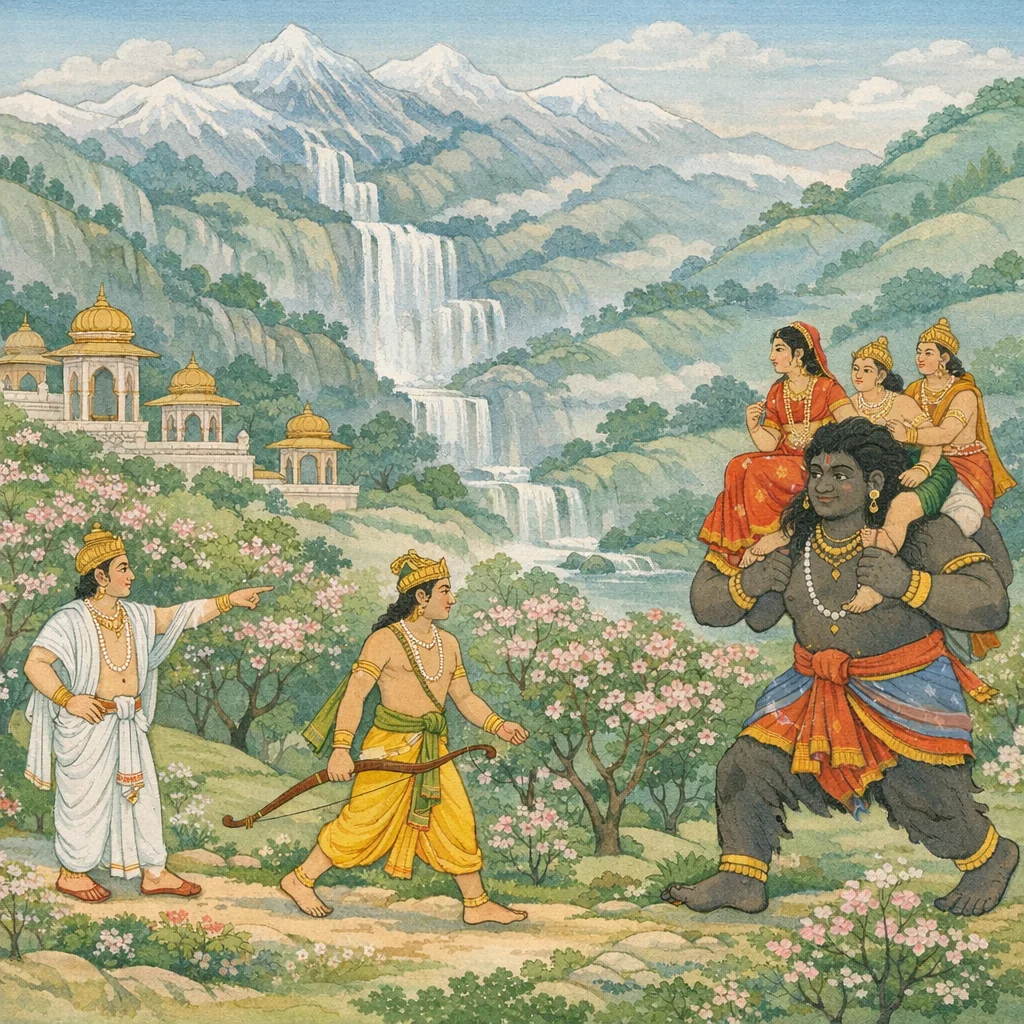
वृतश्न सर्वरनुजेैर्दिजैश्न तेनैव मार्गेण पति: कुरूणाम् उवाह चैतान् गणशस्तथैव घटोत्कच: पर्वतनिर्झरिषु,तत्पश्चात् समस्त भाइयों और ब्रह्माणोंसे घिरे हुए कुरुगाज युधिष्ठिर उसी मार्गसे नीचे उतरने लगे जहाँ दुर्गम पर्वत और झरने पड़ते थे, वहाँ घटोत्कव अपने गणोंसहित आकर पहलेकी तरह इन सबको पीठपर बिठा वहाँसे पार कर देता था
Vaiśampāyana said: Surrounded by all his younger brothers and by the brāhmaṇas, Yudhiṣṭhira—the lord of the Kurus—began to descend by that very route, where the mountain paths were harsh and broken by streams and waterfalls. There, Ghaṭotkaca arrived with his troop and, as before, carried them in groups across those difficult stretches.
Verse 22
तान् प्रस्थितान् प्रीतमना महर्षि: पितेव पुत्राननुशिष्य सर्वान् स लोमश: प्रीतमना जगाम दिवौकसां पुण्यतमं निवासम्,महर्षि लोमशने जब पाण्डवोंको वहाँसे प्रस्थान करते देखा, तब जिस प्रकार दयालु पिता अपने पुत्रोंको उपदेश देता है वैसे ही उन्होंने प्रसन्नचित्त होकर सबको उत्तम उपदेश दिया। फिर मन-ही-मन प्रसन्नताका अनुभव करते हुए वे देवताओंके परम पवित्र स्थानको चले गये
Vaiśampāyana said: Seeing the Pāṇḍavas setting out, the great sage Lomaśa—his mind filled with affection—counselled them all, just as a father instructs his sons. Then, inwardly rejoicing, he departed for the most sacred abode of the gods.
Verse 23
तेनार्शटिषिणेन तथानुशिष्टा- स्तीर्थानि रम्याणि तपोवनानि महान्ति चान्यानि सरांसि पार्था: सम्पश्यमाना: प्रययुर्नराग्रया:,इसी प्रकार राजर्षि आर्ड्षिणने भी उन सबको उपदेश दिया। तत्पश्चात् वे नरश्रेष्ठ पाण्डव पवित्र तीर्थों, मनोहर तपोवनों और अन्य बड़े-बड़े सरोवरोंका दर्शन करते हुए आगे बढ़े
Thus instructed by that royal sage, the foremost of men—the Pāṇḍavas—set forth. As they went, they beheld sacred fords, delightful forests of austerity, and other great lakes, moving onward with reverence, as travelers shaped by counsel and discipline.
Verse 163
आपको धनकी प्राप्ति हो और आपका एऐश्वर्य बढ़े, यही हमारा प्रधान लक्ष्य है। अतः हमलोग शत्रुओंसे भिड़कर वैरकी शान्ति करेंगे
“May you obtain wealth and may your prosperity increase—this is our foremost aim. Therefore, by engaging the enemies in battle, we shall bring this enmity to an end.”
Verse 166
त्वदर्थयोगप्रभवप्रधाना: शमं करिष्याम परान् समेत्य
Vaiśampāyana said: “Moved chiefly by the power born of our disciplined resolve for your sake, we shall go forth, confront the opposing party, and bring about peace.”
Verse 175
इस प्रकार श्रीमह्ाभारत वनपर्वके अन्तर्गत निवातकवचयुद्धपर्वमें अस्त्रदर्शनविषयक एक सौ पचहत्तरवाँ अध्याय पूरा हुआ
Thus ends the one-hundred-and-seventy-fifth chapter of the Mahābhārata’s Vana Parva, within the Nivātakavaca-yuddha section, dealing with the theme of the revelation and display of divine weapons. The narrator marks the close of this unit, emphasizing the ordered transmission of sacred martial knowledge and the completion of a significant narrative stage in the forest exile.
Verse 176
इति श्रीमहाभारते वनपर्वणि आजगरपर्वणि गन्धमादनप्रस्थाने षट्सप्तत्यधिकशततमो<ध्याय:
Thus ends the one-hundred-and-seventy-sixth chapter of the Vana Parva of the Śrī Mahābhārata—within the section known as the Ajagara episode—concerning the departure toward Gandhamādana. This closing formula marks the completion of a narrative unit and signals a transition to the next movement of the Pāṇḍavas’ forest journey, framing the episode within its ethical and spiritual context of endurance, restraint, and purposeful travel.
Frequently Asked Questions
Yudhiṣṭhira must preserve his brother’s life without coercion by satisfying an adversary’s ethical-philosophical test, balancing urgency with truthful reasoning and non-violent problem-solving.
Ethical identity is validated by virtues and disciplined conduct rather than mere lineage; simultaneously, the ‘knowable’ highest aim is framed as a state beyond ordinary dualities of pleasure and pain.
No explicit phalaśruti is stated in the provided passage; the meta-function is pedagogical, embedding a normative definition of ethical authority (brāhmaṇa by vṛtta) within a life-and-death narrative test.