Adhyaya 164
Arjuna meets the Lokapālas, is tested by Indra, and is led to Amarāvatī for astra-śikṣā (Indraloka-gamana)
Upa-parva: Arjunābhigamana / Indraloka-gamana (Arjuna’s ascent and celestial instruction episode)
Arjuna reports his successful vision of Mahādeva to a radiant brāhmaṇa-like figure, who affirms the uniqueness of the encounter and forecasts that, together with the Lokapālas, Arjuna will meet Indra and receive weapons. Auspicious atmospheric signs arise—fragrant garlands, divine music, hymns, and the arrival of celestial retinues. Indra appears with Śacī; Kubera, Yama, and Varuṇa are seen in their respective stations, and the Lokapālas reassure Arjuna and offer astras for the fulfillment of a divine-purpose mandate. Arjuna receives the weapons with ritual propriety and is dismissed. Indra then addresses Arjuna, acknowledging prior knowledge of him and outlining further tapas and the role of Mātali in conveying him to heaven. Arjuna requests Indra as instructor; Indra tests Arjuna’s intention by suggesting harsh action, and Arjuna clarifies ethical constraints on using divine weapons. Indra approves and directs Arjuna to learn multiple classes of astras. Mātali brings Indra’s chariot; during ascent he notes Arjuna’s steadiness on the moving divine chariot, then shows celestial abodes and Nandana forests. Amarāvatī is described as free from fatigue, impurity, grief, and moral affliction, marked by perennial blossoms, pure winds, jeweled ground, and joyful inhabitants. Arjuna pays respects to divine assemblies, is welcomed by Indra, and remains in heaven to train in astras and learn Gandharva arts under Citraseṇa, maintaining disciplined focus amid abundant pleasures.
Chapter Arc: सूर्योदय के बाद धौम्य और आर्ष्टिषेण नित्यकर्म पूर्ण कर पाण्डवों के पास आते हैं; वनवास की कठोरता के बीच ऋषि-आगमन एक दिव्य संवाद का द्वार खोलता है। → पाण्डव विनयपूर्वक चरण-वन्दना कर ब्राह्मणों का सत्कार करते हैं; युधिष्ठिर के भीतर जगत-व्यवस्था, देव-स्थान और काल-गति को जानने की तीव्र जिज्ञासा उभरती है। → धौम्य मेरु-पर्वत और उसके शिखरों पर स्थित ब्रह्मा-विष्णु आदि के ध्रुव, अक्षय स्थानों का वर्णन करते हैं तथा सूर्य की निरन्तर गति—अहोरात्र, कला, काष्ठा और प्राणियों की आयु-कर्म के विभाजन—को जगत-नियामक सत्य के रूप में स्थापित करते हैं। → युधिष्ठिर को यह बोध मिलता है कि सृष्टि-चक्र, देवर्षियों का प्रजापति में लय-उदय, और सूर्य की अविराम परिक्रमा—सब एक अटल नियम के अधीन हैं; मन स्थिर होकर धर्म-मार्ग में धैर्य पाता है। → मेरु-दर्शन और नारायण-स्थान जैसे दिव्य-स्थानों का संकेत आगे के अध्यायों में और व्यापक ब्रह्माण्ड-वर्णन/तीर्थ-प्रसंग की ओर ले जाता है।
Shlokas
Verse 1
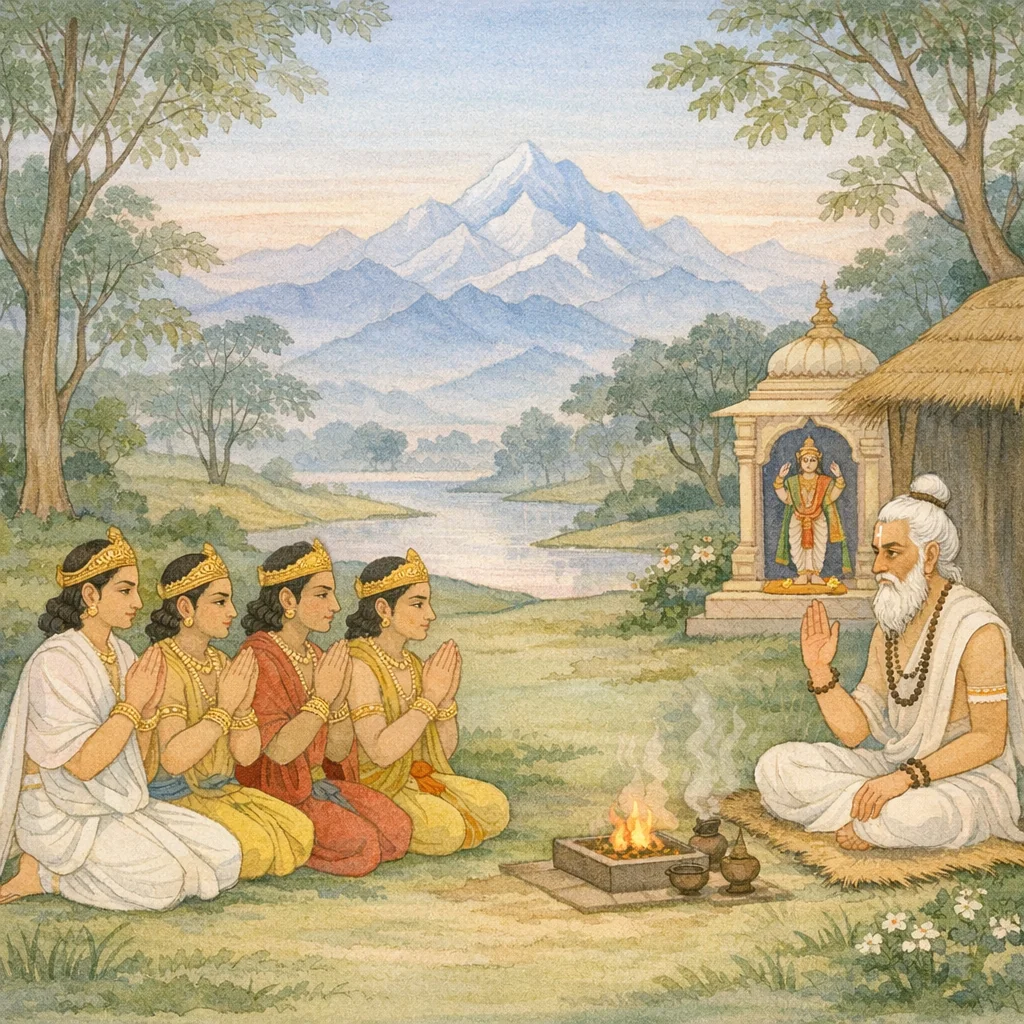
वैशम्पायनजी कहते हैं--शत्रुदमन नरेश! तदनन्तर सूर्योदय होनेपर आ्टिषिणसहित धौम्यजी नित्यकर्म पूरा करके पाण्डवोंके पास आये
Vaiśampāyana said: “O king, tamer of foes! Thereafter, when the sun had risen, Dhaumya—accompanied by the sages—having completed his daily religious duties, came to the Pāṇḍavas.”
Verse 2
ते5भिवाद्यार्टिषिणस्य पादौ धौम्यस्य चैव ह । ततः प्राउजलय: सर्वे ब्राह्म॒णांस्तानपूजयन्,तब समस्त पाण्डवोंने आर्श्षिण तथा धौम्यके चरणोंमें प्रणाम किया और हाथ जोड़कर सब ब्राह्मणोंका पूजन किया
Having bowed in reverence at the feet of the sage Ārṣiṇa and of Dhaumya as well, all of them then stood with joined palms and duly honored those brāhmaṇas.
Verse 3
/ #::73:.8 #::3-.7 (0) हि २ 7 त्रेषष्ट्याधिकशततमोब<् ध्याय: धौम्यका युधिषिरको मेरु पर्वत तथा उसके शिखरोंपर स्थित ब्रह्मा, विष्णु आदिके स्थानोंका लक्ष्य कराना और सूर्य-चन्द्रमाकी गति एवं प्रभावका वर्णन वैशम्पायन उवाच ततः सूर्योदये धौम्य: कृत्वा5डहछ्लिकमरिंदम । आर्टिषेणेन सहित: पाण्डवानभ्यवर्तत,ततो युधिष्टिरं धौम्यो गृहीत्वा दक्षिणे करे । प्राचीं दिशमभिप्रेक्ष्य महर्षिरिदमब्रवीत् तदनन्तर महर्षि धौम्यने युधिष्ठिरका दाहिना हाथ पकड़कर पूर्व दिशाकी ओर देखते हुए कहा--
Vaiśampāyana said: Then, at sunrise, the sage Dhaumya—having completed his morning rites (ahnika)—approached the Pāṇḍavas, accompanied by Ārtiṣeṇa. Thereupon Dhaumya took Yudhiṣṭhira by the right hand and, gazing toward the eastern direction, the great seer spoke these words.
Verse 4
असोौ सागरपर्यन्तां भूमिमावृत्य तिष्ठति । शैलराजो महाराज मन्दरो5ति विराजते,“महाराज! वह पर्वतराज मन्दराचल प्रकाशित हो रहा है, जो समुद्रतककी भूमिको घेरकर खड़ा है
Vaiśampāyana said: “O great king, that sovereign among mountains—Mandara—stands there, seeming to encompass the earth up to the ocean’s edge, shining forth in majestic splendor.”
Verse 5
इन्द्रवैश्रवणावेतां दिशं पाण्डव रक्षत: | पर्वतैश्न वनान्तैश्न काननैश्वैव शोभिताम्
Vaiśampāyana said: The Pāṇḍava was keeping watch over the quarter presided over by Indra and Vaiśravaṇa (Kubera)—a direction made splendid by mountains, forest-border tracts, and deep woodland groves.
Verse 6
'पाण्डुनन्दन! पर्वतों, वनान्त प्रदेशों और काननोंसे सुशोभित इस पूर्व दिशाकी रक्षा इन्द्र और कुबेर करते हैं ।। एतदाहुर्महेन्द्रस्य राज्ञो वैश्रवणस्य च । ऋषय: सर्वधर्मज्ञा: सझ तात मनीषिण:,“तात! सब धर्मोके ज्ञाता मनीषी महर्षि इस दिशाको देवराज इन्द्र तथा कुबेरका निवासस्थान कहते हैं। इधरसे ही उदित होनेवाले सूर्यदेवकी समस्त प्रजा, धर्मज्ञ ऋषि, सिद्ध महात्मा तथा साध्य देवता उपासना करते हैं
Vaiśampāyana said: “O son of Pāṇḍu! This eastern quarter—adorned with mountains, forest-border regions, and deep woods—is guarded by Indra and Kubera. Thus declare the all-knowing sages, wise and discerning: ‘Child, this direction is spoken of as the dwelling-place of King Mahendra (Indra) and of Vaiśravaṇa (Kubera). From here the Sun rises, and all beings—along with dharma-knowing seers, perfected siddhas, great-souled ones, and the Sādhya deities—offer worship.’”
Verse 7
अतश्रोद्यन्तमादित्यमुपतिष्ठन्ति वै प्रजा: । ऋषयश्नापि धर्मज्ञा: सिद्धा: साध्याश्व देवता:,“तात! सब धर्मोके ज्ञाता मनीषी महर्षि इस दिशाको देवराज इन्द्र तथा कुबेरका निवासस्थान कहते हैं। इधरसे ही उदित होनेवाले सूर्यदेवकी समस्त प्रजा, धर्मज्ञ ऋषि, सिद्ध महात्मा तथा साध्य देवता उपासना करते हैं
Therefore, all beings duly worship the Sun as he rises. The seers who know dharma, the perfected Siddhas, and the Sādhya deities also stand in reverent attendance—affirming that the daily emergence of the Sun is a sacred occasion that sustains order and invites disciplined, righteous conduct.
Verse 8
यमस्तु राजा धर्मज्ञ: सर्वप्राणभृतां प्रभु: । प्रेतसत्त्वगतिं होनां दक्षिणामाश्रितो दिशम्,“समस्त प्राणियोंके ऊपर प्रभुत्व रखनेवाले धर्मज्ञ राजा यम इस दक्षिण दिशाका आश्रय लेकर रहते हैं। इसमें मरे हुए प्राणी ही जा सकते हैं
Vaiśampāyana said: Yama, the king who knows dharma and is sovereign over all living beings, abides in the southern quarter. That direction is held to be the path of departed spirits—an inferior course—open only to those who have died.
Verse 9
एतत् संयमनं पुण्यमतीवाद्धुतदर्शनम् । प्रेतराजस्य भवनमृद्धया परमया युतम्,'प्रेतताजका यह निवासस्थान अत्यन्त समृद्धिशाली परम पवित्र तथा देखनेमें अद्भुत है। राजन! इसका नाम संयमन (या संयमनीपुरी) है
Vaiśampāyana said: “This holy city called Saṁyamana is exceedingly wondrous to behold. It is the abode of the Lord of the Departed (Yama), endowed with supreme prosperity and splendor.”
Verse 10
“राजन! जहाँ जाकर भगवान् सूर्य सत्यसे प्रतिष्ठित होते हैं, उस पर्वतराजको मनीषी पुरुष अस्ताचल कहते हैं। गिरिराज अस्ताचल और महान् जलराशिसे भरे हुए समुद्रमें रहकर राजा वरुण समस्त प्राणियोंकी रक्षा करते हैं
Vaiśampāyana said: “O King, the mountain-lord where the blessed Sun, having gone, comes to rest in the realm of Truth—wise men call that sovereign peak ‘Astācala,’ the Mountain of Setting. Abiding there, and also within the ocean filled with vast masses of water, King Varuṇa safeguards all living beings.”
Verse 11
एतं पर्वतराजानं समुद्र च महोदधिम् | आवसन् वरुणो राजा भूतानि परिरक्षति,“राजन! जहाँ जाकर भगवान् सूर्य सत्यसे प्रतिष्ठित होते हैं, उस पर्वतराजको मनीषी पुरुष अस्ताचल कहते हैं। गिरिराज अस्ताचल और महान् जलराशिसे भरे हुए समुद्रमें रहकर राजा वरुण समस्त प्राणियोंकी रक्षा करते हैं
Vaiśampāyana said: Dwelling upon that king of mountains and within the ocean—the vast reservoir of waters—King Varuṇa abides, safeguarding all living beings. The passage situates cosmic order in geography: the mountain associated with the sun’s setting and the great sea become Varuṇa’s seat, from which he upholds protection and restraint, key supports of dharma.
Verse 12
उदीचीं दीपयन्नेष दिशं तिष्ठति वीर्यवान् | महामेरुर्महा भाग शिवो ब्रह्मविदां गति:,“महाभाग!” यह अत्यन्त प्रकाशमान महामेरु पर्वत दिखायी देता है, जो उत्तर दिशाको उद्धासित करता हुआ खड़ा है। इस कल्याणकारी पर्वतपर ब्रह्मवेत्ताओंकी ही पहुँच हो सकती है
“O greatly blessed one! Behold Mahāmeru, radiant beyond measure, standing and illumining the northern quarter. Upon this auspicious mountain, only those who know Brahman—the seers of highest wisdom—may attain passage.”
Verse 13
यस्मिन ब्रह्मसदश्चैव भूतात्मा चावतिष्ठते । प्रजापति: सृजन् सर्व यत् किज्चिज्जड्र्मागमम्,“इसीपर ब्रह्माजीकी सभा है, जहाँ समस्त प्राणियोंके आत्मा ब्रह्मा स्थावर-जंगम समस्त प्राणियोंकी सृष्टि करते हुए नित्य निवास करते हैं
Vaiśampāyana said: “In that realm stands Brahmā’s own assembly-hall, where the Lord of creatures—Brahmā, the inner Self of all beings—abides continually, bringing forth all that exists, both moving and unmoving.”
Verse 14
यानाहुर्ब्रह्मण: पुत्रान् मानसात् दक्षसप्तमान् । तेषामपि महामेरु: शिवं स्थानमनामयम्,“जिन्हें ब्रह्माजीका मानसपुत्र बताया जाता है और जिनमें दक्षप्रजापतिका स्थान सातवाँ है। उन समस्त प्रजापतियोंका भी यह महामेरु पर्वत ही रोग-शोकसे रहित सुखद स्थान है
“Those whom they call Brahmā’s mind-born sons—the Prajāpatis, with Dakṣa as the seventh among them—have, even they, in this Mahāmeru a blessed and wholesome abode, free from sickness and sorrow.”
Verse 15
अन्रैव प्रतितिष्ठन्ति पुनरेवोदयन्ति च । सप्त देवर्षयस्तात वसिष्ठप्रमुखा: सदा,“तात! वसिष्ठ आदि सात देवर्षि इन्हीं प्रजापतिमें लीन होते और पुनः इन्हींसे प्रकट होते हैं
Vaiśampāyana said: “Dear one, the seven divine seers—foremost among them Vasiṣṭha—ever merge into that very Prajāpati as their resting ground, and again arise from him.”
Verse 16
देशं विरजसं पश्य मेरो: शिखरमुत्तमम् । यत्रात्मतृप्तैर ध्यास्ते देवे: सह पितामह:,'युधिष्ठिर! मेरुका वह उत्तम शिखर देखो, जो रजोगुण रहित प्रदेश है, वहाँ अपने- आपमें तृप्त रहनेवाले देवताओंके साथ पितामह ब्रह्मा निवास करते हैं
Vaiśampāyana said: “Behold that stainless, dustless region—the supreme peak of Mount Meru. There, the Grandsire Brahmā dwells together with the gods who are content within themselves.”
Verse 17
यमाहु: सर्वभूतानां प्रकृते: प्रकृति धरुवम् । अनादिनिधन देवं प्रभुं नारायणं परम्,“जो समस्त प्राणियोंकी पञ्चभूतमयी प्रकृतिके अक्षय उपादान हैं, जिन्हें ज्ञानी पुरुष अनादि अनन्त दिव्य-स्वरूप परम प्रभु नारायण कहते हैं, उनका उत्तम स्थान उस ब्रह्मलोकसे भी ऊपर प्रकाशित हो रहा है। देवता भी उन सर्वतेजोमय शुभस्वरूप भगवान्का सहज ही दर्शन नहीं कर पाते। राजन! परमात्मा विष्णुका वह स्थान सूर्य और अग्निसे भी अधिक तेजस्वी है और अपनी ही प्रभासे प्रकाशित होता है। देवताओं और दानवोंके लिये उसका दर्शन अत्यन्त कठिन है
Vaiśampāyana said: “That supreme Lord Nārāyaṇa—beginningless and endless, the divine Master—whom the wise describe as the imperishable primal ground of all beings and as the very source of material nature, is proclaimed as transcending even Brahmaloka. His own radiance reveals His abode; it outshines the sun and fire. Even the gods do not easily behold that all-luminous, auspicious form, and for both devas and dānavas His vision is exceedingly difficult.”
Verse 18
ब्रहद्मण: सदनात् तस्य परं स्थान प्रकाशते । देवा अपि न पश्यन्ति सर्वतेजोमयं शुभम्,“जो समस्त प्राणियोंकी पञ्चभूतमयी प्रकृतिके अक्षय उपादान हैं, जिन्हें ज्ञानी पुरुष अनादि अनन्त दिव्य-स्वरूप परम प्रभु नारायण कहते हैं, उनका उत्तम स्थान उस ब्रह्मलोकसे भी ऊपर प्रकाशित हो रहा है। देवता भी उन सर्वतेजोमय शुभस्वरूप भगवान्का सहज ही दर्शन नहीं कर पाते। राजन! परमात्मा विष्णुका वह स्थान सूर्य और अग्निसे भी अधिक तेजस्वी है और अपनी ही प्रभासे प्रकाशित होता है। देवताओं और दानवोंके लिये उसका दर्शन अत्यन्त कठिन है
Vaiśaṃpāyana said: “Beyond that vast Brahmā-world, an even higher abode of Him shines forth. Even the gods do not behold that auspicious form made wholly of radiance. It is self-luminous, surpassing the brilliance of the sun and fire, and its vision is exceedingly difficult for both gods and demons.”
Verse 19
अत्यर्कानलदीप्तं तत् स्थान विष्णोर्महात्मन: । स्वयैव प्रभया राजन दुष्प्रेक्ष्यं देवदानवैः,“जो समस्त प्राणियोंकी पञ्चभूतमयी प्रकृतिके अक्षय उपादान हैं, जिन्हें ज्ञानी पुरुष अनादि अनन्त दिव्य-स्वरूप परम प्रभु नारायण कहते हैं, उनका उत्तम स्थान उस ब्रह्मलोकसे भी ऊपर प्रकाशित हो रहा है। देवता भी उन सर्वतेजोमय शुभस्वरूप भगवान्का सहज ही दर्शन नहीं कर पाते। राजन! परमात्मा विष्णुका वह स्थान सूर्य और अग्निसे भी अधिक तेजस्वी है और अपनी ही प्रभासे प्रकाशित होता है। देवताओं और दानवोंके लिये उसका दर्शन अत्यन्त कठिन है
Vaiśampāyana said: “O King, that supreme abode of the great-souled Viṣṇu blazes with a radiance surpassing even the sun and fire. It shines by its own inherent splendor, and for gods and demons alike it is exceedingly hard to behold.”
Verse 20
प्राच्यां नारायणस्थानं मेरावतिविराजते । यत्र भूतेश्वरस्तात सर्वप्रकृतिरात्मभू:
Vaiśampāyana said: “In the eastern quarter there shines the sacred abode of Nārāyaṇa, resplendent with Merāvatī. There, dear one, dwells the Lord of all beings—the Self-born source, the very ground of all nature.”
Verse 21
भासयन् सर्वभूतानि सुश्रियाभिविराजते । नात्र ब्रह्मर्षयस्तात कुत एव महर्षय:
Vaiśampāyana said: “Illuminating all beings, it shines forth with splendid radiance. In that place, dear one, there are no brahmarṣis at all—how then could there be any other great sages?”
Verse 22
प्राप्रुवन्ति गतिं होतां यतीनां भावितात्मनाम् | नतं ज्योतींषि सर्वाणि प्राप्प भासन्ति पाण्डव
Vaiśaṃpāyana said: “They attain that destined course—the state reached by self-disciplined ascetics whose inner being has been purified. Having reached it, all the lights (the heavenly luminaries) shine forth in reverence, O Pāṇḍava.”
Verse 23
“तात! पूर्व दिशामें मेरूपर ही भगवान् नारायणका स्थान सुशोभित हो रहा है, जहाँ सम्पूर्ण भूतोंके स्वामी तथा सबके उपादान कारण स्वयंभू भगवान् विष्णु अपने उत्कृष्ट तेजसे सम्पूर्ण भूतोंको प्रकाशित करते हुए विराजमान होते हैं। वहाँ यत्नशील ज्ञानी महात्माओंकी ही पहुँच हो सकती है। उस नारायणधाममें ब्रह्मर्षियोंकी भी गति नहीं है। फिर महर्षि तो वहाँ जा ही कैसे सकते हैं। पाण्डुनन्दन! सम्पूर्ण ज्योतिर्मय पदार्थ भगवान्के निकट जाकर अपना तेज खो बैठते हैं--उनमें पूर्ववत् प्रकाश नहीं रह जाता ॥| २०-- २२ |। स्वयं प्रभुरचिन्त्यात्मा तत्र ह्यतिविराजते । यतयस्तत्र गच्छन्ति भक्त्या नारायणं हरिम्,'साक्षात् अचिन्त्यस्वरूप भगवान् विष्णु ही वहाँ विराजित होते हैं। यत्नशील महात्मा भक्तिके प्रभावसे वहाँ भगवान् नारायणको प्राप्त होते हैं
Vaiśampāyana said: “Dear child! In the eastern quarter, upon Mount Meru, there shines the splendid abode of the Blessed Nārāyaṇa—where Viṣṇu, the Self-born Lord, master of all beings and the very material cause of all, sits enthroned, illuminating all creatures by His supreme radiance. Only disciplined, striving sages of true knowledge can reach that place. In that realm of Nārāyaṇa even the Brahmarṣis find no passage—how then could other great seers go there? O son of Pāṇḍu, all luminous things, drawing near to the Lord, lose their own brilliance; their former light no longer remains. There the Lord Himself, of inconceivable nature, shines with surpassing splendor. It is by devotion that the self-controlled ascetics attain Nārāyaṇa, Hari.”
Verse 24
परेण तपसा युक्ता भाविता: कर्मभि: शुभै: । योगसिद्धा महात्मानस्तमोमोहविवर्जिता:,“भारत! जो उत्तम तपस्यासे युक्त हैं और पुण्यकर्मोके अनुष्ठानसे पवित्र हो गये हैं, वे अज्ञान और मोहसे रहित योगसिद्ध महात्मा उस नारायण-धाममें जाकर फिर इस संसारमें नहीं लौटते हैं। अपितु स्वयंभू एवं सनातन परमात्मा देवदेव विष्णुमें लीन हो जाते हैं
Vaiśampāyana said: Those great-souled ones who are endowed with higher austerity, refined and sanctified by the performance of auspicious deeds, and perfected in yoga—free from the darkness of ignorance and the delusion it breeds—attain the supreme state and do not return again to worldly existence.
Verse 25
तत्र गत्वा पुनर्नेमं लोकमायान्ति भारत । स्वयम्भुवं महात्मानं देवदेवं सनातनम्,“भारत! जो उत्तम तपस्यासे युक्त हैं और पुण्यकर्मोके अनुष्ठानसे पवित्र हो गये हैं, वे अज्ञान और मोहसे रहित योगसिद्ध महात्मा उस नारायण-धाममें जाकर फिर इस संसारमें नहीं लौटते हैं। अपितु स्वयंभू एवं सनातन परमात्मा देवदेव विष्णुमें लीन हो जाते हैं
Vaiśampāyana said: “O Bhārata, having reached that supreme state, they do not return again to this world. Those perfected great souls—purified by austere discipline and meritorious observances, free from ignorance and delusion—attain the abode of Nārāyaṇa and, rather than coming back to worldly existence, merge into the Self-born, eternal Lord of lords.”
Verse 26
स्थानमेतन्महाभाग ध्रुवमक्षयमव्ययम् | ईश्वरस्य सदा होतत् प्रणमात्र युधिष्ठिर,“महाभाग युधिष्ठिर! यह परमेश्वरका नित्य, अविनाशी और अविकारी स्थान है। तुम यहींसे इसको प्रणाम करो
Vaiśampāyana said: “O noble one, this is a fixed, imperishable, unchanging abode of the Lord. O Yudhiṣṭhira, offer your reverence to Him from this very spot.”
Verse 27
एन॑ त्वहरहर्मेरुं सूर्याचन्द्रमसौ ध्रुवम् प्रदक्षिणमुपावृत्य कुरुत: कुरुनन्दन,“कुरुनन्दन! सूर्य और चन्द्रमा प्रतिदिन इस निश्चल मेरुगिरिकी प्रदक्षिणा करते रहते हैं। पापशून्य महाराज! सम्पूर्ण नक्षत्र भी गिरिराज मेरुकी सर्वतोभावेन परिक्रमा करते हैं
“O Kuru-nandana, the Sun and the Moon, day after day, perform pradakṣiṇā, circling this unmoving Mount Meru. And all the stars as well revolve, encompassing Meru, king of mountains, on every side.”
Verse 28
ज्योतींषि चाप्यशेषेण सर्वाण्यनघ सर्वतः । परियान्ति महाराज गिरिराजं प्रदक्षिणम्,“कुरुनन्दन! सूर्य और चन्द्रमा प्रतिदिन इस निश्चल मेरुगिरिकी प्रदक्षिणा करते रहते हैं। पापशून्य महाराज! सम्पूर्ण नक्षत्र भी गिरिराज मेरुकी सर्वतोभावेन परिक्रमा करते हैं
O Kuru prince! The Sun and the Moon, day after day, make a reverential circumambulation of the unmoving Mount Meru. O sinless great king! All the constellations too, from every side, circle the mountain-king Meru all around.
Verse 29
एतं ज्योतींषि सर्वाणि प्रकर्षीन् भगवानपि । कुरुते वितमस्कर्मा आदित्यो5भिप्रदक्षिणम्,“अन्धकारका निवारण करना ही जिनका मुख्य कर्म है, वे भगवान् सूर्य भी सम्पूर्ण ज्योतियोंको अपनी ओर खींचते हुए इस मेरुगिरिकी प्रदक्षिणा करते हैं
Even the blessed Sun—whose very task is to dispel darkness—draws all these lights toward himself and makes a reverential circumambulation of Mount Meru.
Verse 30
य॑ं प्राप्प सविता राजन् सत्येन प्रतितिष्ठति । अस्तं पर्वतराजानमेतमाहुर्मनीषिण:,अस्तं प्राप्प तत: संध्यामतिक्रम्प दिवाकर: । उदीचीं भजते काष्ठां दिशमेष विभावसु: “तदनन्तर अस्ताचलको पहुँचकर संध्याकालकी सीमाको लाँघकर ये भगवान् सूर्य उत्तर दिशाका आश्रय लेते हैं। पाण्डुनन्दन! मेरु पर्वतका अनुसरण करके उत्तर दिशाकी सीमातक पहुँचकर ये समस्त प्राणियोंके हितमें तत्पर रहनेवाले भगवान् सूर्य पुनः पूर्वाभिमुख होकर चलते हैं
Vaiśaṃpāyana said: “O King, the mountain where the Sun stands firm by truth is called by the wise ‘Asta’, the king of mountains. Reaching the western setting-point and passing beyond the boundary of twilight, this radiant Diwākara turns to the northern quarter. Thereafter, intent on the welfare of all beings, the Lord Sun follows Meru up to the northern extremity and then proceeds again facing east.”
Verse 31
स मेरुमनुवृत्त: सन् पुनर्गच्छति पाण्डव । प्रामुख: सविता देव: सर्वभूतहिते रत:,“तदनन्तर अस्ताचलको पहुँचकर संध्याकालकी सीमाको लाँघकर ये भगवान् सूर्य उत्तर दिशाका आश्रय लेते हैं। पाण्डुनन्दन! मेरु पर्वतका अनुसरण करके उत्तर दिशाकी सीमातक पहुँचकर ये समस्त प्राणियोंके हितमें तत्पर रहनेवाले भगवान् सूर्य पुनः पूर्वाभिमुख होकर चलते हैं
Vaiśampāyana said: “O Pāṇḍava, after following the course of Mount Meru, the divine Sun, Savitṛ—foremost among the gods and ever intent on the welfare of all beings—turns again and proceeds onward.”
Verse 32
स मासान् विभजन् काले बहुथधा पर्वसंधिषु । तथैव भगवान् सोमो नक्षत्र: सह गच्छति,“उसी प्रकार भगवान् चन्द्रमा भी नक्षत्रोंके साथ मेरु पर्वतकी परिक्रमा करते हैं और पर्वसंधिके समय विभिन्न मासोंका विभाग करते रहते हैं
Vaiśampāyana said: “Thus, in due course of time, the months are apportioned in many ways at the junctions of the seasons. In the same manner, the divine Moon, Soma, moves together with the constellations, making his circuit around Meru, and thereby marks out the divisions of the months.”
Verse 33
एवमेतं त्वतिक्रम्प महामेरुमतन्द्रित: । भावयन् सर्वभूतानि पुनर्गच्छति मन्दरम्,“इस तरह आलस्यरहित हो इस महामेरुका उल्लंघन करके समस्त प्राणियोंका पोषण करते हुए वे पुनः मन्दराचलको चले जाते हैं। उसी प्रकार अन्धकारनाशक भगवान् सूर्य अपनी किरणोंसे सम्पूर्ण जगत्का पालन करते हुए इस बाधारहित मार्गपर सदा चक्कर लगाते रहते हैं
Vaiśampāyana said: “Thus, without idleness, having crossed over that great Meru, he returns again to Mandara, sustaining all living beings. In the same way, the Sun—destroyer of darkness—nourishes the entire world with his rays and continually moves along this unobstructed path.”
Verse 34
तथा तमिस्रहा देवो मयूखैर्भावयञ्जगत् । मार्गमेतदसम्बाधमादित्य: परिवर्तते,“इस तरह आलस्यरहित हो इस महामेरुका उल्लंघन करके समस्त प्राणियोंका पोषण करते हुए वे पुनः मन्दराचलको चले जाते हैं। उसी प्रकार अन्धकारनाशक भगवान् सूर्य अपनी किरणोंसे सम्पूर्ण जगत्का पालन करते हुए इस बाधारहित मार्गपर सदा चक्कर लगाते रहते हैं
Vaiśampāyana said: “Thus the Sun-god, the dispeller of darkness, sustaining the world with his rays, continually moves along this unobstructed path.”
Verse 35
सिसृक्षुः शिशिराण्येव दक्षिणां भजते दिशम् | ततः सर्वाणि भूतानि कालो< भ्यच्छति शैशिर:,'शीतकी सृष्टि करनेकी इच्छासे ही सूर्यदेव दक्षिण दिशाका आश्रय लेते हैं, इसलिये समस्त प्राणियोंपर शीतकालका प्रभाव पड़ने लगता है। दक्षिणायनसे निवृत्त होनेपर वे भगवान् सूर्य स्थावर-जंगम सभी प्राणियोंका तेज अपने तेजसे हर लेते हैं, यही कारण है कि मनुष्योंको पसीना, थकावट, आलस्य और ग्लानिका अनुभव होता है तथा प्राणी सदा निद्राका ही बार-बार सेवन करते हैं। इस प्रकार इस अन्तरिक्ष मार्गको आवृत करके समस्त प्रजाकी पुष्टि करते हुए भगवान् सूर्य पुन: वर्षाकी सृष्टि करते हैं
Vaiśampāyana said: “When the Sun intends to bring forth the season of cold, he turns toward the southern quarter. Thereupon the wintry time spreads over all beings, and the touch of winter comes to be felt throughout creation.”
Verse 36
स्थावराणां च भूतानां जजड़मानां च तेजसा । तेजांसि समुपादत्ते निवृत्त: स विभावसु:,'शीतकी सृष्टि करनेकी इच्छासे ही सूर्यदेव दक्षिण दिशाका आश्रय लेते हैं, इसलिये समस्त प्राणियोंपर शीतकालका प्रभाव पड़ने लगता है। दक्षिणायनसे निवृत्त होनेपर वे भगवान् सूर्य स्थावर-जंगम सभी प्राणियोंका तेज अपने तेजसे हर लेते हैं, यही कारण है कि मनुष्योंको पसीना, थकावट, आलस्य और ग्लानिका अनुभव होता है तथा प्राणी सदा निद्राका ही बार-बार सेवन करते हैं। इस प्रकार इस अन्तरिक्ष मार्गको आवृत करके समस्त प्रजाकी पुष्टि करते हुए भगवान् सूर्य पुन: वर्षाकी सृष्टि करते हैं
Vaiśaṃpāyana said: “When he turns back (from his course), Vibhāvasu—the Sun—draws into himself the vital brilliance of beings, both the immobile and the moving, and even of those rendered inert by cold. Hence creatures lose their vigor: fatigue, languor, and heaviness arise, until the Sun again sustains the world by regulating the seasons.”
Verse 37
ततः स्वेदक्लमौ तन््द्री ग्लानिश्व भजते नरान् । प्राणिभि: सतत स्वप्नो हाभीक्षणं च निषेव्यते,'शीतकी सृष्टि करनेकी इच्छासे ही सूर्यदेव दक्षिण दिशाका आश्रय लेते हैं, इसलिये समस्त प्राणियोंपर शीतकालका प्रभाव पड़ने लगता है। दक्षिणायनसे निवृत्त होनेपर वे भगवान् सूर्य स्थावर-जंगम सभी प्राणियोंका तेज अपने तेजसे हर लेते हैं, यही कारण है कि मनुष्योंको पसीना, थकावट, आलस्य और ग्लानिका अनुभव होता है तथा प्राणी सदा निद्राका ही बार-बार सेवन करते हैं। इस प्रकार इस अन्तरिक्ष मार्गको आवृत करके समस्त प्रजाकी पुष्टि करते हुए भगवान् सूर्य पुन: वर्षाकी सृष्टि करते हैं
Vaiśampāyana said: “Thereafter, sweating and fatigue, drowsiness and languor come to afflict human beings; and among living creatures, sleep is continually—and repeatedly—resorted to.”
Verse 38
एवमेतदनिर्देश्यं मार्गमावृत्य भानुमान् । पुन: सृजति वर्षाणि भगवान् भावयन् प्रजा:,'शीतकी सृष्टि करनेकी इच्छासे ही सूर्यदेव दक्षिण दिशाका आश्रय लेते हैं, इसलिये समस्त प्राणियोंपर शीतकालका प्रभाव पड़ने लगता है। दक्षिणायनसे निवृत्त होनेपर वे भगवान् सूर्य स्थावर-जंगम सभी प्राणियोंका तेज अपने तेजसे हर लेते हैं, यही कारण है कि मनुष्योंको पसीना, थकावट, आलस्य और ग्लानिका अनुभव होता है तथा प्राणी सदा निद्राका ही बार-बार सेवन करते हैं। इस प्रकार इस अन्तरिक्ष मार्गको आवृत करके समस्त प्रजाकी पुष्टि करते हुए भगवान् सूर्य पुन: वर्षाकी सृष्टि करते हैं
Vaiśampāyana said: “Thus the Sun-god, after veiling that indescribable course through the sky, again brings forth the rains, sustaining and nourishing all creatures. By his ordered movement and concealment of his path, he regulates the seasons so that living beings are supported—coolness, heat, and rainfall each arriving in their proper time.”
Verse 39
वृष्टिमारुतसंतापै: सुखै: स्थावरजड्रमान् | वर्धयन् सुमहातेजा: पुन: प्रतिनिवर्तते,“महातेजस्वी सूर्यदेव वृष्टि, वायु और तापद्दारा सुखपूर्वक चराचर जीवोंकी पुष्टि करते हुए पुनः अपने स्थानपर लौट आते हैं
Vaiśaṃpāyana said: Endowed with great splendour, the Sun—by means of rain, wind, and warming heat—nourishes all beings, both stationary and moving, in a beneficent way, and then returns again to his own appointed course and place.
Verse 40
एवमेष चरन् पार्थ कालचक्रमतन्द्रित: । प्रकर्षन् सर्वभूतानि सविता परिवर्तते,“कुन्तीनन्दन! इस प्रकार ये भगवान् सूर्य सावधान हो समस्त प्राणियोंका आकर्षण और पोषण करते हुए विचरते और कालचक्रका संचालन करते हैं
Vaiśampāyana said: “O son of Kuntī, thus the Sun (Savitṛ) moves on—unceasingly vigilant—drawing all beings to their appointed courses and sustaining them, while he turns the wheel of Time.”
Verse 41
संतता गतिरेतस्य नैष तिष्ठति पाण्डव | आदायैव तु भूतानां तेजो विसृजते पुन:,'युधिष्ठिर! यह सूर्यदेवकी निरन्तर चलनेवाली गति है। सूर्य कभी एक क्षणके लिये भी रुकते नहीं हैं। वे सम्पूर्ण भूतोंके रसमय तेजको ग्रहण करके पुनः उसे वर्षाकालमें बरसा देते हैं। भारत! ये भगवान् सविता सम्पूर्ण भूतोंकी आयु और कर्मका विभाग करते हुए दिन-रात, कला-काष्ठा आदि समयकी निरन्तर सृष्टि करते रहते हैं!
Vaiśaṃpāyana said: “O Pāṇḍava, the course of this Sun is unbroken; he does not stand still even for a moment. Having drawn up the vital radiance and sap of all beings, he releases it again—returning it in due season as rain. Thus Savitṛ, allotting the span of life and the fruits of action to creatures, continually brings forth the order of time—day and night and the measured divisions of moments—without cease.”
Verse 42
विभजन् सर्वभूतानामायु: कर्म च भारत । अहोरात्र॑ कला: काष्ठा: सृजत्येष सदा विभु:,'युधिष्ठिर! यह सूर्यदेवकी निरन्तर चलनेवाली गति है। सूर्य कभी एक क्षणके लिये भी रुकते नहीं हैं। वे सम्पूर्ण भूतोंके रसमय तेजको ग्रहण करके पुनः उसे वर्षाकालमें बरसा देते हैं। भारत! ये भगवान् सविता सम्पूर्ण भूतोंकी आयु और कर्मका विभाग करते हुए दिन-रात, कला-काष्ठा आदि समयकी निरन्तर सृष्टि करते रहते हैं!
Vaiśampāyana said: “O Bhārata, this mighty Lord (the Sun) continually apportions the lifespan and the fruits of actions for all beings. Ever creating the flow of time—day and night, and the smaller measures such as kalā and kāṣṭhā—he sustains the ordered course of the world.”
Verse 162
इस प्रकार श्रीमहाभारत वनपर्वके अन्तर्गत यक्षयुद्धपर्वमें कुबेरवाक्यविषयक एक सौ बासठवाँ अध्याय पूरा हुआ
Thus ends the one hundred and sixty-second chapter of the Yakṣa-yuddha section within the Vana Parva of the sacred Mahābhārata, concerning the words of Kubera.
Verse 163
इति श्रीमहा भारते वनपर्वणि यक्षयुद्धपर्वणि मेरुदर्शने त्रिषष्टयधिकशततमो< ध्याय:,इस प्रकार श्रीमह्याभारत वनपर्वके अन्तर्गत यक्षयुद्धपर्वमें मेरुदर्शनविषयक एक सौ तिरसठसाँ अध्याय पूरा हुआ
Thus, in the sacred Mahābhārata, within the Vana Parva, in the Yakṣa-yuddha section, the one hundred and sixty-third chapter concerning the vision of Mount Meru comes to an end.
Frequently Asked Questions
Whether the pursuit of extraordinary power (divine weapons) can be justified without ethical risk; Arjuna resolves the dilemma by stating he will not deploy such weapons against humans without appropriate countermeasures and necessity.
Authority and capability must be paired with restraint and tested intention; knowledge with high consequences is transmitted through disciplined training, procedural approval, and explicit limits on use.
No explicit phalaśruti is stated; the meta-significance is narrative and ethical—Arjuna’s eligibility is demonstrated through steadiness, humility, and commitment to responsible use, situating astra-vidyā within a dharma-governed framework.