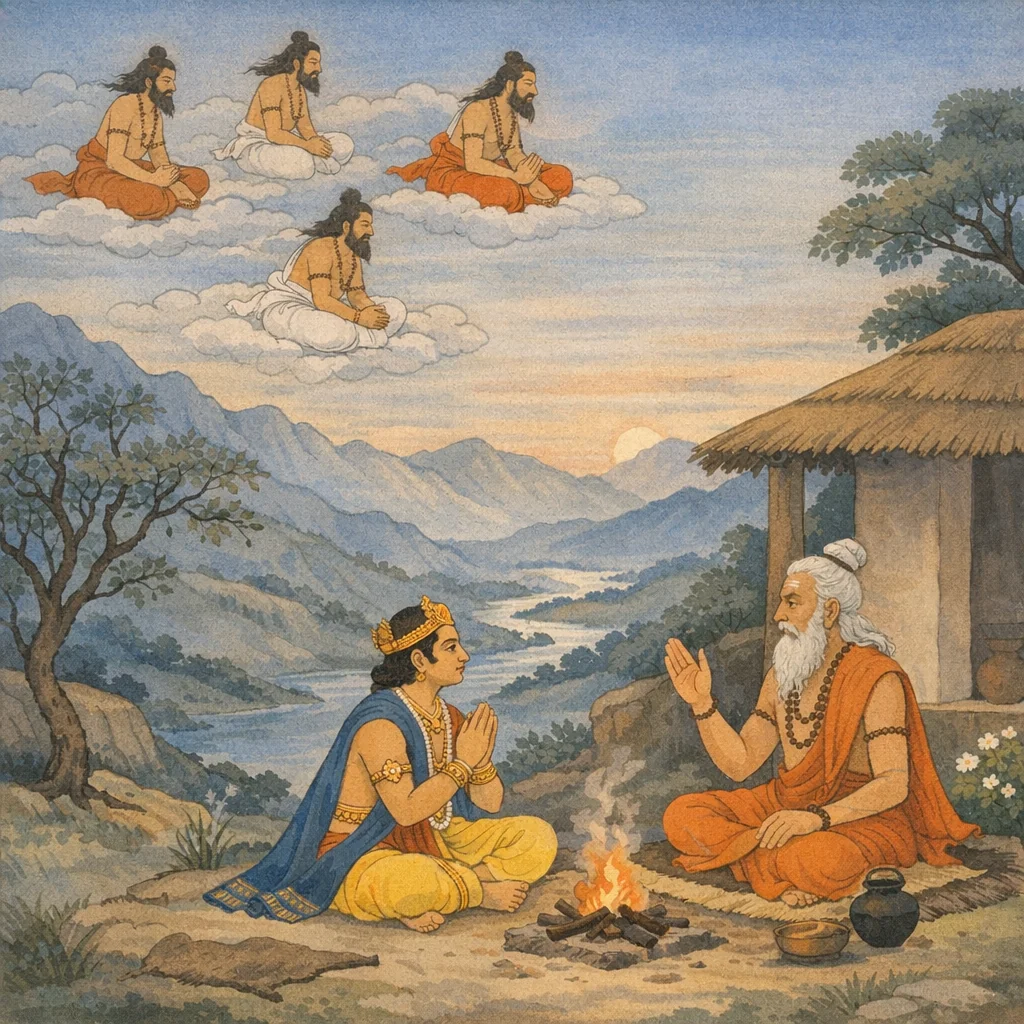
Adhyaya 160
Adhyāya 160: Dikpāla-Cosmography and the Sun’s Kālacakra (दिक्पाल-विश्ववर्णनम् तथा आदित्यस्य कालचक्रम्)
Upa-parva: Dik-Cosmology and Solar Circuit Discourse (Āraṇyaka-parva episodic unit)
Vaiśaṃpāyana reports that at sunrise Dhaumya completes his morning rites and approaches the Pandavas with Ārṣṭiṣeṇa. The brothers formally salute their elders and honor the assembled Brahmins. Dhaumya then takes Yudhiṣṭhira by the hand, faces east, and outlines a directional cosmography: Mandara is presented as a prominent mountain; the quarters are linked with divine authorities (e.g., Indra and Vaiśravaṇa), while the south is associated with Yama and the sacred, formidable Saṃyamana—described as the abode of the lord of departed beings. The west is connected with Varuṇa and the oceanic realm; the north is illuminated by Mahāmeru, associated with Brahmā’s assembly and progenitive powers, and with the abiding station of the seven devarṣis. From this axis, Dhaumya describes a supreme, radiant locus identified with Nārāyaṇa/Vişṇu, difficult to behold even for devas and dānavas, approached by disciplined ascetics and yogic adepts who do not return to ordinary embodiment. The chapter then pivots to temporal mechanics: the Sun’s unceasing circumambulation around Meru, his transitions through directions, the production of seasons (including cold), the modulation of vitality (tejas) in beings, and the generation of day-night and calendrical divisions—framing cosmic motion as the architecture of life and ethical reflection.
Chapter Arc: वन में पर्व-संधि के रहस्यमय समय पर पाण्डव एक महर्षि के आश्रम/पर्वत-प्रदेश में पहुँचते हैं, जहाँ प्रकृति स्वयं अद्भुत संकेतों से बोलती प्रतीत होती है। → द्रौपदी, भीम, नकुल-सहदेव और पुरोहित धौम्य सहित पाण्डव मस्तक झुकाकर ऋषि की सेवा करते हैं। ऋषि युधिष्ठिर से तीखे, आत्म-परीक्षण कराने वाले प्रश्न पूछते हैं—क्या सत्य से विचलन तो नहीं, क्या धर्म-मार्ग स्थिर है, माता-पिता के प्रति वृत्ति और आचरण में शिथिलता तो नहीं। साथ ही कर्म-फल की जिज्ञासा उठती है: दूसरों के दुष्कृत/सुकृत का फल हमें क्या भोगना पड़ता है? → ऋषि पर्व-संधि (पूर्णिमा/अमावस्या की संधि) के समय पर्वत-श्रेष्ठ पर होने वाले अलौकिक दृश्यों का रहस्य खोलते हैं—ऋषि-गण वायु/जल-आहार जैसे कठोर व्रतों से देह को साधकर आकाश-मार्ग से विचरते हैं, और इस काल में अनेक प्राणी अद्भुत दर्शन करते हैं; पर पाण्डवों को वहाँ जाने की इच्छा नहीं करनी चाहिए—जो जानना है, यहीं रहकर सुनें/देखें। → ऋषि युधिष्ठिर को धैर्य और अचंचलता का उपदेश देते हैं—यहाँ श्रद्धा से निवास करो, नियमपूर्वक विहार करो; समय आने पर तुम शस्त्रजित पृथ्वी का पालन करोगे। → पाण्डवों के लिए यह संकेत छोड़ दिया जाता है कि वन-वास का यह संयम ही भविष्य के राज्य-धर्म का आधार बनेगा, और पर्व-संधि के रहस्य अभी और भी गहरे हैं।
Shlokas
Verse 1
#+ #+० ()) #अल अप - सिन्धुवार शब्दका अर्थ आचार्य नीलकण्ठने कमल माना है। आधुनिक कोषकारोंने 'सिन्धुवार'को शेफालिका या निर्गुण्डीका पर्याय माना है। उसके फूल मंजरीके आकारमें केसरिया रंगके होते हैं, अत: तोमरसे उनकी उपमा ठीक बैठती है। इसीलिये यहाँ शेफालिका अर्थ लिया गया। एकोनषष्टर्याधकशततमो< ध्याय: प्रश्नके रूपमें आर्डिषिणका युधिष्ठिरके प्रति उपदेश वैशम्पायन उवाच युधिष्ठिरस्तमासाद्य तपसा दग्धकिल्बिषम् | अभ्यवादयत प्रीतः शिरसा नाम कीर्तयन्,वैशम्पायनजी कहते हैं--जनमेजय! राजर्षि आर्टिषेणने तपस्याद्वारा अपने सारे पाप दग्ध कर दिये थे। राजा युधिष्ठिरने उनके पास जाकर बड़ी प्रसन्नताके साथ अपना नाम बताते हुए उनके चरणोंमें मस्तक रखकर प्रणाम किया
Vaiśampāyana said: Yudhiṣṭhira approached him—Ārtiṣeṇa—whose sins had been burned away by austerity. Pleased at heart, Yudhiṣṭhira bowed in reverence, lowering his head and announcing his own name as he offered respectful salutations.
Verse 2
ततः कृष्णा च भीमश्न यमौ च सुतपस्विनौ । शिरोभ्रि: प्राप्य राजर्षि परिवार्योपतस्थिरे,तदनन्तर द्रौपदी, भीमसेन और परम तपस्वी नकुल-सहदेव--ये सभी मस्तक झुकाकर उन राजर्षिको चारों ओरसे घेरकर खड़े हो गये
Then Kṛṣṇā (Draupadī), Bhīma, and the twin brothers—Nakula and Sahadeva, steadfast in austerity—approached the royal sage with bowed heads. Gathering around him on all sides, they stood in respectful attendance, embodying humility and proper conduct toward a venerable elder.
Verse 3
तथैव धौम्यो धर्मज्ञ: पाण्डवानां पुरोहित: । यथान्यायमुपाक्रान्तस्तमृषिं संशितव्रतम्,उसी प्रकार पाण्डवोंके पुरोहित धर्मज्ञ धौम्यजी कठोर व्रतका पालन करनेवाले राजर्षि आ्शडिषिणके पास यथोचित शिष्टाचारके साथ उपस्थित हुए
In the same way, Dhaumya—knower of dharma and the Pāṇḍavas’ household priest—approached that ṛṣi of stern vows, observing the proper courtesies.
Verse 4
अन्वजानातू स धर्मज्ञो मुनिर्दिव्येन चक्षुषा । पाण्डो: पुत्रान् कुरुश्रेष्ठानास्यतामिति चाब्रवीत्,उन धर्मज्ञ मुनि आर्डिषेणने अपनी दिव्यदृष्टिसे कुरुश्रेष्ठ पाण्डवोंको जान लिया और कहा, “आप सब लोग बैठें”
Vaiśampāyana said: That sage, a knower of dharma, perceived with his divine sight the sons of Pāṇḍu—the foremost among the Kurus—and said, “Be seated.”
Verse 5
कुरूणामृषभं पार्थ पूजयित्वा महातपा: । सह भ्रातृभिरासीनं पर्यपृच्छटदनामयम्,महातपस्वी आर्टिषिणने भाइयोंसहित कुरुश्रेष्ठ युधिष्ठिका यथोचित आदर-सत्कार किया और जब वे बैठ गये, तब उनसे कुशल-समाचार पूछा--
Vaiśampāyana said: The great ascetic, having duly honored Yudhiṣṭhira—the bull among the Kurus, O Pārtha—then, when he was seated together with his brothers, inquired after his welfare.
Verse 6
नानृते कुरुषे भावं कच्चिद् धर्मे प्रवर्तसे । मातापित्रोश्व ते वृत्ति: कच्चित् पार्थ न सीदति,“कुन्तीनन्दन! कभी झूठकी ओर तो तुम्हारा मन नहीं जाता? तुम धर्ममें लगे रहते हो न? माता-पिताके प्रति जो तुम्हारी सेवावृत्ति होनी चाहिये, वह है न? उसमें शिथिलता तो नहीं आयी है?
Vaiśampāyana said: “Do you never incline your mind toward falsehood? Are you steadily engaged in dharma? And, O Pārtha, has your dutiful conduct toward your mother and father remained firm—has it not slackened?”
Verse 7
कच्चित् ते गुरव: सर्वे वृद्धा वैद्याश्न पूजिता: । कच्चिन्न कुरुषे भावं पार्थ पापेषु कर्मसु,“क्या तुमने समस्त गुरुजनों, बड़े-बूढ़ों और विद्वानोंका सदा समादर किया है? पार्थ! कभी पापकर्मामें तो तुम्हारी रुचि नहीं होती?
Vaiśampāyana said: “Have you duly honored all your teachers, elders, and learned physicians? And, O Pārtha, do you refrain from inclining your mind toward sinful deeds?”
Verse 8
सुकृतं प्रतिकर्तु च कच्चिद्धातुं च दुष्कृतम् । यथान्यायं कुरुश्रेष्ठ जानासि न विकत्थसे,“कुरुश्रेष्ठ! क्या तुम अपने उपकारीको उसके उपकारका यथोचित बदला देना जानते हो? क्या तुम्हें अपना अपकार करनेवाले मनुष्यकी उपेक्षा कर देनेकी कला का ज्ञान है? तुम अपनी बड़ाई तो नहीं करते?
Vaiśampāyana said: “O best of the Kurus, do you know how to repay a good deed with a fitting return, and how to set aside (or disregard) the harm done by the wicked? Do you understand what is just and proper in such matters—and do you refrain from self-praise?”
Verse 9
यथा मानिता: कच्चित् त्वया नन्दन्ति साधव: । वनेष्वपि वसन् कच्चिद् धर्ममेवानुवर्तसे,“क्या तुमसे यथायोग्य सम्मानित होकर साधु पुरुष तुमपर प्रसन्न रहते हैं? क्या तुम वनमें रहते हुए भी सदा धर्मका ही अनुसरण करते हो?
Vaiśampāyana said: “Are the virtuous men, having been honored by you in the proper manner, truly pleased with you? And even while dwelling in the forests, do you continue to follow dharma alone?”
Verse 10
कच्चिद् धौम्यस्त्वदाचारैर्न पार्थ परितप्यते । दानधर्मतपःशौचैरार्जवेन तितिक्षया,'पार्थ! तुम्हारे आचार-व्यवहारसे पुरोहित धौम्यजीको क्लेश तो नहीं पहुँचता है? कुन्तीनन्दन! कया तुम दान, धर्म, तप, शौच, सरलता और क्षमा आदिके द्वारा अपने बाप- दादोंके आचार-व्यवहारका अनुसरण करते हो? पाण्डुनन्दन! प्राचीन राजर्षि जिस मार्गसे गये हैं, उसीपर तुम भी चलते हो न?
Vaiśampāyana said: “O Pārtha, is the priest Dhaumya not being distressed by your conduct? O son of Kuntī, do you uphold the ancestral way of life through generosity, righteousness, austerity, purity, straightforwardness, and forbearance—walking the very path once taken by the royal seers of old?”
Verse 11
पितृपैतामहं वृत्तं कच्चित् पार्थनुवर्तसे । कच्चिद् राजर्षियातेन पथा गच्छसि पाण्डव,'पार्थ! तुम्हारे आचार-व्यवहारसे पुरोहित धौम्यजीको क्लेश तो नहीं पहुँचता है? कुन्तीनन्दन! कया तुम दान, धर्म, तप, शौच, सरलता और क्षमा आदिके द्वारा अपने बाप- दादोंके आचार-व्यवहारका अनुसरण करते हो? पाण्डुनन्दन! प्राचीन राजर्षि जिस मार्गसे गये हैं, उसीपर तुम भी चलते हो न?
Vaiśampāyana said: “O Pārtha, do you still follow the conduct handed down by your fathers and grandfathers? O Pāṇḍava, do you walk the very path once trodden by the royal seers—upholding the ancient standard of righteous kings?”
Verse 12
स्वे स्वे किल कुले जाते पुत्रे नप्तरि वा पुन: । पितर: पितृलोकस्था: शोचन्ति च हसन्ति च,“कहते हैं, जब-जब अपने-अपने कुलमें पुत्र अथवा नातीका जन्म होता है, तब-तब पितृलोकमें रहनेवाले पितर शोकमग्न होते हैं और हँसते भी हैं। शोक तो उन्हें यह सोचकर होता है कि “क्या हमें इसके पापमें हिस्सा बँटाना पड़ेगा?” और हँसते इसलिये हैं कि “क्या हमें इसके पुण्यका कुछ भाग मिलेगा? यदि ऐसा हो तो बड़ी अच्छी बात है!
Vaiśampāyana said: Whenever, in each family line, a son—or again a grandson—is born, the ancestors dwelling in the world of the Pitṛs both grieve and rejoice. They grieve, thinking, “Will we have to share in his sin?” and they rejoice, thinking, “Will some portion of his merit come to us? If so, that is indeed good.”
Verse 13
कि तस्य दुष्कृते5स्माभि: सम्प्राप्तव्यं भविष्यति । कि चास्य सुकृतेडस्माभि: प्राप्तव्यमिति शोभनम्,“कहते हैं, जब-जब अपने-अपने कुलमें पुत्र अथवा नातीका जन्म होता है, तब-तब पितृलोकमें रहनेवाले पितर शोकमग्न होते हैं और हँसते भी हैं। शोक तो उन्हें यह सोचकर होता है कि “क्या हमें इसके पापमें हिस्सा बँटाना पड़ेगा?” और हँसते इसलिये हैं कि “क्या हमें इसके पुण्यका कुछ भाग मिलेगा? यदि ऐसा हो तो बड़ी अच्छी बात है!
Vaiśampāyana said: “What share, if any, will come to us from his evil deeds? And what share will come to us from his good deeds—how splendid it would be if we could receive some of that!” (Thus the ancestors, dwelling in the world of the Pitṛs, grieve and also rejoice whenever a son or grandson is born in their lineage, anxious about inheriting sin yet hopeful of partaking in merit.)
Verse 14
पिता माता तथैवाग्निर्गुरुरात्मा च पठचम: । यस्यैते पूजिता: पार्थ तस्था लोकावुभौ जितौ,'पार्थ! जिसके द्वारा पिता, माता, अग्नि, गुरु और आत्मा--इन पाँचोंका आदर होता है, वह यह लोक और परलोक दोनोंको जीत लेता है”
Vaiśampāyana said: “O Pārtha, the one who reveres these five—father, mother, the sacred fire, the teacher, and one’s own self—wins both worlds: this life here and the world beyond.”
Verse 15
युधिछिर उवाच भगवन्नार्य माहैतद् यथावद् धर्मनिश्चयम् । यथाशक्ति यथान्यायं क्रियते विधिवन्मया,युधिष्ठिरने कहा--भगवन्! आर्यचरण! आपने मुझे यह धर्मका निचोड़ बताया है। मैं अपनी शक्तिके अनुसार यथोचित रीतिसे विधिपूर्वक इसका पालन करता हूँ
Yudhiṣṭhira said: “O Blessed one, O noble sir—this is indeed a great and proper determination of dharma that you have set forth. As far as my strength allows, and in a manner that is just and fitting, I strive to carry it out according to the prescribed rule.”
Verse 16
आर्शिषिण उवाच अब्भक्षा वायुभक्षाश्व प्लवमाना विहायसा । जुषन्ते पर्वतश्रेष्ठमृषय: पर्वसंधिषु,आर्डिषेण बोले--पार्थ! पर्वोकी संधिवेलामें (पूर्णिमा तथा प्रतिपदाकी संधिमें) बहुत- से ऋषिगण आकाशभमार्गसे उड़ते हुए आते हैं और इस श्रेष्ठ पर्वतका सेवन करते हैं। उनमेंसे कितने तो केवल जल पीकर जीवन-निर्वाह करते हैं और कितने केवल वायु पीकर रहते हैं
The sage said: “Some live only on water, and some live only on air. Moving through the sky, many seers come at the junctions of the lunar observances (such as the meeting of the full-moon day and the first day of the fortnight) and resort to this best of mountains. Their austere way of life and their reverence for sacred times show how discipline and purity are strengthened by honoring the rhythms of dharma.”
Verse 17
कामिन: सह कान्ताभि: परस्परमनुव्रता: । दृश्यन्ते शैलशूड्रस्था यथा किम्पुरुषा नृप,राजन! कितने ही किम्पुरुष-जातिके कामी अपनी कामिनियोंके साथ परस्पर अनुरक्तभावसे यहाँ क्रीडाके लिये आते हैं और पर्वतके शिखरोंपर घूमते दिखायी देते हैं
The sage said: “O king, here one may be seen as though among the Kimpuruṣas—lovers together with their beloveds, mutually devoted and in harmony—sporting for pleasure and wandering upon the mountain-peaks.”
Verse 18
अरजांसि च वासांसि वसाना: कौशिकानि च । दृश्यन्ते बहवः पार्थ गन्धर्वाप्सरसां गणा:,कुन्तीकुमार! गन्धर्वों और अप्सराओंके बहुत-से गण यहाँ देखनेमें आते हैं, उनमेंसे कितने ही स्वच्छ वस्त्र धारण करते हैं और कितने ही रेशमी वस्त्रोंसे सुशोभित होते हैं
The seer said: “O Pārtha, many companies of Gandharvas and Apsarases are seen here. Some wear spotless garments, and others are adorned in silken attire.”
Verse 19
विद्याधरगणाश्षैव स्रग्विण: प्रियदर्शना: । महोरगगणांश्वैव सुपर्णाश्षीरगादय:,विद्याधरोंके गण भी सुन्दर फूलोंके हार पहने अत्यन्त मनोहर दिखायी देते हैं। इनके सिवा बड़े-बड़े नागगण, सुपर्णजातीय पक्षी तथा सर्प आदि भी दृष्टिगोचर होते हैं
The hosts of Vidyādharas also appear—wearing garlands and delightful to behold. Along with them are seen mighty companies of great serpents, the Suparṇas (Garuda-kind), and other creeping beings. The scene emphasizes the wondrous, many-layered order of the world, where diverse classes of beings—celestial and subterranean alike—are gathered in their own splendor.
Verse 20
अस्य चोपरि शैलस्य श्रूयते पर्वसंधिषु । भेरीपणवशड्खानां मृदड़ानां च नि:ःस्वन:,पर्वोकी संधि-बेलामें इस पर्वतके ऊपर भेरी, पणव, शंख और मृदंगोंकी ध्वनि सुनायी देती है
At the junctions of the mountain’s ridges, a sound is heard upon this peak—the reverberation of kettledrums, hand-drums, conches, and mṛdaṅgas. The place seems to proclaim, by its own mysterious music, that unseen rites or gatherings occur here, marking it as a charged and significant threshold in the landscape.
Verse 21
इहस्थैरेव तत् सर्व श्रोतव्यं भरतर्षभा: । न कार्या व: कथंचित् स्यात् तत्राभिगमने मति:,भरतकुलभूषण पाण्डवो! तुम्हें यहीं रहकर वह सब कुछ देखना या सुनना चाहिये। वहाँ पर्वतके ऊपर जानेका विचार तुम्हें किसी प्रकार भी नहीं करना चाहिये
The seer said: “O best of the Bharatas, you should remain here and learn everything—by seeing and hearing from this very place. You must not, under any circumstances, let your mind turn toward going up there.”
Verse 22
न चाप्यत: परं शक््यं गन्तुं भरतसत्तमा: | विहारो ह्वञात्र देवानाममानुषगतिस्तु सा,भरतश्रेष्ठ] इससे आगे जाना असम्भव है। वहाँ देवताओंकी विहारस्थली है। वहाँ मनुष्योंकी गति नहीं हो सकती
O best of the Bharatas, it is not possible to go beyond this point. This place is a pleasure-ground of the gods; the path beyond belongs to the non-human realm, and is not accessible to mortals.
Verse 23
ईषच्चपलकर्माणं मनुष्यमिह भारत | द्विषन्ति सर्वभूतानि ताडयन्ति च राक्षसा:,भारत! यहाँ थोड़ी-सी भी चपलता करनेवाले मनुष्यसे सब प्राणी द्वेष करते हैं तथा राक्षसलोग उसपर प्रहार कर बैठते हैं
O Bhārata, in this world even a person who shows the slightest fickleness or rashness in conduct becomes disliked by all beings; and the rākṣasas, seizing upon such heedlessness, strike him down.
Verse 24
अस्यातिक्रम्य शिखरं कैलासस्य युधिष्छिर । गति: परमसिद्धानां देवर्षीणां प्रकाशते,युधिष्ठिर! इस कैलासके शिखरको लाँघ जानेपर परम सिद्ध देवर्षियोंकी गति प्रकाशित होती है
The Ṛṣi said: “O Yudhiṣṭhira, once one passes beyond the summit of Mount Kailāsa, the transcendent path—known to the supreme Siddhas and the divine seers—becomes manifest.”
Verse 25
चापलादिह गच्छन्तं पार्थ यानमित: परम् | अय:शूलादिभिष्ष्नन्ति राक्षसा: शत्रुसूदन,शत्रुसूदन पार्थ! चपलतावश इससे आगेके मार्गपर जानेवाले मनुष्यको राक्षसगण लोहेके शूल आदिसे मारते हैं
The Ṛṣi said: “O Pārtha, if a man proceeds further on this path out of mere rashness, the Rākṣasas strike him down with iron spears and the like. O Śatrusūdana—be warned.”
Verse 26
अप्सरोभि: परिवृत: समृद्धया नरवाहन: । इह वैश्रवणस्तात पर्वसंधिषु दृश्यते,तात! पर्वोकी संधिके समय यहाँ मनुष्योंपर सवार होनेवाले कुबेर अप्सराओंसे घिरकर अपने अतुल वैभवके साथ दिखायी देते हैं
The sage said: “Here, dear child, Vaiśravaṇa (Kubera) is seen at the junctions of the mountains—mounted upon a man-borne conveyance, surrounded by apsarases, and displaying his abundant splendor.”
Verse 27
शिखरस्थं समासीनमधिपं यक्षरक्षसाम् । प्रेक्षन्ते सर्वभूततानि भानुमन्तमिवोदितम्,यक्षों तथा राक्षसोंके अधिपति कुबेर जब इस कैलाशशिखरपर विराजमान होते हैं, उस समय उदित हुए सूर्यकी भाँति शोभा पाते हैं। उस अवसरपर सब प्राणी उनका दर्शन करते हैं
Seated upon the mountain peak, the lord of the Yakṣas and Rākṣasas—Kubera—shines like the newly risen sun. At that time, all beings turn their gaze toward him and behold him.
Verse 28
देवदानवसिद्धानां तथा वैश्रवणस्य च । गिरे: शिखरमूद्यानमिदं भरतसत्तम,भरतश्रेष्ठ! पर्वतका यह शिखर देवताओं, दानवों, सिद्धों तथा कुबेरका क्रीड़ा-कानन है
The sage said: “O best of the Bharatas, this garden upon the mountain’s summit is a pleasure-grove belonging to the gods, the Dānavas, the Siddhas, and also to Vaiśravaṇa (Kubera).”
Verse 29
उपासीनस्य धनदं तुम्बुरो: पर्वसंधिषु । गीतसामस्वनस्तात श्रूयते गन्धमादने,तात! पर्वसंधिके समय गन्धमादन पर्वतपर कुबेरकी सेवामें उपस्थित हुए तुम्बुरु गन्धर्वके साम-गानका स्वर स्पष्ट सुनायी पड़ता है
O dear one, on Gandhamādana, at the mountain passes, the clear sound of Tumburu’s Sāman-chanting is heard as he sits in attendance upon Dhanada (Kubera).
Verse 30
एतदेवंविध॑ चित्रमिह तात युधिष्िर । प्रेक्षन्ते सर्वभूतानि बहुश: पर्वसंधिषु
So it is, dear Yudhiṣṭhira: in this world such wondrous and striking turns are seen again and again. At the junctions of life’s “mountain-passes”—the great transitions and crises—all beings look on, as if witnessing a spectacle, when fate and effort meet and outcomes suddenly change.
Verse 31
तात युधिष्ठिर! इस प्रकार पर्वसंधिकालमें सब प्राणी यहाँ अनेक बार ऐसे-ऐसे अद्भुत दृश्योंका दर्शन करते हैं ।। भुज्जाना मुनिभोज्यानि रसवन्ति फलानि च । वसध्व॑ पाण्डवश्रेष्ठा यावदर्जुनदर्शनात्,श्रेष्ठ पाण्डवो! जबतक तुम्हारी अर्जुनसे भेंट न हो, तबतक मुनियोंके भोजन करनेयोग्य सरस फलोंका उपभोग करते हुए तुम सब लोग यहाँ (सानन्द) निवास करो
Dear Yudhiṣṭhira, at the junctures between sacred seasons and observances, living beings here repeatedly behold many such wondrous sights. Therefore, O best of the Pāṇḍavas, partake of the juicy fruits fit for sages’ fare, and dwell here contentedly until you are reunited with Arjuna.
Verse 32
न तात चपलैर्भाव्यमिह प्राप्त: कथंचन । उषित्वेह यथाकामं यथाश्रद्ध॑ विहृत्य च | ततः शस्त्रजितां तात पृथिवीं पालयिष्यसि,तात! यहाँ आनेवाले लोगोंको किसी प्रकार चपल नहीं होना चाहिये। तुम यहाँ अपनी इच्छाके अनुसार रहकर और श्रद्धाके अनुसार घूम-फिरकर लौट जाओगे और श्त्रोंद्वारा जीती हुई पृथ्वीका पालन करोगे
My child, once you have come here, you must not behave with fickleness or rash haste in any way. Stay here as long as you wish, and wander about in accordance with your faith and reverence. Then you will return and rule the earth that has been won by weapons.
Verse 159
इति श्रीमहा भारते वनपर्वणि यक्षयुद्धपर्वणि आर्टिषेणयुधिष्ठटिरसंवादे एकोनषष्ट्यधिकशततमो<ध्याय
Thus, in the sacred Mahābhārata, within the Vana Parva, in the section concerning the battle with the Yakṣa, in the dialogue between Ārtiṣeṇa and Yudhiṣṭhira, ends the one-hundred-and-fifty-ninth chapter (159).
Frequently Asked Questions
Rather than a situational dispute, the chapter presents an orientation-problem: how a ruler-in-exile should stabilize judgment when external order is disrupted, by grounding conduct in enduring structures—directional order, time-cycles, and disciplined reverence.
Cosmic regularity functions as an ethical template: as the Sun sustains beings through continuous motion and measured transitions, human agency should emphasize steadiness, responsibility, and alignment with dharma across changing circumstances.
No explicit phalaśruti formula is stated here; the meta-function is implicit—understanding cosmology and kāla is presented as a contemplative aid that situates human action within a larger, accountable order.