Adhyaya 158
Kubera’s Arrival and the Disclosure of Agastya’s Curse (Vaiśaṃpāyana–Janamejaya Narrative)
Upa-parva: Kubera–Bhīmasena Saṃvāda (Yakṣa-Rākṣasa Encounter at Kubera’s Abode)
Hearing ominous sounds from mountain caves, Yudhiṣṭhira, the Mādrī twins, Draupadī, Dhaumya, and accompanying brāhmaṇas search for Bhīmasena and ascend the peak. They find Bhīma standing resplendent with weapons amid fallen, formidable rākṣasas. Yudhiṣṭhira embraces him but issues a measured reprimand: actions offensive to rulers and displeasing to the gods should be avoided; indulgence in wrongdoing yields certain consequences, and Bhīma must not repeat such rashness. Surviving rākṣasas flee to Kubera’s abode and report the losses, including Maṇimān’s death. Kubera, angered, mobilizes an imposing retinue and approaches, but upon seeing the armed Pandavas he becomes pleased; the brothers offer formal salutations and stand as if at fault. Seated on the splendid Puṣpaka, Kubera reassures Yudhiṣṭhira: there is no anger toward Bhīma; time had already destined the yakṣa-rākṣasa destruction, and Bhīma served as an instrument. Kubera further states that Bhīma’s deed frees him from a severe curse. In response to Yudhiṣṭhira’s inquiry, Kubera recounts how his associate Maṇimān insulted the ascetic Agastya during tapas, prompting Agastya to curse that Maṇimān and Kubera’s forces would be slain by a human, and that Kubera would be released from affliction upon seeing that human—fulfilled now through Bhīma.
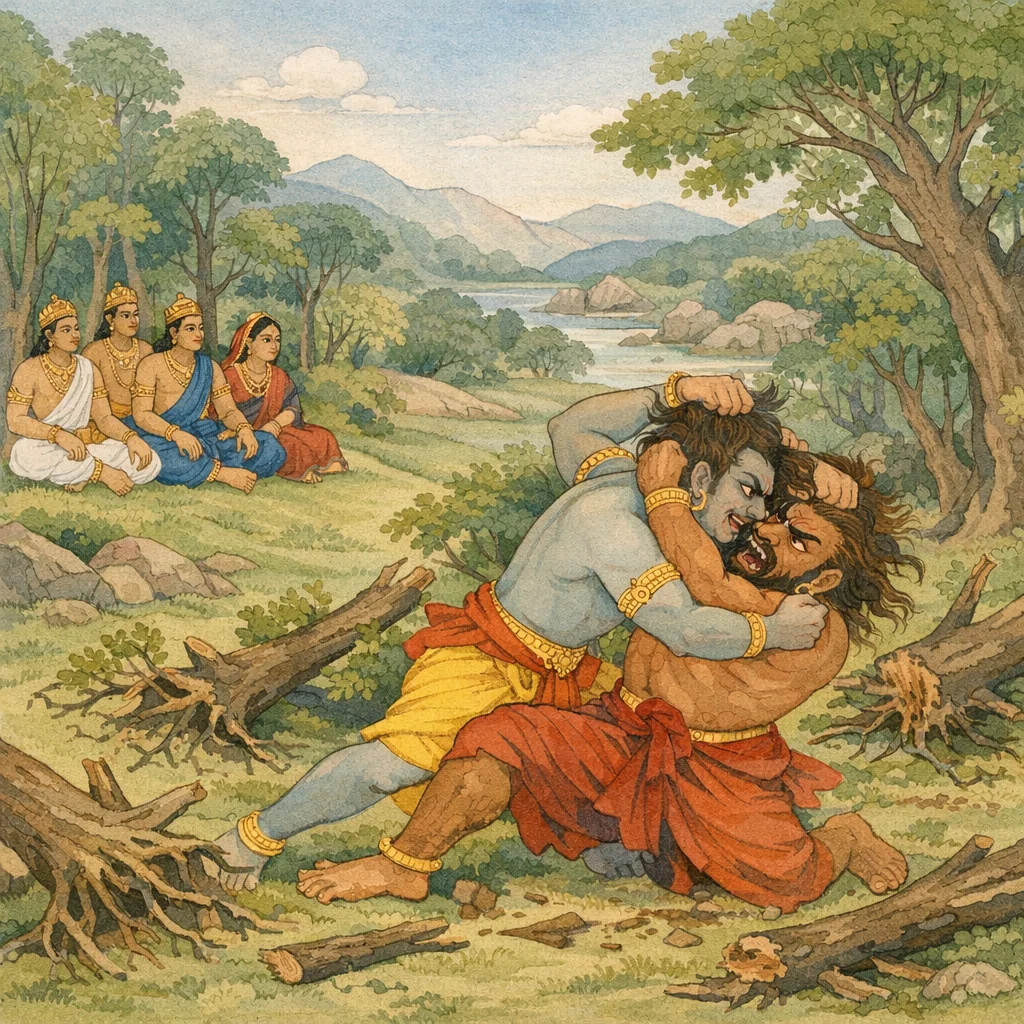
Chapter Arc: भीमसेन के किसी कार्यवश दूर होने पर वन में एक अवसर-छिद्र खुलता है—और उसी क्षण राक्षस जटासुर ब्राह्मण-वेष में पाण्डवों के समीप आ पहुँचता है। → मन्त्रकुशल, शास्त्र-विद् ब्राह्मण का आवरण धारण कर जटासुर युधिष्ठिर, नकुल-सहदेव और द्रौपदी को उठा ले जाता है। अपहृत होते हुए युधिष्ठिर उसे धर्म का उपदेश देते हैं—राजा का अपमान, राष्ट्र-रक्षा और नीति का स्मरण कराते हैं—पर राक्षस का मोह-आवरण नहीं हटता। → भीमसेन लौटकर जटासुर को पकड़ता है; वृक्षों के उखड़ने-टूटने तक का ‘वृक्षयुद्ध’ होता है और फिर भयानक मुष्टि-युद्ध। अंततः भीम के बल से जटासुर का सिर वृक्ष से टूटे फल की भाँति कटकर गिर पड़ता है। → जटासुर-वध के बाद भीम युधिष्ठिर और द्रौपदी सहित भाइयों को मुक्त कराता है। ब्राह्मणगण भीम की स्तुति करते हैं—वह मरुतों सहित इन्द्र के समान विजयी प्रतीत होता है।
Shlokas
Verse 1
/ हि आय न [हुक हि 7 आम (जटासुरवधपर्व) सप्तपञ्चाशदधिकशततमो< ध्याय: जटासुरके द्वारा द्रौपदीसहित युधिष्ठिर, नकुल, सहदेवका हरण तथा भीमसेनद्वारा जटासुरका वध वैशम्पायन उवाच ततस्तान् परिविश्वस्तान् वसतस्तत्र पाण्डवान् । पर्वतेन्द्रे द्विजैः सार्थ पार्थागमनकाड्क्षया
Vaiśampāyana said: Then, while the Pāṇḍavas were living there in trustful security, on that best of mountains, a brāhmaṇa arrived in their company—drawn by the wish to meet the sons of Pṛthā.
Verse 2
गतेषु तेषु रक्ष:सु भीमसेनात्मजे5पि च । रहितान् भीमसेनेन कदाचित् तान् यदृच्छया
Vaiśampāyana said: After those rākṣasas had departed—and after Bhīmasena’s son too had gone—once, by sheer chance, they were found without Bhīmasena’s protection.
Verse 3
जहार धर्मराजानं यमौ कृष्णां च राक्षस: | ब्राह्मणो मन्त्रकुशलः सर्वशास्त्रविदुत्तम:
Vaiśampāyana said: A rākṣasa carried off Dharmarāja, the twin brothers, and Kṛṣṇā as well—appearing as a brāhmaṇa skilled in mantras, foremost among those who know all the śāstras.
Verse 4
इति ब्रुवन् पाण्डवेयान् पर्युपास्ते सम नित्यदा । परीप्समान: पार्थानां कलापानि धनूंषि च
Thus speaking, he would continually attend upon the sons of Pāṇḍu with an even and steady mind. Ever intent on their welfare, he looked after the Pārthas’ quivers and bows as well.
Verse 5
अन्तरं सम्परिप्रेप्सुद्रौपद्या हरणं प्रति । दुष्टात्मा पापबुद्धि: स नाम्ना ख्यातो जटासुर:
Vaiśampāyana said: Seeking an opportunity to carry off Draupadī, there was a wicked-souled one of sinful intent, renowned by the name Jaṭāsura.
Verse 6
वैशम्पायनजी कहते हैं--जनमेजय! तदनन्तर पर्वतराज गन्धमादनपर सब पाण्डव अर्जुनके आनेकी प्रतीक्षा करते हुए ब्राह्मणोंके साथ नि:शंक रहने लगे। उन्हें पहुँचानेके लिये आये हुए राक्षस चले गये। भीमसेनका पुत्र घटोत्कच भी विदा हो गया। तत्पश्चात् एक दिनकी बात है, भीमसेनकी अनुपस्थितिमें अकस्मात् एक राक्षसने धर्मराज युधिष्ठिर, नकुल, सहदेव तथा द्रौपदीको हर लिया। वह ब्राह्मणके वेषमें प्रतिदिन उन््हींके साथ रहता था और सब पाण्डवोंसे कहता था कि “मैं सम्पूर्ण शास्त्रोंमें श्रेष्ठ और मन्त्र-कुशल ब्राह्मण हूँ।” वह कुन्तीकुमारोंक तरकस और धनुषको भी हर लेना चाहता था और द्रौपदीका अपहरण करनेके लिये सदा अवसर दूँढ़ता रहता था। उस दुष्टात्मा एवं पापबुद्धि राक्षसका नाम जटासुर था ।। पोषणं तस्य राजेन्द्र चक्रे पाण्डवनन्दन: । बुबुधे न च तं पापं भस्मच्छन्नमिवानलम्,जनमेजय! पाण्डवोंको आनन्द प्रदान करनेवाले युधिष्ठिर अन्य ब्राह्मणोंकी तरह उसका भी पालन-पोषण करते थे। परंतु राखमें छिपी हुई आगकी भाँति उस पापीके असली स्वरूपको वे नहीं जानते थे
Vaiśampāyana said: “O Janamejaya, thereafter, on the king of mountains Gandhamādana, all the Pāṇḍavas stayed fearlessly with the brāhmaṇas, waiting for Arjuna’s return. The rākṣasas who had escorted them departed, and Bhīmasena’s son Ghaṭotkaca also took leave. Then, one day, in Bhīma’s absence, a rākṣasa suddenly carried off Dharmarāja Yudhiṣṭhira, Nakula, Sahadeva, and Draupadī. Disguised as a brāhmaṇa, he had been living with them daily, telling the Pāṇḍavas, ‘I am a brāhmaṇa, foremost in all śāstras and skilled in mantras.’ He also sought to seize the quivers and bow of the sons of Kuntī, and he was always looking for an opportunity to abduct Draupadī. That wicked, sinful-minded rākṣasa was named Jaṭāsura. Yudhiṣṭhira, the delight of the Pāṇḍavas, had been supporting him as he did the other brāhmaṇas, yet he did not recognize the evil one—like fire hidden beneath ashes.”
Verse 7
स भीमसेने निष्क्रान्ते मृगयार्थमरिन्दम । घटोत्कचं सानुचरं दृष्ट्वा विप्रद्रुतं दिश:,शत्रुसूदन! हिंसक पशुओंको मारनेके लिये भीमसेनके आश्रमसे बाहर चले जानेपर उस राक्षसने देखा कि घटोत्कच अपने सेवकोंसहित किसी अज्ञात दिशाको चला गया, लोमश आदि महर्षि ध्यान लगाये बैठे हैं तथा दूसरे तपोधन स्नान करने और फूल लानेके लिये कुटियासे बाहर निकल गये हैं, तब उस दुष्टात्माने विशाल, विकराल एवं भयंकर दूसरा रूप धारण करके पाण्डवोंके सम्पूर्ण अस्त्र-शस्त्र, द्रौपदी तथा तीनों पाण्डवोंको भी लेकर वहाँसे प्रस्थान कर दिया। उस समय पाण्डु-कुमार सहदेव प्रयत्न करके उस राक्षसकी पकड़से छूट गये और पराक्रम करके म्यानसे निकली हुई अपनी तलवारको भी उससे छुड़ा लिया। फिर वे महाबली भीमसेन जिस मार्गसे गये थे, उधर ही जाकर उन्हें जोर-जोरसे पुकारने लगे
Vaiśampāyana said: When Bhīmasena had gone out from the hermitage to hunt down dangerous beasts, the rākṣasa—O subduer of foes—seeing Ghaṭotkaca depart with his attendants toward an unknown direction, seized the moment. With the sages like Lomaśa absorbed in meditation and the other ascetics away for bathing and gathering flowers, that wicked one assumed another vast, grotesque, and terrifying form and carried off the Pāṇḍavas’ weapons, Draupadī, and the three Pāṇḍava brothers from that place. Sahadeva, however, by strenuous effort slipped free from the rākṣasa’s grasp and, with valor, recovered his sword that had been drawn from its scabbard; then he ran along the path Bhīma had taken, calling out loudly for him.
Verse 8
लोमशप्रभृतींस्तांस्तु महर्षीक्ष समाहितान् । स््नातुं विनिर्गतान् दृष्टवा पुष्पार्थ च तपोधनान्,शत्रुसूदन! हिंसक पशुओंको मारनेके लिये भीमसेनके आश्रमसे बाहर चले जानेपर उस राक्षसने देखा कि घटोत्कच अपने सेवकोंसहित किसी अज्ञात दिशाको चला गया, लोमश आदि महर्षि ध्यान लगाये बैठे हैं तथा दूसरे तपोधन स्नान करने और फूल लानेके लिये कुटियासे बाहर निकल गये हैं, तब उस दुष्टात्माने विशाल, विकराल एवं भयंकर दूसरा रूप धारण करके पाण्डवोंके सम्पूर्ण अस्त्र-शस्त्र, द्रौपदी तथा तीनों पाण्डवोंको भी लेकर वहाँसे प्रस्थान कर दिया। उस समय पाण्डु-कुमार सहदेव प्रयत्न करके उस राक्षसकी पकड़से छूट गये और पराक्रम करके म्यानसे निकली हुई अपनी तलवारको भी उससे छुड़ा लिया। फिर वे महाबली भीमसेन जिस मार्गसे गये थे, उधर ही जाकर उन्हें जोर-जोरसे पुकारने लगे
Vaiśampāyana said: O Śatrusūdana, when the rākṣasa saw the great seers beginning with Lomaśa absorbed in meditation, and the ascetics—rich in austerity—having gone out to bathe and to gather flowers, he seized the moment. Taking on another vast, grotesque, and terrifying form, he departed from that place carrying away the Pāṇḍavas’ entire store of weapons, Draupadī, and the three Pāṇḍava brothers. At that time Sahadeva, son of Pāṇḍu, struggled free from the rākṣasa’s grasp and, by valor, also wrenched back his sword already drawn from its scabbard. Then he hurried along the very path by which mighty Bhīmasena had gone and began calling out to him loudly.
Verse 9
रूपमन्यत् समास्थाय विकृतं भैरवं महत् | गृहीत्वा सर्वशस्त्राणि द्रौपदी परिगृह्ू च,शत्रुसूदन! हिंसक पशुओंको मारनेके लिये भीमसेनके आश्रमसे बाहर चले जानेपर उस राक्षसने देखा कि घटोत्कच अपने सेवकोंसहित किसी अज्ञात दिशाको चला गया, लोमश आदि महर्षि ध्यान लगाये बैठे हैं तथा दूसरे तपोधन स्नान करने और फूल लानेके लिये कुटियासे बाहर निकल गये हैं, तब उस दुष्टात्माने विशाल, विकराल एवं भयंकर दूसरा रूप धारण करके पाण्डवोंके सम्पूर्ण अस्त्र-शस्त्र, द्रौपदी तथा तीनों पाण्डवोंको भी लेकर वहाँसे प्रस्थान कर दिया। उस समय पाण्डु-कुमार सहदेव प्रयत्न करके उस राक्षसकी पकड़से छूट गये और पराक्रम करके म्यानसे निकली हुई अपनी तलवारको भी उससे छुड़ा लिया। फिर वे महाबली भीमसेन जिस मार्गसे गये थे, उधर ही जाकर उन्हें जोर-जोरसे पुकारने लगे
Vaiśampāyana said: Assuming another form—distorted, vast, and terrifying—the rākṣasa seized all the weapons and implements, and also took Draupadī with him.
Verse 10
प्रातिष्ठत स दुष्टात्मा त्रीन् गृहीत्वा च पाण्डवान् | सहदेवस्तु यत्नेन ततो5पक्रम्य पाण्डव:,शत्रुसूदन! हिंसक पशुओंको मारनेके लिये भीमसेनके आश्रमसे बाहर चले जानेपर उस राक्षसने देखा कि घटोत्कच अपने सेवकोंसहित किसी अज्ञात दिशाको चला गया, लोमश आदि महर्षि ध्यान लगाये बैठे हैं तथा दूसरे तपोधन स्नान करने और फूल लानेके लिये कुटियासे बाहर निकल गये हैं, तब उस दुष्टात्माने विशाल, विकराल एवं भयंकर दूसरा रूप धारण करके पाण्डवोंके सम्पूर्ण अस्त्र-शस्त्र, द्रौपदी तथा तीनों पाण्डवोंको भी लेकर वहाँसे प्रस्थान कर दिया। उस समय पाण्डु-कुमार सहदेव प्रयत्न करके उस राक्षसकी पकड़से छूट गये और पराक्रम करके म्यानसे निकली हुई अपनी तलवारको भी उससे छुड़ा लिया। फिर वे महाबली भीमसेन जिस मार्गसे गये थे, उधर ही जाकर उन्हें जोर-जोरसे पुकारने लगे
Vaiśampāyana said: Having seized three of the Pāṇḍavas, that wicked-souled rākṣasa set out. But Sahadeva, exerting himself with care, slipped free from the demon’s grasp and, by his own valor, recovered his sword that had been drawn from its scabbard. Then he hurried along the very path by which the mighty Bhīmasena had gone and began calling out to him loudly.
Verse 11
विक्रम्प कौशिकं खडगं मोक्षयित्वा ग्रहं रिपो: | आक्रन्दद् भीमसेनं वै येन यातो महाबल:,शत्रुसूदन! हिंसक पशुओंको मारनेके लिये भीमसेनके आश्रमसे बाहर चले जानेपर उस राक्षसने देखा कि घटोत्कच अपने सेवकोंसहित किसी अज्ञात दिशाको चला गया, लोमश आदि महर्षि ध्यान लगाये बैठे हैं तथा दूसरे तपोधन स्नान करने और फूल लानेके लिये कुटियासे बाहर निकल गये हैं, तब उस दुष्टात्माने विशाल, विकराल एवं भयंकर दूसरा रूप धारण करके पाण्डवोंके सम्पूर्ण अस्त्र-शस्त्र, द्रौपदी तथा तीनों पाण्डवोंको भी लेकर वहाँसे प्रस्थान कर दिया। उस समय पाण्डु-कुमार सहदेव प्रयत्न करके उस राक्षसकी पकड़से छूट गये और पराक्रम करके म्यानसे निकली हुई अपनी तलवारको भी उससे छुड़ा लिया। फिर वे महाबली भीमसेन जिस मार्गसे गये थे, उधर ही जाकर उन्हें जोर-जोरसे पुकारने लगे
Vaiśampāyana said: Having wrenched free his sword (the Kauśika blade) and escaped from the enemy’s grasp, he cried out loudly for Bhīmasena, calling in the direction where that mighty warrior had gone, O destroyer of foes.
Verse 12
तमब्रवीद् धर्मराजो ह्वियमाणो युधिष्ठिर: । धर्मस्ते हीयते मूढ न तत्त्वं समवेक्षसे
Yudhiṣṭhira, the king devoted to dharma, addressed him while being challenged and provoked: “Foolish man, your righteousness is diminishing; you do not truly discern the reality of the matter.”
Verse 13
इधर जिन्हें वह जटासुर हरकर लिये जा रहा था *वे धर्मराज युधिष्ठिर उससे इस प्रकार बोले--“अरे मूर्ख! इस प्रकार (विश्वासघात करनेसे) तो तेरे धर्मका ही नाश हो रहा है। किंतु उधर तेरी दृष्टि नहीं जाती है ।। येअन्ये क्वचिन्मनुष्येषु तिर्यग्योनिगताश्व ये । धर्म ते समवेक्षन्ते रक्षांसि च विशेषत:,“दूसरे भी जहाँ कहीं मनुष्य अथवा पशु-पक्षीकी योनिमें स्थित प्राणी हैं, वे सभी धर्मपर दृष्टि रखते हैं। राक्षस तो (पशु-पक्षीकी अपेक्षा भी) विशेषरूपसे धर्मका विचार करते हैं
Vaiśampāyana said: As Jaṭāsura was carrying them away, Dharmarāja Yudhiṣṭhira addressed him: “Fool! By this act of treachery you are destroying your own dharma, though your gaze does not turn to that truth. Wherever there are beings born among humans or in animal and bird wombs, they too keep dharma in view; and rākṣasas, in particular, are expected to weigh dharma even more carefully.”
Verse 14
धर्मस्य राक्षसा मूलं॑ धर्म ते विदुरुत्तमम् । एतत् परीक्ष्य सर्व त्वं समीपे स्थातुमहसि
Vaiśampāyana said: “The very root of dharma is subtle and hard to discern—yet the wise know it as the highest good. Therefore, having examined this matter in every way, you ought to remain close at hand (and act with careful discernment).”
Verse 15
देवाश्ष ऋषय: सिद्धा: पितरश्चापि राक्षस । गन्धर्वोरगरक्षांसि वयांसि पशवस्तथा
Vaiśampāyana said: “The gods, the seers, the perfected beings, and the Pitṛs; likewise the Rākṣasas; the Gandharvas, Nāgas and other guardians/spirits; birds and also beasts—all these (orders of beings) were involved/concerned.”
Verse 16
तिर्यग्योनिगताश्ैव अपि कीटपिपीलिका: । मनुष्यानुपजीवन्ति ततस्त्वमपि जीवसि
Vaiśampāyana said: “Even creatures born in lower wombs—worms and ants—manage to subsist by depending on human beings. Therefore you too are able to live.”
Verse 17
'राक्षस धर्मके मूल हैं। वे उत्तम धर्मका ज्ञान रखते हैं। इन सब बातोंका विचार करके तुझे हमलोगोंके समीप ही रहना चाहिये। राक्षस! देवता, ऋषि, सिद्ध, पितर, गन्धर्व, नाग, राक्षस, पशु, तिर्यग्योनिके सभी प्राणी और कीड़े-मकोड़े, चींटी आदि भी मनुष्योंके आश्रित हो जीवन-निर्वाह करते हैं। इस दृष्टिसे तू भी मनुष्योंसे ही जीविका चलाता है ॥| १४-- १६ || समृद्धया हास्य लोकस्य लोको युष्माकमृध्यति । इमं च लोक॑ शोचन्तमनुशोचन्ति देवता:,“इस मनुष्यलोककी समृद्धिसे ही तुम सब लोगोंका लोक समृद्धिशाली होता है। यदि इस लोककी दशा शोचनीय हो तो देवता भी शोकमें पड़ जाते हैं
Vaiśampāyana said: “It is by the prosperity of this human world that the worlds of you beings also flourish. And when this world falls into a pitiable state and is grieved for, even the gods grieve along with it.”
Verse 18
पूज्यमानाश्र वर्धन्ते हव्यकव्यैर्यथाविधि । वयं राष्ट्रस्य गोप्तारो रक्षितारश्न राक्षस,क्योंकि मनुष्यद्वारा हव्य और कव्यसे विधिपूर्वक पूजित होनेपर उनकी वृद्धि होती है। राक्षस! हमलोग राष्ट्रके पालक और संरक्षक हैं
Vaiśampāyana said: “When they are duly honoured with the prescribed offerings—havis and kavya—they grow in strength and prosperity. O Rākṣasa, we are the guardians and protectors of the realm.”
Verse 19
राष्ट्रस्यारक्ष्यमाणस्य कुतो भूति: कुतः सुखम् | न च राजावमन्तव्यो रक्षसा जात्वनागसि,“हमारे द्वारा रक्षित न होनेपर राष्ट्रको कैसे समृद्धि प्राप्त होगी और कैसे उसे सुख मिलेगा? राक्षसको भी उचित है कि वह बिना अपराधके कभी किसी राजाका अपमान न करे
Vaiśampāyana said: “If a kingdom is not being protected, how can it gain prosperity, and how can it enjoy happiness? Therefore, even a rākṣasa should never insult a king who is without fault.”
Verse 20
अणुरप्यपचारकश्न नास्त्यस्माकं नराशन । विघसाशान् यथाशकक्त्या कुर्महे देवतादिषु,“नरभक्षी निशाचर! तेरे प्रति हमलोगोंकी ओरसे थोड़ा-सा भी अपराध नहीं हुआ है। हम देवता आदिको समर्पित करके बचे हुए प्रसादस्वरूप अन्नका यथाशक्ति गुरुजनों और ब्राह्मणोंको भोजन कराते हैं
Vaiśampāyana said: “O man-eater, not even the slightest offense has been committed by us. As far as we are able, we first make offerings to the gods and the like, and then we feed elders and Brahmins with the remaining consecrated food.”
Verse 21
गुरूंश्न ब्राह्म॒णांश्वैव प्रणामप्रवणा: सदा | द्रोग्धव्यं न च मित्रेषु न विश्वस्तेषु करहिचित्,“गुरुजनों तथा ब्राह्मणोंके सम्मुख हमारा मस्तक सदा झुका रहता है। किसी भी पुरुषको कभी अपने मित्रों और विश्वासी पुरुषोंके साथ द्रोह नहीं करना चाहिये
“Before our teachers and the Brahmins, our heads are ever bowed in reverence. And one should never betray friends or those who have placed their trust in him.”
Verse 22
येषां चान्नानि भुज्जीत यत्र च स्यात् प्रतिश्रय: । स त्वं प्रतिश्रयेडस्माकं पूज्यमान: सुखोषित:,“जिनका अन्न खाये और जहाँ अपनेको आश्रय मिला हो, उनके साथ भी द्रोह या विश्वासघात करना उचित नहीं है। तू हमारे आश्रयमें हमलोगोंसे सम्मानित होकर सुखपूर्वक रहा है
Verse 23
भुक्त्वा चान्नानि दुष्प्रज्ञ कथमस्मान् जिहीर्षसि । एवमेव वृथाचारो वृथावृद्धों वृथामति:,“खोटी बुद्धिवाले राक्षस! तू हमारा अन्न खाकर हमें ही हर ले जानेकी इच्छा कैसे करता है? इस प्रकार तो अबतक तूने ब्राह्मणरूपसे जो आचार दिखाया था, वह सब व्यर्थ ही था। तेरा बढ़ना या वृद्ध होना भी व्यर्थ ही है। तेरी बुद्धि भी व्यर्थ है
Vaiśampāyana said: “O foolish one! After eating our food, how can you now wish to carry us off? If this is what you do, then the brahmin-like conduct you have displayed until now was entirely in vain. Your growing up—indeed even your maturity—is futile, and your intellect is futile as well.”
Verse 24
वृथामरणमर्हश्व वृथाद्य न भविष्यसि । अथ चेद् दुष्टबुद्धिस्त्वं सर्वेर्धमर्विवर्जित:,'ऐसी दशामें तू व्यर्थ मृत्युका ही अधिकारी है और आज व्यर्थ ही तुम्हारे प्राण नष्ट हो जायँगे। यदि तेरी बुद्धि दुष्टतापर ही उतर आयी है और तू सम्पूर्ण धर्मोको भी छोड़ बैठा है, तो हमें हमारे अस्त्र देकर युद्ध कर तथा उसमें विजयी होनेपर द्रौपदीको ले जा। यदि तू अज्ञानवश यह विश्वासघात या अपहरण कर्म करेगा, तो संसारमें तुझे केवल अधर्म और अकीर्ति ही प्राप्त होगी। निशाचर! आज तूने इस मानवजातिकी स्त्रीका स्पर्श करके जो पाप किया है, यह भयंकर विष है, जिसे तूने घड़ेमें घोलकर पी लिया है।' इतना कहकर युधिष्ठिर उसके लिये बहुत भारी हो गये
Vaiśampāyana said: “You deserve a futile death; indeed, today you will not survive in vain. And if your mind has truly turned to wickedness, and you have cast off all dharma, then return our weapons and fight—if you win, take Draupadī away. But if, out of ignorance, you commit this act of betrayal and abduction, you will gain only unrighteousness and infamy in the world. O night-ranger, by laying hands upon a woman of humankind you have incurred a sin like dreadful poison—mixed in a jar and drunk by your own choice.” Having spoken thus, Yudhiṣṭhira became a crushing burden to him (i.e., a formidable opponent).
Verse 25
प्रदाय शस्त्राण्यस्माकं युद्धेन द्रौपदी हर । अथ चेत् त्वमविज्ञानादिदं कर्म करिष्यसि,'ऐसी दशामें तू व्यर्थ मृत्युका ही अधिकारी है और आज व्यर्थ ही तुम्हारे प्राण नष्ट हो जायँगे। यदि तेरी बुद्धि दुष्टतापर ही उतर आयी है और तू सम्पूर्ण धर्मोको भी छोड़ बैठा है, तो हमें हमारे अस्त्र देकर युद्ध कर तथा उसमें विजयी होनेपर द्रौपदीको ले जा। यदि तू अज्ञानवश यह विश्वासघात या अपहरण कर्म करेगा, तो संसारमें तुझे केवल अधर्म और अकीर्ति ही प्राप्त होगी। निशाचर! आज तूने इस मानवजातिकी स्त्रीका स्पर्श करके जो पाप किया है, यह भयंकर विष है, जिसे तूने घड़ेमें घोलकर पी लिया है।' इतना कहकर युधिष्ठिर उसके लिये बहुत भारी हो गये
Vaiśampāyana said: “Return our weapons and win Draupadī by battle. If, out of ignorance, you persist in this deed, you become fit only for a futile death, and today your life will be wasted. If your mind has sunk into wickedness and you have abandoned all dharma, then give us back our arms, fight, and—if you can win—take Draupadī. But if, through delusion, you commit this act of betrayal and abduction, you will gain only unrighteousness and infamy in the world. Night-ranger! By laying hands today upon a woman of humankind, you have incurred a sin like a terrible poison—one you have mixed in a jar and drunk.” Having spoken thus, Yudhiṣṭhira became a heavy, overpowering presence to him.
Verse 26
अधर्म चाप्यकीर्तिं च लोके प्राप्स्पसि केवलम् । एतामट्य परामृश्य स्त्रियं राक्षस मानुषीम्,'ऐसी दशामें तू व्यर्थ मृत्युका ही अधिकारी है और आज व्यर्थ ही तुम्हारे प्राण नष्ट हो जायँगे। यदि तेरी बुद्धि दुष्टतापर ही उतर आयी है और तू सम्पूर्ण धर्मोको भी छोड़ बैठा है, तो हमें हमारे अस्त्र देकर युद्ध कर तथा उसमें विजयी होनेपर द्रौपदीको ले जा। यदि तू अज्ञानवश यह विश्वासघात या अपहरण कर्म करेगा, तो संसारमें तुझे केवल अधर्म और अकीर्ति ही प्राप्त होगी। निशाचर! आज तूने इस मानवजातिकी स्त्रीका स्पर्श करके जो पाप किया है, यह भयंकर विष है, जिसे तूने घड़ेमें घोलकर पी लिया है।' इतना कहकर युधिष्ठिर उसके लिये बहुत भारी हो गये
Vaiśampāyana said: “You will gain nothing in this world but unrighteousness and disgrace. O Rākṣasa, having roamed about and laid hands upon this human woman, you have incurred a grievous sin.”
Verse 27
विषमेतत् समालोड्य कुम्भेन प्राशितं त्वया । ततो युधिष्िरस्तस्य गुरुक: समपद्यत,'ऐसी दशामें तू व्यर्थ मृत्युका ही अधिकारी है और आज व्यर्थ ही तुम्हारे प्राण नष्ट हो जायँगे। यदि तेरी बुद्धि दुष्टतापर ही उतर आयी है और तू सम्पूर्ण धर्मोको भी छोड़ बैठा है, तो हमें हमारे अस्त्र देकर युद्ध कर तथा उसमें विजयी होनेपर द्रौपदीको ले जा। यदि तू अज्ञानवश यह विश्वासघात या अपहरण कर्म करेगा, तो संसारमें तुझे केवल अधर्म और अकीर्ति ही प्राप्त होगी। निशाचर! आज तूने इस मानवजातिकी स्त्रीका स्पर्श करके जो पाप किया है, यह भयंकर विष है, जिसे तूने घड़ेमें घोलकर पी लिया है।' इतना कहकर युधिष्ठिर उसके लिये बहुत भारी हो गये
Vaiśaṃpāyana said: “You have churned up a deadly poison and drunk it from a jar. Therefore Yudhiṣṭhira became a crushing weight upon him—overpowering him with stern, dharma-grounded words: ‘In such a condition you are fit only for a futile death, and today your life will be wasted. If your mind has truly sunk into wickedness and you have abandoned all dharma, then give us our weapons, fight us, and if you win, take Draupadī away. But if, out of ignorance, you commit this betrayal and abduction, you will gain only unrighteousness and ill-fame in the world. Night-ranger! By touching the wife of men you have committed a sin—this is a terrible poison you have mixed and swallowed.’”
Verse 28
स तु भाराभिभूतात्मा न तथा शीघ्रगो5भवत् | अथाब्रवीद द्रौपदीं च नकुलं च युधिष्ठिर:,भारसे उसका शरीर दबने लगा, इसलिये अब वह पहलेकी तरह शीघ्रतापूर्वक न चल सका। तब युधिष्ठिरने नकुल और द्रौपदीसे कहा--
But he, his strength and spirit weighed down by the burden, could no longer move with the same speed as before. Then Yudhiṣṭhira addressed Draupadī and Nakula, indicating a shift from mere travel to deliberate, responsible action in the face of strain.
Verse 29
मा भैष्ट राक्षसान्मूढाद् गतिरस्य मया हृता । नातिदूरे महाबाहुर्भविता पवनात्मज:,“तुमलोग इस मूढ़ राक्षससे डरना मत। मैंने इसकी गति कुण्ठित कर दी है। वायुपुत्र महाबाहु भीमसेन यहाँसे अधिक दूर नहीं होंगे
Vaiśampāyana said: “Do not be afraid of this foolish rākṣasa. I have taken away his power to move and act freely. The mighty-armed son of the Wind—Bhīmasena—will not be far from here.”
Verse 30
अस्मिन् मुहुर्ते सम्प्राप्ते न भविष्यति राक्षस: । सहदेवस्तु त॑ दृष्टवा राक्षसं मूढचेतनम्,“इस आगामी मुहूर्तके आते ही इस राक्षसके प्राण नहीं रहेंगे।! इधर सहदेवने उस मूढ़ राक्षषकी ओर देखते हुए कुन्तीनन्दन युधिष्ठिस्से कहा--'राजन्! क्षत्रियके लिये इससे अधिक सत्कर्म क्या होगा कि वह युद्धमें शत्रुका सामना करते हुए प्राणोंका त्याग कर दे अथवा शत्रुको ही जीत ले। राजन्! इस प्रकार यह हमें अथवा हम इसे युद्ध करते हुए मार डालें। परंतप महाबाहु नरेश! यह क्षत्रिय धर्मके अनुकूल देश-काल प्राप्त हुआ है। यह समय यथार्थ पराक्रम प्रकट करनेके लिये है
Vaiśampāyana said: “When this coming auspicious moment arrives, that rākṣasa will not remain alive.” Then Sahadeva, seeing the rākṣasa whose mind was deluded, spoke to Yudhiṣṭhira, Kuntī’s son: “O King, what higher righteous deed is there for a kṣatriya than to give up his life while facing an enemy in battle—or else to conquer that enemy? Therefore, O King, let either he slay us or we slay him as we fight. O mighty-armed ruler, this is the fitting place and time in accord with kṣatriya-dharma; this is the moment to reveal true valor.”
Verse 31
उवाच वचन राजन् कुन्तीपुत्रं युधिष्ठिरम् । राजन् किंनाम सत्कृत्यं क्षत्रियस्यास्त्यतोडधिकम्,“इस आगामी मुहूर्तके आते ही इस राक्षसके प्राण नहीं रहेंगे।! इधर सहदेवने उस मूढ़ राक्षषकी ओर देखते हुए कुन्तीनन्दन युधिष्ठिस्से कहा--'राजन्! क्षत्रियके लिये इससे अधिक सत्कर्म क्या होगा कि वह युद्धमें शत्रुका सामना करते हुए प्राणोंका त्याग कर दे अथवा शत्रुको ही जीत ले। राजन्! इस प्रकार यह हमें अथवा हम इसे युद्ध करते हुए मार डालें। परंतप महाबाहु नरेश! यह क्षत्रिय धर्मके अनुकूल देश-काल प्राप्त हुआ है। यह समय यथार्थ पराक्रम प्रकट करनेके लिये है
Vaiśampāyana said: Addressing Kuntī’s son Yudhiṣṭhira, he spoke these words: “O King, what noble deed could there be for a kṣatriya greater than this?”
Verse 32
यद् युद्धेडभिमुख: प्राणांस्त्यजेच्छत्रुं जयेत वा । एष चास्मान् वयं चैनं युद्धयमाना: परंतप,“इस आगामी मुहूर्तके आते ही इस राक्षसके प्राण नहीं रहेंगे।! इधर सहदेवने उस मूढ़ राक्षषकी ओर देखते हुए कुन्तीनन्दन युधिष्ठिस्से कहा--'राजन्! क्षत्रियके लिये इससे अधिक सत्कर्म क्या होगा कि वह युद्धमें शत्रुका सामना करते हुए प्राणोंका त्याग कर दे अथवा शत्रुको ही जीत ले। राजन्! इस प्रकार यह हमें अथवा हम इसे युद्ध करते हुए मार डालें। परंतप महाबाहु नरेश! यह क्षत्रिय धर्मके अनुकूल देश-काल प्राप्त हुआ है। यह समय यथार्थ पराक्रम प्रकट करनेके लिये है
Vaiśampāyana said: “For a kṣatriya, what higher righteous deed is there than this: to face the battle and either lay down one’s life or else conquer the enemy? Therefore, O scorcher of foes, let this one be slain while fighting us—or let us fall while fighting him.”
Verse 33
सूदयेम महाबाहो देशकालो हाय॑ नृप । क्षत्रधर्मस्य सम्प्राप्त: काल: सत्यपराक्रम:,“इस आगामी मुहूर्तके आते ही इस राक्षसके प्राण नहीं रहेंगे।! इधर सहदेवने उस मूढ़ राक्षषकी ओर देखते हुए कुन्तीनन्दन युधिष्ठिस्से कहा--'राजन्! क्षत्रियके लिये इससे अधिक सत्कर्म क्या होगा कि वह युद्धमें शत्रुका सामना करते हुए प्राणोंका त्याग कर दे अथवा शत्रुको ही जीत ले। राजन्! इस प्रकार यह हमें अथवा हम इसे युद्ध करते हुए मार डालें। परंतप महाबाहु नरेश! यह क्षत्रिय धर्मके अनुकूल देश-काल प्राप्त हुआ है। यह समय यथार्थ पराक्रम प्रकट करनेके लिये है
“Let us slay him, O mighty-armed one. O king, this is indeed the fitting place and time. The proper hour for a kṣatriya’s duty has arrived—this is the moment to display true valor.”
Verse 34
जयन्तो हन्यमाना वा प्राप्तुमर्हाम सदगतिम् । राक्षसे जीवमानेउद्य रविरस्तमियाद् यदि,“भारत! हम विजयी हों या मारे जाय, सभी दशाओंमें उत्तम गति प्राप्त कर सकते हैं। यदि इस राक्षसके जीते-जी सूर्य डूब गये, तो मैं फिर कभी अपनेको क्षत्रिय नहीं कहूँगा। अरे ओ निशाचर! खड़ा रह, मैं पाण्डुकुमार सहदेव हूँ, या तो तू मुझे मारकर द्रौपदीको ले जा या स्वयं मेरे हाथों मारा जाकर आज यहीं सदाके लिये सो जा।' माद्रीनन्दन सहदेव जब ऐसी बात कह रहे थे, उसी समय अकस्मात् गदा हाथमें लिये भीमसेन दिखायी दिये, मानो वज्रधारी इन्द्र आ पहुँचे हों। उन्होंने वहाँ (राक्षसके अधिकारमें पड़े हुए) अपने दोनों भाइयों तथा यशस्विनी द्रौपदीको देखा
Vaiśampāyana said: “Whether we win or are slain, in either case we are worthy to attain the highest good. But if, while this rākṣasa still lives, the sun should set today, then I shall never again call myself a kṣatriya. Stand and face me, O night-roamer! I am Sahadeva, son of Pāṇḍu. Either kill me and take Draupadī away, or be struck down by my hands and lie here forever.” As Mādrī’s son Sahadeva spoke thus, Bhīmasena suddenly appeared, mace in hand, like Indra bearing the thunderbolt. He beheld there his two brothers and the illustrious Draupadī fallen under the rākṣasa’s power.
Verse 35
नाहं ब्रूयां पुनर्जातु क्षत्रियोडस्मीति भारत | भो भो राक्षस तिष्ठस्व सहदेवो5स्मि पाण्डव:,“भारत! हम विजयी हों या मारे जाय, सभी दशाओंमें उत्तम गति प्राप्त कर सकते हैं। यदि इस राक्षसके जीते-जी सूर्य डूब गये, तो मैं फिर कभी अपनेको क्षत्रिय नहीं कहूँगा। अरे ओ निशाचर! खड़ा रह, मैं पाण्डुकुमार सहदेव हूँ, या तो तू मुझे मारकर द्रौपदीको ले जा या स्वयं मेरे हाथों मारा जाकर आज यहीं सदाके लिये सो जा।' माद्रीनन्दन सहदेव जब ऐसी बात कह रहे थे, उसी समय अकस्मात् गदा हाथमें लिये भीमसेन दिखायी दिये, मानो वज्रधारी इन्द्र आ पहुँचे हों। उन्होंने वहाँ (राक्षसके अधिकारमें पड़े हुए) अपने दोनों भाइयों तथा यशस्विनी द्रौपदीको देखा
Vaiśampāyana said: “O Bhārata, I would never again call myself a kṣatriya if, while this rākṣasa still lives, the sun were to set. Hey, hey rākṣasa—stand your ground! I am Sahadeva, a son of Pāṇḍu. Either kill me and take Draupadī away, or be slain by my hands and lie here forever.” As Mādrī’s son Sahadeva spoke thus, Bhīmasena suddenly appeared with a mace in hand, like Indra bearing the thunderbolt. He saw there his two brothers and the illustrious Draupadī under the rākṣasa’s power.
Verse 36
हत्वा वा मां नयस्वैनां हतो वाद्येह स्वप्स्यसि । तदा ब्रुवति माद्रेये भीमसेनो यदृच्छया,“भारत! हम विजयी हों या मारे जाय, सभी दशाओंमें उत्तम गति प्राप्त कर सकते हैं। यदि इस राक्षसके जीते-जी सूर्य डूब गये, तो मैं फिर कभी अपनेको क्षत्रिय नहीं कहूँगा। अरे ओ निशाचर! खड़ा रह, मैं पाण्डुकुमार सहदेव हूँ, या तो तू मुझे मारकर द्रौपदीको ले जा या स्वयं मेरे हाथों मारा जाकर आज यहीं सदाके लिये सो जा।' माद्रीनन्दन सहदेव जब ऐसी बात कह रहे थे, उसी समय अकस्मात् गदा हाथमें लिये भीमसेन दिखायी दिये, मानो वज्रधारी इन्द्र आ पहुँचे हों। उन्होंने वहाँ (राक्षसके अधिकारमें पड़े हुए) अपने दोनों भाइयों तथा यशस्विनी द्रौपदीको देखा
Vaiśampāyana said: “Either kill me and take her away, or, if you are slain, you will sleep here today.” As Madreyā’s son (Sahadeva) spoke these defiant words—staking his honor as a kṣatriya on not allowing the sun to set while the rākṣasa still prevailed—Bhīmasena suddenly appeared by chance, mace in hand, like Indra bearing the thunderbolt. There he beheld his two brothers and the illustrious Draupadī held under the rākṣasa’s power. The passage frames courage and protection of the vulnerable as a dharmic imperative: better death than complicity in dishonor and injustice.
Verse 37
प्रत्यदृश्यद् गदाहस्त: सवज्र इव वासव: । सो<पश्यद् भ्रातरौ तत्र द्रौपदीं च यशस्विनीम्,“भारत! हम विजयी हों या मारे जाय, सभी दशाओंमें उत्तम गति प्राप्त कर सकते हैं। यदि इस राक्षसके जीते-जी सूर्य डूब गये, तो मैं फिर कभी अपनेको क्षत्रिय नहीं कहूँगा। अरे ओ निशाचर! खड़ा रह, मैं पाण्डुकुमार सहदेव हूँ, या तो तू मुझे मारकर द्रौपदीको ले जा या स्वयं मेरे हाथों मारा जाकर आज यहीं सदाके लिये सो जा।' माद्रीनन्दन सहदेव जब ऐसी बात कह रहे थे, उसी समय अकस्मात् गदा हाथमें लिये भीमसेन दिखायी दिये, मानो वज्रधारी इन्द्र आ पहुँचे हों। उन्होंने वहाँ (राक्षसके अधिकारमें पड़े हुए) अपने दोनों भाइयों तथा यशस्विनी द्रौपदीको देखा
Vaiśampāyana said: At that moment Bhīmasena suddenly came into view, mace in hand, like Vāsava (Indra) bearing the thunderbolt. There he saw his two brothers and the illustrious Draupadī. The scene underscores the Kṣatriya ethic of protection: when kin and a woman under one’s charge are threatened, decisive courage and timely intervention become a form of dharma in action.
Verse 38
क्षितिस्थं सहदेवं च क्षिपन्तं राक्षसं तदा । मार्गाच्च राक्षसं मूढं कालोपहतचेतसम्,उस समय सहदेव धरतीपर खड़े होकर राक्षसपर आक्षेप कर रहे थे और वह मूढ़ राक्षस मार्गसे भ्रष्ट होकर वहीं चक्कर काट रहा था। कालसे उसकी बुद्धि मारी गयी थी। दैवने ही उसे वहाँ रोक रखा था। भाइयों और द्रौपदीका अपहरण होता देख महाबली भीमसेन कुपित हो उठे और जटासुरसे बोले--“ओ पापी! पहले जब तू शस्त्रोंकी परीक्षा कर रहा था, तभी मैंने तुझे पहचान लिया था
Vaiśampāyana said: At that time Sahadeva stood firm upon the ground and assailed the rākṣasa with sharp reproaches. The deluded rākṣasa, his mind struck down by Time, had strayed from the path and wandered about in confusion. It was as though fate itself held him there. Seeing his brothers and Draupadī being carried off, the mighty Bhīmasena blazed with anger and addressed Jaṭāsura: “O sinner! Even earlier, when you were testing our weapons, I recognized you.”
Verse 39
भ्रमन्तं तत्र तत्रेैव देवेन विनिवारितम् । भ्रातृस्तान् ह्वियतो दृष्ट्वा द्रौपदी च महाबल:,उस समय सहदेव धरतीपर खड़े होकर राक्षसपर आक्षेप कर रहे थे और वह मूढ़ राक्षस मार्गसे भ्रष्ट होकर वहीं चक्कर काट रहा था। कालसे उसकी बुद्धि मारी गयी थी। दैवने ही उसे वहाँ रोक रखा था। भाइयों और द्रौपदीका अपहरण होता देख महाबली भीमसेन कुपित हो उठे और जटासुरसे बोले--“ओ पापी! पहले जब तू शस्त्रोंकी परीक्षा कर रहा था, तभी मैंने तुझे पहचान लिया था
Vaiśampāyana said: Seeing that deluded one wandering here and there, yet held back on the spot by divine dispensation, and witnessing his brothers and Draupadī being carried off, the mighty (Bhīma) was inflamed with righteous anger—recognizing that fate itself had restrained the wrongdoer so that his crime might be checked and answered.
Verse 40
क्रोधमाहारयद् भीमो राक्षसं चेदमब्रवीत् | विज्ञातो$सि मया पूर्व पाप शस्त्रपरीक्षणे,उस समय सहदेव धरतीपर खड़े होकर राक्षसपर आक्षेप कर रहे थे और वह मूढ़ राक्षस मार्गसे भ्रष्ट होकर वहीं चक्कर काट रहा था। कालसे उसकी बुद्धि मारी गयी थी। दैवने ही उसे वहाँ रोक रखा था। भाइयों और द्रौपदीका अपहरण होता देख महाबली भीमसेन कुपित हो उठे और जटासुरसे बोले--“ओ पापी! पहले जब तू शस्त्रोंकी परीक्षा कर रहा था, तभी मैंने तुझे पहचान लिया था
Vaiśampāyana said: Bhīma restrained his rising anger and spoke these words to the rākṣasa: “Sinful one, I recognized you earlier, at the time you were testing weapons.” The line underscores Bhīma’s controlled wrath—anger is present, yet held in check—while he confronts the deceiver whose hostile intent has already been exposed.
Verse 41
आस्था तु त्वयि मे नास्ति यतोडसि न हतस्तदा । ब्रह्मरूपप्रतिच्छन्नो न नो वदसि चाप्रियम्,“तुझपर मेरा विश्वास नहीं रह गया था, तो भी तू ब्राह्मणके रूपमें अपने असली स्वरूपको छिपाये हुए था और हमलोगोंसे कोई अप्रिय बात नहीं कहता था। इसीलिये मैंने तुम्हें तत्काल नहीं मार डाला
‘I no longer had trust in you; yet, when you bit (me), I did not kill you at that moment. For you were concealing your true nature under the guise of a brāhmaṇa, and you did not speak anything harsh or offensive to us. That is why I did not strike you down immediately.’
Verse 42
प्रियेषु रममाणं त्वां न चैवाप्रियकारिणम् । अतिथिं ब्रह्मरूपं च कथं हन्यामनागसम्,तू हमारे प्रिय कार्योमें मन लगाता था। जो हमें प्रिय न लगे, ऐसा काम नहीं करता था। ब्राह्मण अतिथिके रूपमें आया था और कभी कोई अपराध नहीं किया था। ऐसी दशामें मैं तुझे कैसे मारता? जो राक्षसको राक्षस जानते हुए भी बिना किसी अपराधके उसका वध करता है, वह नरकमें जाता है। अभी तेरा समय पूरा नहीं हुआ था, इसलिये भी आजसे पहले तेरा वध नहीं किया जा सकता था
Vaiśampāyana said: “You delighted in what was dear to us and never did what displeased us. And since you had come as a guest in the form of a brāhmaṇa and were without fault, how could I have slain you? Whoever, even knowing a being to be a rākṣasa, kills him without any offence on his part, goes to hell. Moreover, your allotted time had not yet run out; therefore, your death could not have been brought about before today.”
Verse 43
राक्षसं जानमानो5पि यो हन्यान्नरकं व्रजेत् । अपक्वस्य च कालेन वधस्तव न विद्यते,तू हमारे प्रिय कार्योमें मन लगाता था। जो हमें प्रिय न लगे, ऐसा काम नहीं करता था। ब्राह्मण अतिथिके रूपमें आया था और कभी कोई अपराध नहीं किया था। ऐसी दशामें मैं तुझे कैसे मारता? जो राक्षसको राक्षस जानते हुए भी बिना किसी अपराधके उसका वध करता है, वह नरकमें जाता है। अभी तेरा समय पूरा नहीं हुआ था, इसलिये भी आजसे पहले तेरा वध नहीं किया जा सकता था
Vaiśampāyana said: “Even if one knows him to be a rākṣasa, whoever kills him without just cause goes to hell. Moreover, since your destined time had not yet ripened, your death could not occur earlier.”
Verse 44
नूनमद्यासि सम्पक्वो यथा ते मतिरीदृशी । दत्ता कृष्णापहरणे कालेनाद्भुतकर्मणा,“आज निश्चय ही तेरी आयु पूरी हो चुकी है, तभी तो अद्भुत कर्म करनेवाले कालने तुझे इस प्रकार द्रौपदीके अपहरणकी बुद्धि दी है
Vaiśampāyana said: “Surely your life has ripened to its end today, since Time—whose deeds are wondrous—has planted in you such a thought: to abduct Kṛṣṇā (Draupadī).”
Verse 45
बडिशो< यं त्वया ग्रस्त: कालसूत्रेण लम्बित: । मत्स्यो5म्भसीव स्यूतास्य: कथमद्य भविष्यसि,“कालरूपी डोरेसे लटकाया हुआ बंसीका काँटा तूने निगल लिया है। तेरा मुँह जलकी मछलीके समान उस काँटेमें गुथ गया है, अतः अब तू कैसे जीवन धारण करेगा?
Vaiśampāyana said: “You have swallowed this fishhook, hanging from the cord of Time. Like a fish in the water whose mouth is caught and stitched fast upon the hook, how will you survive today?”
Verse 46
यं चासि प्रस्थितो देशं मन: पूर्व गतं च ते । न तं गन्तासि गन्तासि मार्ग बकहिडिम्बयो:,“जिस देशकी ओर तू प्रस्थित हुआ है और जहाँ तेरा मन पहलेसे ही जा पहुँचा है, वहाँ अब तू न जा सकेगा। तुझे तो बक और हिडिम्बके मार्गपर जाना है,
Vaiśampāyana said: “The land toward which you have set out—and where your mind has already gone ahead—there you will not be able to reach. Instead, you are destined to go by the path that leads to Baka and Hiḍimba.”
Verse 47
एवमुक्तस्तु भीमेन राक्षस: कालचोदित: । भीत उत्सृज्य तान् सर्वान् युद्धाय समुपस्थित:,भीमसेनके ऐसा कहनेपर वह राक्षस भयभीत हो उन सबको छोड़कर कालकी प्रेरणासे युद्धके लिये उद्यत हो गया
Thus addressed by Bhīma, the rākṣasa—driven on by Time (fate)—grew afraid; releasing them all, he stepped forward, ready for battle.
Verse 48
अब्रवीच्च पुनर्भीम॑ रोषात् प्रस्फुरिताधर: । न मे मूढा दिश: पाप त्वदर्थ मे विलम्बितम्,उस समय रोषसे उसके ओठ फड़क रहे थे। उसने भीमसेनको उत्तर देते हुए कहा --ओ पापी! मुझे दिग्भ्रम नहीं हुआ था। मैंने तेरे ही लिये विलम्ब किया था
Then, with anger—his lips quivering—he spoke again to Bhīma: “O sinful one, I was not confused about the directions. I delayed only for your sake.”
Verse 49
श्रुता मे राक्षसा ये ये त्वया विनिहता रणे | तेषामद्य करिष्यामि तवास्रेणोदकक्रियाम्,'तूने जिन-जिन राक्षसोंको युद्धमें मारा है, उन सबके नाम मैंने सुने हैं। आज तेरे रक्तसे ही मैं उनका तर्पण करूँगा,
“I have heard the names of all those rākṣasas whom you have slain in battle. Today, with your very blood, I shall perform for them the water-offering rites.”
Verse 50
एवमुक्तस्ततो भीम: सृक्किणी परिसंलिहन् । स्मयमान इव क्रोधात् साक्षात् कालान्तकोपम:,राक्षसके ऐसा कहनेपर भीमसेन अपने मुखके दोनों कोने चाटते हुए कुछ मुसकराते-से प्रतीत हुए फिर क्रोधसे साक्षात् काल और यमराजके समान जान पड़ने लगे। रोषसे उनकी आँखें लाल हो गयी थीं “खड़ा रह,” खड़ा रह कहते हुए ताल ठोंककर राक्षसकी ओर दृष्टि गड़ाये उसपर टूट पड़े। राक्षस भी उस समय भीमसेनको युद्धके लिये उपस्थित देख बार- बार मुँह फैलाकर मुँहके दोनों कोने चाटने लगा और जैसे बलिराजा वज्रधारी इन्द्रपर आक्रमण करता है, उसी प्रकार कुपित हो उसने भीमसेनपर धावा किया
Thus addressed, Bhīma licked the corners of his mouth; for a moment he seemed almost to smile, but in the next instant—through wrath—he appeared like Death itself, the ender of time.
Verse 51
(ब्रुवन् वै तिष्ठ तिछेति क्रोधसंरक्तलोचन: ।) बाहुसंरम्भमेवैक्षन्नभिदुद्राव राक्षसम् । राक्षसो5पि तदा भीम॑ युद्धार्थिननवस्थितम्,राक्षसके ऐसा कहनेपर भीमसेन अपने मुखके दोनों कोने चाटते हुए कुछ मुसकराते-से प्रतीत हुए फिर क्रोधसे साक्षात् काल और यमराजके समान जान पड़ने लगे। रोषसे उनकी आँखें लाल हो गयी थीं “खड़ा रह,” खड़ा रह कहते हुए ताल ठोंककर राक्षसकी ओर दृष्टि गड़ाये उसपर टूट पड़े। राक्षस भी उस समय भीमसेनको युद्धके लिये उपस्थित देख बार- बार मुँह फैलाकर मुँहके दोनों कोने चाटने लगा और जैसे बलिराजा वज्रधारी इन्द्रपर आक्रमण करता है, उसी प्रकार कुपित हो उसने भीमसेनपर धावा किया
With eyes reddened by anger, Bhīma kept shouting, “Stand! Stand!” Bracing his arms in fierce resolve and fixing his gaze, he rushed straight at the rākṣasa. The rākṣasa too, seeing Bhīma poised for battle, readied himself to meet the attack.
Verse 52
मुहुर्मुहुव्याददान: सृक्किणी परिसंलिहन् | अभिदुद्राव संरब्धो बलिव॑ज़धरं यथा,राक्षसके ऐसा कहनेपर भीमसेन अपने मुखके दोनों कोने चाटते हुए कुछ मुसकराते-से प्रतीत हुए फिर क्रोधसे साक्षात् काल और यमराजके समान जान पड़ने लगे। रोषसे उनकी आँखें लाल हो गयी थीं “खड़ा रह,” खड़ा रह कहते हुए ताल ठोंककर राक्षसकी ओर दृष्टि गड़ाये उसपर टूट पड़े। राक्षस भी उस समय भीमसेनको युद्धके लिये उपस्थित देख बार- बार मुँह फैलाकर मुँहके दोनों कोने चाटने लगा और जैसे बलिराजा वज्रधारी इन्द्रपर आक्रमण करता है, उसी प्रकार कुपित हो उसने भीमसेनपर धावा किया
Vaiśampāyana said: Again and again, gaping his mouth and licking the corners of his lips, he rushed forward in fury—just as Bali once charged at Indra, the wielder of the thunderbolt. The scene signals the onset of a decisive clash: wrath flares, bodies tense for combat, and the comparison to Bali and Indra frames the encounter as a contest of overpowering force against established might, where pride and rage drive the combatants toward violent consequence.
Verse 53
(भीमसेनो>प्यवष्टब्धो नियुद्धायाभवत् स्थित: । राक्षसो5पि च विस्रब्धो बाहुयुद्धमकाड्क्षत ।। वर्तमाने तदा ताभ्यां बाहुयुद्धे सुदारुणे । माद्रीपुत्रावतिक्रुद्धावुभावप्य भ्यधावताम्,भीमसेन भी स्थिर होकर उससे युद्धके लिये खड़े हो गये और वह राक्षस भी निश्िन्त हो उनके साथ बाहुयुद्धकी इच्छा करने लगा। उस समय उन दोनोंमें बड़ा भयंकर बाहुयुद्ध होने लगा। यह देख माद्रीपुत्र नकुल और सहदेव अत्यन्त क्रोधमें भरकर उसकी ओर दौड़े
Vaiśaṃpāyana said: Bhīmasena too, standing firm and unshaken, took his position for combat. The rākṣasa as well, now confident, longed to engage him in a wrestling fight with bare arms. As that exceedingly dreadful hand-to-hand struggle raged between the two, Mādrī’s sons—Nakula and Sahadeva—both inflamed with anger, rushed forward toward him.
Verse 54
न्यवारयत् तौ प्रहसन् कुन्तीपुत्रो वृकोदर: । शक्तोहं राक्षसस्येति प्रेक्षध्वमिति चाब्रवीत्,परंतु कुन्तीकुमार भीमसेनने हँसकर उन दोनोंको रोक दिया और कहा--“मैं अकेला ही इस राक्षसके लिये पर्याप्त हूँ। तुमलोग चुप-चाप देखते रहो”
Vaiśampāyana said: Laughing, Bhīma—Kuntī’s son, the wolf-bellied—held the two back and declared, “I alone am sufficient for this rākṣasa. You stay quiet and simply watch.” The moment highlights Bhīma’s protective resolve and confidence, as he assumes personal responsibility to shield his companions from danger.
Verse 55
आत्मना क्रातृभिश्वैव धर्मेण सुकृतेन च । इप्टेन च शपे राजन् सूदयिष्यामि राक्षसम्,फिर वे युधिष्ठिससे बोले--“महाराज! मैं अपनी, सब भाइयोंकी, धर्मकी, पुण्य कर्मोंकी तथा यज्ञकी शपथ खाकर कहता हूँ, इस राक्षसको अवश्य मार डालूँगा
Vaiśampāyana said: “O King, I swear by my own self, by my brothers, by dharma, by the merit of righteous deeds, and by the sacrifices I have duly performed: I will surely slay this rākṣasa.” The vow is framed as an ethical commitment—grounded in dharma and earned religious merit—rather than mere anger or bravado.
Verse 56
इत्येवमुक्त्वा तौ वीरौ स्पर्थमानौ परस्परम् | बाहुभ्यां समसज्जेतामुभौ रक्षोवृकोदरी,ऐसा कहकर वे दोनों वीर राक्षत और भीम एक-दूसरेसे स्पर्धा रखते हुए बाँहोंसे बाँहें मिलाकर गुथ गये
Vaiśaṃpāyana said: Having spoken thus, the two heroes—Bhīma (Vṛkodara) and the rākṣasa—burning with rivalry against one another, closed in and grappled, locking arm with arm. The scene marks the shift from words to direct bodily contest, where pride and prowess are tested in a face-to-face struggle.
Verse 57
तयोरासीत् सम्प्रहार: क्रुद्धयोर्भीमरक्षसो: । अमृष्यमाणयो: सड्ख्ये देवदानवयोरिव,भीमसेन तथा राक्षस दोनोंमें देवताओं और दानवोंके समान युद्ध होने लगा। दोनों ही रोष और अमर्षमें भरकर एक-दूसरेपर प्रहार करने लगे
Vaiśampāyana said: Then a fierce clash arose between the enraged Bhīma and the rākṣasa. Unable to endure one another, they struck in battle like the gods and the dānavas—each driven by wrath and wounded pride, each intent on overpowering the other.
Verse 58
आरुज्यारुज्य तौ वृक्षानन्योन्यमभिजषघ्नतु: । जीमूताविव गर्जन्तौ निनदन्तौ महाबलौ,दोनोंका बल महान् था। वे गर्जते हुए दो मेघोंकी भाँति सिंहनाद करके वृक्षोंकों तोड़- तोड़कर परस्पर चोट करते थे
Vaiśampāyana said: With great strength, the two repeatedly broke off trees and struck one another with them. Roaring and bellowing like two thunderclouds, they filled the forest with their battle-cries as they exchanged blows.
Verse 59
बभज्जतुर्महावक्षानूरुभिबलिनां वरौ । अन्योन्येनाभिसंरब्धौ परस्परवधैषिणौ,बलवानोंमें श्रेष्ठ वे दोनों वीर अपनी जाँघोंके धक््केसे बड़े-बड़े वृक्षोंको तोड़ डालते थे और परस्पर कुपित हो एक-दूसरेको मार डालनेकी इच्छा रखते थे
Vaiśampāyana said: Those two heroes, the foremost among the strong, shattered great trees with the force of their thighs. Enraged against one another, each sought the other’s death—an image of wrath overpowering restraint and turning strength into a weapon of mutual destruction.
Verse 60
तद् वृक्षयुद्धमभवन्महीरुहविनाशनम् | बालिसुग्रीवयो भ्रात्रो: पुरा स्त्रीकाड्क्षिणोर्यथा,जैसे पूर्वकालमें स्त्रीकी इच्छावाले दो भाई बालि और सुग्रीवर्में भयंकर संग्राम हुआ था, उसी प्रकार भीमसेन और राक्षसमें होने लगा। उन दोनोंका वह वृक्षयुद्ध उस वनके वृक्षसमूहोंके लिये महान् विनाशकारी सिद्ध हुआ
Vaiśampāyana said: Then there arose a battle with trees, devastating to the great forest-lords. It was like the fierce combat of the two brothers Vāli and Sugrīva in former times, when both were driven by desire for a woman; in the same way, the fight between Bhīmasena and the rākṣasa began, and their tree-fighting proved ruinous to the grove’s mass of trees.
Verse 61
आविध्याविध्य तौ वृक्षान् मुहूर्तमितरेतरम् ताडयामासतुरुभौ विनदन्तौ मुहुर्मुहु:,वे दोनों बड़े-बड़े वृक्षोंकी हिला-हिलाकर बार-बार विकट गर्जना करते हुए दो घड़ीतक एक-दूसरेपर प्रहार करते रहे
Vaiśampāyana said: Shaking and striking those two trees again and again, the two of them kept battering one another for a while, repeatedly roaring with a dreadful sound—an image of unchecked force colliding with force.
Verse 62
तस्मिन् देशे यदा वृक्षा: सर्व एव निपातिता: । पुञज्जीकृताश्न शतश: परस्परवधेप्सया,भारत! जब उस प्रदेशके सारे वृक्ष गिरा दिये गये, तब एक-दूसरेका वध करनेकी इच्छासे उन महाबली वीरोंने वहाँ ढेर-की-ढेर पड़ी हुई सैकड़ों शिलाएँ लेकर दो घड़ीतक इस प्रकार युद्ध किया, मानो दो पर्वतराज बड़े-बड़े मेघखण्डोंद्वारा परस्पर युद्ध कर रहे हों। वहाँकी शिलाएँ विशाल और अत्यन्त भयंकर थीं। वे देखनेमें महान् वेगशाली वजच्धोंके समान जान पड़ती थीं। अमर्षमें भरे हुए वे दोनों योद्धा उन्हीं शिलाओंद्वारा एक-दूसरेको मारने लगे
Vaiśaṃpāyana said: When, in that region, all the trees had been felled, the two mighty warriors—intent on slaying one another—took up heaps of stones by the hundreds and fought on for a while, as though two lordly mountains were hurling great masses of cloud against each other. The stones there were huge and exceedingly dreadful, seeming like swift thunderbolts; and, inflamed with wrath, the two combatants struck at each other with those very rocks.
Verse 63
ततः शिला: समादाय मुहूर्तमिव भारत । महाभ्रेरिव शैलेन्द्रौ युयुधाते महाबलौ,भारत! जब उस प्रदेशके सारे वृक्ष गिरा दिये गये, तब एक-दूसरेका वध करनेकी इच्छासे उन महाबली वीरोंने वहाँ ढेर-की-ढेर पड़ी हुई सैकड़ों शिलाएँ लेकर दो घड़ीतक इस प्रकार युद्ध किया, मानो दो पर्वतराज बड़े-बड़े मेघखण्डोंद्वारा परस्पर युद्ध कर रहे हों। वहाँकी शिलाएँ विशाल और अत्यन्त भयंकर थीं। वे देखनेमें महान् वेगशाली वजच्धोंके समान जान पड़ती थीं। अमर्षमें भरे हुए वे दोनों योद्धा उन्हीं शिलाओंद्वारा एक-दूसरेको मारने लगे
Then, O Bhārata, taking up rocks, those two mighty warriors fought for what seemed like a brief while, as if two lordly mountains were battling one another with great masses of cloud. Driven by wrath and the desire to kill, they turned the very landscape into weapons, showing how ungoverned fury in combat can make even nature an instrument of destruction.
Verse 64
शिलाभिरुग्ररूपाभिव॑हतीभि: परस्परम् | वजैरिव महावेगैराजघ्नतुरमर्षणौ,भारत! जब उस प्रदेशके सारे वृक्ष गिरा दिये गये, तब एक-दूसरेका वध करनेकी इच्छासे उन महाबली वीरोंने वहाँ ढेर-की-ढेर पड़ी हुई सैकड़ों शिलाएँ लेकर दो घड़ीतक इस प्रकार युद्ध किया, मानो दो पर्वतराज बड़े-बड़े मेघखण्डोंद्वारा परस्पर युद्ध कर रहे हों। वहाँकी शिलाएँ विशाल और अत्यन्त भयंकर थीं। वे देखनेमें महान् वेगशाली वजच्धोंके समान जान पड़ती थीं। अमर्षमें भरे हुए वे दोनों योद्धा उन्हीं शिलाओंद्वारा एक-दूसरेको मारने लगे
Vaiśampāyana said: Bearing against one another fierce, formidable boulders—like thunderbolts driven with great speed—the two wrathful warriors struck each other repeatedly. The scene underscores how, when anger eclipses restraint, even the very landscape becomes a weapon, and combat turns into a contest of sheer destructive force rather than measured, dharmic self-control.
Verse 65
अभिद्र॒ुत्य च भूयस्तावन्योन्यं बलदर्पितौ | भुजाभ्यां परिगृह्माथ चकर्षाते गजाविव,तत्पश्चात् अपने-अपने बलके घमंडमें भरे हुए वे दोनों वीर एक दूसरेकी ओर झपटकर पुनः अपनी भुजाओंसे कसते हुए विपक्षीको उसी प्रकार खींचने लगे, जैसे दो गजराज परस्पर भिड़कर एक-दूसरेको खींच रहे हों
Vaiśampāyana said: Then, once again, those two—swollen with pride in their strength—rushed at each other. Locking one another in their arms, they began to drag and wrench their opponent, like two lordly elephants grappling and pulling in combat.
Verse 66
मुष्टिभिश्व महाघोरैरन्योन्यमभिजचध्नतु: । तत: कटकटाशब्दो बभूव सुमहात्मनो:,अपने अत्यन्त भयानक मुक्कोंद्वारा वे परस्पर चोट करने लगे। तब उन दोनों महाकाय वीरोंमें जोर-जोरसे कटकटानेकी आवाज होने लगी
Vaiśampāyana said: With exceedingly dreadful fists they struck one another again and again. Then, from those two mighty-souled, huge-bodied heroes, there arose a loud clacking sound—like the grinding of hard blows—signaling the ferocity and unrelenting intensity of their combat.
Verse 67
ततः संहृत्य मुष्टिं तु पजचशीर्षमिवोरगम् । वेगेनाभ्यहनद् भीमो राक्षसस्य शिरोधराम्,तदनन्तर भीमसेनने पाँच सिरवाले सर्पकी भाँति अपने पाँच अंगुलियोंसे युक्त हाथकी मुट्ठी बाँधकर उसे राक्षसकी गर्दनपर बड़े वेगसे दे मारा
Then Bhīma clenched his hand into a tight fist—like a five-hooded serpent—and with tremendous force struck the rākṣasa on the neck.
Verse 68
ततः श्रान्तं तु तद् रक्षो भीमसेनभुजाहतम् । सुपरिश्रान्तमालक्ष्य भीमसेनो< भ्यवर्तत,भीमसेनकी भुजाओंके आघातसे वह राक्षस थक गया था। तदनन्तर उसे अधिक थका हुआ देख भीमसेन आगे बढ़ते गये
Then that rākṣasa, struck by the blows of Bhīmasena’s arms, became exhausted. Seeing him utterly worn out, Bhīmasena pressed forward, continuing the attack.
Verse 69
तत एन महाबाहुर्बाहुभ्याममरोपम: । समुत्क्षिप्प बलादू भीमो विनिष्पिष्य महीतले,तत्पश्चात् देवताओंके समान तेजस्वी महाबाहु भीमसेनने उस राक्षसको दोनों भुजाओंसे बलपूर्वक उठा लिया और उसे पृथ्वीपर पटककर पीस डाला
Then Bhīma—mighty-armed and godlike in prowess—seized that foe with both arms, hoisted him up by sheer force, and hurled him down upon the earth, crushing him there.
Verse 70
तस्य गात्राणि सर्वाणि चूर्णयामास पाण्डव: । अरत्निना चाभिहत्य शिर: कायादपाहरत्,उस समय पाण्डुनन्दन भीमने उसके सारे अंगोंको दबाकर चूर-चूर कर दिया और थप्पड़ मारकर उसके सिरको धड़से अलग कर दिया
Vaiśampāyana said: Then the Pāṇḍava (Bhīma) crushed all his limbs to powder; and striking him with the forearm, he tore the head away from the body.
Verse 71
संदष्टौष्ठ॑ विवृत्ताक्ष॑ फलं वृक्षादिव च्युतम् । जटासुरस्य तु शिरो भीमसेनबलाद्धतम्,भीमसेनके बलसे कटकर अलग हुआ जटासुरका वह सिर वृक्षसे टूटकर गिरे हुए फलके समान जान पड़ता था। उसका ओठ दाँतोंसे दबा हुआ था और आँखें बहुत फैली हुई थीं
Vaiśampāyana said: Jatāsura’s head, struck off by the strength of Bhīmasena, looked like a fruit that has fallen from a tree. Its lips were clenched between the teeth, and its eyes were wide and staring.
Verse 72
पपात रुधिरादिग्ध॑ संदष्टदशनच्छदम् । त॑ निहत्य महेष्वासो युधिष्ठिरमुपागमत् । स्तूयमानो द्विजाग्रयैस्तु मरुद्धिरिव वासव:,दाँतोंसे दबे हुए ओठवाला वह मस्तक खूनसे लथपथ होकर गिर पड़ा था। इस प्रकार जटासुरको मारकर महान धनुर्धर भीमसेन युधिष्ठिरके पास आये। उस समय श्रेष्ठ द्विज उनकी भूरि-भूरि प्रशंसा कर रहे थे, मानो मरुद्गण देवराज इन्द्रके गुण गा रहे हों
His head, smeared with blood and with lips clenched by gritted teeth, fell to the ground. Having thus slain Jaṭāsura, the great archer Bhīmasena approached Yudhiṣṭhira. At that moment the foremost twice-born sages praised him profusely, as if the Maruts were singing the virtues of Vāsava (Indra).
Verse 157
इति श्रीमहाभारते वनपर्वणि जटासुरवधपर्वणि सप्तपञ्चाशदधिकशततमो< ध्याय:,इस प्रकार श्रीमहाभारत वनप्वके अन्तर्गत जटायुरवधपर्वमें एक सौ सत्तावनवाँ अध्याय पूरा हुआ
Thus, in the Śrī Mahābhārata, within the Vana Parva, in the section concerning the slaying of Jaṭāsura, the one hundred and fifty-seventh chapter concludes.
Frequently Asked Questions
The dilemma concerns whether exceptional strength justifies unilateral action: Yudhiṣṭhira frames Bhīma’s deed as potentially ‘rājadviṣṭa’ and ‘tridaśadviṣṭa,’ emphasizing that power must remain accountable to ethical and jurisdictional limits.
The chapter teaches that moral evaluation includes intention, propriety, and foreseeable consequence, while also acknowledging a layered causality where individual agency operates within broader temporal/fated outcomes (kāla), sometimes as an instrument of expiation.
No explicit phalaśruti is stated in this chapter; its meta-function is explanatory—linking present events to a prior curse narrative, thereby reinforcing the epic’s doctrine of karmic continuity and the moral authority of ascetic speech.