Adhyaya 143
Gandhamādana-praveśa and the Sudden Storm (गन्धमादनप्रवेशः — चण्डवातवर्षवर्णनम्)
Upa-parva: Gandhamādana-gamana (Pandavas’ entry into Gandhamādana)
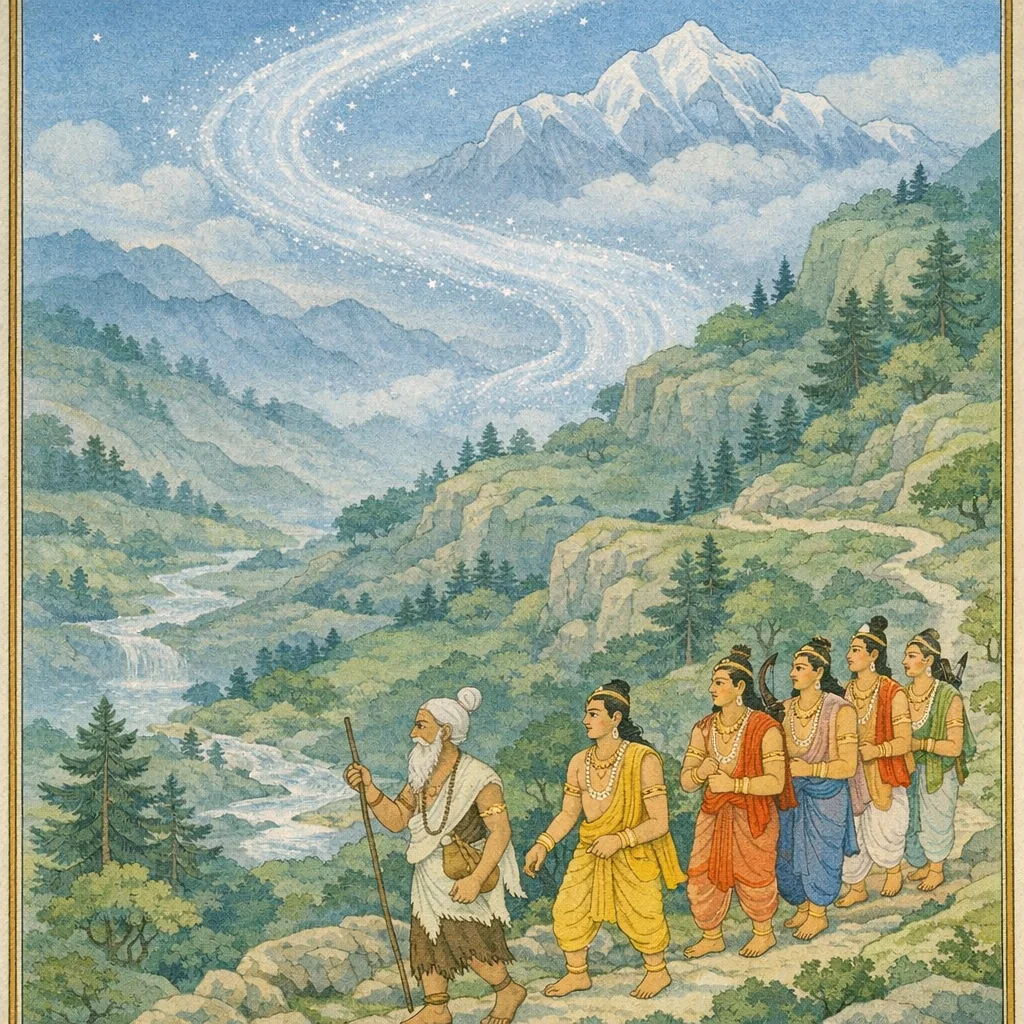
Vaiśaṃpāyana reports that armed, capable warriors escort eminent brāhmaṇas as the Pandavas, with Draupadī, advance toward Gandhamādana. On the mountain they observe rivers, lakes, forests, shaded trees, and ever-flowering, ever-fruiting tracts frequented by divine and sage-like beings. Sustaining themselves on roots and fruits, they traverse uneven, hazardous terrain while observing diverse wildlife. Upon entering Gandhamādana, a violent wind and heavy rain arise; dust and leaf-laden debris obscure earth and sky, disrupting visibility and communication. Stones and pulverized grit are driven by the wind; trees crack and fall with loud reports, generating confusion and fear. The party searches by touch for nearby trees, anthills, and uneven ground to take shelter. Bhīma raises his bow and draws Draupadī close, bracing beside a tree; Yudhiṣṭhira and Dhaumya conceal themselves in the forest; Sahadeva secures agnihotra implements; Nakula, other brāhmaṇas, and the ascetic Lomaśa shelter among trees. As the wind subsides, rain intensifies into stone-mixed torrents and foaming, turbulent flows that surge loudly and uproot vegetation. When wind and rain cease and sunlight returns, the group regathers and resumes the ascent toward Gandhamādana.
Chapter Arc: गन्धमादन-प्रवेश के पवित्र पथ पर लोमश ऋषि पाण्डवों को दिव्य मन्दराचल की ओर ले चलते हैं और कहते हैं—यह देव-निवास और पुण्यात्मा ऋषियों का निवास-स्थान है; अतः मन को समाहित कर, उद्वेग त्याग कर चलो। → मार्ग की दिव्यता के साथ उसका भय भी बढ़ता है—देव-प्रदेश में प्रवेश के लिए संयम, विनय और शुद्ध आचरण अनिवार्य है। पाण्डव लोमश के वचन सुनकर ‘आकाशगंगा’ (गंगा) को प्रणाम करते हैं; यात्रा अब केवल भूगोल नहीं, तप और पात्रता की परीक्षा बन जाती है। → लोमश के उपदेश के बीच पृथ्वी-देवी की व्यथा का प्रसंग उभरता है—भारी भार से पीड़ित वसुधा नारायण की शरण में जाती है; वहीं वराह-रूप द्वारा वसुधा-उद्धार का महात्म्य और नरकासुर-वध की कथा का संकेत देव-शक्ति के निर्णायक हस्तक्षेप को चरम बिन्दु बनाता है। → कथा-श्रवण से पाण्डवों का चित्त स्थिर और प्रहृष्ट होता है; वे लोमश-निर्दिष्ट पथ पर शीघ्र आगे बढ़ते हैं—तीर्थयात्रा का उद्देश्य (शुद्धि, धैर्य, और देव-आश्रय) पुनः दृढ़ हो जाता है। → देव-निवास की सीमा पर पहुँचकर आगे के दिव्य आश्रमों/तीर्थों और वहाँ की परीक्षाओं का संकेत—अगले चरण में गन्धमादन के भीतर कौन-सा अद्भुत दर्शन या विघ्न प्रतीक्षा कर रहा है?
Shlokas
Verse 1
अपर अप हूँ... आपके अप: द्विचत्वारिशर्दाधिकशततमो< ध्याय: पाण्डवोंद्वारा गंगाजीकी वन्दना, लोमशजीका नरकासुरके वध और भगवान् वाराहद्वारा वसुधाके उद्धारकी कथा कहना लोगश उवाच द्रष्टार: पर्वता: सर्वे नद्य: सपुरकानना: । तीर्थानि चैव श्रीमन्ति स्पृष्टं च सलिलं करै:,लोमशजीने कहा--तीर्थदर्शी पाण्डुकुमारो! तुमने सब पर्वतोंके दर्शन कर लिये। नगरों और वनोंसहित नदियोंका भी अवलोकन किया। शोभाशाली तीर्थोंके भी दर्शन किये और उन सबके जलका अपने हाथोंसे स्पर्श भी कर लिया
Lomaśa said: “O son of Pāṇḍu, you have now beheld all the mountains; you have also surveyed the rivers along with their cities and forests. You have visited the splendid sacred fords, and with your own hands you have even touched their waters.”
Verse 2
पर्वतं मन्दरं दिव्यमेष पन्था: प्रयास्यति । समाहिता निरुद्धिग्ना: सर्वे भवत पाण्डवा:,पाण्डवो! यह मार्ग दिव्य मन्दराचलकी ओर जायगा। अब तुम सब लोग उद्धेगशून्य और एकाग्रचित्त हो जाओ। यह देवताओंका निवासस्थान है, जिसपर तुम्हें चलना होगा। यहाँ पुण्यकर्म करनेवाले दिव्य ऋषियोंका भी निवास है
“This is the path that leads to the divine Mount Mandara. Therefore, O Pāṇḍavas, all of you become steady in mind and free from agitation. You must proceed along a route that is the abode of the gods and also the dwelling-place of radiant seers who have attained it through meritorious deeds.”
Verse 3
अयं देवनिवासो वै गन्तव्यो वो भविष्यति । ऋषीणां चैव दिव्यानां निवास: पुण्यकर्मणाम्,पाण्डवो! यह मार्ग दिव्य मन्दराचलकी ओर जायगा। अब तुम सब लोग उद्धेगशून्य और एकाग्रचित्त हो जाओ। यह देवताओंका निवासस्थान है, जिसपर तुम्हें चलना होगा। यहाँ पुण्यकर्म करनेवाले दिव्य ऋषियोंका भी निवास है
“This indeed is the dwelling-place of the gods; it is a path you must go upon. It is also the abode of divine seers—those whose lives are shaped by meritorious deeds.”
Verse 4
एषा शिवजला पुण्या याति सौम्य महानदी । बदरीप्रभवा राजन् देवर्षिगणसेविता,सौम्य स्वभाववाले नरेश! यह कल्याणमय जलसे भरी हुई पुण्यस्वरूपा महानदी अलकनन्दा (गंगा) प्रवाहित होती है, जो देवर्षियोंके समुदायसे सेवित है। इसका प्रादुर्भाव बदरिकाश्रमसे ही हुआ है
Lomaśa said: “O gentle-natured king, this great river, holy and filled with auspicious waters, flows on. It rises from Badarī (Badarikāśrama) and is attended and revered by hosts of divine seers.”
Verse 5
एषा वैहायसैर्नित्यं बालखिल्यैर्महात्मभि: । अर्चिता चोपयाता च गन्धर्वैश्न महात्मभि:,आकाशचारी महात्मा बालखिल्य तथा महामना गन्धर्वगण भी नित्य इसके तटपर आते-जाते हैं और इसकी पूजा करते हैं
“This (sacred place) is ever revered by the great Bālakhilya sages who move through the sky; and it is also regularly visited and worshipped by the noble Gandharvas. Thus, beings of pure conduct—whether ascetics or celestial musicians—continually come here, honoring it as a seat of sanctity.”
Verse 6
अत्र साम सम गायन्ति सामगा: पुण्यनि:स्वना: | मरीचि: पुलहश्चैव भुगुश्चैवाड्धिरास्तथा,सामगान करनेवाले विद्वान् वेदमन्त्रोंकी पुण्यमयी ध्वनि फैलाते हुए यहाँ सामवेदकी ऋचाओंका गान करते हैं। मरीचि, पुलह, भूगु तथा अंगिरा भी यहाँ जप एवं स्वाध्याय करते हैं
Here the Sāma-chanters, whose voices are pure and auspicious, sing the hymns of the Sāmaveda, spreading sacred sound in every direction. Here too the seers Marīci, Pulaha, Bhṛgu, and Aṅgiras engage in japa and Vedic study—presenting this place as a living center of disciplined worship, learning, and dharmic conduct.
Verse 7
अत्राह्निकं सुरश्रेष्ठो जपते समरुदूगण: । साध्याक्षैवाश्विनौ चैव परिधावन्ति तं॑ तदा,देवश्रेष्ठ इन्द्र भी मरुदुगणोंके साथ यहाँ आकर प्रतिदिन नियमपूर्वक जप करते हैं। उस समय साध्य तथा अश्विनीकुमार भी उनकी परिचर्यामें रहते हैं
Here the foremost of the gods performs his daily rite of recitation, accompanied by the host of Maruts. At that time the Sādhyas and the twin Aśvins also attend upon him, moving about in service.
Verse 8
चन्द्रमा: सह सूर्येण ज्योतींषि च ग्रहै: सह । अहोरात्रविभागेन नदीमेनामनुव्रजन्,चन्द्रमा, सूर्य, ग्रह और नक्षत्र भी दिन-रातके विभागपूर्वक इस पुण्य नदीकी यात्रा करते हैं
Lomaśa said: “The Moon along with the Sun—and the other luminaries together with the planets—follow this sacred river in due order, marking the divisions of day and night.”
Verse 9
एतस्या: सलिल मूर्थ्नि वृषाडुक: पर्यधारयत् । गड़ाद्वारे महाभाग येन लोकस्थितिर्भवेत्,महाभाग! गंगाद्वार (हरिद्वार)-में साक्षात् भगवान् शंकरने इसके पावन जलको अपने मस्तकपर धारण किया है, जिससे जगत्की रक्षा हो
At Gaṅgādvāra (Haridvāra), the blessed Lord Śaṅkara bore upon his head the sacred waters of this river, so that the world’s stability and protection might be secured. The saying proclaims the river’s sanctity and the divine deed undertaken for the welfare of all beings.
Verse 10
एतां भगवतीं देवीं भवन्त: सर्व एव हि । प्रयतेनात्मना तात प्रतिगम्याभिवादत,तात! तुम सब लोग मनको संयममें रखते हुए इस ऐश्वर्यशालिनी दिव्य नदीके तटपर चलकर इसे सादर प्रणाम करो
Dear one, indeed all of you should go to this blessed goddess—the divine, sacred river. With a disciplined and attentive mind, approach her bank and offer your respectful salutations.
Verse 11
तस्य तद् वचन श्रुत्वा लोमशस्य महात्मन: । आकाशगड्जां प्रयता: पाण्डवास्ते5भ्यवादयन्,महात्मा लोमशका यह वचन सुनकर सब पाण्डवोंने संयतचित्तसे भगवती आकाशगंगा (अलकनन्दा) को प्रणाम किया
Hearing the words of the great-souled Lomasha, the Pāṇḍavas, with minds disciplined and reverent, offered their salutations to the divine Gaṅgā that flows down from the heavens (Alakanandā). The scene affirms humility before sacred places and the purifying power of pilgrimage guided by right conduct.
Verse 12
अभिवाद्य च ते सर्वे पाण्डवा धर्मचारिण: । पुन: प्रयाता: संहृष्टा: सर्वे्रषिगणै: सह,प्रणाम करके धर्मका आचरण करनेवाले वे समस्त पाण्डव पुनः सम्पूर्ण ऋषि-मुनियोंके साथ हर्षपूर्वक आगे बढ़े
Having offered their respectful salutations, all the Pāṇḍavas—steadfast in the practice of dharma—set out again, joyful at heart, proceeding onward with the entire company of sages. The scene shows that righteousness is expressed not only in great vows, but also in humble courtesies and reverence toward the wise.
Verse 13
ततो दूरात् प्रकाशन्तं पाण्डुरं मेरुसंनिभम् | ददृशुस्ते नरश्रेष्ठा विकीर्ण सर्वतोदिशम्,तदनन्तर उन नरश्रेष्ठ पाण्डवोंने एक श्वेत पर्वत-सा देखा जो मेरुगिरिके समान दूरसे ही प्रकाशित हो रहा था। वह सम्पूर्ण दिशाओंमें बिखरा जान पड़ता था
Then, from far away, those best of men beheld a pale-white mass, shining clearly and resembling Mount Meru. It seemed spread out in every direction—an awe-inspiring sight that draws the mind from ordinary concerns toward steadiness and reverence before the world’s vastness.
Verse 14
तान् प्रष्टकामान् विज्ञाय पाण्डवान् स तु लोमश: । उवाच वाक्यं वाक्यज्ञ: शृणुध्वं पाण्डुनन्दना:,लोमशजी ताड़ गये कि पाण्डवलोग उस श्वेत पर्वताकार वस्तुके विषयमें कुछ पूछना चाहते हैं, तब प्रवचनकी कला जाननेवाले उन महर्षिने कहा--*पाण्डवो! सुनो
Perceiving that the Pāṇḍavas wished to ask about it, the sage Lomaśa—skilled in apt and well-formed speech—addressed them: “Listen, O sons of Pāṇḍu.”
Verse 15
एतद् विकीर्ण सुश्रीमत् कैलासशिखरोपमम् । यत् पश्यसि नरश्रेष्ठ पर्वतप्रतिमं स्थितम्,“नरश्रेष्ठ यह जो सब ओर बिखरी हुई कैलासशिखरके समान सुन्दर प्रकाशयुक्त पर्वताकार वस्तु देख रहे हो, ये सब विशालकाय नरकासुरकी हडियाँ हैं। पर्वत और शिलाखण्डोंपर स्थित होनेके कारण ये भी पर्वतके समान ही प्रतीत होती हैं
Lomaśa said: “O best of men, what you see scattered all around—radiant and splendid, resembling the summit of Mount Kailāsa, and lying there like a mountain—this is a vast heap that appears mountain-like in form.”
Verse 16
एतान्यस्थीनि दैत्यस्य नरकस्य महात्मन: । पर्वतप्रतिमं भाति पर्वतप्रस्तराश्रितम्,“नरश्रेष्ठ यह जो सब ओर बिखरी हुई कैलासशिखरके समान सुन्दर प्रकाशयुक्त पर्वताकार वस्तु देख रहे हो, ये सब विशालकाय नरकासुरकी हडियाँ हैं। पर्वत और शिलाखण्डोंपर स्थित होनेके कारण ये भी पर्वतके समान ही प्रतीत होती हैं
Lomaśa said: “O best of men, these are the bones of the great Daitya Naraka. Resting upon mountains and rocky crags, they shine and appear like a mountain itself. Thus what you see scattered all around, radiant and mountain-like, is in truth the vast skeleton of Narakāsura.”
Verse 17
पुरातनेन देवेन विष्णुना परमात्मना | दैत्यो विनिहतस्तेन सुरराजहितैषिणा,“पुरातन परमात्मा श्रीविष्णुदेवने देवराज इन्द्रका हित करनेकी इच्छासे उस दैत्यका वध किया था
That Daitya was slain by the ancient Lord—Viṣṇu, the Supreme Self—who acted with the intention of securing the welfare of the king of the gods, Indra.
Verse 18
दशवर्षसहस््त्राणि तपस्तप्यन् महामना: । ऐन्द्रं प्रार्थयते स्थानं तप:स्वाध्यायविक्रमात्,“वह महामना दैत्य दस हजार वर्षोतक कठोर तपस्या करके तप, स्वाध्याय और पराक्रमसे इन्द्रका स्थान लेना चाहता था
Lomaśa said: “That great-minded one, performing austerities for ten thousand years, seeks to obtain Indra’s station—by the force of his penance, self-study, and prowess.”
Verse 19
तपोबलेन महता बाहुवेगबलेन च । नित्यमेव दुराधर्षो धर्षयन् स दिते: सुत:,“अपने महान् तपोबल तथा वेगयुक्त बाहुबलसे वह देवताओंके लिये सदा अजेय बना रहता था और स्वयं सब देवताओंको सताया करता था
Endowed with immense ascetic power and the forceful momentum of his arms, Diti’s son was ever difficult to overcome. He remained perpetually unconquerable to the gods and, in his arrogance of strength, continually harassed and oppressed them.
Verse 20
स तु तस्य बल ज्ञात्वा धर्मे च चरितव्रतम् । भयाभिभूत: संविग्न: शक्र आसीत् तदानघ,“निष्पाप युधिष्ठिर! नरकासुर बलवान तो था ही, धर्मके लिये भी उसने कितने ही उत्तम व्रतोंका आचरण किया था, यह सब जानकर इन्द्रको बड़ा भय हुआ, वे घबरा उठे
But when he came to know that demon’s might, and also the vows he had faithfully practiced in the cause of dharma, Śakra (Indra) was overcome with fear and became deeply agitated at that time. O sinless Yudhiṣṭhira, this was because Narakāsura was not only powerful, but had also undertaken many excellent observances for righteousness—facts that made Indra apprehensive.
Verse 21
तेन संचिन्तितो देवो मनसा विष्णुरव्यय: । सर्वत्रग: प्रभु: श्रीमानागतश्न स्थितो बभौ,“तब उन्होंने मन-ही-मन अविनाशी भगवान् विष्णुका चिन्तन किया, उनके स्मरण करते ही सर्वव्यापी भगवान् श्रीपति वहाँ उपस्थित हो प्रकाशित हुए
Thus remembered and contemplated within the mind, the imperishable Lord Viṣṇu—omnipresent, sovereign, and glorious—at once arrived there and stood revealed in radiant presence.
Verse 22
ऋषयश्चापि त॑ सर्वे तुष्ठवुश्न दिवौकस: । त॑ दृष्टवा ज्वलमानश्रीर्भगवान् हव्यवाहन:
All the sages, and the gods as well, praised him with delight. Seeing him—radiant with blazing splendor—the Blessed Havyavāhana (Agni), the bearer of sacrificial offerings, responded in recognition of that manifest spiritual power and worthiness.
Verse 23
नष्टतेजा: समभवत् तस्य तेजो5भिभर्त्सित: | त॑ दृष्टवा वरदं देवं विष्णुं देवगणेश्वरम्
His radiance was extinguished; his former splendor stood rebuked and overpowered. Seeing that boon-giving god—Viṣṇu, the Lord of the hosts of gods—he was confronted with a higher divine authority before which pride and self-assertion cannot endure.
Verse 24
प्राउजलि: प्रणतो भूत्वा नमस्कृत्य च वज्रञभृत् । प्राह वाक््यं ततस्तत्त्वं यतस्तस्य भयं भवेत्
With palms joined in reverence, he bowed low and offered salutations. Then Vajra-bhṛt (Indra) spoke words of sober truth—words aimed at the very point from which fear could arise in him.
Verse 25
“उस समय सभी देवताओं तथा ऋषियोंने उनकी स्तुति की। उन्हें देखते ही प्रज्वलित कान्तिसे सुशोभित भगवान् अग्निदेवका तेज नष्ट-सा हो गया। वे श्रीहरिके तेजसे तिरस्कृत हो गये। समस्त देवसमुदायके स्वामी एवं वरदायक भगवान् विष्णुका दर्शन करके वज्रधारी इन्द्रने उन्हें हाथ जोड़कर प्रणाम किया और बार-बार मस्तक झुकाया। तदनन्तर वे सारी बातें भगवानसे कह सुनायीं, जिनके कारण उन्हें उस दैत्यसे भय हो रहा था” | २२-- २४ ।। विष्णुरुवाच जानामि ते भयं शक्र दैत्येन्द्रान्नकात् ततः । ऐन्द्रं प्रार्थयते स्थानं तप:सिद्धेन कर्मणा,तब भगवान् विष्णुने कहा--इन्द्र! मैं जानता हूँ, तुम्हें दैत्यराज नरकासुरसे भय प्राप्त हुआ है। वह अपने तपःसिद्ध कर्मोद्वारा इन्द्रपदको लेना चाहता है
At that time the gods and seers praised Him. Yet the moment they beheld the Lord, radiant with blazing splendor, even Agni’s fire-like brilliance seemed to fade, eclipsed by Śrī Hari’s superior light. Seeing Viṣṇu, sovereign and boon-giver of the entire host of gods, Indra the wielder of the thunderbolt bowed with folded hands, again and again lowering his head in reverence. Then he reported to the Lord all the circumstances that had made him afraid of that demon. Viṣṇu said: “Śakra, I know your fear—arising from the demon-king Naraka. By the power gained through austerity and accomplished deeds, he seeks to claim the station of Indra.”
Verse 26
सो5हमेनं तव प्रीत्या तप:सिद्धमपि ध्रुवम् । वियुनज्मि देहाद् देवेन्द्र मुहूर्त प्रतिपालय,देवेन्द्र! यद्यपि तपस्याद्वारा उसे सिद्धि प्राप्त हो चुकी है तो भी मैं तुम्हारे प्रेमवश निश्चय ही उस दैत्यको मार डालूगा, तुम थोड़ी देर और प्रतीक्षा करो
“Therefore, out of affection for you, O Indra, I shall certainly sever him from his body—though he has indeed attained success through austerities. Wait only a moment more, O lord of the gods.”
Verse 27
तस्य विष्णुर्महातेजा: पाणिना चेतनां हरत् । स पपात ततो भूमौ गिरिराज इवाहतः,ऐसा कहकर महातेजस्वी भगवान् विष्णुने हाथसे मारकर उस दैत्यके प्राण हर लिये और वह वच्रके मारे हुए गिरिराजकी भाँति पृथ्वीपर गिर पड़ा
Then the mighty, radiant Viṣṇu struck him with His hand and took away his life-breath. Thereupon the demon fell to the earth, like a king of mountains shattered by a thunderbolt.
Verse 28
तस्यैतदस्थिसंघातं मायाविनिहतस्य वै । इदं द्वितीयमपरं विष्णो: कर्म प्रकाशते,इस प्रकार मायाद्वारा मारे गये उस दैत्यकी हड्डियोंका यह समूह दिखायी देता है। अब मैं भगवान् विष्णुका यह दूसरा पराक्रम बता रहा हूँ, जो सर्वत्र प्रकाशमान है
Here is the heap of bones of that being who was indeed slain through illusion. Now I shall relate another, the second, deed of Lord Viṣṇu—an exploit renowned and manifest everywhere.
Verse 29
नष्टा वसुमती कृत्स्ना पाताले चैव मज्जिता । पुनरुद्धरिता तेन वाराहेणैकशृद्धिणा,एक समय सारी पृथ्वी एकार्णवके जलमें ड्रबकर अदृश्य हो गयी, पातालमें डूब गयी। उस समय भगवान् विष्णुने पर्वतशिखरके सदृश एक दाँतवाले वाराहका रूप धारण करके पुनः इसका उद्धार किया था
Once the whole Earth (Vasumatī) was lost—submerged and sunk into the netherworld. Then the Lord, taking the form of the single-tusked Boar, raised her up again. The tale recalls divine intervention that restores cosmic order when the world is overwhelmed, affirming that the protection of the earth and the re-establishment of dharma are the Supreme’s paramount charge.
Verse 30
युधिछिर उवाच भगवन् विस्तरेणेमां कथां कथय तत्त्वतः । कथं तेन सुरेशेन नष्टा वसुमती तदा,युधिष्ठिरने पूछा--भगवन्! देवेश्वर भगवान् विष्णुने पातालमें सैकड़ों योजन नीचे डूबी हुई इस पृथ्वीका पुनरुद्धार किस प्रकार किया? आप इस कथाको यथार्थरूपसे और विस्तारपूर्वक कहिये। जगत्का भार धारण करनेवाली इस अचला पृथ्वीका उद्धार करनेके लिये उन्होंने किस उपायका अवलम्बन किया?
Yudhiṣṭhira said: “O revered one, tell me this tale in full, in accord with the truth. How was the Earth—bearer of the world’s burden—lost at that time, and by what means did the Lord of the gods bring her back?”
Verse 31
योजनानां शतं ब्रह्मन् पुनरुद्धरिता तदा | केन चैव प्रकारेण जगतो धरणी श्लुवा,युधिष्ठिरने पूछा--भगवन्! देवेश्वर भगवान् विष्णुने पातालमें सैकड़ों योजन नीचे डूबी हुई इस पृथ्वीका पुनरुद्धार किस प्रकार किया? आप इस कथाको यथार्थरूपसे और विस्तारपूर्वक कहिये। जगत्का भार धारण करनेवाली इस अचला पृथ्वीका उद्धार करनेके लिये उन्होंने किस उपायका अवलम्बन किया?
Yudhiṣṭhira said: “O Brahmin, the Earth was then lifted up again from a depth of a hundred yojanas. By what means, and in what manner, was this Earth—bearer of the world—restored and set firm? Please tell me this account truthfully and in detail.”
Verse 32
शिवा देवी महाभागा सर्वसस्यप्ररोहिणी । कस्य चैव प्रभावाद्धि योजनानां शतं गता,सम्पूर्ण शस्योंका उत्पादन करनेवाली यह कल्याणमयी महाभागा वसुधादेवी किसके प्रभावसे सैकड़ों योजन नीचे धँस गयी थी
Yudhiṣṭhira said: “This auspicious, greatly fortunate Goddess Earth—she who causes all crops to sprout—by whose power did she sink down a full hundred yojanas?”
Verse 33
केन तद् वीर्यसर्वस्वं दर्शितं परमात्मन: । एतत् सर्व यथातत्त्वमिच्छामि द्विजसत्तम | श्रोतुं विस्तरश: सर्व त्वं हि तस्य प्रतिश्रय:,परमात्माके उस अद्भुत पराक्रमका दर्शन (ज्ञान) किसने कराया था? द्विजश्रेष्ठ! यह सब मैं यथार्थरूपसे विस्तारपूर्वक सुनना चाहता हूँ। आप इस वृत्तान्तके आश्रय (ज्ञाता) हैं
Yudhiṣṭhira said: “By whom was that wondrous manifestation of the Supreme Self’s complete might revealed? O best of twice-born sages, I wish to hear all of it exactly as it truly happened, in full detail. For you are the sure refuge and authoritative source of that account.”
Verse 34
लोगमश उवाच यत् ते$हं परिपृष्टो5स्मि कथामेतां युधिष्िर । तत् सर्वमखिलेनेह श्रूयतां मम भाषत:,लोमशजीने कहा--युधिष्ठिर! तुमने जिसके विषयमें मुझसे प्रश्न किया है, वह कथा --वह सारा वृत्तान्त मैं बता रहा हूँ, सुनो
Lomaśa said: “Yudhiṣṭhira, you have asked me about this account. Now hear from me, as I speak here, the entire narrative in full.”
Verse 35
पुरा कृतयुगे तात वर्तमाने भयंकरे । यमत्वं कारयामास आदिदेव: पुरातन:,तात! इस कल्पके प्रथम सत्ययुगकी बात है, एक समय बड़ी भयंकर परिस्थिति उत्पन्न हो गयी थी। उस समय आदिदेव पुरातन पुरुष भगवान् श्रीहरि ही यमराजका भी कार्य सम्पन्न करते थे
Lomāśa said: “In ancient times, dear child, in the Kṛta Yuga—when a dreadful crisis had arisen—the Primeval God, the Ancient Lord, Himself caused the office and function of Yama (the dispenser of justice and death) to be carried out.”
Verse 36
यमत्वं कुर्वतस्तस्य देवदेवस्य धीमत: । न तत्र म्रियते कश्चिज्जायते वा तथाप्युत
Lomasha said: “When that wise Lord of lords assumes the office of Yama (the cosmic judge), in that sphere no one truly dies, nor is anyone truly born—yet, in worldly appearance, these processes seem to occur.”
Verse 37
युधिष्ठिर! परम बुद्धिमान् देवदेव भगवान् श्रीहरिके यमराजका कार्य सँभालते समय किसी भी प्राणीकी मृत्यु नहीं होती थी; परंतु उत्पत्तिका कार्य पूर्ववत् चलता रहा ।। वर्धन्ते पक्षिसंघाश्व तथा पशुगवेडकम् | गवाश्चं च मृगाश्नचैव सर्वे ते पिशिताशना:,फिर तो पक्षियोंके समूह बढ़ने लगे। गाय, बैल, भेड़-बकरे आदि पशु, घोड़े, मृग तथा मांसाहारी जीव सभी बढ़ने लगे
Lomaśa said: “O Yudhiṣṭhira, when the supremely wise Lord Hari—the God of gods—took charge of Yama’s office, no living being met with death; yet the work of generation continued as before. Then flocks of birds multiplied, and so did cattle and other domestic beasts—cows and bulls—as well as deer; indeed all creatures, including flesh-eaters, increased in number.”
Verse 38
तथा पुरुषशार्दूल मानुषाश्न परंतप | सहस्रशो हायुतशो वर्धन्ते सलिलं यथा,शत्रुओंको संताप देनेवाले नरश्रेष्ठ जैसे बरसातमें पानी बढ़ता है, उसी प्रकार मनुष्य भी हजार एवं दस हजार गुनी संख्यामें बढ़ने लगे
Lomasa said: “So too, O tiger among men, O scorcher of foes: just as waters swell in the rainy season, in the same way human beings began to multiply—by thousands and by tens of thousands.”
Verse 39
एतस्मिन् संकुले तात वर्तमाने भयंकरे | अतिभाराद् वसुमती योजनानां शतं गता,तात! इस प्रकार सब प्राणियोंकी वृद्धि होनेसे जब बड़ी भयंकर अवस्था आ गयी तब अत्यन्त भारसे दबकर यह पृथ्वी सैकड़ों योजन नीचे चली गयी
Lomasa said: “Dear child, when this world had fallen into such a confused and terrifying condition, the Earth—overwhelmed by the excessive burden—sank down by a hundred yojanas.”
Verse 40
सा वै व्यथितसर्वाज्डी भारेणाक्रान्तचेतना । नारायणं वरं देवं प्रपन्ना शरणं गता,भारी भारके कारण पृथ्वी देवीके सम्पूर्ण अंगोंमें बड़ी पीड़ा हो रही थी। उसकी चेतना लुप्त होती जा रही थी। अतः वह सर्वश्रेष्ठ देवता भगवान् नारायणकी शरणमें गयी
Her whole body was wracked with pain, and her mind was overwhelmed under the crushing burden. Therefore the Earth-goddess sought refuge—surrendering to Nārāyaṇa, the supreme divine Lord—as her protector and final recourse.
Verse 41
पृथिव्युवाच भगवंस्त्वत्प्रसादाद्धि तिछ्ेयं सुचिरं त्विह । भारेणास्मि समाक्रान्ता न शकनोमि सम वर्तितुम्,पृथ्वी बोली--भगवन्! आप ऐसी कृपा करें जिससे मैं दीर्घ कालतक यहाँ स्थिर रह सकूँ। इस समय मैं भारसे इतनी दब गयी हूँ कि जीवन धारण नहीं कर सकती
The Earth said: “O Blessed Lord, by your grace may I remain established here for a long time. I am overwhelmed and crushed by the burden; I am no longer able to maintain my balance and continue to function as before.”
Verse 42
ममेम॑ भगवन् भार व्यपनेतुं त्वमहसि । शरणागतास्मि ते देव प्रसादं कुरु मे विभो,भगवन्! मेरे इस भारको आप दूर करनेकी कृपा करें। देव! मैं आपकी शरणमें आयी हूँ। विभो! मुझपर कृपाप्रसाद कीजिये
“O Blessed Lord, please remove this burden of mine. O divine one, I have come to you for refuge; O mighty Lord, grant me your gracious favor.”
Verse 43
तस्यास्तद् वचन श्रुत्वा भगवानक्षर: प्रभु: | प्रोवाच वचन हद्ृष्ट: श्रव्याक्षरसमीरितम्,पृथ्वीका यह वचन सुनकर अविनाशी भगवान् नारायणने प्रसन्न होकर श्रवणमधुर अक्षरोंसे युक्त मीठी वाणीमें कहा
Hearing her words, the Blessed Lord—imperishable and sovereign—became pleased. Delighted, he then spoke in a sweet, melodious utterance, formed of syllables that were delightful to hear.
Verse 44
विष्णुरुवाच न ते महि भयं कार्य भारातें वसुधारिणि । अहमेवं तथा कुर्मि यथा लघ्वी भविष्यसि,भगवान् विष्णु बोले--वसुधे! तू भारसे पीड़ित है; किंतु अब उसके लिये भय न कर। मैं अभी ऐसा उपाय करता हूँ जिससे तू हलकी हो जायगी
Viṣṇu said: “O Earth, bearer of all, do not yield to fear in your distress beneath this burden. I shall act at once in such a way that you will be made light.”
Verse 45
लोमश उवाच सतां विसर्जयित्वा तु वसुधां शैलकुण्डलाम् | ततो वराह: संवृत्त एकशुड्रो महाद्युति:,लोमशजी कहते हैं--युधिष्ठिर! पर्वतरूपी कुण्डलोंसे विभूषित वसुधादेवीको विदा करके महातेजस्वी भगवान् विष्णुने वाराहका रूप धारण कर लिया। उस समय उनके एक ही दाँत था, जो पर्वत-शिखरके समान सुशोभित होता था
Lomaśa said: “After dismissing the Earth—adorned as though with mountain-earrings—the supremely radiant Lord assumed the form of the Boar, Varāha. In that manifestation he bore a single tusk, splendid like a mountain peak.”
Verse 46
रक्ताभ्यां नयनाभ्यां तु भयमुत्पादयन्निव । धूमं च ज्वलयॉल्लक्ष्म्या तत्र देशे व्यवर्धत,वे अपने लाल-लाल नेत्रोंसे मानो भय उत्पन्न कर रहे थे और अपनी अंगकान्तिसे धूम प्रकट करते हुए उस स्थानपर बढ़ने लगे
With eyes reddened as if to strike fear, and with a blazing radiance that seemed to kindle smoke, he advanced, and his presence swelled there in that very place.
Verse 47
स गृहीत्वा वसुमतीं शृज्जेणैकेन भास्वता । योजनानां शतं वीर समुद्धरति सो$क्षर:,वीर युधिष्ठिर! अविनाशी भगवान् विष्णुने अपने एक ही तेजस्वी दाँतके द्वारा पृथ्वीको थामकर उसे सौ योजन ऊपर उठा दिया
Lomaśa said: “O hero, with a single radiant tusk he seized the Earth and lifted her up a hundred yojanas. O valiant Yudhiṣṭhira, the imperishable Lord Viṣṇu supported the Earth with one blazing tooth and raised her aloft.”
Verse 48
तस्यां चोद्धार्यमाणायां संक्षो भ: समजायत । देवा: संक्षुभिता: सर्वे ऋषयश्न तपोधना:
As she was being lifted up (rescued), a great upheaval arose. All the gods were thrown into agitation, and so too were the ascetic sages, rich in the treasure of austerity.
Verse 49
पृथ्वीको उठाते समय सब ओर भारी हलचल मच गयी। सम्पूर्ण देवता तथा तपस्वी ऋषि क्षुब्ध हो उठे ।। हाहाभूतम भूत् सर्व त्रिदिवं व्योम भूस्तथा । न पर्यवस्थित: कश्चिद् देवो वा मानुषो5पि वा,स्वर्ग, अन्तरिक्ष तथा भूलोक सबमें अत्यन्त हाहाकार मच गया। कोई भी देवता या मनुष्य स्थिर नहीं रह सका। तब अनेक देवता और ऋषि ब्रह्माजीके समीप गये। उस समय वे अपने आसनपर बैठकर दिव्य कान्तिसे प्रकाशित हो रहे थे
Lomaśa said: As the earth was being lifted up, a tremendous upheaval arose on every side. The gods and the ascetic seers were shaken. A cry of alarm spread through heaven, the mid-region, and the earth; no god or human could remain steady. Then many gods and sages went to Brahmā. At that time he sat upon his seat, radiant with divine splendor—an image of calm authority amid universal disturbance.
Verse 50
ततो ब्रह्माणमासीनं ज्वलमानमिव श्रिया । देवा: सर्षिगणाश्वैव उपतस्थुरनेकश:,स्वर्ग, अन्तरिक्ष तथा भूलोक सबमें अत्यन्त हाहाकार मच गया। कोई भी देवता या मनुष्य स्थिर नहीं रह सका। तब अनेक देवता और ऋषि ब्रह्माजीके समीप गये। उस समय वे अपने आसनपर बैठकर दिव्य कान्तिसे प्रकाशित हो रहे थे
Then they approached Brahmā, who was seated, blazing as it were with splendor. The gods—together with companies of ṛṣis—came to attend upon him in great numbers. In the background of this episode, a widespread upheaval and alarm had arisen across heaven, the mid-region, and the earth, so that none among gods or humans could remain composed; therefore they sought Brahmā’s counsel and refuge as the stabilizing authority of cosmic order.
Verse 51
उपसर्प्य च देवेशं ब्रह्माणं लोकसाक्षिकम् | भूत्वा प्राजजलय: सर्वे वाक्यमुच्चारयंस्तदा,लोकसाक्षी देवेश्वर ब्रह्माके निकट पहुँचकर सबने हाथ जोड़कर प्रणाम किया और कहा--
Lomaśa said: Then, approaching Brahmā—the Lord of the gods, the witness of the worlds—they all stood with palms joined in reverence and, at that moment, voiced their petition.
Verse 52
लोकाः: संक्षुभिता: सर्वे व्याकुलं च चराचरम् । समुद्राणां च संक्षोभस्त्रिदशेश प्रकाशते,'देवेश्वर! सम्पूर्ण लोकोंमें हलचल मच गयी है। चर और अचर सभी प्राणी व्याकुल हैं। समुद्रोंमें बड़ा भारी क्षोभ दिखायी दे रहा है
Lomaśa said: “All the worlds have been thrown into turmoil; everything, moving and unmoving, is distressed. Even the oceans are seen to heave in violent agitation, O lord of the gods.”
Verse 53
सैषा वसुमती कृत्स्ना योजनानां शतं गता । किमेतद् कि प्रभावेण येनेदं व्याकुलं जगत् । अख्यातु नो भवान् शीघ्र विसंज्ञा: स्मेह सर्वश:,“यह सारी पृथ्वी सैकड़ों योजन नीचे चली गयी थी, अब यह किसके प्रभावसे कौन-सी अद्भुत घटना घटित हो रही है जिससे सारा संसार व्याकुल हो उठा है। आप शीजत्र हमें इसका कारण बताइये। हम सब लोग अचेत-से हो रहे हैं"
Lomaśa said: “This entire earth has sunk down by a hundred yojanas. What is this—by whose power has such a wondrous event occurred, by which the whole world has been thrown into agitation? Tell us quickly the cause of it; here we are all becoming as if senseless.”
Verse 54
ब्रह्मोवाच असुरेभ्यो भयं नास्ति युष्माकं कुत्रचित् क्वचित् | श्रूयतां यत्कृतेष्वेष संक्षोभो जायतेडमरा:,ब्रह्माजीने कहा--देवताओ! तुम्हें असुरोंस कभी और कोई भय नहीं है। यह जो चारों ओर क्षोभ फैल रहा है, इसका क्या कारण है? वह सुनो। वे जो सर्वव्यापी अक्षरस्वरूप श्रीमान् भगवान् नारायण हैं, उन्हींके प्रभावसे यह स्वर्गलोकमें क्षोभ प्रकट हो रहा है
Brahmā said: “O immortals (gods), you have no fear from the Asuras—nowhere, at any time. Listen to the reason for which this agitation has arisen. It is by the power of the all-pervading, imperishable Lord Nārāyaṇa that this disturbance has manifested here in the heavenly realm.”
Verse 55
योअसौ सर्वत्रग: श्रीमानक्षरात्मा व्यवस्थित:। तस्य प्रभावात् संक्षोभस्त्रिदिवस्य प्रकाशते,ब्रह्माजीने कहा--देवताओ! तुम्हें असुरोंस कभी और कोई भय नहीं है। यह जो चारों ओर क्षोभ फैल रहा है, इसका क्या कारण है? वह सुनो। वे जो सर्वव्यापी अक्षरस्वरूप श्रीमान् भगवान् नारायण हैं, उन्हींके प्रभावसे यह स्वर्गलोकमें क्षोभ प्रकट हो रहा है
Lomaśa said: “That blessed Lord—imperishable in essence and present everywhere—abides as the universal Self. By the force of His power, this agitation has become manifest in the heaven of the gods.”
Verse 56
यैषा वसुमती कृत्स्ना योजनानां शतं गता । समुद्धृता पुनस्तेन विष्णुना परमात्मना,यह सारी पृथ्वी, जो सैकड़ों योजन नीचे चली गयी थी, इसे परमात्मा श्रीविष्णुने पुनः ऊपर उठाया है
Lomaśa said: “This entire Earth, which had sunk down a hundred yojanas, was once again lifted up by that Supreme Self, Viṣṇu.”
Verse 57
तस्यामुद्धार्यमाणायां संक्षो भ: समजायत । एवं भवन्न्तो जानन्तु छिद्यतां संशयश्व व:,इस पृथ्वीका उद्धार करते समय ही सब ओर यह महान क्षोभ प्रकट हुआ है। इस प्रकार तुम्हें इस विश्वव्यापी हलचलका यथार्थ कारण ज्ञात होना और तुम्हारा आन्तरिक संशय दूर हो जाना चाहिये
Lomaśa said: “While she (the Earth) was being lifted up, a great upheaval arose on every side. Let all of you understand this: this is the true cause of that world-pervading disturbance, and let your inner doubt be cut away.”
Verse 58
देवा ऊचु क्व तद् भूतं वसुमतीं समुद्धरति हृष्टवत् । त॑ देशं भगवन् ब्रूहि तत्र यास्यामहे वयम्,देवता बोले--भगवन्! वे वाराहरूपधारी भगवान् प्रसन्न-से होकर कहाँ पृथ्वीका उद्धार कर रहे हैं, उस प्रदेशका पता हमें बताइये; हम सब लोग वहाँ जायँगे
The gods said: “Where is that Being who, in joyful vigor, is lifting up the Earth? O Blessed One, tell us that region; we all wish to go there.”
Verse 59
ब्रह्मोवाच हन्त गच्छत भद्रं वो नन्दने पश्यत स्थितम् | एषोअत्र भगवान् श्रीमान् सुपर्ण: सम्प्रकाशते,ब्रह्माजीनी कहा--देवताओ! बड़े हर्षकी बात है, जाओ। तुम्हारा कल्याण हो। भगवान् नन्दनवनमें विराजमान हैं। वहीं उनका दर्शन करो। उस वनके निकट ये स्वर्णके समान सुन्दर रोमवाले परम कान्तिमान् विश्वभावन भगवान् श्रीविष्णु वाराहरूपसे प्रकाशित हो रहे हैं। भूतलका उद्धार करते हुए वे प्रलयकालीन अग्निके समान उद्धासित होते हैं
Brahmā said: “Come then—go forth; may good befall you. In Nandana (Indra’s celestial grove) behold Him as He stands revealed. Here indeed the Blessed Lord, glorious and radiant, manifests as the mighty Suparṇa (the divine, winged one).”
Verse 60
वाराहेणैव रूपेण भगवॉँल्लोकभावन: । कालानल इवाभाति पृथिवीतलमुद्धरन्,ब्रह्माजीनी कहा--देवताओ! बड़े हर्षकी बात है, जाओ। तुम्हारा कल्याण हो। भगवान् नन्दनवनमें विराजमान हैं। वहीं उनका दर्शन करो। उस वनके निकट ये स्वर्णके समान सुन्दर रोमवाले परम कान्तिमान् विश्वभावन भगवान् श्रीविष्णु वाराहरूपसे प्रकाशित हो रहे हैं। भूतलका उद्धार करते हुए वे प्रलयकालीन अग्निके समान उद्धासित होते हैं
Lomaśa said: “That Blessed Lord, the sustainer and benefactor of the worlds, appears in the very form of the Boar. As He lifts up the surface of the earth, He blazes forth like the fire that consumes all at the end of time.”
Verse 61
एतस्योरसि सुव्यक्तं श्रीवत्समभिराजते । पश्यध्वं विबुधा: सर्वे भूतमेतदनामयम्,इनके वक्षःस्थलमें स्पष्टरूपसे श्रीवत्सचिह्न प्रकाशित हो रहा है। देवताओ! ये रोग- शोकसे रहित साक्षात् भगवान् ही वाराहरूपसे प्रकट हुए हैं, तुम सब लोग इनका दर्शन करो
Lomaśa said: “Upon his chest the Śrīvatsa mark shines clearly and unmistakably. Behold, all you gods—this being has manifested here free from all affliction; he is the Lord himself, revealed in the form of the Boar. Look upon him.”
Verse 62
लोगश उवाच ततो दृष्टवा महात्मान श्रुत्वा चामन्त्रय चामरा: । पितामहं पुरस्कृत्य जम्मुर्देवा यथागतम्,लोमशजी कहते हैं--युधिष्ठटिर! तदनन्तर देवताओंने जाकर वाराहरूपधारी परमात्मा श्रीविष्णुका दर्शन किया, उनकी महिमा सुनी और उनकी आज्ञा लेकर वे ब्रह्माजीको आगे करके जैसे आये थे वैसे लौट गये
Lomaśa said: Then, having beheld that great-souled Lord and having heard His glory, the gods—after receiving His permission—set Brahmā, the Grandfather, at their head and departed, returning just as they had come.
Verse 63
वैशग्पायन उवाच श्रुत्वा तु तां कथां सर्वे पाण्डवा जनमेजय । लोमशादेशितेनाशु पथा जम्मु: प्रहृष्टटत्,वैशम्पायनजी कहते हैं-जनमेजय! यह कथा सुनकर सब पाण्डव बड़े प्रसन्न हुए और लोमशजीके बताये हुए मार्गसे शीघ्रतापूर्वक आगे बढ़ गये
Vaiśampāyana said: O Janamejaya, having heard that account, all the Pāṇḍavas became greatly delighted; and, following the route promptly indicated by the sage Lomaśa, they set out swiftly, their hearts uplifted.
Verse 141
इस प्रकार श्रीमह्ा भारत वनपर्वके अन्तर्गत तीर्थयात्रापवरमें लोगशती र्थयात्राके प्रसंगमें गन्धमादनप्रवेशविषयक एक सौ इकलीसवाँ अध्याय पूरा हुआ
Thus, in the Śrī Mahābhārata, within the Vana Parva—specifically in the Tīrtha-yātrā Parva—here ends the one hundred and forty-first chapter, which, in the course of Lomaharṣaṇa’s pilgrimage narrative, concerns the entry into Gandhamādana. This line stands as the formal colophon, marking the chapter’s close and framing the tale within a sacred itinerary and its moral-religious setting.
Verse 142
इति श्रीमहा भारते वनपर्वणि तीर्थयात्रापर्वणि लोमशतीर्थयात्रायां गन्धमादनप्रवेशे द्विचत्वारिंशदधिकशततमो< ध्याय:,इस प्रकार श्रीमहाभारत वनपर्वके अन्तर्गत तीर्थयात्रापर्वमें लोमशती र्थयात्राके प्रस॑ंगमें गन्धमादनप्रवेशविषयक एक सौ बयालीसवाँ अध्याय पूरा हुआ
Thus, in the Śrī Mahābhārata, within the Vana Parva, in the Tīrtha-yātrā Parva—during Lomāśa’s pilgrimage narrative—here ends the one hundred and forty-second chapter, concerning the entry into Gandhamādana. (This is the colophon marking the end of the chapter.)
Frequently Asked Questions
The ethical tension is operational rather than deliberative: how leaders protect dependents and preserve group integrity when visibility, communication, and mobility collapse under a sudden natural hazard.
Disciplined response to crisis—prioritizing shelter, safeguarding vulnerable members, and maintaining composure—outperforms impulsive action when conditions prevent reliable perception and coordination.
No explicit phalaśruti is presented here; the chapter functions as narrative documentation of conduct-in-crisis and as a transitional set-piece that underscores readiness and cohesion during the exile journey.