Adhyaya 130
Adhyāya 130 — Lomāśa Describes Sarasvatī’s Vināśana and Northern Tīrthas; The Uśīnara (Śibi) Hospitality Test Begins
Upa-parva: Tīrtha-yātrā (Lomāśa’s Pilgrimage Discourse) — Sacred Geography and Ethical Memory
Lomāśa outlines a doctrinal premise that tapas performed in the human realm can lead to heavenly attainment, and recalls a benediction associated with Dakṣa’s sacrifice that valorizes those who die in a sanctified context. He then turns to sacred geography: the divine Sarasvatī is identified along with Vināśana, a named locus tied to the river’s disappearance into the earth, framed through a boundary narrative involving the Niṣādas. The itinerary proceeds through sites where Sarasvatī is visible (including a location associated with the river’s re-emergence/visibility), and references major tīrthas such as Prabhāsa (purificatory, sin-destroying), Viṣṇupada, and the river Vipāśā. A compressed mythic note recalls Vasiṣṭha’s despair and recovery at Vipāśā, integrating psychological crisis with sacred topography. The discourse expands northward to the Kāśmīra-maṇḍala, described as exceptionally meritorious and inhabited by ṛṣis, and to other named gateways/regions associated with legendary figures. The chapter then transitions into an ethical exemplum: near Yamunā-associated rivers, King Uśīnara’s sacrificial context draws Indra and Agni, who approach in disguised forms (hawk and dove) to test the king’s commitment to protection of a supplicant, initiating the well-known hospitality and refuge dilemma.
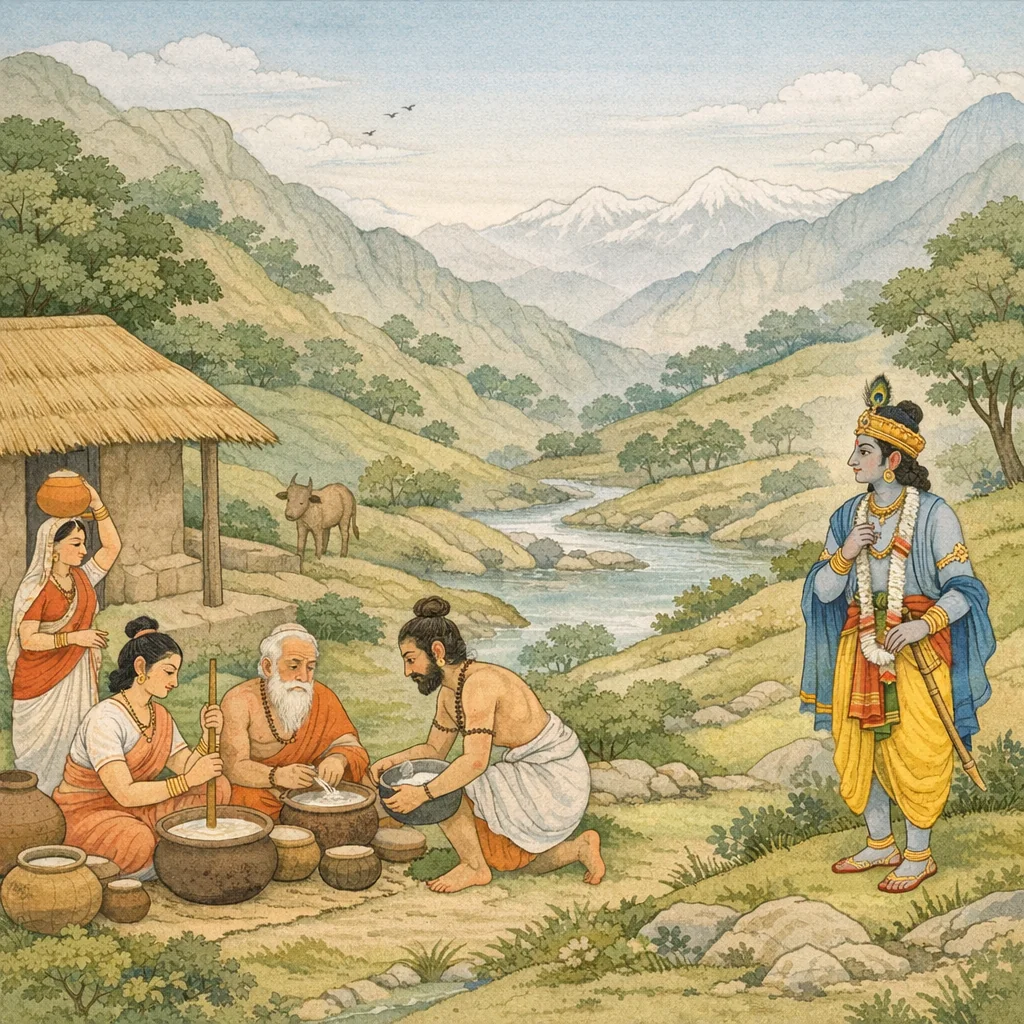
Chapter Arc: The narration turns from the forest’s immediate trials to a wider map of the world—Yugandhara is named, and with it the startling customs of its people, whose daily life is marked by curds made from camel and she-ass milk. → As the catalogue of regions and practices unfolds, the listener is pulled into a sense of vastness and strangeness: dharma is no longer only what the Pandavas must do in exile, but also what countless peoples call ‘normal’ under different skies. → The most vivid crest is the ethnographic shock itself—Yugandhara’s people and their unusual dairy—an emblematic detail that makes the far country feel immediate and real, and forces the mind to confront difference without easy judgment. → The chapter settles into the tone of a travel-cosmography: the world is larger than the forest, and the epic’s gaze can hold both royal dilemmas and the humble, unfamiliar habits of distant communities. → The description implies further regions and marvels to come, inviting the next adhyaya to continue the unfolding geography and its moral implications.
Shlokas
Frequently Asked Questions
A refuge-protection dilemma: a dove seeks shelter from a pursuing hawk, and the king’s duty to protect the supplicant is tested against competing claims of harm, hunger, and justice—setting up an evaluation of ātithi-dharma and kṣatriya responsibility.
Sacred geography is used as moral infrastructure: places preserve precedents, model restraint and purification, and teach that dharma is enacted through disciplined conduct (tapas, reverence, protection) rather than mere status or location.
Yes, implicitly: the tīrthas are repeatedly characterized as purifying and merit-generating (pavitra, pāpanāśana, sarvapuṇya), indicating that visiting/remembering them is framed as ethically transformative and karmically consequential within the epic’s pedagogy.