Adhyaya 126
मान्धातृ-जन्म-चरितम् (The Birth and Career Account of Māndhātṛ)
Upa-parva: Tīrthayātrā-upākhyāna (Lomāśa’s pilgrimage narratives and royal exempla)
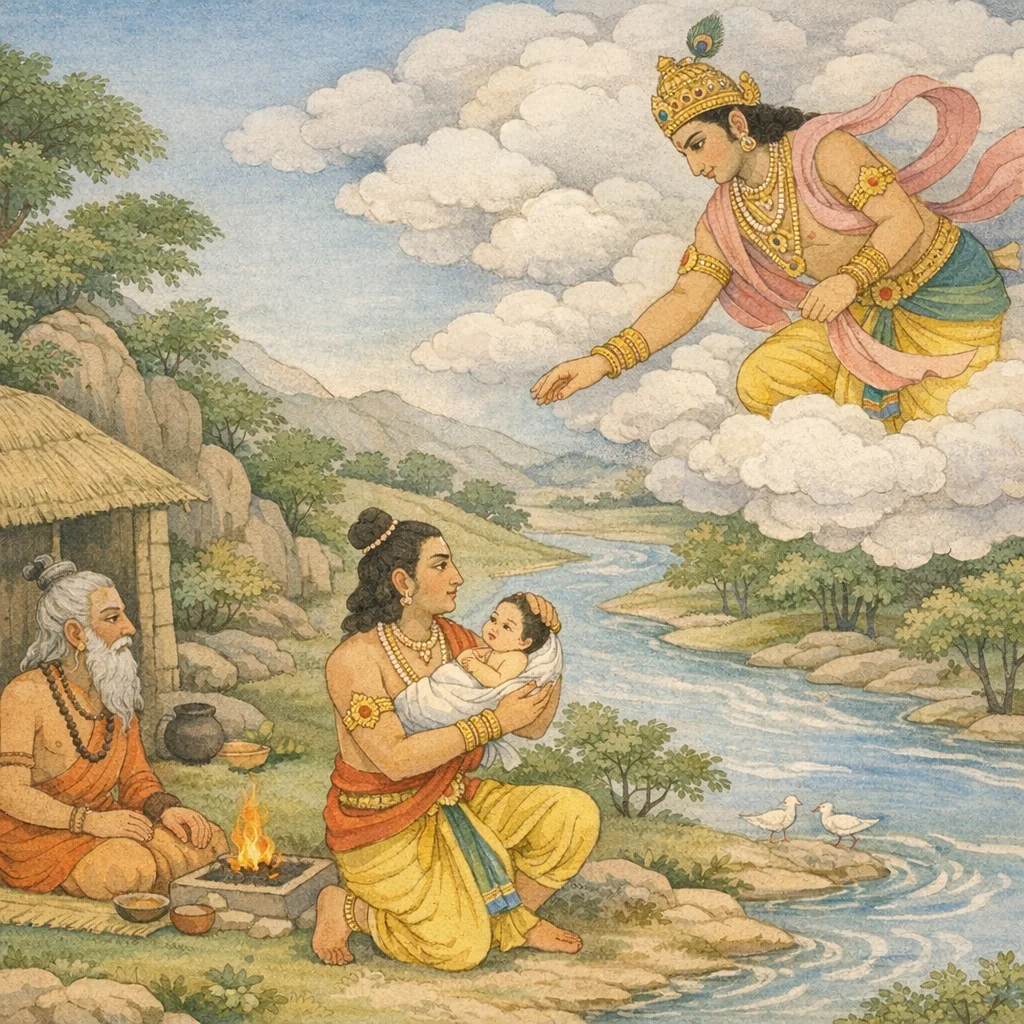
Yudhiṣṭhira asks Lomāśa to explain the celebrated King Māndhātṛ—his origin, the reason for his name, and how he attained exceptional eminence. Lomāśa recounts that Yuvanāśva of the Ikṣvāku line performed major sacrifices (including extensive aśvamedhas) but remained without offspring and turned to forest-discipline. Entering Bhṛgu’s hermitage in severe thirst, he unknowingly drank consecrated, mantra-purified water prepared by sages for a putra-kāraṇa rite intended for his queen. The sages interpret the event as daiva-driven and declare that Yuvanāśva will generate a powerful son from his own body. After a hundred years, the child emerges by splitting the king’s left side; Indra arrives, provides a finger for nourishment, and the child is named Māndhātṛ (“he will hold/maintain me”), based on Indra’s utterance. The narrative then catalogs Māndhātṛ’s extraordinary growth, spontaneous acquisition of Vedas and divine weapons, consecration by Indra, righteous conquest of the three worlds in dharmic terms, abundance of ratnas, expansive sacrificial constructions, largesse to brāhmaṇas, and public-benefiting feats (including rain during drought). The chapter closes by locating his sacred ritual site in the Kurukṣetra region and presenting the account as the requested explanation of his famed birth and deeds.
Chapter Arc: युधिष्ठिर लोमश से पूछते हैं—त्रिलोकी-विख्यात, विष्णु-सदृश तेजस्वी राजा मान्धाता ने वह परम कीर्ति और सर्वोच्च स्थिति कैसे पाई, और उनका जन्म-वृत्तांत क्या है। → लोमश/वैशम्पायन मान्धाता की उत्पत्ति का अद्भुत प्रसंग खोलते हैं—राजर्षि युवनाश्व पुत्रार्थ कठोर तप करते हैं; च्यवन-ऋषि के विधान से यज्ञ-सम्बन्धी जल ‘मन्त्रपूर्वक’ सिद्ध होता है, पर वही जल अनहोनी से स्वयं युवनाश्व पी लेते हैं, जिससे गर्भ-धारण का असंभव-सा संकट खड़ा होता है। → देव-व्यवस्था के चरम क्षण में इन्द्र बालक के मुख में अपनी तर्जनी रखते हैं—‘यह मुझे धायेगा’—और उसी दिव्य हस्तक्षेप से नवजात मान्धाता का पालन/जीवन-रक्षण सुनिश्चित होता है; असंभव जन्म देव-समर्थन से धर्म-सम्भव बन जाता है। → मान्धाता का संक्षिप्त चरित्र उभरता है—पृथ्वी धन-रत्नों से परिपूर्ण होकर उनके अधीन होती है; वे अनेक यज्ञ करते हैं, उदार दक्षिणाएँ देते हैं, और धर्मपूर्वक राज्य-रक्षा से स्वर्ग-गति के अधिकारी बनते हैं। लोमश युधिष्ठिर को उपदेश देते हैं कि तुम भी मान्धाता की भाँति धर्म से पृथ्वी की रक्षा करोगे तो उत्तम लोक पाओगे। → वैशम्पायन बताते हैं कि लोमश के वचन सुनकर कुन्तीपुत्र युधिष्ठिर आगे फिर सोमक-प्रसंग के लिए प्रश्न करते हैं—अगली कथा का द्वार खुलता है।
Shlokas
Verse 1
हम () अऑणआ आह षड्विशरत्याधेकशततमो< ध्याय: राजा मान्धाताकी उत्पत्ति और संक्षिप्त चरित्र युधिछिर उवाच मान्धाता राजशार्दूलस्त्रिषु लोकेषु विश्लुत: । कथं जातो महाब्रद्यन् यौवनाश्वो नृपोत्तम:,युधिष्ठिरने पूछा-ब्राह्मणश्रेष्ठ! युवनाश्वके पुत्र नृपश्रेष्ठ मान्धाता तीनों लोकोंमें विख्यात थे। उनकी उत्पत्ति किस प्रकार हुई थी?
Yudhiṣṭhira said: “O great Brāhmaṇa, the tiger among kings—Mandhātṛ—was renowned in the three worlds. How was that foremost of rulers, the son of King Yuvanāśva, born?”
Verse 2
कथं चैनां परां काष्ठां प्राप्तवानमितद्युति: । यस्य लोकास्त्रयो वश्या विष्णोरिव महात्मन:,अमित तेजस्वी मान्धाताने यह सर्वोच्च स्थिति कैसे प्राप्त कर ली थी? सुना है, परमात्मा विष्णुके समान महाराज मान्धाताके वशमें तीनों लोक थे
Yudhiṣṭhira said: “How did that man of immeasurable splendor attain this highest summit of greatness—he, the great-souled Māndhātṛ, to whom the three worlds were obedient, as they are to Viṣṇu? By what means did he reach such an unsurpassed state?”
Verse 3
एतदिच्छाम्यहं श्रोतुं चरितं तस्य धीमत:ः । (सत्यकीर्तेहि मान्धातु: कथ्यमानं त्वयानघ ।) यथा मान्धातृशब्दश्न॒ तस्य शक्रसमद्युते: । जन्म चाप्रतिवीर्यस्य कुशलो हासि भाषितुम्,निष्पाप महर्षे! मैं आपके मुखसे उन सत्यकीर्ति एवं बुद्धिमान् राजा मान्धाताका वह सब चरित्र सुनना चाहता हूँ। इन्द्रके समान तेजस्वी और अनुपम पराक्रमी उन नरेशका 'मान्धाता” नाम कैसे हुआ? और उनके जन्मका वृत्तान्त क्या है? बताइये; क्योंकि आप ये सब बातें बतानेमें कुशल हैं
Yudhiṣṭhira said: “I wish to hear the life-story of that wise king Māndhātṛ, whose fame is founded on truth. O sinless one, please relate it to me. How did that monarch—radiant like Indra—come to bear the name ‘Māndhātṛ’? And what was the account of his birth, he whose valor was without equal? O stainless great sage, you are skilled in telling these matters—so speak.”
Verse 4
लोमश उवाच शृणुष्वावहितो राजनू् राज्ञस्तस्य महात्मन: । यथा मान्धातृशब्दो वै लोकेषु परिगीयते,लोमशजीने कहा--राजन्! लोकमें उन महामना नरेशका “*मान्धाता” नाम कैसे प्रचलित हुआ? यह बतलाता हूँ, ध्यान देकर सुनो
Lomaśa said: “Listen attentively, O King, as I explain about that great-souled monarch—how it is that the name ‘Māndhātṛ’ is celebrated and sung throughout the worlds.”
Verse 5
इक्ष्वाकुवंशप्रभवो युवनाश्वो महीपति: । सो5यजत् पृथिवीपाल: क्रतुभिर्भूरिदक्षिणै:,इक्ष्वाकुवंशमें युवनाश्व॒ नामसे प्रसिद्ध एक राजा हो गये हैं। भूपाल युवनाश्चने प्रचुर दक्षिणावाले बहुत-से यज्ञोंका अनुष्ठान किया
Lomaśa said: “From the lineage of Ikṣvāku there arose a king named Yuvanāśva. That ruler of the earth performed many sacrificial rites, each accompanied by abundant gifts to the officiants.”
Verse 6
अश्वमेधसहस््रं च प्राप्य धर्मभृतां वर: । अन्यैश्न क्रतुभिर्मुख्यैरयजत् स्वाप्तदक्षिणै:,वे धर्मात्माओंमें श्रेष्ठ थे। उन्होंने एक सहस्र अश्वमेधयज्ञ पूर्ण करके बहुत दक्षिणाके साथ दूसरे-दूसरे श्रेष्ठ यज्ञोंद्वारा भी भगवानकी आराधना की
Lomaśa said: “Having completed a thousand Aśvamedha sacrifices, that foremost upholder of dharma also worshipped the Lord through other principal Vedic rites, each duly concluded with the proper gifts to the officiants.”
Verse 7
अनपत्यस्तु राजर्षि: स महात्मा महाव्रत: । मन्त्रिष्वाधाय तद् राज्यं वननित्यो बभूव ह,वे महामना राजर्षि महान् व्रतका पालन करनेवाले थे तो भी उनके कोई संतान नहीं हुई। तब वे मनस्वी नरेश राज्यका भार मन्त्रियोंपर रखकर शास्त्रीय विधिके अनुसार अपने- आपको परमात्म-चिन्तनमें लगाकर सदा वनमें ही रहने लगे। एक दिनकी बात है, राजा युवनाश्व उपवासके कारण दु:खित हो गये। प्याससे उनका हृदय सूखने लगा। उन्होंने जल पीनेकी इच्छासे रातके समय महर्षि भूगुके आश्रममें प्रवेश किया। राजेन्द्र! उसी रातमें महात्मा भृगुनन्दन महर्षि च्यवनने सुद्युम्नकुमार युवनाश्वको पुत्रकी प्राप्ति करानेके लिये एक इष्टि की थी। उस इष्टिके समय महर्षिने मन्त्रपूत जलसे एक बहुत बड़े कलशको भरकर रख दिया था
Lomaśa said: That royal sage—great-souled and steadfast in his vows—though without offspring, entrusted the burden of his kingdom to his ministers and thereafter lived continually in the forest.
Verse 8
शास्त्रदृष्टेन विधिना संयोज्यात्मानमात्मवान् | स कदाचिजन्नूपो राजन्नुपवासेन दु:ःखित:,वे महामना राजर्षि महान् व्रतका पालन करनेवाले थे तो भी उनके कोई संतान नहीं हुई। तब वे मनस्वी नरेश राज्यका भार मन्त्रियोंपर रखकर शास्त्रीय विधिके अनुसार अपने- आपको परमात्म-चिन्तनमें लगाकर सदा वनमें ही रहने लगे। एक दिनकी बात है, राजा युवनाश्व उपवासके कारण दु:खित हो गये। प्याससे उनका हृदय सूखने लगा। उन्होंने जल पीनेकी इच्छासे रातके समय महर्षि भूगुके आश्रममें प्रवेश किया। राजेन्द्र! उसी रातमें महात्मा भृगुनन्दन महर्षि च्यवनने सुद्युम्नकुमार युवनाश्वको पुत्रकी प्राप्ति करानेके लिये एक इष्टि की थी। उस इष्टिके समय महर्षिने मन्त्रपूत जलसे एक बहुत बड़े कलशको भरकर रख दिया था
Lomaśa said: “O king, the self-controlled ruler Yuvanāśva, having disciplined himself according to the procedure taught in the śāstras and having joined his mind to the Supreme through contemplation, lived continually in the forest. Once, afflicted by the hardship of fasting, he became distressed; his heart grew parched with thirst. Seeking water, he entered the hermitage of the sage Bhṛgu at night. That very night, the great sage Cyavana, son of Bhṛgu, had performed an iṣṭi-sacrifice to secure a son for Yuvanāśva, the son of Sudyumna; and for that rite he had set aside a large jar filled with water sanctified by mantras.”
Verse 9
पिपासाशुष्कहृदय: प्रविवेशाश्रमं भृगो: । तामेव रात्रि राजेन्द्र महात्मा भुगुनन्दन:,वे महामना राजर्षि महान् व्रतका पालन करनेवाले थे तो भी उनके कोई संतान नहीं हुई। तब वे मनस्वी नरेश राज्यका भार मन्त्रियोंपर रखकर शास्त्रीय विधिके अनुसार अपने- आपको परमात्म-चिन्तनमें लगाकर सदा वनमें ही रहने लगे। एक दिनकी बात है, राजा युवनाश्व उपवासके कारण दु:खित हो गये। प्याससे उनका हृदय सूखने लगा। उन्होंने जल पीनेकी इच्छासे रातके समय महर्षि भूगुके आश्रममें प्रवेश किया। राजेन्द्र! उसी रातमें महात्मा भृगुनन्दन महर्षि च्यवनने सुद्युम्नकुमार युवनाश्वको पुत्रकी प्राप्ति करानेके लिये एक इष्टि की थी। उस इष्टिके समय महर्षिने मन्त्रपूत जलसे एक बहुत बड़े कलशको भरकर रख दिया था
Lomaśa said: With his heart parched by thirst, he entered the hermitage of Bhṛgu, seeking water. O best of kings, it was on that very night that the great-souled descendant of Bhṛgu was engaged in a rite connected with granting progeny—showing how a moment of human need can intersect with sacred ritual and destiny.
Verse 10
इष्टिं चकार सौद्युम्नेर्महर्षि: पुत्रकारणात् । सम्भूृतो मन्त्रपूतेन वारिणा कलशो महान्,वे महामना राजर्षि महान् व्रतका पालन करनेवाले थे तो भी उनके कोई संतान नहीं हुई। तब वे मनस्वी नरेश राज्यका भार मन्त्रियोंपर रखकर शास्त्रीय विधिके अनुसार अपने- आपको परमात्म-चिन्तनमें लगाकर सदा वनमें ही रहने लगे। एक दिनकी बात है, राजा युवनाश्व उपवासके कारण दु:खित हो गये। प्याससे उनका हृदय सूखने लगा। उन्होंने जल पीनेकी इच्छासे रातके समय महर्षि भूगुके आश्रममें प्रवेश किया। राजेन्द्र! उसी रातमें महात्मा भृगुनन्दन महर्षि च्यवनने सुद्युम्नकुमार युवनाश्वको पुत्रकी प्राप्ति करानेके लिये एक इष्टि की थी। उस इष्टिके समय महर्षिने मन्त्रपूत जलसे एक बहुत बड़े कलशको भरकर रख दिया था
Lomaśa said: For the sake of obtaining a son for Saudyumna’s line, the great sage performed an iṣṭi (a Vedic sacrificial rite). In that rite, a large jar was filled with water purified by sacred mantras and set aside. The episode frames progeny not as mere desire but as a dharmic concern addressed through prescribed ritual discipline and spiritual means.
Verse 11
तत्रातिष्ठत राजेन्द्र पूर्वमेव समाहित: । यत् प्राश्य प्रसवेत् तस्य पत्नी शक्रसमं सुतम्,महाराज! वह कलशका जल पहलेसे ही आश्रमके भीतर इस उद्देश्यसे रखा गया था कि उसे पीकर राजा युवनाश्वकी रानी इन्द्रके समान शक्तिशाली पुत्रको जन्म दे सके
Lomaśa said: “O best of kings, that water had already been kept there within the hermitage with a fixed intention: that, upon drinking it, his queen would conceive and give birth to a son equal in might to Śakra (Indra), O great king.”
Verse 12
त॑ न्यस्य वेद्यां कलशं सुषुपुस्ते महर्षय: । रात्रिजागरणाच्छान्तान् सौद्युम्नि: समतीत्य तान्,उस कलशको वेदीपर रखकर सभी महर्षि सो गये थे। रातमें देरतक जागनेके कारण वे सब-के-सब थके हुए थे। युवनाश्व उन्हें लाँचघकर आगे बढ़ गये
Lomaśa said: Having placed the water-pot upon the altar, those great seers fell asleep. Wearied and subdued by keeping vigil through the night, they lay at rest; and Saudyumni (Yuvanāśva), passing beyond them unnoticed, went on ahead.
Verse 13
शुष्ककण्ठ: पिपासार्त: पानीयार्थी भृशं नृप: । त॑ प्रविश्याश्रमं शान्त: पानीयं सो5भ्ययाचत,वे प्याससे पीड़ित थे। उनका कण्ठ सूख गया था। पानी पीनेकी अत्यन्त अभिलाषासे वे उस आश्रमके भीतर गये और शान्तभावसे जलके लिये याचना करने लगे
Lomaśa said: The king, his throat parched and tormented by thirst, urgently seeking water, entered the hermitage. With a calm and restrained demeanor, he respectfully begged for drinking water.
Verse 14
तस्य श्रान्तस्य शुष्केण कण्ठेन क्रोशतस्तदा । नाश्रौषीत् कश्नन तदा शकुनेरिव वाशत:,राजा थककर सूखे कण्ठसे पानीके लिये चिल्ला रहे थे, परंतु उस समय चें-चें करनेवाले पक्षीकी भाँति उनकी चीख-पुकार कोई भी न सुन सका
Lomaśa said: When he, exhausted, cried out then with a throat parched and dry, no one heard him at that time—his calls went unheard, like the harsh cry of a bird in the wilderness.
Verse 15
ततस्तं कलशं दृष्टवा जलपूर्ण स पार्थिव: । अभ्यद्रवत वेगेन पीत्वा चाम्भो व्यवासृजत्,तदनन्तर जलसे भरे हुए पूर्वोक्त कलशपर उनकी दृष्टि पड़ी। देखते ही वे बड़े वेगसे उसकी ओर दौड़े और (इच्छानुसार) पीकर उन्होंने बचे हुए जलको वहीं गिरा दिया
Then, seeing that water-filled pitcher, the king rushed toward it with great speed. After drinking the water to his satisfaction, he poured out what remained right there.
Verse 16
स पीत्वा शीतल तोयं पिपासार्तों महीपति: । निर्वाणमगमद् धीमान् सुसुखी चाभवत् तदा,राजा युवनाश्व प्याससे बड़ा कष्ट पा रहे थे। वह शीतल जल पीकर उन्हें बड़ी शान्ति मिली। वे बुद्धिमान् नरेश उस समय जल पीनेसे बहुत सुखी हुए
Lomaśa said: Tormented by thirst, the king drank the cool water. The wise ruler then attained a state of deep relief and calm, and at that moment became thoroughly at ease.
Verse 17
ततस्ते प्रत्यबुध्यन्त मुनय: सतपोधना: । निस्तोयं तं च कलशं ददृशु: सर्व एव ते
Then those sages, rich in the wealth of austere merit, awoke to awareness; and all of them saw that waterless water-pot.
Verse 18
तत्पश्चात् तपोधन च्यवन मुनिके सहित सब मुनि जाग उठे। उन सबने उस कलशको जलसे शून्य देखा ।। कस्य कर्मेदमिति ते पर्यपृच्छन् समागता: । युवनाश्वो ममेत्येवं सत्यं समभिपद्यत,फिर तो वे सब एकत्र हो गये और एक-दूसरेसे पूछने लगे--“यह किसका कर्म है?' युवनाश्वने सामने आकर कहा--“यह मेरा ही कर्म है।' इस प्रकार उन्होंने सत्यको स्वीकार कर लिया
Afterward, Cyavana—rich in the power of austerity—awoke along with all the sages. They saw the water-vessel (kalaśa) empty. Gathering together, they asked one another, “Whose deed is this?” Then Yuvanāśva stepped forward and truthfully acknowledged, “This deed is mine.” Thus the truth was accepted without evasion, before revered witnesses.
Verse 19
न युक्तमिति तं॑ प्राह भगवान् भार्गवस्तदा । सुतार्थ स्थापिता ह्यापस्तपसा चैव सम्भूता:,तब भगवान् च्यवनने कहा--“महान् बल और पराक्रमसे सम्पन्न राजर्षि युवनाश्व! यह तुमने ठीक नहीं किया। इस कलभमें मैंने तुम्हें ही पुत्र प्रदान करनेके लिये तपस्यासे संस्कारयुक्त किया हुआ जल रखा था और कठोर तपस्या करके उसमें ब्रह्मतेजकी स्थापना की थी
Then the venerable Bhārgava (Cyavana) said to him, “This is not proper. For those waters were prepared and empowered through austerity for the sake of a son; by severe tapas I had consecrated them and established sacred spiritual potency within them.”
Verse 20
मया द्वात्राहितं ब्रह्म तप आस्थाय दारुणम् | पुत्रार्थ तव राजर्षे महाबलपराक्रम,तब भगवान् च्यवनने कहा--“महान् बल और पराक्रमसे सम्पन्न राजर्षि युवनाश्व! यह तुमने ठीक नहीं किया। इस कलभमें मैंने तुम्हें ही पुत्र प्रदान करनेके लिये तपस्यासे संस्कारयुक्त किया हुआ जल रखा था और कठोर तपस्या करके उसमें ब्रह्मतेजकी स्थापना की थी
By undertaking severe austerities, I established brahmanic potency in that water which I had set aside. O royal sage Yuvanāśva, great in strength and valor, it was consecrated through tapas for your sake—to grant you a son.
Verse 21
महाबलो महावीर्यस्तपोबलसमन्वित: । य: शक्रमपि वीर्येण गमयेद् यमसादनम्,“राजन! उक्त विधिसे इस जलको मैंने ऐसा शक्तिसम्पन्न कर दिया था कि इसको पीनेसे एक महाबली, महापराक्रमी और तपोबल सम्पन्न पुत्र उत्पन्न हो जो अपने बल- पराक्रमसे देवराज इन्द्रको भी यमलोक पहुँचा सके। उसी जलको तुमने आज पी लिया, यह अच्छा नहीं किया
Lomaśa said: “O king, by the prescribed rite I had empowered this water so that, upon being drunk, it would bring forth a son—mighty in strength, great in valor, and endowed with the power of austerity—one who by his prowess could even send Indra to the abode of Yama. You have drunk that very water today; you have not done well.”
Verse 22
अनेन विधिना राजन् मयैतदुपपादितम् । अब्भक्षणं त्वया राजन् न युक्त कृतमद्य वै,“राजन! उक्त विधिसे इस जलको मैंने ऐसा शक्तिसम्पन्न कर दिया था कि इसको पीनेसे एक महाबली, महापराक्रमी और तपोबल सम्पन्न पुत्र उत्पन्न हो जो अपने बल- पराक्रमसे देवराज इन्द्रको भी यमलोक पहुँचा सके। उसी जलको तुमने आज पी लिया, यह अच्छा नहीं किया
Lomaśa said: “O King, by this prescribed rite I had empowered this water. Yet you have drunk it today; that was not a proper act. It was meant to be taken in the intended manner so that it might yield a mighty, heroic, austerity-born son—one whose strength could even send Indra to Yama’s realm. To consume it otherwise is ethically improper and frustrates the purpose of the rite.”
Verse 23
न त्वद्य शक््यमस्माभिरेतत् कर्तुमतो$न्यथा । नूनं दैवकृतं होतद् यदेव॑ कृतवानसि,“अब हमलोग इसके प्रभावको टालने या बदलनेमें असमर्थ हैं। तुमने जो ऐसा कार्य कर डाला है, इसमें निश्चय ही दैवकी प्रेरणा है
Lomaśa said: “Today we are not able to avert this effect or make it otherwise. Surely this has been brought about by destiny, since you have in fact done such a deed.”
Verse 24
पिपासितेन या: पीता विधिमन्त्रपुरस्कृता: । आपस्त्वया महाराज मत्तपोवीर्यसम्भूता:
Lomaśa said: “O great king, the waters that were drunk by you when you were parched—after being duly preceded by the proper rite and sacred mantras—were waters brought forth by the power of my austerity. Therefore, they were not ordinary; they arose from ascetic potency and were meant to be approached with reverence and restraint.”
Verse 25
ताभ्यस्त्वमात्मना पुत्रमीदृ्शं जनयिष्यसि । विधास्यामो वयं तत्र तवेष्टिं परमाद्भुताम्
Lomaśa said: “From those (wives), you yourself will beget a son of just such a kind. There, we shall arrange for you a most wondrous iṣṭi-sacrifice (a rite undertaken to obtain the desired boon).”
Verse 26
यथा शक्रसमं पुत्र॑ं जनयिष्यसि वीर्यवान् । गर्भधारणजं वापि न खेदं समवाप्स्यसि
Lomaśa said: “In due course you shall give birth to a valiant son, equal to Śakra (Indra) in prowess; and even the hardship that arises from bearing the pregnancy will not come upon you.”
Verse 27
“महाराज! तुमने प्याससे व्याकुल होकर जो मेरे तपोबलसे संचित तथा विधिपूर्वक मन्त्रसे अभिमन्त्रित जलको पी लिया है, उसके कारण तुम अपने ही पेटसे तथाकथित इन्द्रविजयी पुत्रको जन्म दोगे। इस उद्देश्यकी सिद्धिके लिये हम तुम्हारी इच्छाके अनुरूप अत्यन्त अद्भुत यज्ञ करायेंगे जिससे तुम स्वयं भी शक्तिशाली रहकर इन्द्रके समान पराक्रमी पुत्र उत्पन्न कर सकोगे और गर्भधारणजनित कष्टका भी तुम्हें अनुभव न होगा" ॥| २४-- २६ || ततो वर्षशते पूर्णे तस्य राज्ञो महात्मन: । वाम॑ पार्श्व॑ विनिर्भिद्य सुत: सूर्य इव स्थित:,तदनन्तर पूरे सौ वर्ष बीतनेपर उन महात्मा राजा युवनाश्वकी बायीं कोख फाड़कर एक सूर्यके समान महातेजस्वी बालक बाहर निकला तथा राजाकी मृत्यु भी नहीं हुई। यह एक अद्भुत-सी बात हुई
Lomaśa said: “O great king! Because, tormented by thirst, you drank the water that I had stored up through ascetic power and duly consecrated with mantras, you will, from your own belly, beget a son who will be spoken of as an ‘Indra-conqueror.’ To bring this purpose to fulfillment, we shall have an exceedingly wondrous sacrifice performed according to your desire—so that you yourself, remaining strong, may produce a son equal to Indra in valor, and you will not experience the suffering that ordinarily arises from bearing a pregnancy.” Then, when a full hundred years had passed, a son, radiant like the sun, burst forth by splitting the left side of that great-souled king; yet the king did not die. This was a marvel.
Verse 28
निश्चक्राम महातेजा न च तं मृत्युराविशत् । युवनाश्वचं नरपतिं तदद्भुतमिवाभवत्,तदनन्तर पूरे सौ वर्ष बीतनेपर उन महात्मा राजा युवनाश्वकी बायीं कोख फाड़कर एक सूर्यके समान महातेजस्वी बालक बाहर निकला तथा राजाकी मृत्यु भी नहीं हुई। यह एक अद्भुत-सी बात हुई
Lomaśa said: “A child of great radiance came forth, and death did not seize him. As for King Yuvanāśva, the lord of men, it seemed a marvel.”
Verse 29
तत: शक्रो महातेजास्तं दिदृक्षुरुपागमत् । ततो देवा महेन्द्र तमपृच्छन् धास्यततीति किम्,तत्पश्चात् महातेजस्वी इन्द्र उस बालकको देखनेके लिये वहाँ आये। उस समय देवताओंने महेन्द्रसे पूछा--यह बालक क्या पीयेगा?
Lomaśa said: Then Śakra, mighty and radiant, came there wishing to see that child. After that, the gods asked Mahendra, “What indeed will this child drink?”
Verse 30
हल नमः की 20८2 )३४३ प्रदेशिनीं ततो5स्यास्ये शक्र: समभिसंदधे । मामयं धास्यतीत्येवं भाषिते चैव वज्चिणा,तब इन्द्रने अपनी तर्जनी अंगुली बालकके मुँहमें डाल दी और कहा--“माम् अयं धाता ।” “अर्थात् यह मुझे ही पीयेगा” वज्रधारी इन्द्रके ऐसा कहनेपर इन्द्र आदि सब देवताओंने मिलकर उस बालकका नाम “मान्धाता” रख दिया। राजन! इन्द्रकी दी हुई प्रदेशिनी (तर्जनी) अंगुलिका रसास्वादन करके वह महातेजस्वी शिशु तेरह बित्ता बढ़ गया
Then Indra placed his index finger into the infant’s mouth and said, “This one will drink me”—that is, he will be nourished by me. When the thunderbolt-bearing Indra spoke thus, the gods together named the child “Māndhātā.” Tasting the essence from the finger Śakra bestowed, the radiant baby at once grew by thirteen spans.
Verse 31
मान्धातेति च नामास्य चक्रुः सेन्द्रा दिवौकस:,तब इन्द्रने अपनी तर्जनी अंगुली बालकके मुँहमें डाल दी और कहा--“माम् अयं धाता ।” “अर्थात् यह मुझे ही पीयेगा” वज्रधारी इन्द्रके ऐसा कहनेपर इन्द्र आदि सब देवताओंने मिलकर उस बालकका नाम “मान्धाता” रख दिया। राजन! इन्द्रकी दी हुई प्रदेशिनी (तर्जनी) अंगुलिका रसास्वादन करके वह महातेजस्वी शिशु तेरह बित्ता बढ़ गया
Lomaśa said: Then, with Indra among them, the gods gave the child the name “Māndhātā.” For Indra placed his index finger into the infant’s mouth and declared, “This one will drink me”—that is, he will be nourished by me.
Verse 32
प्रदेशिनीं शक्रदत्तामास्वाद्य स शिशुस्तदा । अवर्धत महातेजा: किष्कून् राजंस्त्रयोदश,तब इन्द्रने अपनी तर्जनी अंगुली बालकके मुँहमें डाल दी और कहा--“माम् अयं धाता ।” “अर्थात् यह मुझे ही पीयेगा” वज्रधारी इन्द्रके ऐसा कहनेपर इन्द्र आदि सब देवताओंने मिलकर उस बालकका नाम “मान्धाता” रख दिया। राजन! इन्द्रकी दी हुई प्रदेशिनी (तर्जनी) अंगुलिका रसास्वादन करके वह महातेजस्वी शिशु तेरह बित्ता बढ़ गया
Lomaśa said: “O King, after tasting the essence from the forefinger given by Śakra, that radiant infant grew then—by thirteen spans.”
Verse 33
वेदास्तं सथरनुर्वेदा दिव्यान्यस्त्राणि चेश्वरम् | उपतस्थुर्महाराज ध्यातमात्रस्य सर्वश:,महाराज! उस समय शक्तिशाली मान्धाताके चिन्तन करनेमात्रसे ही धनुर्वेदसहित सम्पूर्ण वेद और दिव्य अस्त्र (ईश्वरकी कृपासे) उपस्थित हो गये
Lomaśa said: “O great king, by the Lord’s favor, the Vedas together with the science of archery, and the divine weapons as well, came and stood ready in every way—merely by the act of his contemplation.”
Verse 34
आजगवं नाम धनु: शतः शड्ोेद्धवाश्न ये अभेद्यं कवचं चैव सद्यस्तमुपशिश्रियु:
Lomaśa said: “There was a bow named Ājagava, and arrows in their hundreds—six-piercing shafts—along with an impenetrable coat of mail. All these were at once taken up and made ready for use.”
Verse 35
आजगव नामक धनुष, सींगके बने हुए बाण और अभेद्य कवच--सभी तत्काल उनकी सेवामें आ गये ।। सो5भिषिक्तो मघवता स्वयं शक्रेण भारत । धर्मेण व्यजयल्लोकांस्त्रीन् विष्णुरिव विक्रमै:,भारत! साक्षात् देवराज इन्द्रने मान्धाताका राज्याभिषेक किया। भगवान् विष्णुने जैसे तीन पगोंद्वारा त्रिलोकीको नाप लिया था, उसी प्रकार मान्धाताने भी धर्मके द्वारा तीनों लोकोंको जीत लिया
Lomaśa said: “The bow named Ājagava, the horn-made arrows, and the impenetrable armor—all of these at once came into his service. O Bhārata, he was consecrated to kingship by Maghavat himself, by Śakra in person. And by dharma he conquered the three worlds, just as Viṣṇu, through his mighty strides, measured out the three worlds.”
Verse 36
तस्याप्रतिहतं चक्र प्रावर्तत महात्मन: । रत्नानि चैव राजर्षि स्वयमेवोपतस्थिरे,उन महात्मा नरेशका शासनचक्र सर्वत्र बेरोक-टोक चलने लगा। सारे रत्न राजर्षि मान्धाताके यहाँ स्वयं उपस्थित हो जाते थे
Lomaśa said: “For that great-souled king, the wheel of sovereignty moved unobstructed everywhere; and the royal treasures, of their own accord, came and presented themselves before the royal sage.”
Verse 37
तस्यैवं वसुसम्पूर्णा वसुधा वसुधाधिप । तेनेष्टं विविधैर्यज्ैर्बहुभि: स्वाप्तदक्षिणै:,युधिष्ठिर! इस प्रकार उनके लिये यह सारी पृथ्वी धन-रत्नोंसे परिपूर्ण थी। उन्होंने पर्याप्त दक्षिणावाले नाना प्रकारके बहुसंख्यक यज्ञोंद्वारा भगवानकी समाराधना की
O lord of the earth, Yudhiṣṭhira, for him the whole world was thus filled with wealth and treasures. With that prosperity he performed many sacrifices of various kinds, each furnished with fitting gifts to the priests, thereby worshipping the Divine in the proper way.
Verse 38
चितचैत्यो महातेजा धर्मान् प्राप्प च पुष्कलान् | शक्रस्यार्धासनं राजँल्लब्धवानमितद्युति:,राजन्! महातेजस्वी एवं परम कान्तिमान् राजा मान्धाताने यज्ञमण्डपोंका निर्माण करके पर्याप्त धर्मका सम्पादन किया और उसीके फलसे स्वर्गलोकमें इन्द्रका आधा सिंहासन प्राप्त कर लिया
Lomaśa said: “O King, the mighty and radiant Māndhātṛ—having amassed abundant merit through righteous deeds—attained heaven and won even half the throne-seat of Śakra (Indra).”
Verse 39
एकाहात् पृथिवी तेन धर्मनित्येन धीमता । विजिता शासनादेव सरत्नाकरपत्तना,उन धर्मपरायण बुद्धिमान् नरेशने केवल शासनमात्रसे एक ही दिनमें समुद्र, खान और नगरोंसहित सारी पृथ्वीपर विजय प्राप्त कर ली
Lomaśa said: “By that wise king, ever steadfast in dharma, the whole earth was conquered in a single day—together with its oceans, treasure-mines, and cities—by the sheer force of his righteous command alone.”
Verse 40
तस्य चैत्यैर्महाराज क्रतूनां दक्षिणावताम् | चतुरन्ता मही व्याप्ता नासीत् किंचिदनावृतम्,महाराज! उनके दक्षिणायुक्त यज्ञोंके चैत्यों (यज्ञमण्डपों)-से चारों ओरकी पृथ्वी भर गयी थी, कहीं कोई भी स्थान ऐसा नहीं था जो उनके यज्ञमण्डपोंसे घिरा न हो
Lomaśa said: “O great king, by the caityas—sacrificial pavilions—raised for his rites, rites performed with due dakṣiṇā and gifts, the earth in all four directions was filled. There was no place anywhere, O king, that was not enclosed and marked by the precincts of his sacrifices.”
Verse 41
तेन पद्मसहसत्राणि गवां दश महात्मना । ब्राह्मणानां महाराज दत्तानीति प्रचक्षते,महाराज! महात्मा राजा मान्धाताने दस हजार पद्म गौएँ ब्राह्मणोंको दानमें दी थीं, ऐसा जानकार-लोग कहते हैं
Lomaśa said: “Therefore, O great king, it is reported that that noble one bestowed upon the Brāhmaṇas cows worth ten thousand padmas. Thus do the learned recount the famed generosity of King Māndhātṛ.”
Verse 42
तेन द्वादशवार्षिक्यामनावृष्ट्यां महात्मना । वृष्टं सस्यविवृद्धयर्थ मिषतो वज़पाणिन:,उन महामना नरेशने बारह वर्षोतक होनेवाली अनावृष्टिके समय वज्रधारी इन्द्रके देखते-देखते खेतीकी उन्नतिके लिये स्वयं पानीकी वर्षा की थी
Lomaśa said: “During a twelve-year drought, that great-souled one caused rain to fall for the sake of increasing the crops—while Indra, the wielder of the thunderbolt (vajra), looked on.”
Verse 43
तेन सोमकुलोत्पन्नो गान्धाराधिपतिर्महान् । गर्जन्निव महामेघ: प्रमथ्य निहत: शरै:,उन्होंने महामेघके समान गर्जते हुए महापराक्रमी चन्द्रवंशी गान्धारराजको बाणोंसे घायल करके मार डाला था
Lomaśa said: “By him, the mighty lord of Gāndhāra—born in the Soma (Lunar) dynasty—was struck down with arrows. Roaring like a great rain-cloud, that powerful king was crushed in battle and slain.”
Verse 44
प्रजाश्षतुर्विधास्तेन त्राता राजन् कृतात्मना | तेनात्मतपसा लोकास्तापिताश्षातितेजसा
Lomaśa said: “O King, by him—self-controlled and disciplined—the fourfold classes of subjects were protected. And by the heat of his inner austerity, that exceedingly radiant one made the worlds feel its burning power.”
Verse 45
युधिष्ठिर! वे अपने मनको वशमें रखते थे। उन्होंने अपने तपोबलसे देवता, मनुष्य, तिर्यक् और स्थावर--चार प्रकारकी प्रजाकी रक्षा की थी; साथ ही अपने अत्यन्त तेजसे सम्पूर्ण लोकोंको संतप्त कर दिया था ।। तस्यैतद् देवयजनं स्थानमादित्यवर्चस: । पश्य पुण्यतमे देशे कुरुक्षेत्रस्य मध्यत:
‘Yudhiṣṭhira, they had mastered their own minds. By the power of their austerities they protected the fourfold creation—gods, humans, animals, and immobile beings; yet by their intense radiance they also scorched all the worlds. This is the sacred place of worship of that Sun-like, radiant one. Behold it here, in this most holy region, at the very heart of Kurukṣetra.’
Verse 46
(तथा त्वमपि राजेन्द्र मान्धातेव महीपति: । धर्म कृत्वा महीं रक्षन् स्वर्गलोकमवाप्स्यसि ।।) सूर्यके समान तेजस्वी उन्हीं महाराज मान्धाताके देवयज्ञका यह स्थान है जो कुरुक्षेत्रक्री सीमाके भीतर परम पवित्र प्रदेशमें स्थित है, इसका दर्शन करो। राजेन्द्र! महाराज मान्धाताकी भाँति तुम भी धर्मपूर्वक पृथ्वीकी रक्षा करते रहनेपर अक्षय स्वर्गलोक प्राप्त कर लोगे ।। एतत् ते सर्वमाख्यातं मान्धातुश्चरितं महत् । जन्म चाग्रयं महीपाल यन्मां त्वं परिपृच्छसि,भूपाल! तुम मुझसे जिसके विषयमें पूछ रहे थे, वह मान्धाताका उत्तम जन्मवृत्तान्त और उनका महान् चरित्र सब कुछ तुम्हें सुना दिया
Lomasha said: “So you too, O best of kings, like Māndhātṛ, the lord of the earth: by upholding dharma and protecting the land, you will attain the heavenly world. In this way I have told you everything—Māndhātṛ’s great deeds and the excellence of his birth—exactly what you asked me, O ruler.”
Verse 47
वैशम्पायन उवाच एवमुक्त: स कौन्तेयो लोमशेन महर्षिणा । पप्रच्छानन्तरं भूय: सोमकं प्रति भारत,वैशम्पायनजी कहते हैं--भारत! महर्षि लोमशके ऐसा कहनेपर कुन्तीनन्दन युधिष्ठिरने पुन: सोमकके विषयमें प्रश्न किया
Vaiśampāyana said: When the great sage Lomaśa had spoken thus, that son of Kuntī (Yudhiṣṭhira), O Bhārata, again asked a further question—this time concerning Somaka.
Verse 126
इति श्रीमहाभारते वनपर्वणि तीर्थयात्रापर्वणि लोमशतीर्थयात्रायां मान्धातोपाख्याने षड्विंशत्यधिकशततमो<ध्याय:
Thus, in the Śrī Mahābhārata, within the Vana Parva, in the Tīrtha-yātrā Parva, in the account of Lomaśa’s pilgrimage, in the episode concerning King Māndhātṛ—here ends the one hundred and twenty-sixth chapter.
Frequently Asked Questions
The dilemma concerns ritual propriety versus unintended action: Yuvanāśva drinks consecrated water meant for a fertility rite, raising the question of fault; the sages resolve it as daiva-mediated and reframe it into a lawful outcome.
The episode teaches that dharmic outcomes are narrated as arising from a convergence of disciplined intention (tapas/yajña), ethical character, and providential ordering—encouraging responsibility without simplistic blame.
No explicit phalaśruti formula appears; the chapter’s meta-function is archival and legitimizing—closing with the claim that Lomāśa has fully answered Yudhiṣṭhira’s inquiry and by pointing to a sacred site associated with Māndhātṛ.