Adhyaya 122
Cyavana’s Tapas, Sukanyā’s Curiosity, and Śaryāti’s Appeasement (च्यवन-सुकन्या-उपाख्यान आरम्भ)
Upa-parva: Cyavana–Sukanyā Upākhyāna (Episode within Āraṇyaka-parva)
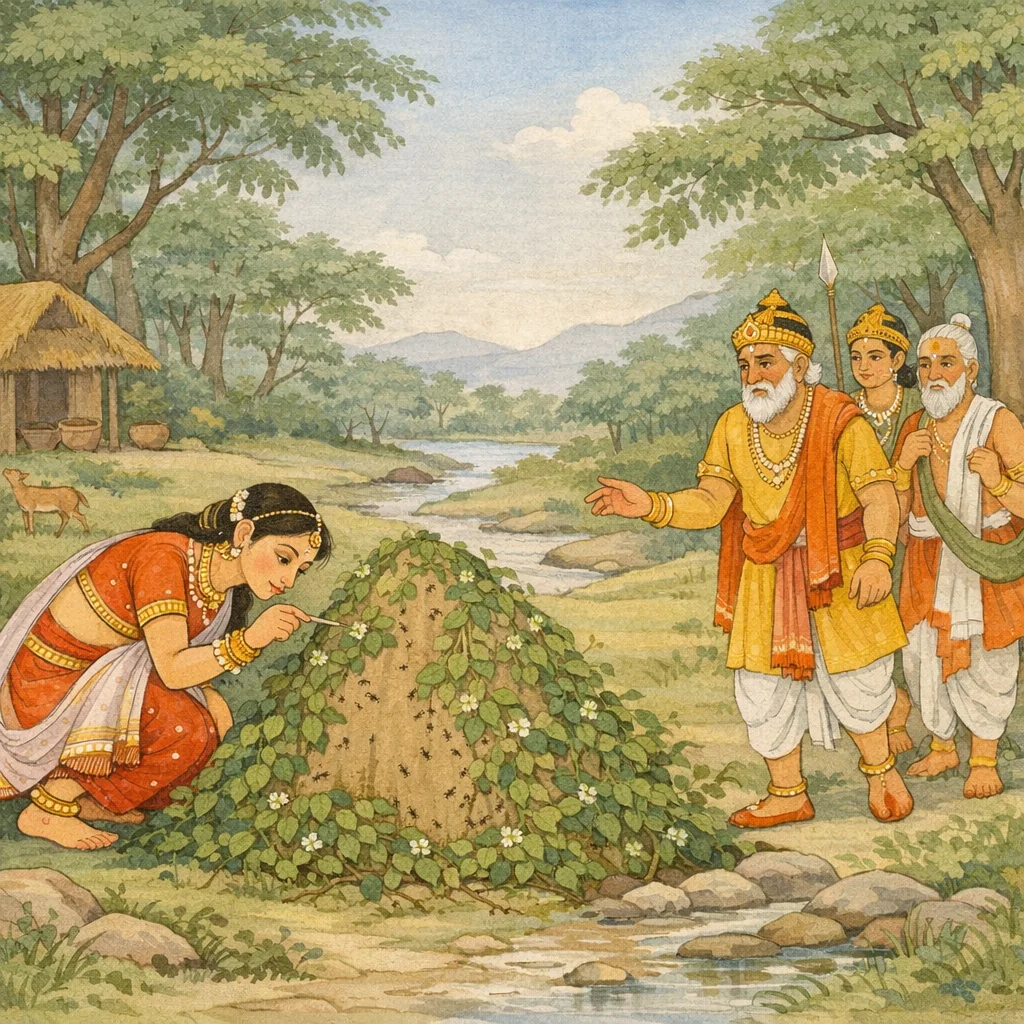
Lomāśa introduces Cyavana, son of Bhṛgu, engaged in severe tapas near a lake. Over time he becomes motionless, covered by vines and enclosed within a vāl mīka (anthill), like an earthen mound, yet continues austerities. King Śaryāti arrives at the lake for recreation with a vast retinue and his daughter Sukanyā. While wandering with companions, Sukanyā approaches the anthill; noticing two luminous points (Cyavana’s eyes), she impulsively pierces them with a thorn out of curiosity and confusion. Cyavana, angered, responds by afflicting Śaryāti’s camp with a bodily blockage (cessation of excretion/urination), causing collective distress. Śaryāti investigates, questions his soldiers and associates, and receives no admission until Sukanyā confesses her act. The king rushes to the anthill, finds the aged ascetic, and petitions forgiveness, framing the act as ignorance by a young girl. Cyavana stipulates a condition for pardon: he will forgive if Śaryāti gives Sukanyā to him in marriage. Śaryāti consents; Cyavana is appeased; the king returns with his retinue. Sukanyā thereafter is depicted as exemplary in service—attending to her husband, fires, and guests with disciplined devotion.
Chapter Arc: लोमश ऋषि युधिष्ठिर को च्यवन-ऋषि की अद्भुत तपस्या सुनाते हैं—जो वीरस्थाने स्थाणु-सा अचल खड़े रहे और काल के प्रवाह में वल्मीकि से ढँक गए। → एकान्त वन में वल्मीकि-आवृत च्यवन को देखकर शर्याति की पुत्री सुकन्या कौतूहलवश उनके भीतर चमकते ‘खद्योत’ समान नेत्रों को काँटे से बेध देती है; ऋषि के अपमान से तपोबल का क्रोध जागता है और राजा-परिवार पर संकट छा जाता है। → अपराध का पता चलने पर शर्याति भयभीत होकर वल्मीकि तक पहुँचता है; सुकन्या का अज्ञानजन्य कृत्य ऋषि-कोप का कारण बनता है और राजा को क्षमा-याचना तथा प्रायश्चित्त का मार्ग चुनना पड़ता है। → राजा सत्य स्वीकार कर विनय करता है; सुकन्या को च्यवन की सेवा-परायणता हेतु समर्पित किया जाता है—वह अनसूया होकर अग्नियों, अतिथियों और ऋषि की शुश्रूषा से शीघ्र ही उन्हें प्रसन्न करती है। → सुकन्या की सेवा से च्यवन का अनुग्रह तो प्राप्त होता है, पर आगे यह संबंध और ऋषि-वरदान/परिणाम राजवंश के भाग्य को किस दिशा में मोड़ेंगे—यह प्रश्न शेष रहता है।
Shlokas
Verse 1
(दाक्षिणात्य अधिक पाठका १ श्लोक मिलाकर कुल २५ श्लोक हैं) 2.3 अपर () है ० ३. यूपके ऊपरका गोलाकार काष्ठ। २. यूप--यज्ञस्तम्भ। 3. चमस--सोमपानका पात्र। ४. बटलोई। ५. पकी-पकायी रखनेका सामग्री-पात्र। ६. हविष्य अर्पण करनेका उपकरण। ७. घृत आदिकी आहुति डालनेका साधन। द्वाविशर्त्याधेकशततमो< ध्याय: महर्षि च्यवनको सुकन्याकी प्राप्ति लोगश उवाच भगोर्महर्षे: पुत्रो5 भूच्च्यवनो नाम भारत | समीपे सरसस्तस्य तपस्तेपे महाद्युति:,लोमशजी कहते हैं--युधिष्ठिर! महर्षि भृगुके पुत्र च्यवन मुनि हुए, जो महान् तेजस्वी थे। उन्होंने उस सरोवरके समीप तपस्या आरम्भ की। पाण्डुनन्दन! परम तेजस्वी महात्मा च्यवन वीरासनसे बैठकर ढूँठे काठके समान जान पड़ते थे। राजन्! वे एक ही स्थानपर दीर्घकालतक अविचलभावसे बैठे रहे
Lomaśa said: “O Bhārata (Yudhiṣṭhira), there was a sage named Cyavana, the son of the great seer Bhṛgu. Radiant with the splendor of austerity, he began severe tapas near a certain lake. The passage sets the Vana Parva’s moral frame: spiritual power is born of steadfast self-discipline and long, unmoving endurance, which later becomes the ground for testing and transforming the conduct of those around him.”
Verse 2
स्थाणुभूतो महातेजा वीरस्थानेन पाण्डव । अतिष्ठत चिरं कालमेकदेशे विशाम्पते,लोमशजी कहते हैं--युधिष्ठिर! महर्षि भृगुके पुत्र च्यवन मुनि हुए, जो महान् तेजस्वी थे। उन्होंने उस सरोवरके समीप तपस्या आरम्भ की। पाण्डुनन्दन! परम तेजस्वी महात्मा च्यवन वीरासनसे बैठकर ढूँठे काठके समान जान पड़ते थे। राजन्! वे एक ही स्थानपर दीर्घकालतक अविचलभावसे बैठे रहे
Lomaśa said: “O Pāṇḍava, that great ascetic, blazing with spiritual power, sat in vīrāsana and looked like a motionless tree-stump. O lord of the people, he remained for a very long time, unmoving, in a single spot.”
Verse 3
स वल्मीको5भवदृषिर्लताभिरिव संवृतः । कालेन महता राजन् समाकीर्ण: पिपीलिकै:,धीरे-धीरे अधिक समय बीतनेपर उनका शरीर चींटियोंसे व्याप्त हो गया। वे महर्षि लताओंसे आच्छादित हो गये और बाँबीके समान प्रतीत होने लगे
Over a long passage of time, O King, the sage became like a termite-mound: covered as though by creeping vines, and gradually swarmed over by ants. The verse underscores the austere stillness of prolonged tapas—so complete that the body itself is surrendered to time—while the inner resolve of the ascetic remains unwavering.
Verse 4
तथा स संवृतो धीमान् मृत्पिण्ड इव सर्वश: । तप्यते सम तपो घोरं वल्मीकेन समावृत:,इस प्रकार लता-वेलोंसे आच्छादित हो बुद्धिमान् च्यवन मुनि सब ओरसे केवल मिट्टीके लोंदेके समान जान पड़ने लगे। दीमकोंद्वारा जमा की हुई मिट्टीके ढेरसे ढके हुए वे बड़ी भारी तपस्या कर रहे थे
Thus the wise Cyavana, covered everywhere with creepers, came to look like nothing but a lump of earth. Enveloped by the mound of soil heaped up by termites, he continued to perform a dreadful, weighty tapas.
Verse 5
अथ दीर्घस्य कालस्य शर्यातिर्नाम पार्थिव: | आजगाम सरो रम्यं विहर्तुमिदमुत्तमम्,इस प्रकार दीर्घकाल व्यतीत होनेपर राजा शर्याति इस उत्तम एवं रमणीय सरोवरके तटपर विहारके लिये आये
After a long time had passed, the king named Śaryāti came to this excellent and delightful lake, intending to take his recreation there.
Verse 6
तस्य स्त्रीणां सहस््राणि चत्वार्यासन् परिग्रहे । एकैव च सुता सुभ्रू: सुकन्या नाम भारत,युधिष्ठिर! उनके अन्तःपुरमें चार हजार स्त्रियाँ थीं, परंतु संतानके नामपर केवल एक ही सुन्दरी पुत्री थी, जिसका नाम सुकन्या था
O Bhārata, O Yudhiṣṭhira, he had four thousand women in his household; yet, as far as offspring were concerned, he had only a single daughter—a fair-browed maiden named Sukanyā.
Verse 7
सा सर्खीभि: परिवृता दिव्याभरणभूषिता । चंक्रम्पमाणा वल्मीकं भार्गवस्य समासदत्,वह कन्या दिव्य वस्त्राभूषणोंसे विभूषित हो सखियोंसे घिरी हुई वनमें इधर-उधर घूमने लगी। घूमती-घामती वह भृगुनन्दन च्यवनकी बाँबीके पास जा पहुँची
Adorned with celestial ornaments and surrounded by her companions, the maiden wandered about in the forest. As she strolled, she came up to the anthill associated with the Bhārgava sage—Cyavana.
Verse 8
सा वै वसुमतीं तत्र पश्यन्ती सुमनोरमाम् । वनस्पतीन् विचिन्वन्ती विजहार सखीवृता,वहाँकी भूमि उसे बड़ी मनोहर दिखायी दी। वह सखियोंके साथ वृक्षोंके फल-फूल तोड़ती हुई चारों ओर घूमने लगी
There she beheld the earth as exceedingly beautiful and pleasing. Surrounded by her companions, she wandered about in delight, gathering from the forest trees their flowers and fruits.
Verse 9
रूपेण वयसा चैव मदनेन मदेन च । बभज्ज वनवृक्षाणां शाखा: परमपुष्पिता:,सुन्दर रूप, नयी अवस्था, कामभावके उदय और यौवनके मदसे प्रेरित हो सुकन्याने उत्तम फूलोंसे भरी हुई वन-वृक्षोंकी बहुत-सी शाखाएँ तोड़ लीं। वह सखियोंका साथ छोड़कर अकेली टहलने लगी। उस समय उसके शरीरपर एक ही वस्त्र था और वह भाँति- भाँतिके अलंकारोंसे अलंकृत थी। बुद्धिमान् च्यवन मुनिने उसे देखा। वह चमकती हुई विद्युतके समान चारों ओर विचर रही थी
Lomaśa said: Driven by her beauty and youth—by the stirrings of desire and the intoxication of maidenly pride—Sukanyā broke off many richly blossoming branches from the forest trees. Leaving her companions behind, she wandered alone, clad in a single garment and adorned with various ornaments. The wise sage Cyavana saw her as she moved about, radiant like a flash of lightning.
Verse 10
तां सखीरहितामेकामेकवस्त्रामलंकृताम् । ददर्श भार्गवो धीमांश्वरन्तीमिव विद्युतम्,सुन्दर रूप, नयी अवस्था, कामभावके उदय और यौवनके मदसे प्रेरित हो सुकन्याने उत्तम फूलोंसे भरी हुई वन-वृक्षोंकी बहुत-सी शाखाएँ तोड़ लीं। वह सखियोंका साथ छोड़कर अकेली टहलने लगी। उस समय उसके शरीरपर एक ही वस्त्र था और वह भाँति- भाँतिके अलंकारोंसे अलंकृत थी। बुद्धिमान् च्यवन मुनिने उसे देखा। वह चमकती हुई विद्युतके समान चारों ओर विचर रही थी
Bhārgava Cyavana, the wise sage, saw her wandering alone, separated from her companions—clad in a single garment and adorned with ornaments—moving about like a flashing streak of lightning.
Verse 11
तां पश्यमानो विजने स रेमे परमद्युति: । क्षामकण्ठश्न विप्रर्षिस्तपोबलसमन्वित:,उसे एकान्तमें देखकर परम कान्तिमानू, तपोबल-सम्पन्न एवं दुर्बल कण्ठवाले ब्रह्मर्षि च्यवनको बड़ी प्रसन्नता हुई
Seeing her there in solitude, the supremely radiant sage felt deep delight. Though his throat was thin and weakened by austerities, that brahmarṣi Cyavana—endowed with the strength born of tapas—was inwardly pleased.
Verse 12
तामाबभाषे कल्याणीं सा चास्य न शृणोति वै । ततः: सुकन्या वल्मीके दृष्टवा भार्गवचक्षुषी,उन्होंने उस कल्याणमयी राजकन्याको पुकारा; परंतु वह (त्रह्मर्षिका कण्ठ दुर्बल होनेके कारण) उनकी आवाज नहीं सुनती थी। उस बाँबीमें मुनिवर च्यवनकी चमकती हुई आँखोंको देखकर उसे बहुत कौतूहल हुआ। उसकी बुद्धिपर मोह छा गया और उसने विवश होकर यह कहती हुई कि “देखूँ यह क्या है?” एक काँटेसे उन्हें छेद दिया। उसके द्वारा आँखें बिंध जानेके कारण परम क्रोधी ब्रह्मर्षि च्यवन अत्यन्त कुपित हो उठे। फिर तो उन्होंने शर्यातिकी सेनाके मल-मूत्र बंद कर दिये। मल-मूत्रका द्वार बंद हो जानेसे मलावरोधके कारण सारी सेनाको बहुत दुःख होने लगा। सैनिकोंकी ऐसी अवस्था देखकर राजाने सबसे पूछा--“यहाँ नित्य-निरन्तर तपस्यामें संलग्न रहनेवाले वयोवृद्ध महामना च्यवन रहते हैं। वे स्वभावतः बड़े क्रोधी हैं। उनका जानकर या बिना जाने आज किसने अपकार किया है? जिन लोगोंने भी ब्रह्मर्षिका अपराध किया हो, वे तुरंत सब कुछ बता दें, विलम्ब न करें।' ५ 080 तब सम्पूर्ण सैनिकोंने उनसे कहा--“महाराज! हम नहीं जानते कि किसके द्वारा उनका अपराध हुआ है?
He addressed that auspicious maiden, but she did not hear him at all. Then Sukanyā, seeing within an anthill the shining eyes of the Bhārgava (the sage Cyavana), was seized by curiosity; her judgment became clouded, and, compelled by fascination, she pierced them with a thorn, saying, “Let me see what this is.” From that injury to his eyes, the exceedingly irascible brahmarṣi Cyavana flared up in anger and, as a consequence, obstructed the army of King Śaryāti from passing urine and stool. When the bodily channels were thus blocked, the entire force suffered severe distress; seeing his soldiers in that condition, the king questioned them, asking who—knowingly or unknowingly—had wronged the ever-austere, aged, and quick-tempered sage, and urged the offender to confess without delay.
Verse 13
कौतूहलात् कण्टकेन बुद्धिमोहबलात्कृता । कि नु खल्विदमित्युक्त्वा निर्बिभेदास्य लोचने,उन्होंने उस कल्याणमयी राजकन्याको पुकारा; परंतु वह (त्रह्मर्षिका कण्ठ दुर्बल होनेके कारण) उनकी आवाज नहीं सुनती थी। उस बाँबीमें मुनिवर च्यवनकी चमकती हुई आँखोंको देखकर उसे बहुत कौतूहल हुआ। उसकी बुद्धिपर मोह छा गया और उसने विवश होकर यह कहती हुई कि “देखूँ यह क्या है?” एक काँटेसे उन्हें छेद दिया। उसके द्वारा आँखें बिंध जानेके कारण परम क्रोधी ब्रह्मर्षि च्यवन अत्यन्त कुपित हो उठे। फिर तो उन्होंने शर्यातिकी सेनाके मल-मूत्र बंद कर दिये। मल-मूत्रका द्वार बंद हो जानेसे मलावरोधके कारण सारी सेनाको बहुत दुःख होने लगा। सैनिकोंकी ऐसी अवस्था देखकर राजाने सबसे पूछा--“यहाँ नित्य-निरन्तर तपस्यामें संलग्न रहनेवाले वयोवृद्ध महामना च्यवन रहते हैं। वे स्वभावतः बड़े क्रोधी हैं। उनका जानकर या बिना जाने आज किसने अपकार किया है? जिन लोगोंने भी ब्रह्मर्षिका अपराध किया हो, वे तुरंत सब कुछ बता दें, विलम्ब न करें।' ५ 080 तब सम्पूर्ण सैनिकोंने उनसे कहा--“महाराज! हम नहीं जानते कि किसके द्वारा उनका अपराध हुआ है?
Out of sheer curiosity, and driven by the force of delusion that clouded her judgment, she said, “What indeed is this?” and pierced his eyes with a thorn.
Verse 14
अक्रुध्यत् स तया विद्धे नेत्रे परममन्युमान् । ततः शर्यातिसैन्यस्य शकृन्मूत्रे समावृणोत्,उन्होंने उस कल्याणमयी राजकन्याको पुकारा; परंतु वह (त्रह्मर्षिका कण्ठ दुर्बल होनेके कारण) उनकी आवाज नहीं सुनती थी। उस बाँबीमें मुनिवर च्यवनकी चमकती हुई आँखोंको देखकर उसे बहुत कौतूहल हुआ। उसकी बुद्धिपर मोह छा गया और उसने विवश होकर यह कहती हुई कि “देखूँ यह क्या है?” एक काँटेसे उन्हें छेद दिया। उसके द्वारा आँखें बिंध जानेके कारण परम क्रोधी ब्रह्मर्षि च्यवन अत्यन्त कुपित हो उठे। फिर तो उन्होंने शर्यातिकी सेनाके मल-मूत्र बंद कर दिये। मल-मूत्रका द्वार बंद हो जानेसे मलावरोधके कारण सारी सेनाको बहुत दुःख होने लगा। सैनिकोंकी ऐसी अवस्था देखकर राजाने सबसे पूछा--“यहाँ नित्य-निरन्तर तपस्यामें संलग्न रहनेवाले वयोवृद्ध महामना च्यवन रहते हैं। वे स्वभावतः बड़े क्रोधी हैं। उनका जानकर या बिना जाने आज किसने अपकार किया है? जिन लोगोंने भी ब्रह्मर्षिका अपराध किया हो, वे तुरंत सब कुछ बता दें, विलम्ब न करें।' ५ 080 तब सम्पूर्ण सैनिकोंने उनसे कहा--“महाराज! हम नहीं जानते कि किसके द्वारा उनका अपराध हुआ है?
When his eyes were pierced by her, the great sage—fierce in wrath—became exceedingly enraged. Then he obstructed the army of King Śaryāti, stopping their passage of feces and urine.
Verse 15
ततो रुद्धे शकन्मूत्रे सैन्यमानाहदु:खितम् । तथागतमभ्िप्रेक्ष्य पर्यपृच्छत् स पार्थिव:,उन्होंने उस कल्याणमयी राजकन्याको पुकारा; परंतु वह (त्रह्मर्षिका कण्ठ दुर्बल होनेके कारण) उनकी आवाज नहीं सुनती थी। उस बाँबीमें मुनिवर च्यवनकी चमकती हुई आँखोंको देखकर उसे बहुत कौतूहल हुआ। उसकी बुद्धिपर मोह छा गया और उसने विवश होकर यह कहती हुई कि “देखूँ यह क्या है?” एक काँटेसे उन्हें छेद दिया। उसके द्वारा आँखें बिंध जानेके कारण परम क्रोधी ब्रह्मर्षि च्यवन अत्यन्त कुपित हो उठे। फिर तो उन्होंने शर्यातिकी सेनाके मल-मूत्र बंद कर दिये। मल-मूत्रका द्वार बंद हो जानेसे मलावरोधके कारण सारी सेनाको बहुत दुःख होने लगा। सैनिकोंकी ऐसी अवस्था देखकर राजाने सबसे पूछा--“यहाँ नित्य-निरन्तर तपस्यामें संलग्न रहनेवाले वयोवृद्ध महामना च्यवन रहते हैं। वे स्वभावतः बड़े क्रोधी हैं। उनका जानकर या बिना जाने आज किसने अपकार किया है? जिन लोगोंने भी ब्रह्मर्षिका अपराध किया हो, वे तुरंत सब कुछ बता दें, विलम्ब न करें।' ५ 080 तब सम्पूर्ण सैनिकोंने उनसे कहा--“महाराज! हम नहीं जानते कि किसके द्वारा उनका अपराध हुआ है?
Then, when the passage of feces and urine was obstructed, the army was thrown into distress, writhing in pain. Seeing them brought so low, the king questioned them—seeking to learn what had drawn down this calamity, as though some offense against the ascetic had been committed.
Verse 16
तपोनित्यस्य वृद्धस्य रोषणस्य विशेषत: । केनापकृतमग्येह भार्गवस्य महात्मन:,उन्होंने उस कल्याणमयी राजकन्याको पुकारा; परंतु वह (त्रह्मर्षिका कण्ठ दुर्बल होनेके कारण) उनकी आवाज नहीं सुनती थी। उस बाँबीमें मुनिवर च्यवनकी चमकती हुई आँखोंको देखकर उसे बहुत कौतूहल हुआ। उसकी बुद्धिपर मोह छा गया और उसने विवश होकर यह कहती हुई कि “देखूँ यह क्या है?” एक काँटेसे उन्हें छेद दिया। उसके द्वारा आँखें बिंध जानेके कारण परम क्रोधी ब्रह्मर्षि च्यवन अत्यन्त कुपित हो उठे। फिर तो उन्होंने शर्यातिकी सेनाके मल-मूत्र बंद कर दिये। मल-मूत्रका द्वार बंद हो जानेसे मलावरोधके कारण सारी सेनाको बहुत दुःख होने लगा। सैनिकोंकी ऐसी अवस्था देखकर राजाने सबसे पूछा--“यहाँ नित्य-निरन्तर तपस्यामें संलग्न रहनेवाले वयोवृद्ध महामना च्यवन रहते हैं। वे स्वभावतः बड़े क्रोधी हैं। उनका जानकर या बिना जाने आज किसने अपकार किया है? जिन लोगोंने भी ब्रह्मर्षिका अपराध किया हो, वे तुरंत सब कुछ बता दें, विलम्ब न करें।' ५ 080 तब सम्पूर्ण सैनिकोंने उनसे कहा--“महाराज! हम नहीं जानते कि किसके द्वारा उनका अपराध हुआ है?
Lomaśa said: “Here dwells the great-souled Bhārgava, Cyavana—aged, ever steadfast in austerity, and especially quick to anger. Who, today, has wronged him, whether knowingly or unknowingly?”
Verse 17
ज्ञातं वा यदि वज्ञातं तद् द्रुतं ब्रूत मा चिरम् । तमूचु: सैनिका: सर्वे न विद्योड5पकृतं वयम्,उन्होंने उस कल्याणमयी राजकन्याको पुकारा; परंतु वह (त्रह्मर्षिका कण्ठ दुर्बल होनेके कारण) उनकी आवाज नहीं सुनती थी। उस बाँबीमें मुनिवर च्यवनकी चमकती हुई आँखोंको देखकर उसे बहुत कौतूहल हुआ। उसकी बुद्धिपर मोह छा गया और उसने विवश होकर यह कहती हुई कि “देखूँ यह क्या है?” एक काँटेसे उन्हें छेद दिया। उसके द्वारा आँखें बिंध जानेके कारण परम क्रोधी ब्रह्मर्षि च्यवन अत्यन्त कुपित हो उठे। फिर तो उन्होंने शर्यातिकी सेनाके मल-मूत्र बंद कर दिये। मल-मूत्रका द्वार बंद हो जानेसे मलावरोधके कारण सारी सेनाको बहुत दुःख होने लगा। सैनिकोंकी ऐसी अवस्था देखकर राजाने सबसे पूछा--“यहाँ नित्य-निरन्तर तपस्यामें संलग्न रहनेवाले वयोवृद्ध महामना च्यवन रहते हैं। वे स्वभावतः बड़े क्रोधी हैं। उनका जानकर या बिना जाने आज किसने अपकार किया है? जिन लोगोंने भी ब्रह्मर्षिका अपराध किया हो, वे तुरंत सब कुछ बता दें, विलम्ब न करें।' ५ 080 तब सम्पूर्ण सैनिकोंने उनसे कहा--“महाराज! हम नहीं जानते कि किसके द्वारा उनका अपराध हुआ है?
“Whether it was done knowingly or unknowingly, tell it at once—do not delay.” Then all the soldiers replied, “O king, we do not know; we have committed no offense.”
Verse 18
सर्वोपायैर्यथाकामं भवांस्तदधिगच्छतु । ततः स पृथिवीपाल: साम्ना चोग्रेण च स्वयम्,“आप अपनी रुचिके अनुसार सभी उपायोंद्वारा इसका पता लगावें।” तब राजा शर्यातिने साम और उग्रनीतिके द्वारा सभी सुहृदोंसे पूछा; परंतु वे भी इसका पता न लगा सके। तदनन्तर सुकन्याने सारी सेनाको मलावरोधके कारण दुःखसे पीड़ित और पिताको भी चिन्तित देख इस प्रकार कहा--“तात! मैंने इस वनमें घूमते समय एक बाँबीके भीतर कोई चमकीली वस्तु देखी, जो जुगनूके समान जान पड़ती थी। उसके निकट जाकर मैंने उसे काँटेसे बींध दिया।” यह सुनकर शर्याति तुरंत ही बाँबीके पास गये। वहाँ उन्होंने तपस्यामें बढ़े-चढ़े वयोवृद्ध महात्मा च्यवनको देखा और हाथ जोड़कर अपने सैनिकोंका कष्ट निवारण करनेके लिये याचना की--
“Let Your Majesty, by whatever means you deem fit, discover the truth of this matter.” Thereupon the king, protector of the earth, personally began his inquiries—now with conciliatory words, now with stern measures. Yet the cause remained unknown, until events led him to the ascetic Cyavana, revealing how a heedless act can bring suffering upon many and how duty demands swift redress.
Verse 19
पर्यपृच्छत् सुद्ृद्वर्ग पर्यजानन्न चैव ते । आनाहार्त ततो दृष्टवा तत्सैन्यमसुखार्दितम्,“आप अपनी रुचिके अनुसार सभी उपायोंद्वारा इसका पता लगावें।” तब राजा शर्यातिने साम और उग्रनीतिके द्वारा सभी सुहृदोंसे पूछा; परंतु वे भी इसका पता न लगा सके। तदनन्तर सुकन्याने सारी सेनाको मलावरोधके कारण दुःखसे पीड़ित और पिताको भी चिन्तित देख इस प्रकार कहा--“तात! मैंने इस वनमें घूमते समय एक बाँबीके भीतर कोई चमकीली वस्तु देखी, जो जुगनूके समान जान पड़ती थी। उसके निकट जाकर मैंने उसे काँटेसे बींध दिया।” यह सुनकर शर्याति तुरंत ही बाँबीके पास गये। वहाँ उन्होंने तपस्यामें बढ़े-चढ़े वयोवृद्ध महात्मा च्यवनको देखा और हाथ जोड़कर अपने सैनिकोंका कष्ट निवारण करनेके लिये याचना की--
Then the king questioned again and again his steadfast circle of allies and attendants, but they too could not discover the cause. Seeing thereafter that the entire army was afflicted with distress—unable to eat and tormented in body—the burden of kingship pressed upon him: a ruler must seek the truth of a calamity and relieve the suffering of those under his protection.
Verse 20
पितरं दुःखितं दृष्टवा सुकन्येदमथाब्रवीत् । मयावन्त्येह वल्मीके दृष्टं सत्व्मभिज्वलत्,“आप अपनी रुचिके अनुसार सभी उपायोंद्वारा इसका पता लगावें।” तब राजा शर्यातिने साम और उग्रनीतिके द्वारा सभी सुहृदोंसे पूछा; परंतु वे भी इसका पता न लगा सके। तदनन्तर सुकन्याने सारी सेनाको मलावरोधके कारण दुःखसे पीड़ित और पिताको भी चिन्तित देख इस प्रकार कहा--“तात! मैंने इस वनमें घूमते समय एक बाँबीके भीतर कोई चमकीली वस्तु देखी, जो जुगनूके समान जान पड़ती थी। उसके निकट जाकर मैंने उसे काँटेसे बींध दिया।” यह सुनकर शर्याति तुरंत ही बाँबीके पास गये। वहाँ उन्होंने तपस्यामें बढ़े-चढ़े वयोवृद्ध महात्मा च्यवनको देखा और हाथ जोड़कर अपने सैनिकोंका कष्ट निवारण करनेके लिये याचना की--
Seeing her father distressed, Sukanyā then spoke: “Father, while wandering here in this forest, I saw within an anthill a living presence shining brightly. Thinking it like a small luminous creature, I went near and pierced it with a thorn.” This confession sets the ethical pivot of the episode: an unknowing act that harms an ascetic becomes the cause of collective suffering, and it calls for accountability, humility, and restitution rather than denial.
Verse 21
खद्योतवदभिज्ञातं तनन््मया विद्धमन्तिकात् । एतच्छुत्वा तु वल्मीकं शर्यातिस्तूर्णम भ्ययात्,“आप अपनी रुचिके अनुसार सभी उपायोंद्वारा इसका पता लगावें।” तब राजा शर्यातिने साम और उग्रनीतिके द्वारा सभी सुहृदोंसे पूछा; परंतु वे भी इसका पता न लगा सके। तदनन्तर सुकन्याने सारी सेनाको मलावरोधके कारण दुःखसे पीड़ित और पिताको भी चिन्तित देख इस प्रकार कहा--“तात! मैंने इस वनमें घूमते समय एक बाँबीके भीतर कोई चमकीली वस्तु देखी, जो जुगनूके समान जान पड़ती थी। उसके निकट जाकर मैंने उसे काँटेसे बींध दिया।” यह सुनकर शर्याति तुरंत ही बाँबीके पास गये। वहाँ उन्होंने तपस्यामें बढ़े-चढ़े वयोवृद्ध महात्मा च्यवनको देखा और हाथ जोड़कर अपने सैनिकोंका कष्ट निवारण करनेके लिये याचना की--
Sukanyā said, “I noticed something shining like a firefly, and from close by I pierced it.” Hearing this, King Śaryāti hurried at once to the anthill. The moment underscores how a small, careless act—done in ignorance—can bring grave consequences, and how rulers must respond swiftly and responsibly to relieve suffering and restore moral order.
Verse 22
तत्रापश्यत् तपोवृद्धं वयोवृद्धं च भार्गवम् । अयाचदथ सैन्यार्थ प्राउ्जलि: पृथिवीपति:,“आप अपनी रुचिके अनुसार सभी उपायोंद्वारा इसका पता लगावें।” तब राजा शर्यातिने साम और उग्रनीतिके द्वारा सभी सुहृदोंसे पूछा; परंतु वे भी इसका पता न लगा सके। तदनन्तर सुकन्याने सारी सेनाको मलावरोधके कारण दुःखसे पीड़ित और पिताको भी चिन्तित देख इस प्रकार कहा--“तात! मैंने इस वनमें घूमते समय एक बाँबीके भीतर कोई चमकीली वस्तु देखी, जो जुगनूके समान जान पड़ती थी। उसके निकट जाकर मैंने उसे काँटेसे बींध दिया।” यह सुनकर शर्याति तुरंत ही बाँबीके पास गये। वहाँ उन्होंने तपस्यामें बढ़े-चढ़े वयोवृद्ध महात्मा च्यवनको देखा और हाथ जोड़कर अपने सैनिकोंका कष्ट निवारण करनेके लिये याचना की--
There the king beheld the Bhārgava sage—advanced both in austerity and in years. Then, with palms joined, the lord of the earth entreated him for the sake of his army, seeking relief from their suffering. The episode underscores the ethical necessity of humility and restitution when harm is done—especially toward ascetics whose spiritual power protects the moral order.
Verse 23
अज्ञानाद् बालया यत् ते कृतं तत् क्षन्तुमरहसि । ततोअब्रवीन्महीपालं च्यवनो भार्गवस्तदा,“भगवन्! मेरी बालिकाने अज्ञानवश जो आपका अपराध किया है, उसे आप कृपापूर्वक क्षमा करें।” उनके ऐसा कहनेपर भृगुनन्दन च्यवनने राजासे कहा--“राजन्! तुम्हारी इस पुत्रीने अहंकारवश अपमानपूर्वक मेरी आँखें फोड़ी हैं, अत: रूप और उदारता आदि गुणोंसे युक्त तथा लोभ और मोहके वशीभूत हुई तुम्हारी इस कन्याको पत्नीरूपमें प्राप्त करके ही मैं इसका अपराध क्षमा कर सकता हूँ। भूपाल! यह मैं तुमसे सच्ची बात कहता हूँ
Lomaśa said: “Please forgive what your young daughter has done out of ignorance.” Then the Bhārgava sage Cyavana addressed the king: “O King, your daughter, driven by pride, has insultingly harmed my eyes. Therefore, I can forgive this offense only if I receive her as my wife—she who is endowed with beauty and noble qualities, yet is also liable to be swayed by desire and delusion. O ruler, I tell you this as the truth.”
Verse 24
अपमानादहं विद्धो हानया दर्पपूर्णया । रूपौदार्यसमायुक्तां लोभमोहबलात्कृताम्,“भगवन्! मेरी बालिकाने अज्ञानवश जो आपका अपराध किया है, उसे आप कृपापूर्वक क्षमा करें।” उनके ऐसा कहनेपर भृगुनन्दन च्यवनने राजासे कहा--“राजन्! तुम्हारी इस पुत्रीने अहंकारवश अपमानपूर्वक मेरी आँखें फोड़ी हैं, अत: रूप और उदारता आदि गुणोंसे युक्त तथा लोभ और मोहके वशीभूत हुई तुम्हारी इस कन्याको पत्नीरूपमें प्राप्त करके ही मैं इसका अपराध क्षमा कर सकता हूँ। भूपाल! यह मैं तुमसे सच्ची बात कहता हूँ
Wounded by the insult inflicted by this arrogant girl, I speak plainly: she has, under the force of greed and delusion, committed this act despite being endowed with beauty and noble qualities. Therefore, O king, I can forgive her offense only if I receive your daughter as my wife. This, O ruler, is the truth I tell you.
Verse 25
तामेव प्रतिगृह्माहं राजन् दुहितरं तव । क्षंस्यामीति महीपाल सत्यमेतद् ब्रवीमि ते,“भगवन्! मेरी बालिकाने अज्ञानवश जो आपका अपराध किया है, उसे आप कृपापूर्वक क्षमा करें।” उनके ऐसा कहनेपर भृगुनन्दन च्यवनने राजासे कहा--“राजन्! तुम्हारी इस पुत्रीने अहंकारवश अपमानपूर्वक मेरी आँखें फोड़ी हैं, अत: रूप और उदारता आदि गुणोंसे युक्त तथा लोभ और मोहके वशीभूत हुई तुम्हारी इस कन्याको पत्नीरूपमें प्राप्त करके ही मैं इसका अपराध क्षमा कर सकता हूँ। भूपाल! यह मैं तुमसे सच्ची बात कहता हूँ
“O King, I will accept only that very daughter of yours; then I shall forgive. O protector of the earth, I speak this truth to you.” In context, the sage makes forgiveness conditional upon the king’s giving his daughter in marriage—presenting a stark ethical tension between royal duty, a child’s wrongdoing, and the ascetic’s demand for recompense.
Verse 26
लोगमश उवाच ऋषेवचनमाज्ञाय शर्यातिरविचारयन् | ददौ दुहितरं तस्मै च्यवनाय महात्मने,लोमशजी कहते हैं--च्यवन ऋषिका यह वचन सुनकर राजा शर्यातिने बिना कुछ विचार किये ही महात्मा च्यवनको अपनी पुत्री दे दी
Lomaśa said: Having understood the sage’s words, King Śaryāti—without further deliberation—gave his daughter to the great-souled sage Cyavana.
Verse 27
प्रतिगृह्य च तां कन््यां भगवान् प्रससाद ह । प्राप्पप्रसादो राजा वै ससैन्य: पुरमाव्रजत्,उस राजकन्याको पाकर भगवान् च्यवन मुनि प्रसन्न हो गये। तत्पश्चात् उनका कृपाप्रसाद प्राप्त करके राजा शर्याति सेनासहित सकुशल अपनी राजधानीको लौट आये
Having accepted that maiden, the venerable sage became graciously pleased. The king, having obtained the sage’s favor, returned safely to his capital together with his army.
Verse 28
सुकन्यापि पतिं लब्ध्वा तपस्विनमनिन्दिता । नित्यं पर्यचरत् प्रीत्या तपसा नियमेन च,सुकन्या भी तपस्वी च्यवनको पतिरूपमें पाकर प्रतिदिन प्रेमपूर्वकत तप और नियमका पालन करती हुई उनकी परिचर्या करने लगी
Even Sukanyā—blameless in conduct—having obtained a husband in the ascetic Cyavana, served him every day with affection, steadfastly observing austerity and self-restraint.
Verse 29
अग्नीनामतिथीनां च शुश्रूषुरनसूयिका । समाराधयत क्षिप्रं च्यवनं सा शुभानना,सुमुखी सुकन्या किसीके गुणोंमें दोष नहीं देखती थी। वह त्रिविध अग्नियों और अतिथियोंकी सेवामें तत्पर हो शीघ्र ही महर्षि च्यवनकी आराधनामें लग गयी
Lomaśa said: Sukanyā, fair-faced and gentle, free from fault-finding, devoted herself to attentive service of the sacred household fires and to the honoring of guests; and thus she quickly set herself to propitiate the sage Cyavana.
Verse 122
इति श्रीमहाभारते वनपर्वणि तीर्थयात्रापर्वणि लोमशतीर्थयात्रायां सौकन्ये द्वाविंशत्यधिकशततमो<ध्याय:
Thus, in the Śrī Mahābhārata, within the Vana Parva—specifically in the Tīrtha-yātrā section—here ends the one-hundred-and-twenty-second chapter, in the account of Lomāśa’s pilgrimage, in connection with the episode of Sukanyā.
Verse 129
इस प्रकार श्रीमहाभारत वनपर्वके अन्तर्गत तीर्थयात्रापर्वमें लोमशती र्थयात्राके प्रसंगमें युकन्योपाख्यानविषयक एक सौ इक्कीसवाँ अध्याय पूरा हुआ
Thus, in the Śrī Mahābhārata, within the Vana Parva, in the Tīrtha-yātrā Parva, in the context of Lomāśa’s pilgrimage narrative, the chapter concerning the episode of Yukan(y)ā (Sukanyā) comes to its close—completing the one-hundred-and-twenty-first adhyāya.
Frequently Asked Questions
How a ruler should respond when harm is caused unintentionally by someone under his protection—balancing truthful disclosure, public welfare, and a negotiated remedy with an offended ascetic authority.
Austerity and restraint are treated as socially consequential forces; therefore, curiosity without discernment can cause injury, and restoration requires confession, responsibility, and proportionate restitution.
No explicit phalaśruti is stated here; the chapter functions as a narrative exemplum within Lomāśa’s instruction, illustrating the ethical logic of harm, appeasement, and restored order.